Search results
Search for "graphene" in Full Text gives 563 result(s) in Beilstein Journal of Nanotechnology. Showing first 200.
Further insights into the thermodynamics of linear carbon chains for temperatures ranging from 13 to 300 K
Beilstein J. Nanotechnol. 2025, 16, 1818–1825, doi:10.3762/bjnano.16.125
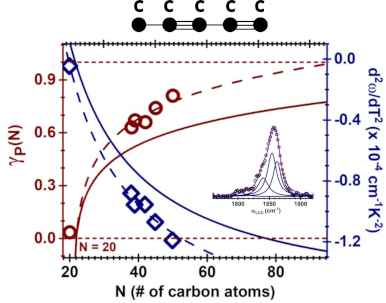
- the largest mechanical resistances among materials (including other carbon allotropic versions like graphene or nanotubes) [29][43][44][45][46][47][48][49], in addition to presenting unique conductive properties that place them ahead as ideal candidates for future developments in nanoelectronics [43


![[Graphic 23]](/bjnano/content/inline/2190-4286-16-125-i25.svg?max-width=637&scale=1.18182)
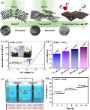
Electrical, photocatalytic, and sensory properties of graphene oxide and polyimide implanted with low- and medium-energy silver ions
Beilstein J. Nanotechnol. 2025, 16, 1794–1811, doi:10.3762/bjnano.16.123
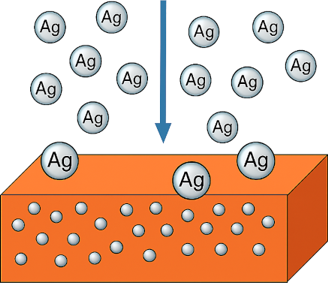
- , sensory, and photocatalytic properties of graphene oxide (GO) and polyimide (PI). Implantations were carried out with fluences ranging from 3.75 × 1012 cm−2 to 1 × 1016 cm−2. Silver ions offer excellent electrical, catalytic, and plasmonic characteristics, making them ideal for multifunctional enhancement
- multifunctional behavior of polymer systems. Keywords: ERDA; graphene oxide; ion implantation; photocatalysis; polyimide; RBS; Introduction Silver ion implantation is an effective strategy for controlling modification of the physicochemical properties of polymers and graphene-based materials. This method allows
- controlled modification of the electrical properties of dielectric and semiconducting materials [7]. When Ag ions are implanted into polymer substrates, such as polyimide (PI) or graphene oxide (GO), fundamental changes occur at the molecular and electronic levels, leading to a significant decrease in the


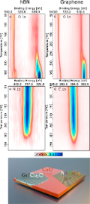
Ambient pressure XPS at MAX IV
Beilstein J. Nanotechnol. 2025, 16, 1677–1694, doi:10.3762/bjnano.16.118
- here. Instead, we focus on a study by Vesselli and co-workers that directly addresses catalytic activity in a biomimetic SAC system [20][21]. In their work, a cobalt single-atom biomimetic model catalyst is based on a self-assembled monolayer of Co-porphyrins grown on an almost free-standing graphene
- , often lowering activation energies and altering reaction pathways [23][24][25]. A particularly interesting case is “undercover catalysis”, where the void space between a 2D material and a catalytic surface is exploited. Materials such as graphene [26][27][28], hexagonal boron nitride (hBN) [29], and
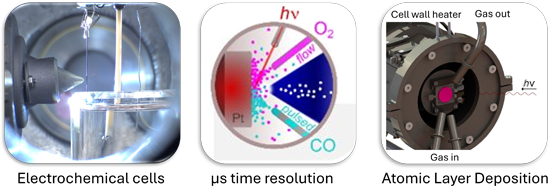
- transition metal dichalcogenides [30] are widely studied for this purpose. Boix, Knudsen and collaborators combined APXPS with gas pulsing with varied composition to repeatedly form and remove undercover reaction products. Specifically, they studied CO and H2 oxidation below oxygen-intercalated graphene





Nanotechnology-based approaches for the removal of microplastics from wastewater: a comprehensive review
Beilstein J. Nanotechnol. 2025, 16, 1607–1632, doi:10.3762/bjnano.16.114
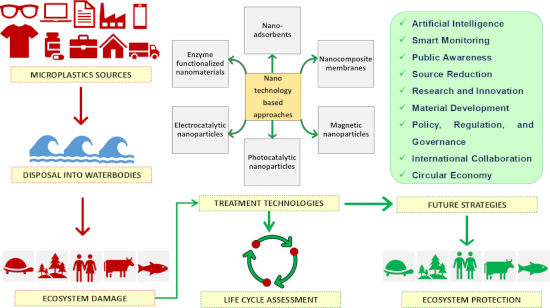
- , adaptability for functionalization and superior sorption capacity. Carbon materials with graphene-like structures, made up of sp2-hybridized carbon atoms, have gained considerable interest for their use in water treatment technologies. Their abundance of functional groups, expansive surface area, and inherent
- environmental conditions and across a wide pH range, making them reliable materials for pollutant removal [83]. Sun et al. [84] studied the removal of MPs from water using a sustainable adsorbent composed of graphene oxide and chitin. The elastic nature of the sponge retains its high porosity, enabling
- nanomaterials in membrane fabrication are zeolites, various metals and metal oxides, as well as carbon-based materials such as CNTs and graphene derivatives [86]. The nanomaterials that can be used membrane components for the removal of MPs are discussed in detail below. Metal-organic frameworks: Metal-organic


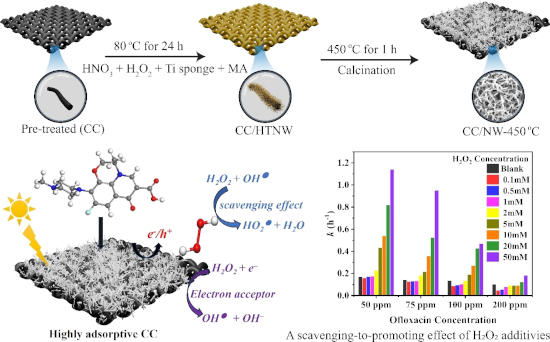
Photocatalytic degradation of ofloxacin in water assisted by TiO2 nanowires on carbon cloth: contributions of H2O2 addition and substrate absorbability
Beilstein J. Nanotechnol. 2025, 16, 1567–1579, doi:10.3762/bjnano.16.111
- on porous materials, such as carbon-based adsorbents. These innovations help to slow down electron–hole recombination, broaden light absorption, and enhance surface adsorption sites [11]. Cao et al. synthesized TiO2 nanowires on reduced graphene oxide (rGO) through a solvothermal method, which


Dendrimer-modified carbon nanotubes for the removal and recovery of heavy metal ions from water
Beilstein J. Nanotechnol. 2025, 16, 1522–1532, doi:10.3762/bjnano.16.107

- dendrimers on a solid support can also improve the dispersibility, accessibility of binding sites, chemical recyclability, and mechanical stability [16][17]. In fact, dendrimers have been supported by various nanomaterials such as silica, graphene oxide, and carbon nanotubes (CNTs), broadening their
- . Moreover, the applicability of Langmuir model confirms that the adsorption occurs on specific, identical sites of the CNTs-G5 surface (Figure 4c,d and Supporting Information File 1, Table S2). A recent study has observed multilayer adsorption in graphene/CNT-PAMAM hybrid materials [48], supported by


Nanomaterials for biomedical applications
Beilstein J. Nanotechnol. 2025, 16, 1499–1503, doi:10.3762/bjnano.16.105

- . Drugs or genetic material can be carried by these cylindrical nanoparticles and directed towards specific cells through external stimuli such as a magnetic field or light [12]. A new nanoscale drug delivery system has been developed by using carbon nanotubes and a carbon nanotube–graphene hybrid to more
- healthy tissues [33]. Scientists are also investigating carbon-based nanomaterials such as graphene and carbon nanotubes for different possible uses. Besides their great photothermal properties, these materials can be modified to specifically target tumor cells [34]. Additionally, photothermal
Laser processing in liquids: insights into nanocolloid generation and thin film integration for energy, photonic, and sensing applications
Beilstein J. Nanotechnol. 2025, 16, 1428–1498, doi:10.3762/bjnano.16.104
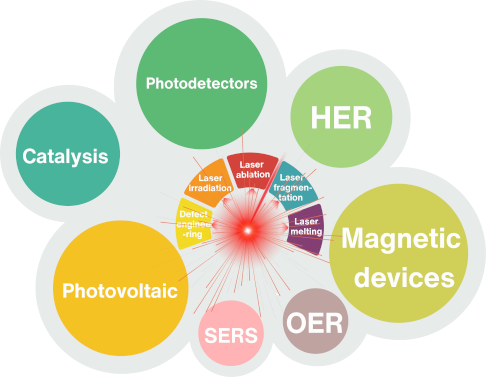
- study also delves into the preparation of novel nanomaterials like HfO2 NPs, few-layer graphene, and Cu/CuO/Fe3O4 composites using LAL, opening new avenues in both sensing and photonics. Looking ahead, studies focusing on the formation of functionalized nanostructures with tailored properties for
- CuPc films [105]. In order to fabricate a NP/graphene nanocomposite, drops of colloidal solutions from each samples were cast and spin-coated onto graphene substrates to obtain a “starry-sky” morphology, which can be used in fuel cells, sensors, catalysis, and electronic and optical devices [106
- ]. Nanostructured films of SnS and its hybrids with Si and graphene prepared by employing laser fragmentation and ablation in different solvents were reported for photodetector applications. While SnS and SnS–Si NPs had spherical morphology [104][107], in SnS–graphene, the layered nature of graphene was visible and






The role of biochar in combating microplastic pollution: a bibliometric analysis in environmental contexts
Beilstein J. Nanotechnol. 2025, 16, 1401–1416, doi:10.3762/bjnano.16.102
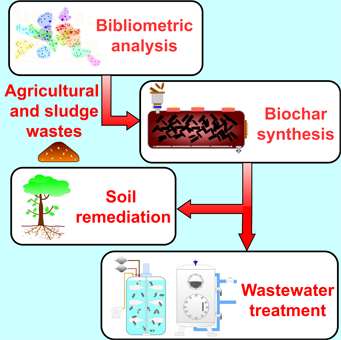
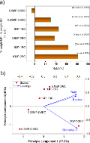
- . Additionally, three-dimensional graphene oxide has shown adsorption capacities of up to 617.28 mg·g−1 for polystyrene MPs of 5 µm in size [13][14]. The integration of adsorbents with appropriate treatment models has further enhanced removal efficiency. For instance, coal gasification slag-based adsorbents
- ] assessed different biosorbents, including biochar, sponge/aerogel biomass-derived materials, and biomass-based graphene materials, revealing that biochar exhibits comparable efficiency to sponge/aerogel biomass-derived materials. Furthermore, while MP-induced soil alterations have shown positive responses
- metal–O functional groups in adsorption [43]. In contrast, the adsorption kinetics of AZP show minimal differences between PFO and PSO models, suggesting a balanced contribution from its graphene-like structure and Al–O/Si–O functional groups. The mixed first- and second-order model achieves an R2 value



Synthesis and antibacterial properties of nanosilver-modified cellulose triacetate membranes for seawater desalination
Beilstein J. Nanotechnol. 2025, 16, 1380–1391, doi:10.3762/bjnano.16.100
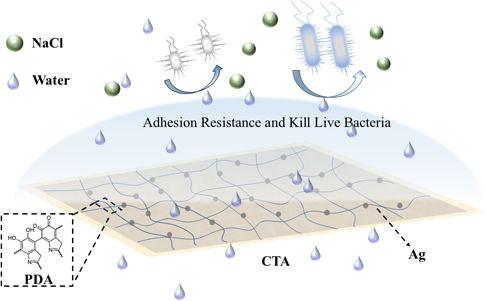
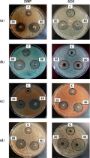
- , indicating the potential for repeated use and long-term application [21]. Zhao and Park’s group incorporated in situ synthesized silver-loaded graphene oxide (GO-Ag) nanoparticles into polyvinyl alcohol/chitosan (PVA/CS) electrospun nanofiber membranes to boost desalination performance. The PVA/CS/GO-Ag


Deep-learning recognition and tracking of individual nanotubes in low-contrast microscopy videos
Beilstein J. Nanotechnol. 2025, 16, 1316–1324, doi:10.3762/bjnano.16.96
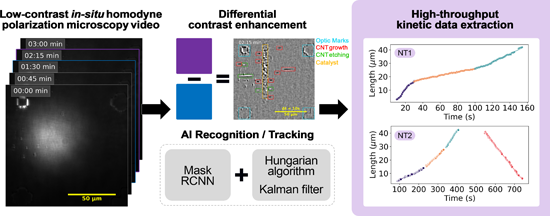
- situ imaging platforms for nanomaterials, such as environmental transmission electron microscopy (ETEM) of CNTs [31][33] and environmental scanning electron microscopy (ESEM) of graphene growth and etching processes [34]. Snapshots from (a) the raw video of carbon nanotube (CNT) synthesis on a stable


Better together: biomimetic nanomedicines for high performance tumor therapy
Beilstein J. Nanotechnol. 2025, 16, 1246–1276, doi:10.3762/bjnano.16.92
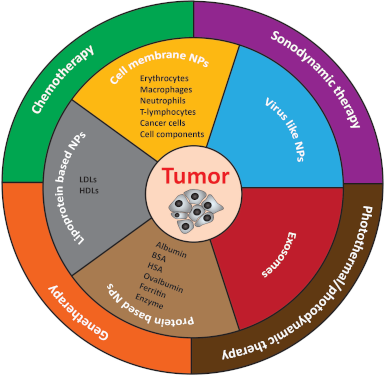
- , a ligand of transferrin receptor, and NGR peptide, a ligand of CD13 [127]. Dual modification with the peptides yielded the ability to overcome the BBB and target the glioma. In another study, RBC-covered graphene oxide quantum dots (GTDC@M) were investigated regarding the targeted therapy of


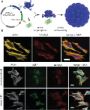



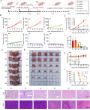

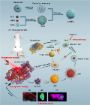

Functional bio-packaging enhanced with nanocellulose from rice straw and cinnamon essential oil Pickering emulsion for fruit preservation
Beilstein J. Nanotechnol. 2025, 16, 1234–1245, doi:10.3762/bjnano.16.91
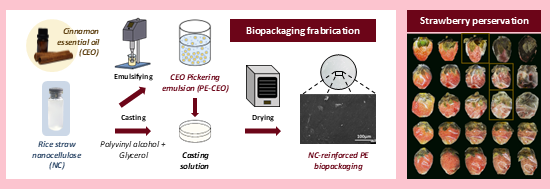
- degradation byproducts [8][9]. One problem is that the hydrophilic structure of PVA gives it a high water-solubility, water uptake, and worse mechanical properties [10][11]. Different filler and nanomaterials including silica [12][13][14], graphene [15][16], and metals [17][18] have been added to PVA to




Electronic and optical properties of chloropicrin adsorbed ZnS nanotubes: first principle analysis
Beilstein J. Nanotechnol. 2025, 16, 1184–1196, doi:10.3762/bjnano.16.87
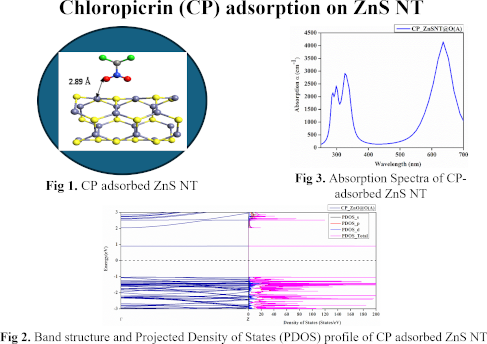
- . Semiconductor nanomaterials such as graphene, B12N12, fullerene C60, carbon nanotubes, WO₃, ZnO, ZnS, ZnSe, ZnTe, SnO₂, TiO₂, MoS₂, and NiO have been widely employed in gas sensor applications due to their superior selectivity, sensitivity, and response characteristics [20][21][22][23][24][25][26][27][28][29


Single-layer graphene oxide film grown on α-Al2O3(0001) for use as an adsorbent
Beilstein J. Nanotechnol. 2025, 16, 1082–1087, doi:10.3762/bjnano.16.79
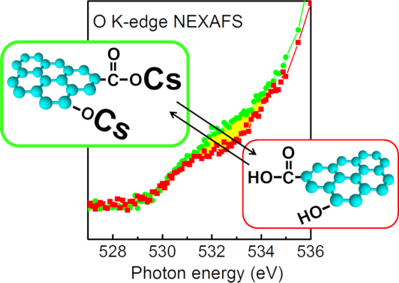
- , Ibaraki 319-1195, Japan College of Science and Engineering, Ritsumeikan University, Kusatsu, Shiga 525-8577, Japan School of Engineering, Tohoku University, Aoba-ku, Sendai 980-8579, Japan 10.3762/bjnano.16.79 Abstract Graphene oxide (GO) is expected to be one of the most promising adsorbents for metal
- ions, including radioactive nuclides in aqueous solutions. Large-area and single-layer graphene oxide (SLGO) grown on α-Al2O3(0001) was used as a model structure of GO since the aggregation and re-stacking of the GO sheets prevent the adequate analysis of the adsorption state. The SLGO film was
- obtained by oxidizing monolayer graphene grown by metal-free chemical vapor deposition on the α-Al2O3(0001) surface, and the adsorption state was determined by surface analytical techniques. It was clarified that Cs adsorbs on oxygen functional groups by substituting with H atoms from carboxyl and hydroxy


Piezoelectricity of hexagonal boron nitrides improves bone tissue generation as tested on osteoblasts
Beilstein J. Nanotechnol. 2025, 16, 1068–1081, doi:10.3762/bjnano.16.78
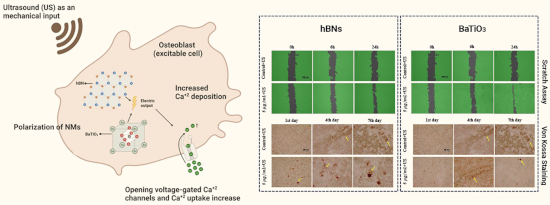
- -dimensional (2D) material, structurally similar to graphene, consisting of alternating boron and nitrogen atoms arranged in a hexagonal lattice. It is well known for its excellent thermal stability, electrical insulation, chemical inertness, and mechanical strength. Importantly, hBN exhibits piezoelectric


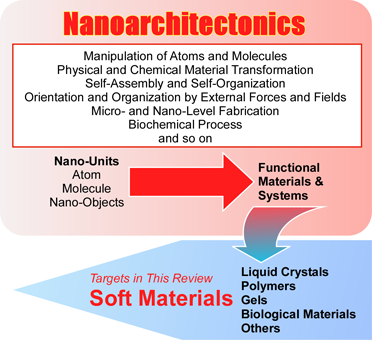
Soft materials nanoarchitectonics: liquid crystals, polymers, gels, biomaterials, and others
Beilstein J. Nanotechnol. 2025, 16, 1025–1067, doi:10.3762/bjnano.16.77






Structural and magnetic properties of microwave-synthesized reduced graphene oxide/VO2/Fe2O3 nanocomposite
Beilstein J. Nanotechnol. 2025, 16, 921–932, doi:10.3762/bjnano.16.70
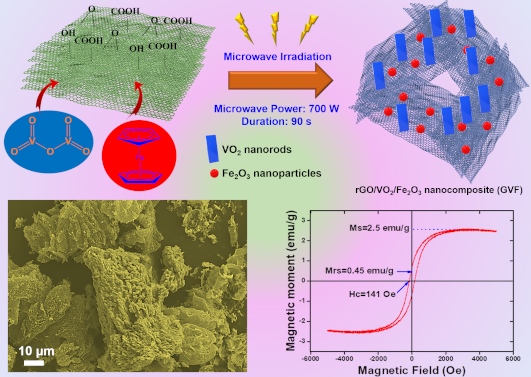
- Sumanta Sahoo Ankur Sood Sung Soo Han School of Chemical Engineering, Yeungnam University, 280 Daehak-ro, Gyeongsan 38541, South Korea 10.3762/bjnano.16.70 Abstract Reduced graphene oxide (rGO)-assisted microwave (MW) synthesis of metal-oxide-based binary and ternary nanocomposites has recently
- Fe2O3 nanoparticles and VO2 nanorods on the 2D rGO surface. Notably, the ternary composite displayed good magnetic properties for its potential biomedical applications. Overall, this work explores an efficient and cost-effective synthetic approach for developing graphene-based magnetic nanocomposites
- . Keywords: Fe2O3; magnetism; microwave irradiation; reduced graphene oxide; VO2; Introduction Graphene-based materials have been significantly explored in various fields of materials science due to their unique physical and chemical characteristics [1][2][3][4]. The special arrangement of carbon materials



Heat-induced transformation of nickel-coated polycrystalline diamond film studied in situ by XPS and NEXAFS
Beilstein J. Nanotechnol. 2025, 16, 887–898, doi:10.3762/bjnano.16.67
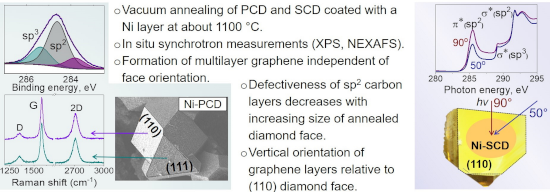
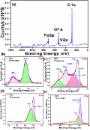
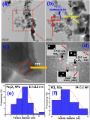
- producing hybrid materials which combine these two forms of carbon [1][2][3]. In particular, such graphene-on-diamond heterostructures have been shown to be attractive for power electronics [4][5], microelectronic devices [6][7], and detectors [7][8]. At room temperature and atmospheric pressure, carbon in
- diamond surfaces is initiated at 750 °C. A temperature of about 1500 °C is needed for the formation of extended graphene-like layers, and temperatures higher than 2000 °C are required for the complete conversion of the diamond (111) surface to graphitic layers [10][11]. Thermal stability of diamond
- coating of diamond surface with a metal catalyst has been explored to reduce the temperatures required for the initiation of the graphitization process. Nickel [17][18][19][20][21][22][23][24], iron [25][26][27][28], copper [29][30], gallium [31], and molybdenum [32] allow the fabrication of graphene-on


Synchrotron X-ray photoelectron spectroscopy study of sodium adsorption on vertically arranged MoS2 layers coated with pyrolytic carbon
Beilstein J. Nanotechnol. 2025, 16, 847–859, doi:10.3762/bjnano.16.64
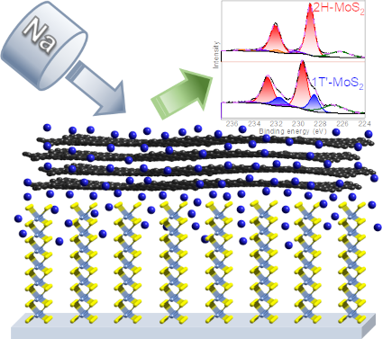
- interaction with MoS2 leads to the transformation of the original hexagonal structure into a distorted tetragonal one. Under the experimental conditions, sodium is unable to diffuse through the carbon film consisting of horizontally oriented graphene domains and is almost completely removed by annealing the
- sandwiched between MoS2 layers, the MoS2 component was not converted to Mo and Na2S even at a high degree of sodiation [18]. An ex situ study of a fully sodiated anode composed of MoS2 nanosheets coupled with few-layered graphene revealed a partial transformation of 2H-MoS2 into a distorted tetragonal
- structure without significant formation of Mo and Na2S [19]. The carbon coating improved the electrical contact between the MoS2 agglomerates, while the sandwich-like structure of MoS2-graphene facilitated the diffusion of sodium ions [20][21]. There are various possibilities to improve the properties of


Supramolecular hydration structure of graphene-based hydrogels: density functional theory, green chemistry and interface application
Beilstein J. Nanotechnol. 2025, 16, 806–822, doi:10.3762/bjnano.16.61
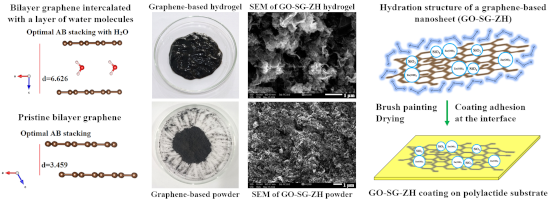
- play an essential role in the structure and function of biomolecules (deoxyribonucleic acid, protein, and phospholipid membrane). Hydration layers are also important to the structure and property of artificial graphene-based materials. Our recent works prove that graphene-based hydrogels are
- supramolecular hydration structures that preserve graphene nanosheets from the restacking through hydrophobic force, van der Waals force, and π–π interaction. In this manuscript, density functional theory and high-performance computing (HPC) are used for modeling and calculating van der Waals force between
- graphene nanosheets in water-intercalated AB bilayer graphene structures. A layer of water molecules significantly decreases the intersheet van der Waals force. A novel hydrogel of graphene oxide–silica gel–zinc hydroxide (GO-SG-ZH) is experimentally synthesized to demonstrate the advantages of hydrated


Colloidal few layered graphene–tannic acid preserves the biocompatibility of periodontal ligament cells
Beilstein J. Nanotechnol. 2025, 16, 664–677, doi:10.3762/bjnano.16.51
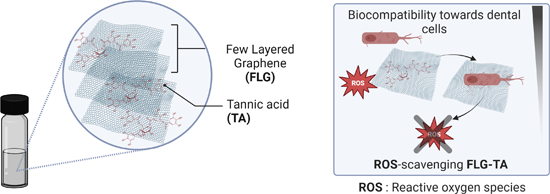
- . In this context, the incorporation of graphene-based materials into dental biomaterials could offer advantages such as increased mechanical strength. Nevertheless, biocompatibility issues still hinder their adoption. In this study, a biocomposite of few-layered graphene and tannic acid (FLG–TA) was
- ; biocompatibility; dental applications; few layered graphene–tannic acid biocomposite (FLG–TA); periodontal ligament cells (PDL); Introduction Dental diseases remain a global health challenge [1]. Dental biomaterials are crucial in both therapeutic and preventive strategies, with nanotechnology emerging as a
- transformative approach to enhance their efficacy [2]. Actually, incorporating nanomaterials into dental biomaterials has already offered advantages like enhanced tissue regeneration, increased mechanical strength of composites, and improved sealing of filler materials [3]. Graphene-based materials (GBMs) stand




Focused ion and electron beams for synthesis and characterization of nanomaterials
Beilstein J. Nanotechnol. 2025, 16, 613–616, doi:10.3762/bjnano.16.47
- effects noted in water-assisted graphene etching [11]. While controlling the purity of deposits appears more straightforward, achieving precise nanoscale shapes remains challenging, particularly when structures are fabricated in close proximity. Experimental results demonstrate that FEBID, followed by

Polyurethane/silk fibroin-based electrospun membranes for wound healing and skin substitute applications
Beilstein J. Nanotechnol. 2025, 16, 591–612, doi:10.3762/bjnano.16.46
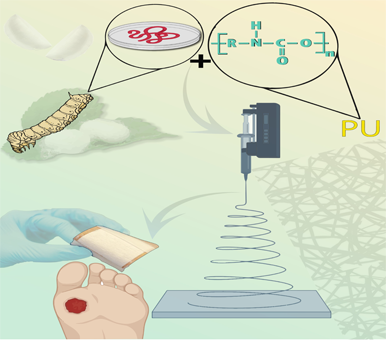
- design offers a large surface area. They are biocompatible, lowering the possibility of negative immune responses, and are adaptable to the use as films, gels, or scaffolds for different kinds of wounds [169]. Materials such as gold nanoparticles, graphene oxide, and silicon nanostructures are frequently



Feasibility analysis of carbon nanofiber synthesis and morphology control using a LPG premixed flame
Beilstein J. Nanotechnol. 2025, 16, 581–590, doi:10.3762/bjnano.16.45
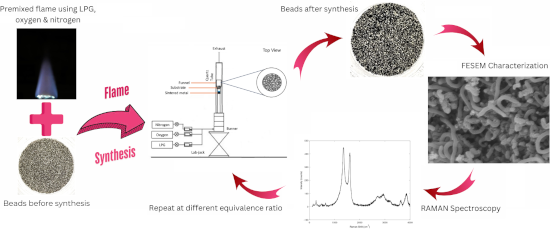
- , with the primary distinction between CNTs and CNFs being the arrangement of graphene layers. CNFs have a cylindrical or conical structure, with their diameter varying from a few to several hundred nanometers [4]. In CNFs, carbon atoms form covalent bonds, resulting in a three-dimensional hexagonal
- graphene sheath. These nanofibers can have three different structural configurations including herringbone, tubular, and platelet configurations [4][5]. A premixed flame of liquefied petroleum gas (LPG) can be used as a fuel source for carbon nanomaterial growth processes. A premixed flame is a specific