Search results
Search for "graphene oxide (GO)" in Full Text gives 85 result(s) in Beilstein Journal of Nanotechnology.
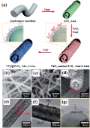
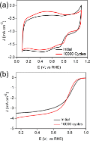
Evaluation of electrosynthesized reduced graphene oxide–Ni/Fe/Co-based (oxy)hydroxide catalysts towards the oxygen evolution reaction
Beilstein J. Nanotechnol. 2023, 14, 420–433, doi:10.3762/bjnano.14.34
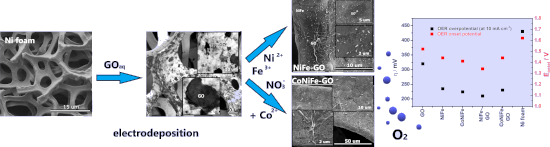
- Cracow, Poland 10.3762/bjnano.14.34 Abstract In this work, the specific role of the addition of graphene oxide (GO) to state-of-the-art nickel–iron (NiFe) and cobalt–nickel–iron (CoNiFe) mixed oxides/hydroxides towards the oxygen evolution reaction (OER) is investigated. Morphology, structure, and OER
- different kinds of conductive carbon materials [14][15][16][17][18]. Recently, graphene (Gr)/graphene oxide (GO) has attracted the attention of many researchers due to its high surface area, significant chemical stability, high electrical conductivity, and high mechanical strength [12][19]. Combining a




Design of surface nanostructures for chirality sensing based on quartz crystal microbalance
Beilstein J. Nanotechnol. 2022, 13, 1201–1219, doi:10.3762/bjnano.13.100
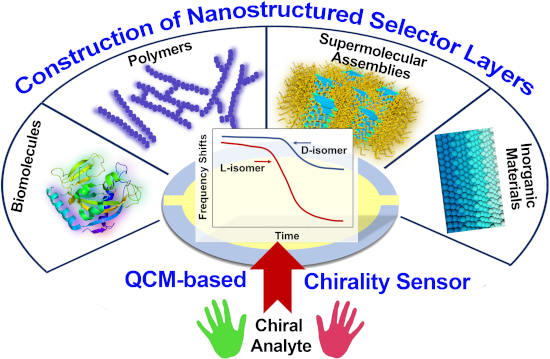
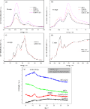
- , is the main cause of neurodegenerative diseases. Qing et al. used a chiral cysteine- (L/R-Cys) modified graphene oxide (GO) to study the chirality of the aggregation process of the chiral amyloid β-protein(1-40) (Aβ(1-40)) [152]. The adsorption behaviors of Aβ(1–40) monomers and oligomers by QCM


Application of nanoarchitectonics in moist-electric generation
Beilstein J. Nanotechnol. 2022, 13, 1185–1200, doi:10.3762/bjnano.13.99
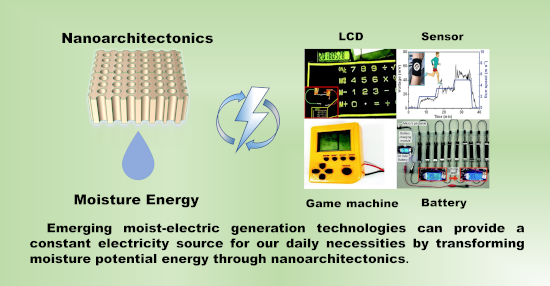
- hygroscopic graphene oxide (GO) [61][62][63][64][65]. As shown in Figure 5, when the graphene oxide bulk material with a certain thickness is irradiated by a laser, the laser intensity inside the graphene is gradually attenuated, so that the oxygen-containing functional groups and carbon atom concentration of


Electrocatalytic oxygen reduction activity of AgCoCu oxides on reduced graphene oxide in alkaline media
Beilstein J. Nanotechnol. 2022, 13, 1020–1029, doi:10.3762/bjnano.13.89
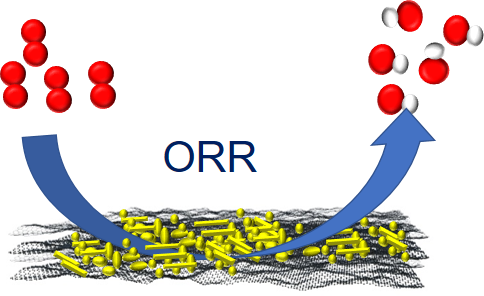
- electrocatalyst. Results and Discussion The microwave-assisted one-pot synthesis connecting graphene oxide (GO) nanosheets with bi- and trimetallic precursors under alkaline conditions is presented in Figure 1. GO serves as functional network and conducting matrix, while PVP acts as structure-directing agent


A nonenzymatic reduced graphene oxide-based nanosensor for parathion
Beilstein J. Nanotechnol. 2022, 13, 730–744, doi:10.3762/bjnano.13.65
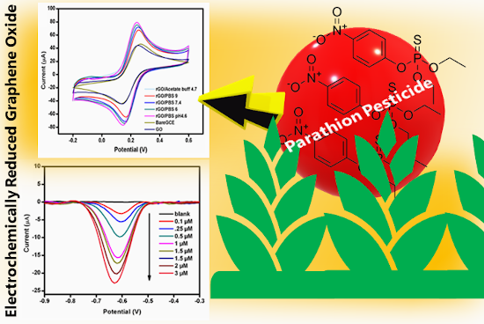
- detection limit and long-term stability at room temperature. Graphene oxide (GO), consisting of a monolayer of sp2-hybridized carbon atom network, has already been used in electrocatalysis, nanoelectronics, bionanosensors, and sustainable energy storage systems due to its larger active surface area


Reliable fabrication of transparent conducting films by cascade centrifugation and Langmuir–Blodgett deposition of electrochemically exfoliated graphene
Beilstein J. Nanotechnol. 2022, 13, 666–674, doi:10.3762/bjnano.13.58
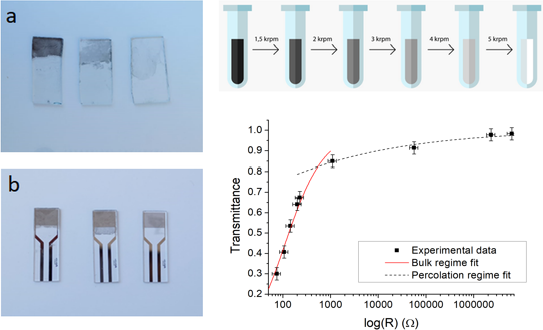
- ) [3][4][5][6][7], epitaxial growth on different substrates [8][9], and the chemical reduction of graphene oxide (GO) [10][11]. In 2008, production of graphene by liquid-phase exfoliation (LPE) of graphite through sonication of graphite powder in N-methylpyrrolidone (NMP) was first proposed by Coleman


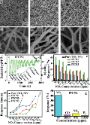
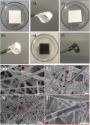
A comprehensive review on electrospun nanohybrid membranes for wastewater treatment
Beilstein J. Nanotechnol. 2022, 13, 137–159, doi:10.3762/bjnano.13.10
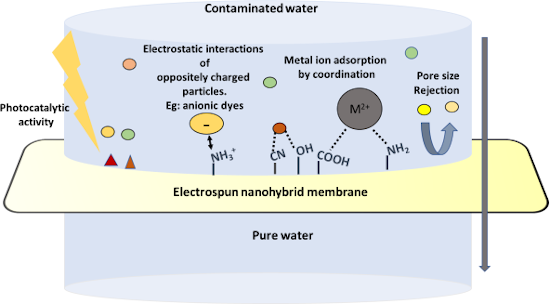
- alone [12]. In addition, ENHs have been utilized in energy applications as well. Zhang et al. developed a graphene oxide (GO)-based nanohybrid Nafion nanofiber as a proton-exchange membrane (PEM) for fuel cells to overcome low proton conductivity, high fuel permeability, and poor stability of




Toward graphene textiles in wearable eye tracking systems for human–machine interaction
Beilstein J. Nanotechnol. 2021, 12, 180–189, doi:10.3762/bjnano.12.14
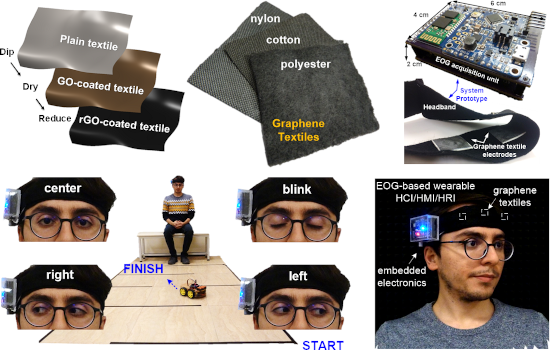
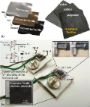
- , cotton, and Kevlar (Figure 1a). The textiles were first dipped into graphene oxide (GO) suspension prepared by the modified Hummer’s method, dried to allow for the layering of GO on the textiles, treated by reducing agents (e.g., hydrazine or hydrogen iodide), and rinsed with distilled water to form a


Paper-based triboelectric nanogenerators and their applications: a review
Beilstein J. Nanotechnol. 2021, 12, 151–171, doi:10.3762/bjnano.12.12
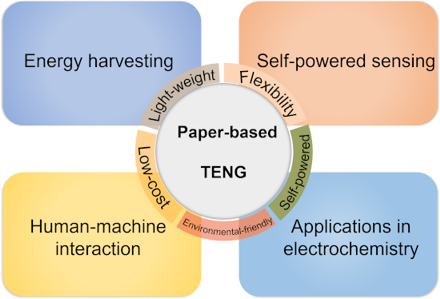
- (e.g., humidity and height sensors) have been rarely reported. Recently, Ejehi et al. proposed a self-powered humidity sensor based on a graphene oxide (GO) paper-based TENG [151], which showed an outstanding power density as high as 1.3 W·m−2, a Voc of up to 870 V and a Isc of 1.4 µA·cm−2. GO was






A few-layer graphene/chlorin e6 hybrid nanomaterial and its application in photodynamic therapy against Candida albicans
Beilstein J. Nanotechnol. 2020, 11, 1054–1061, doi:10.3762/bjnano.11.90
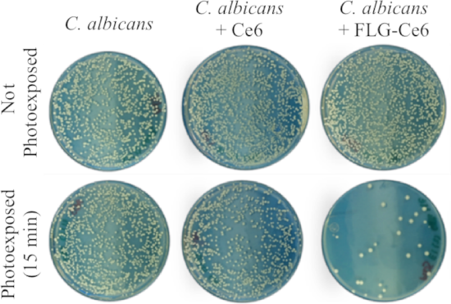
- , due to their excellent physical and chemical properties (e.g., high surface area, excellent thermal and electric conductivity, high mechanical strength)[19][20][21]. Examples of graphene nanomaterials include single-layer graphene, few-layer graphene (FLG), graphene oxide (GO), and the reduced form of
- for the stabilization of FLG and graphene oxide (GO). During the exfoliation of GO, the band at 700 nm was not observed since the conjugated system of π-electrons is highly compromised by the large amount of oxygen functionalities present in GO. The π–π stacking interactions between Ce6 and GO are


Multilayer capsules made of weak polyelectrolytes: a review on the preparation, functionalization and applications in drug delivery
Beilstein J. Nanotechnol. 2020, 11, 508–532, doi:10.3762/bjnano.11.41
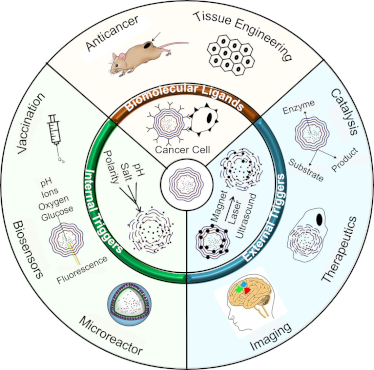
- CNTs ruptured upon laser light irradiation [115]. The introduction of graphene oxide (GO) nanosheets with PDDA as multilayers caused the migration and rearrangement of chains compared to PDDA/PAA multilayers [116]. The PDDA/GO multilayers showed improved resistance to damage and maintained a defect



Electrochemically derived functionalized graphene for bulk production of hydrogen peroxide
Beilstein J. Nanotechnol. 2020, 11, 432–442, doi:10.3762/bjnano.11.34
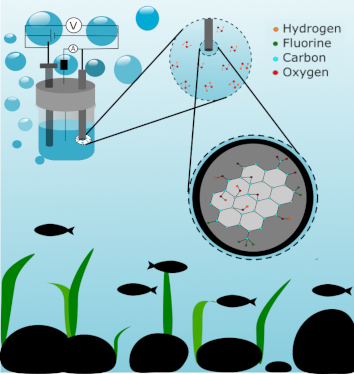
- charge transfer properties of functionalized graphene (graphene oxide (GO) or other functional derivatives of graphene) [41]. Hence the single-step method for the production of large scale, controllably functionalized graphene is of high demand, and in this work, we demonstrate such a method to control


Simple synthesis of nanosheets of rGO and nitrogenated rGO
Beilstein J. Nanotechnol. 2020, 11, 68–75, doi:10.3762/bjnano.11.7
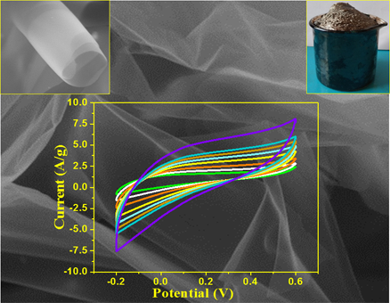
- its discovery [1][2]. It is a fascinating material used in various applications owing to its excellent electrical, optical, mechanical and thermal properties [3][4][5]. It has a unique electronic structure with a linear dispersion of Dirac electrons. Graphene oxide (GO) and reduced graphene oxide (rGO


Synthesis of amorphous and graphitized porous nitrogen-doped carbon spheres as oxygen reduction reaction catalysts
Beilstein J. Nanotechnol. 2020, 11, 1–15, doi:10.3762/bjnano.11.1
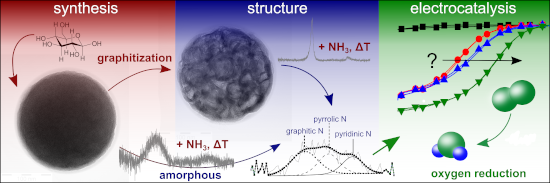
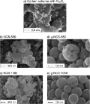
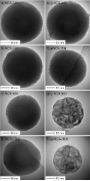
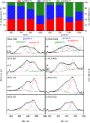
- . Annealing graphene oxide (GO) in an ammonia atmosphere at 550 °C led to pyridinic N-doped graphene, while at a temperature of 850 °C graphitic nitrogen coexisted with pyridinic nitrogen, and for higher temperatures the amount of graphitic N increased. Annealing GO at 850 °C in the presence of polyaniline or




Synthesis and acetone sensing properties of ZnFe2O4/rGO gas sensors
Beilstein J. Nanotechnol. 2019, 10, 2516–2526, doi:10.3762/bjnano.10.242
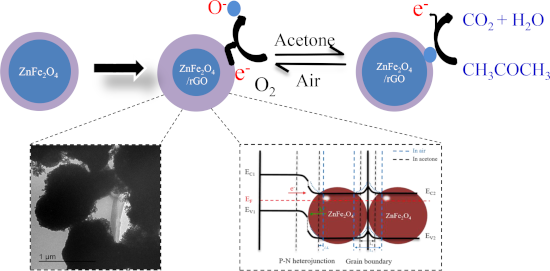
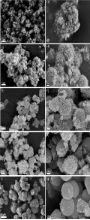
- -layer graphene oxide (GO) particles with average diameters of less than 500 nm and thicknesses of 0.8–1.2 nm (purity: 99%, concentration: 0.5 mg/mL) was purchased from Nanjing XFNANO Materials Technology Co., Ltd (Nanjing, China). Isopropanol (analytical degree) was obtained from Jiangsu Qiangsheng




Multiwalled carbon nanotube based aromatic volatile organic compound sensor: sensitivity enhancement through 1-hexadecanethiol functionalisation
Beilstein J. Nanotechnol. 2019, 10, 2364–2373, doi:10.3762/bjnano.10.227
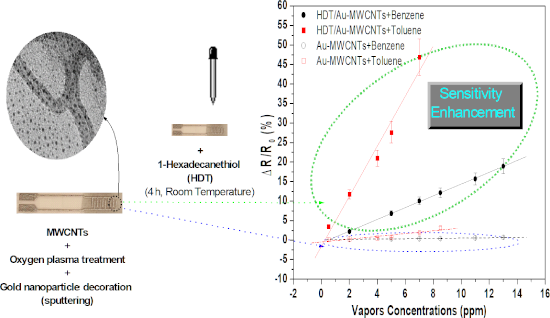
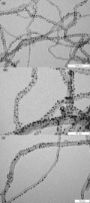
- ., single-wall carbon nanotube (SWCNT), multiwall carbon nanotube (MWCNT), graphene, graphene oxide (GO)) present a sensitive active layer exhibiting an electrical resistance change while in contact with the target gas due to interactions at the molecular level [7][8]. These interactions, depending whether




Ultrathin Ni1−xCoxS2 nanoflakes as high energy density electrode materials for asymmetric supercapacitors
Beilstein J. Nanotechnol. 2019, 10, 2207–2216, doi:10.3762/bjnano.10.213
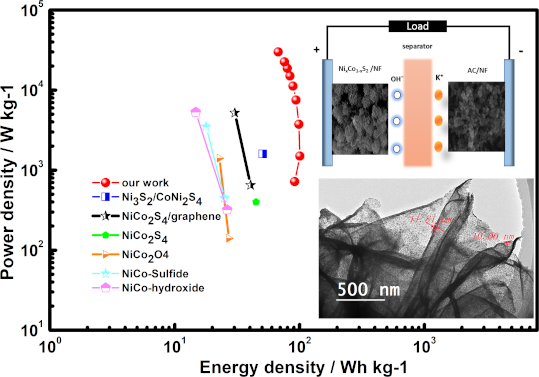
- graphene, graphene oxide (GO) or carbon nanotubes (CNTs) in order to improve the charge–discharge process stability [11][12][13]. There are limited reports regarding a comparison of the intrinsic performance between these Ni–Co chalcogenides materials. Even pure Ni–Co chalcogenide nanomaterials have been


TiO2/GO-coated functional separator to suppress polysulfide migration in lithium–sulfur batteries
Beilstein J. Nanotechnol. 2019, 10, 1726–1736, doi:10.3762/bjnano.10.168
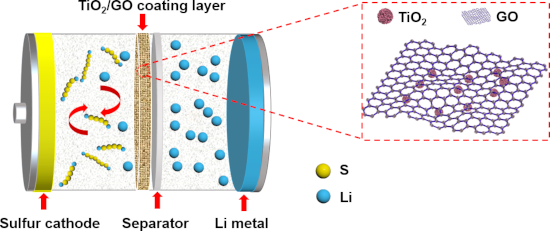
- but suffer from poor cyclic performance due to the dissolution of intermediate polysulfides. Herein, a lightweight nanoporous TiO2 and graphene oxide (GO) composite is prepared and utilized as an interlayer between a Li anode and a sulfur cathode to suppress the polysulfide migration and improve the
- effect and the Li/S batteries with these functional interlayers deliver high gravimetric energy density and superior cyclic performance. Two-dimensional graphene oxide (GO) has excellent thermal stability, an ultrahigh specific surface area, and good electrical conductivity. The polysulfide shuttle can
- (DI) water (18.2 MΩ cm) and ethyl alcohol. Then, the powder was vacuum dried (−0.08 MPa) for 8 h. To synthesize the TiO2/GO composites, 1 g of nanoporous TiO2 (≈40 nm) and 100 mL of graphene oxide (GO) solution were dispersed into 100 mL of deionized water and ultrasonically mixed for 2 h, followed by


The systemic effect of PEG-nGO-induced oxidative stress in vivo in a rodent model
Beilstein J. Nanotechnol. 2019, 10, 901–911, doi:10.3762/bjnano.10.91
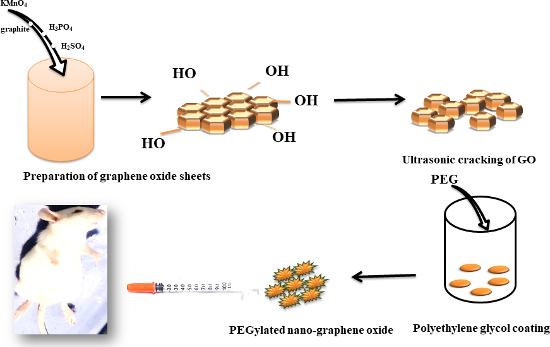
- restricts its use for biomedical applications. Scientists have overcome this challenge through the oxidation of graphene by an improved Hummer’s method [3]. Graphene oxide (GO), due to its hydrophilic nature, can host a large number of biocompatible polymers, such as chitosan [4], polyethylene glycol (PEG
- ′-dithiobis(2-nitrobenzoic acid), DTNB], and TCA were used to examine the reduced glutathione level, and CDNB (1-chloro-2,4-dinitrobenzene), and glutathione were used to measure GST activity. Graphene oxide synthesis Highly oxidized sheets of graphene oxide (GO) were synthesized by an improved Hummer’s method


A porous 3D-RGO@MWCNT hybrid material as Li–S battery cathode
Beilstein J. Nanotechnol. 2019, 10, 514–521, doi:10.3762/bjnano.10.52
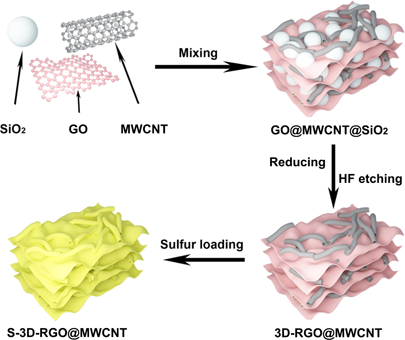
- of 3D-RGO@MWCNT composite The synthesis of 3D-RGO@MWCNT composite consists of the following steps: i) the preparation of monodispersed SiO2 spherical particles using Stober’s method [30]; ii) the preparation of graphene oxide (GO) using Hummers method [31]; iii) the incorporation of MWCNTs; iv) the



Scanning probe microscopy for energy-related materials
Beilstein J. Nanotechnol. 2019, 10, 132–134, doi:10.3762/bjnano.10.12

- individual graphene oxide sheets” by Yue Shen and co-workers. Yue Shen won the prize for the best presentation during the E-MRS conference [12]. Electrostatic force spectroscopy (EFS) is used here to characterize the degree of reduction of uniformly reduced one-atom-thick graphene oxide (GO) sheets at the
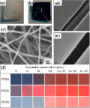
Threshold voltage decrease in a thermotropic nematic liquid crystal doped with graphene oxide flakes
Beilstein J. Nanotechnol. 2019, 10, 71–78, doi:10.3762/bjnano.10.7
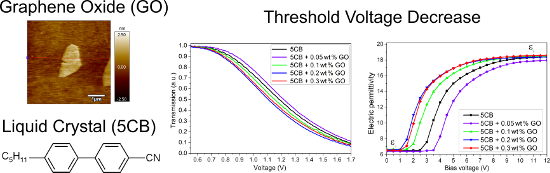
- /bjnano.10.7 Abstract We report a threshold voltage decrease in a nematic liquid crystal compound, 4-cyano-4′-pentylbiphenyl (5CB), doped with graphene oxide (GO) flakes at a concentration of 0.05–0.3 wt %. The threshold voltage decrease was observed at the same concentration in electro-optic and
- elastic constant [19][20][21]. In this work, we discuss our approach in reducing the threshold voltage by using graphene oxide (GO) flakes. The extraordinary properties of GO make this material a good candidate for this purpose. GO is an oxidized form of graphene [22][23][24]. In GO, carbon atoms are
- K11, electric anisotropy Δε, switch-on τON and switch-off τOFF times and their dependence on the concentration of the GO flakes. Materials and Methods Graphene oxide (GO) flakes dispersed in water were obtained from natural graphite by the modified Hummers’ method [29][30] in the Department of



Ternary nanocomposites of reduced graphene oxide, polyaniline and hexaniobate: hierarchical architecture and high polaron formation
Beilstein J. Nanotechnol. 2018, 9, 2936–2946, doi:10.3762/bjnano.9.272
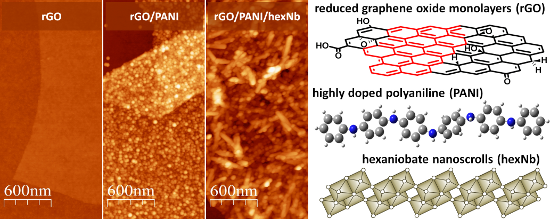
- [10][11]. Graphene oxide (GO) is a graphene derivative that has also attracted great scientific interest due to its better processability and scalable production in comparison with pristine graphene [12]. The great chemical versatility of GO is mostly attributed to its complex structure, composed of


Graphene-enhanced metal oxide gas sensors at room temperature: a review
Beilstein J. Nanotechnol. 2018, 9, 2832–2844, doi:10.3762/bjnano.9.264
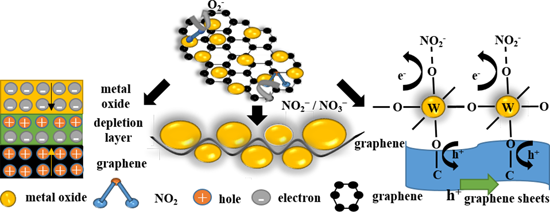
- for semiconductor gas sensors [6]. Graphene oxide (GO), as a derivative of graphene, is prepared via the oxidation of graphene. Epoxy groups, hydroxy groups and defects are produced at the surface when oxidizing graphene [7][8][9][10]. These variations will alter the electronic structure of graphene



Electrospun one-dimensional nanostructures: a new horizon for gas sensing materials
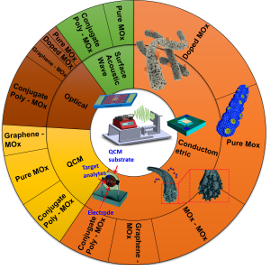
Beilstein J. Nanotechnol. 2018, 9, 2128–2170, doi:10.3762/bjnano.9.202
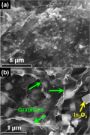
- polyurethane (PU) nanofibers using electrospinning [64]. These nanoparticles embedded in polymer nanofibers could be promising materials for room temperature gas sensing. Furthermore, graphene oxide (GO) sheets have also been incorporated with electrospun polyacrylonitrile (PAN) fibers [65][66][67]. The fibers