Search results
Search for "heavy metal" in Full Text gives 51 result(s) in Beilstein Journal of Nanotechnology.
Nanoporous and nonporous conjugated donor–acceptor polymer semiconductors for photocatalytic hydrogen production
Beilstein J. Nanotechnol. 2021, 12, 607–623, doi:10.3762/bjnano.12.50

- are primarily inorganic materials, such as metal oxides and sulfides [5]. Inorganic photocatalysts, however, have some inherent drawbacks. Harsh synthetic conditions, such as high pressure and temperature, are required [5]. Moreover, many reported inorganic photocatalysts contain heavy metal elements





A review on the green and sustainable synthesis of silver nanoparticles and one-dimensional silver nanostructures
Beilstein J. Nanotechnol. 2021, 12, 102–136, doi:10.3762/bjnano.12.9
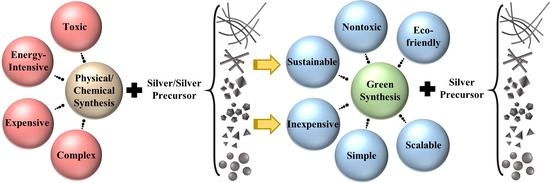
- ]. A variety of plants such as Noccaea caerulescens, Pteris vittata, and Sedum plumbizincicola were previously demonstrated to have substantial heavy-metal detoxification capability [310][311][312]. One of the most significant factors in the detoxification process is the redox potential [313], which is


Bio-imaging with the helium-ion microscope: A review
Beilstein J. Nanotechnol. 2021, 12, 1–23, doi:10.3762/bjnano.12.1

- range of applications to thin sections, similar to the transmission option in SEMs. In combination with the well-established heavy-metal staining techniques used in transmission electron microscopy (TEM), this would allow for ultrastructural research comparable to standard TEM. SRIM [57] simulations


Ultrasensitive detection of cadmium ions using a microcantilever-based piezoresistive sensor for groundwater
Beilstein J. Nanotechnol. 2020, 11, 1242–1253, doi:10.3762/bjnano.11.108
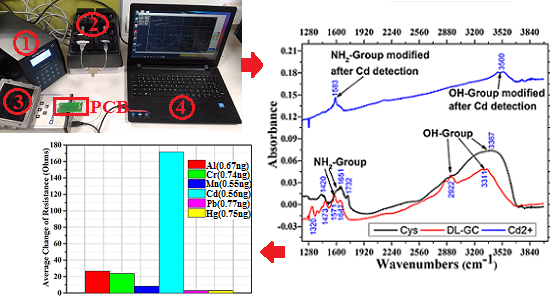
- with a limit of detection (LOD) of 0.56 ng (2.78 pM), which perfectly describes its excellent performance over other reported techniques. Many researchers used nanoparticle-based sensors for the detection of heavy metal ions, but daily increasing usage and commercialization of nanoparticles are rapidly
- the WHO limit of 3 μg/L. Keywords: BioMEMS; heavy metal ions (HMIs); limit of detection (LOD); microcantilevers; microfluidics; micro-electromechanical systems (MEMS); piezoresistive sensors; SAM (self-assembled monolayers); World Health Organization (WHO); Introduction Water is fundamentally
- , cement manufacturing units, electroplating industry, manufacturing units of PVC, Ni–Cd batteries, fertilizers, pesticides, photovoltaic devices, soil, and sediments. Cadmium is a highly toxic heavy metal ion (HMI). Cadmium poisoning may cause fatigue, headaches, nausea, vomiting, abdominal cramps, bone







Tailoring the stability/aggregation of one-dimensional TiO2(B)/titanate nanowires using surfactants
Beilstein J. Nanotechnol. 2019, 10, 1024–1037, doi:10.3762/bjnano.10.103
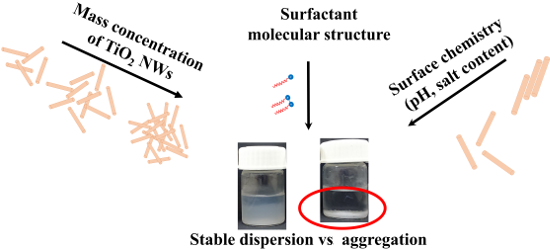
- because of their unique physicochemical properties compared to the bulk material. TNMs play an important role in various applications such as photocatalytic degradation of organic pollutants [1][2], sensors [3][4], solid oxide fuel cells [5], water purification [6][7], adsorption of radioactive and heavy
- metal ions [8], as well as antibacterial applications [9]. Their various applications can be divided into “energy” and “environment” related categories. Many of these applications as well as TNM interactions in the environment depend on their properties and modifications [10]. Therefore, increased


Removal of toxic heavy metals from river water samples using a porous silica surface modified with a new β-ketoenolic host
Beilstein J. Nanotechnol. 2019, 10, 262–273, doi:10.3762/bjnano.10.25
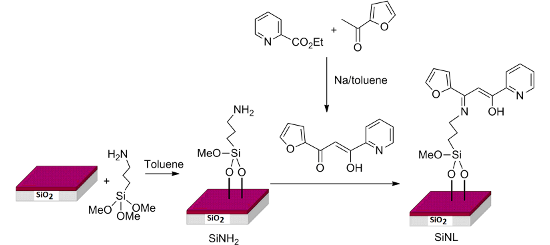
- silica; remediation; Introduction Nowadays, pollution by a large number of heavy metals in water sources is commonly observed due the constant economical growth of our modern society. This environmental issue is being seriously considered by different circles [1][2], given that heavy metal ions are
- coordination complexes with most transition metals [41][42]. The incorporation at the surface silica of a β-ketoenol group thus affords these hybrids the capacity to retain heavy metal ions. The group of C. Sanchez has prepared some mesoporous thin films functionalized with silylated β-ketoenol compounds as
- affinity and adsorption capacity for toxic heavy metal detection with less equilibrium time, a discovery that has significant environmental issues. Parameters that may improve the retention effectiveness of the metal ions have also been studied. The system was used for the confinement of lead, cadmium


New micro/mesoporous nanocomposite material from low-cost sources for the efficient removal of aromatic and pathogenic pollutants from water
Beilstein J. Nanotechnol. 2019, 10, 119–131, doi:10.3762/bjnano.10.11
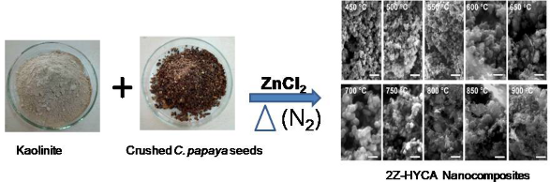
- reduce cost while maintaining the functionality of the material is the use of kaolinite as a cheap yet functional component. Indeed, kaolinite-based materials are efficient materials for the desulphurization of crude oil and heavy metal removal from aqueous media [9][10][11][12][13][14]. Although
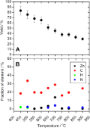
- desirable from a heavy metal pollution point of view; however, the introduction of zinc significantly enhances the performance of the original HYCA materials for remediation of these pollutants in water. As such, and because the Zinc concentration leached into treated water from the 2Z-HYCA nanocomposite




Nanocellulose: Recent advances and its prospects in environmental remediation
Beilstein J. Nanotechnol. 2018, 9, 2479–2498, doi:10.3762/bjnano.9.232

- been used to fabricate catalysts for the reduction of 4-nitrophenol [52] and microfiltration membranes for bacteria, virus, and heavy metal ion removal [53]. In addition, bleached birch fibres from Betula verrucosa and B. pendula were also investigated in a study led by Suopajärvi et al. [54] to


ZnO-nanostructure-based electrochemical sensor: Effect of nanostructure morphology on the sensing of heavy metal ions
Beilstein J. Nanotechnol. 2018, 9, 2421–2431, doi:10.3762/bjnano.9.227
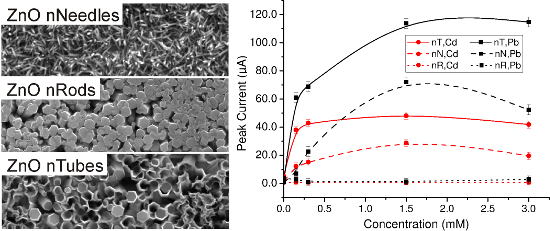
- nanostructures are promising candidates for use in sensors, especially in electrochemical sensors and biosensors, due to their unique physical and chemical properties, as well as sensitivity and selectivity to several types of contamination, including heavy metal ions. In this work, using the hydrothermal method
- sensitivity in detecting lead ions compared to cadmium ions. Keywords: cadmium; electrochemical sensors; heavy metal ions; lead; one-dimensional nanostructures; ZnO; Introduction Today, due to the rapid growth of industry and transport, the issues of environmental pollution by heavy metals, particularly by
- lead, mercury, cadmium and cobalt, are becoming more and more topical. Many metals form stable organic compounds that dissolve well in water and result in the migration of heavy metal ions in aquatic and terrestrial systems, thereby resulting in high levels of contamination [1][2]. Lead is one of the


Influence of the thickness of an antiferromagnetic IrMn layer on the static and dynamic magnetization of weakly coupled CoFeB/IrMn/CoFeB trilayers
Beilstein J. Nanotechnol. 2018, 9, 2198–2208, doi:10.3762/bjnano.9.206
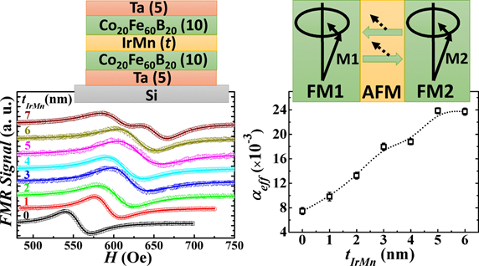
- . There are theoretical studies that suggest the possibility of manipulating the AF moment by spin transfer torque [12][13][14]. Only recently, FM/AF (NiO, IrMn)/heavy metal heterostructures have been extensively studied to demonstrate the efficient spin current transfer across the AF layer mediated by AF


Cr(VI) remediation from aqueous environment through modified-TiO2-mediated photocatalytic reduction
Beilstein J. Nanotechnol. 2018, 9, 1448–1470, doi:10.3762/bjnano.9.137

- their extraction. Hence, removal of toxic heavy metal ions from wastewater is considered as one of the most important environmental issues worldwide. Among the toxic heavy metals, chromium has been a major environmental concern in wastewater treatment. It exists in various oxidation states starting from
- chemical synthesis Photocatalytic, selective, organic transformations are currently preferred over the conventional processes for synthesis of fine chemicals basically due to two reasons. The first one is to restrict the use of environmentally detrimental chemical reagents such as heavy metal catalysts
- for degradation of pollutants was first applied by Frank and Bard in 1977 to reduce CN− in water [57][58]. Thereafter, significant research on photocatalytic degradation of hazardous organic compounds and reduction of toxic heavy metal ions (Cr(VI)) was carried out over various semiconductors upon


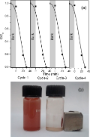

Colorimetric detection of Cu2+ based on the formation of peptide–copper complexes on silver nanoparticle surfaces
Beilstein J. Nanotechnol. 2018, 9, 1414–1422, doi:10.3762/bjnano.9.134
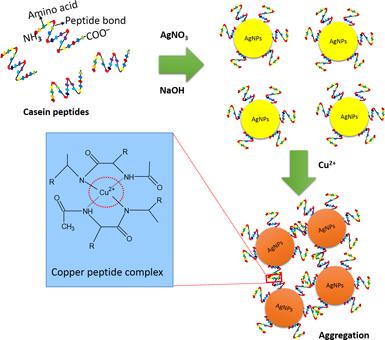
- present above certain concentrations [1]. Copper is a widely distributed heavy metal in water bodies, as a result of direct dumping of industrial and mining waste and electronic waste [2][3]. Cu2+ has been used excessively in the form of copper sulfate and copper hydroxide as a fungicide, algaecide, and


Heavy-metal detectors based on modified ferrite nanoparticles
Beilstein J. Nanotechnol. 2018, 9, 762–770, doi:10.3762/bjnano.9.69
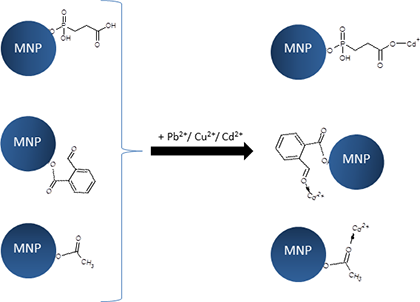
- Abstract In this work, we analyze artificial heavy-metal solutions with ferrite nanoparticles. Measurements of adsorption effectiveness of different kinds of particles, pure magnetite or magnetite doped with calcium, cobalt, manganese, or nickel ions, were carried out. A dependence of the adsorption
- Mn0.5Fe2.5O4 was selected for discussion. The highest heavy-metal adsorption capability and universality was observed for SA as a surface modifier. Keywords: ferrite nanoparticles; heavy metal detection; materials characterization; water purification; Introduction Many research reports show that magnetic
- damage. Changing the package color informs that food is not suitable for consumption because either its expiry date passed or packed edibles started to emit harmful compounds [9]. Recent studies show that nanoparticles can be widely used as heavy-metal detectors. Among others, silver [10][11], gold [12


L-Lysine-grafted graphene oxide as an effective adsorbent for the removal of methylene blue and metal ions
Beilstein J. Nanotechnol. 2017, 8, 2680–2688, doi:10.3762/bjnano.8.268
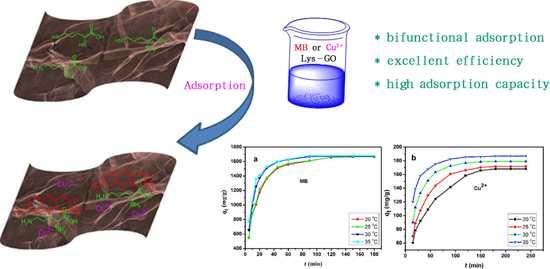
- of graphene materials. According to this analysis, we tried to synthesize a novel graphene material for the removal of heavy metal ions and organic dyes from wastewater. In 2013, Gao et al. developed an environmentally friendly approach to reduce GO with L-lysine [10], which showed potential


Spin-chemistry concepts for spintronics scientists
Beilstein J. Nanotechnol. 2017, 8, 1427–1445, doi:10.3762/bjnano.8.143
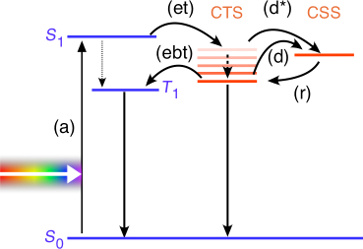
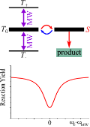
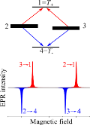
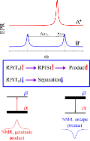
- coupling is usually of lesser importance, unless the hyperfine interaction is strongly suppressed (e.g. in C60, which lacks the protons and contains 99% 12C, having zero nuclear spin [87]) or heavy metal atoms are present as part of the molecule or by doping [86][88]. An MFE can also be observed by



The longstanding challenge of the nanocrystallization of 1,3,5-trinitroperhydro-1,3,5-triazine (RDX)
Beilstein J. Nanotechnol. 2017, 8, 452–466, doi:10.3762/bjnano.8.49

- micrometer-sized agglomerates. CTA is a promising primary explosive compliant with the new REACH legislation [32] forbidding the use of heavy-metal-based materials. Further investigation with surfactants might lead to smaller particles by counteracting the high viscosity of molten droplets. Milling Redner et


Monolayer graphene/SiC Schottky barrier diodes with improved barrier height uniformity as a sensing platform for the detection of heavy metals
Beilstein J. Nanotechnol. 2016, 7, 1800–1814, doi:10.3762/bjnano.7.173
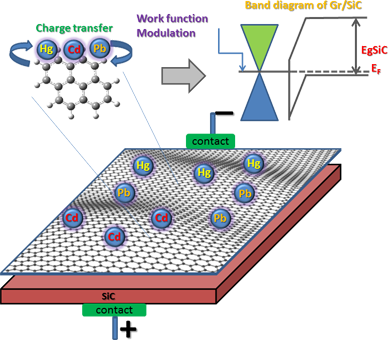
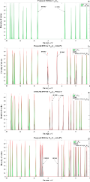
- in the G09 package [54]. The binding energy of interacting systems were calculated based on the following relationship: where Egr-nHM is the total energy of the interacting graphene–heavy metal system, Egr is the total energy of the isolated graphene flake, EHM is the total energy of an individual
- heavy metal atom or ion and n is the total number of interacting heavy metal atoms or ions. To avoid the basis set superposition error (BSSE), the binding energies were calculated by means of counterpoise method [55]. The most important parameter that was extracted from our calculation, the work
- concentration of the heavy metals, since these dependences may provide useful information concerning the detection limit. With this aim, we simulated the adsorption processes on a 2 × 2 graphene flake. At the first stage, one heavy metal atom was placed on the graphene surface. We then optimized the resulting




Hydrophilic silver nanoparticles with tunable optical properties: application for the detection of heavy metals in water
Beilstein J. Nanotechnol. 2016, 7, 1654–1661, doi:10.3762/bjnano.7.157
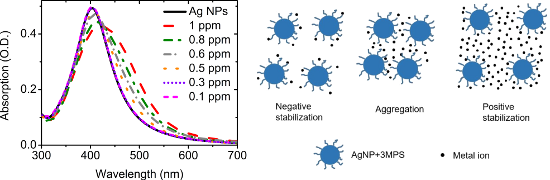
- ), zeta potential (ζ-potential) measurements and scanning tunneling microscopy (STM). Further, to demonstrate the environmental application of our AgNPs, we also applied them for heavy metal sensing by detecting visible color modification due to SPR spectral changes. We found that these negatively charged
- AgNPs show good response to nickel (II) and presented good sensibility properties for the detection of low amount of ions in water in the working range of 1.0–0.1 ppm. Keywords: heavy metal sensor; nickel (II); optical materials; optical sensors; silver nanoparticles; Introduction Nanomaterials have
- selective sensors for the detection of very low amounts of heavy metal ions from biological and environmental samples has greatly increased [26]. The metal-ion toxicity depends on their physical state, chemical form as well as the oxidation state. Many groups have studied fluorescent chemosensors with


Time-dependent growth of crystalline Au0-nanoparticles in cyanobacteria as self-reproducing bioreactors: 2. Anabaena cylindrica
Beilstein J. Nanotechnol. 2016, 7, 312–327, doi:10.3762/bjnano.7.30
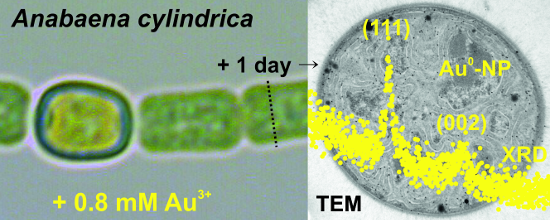
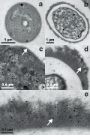
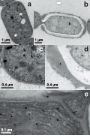
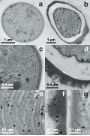
- the electron dense background caused by the heavy metal stained biomass. Such tiny, nearly spherical nanoparticles have already a volume of more than 30 nm3 (1 nm3 crystalline gold contains around 60 gold atoms). From TEM images an average nanoparticle concentration inside the cells can be determined




Carbon nano-onions (multi-layer fullerenes): chemistry and applications
Beilstein J. Nanotechnol. 2014, 5, 1980–1998, doi:10.3762/bjnano.5.207
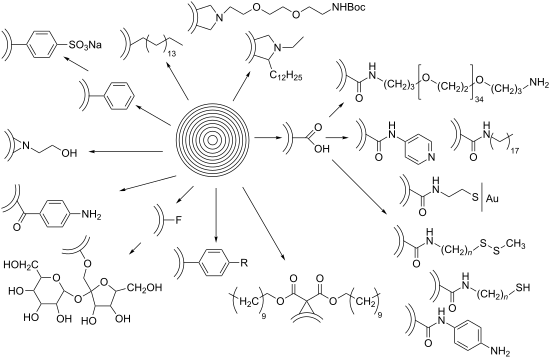
- CNO in environmental remediation was studied by Li group [54], who revealed that surface-oxidized CNO in aqueous suspensions have a high sorption capacity for heavy metal ions such as Pb2+, Cu2+, Cd2+, Ni2+ and Zn2+. The sorption capacity of oxidized CNOs was found to be up to ten times higher than
- the one of fullerene C60. These encouraging results could be a first step toward in situ remediation of heavy metal contaminants. Electronic applications Capacitors: Carbon materials are commonly used as electrode materials in capacitors, but the first study probing CNOs as electrode materials in


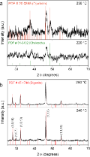
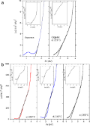
Growth evolution and phase transition from chalcocite to digenite in nanocrystalline copper sulfide: Morphological, optical and electrical properties
Beilstein J. Nanotechnol. 2014, 5, 1542–1552, doi:10.3762/bjnano.5.166
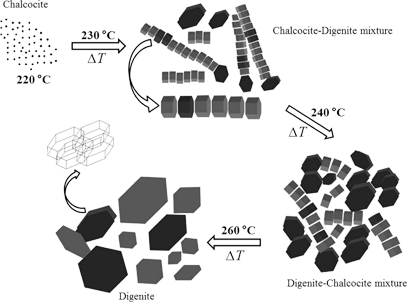
- cadmium, such as cadmium telluride, CdTe, or cadmium sulfide, CdS, have been widely investigated regarding their application in the optoelectronic field, mainly in photovoltaic devices due to the semiconducting, electronic and optical properties [1][2][3][4][5]. Cadmium is a toxic heavy metal, which




Current state of laser synthesis of metal and alloy nanoparticles as ligand-free reference materials for nano-toxicological assays
Beilstein J. Nanotechnol. 2014, 5, 1523–1541, doi:10.3762/bjnano.5.165
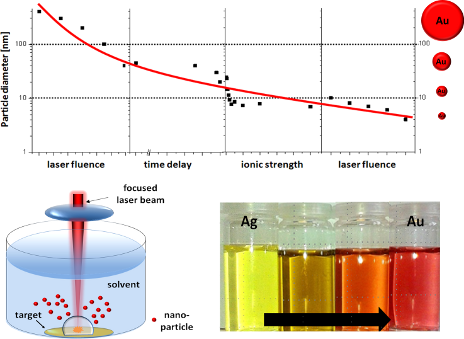
- nanoscopic wear debris [6][7][8] which have been reported to accumulate in lymph nodes, bone marrow, liver and spleen [9]. In that context toxicological effects, including impaired DNA replication and cell growth as well as inflammatory responses, are meant to originate from release of toxic heavy metal ions


Pyrite nanoparticles as a Fenton-like reagent for in situ remediation of organic pollutants
Beilstein J. Nanotechnol. 2014, 5, 855–864, doi:10.3762/bjnano.5.97
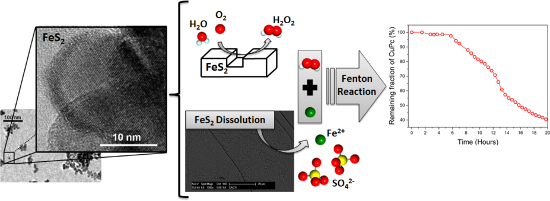
- disulfide, in the absence of trace compounds founds in natural pyrite. Our kinetics analysis showed that the pyrite nanoparticles enabled a ca. 8 times greater efficiency of pollutant removal than did the microparticles. The use of synthetic pyrite nanoparticles avoids the dangers of heavy metal release


Injection of ligand-free gold and silver nanoparticles into murine embryos does not impact pre-implantation development
Beilstein J. Nanotechnol. 2014, 5, 677–688, doi:10.3762/bjnano.5.80
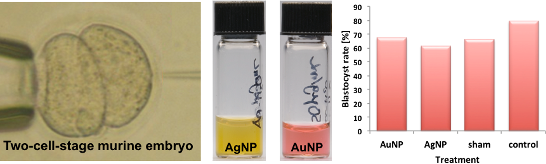
- effects were observed after AgNP injection, silver ion dissolution seems to be either significantly reduced or the ions are deactivated after injection into the embryo. This could be caused by the aforementioned proteins, which are known to deactivate heavy metal ions by complexation. Since no such




Self-assembled monolayers and titanium dioxide: From surface patterning to potential applications
Beilstein J. Nanotechnol. 2011, 2, 845–861, doi:10.3762/bjnano.2.94
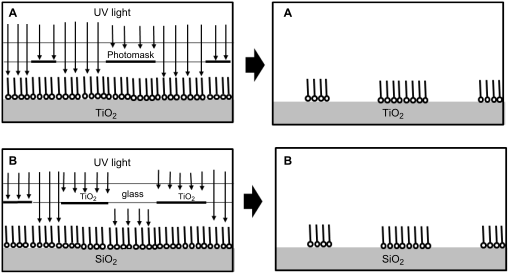
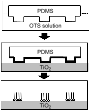
- eventually, following secondary reactions, gives stable molecules such as CO2 and water [5][6]. Nevertheless, it was shown that some halo-organics [7][8] and highly toxic heavy-metal ions such as Cr(VI) [9][10] could be degraded reductively by photoinduced electrons. Langmuir–Hinshelwood type kinetics is