


Search results
Search for "high resolution" in Full Text gives 781 result(s) in Beilstein Journal of Nanotechnology. Showing first 200.
Microplastic pollution in Himalayan lakes: assessment, risks, and sustainable remediation strategies
Beilstein J. Nanotechnol. 2025, 16, 2144–2167, doi:10.3762/bjnano.16.148
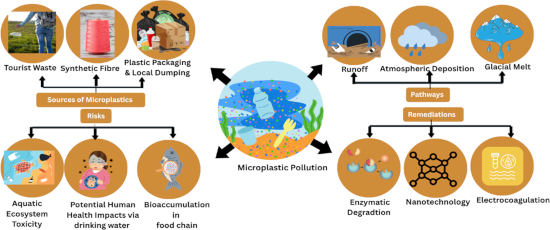
- microscopy (SEM) produces high-resolution images of particle shapes. It also indicates surface wear and tear patterns that reflect how old the MP is and how long it has been in the environment [38]. Ease of operation and minimal cost of optical microscopy make it widely used, despite being less sophisticated


Multifrequency AFM integrating PeakForce tapping and higher eigenmodes for heterogeneous surface characterization
Beilstein J. Nanotechnol. 2025, 16, 2077–2085, doi:10.3762/bjnano.16.142
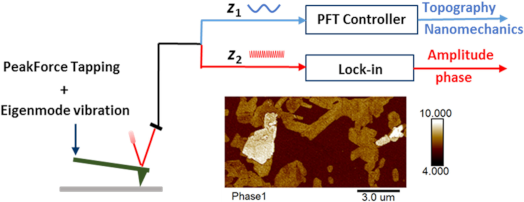
- ) technique that synergistically integrates PeakForce tapping mode with higher eigenmode vibrations to achieve simultaneous high-resolution topographical imaging and to access additional contrast channels for distinguishing material regions or compositions. Unlike conventional multimodal AFM, our method
- traditional dynamic modes, PFT eliminates the need for intricate cantilever tuning by real-time regulation of the interaction force at each scan point. This innovation not only simplifies operation but also enables high-resolution topographic imaging with exceptional stability, even in challenging
- , establishing a novel multifrequency AFM technique. This method synergizes quasi-static force control with dynamic vibrational signals, enabling simultaneous high-resolution topography and mechanical mapping, as well as enhanced material contrast through eigenmode-derived phase imaging. Experimental results


The cement of the tube-dwelling polychaete Sabellaria alveolata: a complex composite adhesive material
Beilstein J. Nanotechnol. 2025, 16, 1998–2014, doi:10.3762/bjnano.16.138
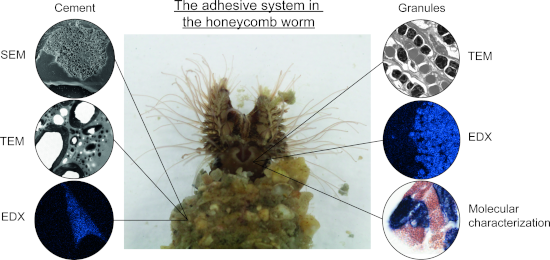
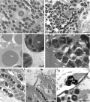
- . Transverse sections through the tubes could be imaged with high resolution in SEM (JEOL JSM-7200F), showing the arrangement of cement spots binding mineral particles together. The epoxy resin embedding technique provided excellent preservation of the cement spot structure. Honeycomb worms embedded in Spurr



Evaluating metal-organic precursors for focused ion beam-induced deposition through solid-layer decomposition analysis
Beilstein J. Nanotechnol. 2025, 16, 1942–1951, doi:10.3762/bjnano.16.135
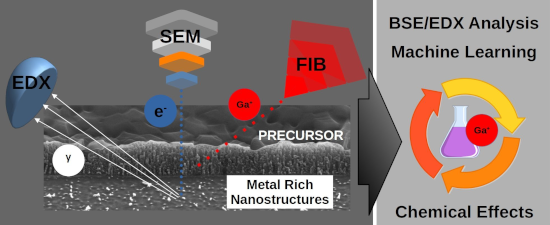
- deposition, chemical mechanical polishing, and laser nanopatterning, enable the creation of nanostructures and nanoscale devices. However, a major limitation of these methods is their inability to effectively produce high-resolution three-dimensional nanostructures [1][2][3][4]. In contrast, focused electron
- adsorbed on the surface, such as electron-stimulated desorption, high-resolution electron energy loss spectroscopy, and focused electron beam secondary ion mass spectrometry [5]. To characterize compounds in terms of their applicability in the FIBID process, comparisons are made with the FEBID process, and
- technique, which is a high-resolution analytical method that can provide elemental information at the nanoscale. This step ensures precise identification and quantification of all elements present in the grown structures. (7) The final step involves examining the chemical composition of the resulted


Low-temperature AFM with a microwave cavity optomechanical transducer
Beilstein J. Nanotechnol. 2025, 16, 1873–1882, doi:10.3762/bjnano.16.130
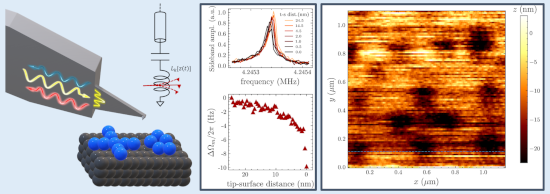
- ]. The challenge for high-resolution AFM is designing such a detector for a test mass hosting a sharp tip that is scanned over a surface in ultrahigh vacuum and at ultralow temperature. In this paper, we report on an AFM cantilever force sensor with an integrated detector consisting of a compact
- have demonstrated ultralow-temperature AFM operation with a kinetic-inductive electromechanical (KIMEC) force sensor. In comparison with state-of-the-art low-temperature AFM, these initial AFM images are not of particularly high resolution. However, our AFM was built into a standard pulse-tube dilution


Electrical, photocatalytic, and sensory properties of graphene oxide and polyimide implanted with low- and medium-energy silver ions
Beilstein J. Nanotechnol. 2025, 16, 1794–1811, doi:10.3762/bjnano.16.123
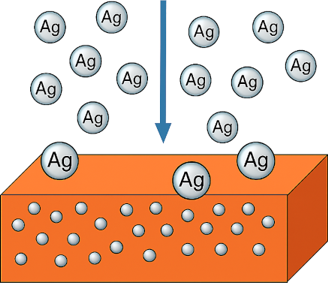
- thin surface layer with a depth of a few nanometers. The deconvolution of the high-resolution C 1s peak of XPS spectra is illustrated in Figure 5 for GO and in Figure 6 for PI. Spectra are shown for unmodified samples and for samples exposed to the highest ion fluence (1 × 1016 cm−2). More detailed
- implantation energy. The deconvolution of the C 1s region in high-resolution X-ray photoelectron spectroscopy (XPS) spectra of pristine PI is depicted in Figure 6a, illustrating four distinct carbon components. These components include C–C carbons originating from the aromatic rings of the oxydianiline portion


Beyond the bilayer: multilayered hygroscopic actuation in pine cone scales
Beilstein J. Nanotechnol. 2025, 16, 1695–1710, doi:10.3762/bjnano.16.119
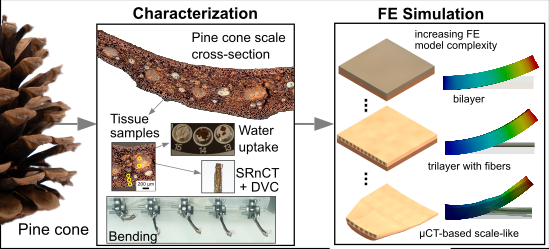
- integrate high-resolution computed tomography-based geometries to further elucidate the mechanisms underlying hygroscopic actuation. This integrative approach will bridge experimental findings with computational modeling and advance plant biomechanics and biomimetic transfer. Keywords: digital volume


Ambient pressure XPS at MAX IV
Beilstein J. Nanotechnol. 2025, 16, 1677–1694, doi:10.3762/bjnano.16.118
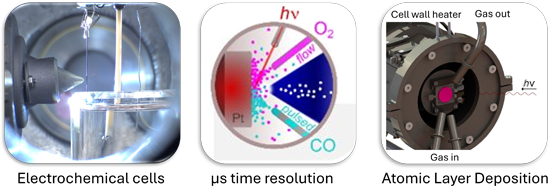
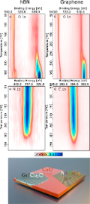
- 11 shows high-resolution photoelectron spectra of As 3d, In 4d, and Hf 4f core levels before and after the first TDMAHf half-cycle on the four samples. The oxide peaks of As and In disappear for all the thermal oxide (samples A–C), and HfOx peaks emerge consistently across samples with differing





Photocatalytic degradation of ofloxacin in water assisted by TiO2 nanowires on carbon cloth: contributions of H2O2 addition and substrate absorbability
Beilstein J. Nanotechnol. 2025, 16, 1567–1579, doi:10.3762/bjnano.16.111
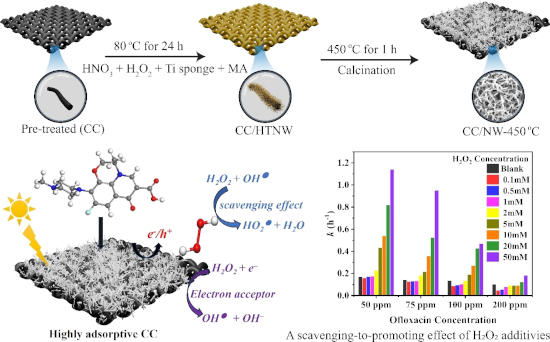
- drying. The P25 loading was ca. 50.0 mg (≈1.0 mg/cm2), nearly the same as that of the TiO2 nanowires on carbon cloth. Characterizations The morphologies were analyzed using field-emission scanning electron microscopy (FESEM, Zeiss Germany Sigma 300) and high-resolution transmission electron microscopy


Transient electronics for sustainability: Emerging technologies and future directions
Beilstein J. Nanotechnol. 2025, 16, 1545–1556, doi:10.3762/bjnano.16.109

- ,5H)-trione pentenoic anhydride (PBTPA), Mo-polybutylene adipate terephthalate (PBAT), W-beeswax, and Mo-polycaprolactone [65][66][67][68][69][70][71]. However, in the case of high-performance devices that require high-resolution micropatterning, the application of conventional silicon
- electronic devices on a large-area substrate, such as a silicon wafer, followed by backside etching to remove the handle or box layers, thereby isolating the functional thin film for transfer onto a biodegradable substrate. This wafer-level technique offers a promising route to large-area, high-resolution


Influence of laser beam profile on morphology and optical properties of silicon nanoparticles formed by laser ablation in liquid
Beilstein J. Nanotechnol. 2025, 16, 1533–1544, doi:10.3762/bjnano.16.108
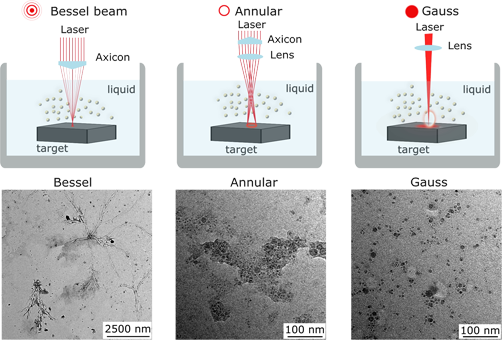
- ultraviolet–visible spectroscopy, high-resolution transmission electron microscopy, and Raman and photoluminescence spectroscopies, and the correlation of the NP properties with the laser beam profile was studied. Three different beam profiles were selected, namely, a Bessel beam produced using an axicon, an
- structure of the formed NPs were analyzed by means of ultraviolet–visible (UV–vis) spectroscopy, high-resolution transmission electron microscopy (HRTEM), selected area electron diffraction (SAED), X-ray diffraction (XRD), and Raman and photoluminescence (PL) spectroscopies. Particle size and morphology


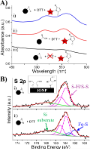
Cross-reactivities in conjugation reactions involving iron oxide nanoparticles
Beilstein J. Nanotechnol. 2025, 16, 1504–1521, doi:10.3762/bjnano.16.106







Parylene-coated platinum nanowire electrodes for biomolecular sensing applications
Beilstein J. Nanotechnol. 2025, 16, 1392–1400, doi:10.3762/bjnano.16.101
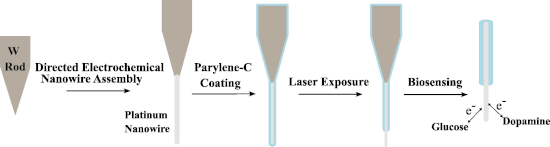
- , and enhanced signal-to-noise ratio besides high-resolution scanning applications [4][5]. These properties have made nanoscale electrodes the preferred choice in the biosensing industry, particularly for point-of-care applications. As this market continues to expand, there is a growing demand for more


Synthesis and antibacterial properties of nanosilver-modified cellulose triacetate membranes for seawater desalination
Beilstein J. Nanotechnol. 2025, 16, 1380–1391, doi:10.3762/bjnano.16.100
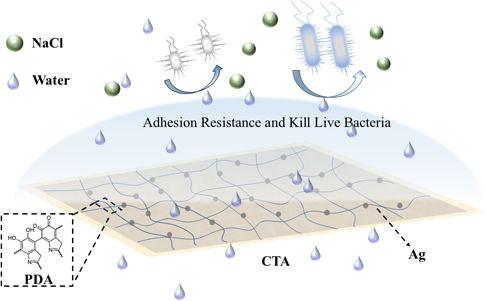
- states of the Ag@PCTA membrane. In the high-resolution Ag 3d spectrum of Figure 3b, the characteristic BEs of Ag 3d5/2 and Ag 3d3/2 are observed at around 368.5 and 374.3 eV, respectively. These values are indicative of the presence of Ag0, which was also well established in the literature [29][30][31
- , PCTA, and Ag@PCTA. High-resolution XPS spectra of Ag in (b) CTA, (c) PCTA, and (d) Ag@PCTA. (a, c, e) Top-view and (b, d, f) cross-sectional SEM images of (a, c) CTA, (c, d) PCTA, and (e, f) Ag@PCTA membrane surfaces. The inset (top right) provides a higher magnification view of the selected region


Automated collection and categorisation of STM images and STS spectra with and without machine learning
Beilstein J. Nanotechnol. 2025, 16, 1367–1379, doi:10.3762/bjnano.16.99
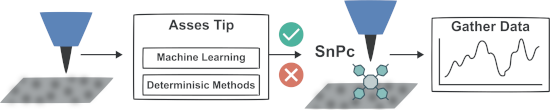
- spectroscopic measurements. The ability to automate this process is a key aim in development of high resolution scanning probe materials characterisation. In this paper, we assess the feasibility of automating the assessment of imaging quality, and spectroscopic tip quality, via both machine learning (ML) and
- statistical analysis. Deterministic methods can be easily implemented to classify the imaging and spectroscopic quality of a STM tip for the purposes of high-resolution STM and STS on small organic molecules. Via automated classification of the tip state, we demonstrate an automated experiment that can




Wavelength-dependent correlation of LIPSS periodicity and laser penetration depth in stainless steel
Beilstein J. Nanotechnol. 2025, 16, 1302–1315, doi:10.3762/bjnano.16.95
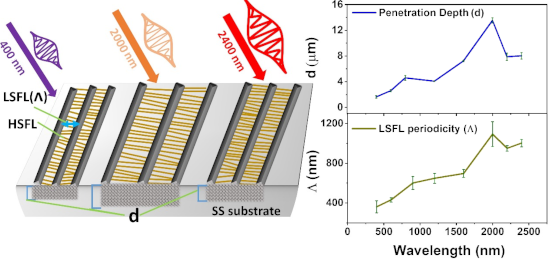
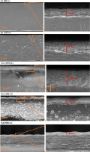
- parallel to the incident beam polarization. In all FESEM images, the incident polarization direction is represented by a violet arrow at the top left corner. High-resolution images of the embedded HSFL ladder-like structure is shown in Figure 5 for two wavelengths for better understanding. The aspect ratio
- . Surface patterns of the optimized ladder structures on a stainless steel surface at various incidence wavelengths. High-resolution images of ladder-like LIPSS formed at two incident wavelengths: 900 and 2200 nm. The violet arrows show the polarization direction. Variations of spatial periodicity of (A
- voltage of 10 kV. In this procedure, a steel plate served as the cathode and was submerged in the oxalic acid solution, while the steel sample acted as the anode and was also immersed in the solution. Etching was carried out for 80 s to unveil the microstructure. Characterization and measurements High




Enhancing the photoelectrochemical performance of BiOI-derived BiVO4 films by controlled-intensity current electrodeposition
Beilstein J. Nanotechnol. 2025, 16, 1289–1301, doi:10.3762/bjnano.16.94
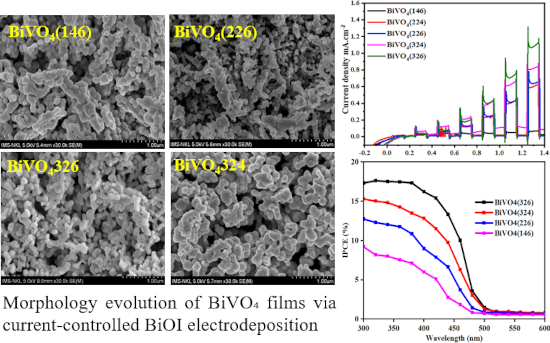
- on the optimized BiVO4(326) sample. The survey spectrum (Figure 7a) confirmed the presence of Bi, V, and O, which is consistent with the BiVO4 structure. High-resolution Bi 4f spectra (Figure 7b) show a characteristic doublet at binding energies of 159.0 eV (Bi 4f7/2) and 164.2 eV (Bi 4f5/2
- 600 min. X-ray photoelectron spectroscopy (XPS) analysis of the BiVO4(326) photoanode before and after PEC stability testing in 30 min (0.5 M Na2SO4). (a) XPS view scans of survey spectrum and high-resolution spectra of (b) Bi 4f, (c) O 1s, and (d) V 2p. Estimated crystallite sizes of BiVO4



Mechanical stability of individual bacterial cells under different osmotic pressure conditions: a nanoindentation study of Pseudomonas aeruginosa
Beilstein J. Nanotechnol. 2025, 16, 1171–1183, doi:10.3762/bjnano.16.86
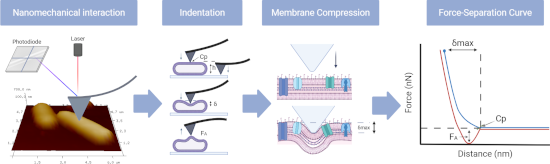
- sample at the nanoscale. The force applied by the AFM tip on the sample is controlled by monitoring the deflection of an extremity of a micrometer mechanical lever onto which the tip is attached. In the study of pathogens, AFM excels in providing high-resolution topographic images while measurements are


Crystalline and amorphous structure selectivity of ignoble high-entropy alloy nanoparticles during laser ablation in organic liquids is set by pulse duration
Beilstein J. Nanotechnol. 2025, 16, 1141–1159, doi:10.3762/bjnano.16.84
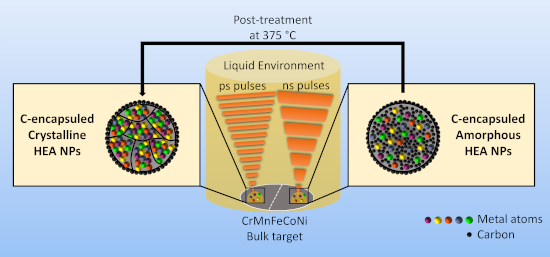
- in organic solvents (acetone, ethanol, acetonitrile). In a systematic experimental series using high-resolution transmission electron microscopy, scanning transmission electron microscopy with energy-dispersive X-ray spectroscopy, selected-area electron diffraction, X-ray diffraction, electron energy
- . Nanoparticle characterization is done by high-resolution transmission electron microscopy (HRTEM), energy-dispersive X-ray spectroscopy (STEM-EDX), selected-area electron diffraction (SAED), X-ray diffraction (XRD), and electron energy loss spectroscopy (EELS), complemented by tempering and laser post
- (±2% to ±5%), making it unlikely that those differences will have a big impact on structural differences. Based on this data, we can conclude that element ratios close to the mole fraction of the target are converted into NPs (Supporting Information File 1, Figure S6). High-resolution particle




Deep learning for enhancement of low-resolution and noisy scanning probe microscopy images
Beilstein J. Nanotechnol. 2025, 16, 1129–1140, doi:10.3762/bjnano.16.83
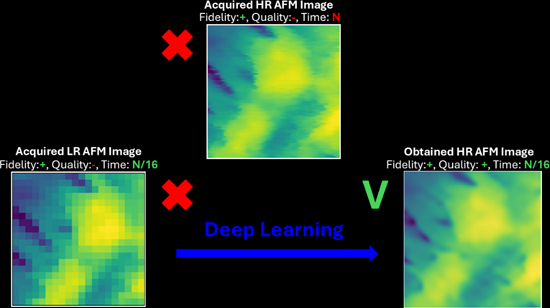
- the traditional methods and yield better results. Additionally, some common AFM artifacts, such as streaking, are present in the ground truth high-resolution images. These artifacts are partially attenuated by the traditional methods but are completely eliminated by the deep learning models. This work
- ; low resolution; super resolution; Introduction The capability of atomic force microscopy (AFM) to achieve high resolution at the nanometer level in plane (xy) and at the angstrom level in height (z), on a variety of surfaces, is one of its major advantages. AFM topographical imaging enables high
- ], the majority use remains that performed on commercial instruments working in ambient (or liquid) environments using one of several operating modes [2][3]. Achieving high-resolution images in such cases is hampered by a few shortcomings. First, the scanning speed of traditional AFM is slow, and several


Towards a quantitative theory for transmission X-ray microscopy
Beilstein J. Nanotechnol. 2025, 16, 1113–1128, doi:10.3762/bjnano.16.82
- investigate this further, we performed selected area electron diffraction on the nanospheres, which revealed the presence of crystalline domains in the nanospheres with the lattice spacing of gold (Supporting Information File 1, Section S13, Figure S12a). Furthermore, a high-resolution TEM image showed the



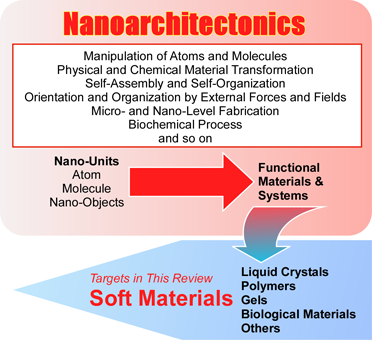
Soft materials nanoarchitectonics: liquid crystals, polymers, gels, biomaterials, and others
Beilstein J. Nanotechnol. 2025, 16, 1025–1067, doi:10.3762/bjnano.16.77






Time-resolved probing of laser-induced nanostructuring processes in liquids
Beilstein J. Nanotechnol. 2025, 16, 968–1002, doi:10.3762/bjnano.16.74
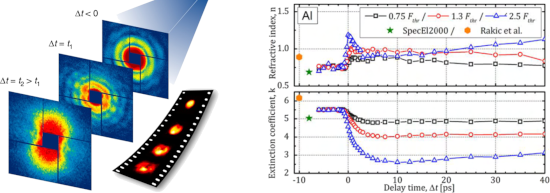
- learning initially in massive data analysis and also in extracting concealed signals to complete high-resolution 3D imaging [83]. Additionally, adapting single-pulse XFEL time-resolved imaging to ultrafast electron sources may provide even higher spatial and temporal resolution, further enhancing our


Shape, membrane morphology, and morphodynamic response of metabolically active human mitochondria revealed by scanning ion conductance microscopy
Beilstein J. Nanotechnol. 2025, 16, 951–967, doi:10.3762/bjnano.16.73
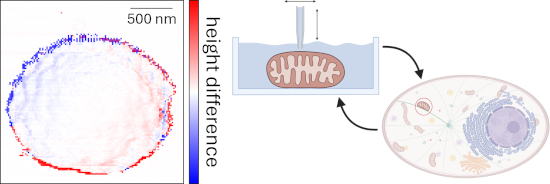
- –sample interaction, often leading to an underestimation of mitochondrial apparent height due to applied cantilever pressure [22][25]. Similarly, scanning electron microscopy (SEM) offers high-resolution imaging but requires mitochondria to be chemically fixed, stained, and sectioned, which precludes the



Tendency in tip polarity changes in non-contact atomic force microscopy imaging on a fluorite surface
Beilstein J. Nanotechnol. 2025, 16, 944–950, doi:10.3762/bjnano.16.72
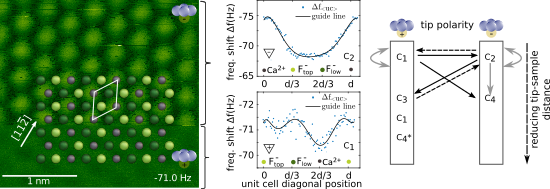
- insulator materials in real space with unprecedented spatial resolution [2][3][4][5][6]. Besides high-resolution imaging of molecular structures [7], NC-AFM has demonstrated its ability to identify sublattices of atomic surfaces [8][9][10]. In these studies, the knowledge of the tip’s atomic structure plays





