Search results
Search for "humidity" in Full Text gives 297 result(s) in Beilstein Journal of Nanotechnology. Showing first 200.
The impact of tris(pentafluorophenyl)borane hole transport layer doping on interfacial charge extraction and recombination
Beilstein J. Nanotechnol. 2025, 16, 678–689, doi:10.3762/bjnano.16.52
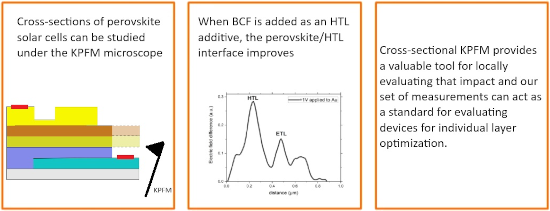
- lock-in amplifier (Zurich Instruments), in an argon atmosphere glove box (less than 1% ppm O2 and negligible humidity). The cantilever used was SCM PIT V2 (resonance frequency: 75 kHz, spring constant: 3 N/m, Bruker). The scan rate of the measurement was 0.5 Hz. To increase the reliability of our data


Aprepitant-loaded solid lipid nanoparticles: a novel approach to enhance oral bioavailability
Beilstein J. Nanotechnol. 2025, 16, 652–663, doi:10.3762/bjnano.16.50
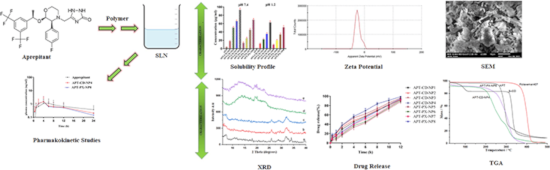
- humidity in the long-term stability study. In vivo pharmacokinetic studies Pharmacoikinetic studies showed a linear relationship between APT release and concentration in rabbit blood plasma (R2 = 0.9959). The pharmacokinetic parameters determined by measuring plasma concentration versus time are displayed
- after one, two, three, and six months [33]. In vivo pharmacokinetic studies Study protocol 10 male rabbits (2 kg body weight) were housed in an animal house under standard environmental conditions of 22 ± 3 °C and 45% relative humidity under a 12 h dark/light cycle (Faculty of Pharmacy, University of



Nanoscale capacitance spectroscopy based on multifrequency electrostatic force microscopy
Beilstein J. Nanotechnol. 2025, 16, 637–651, doi:10.3762/bjnano.16.49

- Nanolab FIB apparatus with a dual Ga+ ion beam. Multifrequency heterodyne electrostatic force microscopy MFH-EFM was measured on an Oxford Instruments/Asylum Research MFP-3D Infinity AFM in a nitrogen glovebox (level of humidity below 0.3%, level of oxygen below 0.1%). The typical resonance frequency of




A formulation containing Cymbopogon flexuosus essential oil: improvement of biochemical parameters and oxidative stress in diabetic rats
Beilstein J. Nanotechnol. 2025, 16, 617–636, doi:10.3762/bjnano.16.48
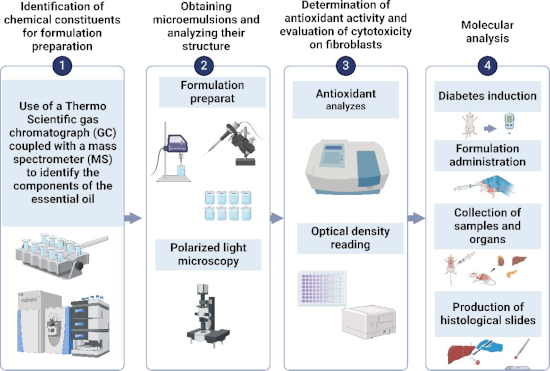
- antidyslipidemic properties in vivo [4][5][6]. EOs are volatile components that are sensitive to temperature, light, oxygen, and humidity [7]. Therefore, it is recommended to use them in drug delivery systems, such as nanostructured systems, which are able to guarantee stability and a better therapeutic effect




Enhancing mechanical properties of chitosan/PVA electrospun nanofibers: a comprehensive review
Beilstein J. Nanotechnol. 2025, 16, 286–307, doi:10.3762/bjnano.16.22

- conductivity. Finally, environmental parameters include relative humidity and temperature [15]. Chitosan, a widely utilized material in electrospun nanofiber membranes, is derived from the crystalline microfibrils of crustaceans, including crabs and prawns. It is biodegradable and exhibits a high capacity for
- , including irregular fluid jet movement, variations in surface tension, and sensitivity to external parameters such as temperature, humidity, and airflow. These factors can disrupt the uniformity of the fiber formation. When the fiber jets are drawn in the direction of the electric field force, the polymer


Probing the potential of rare earth elements in the development of new anticancer drugs: single molecule studies
Beilstein J. Nanotechnol. 2025, 16, 187–194, doi:10.3762/bjnano.16.15

- temperature and with a humidity between 20% to 30%. This experimental procedure has been proved suitable to visualize deposited DNA and DNA–ligand complexes in a reproducible and reliable way [23][24]. The AFM instrument used in the experiments was a NT-MDT-NTEGRA PRIMA operating in tapping mode with TAP300


A review of metal-organic frameworks and polymers in mixed matrix membranes for CO2 capture
Beilstein J. Nanotechnol. 2025, 16, 155–186, doi:10.3762/bjnano.16.14
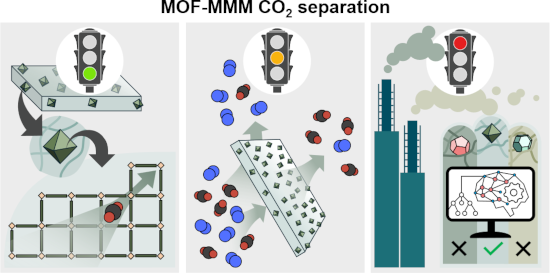
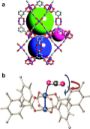
- )2 chemically bind CO2 to form new, covalent carbamic acid (RNHCOOH) species at an adsorption capacity of 1.2 mmol CO2·g−1 [53]. Since the adsorption takes place at the LBSs rather than the OMSs, the influence of humidity was negligible to the adsorption performance. In wet conditions at 95% relative
- humidity (RH), chemisorption of CO2 resulted in ammonium carbamate (RNHCOO−+H3NR) species formation, and the adsorption capacity remained at 1.2 mmol CO2·g−1 [53]. 3 Integration of MOFs in MMMs 3.1 General consideration for MMMs The concept of MMMs dates back to the 1860s [16][69] and the need to




Comparison of organic and inorganic hole transport layers in double perovskite material-based solar cell
Beilstein J. Nanotechnol. 2025, 16, 119–127, doi:10.3762/bjnano.16.11
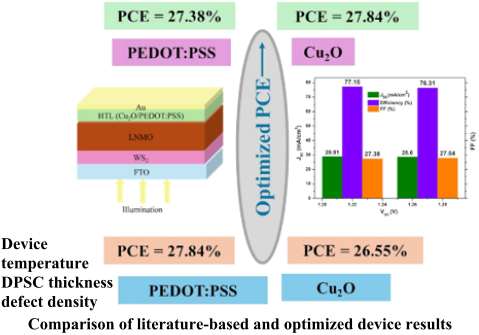
- under ambient conditions with humidity levels of 35–40%. Here, 3,4-dihydroxyphenethylamine hydrochloride (3,4-DpACl) was used as an additive during perovskite fabrication. Despite significant research efforts, there are stability issues when working under critical environmental conditions, which is an


Natural nanofibers embedded in the seed mucilage envelope: composite hydrogels with specific adhesive and frictional properties
Beilstein J. Nanotechnol. 2024, 15, 1603–1618, doi:10.3762/bjnano.15.126
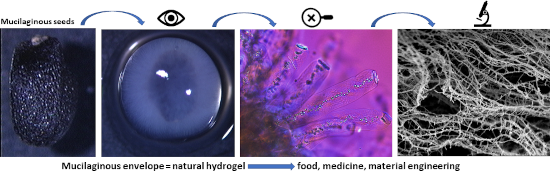
- the higher contact area [36][129]. It cannot be excluded that many other factors (pH, temperature, humidity, or substrate type) can also influence the adhesive properties of the mucilage envelope. The role of mucilage envelope in the seeds dispersal Fruits and seeds exhibit diverse mechanisms allowing


Liver-targeting iron oxide nanoparticles and their complexes with plant extracts for biocompatibility
Beilstein J. Nanotechnol. 2024, 15, 1593–1602, doi:10.3762/bjnano.15.125
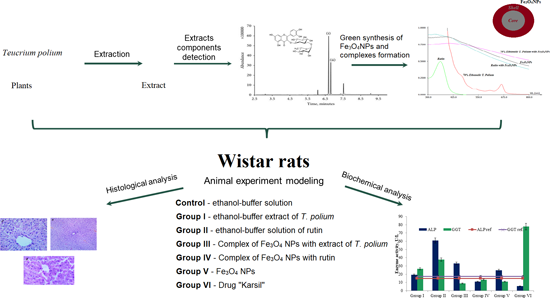
- model Experiments were conducted on mature male white Wistar rats weighing 190–210 g. The animals were kept on a regular diet and water regimen at a temperature of 25 ± 2 °C, 55% ± 5% humidity, and a 12 h day/night cycle. The animals were randomly divided into seven experimental groups of five to six


Polymer lipid hybrid nanoparticles for phytochemical delivery: challenges, progress, and future prospects
Beilstein J. Nanotechnol. 2024, 15, 1473–1497, doi:10.3762/bjnano.15.118


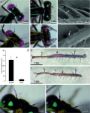
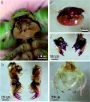
Functional morphology of cleaning devices in the damselfly Ischnura elegans (Odonata, Coenagrionidae)
Beilstein J. Nanotechnol. 2024, 15, 1260–1272, doi:10.3762/bjnano.15.102

- relative humidity of 70 ± 10%) inside net cages (25 cm × 25 cm × 25 cm). Drosophila melanogaster flies were used to feed the damselflies. Adult insects of both sexes were used in the study. Light microscopy To count the mean number of foretibial grooming structures in males and females, we anaesthetized 13


Unveiling the potential of alginate-based nanomaterials in sensing technology and smart delivery applications
Beilstein J. Nanotechnol. 2024, 15, 1077–1104, doi:10.3762/bjnano.15.88

- discussed, including drug delivery and environmental sensing applications for humidity, heavy metals, and hydrogen peroxide. Moreover, biomedical sensing applications of alginate-based nanoparticles regarding various analytes such as glucose, cancer cells, pharmaceutical drugs, and human motion will also be
- alginate from marine sources adds to its appeal as a sustainable and renewable material for nanoparticle synthesis [103]. These nanoparticles have demonstrated potential in sensing applications, including temperature, humidity, water level, and various environmental pollutants. Heavy metal and volatile
- a linear dynamic range of 0 to 1250 μM, with a LOD of 14 μM. Based on the selective enzymatic release of H2O2, the developed solid kit could be used to detect many biomarkers, including glucose, lactate, uric acid, and cholesterol [118]. Humidity sensing: One area that has shown promise in the field


Electrospun nanofibers: building blocks for the repair of bone tissue
Beilstein J. Nanotechnol. 2024, 15, 941–953, doi:10.3762/bjnano.15.77
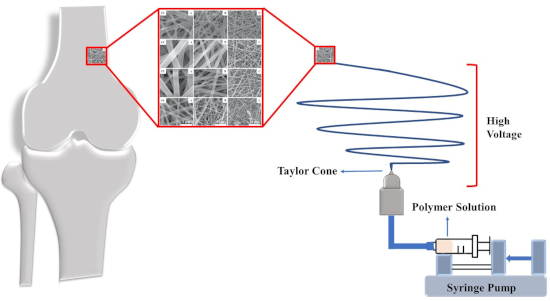
- increasing temperature [84]. Humidity Stable humidity during electrospinning is crucial for a high reproducibility of the fibers [85]. With increasing humidity, the concentration of dissociated ions in the fibers and charge repulsions among the fibers increase during electrospinning [86]. If the humidity is
- high, water may accumulate on the fiber surfaces, and if the humidity is too low, the solvent may evaporate too quickly [73][82]. Also, relative humidity makes nanofibers thicker or thinner depending on the chemical structure of the polymer [82]. Drug release from electrospun nanofibers The rate and


The effect of age on the attachment ability of stick insects (Phasmatodea)
Beilstein J. Nanotechnol. 2024, 15, 867–883, doi:10.3762/bjnano.15.72

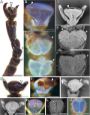
- daytime, at a temperature of 24.6 ± 1.9 °C and an ambient humidity of 51.0% ± 6.9%. Deceased animals were frozen at −70 °C for subsequent investigation of the tarsal morphology. 2 Attachment on a smooth incline The adhesive abilities on a smooth incline were determined using a custom-made tilting platform


Exploring surface charge dynamics: implications for AFM height measurements in 2D materials
Beilstein J. Nanotechnol. 2024, 15, 767–780, doi:10.3762/bjnano.15.64
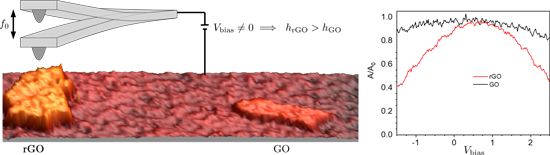
- –60%, Sigma-Aldrich). After deposition, we heated the sample for a minimum of 3 h at 60 °C on a hot plate to remove some of the physisorbed water. While still hot, it was transferred to the AFM and left to cool down in a nitrogen atmosphere. Before starting measurements under controlled humidity, we
- waited for a minimum of 1 h until the humidity stabilized. The experiments were performed at room temperature and low relative humidity (RH < 10%) in a dry nitrogen atmosphere. Topography images were acquired in AM-AFM mode by using the oscillation amplitude as the topography feedback channel. To
- and rGO. SI.2. Experiments at different relative humidity. SI.3. Charging of rGO flakes. SI.4. rGO on a conducting substrate. SI.5. 3D spectroscopy on a GO monolayer flake. Supporting Information File 4: Additional data. Funding The following sources of funding are acknowledged: MCIN/AEI/10.13039


Functional fibrillar interfaces: Biological hair as inspiration across scales
Beilstein J. Nanotechnol. 2024, 15, 664–677, doi:10.3762/bjnano.15.55
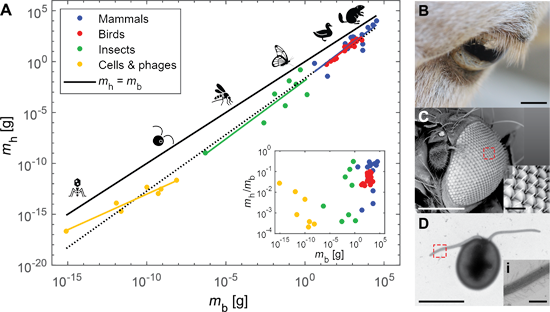
- external stimuli in order to perceive the environment, such as external touch (Figure 4A), odor (Figure 4B), temperature (Figure 4C), and humidity [125][126][127]. Hairy receptors can be classified into several types according to their various functions and sensing modes, such as mechanoreceptors
- may be triggered by either mechanical or thermal energy [158]. Hygrosensation Studies have also shown that hairs exhibit heightened sensitivity to changes in humidity levels, enabling arthropods to discern variations in air humidity with remarkable precision. There are three potential mechanisms for
- hygrosensation with hairs or sensilla: (1) Changes in humidity may cause changes in the volume of the sensilla, which could mechanically trigger sensory cells. (2) For hollow sensilla, the external humidity could cause lymph fluid to evaporate, and the change in fluid volume may trigger sensory cells. (3


Fabrication of nanocrystal forms of ᴅ-cycloserine and their application for transdermal and enteric drug delivery systems
Beilstein J. Nanotechnol. 2024, 15, 465–474, doi:10.3762/bjnano.15.42
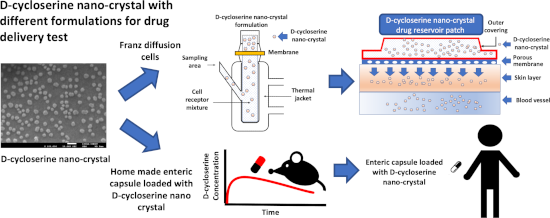
- 8 mL of deionized water. Approximately 1–1.35 mL of the transdermal formulations (Formulation tests 1–3 and A–E) were applied to the membrane over an area of 1 cm2 across the donor compartment. The donor cell was exposed to room temperature with 65% humidity and covered with Parafilm to prevent
- stability of DCS nanocrystals under these experimental conditions. This is the first time that DCS nanocrystals were successfully developed and applied in a transdermal system. Stability tests of these formulations under high temperature and high humidity for final formulations can be conducted in the


Insect attachment on waxy plant surfaces: the effect of pad contamination by different waxes
Beilstein J. Nanotechnol. 2024, 15, 385–395, doi:10.3762/bjnano.15.35
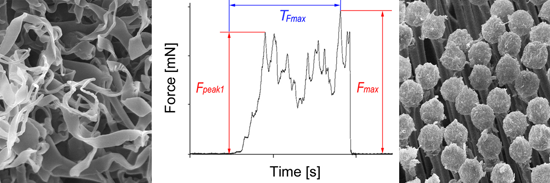
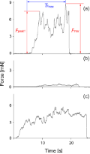
- individual male beetles were tested. In all, 135 force experiments were conducted. Force tests were carried out at 22–25 °C temperature and 60%–75% relative humidity. The statistical analyses of the values of the maximum traction force Fmax, the first peak of the traction force Fpeak1, and the time TFmax




Controllable physicochemical properties of WOx thin films grown under glancing angle
Beilstein J. Nanotechnol. 2024, 15, 350–359, doi:10.3762/bjnano.15.31
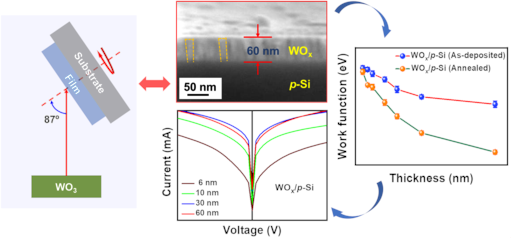
- mapped. Also, variable scan angles and scan speeds (0.2 to 1 Hz) were used to avoid the undesired presence of artefacts in the measured data. A dry nitrogen atmosphere ensured a low humidity level of 8–10% during all the KPFM measurements [29]. Further, the I–V measurements on the WOx/p-Si


Ion beam processing of DNA origami nanostructures
Beilstein J. Nanotechnol. 2024, 15, 207–214, doi:10.3762/bjnano.15.20
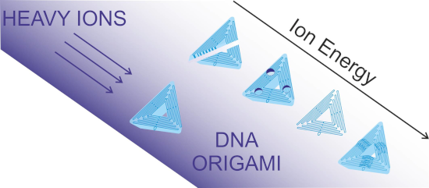
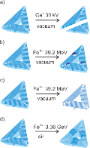
- movement, which probably pushes them to be only lifted-off leading to an observed increase in height. Because the irradiation was performed in air, various reactive species can be also generated, which can change the microenvironment around the nanostructures. This can be influenced by ambient humidity and


Nanotechnological approaches in the treatment of schistosomiasis: an overview
Beilstein J. Nanotechnol. 2024, 15, 13–25, doi:10.3762/bjnano.15.2

- intricacies related to these formulations. Despite none of the authors explicitly mentioning stability challenges as a concern in the nanoparticle manufacturing process, especially in tropical regions characterized by elevated temperatures and humidity, it is a critical aspect to consider. Such environmental


Determination of the radii of coated and uncoated silicon AFM sharp tips using a height calibration standard grating and a nonlinear regression function
Beilstein J. Nanotechnol. 2023, 14, 1200–1207, doi:10.3762/bjnano.14.99
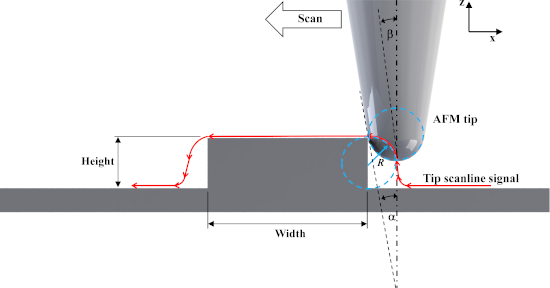
- calibration grating Linewidth scanning in contact mode using each of the selected tips with an applied constant normal load of 0.01 nN perpendicular to the calibration grating was carried out at room temperature and 40% humidity. The scanning frequency of the tips was 0.03 Hz. The tips were moved from right


A multi-resistance wide-range calibration sample for conductive probe atomic force microscopy measurements
Beilstein J. Nanotechnol. 2023, 14, 1141–1148, doi:10.3762/bjnano.14.94
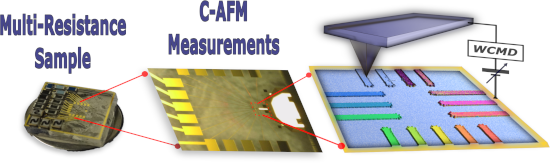
- , repeatability, and exactness [41][42]. The formation of a humidity-induced water meniscus at the tip–sample interface, the presence of surface contamination, and thermal drifts induce significant instabilities in C-AFM measurements [42][43]. Moreover, local overheating and anodic oxidation phenomena are
- MPS150) coupled to a programmable voltage source (Marconi 104A) and a high-precision ammeter to measure the resistance values of the SMD devices in an electromagnetically shielded environment under stabilized air temperature (22.9 ± 0.1) °C and relative humidity (40.7 ± 0.3)%. Two different calibrated


Curcumin-loaded albumin submicron particles with potential as a cancer therapy: an in vitro study
Beilstein J. Nanotechnol. 2023, 14, 1127–1140, doi:10.3762/bjnano.14.93
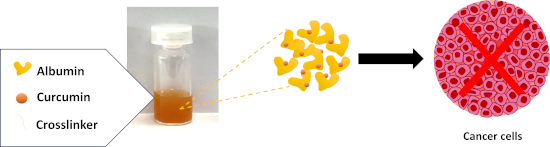
- FBS (10%) and penicillin/streptomycin (1%) at 37 °C in a CO2 incubator (95% relative humidity, 5% CO2). Huh-7, HDFB, and MMNK-1 cells were cultured in DMEM, and MCF-7 cells were cultured in RPMI cell culture medium. The cells were then seeded to grow 24 h prior to treatment at a density of 5 × 10³