Search results
Search for "interferometer" in Full Text gives 50 result(s) in Beilstein Journal of Nanotechnology.
Intuitive human interface to a scanning tunnelling microscope: observation of parity oscillations for a single atomic chain
Beilstein J. Nanotechnol. 2019, 10, 337–348, doi:10.3762/bjnano.10.33
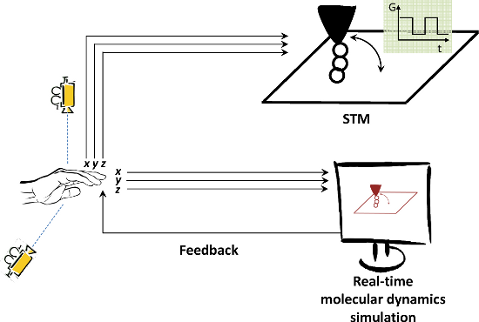
- atomic chain. This back-scattering makes this phenomenon similar to that of the Fabry–Pérot interferometer in optics. This was demonstrated in experiments by making length histograms [8] of conductance and it was observed as oscillations in conductance. However, in this method averaging over many atomic
- . Depending on the length of the barrier one can have different interference patterns of these standing waves giving oscillations in the conductance. This is similar to a Fabry–Pérot interferometer. The different colours of atoms here do not imply different types of atoms but are used only to differentiate




Investigation of CVD graphene as-grown on Cu foil using simultaneous scanning tunneling/atomic force microscopy
Beilstein J. Nanotechnol. 2018, 9, 2953–2959, doi:10.3762/bjnano.9.274
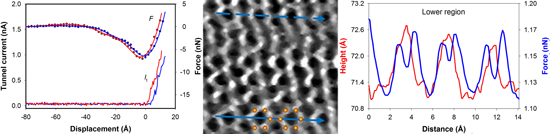
- ]. Experimental Our setup is a commercial STM/AFM operated in ultrahigh vacuum (UHV) that was modified and improved by the implementation of a Fabry–Pérot fiber interferometer in order to achieve high sensitivity in detecting lever deflection and measuring the oscillation amplitude, which in turn allows us to


Room-temperature single-photon emitters in titanium dioxide optical defects
Beilstein J. Nanotechnol. 2018, 9, 1085–1094, doi:10.3762/bjnano.9.100
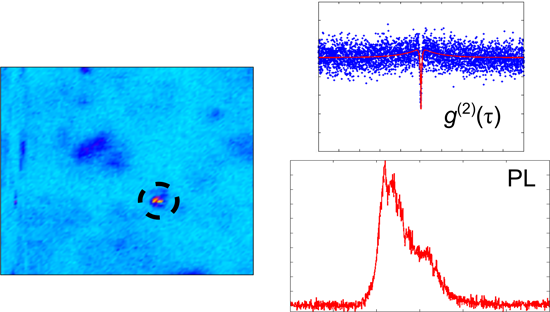
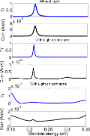
- . Defects D1 and D2 had their fluorescence monitored via a HBT interferometer to quantify their photon statistics. For a single-photon emitter, the second-order correlation function needs to satisfy the inequality: g(2)(τ = 0) < 0.5, where τ is the delay time electronically imposed to one of the detectors


Combined pulsed laser deposition and non-contact atomic force microscopy system for studies of insulator metal oxide thin films
Beilstein J. Nanotechnol. 2018, 9, 686–692, doi:10.3762/bjnano.9.63
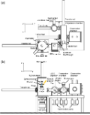
- atomic resolution images with the same performance as in our previous study [48]. We are able to perform NC-AFM measurements without the influence of vibration noise caused by the linkage to the PLD chamber. An optical interferometer [50] was used for deflection detection of the probe used for the NC-AFM


Nanoprofilometry study of focal conic domain structures in a liquid crystalline free surface
Beilstein J. Nanotechnol. 2017, 8, 2544–2551, doi:10.3762/bjnano.8.254
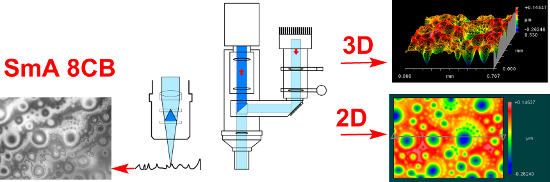
- ]. Comparing the ISSA method with the other surface-sensitive methods, we can see that ISSA is more powerful as compared to the common microscope interferometer [21][22]. In ISSA we see a reconstructed surface of the sample with very high precision due to the software. ISSA pictures are expected to be




Evaluation of preparation methods for suspended nano-objects on substrates for dimensional measurements by atomic force microscopy
Beilstein J. Nanotechnol. 2017, 8, 1774–1785, doi:10.3762/bjnano.8.179
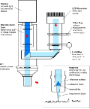
- transducer (PZT) while operating in closed loop [10]. The optical interferometer used for measuring the z-displacement is the National Physical Laboratory’s (NPL) Plane Mirror Differential Optical Interferometer (PMDOI) [11], a homodyne differential interferometer, fibre-fed with a He-Ne frequency stabilized
- laser (λ = 632.8 nm). Two parallel mirrors are required for the interferometer; one for each optical path. One mirror is rigidly connected to the PZT tube that moves the cantilever, and the other forms the sample holder. The interferometer is a double pass interferometer with each optical path having
- sample preparation for microscopic measurements. Using an atomic force microscope that realizes its traceability directly using an integrated optical interferometer we confirmed the suitability of the technique for producing samples whose dimensions can be measured accurately by AFM. Theoretical surface


Ferromagnetic behaviour of ZnO: the role of grain boundaries
Beilstein J. Nanotechnol. 2016, 7, 1936–1947, doi:10.3762/bjnano.7.185
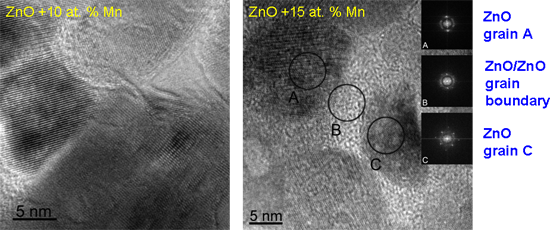
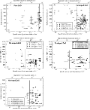
- SQUID interferometer (Quantum Design MPMS-7 and MPMS-XL) in the external magnetic field applied parallel to the sample plane. The diamagnetic signal from a sample holder and a substrate was accurately subtracted from the magnetization curves. In Figure 3 the magnetization curves are plotted for pure ZnO


Surface-enhanced infrared absorption studies towards a new optical biosensor
Beilstein J. Nanotechnol. 2016, 7, 1736–1742, doi:10.3762/bjnano.7.166
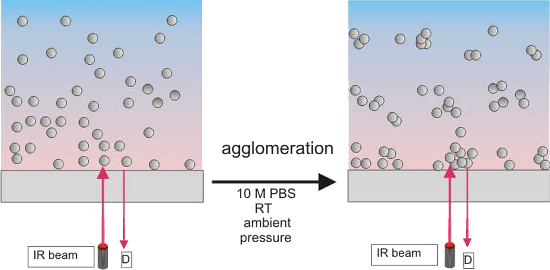
- different measurement techniques in order to gain more information. One idea is to operate a Mach–Zehnder interferometer (MZI) in the mid-infrared, thus combining the interferometric information (quantification) with the characteristic fingerprint (identification) of the attached analyte [6]. An example of


Active and fast charge-state switching of single NV centres in diamond by in-plane Al-Schottky junctions
Beilstein J. Nanotechnol. 2016, 7, 1727–1735, doi:10.3762/bjnano.7.165
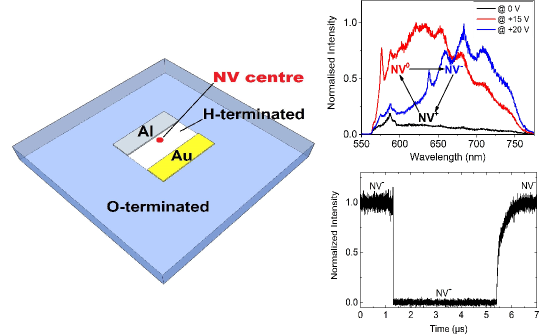
- were identified as single NV− centres according to a measurement of the spectrum (Figure 1b) and the second-order photon autocorrelation with a Hanbury–Brown and Twiss interferometer setup [1][27][28], which shows a clear antibunching dip at τ = 0 s (Figure 1c). Before the realisation of a two
- − centres according to the corresponding (b) PL-spectrum and (c) second-order photon autocorrelation measurement performed with a Hanbury–Brown and Twiss interferometer setup showing a clear antibunching dip indicating single photon emission. (d) After H-termination of the diamond surface the NV-emission is


Adiabatic superconducting cells for ultra-low-power artificial neural networks
Beilstein J. Nanotechnol. 2016, 7, 1397–1403, doi:10.3762/bjnano.7.130
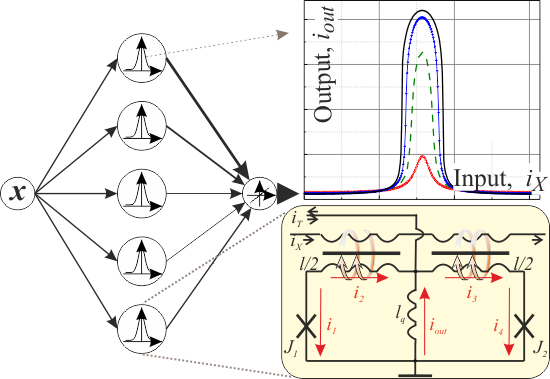
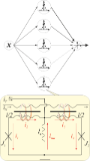
- as a neuron whose activation function usually has a sigmoid-like shape. We start our pursuit of the MLP artificial neuron with an analysis of a simple quantron (or single-junction superconducting interferometer, Figure 1a) transfer function. This function links the applied magnetic flux, ΦX, with
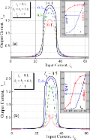
- connection of two s-cells in order to obtain a bell-shaped transfer function from two sigmoid functions. Note that the resulting scheme is quite analogous to the above mentioned QFP. The cell is a two-junction interferometer with a total normalized inductance l, composed of two Josephson junctions J1 and J2
- shunted by inductance lq. Once again, the excitation current IX is applied to a control line, which is magnetically coupled to the symmetrical arms of the interferometer. One can write the equations for a Gauss cell by analogy with Equation 1 and Equation 2 in terms of the sum and difference phases, θ


Understanding interferometry for micro-cantilever displacement detection
Beilstein J. Nanotechnol. 2016, 7, 841–851, doi:10.3762/bjnano.7.76
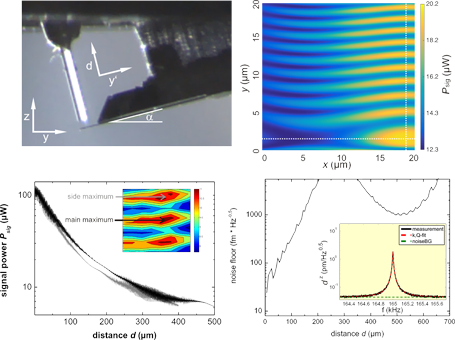
- displacement noise spectral density strongly decreases with decreasing distance between the fiber-end and the cantilever, yielding a noise floor of 24 fm/Hz0.5 under optimum conditions. Keywords: displacement noise spectral density; interferometer; non-contact atomic force microscope (NC-AFM); opto-mechanic
- effects; Introduction A common method for measuring the displacement of a micro-cantilever or another micro-mechanical device is interferometric displacement detection. The most basic interferometer setup is the Michelson interferometer using two mirrors for the superposition of two light beams [1][2]. A
- related interferometric setup based on multi-beam interference in an optical cavity is the Fabry-Pérot interferometer typically used in form of an etalon in spectroscopy, lasers, and optical telecommunication [3] for precise wavelength selection within a certain free spectral range [4]. The Fabry–Pérot


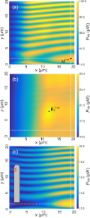


![[Graphic 27]](/bjnano/content/inline/2190-4286-7-76-i36.png?max-width=637&scale=1.18182) of the noise floor of the interferometer signal as a function of the...
of the noise floor of the interferometer signal as a function of the...
Highly compact refractive index sensor based on stripe waveguides for lab-on-a-chip sensing applications
Beilstein J. Nanotechnol. 2016, 7, 751–757, doi:10.3762/bjnano.7.66
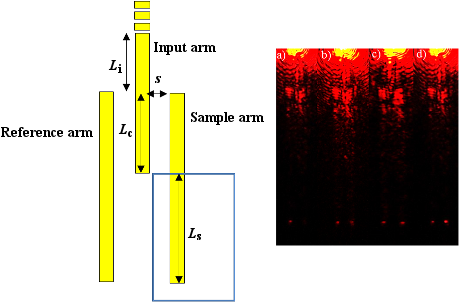
- outcome of this paper will prove beneficial in highly compact, label-free and highly sensitive refractive index analysis. Keywords: interferometer; sensing; surface plasmons; waveguides; Introduction Plasmons are coherent oscillations of free electrons existing on metal dielectric interfaces and are
- excitation. The plasmonic Mach–Zehnder interferometer (MZI) is one such alternative passive nano-optical device used in refractive index sensing applications [3][5][15][16]. In physics, a MZI is a device used to determine the relative phase shift variations between two collimated beams derived from splitting
- ]. MZIs can be designed to be wavelength specific and more compact using waveguide structures. Vernon et al. proposed a compact interferometer design using stripe waveguide coupling to measure the change in the refractive index of a sample using the change in the output intensity [19]. The stripe



Correlative infrared nanospectroscopic and nanomechanical imaging of block copolymer microdomains
Beilstein J. Nanotechnol. 2016, 7, 605–612, doi:10.3762/bjnano.7.53
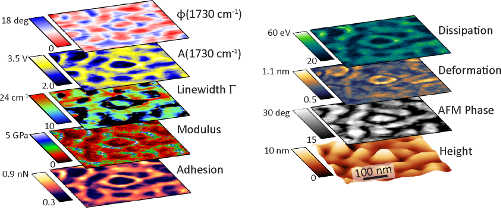
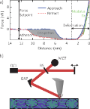
- suppressed by a lock-in detector (HF2, Zurich Instruments) demodulating at the third harmonic of the tip tapping frequency. Tip-scattered light is recombined at the detector with light of known phase from the reference arm in an asymmetric Michelson interferometer geometry, allowing for the determination of
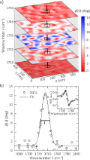
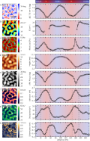


![[Graphic 9]](/bjnano/content/inline/2190-4286-7-53-i10.png?max-width=637&scale=1.18182) (1730 ...
(1730 ...
Imaging of carbon nanomembranes with helium ion microscopy
Beilstein J. Nanotechnol. 2015, 6, 1712–1720, doi:10.3762/bjnano.6.175
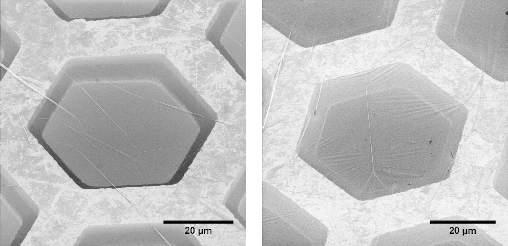
- other suitable indicators that are detectable by optical microscopy. In addition, optical imaging with a Mirau interferometer allows the detection of the vibrational modes of bare CNMs with a resolution limited by the light wavelength [15]. The imaging of CNMs with higher magnification requires charged




Radiation losses in the microwave Ku band in magneto-electric nanocomposites
Beilstein J. Nanotechnol. 2015, 6, 1700–1707, doi:10.3762/bjnano.6.173
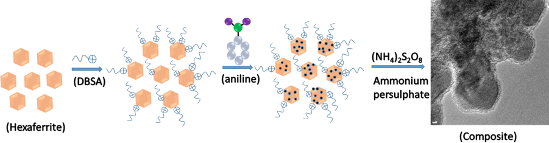
- size 0.02°). Attached functional groups have been analysed with Fourier transform infrared spectrometry (FTIR interferometer IR prestige-21 FTIR (model-8400S)) in the range of 400–4000 cm−1 by making calcined product pallets with KBr in a weight ratio of 1:10. ESR measurements were performed at room


Graphene quantum interference photodetector
Beilstein J. Nanotechnol. 2015, 6, 726–735, doi:10.3762/bjnano.6.74
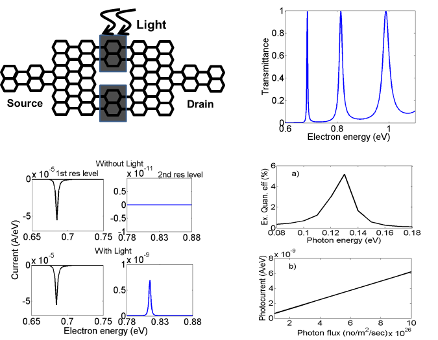
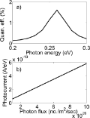
- interference (QI) photodetector was simulated in two regimes of operation. The structure consists of a graphene nanoribbon, Mach–Zehnder interferometer (MZI), which exhibits a strongly resonant transmission of electrons of specific energies. In the first regime of operation (that of a linear photodetector
- flux in one or both of the interferometer arms in the same MZI structure. Graphene QI photodetectors have several distinct advantages: they are of very small size, they do not require p- and n-doped regions, and they exhibit a high external quantum efficiency. Keywords: decoherence; graphene
- device structure that has attracted attention is the resonant tunneling diode, whose operation is based on quantum interference [10]. In graphene nanoribbons, a Mach–Zehnder interferometer (MZI) structure can be devised which gives the same transmittance pattern as that of a resonant tunneling diode for




In situ observation of biotite (001) surface dissolution at pH 1 and 9.5 by advanced optical microscopy
Beilstein J. Nanotechnol. 2015, 6, 665–673, doi:10.3762/bjnano.6.67
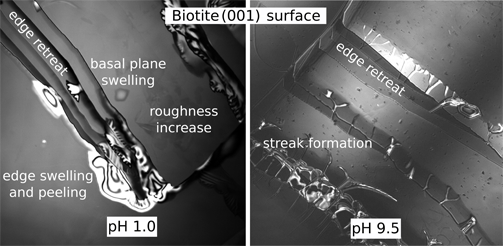
- -resolution phase shifting interferometer (PSI) that allows for the in situ measurement of extremely low surface dissolution (and growth) rates of minerals while submerged in aqueous solutions [26][27][28][29][30]. With the progress of these techniques our understanding of the mechanisms of the surface


High-frequency multimodal atomic force microscopy
Beilstein J. Nanotechnol. 2014, 5, 2459–2467, doi:10.3762/bjnano.5.255
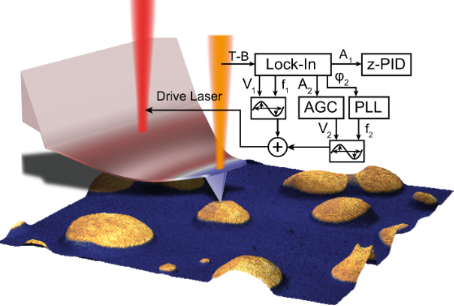
- and drive lasers by using a modified knife-edge technique. An interferometer (NA, SIOS Meßtechnik, Ilmenau, Germany) tracked the position of the optics block as it was swept across a cantilever, and the sum signal from the photodiode was recorded. We inferred the spatial position of the focal spot
- . Acknowledgements We thank the Atelier de l’institut de production et robotique at EPFL for fabrication of the mechanical components, Aleksandra Radenovic for use of the spectrometer, and SCL-Sensor.tech. for use of the interferometer. This work was funded by the European Union’s Seventh Framework Programme FP7


Surface topography and contact mechanics of dry and wet human skin
Beilstein J. Nanotechnol. 2014, 5, 1341–1348, doi:10.3762/bjnano.5.147
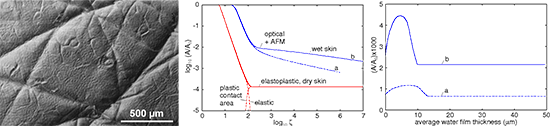
- obtained by using a Hitachi TM3000 tabletop electron microscope (Hitachi High-Technologies Corp., Tokyo, Japan) at an accelerating voltage of 3 kV (Figure 1). 3D surface profiles of the positive replicas were acquired by using a white light interferometer NewView 6k (Zygo, Middlefield, CT, USA) with 5× and


Dry friction of microstructured polymer surfaces inspired by snake skin
Beilstein J. Nanotechnol. 2014, 5, 1091–1103, doi:10.3762/bjnano.5.122
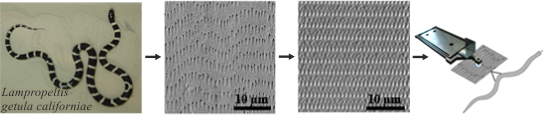
- glass ball), its surface was repeatedly examined by white light interferometer (data not shown). As an indication for the maximum contact area occurring in our measurements we estimated the Hertzian contact area [42] of the glass sphere in contact with flat substrate according to the following
- gold-palladium (4:1) layer by using a high vacuum sputter coater Leica EM SCD500 (Leica Microsystems GmbH, Wetzlar, Germany). Additionally, for quick 3D surface observations a white-light interferometer (New View 6000, ZygoLOT, Darmstadt, Germany) without the sputter coating was used. As described in
- of microstructure. Arrows show sliding directions of each individual measurement. Exact geometry of each PGMS pattern (mean values and standard deviations) measured by white-light interferometer. λ: pitch dimension, A: periodicity of the structure, W: width of the structure and D: depth of the


Friction behavior of a microstructured polymer surface inspired by snake skin
Beilstein J. Nanotechnol. 2014, 5, 83–97, doi:10.3762/bjnano.5.8
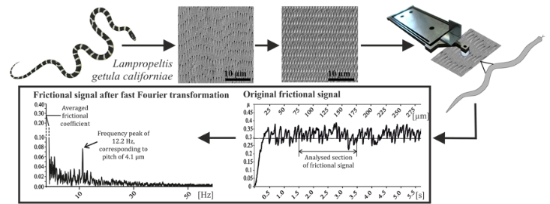
- (Ra) of molds was measured with a white light interferometer (New View 6000, ZygoLOT, Darmstadt, Germany). For metrologic characterization of the surface microstructures, the image analysis software SigmaScanPro 5.0 (SPSS Inc., Chicago, USA) was used. Roughness (Ra) perpendicular to the lines of the
- (Ergo 5925 Elastomer, Tagelswangen, Switzerland). The roughness of the glass ball determined by a white light interferometer (NewView, ZygoLOT GmbH, Darmstadt, Germany) was Ra = 0.006 µm. The polymer surfaces were fixed on metallic sample holders by cyanoacrylate glue. To characterize frictional

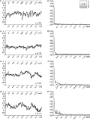
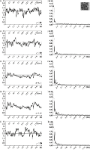

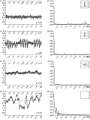
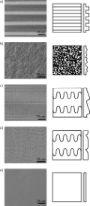


Multiple regimes of operation in bimodal AFM: understanding the energy of cantilever eigenmodes
Beilstein J. Nanotechnol. 2013, 4, 385–393, doi:10.3762/bjnano.4.45
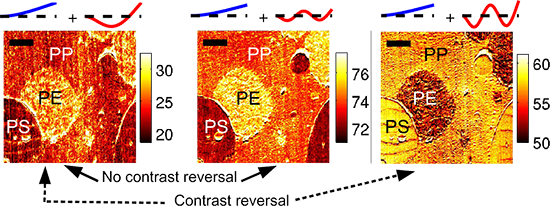
- , interferometer based AFMs, which do not suffer from these calibration problems, may become more attractive than optical lever (photodiode) based AFMs. Conclusion We have shown experimentally that there are multiple distinct imaging regimes in bimodal AFM. The different states were identified by contrast


![[Graphic 3]](/bjnano/content/inline/2190-4286-4-45-i5.png?max-width=637&scale=1.18182) . In the top row (a, b) the first eigen...
. In the top row (a, b) the first eigen...



Effect of deposition temperature on the structural and optical properties of chemically prepared nanocrystalline lead selenide thin films
Beilstein J. Nanotechnol. 2012, 3, 438–443, doi:10.3762/bjnano.3.50
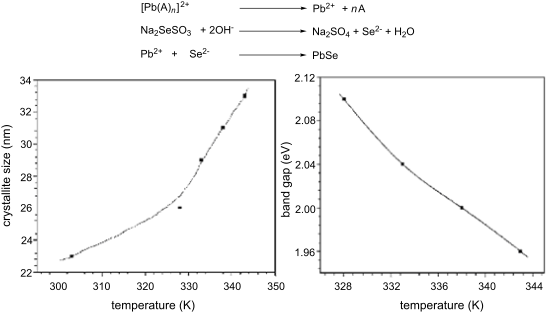
- ) in the wavelength range 360–900 nm. The thickness of the PbSe thin films was measured by the multiple beam interferometer technique. Results and Discussion Film growth A PbSe thin film is formed when the ionic product of Pb2+ and Se2− ions exceeds the solubility product of PbSe (≈10−38 at 300 K) [16




Nano-FTIR chemical mapping of minerals in biological materials
Beilstein J. Nanotechnol. 2012, 3, 312–323, doi:10.3762/bjnano.3.35
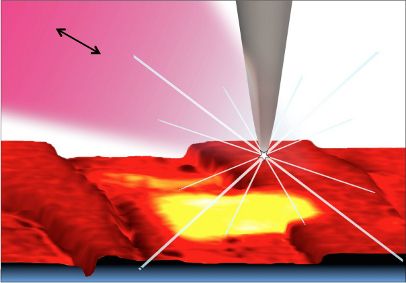
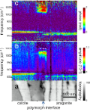
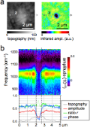
- and spectral analysis of the backscattered light is by an asymmetric Michelson interferometer that generates, by online Fourier transformation, infrared amplitude and phase spectra simultaneously; a switchable reference path ensures an absolute quantification of backscattering [3]. Note that while
- spectrally integrated mode of nano-FTIR is also introduced in this study. It employs a fixed interferometer setting at a (free-induction-decay) [2] fringe maximum (ca. 150–300 fs delay). The detector amplitude signal then represents the background-suppressed near-field signal response averaged over a wide





Mechanical characterization of carbon nanomembranes from self-assembled monolayers
Beilstein J. Nanotechnol. 2011, 2, 826–833, doi:10.3762/bjnano.2.92
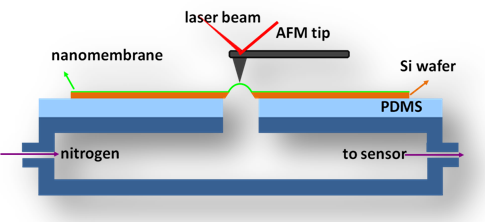
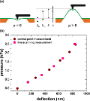
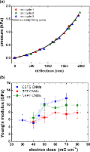
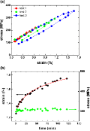
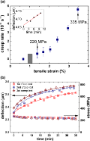
- one side. The Young’s modulus and the prestress are then calculated from the obtained pressure–deflection relationship. The deflection is usually monitored with an optical microscope, either by viewing the membrane from the side [12] or by using a laser interferometer [13]. Both methods have a