Search results
Search for "intermolecular interactions" in Full Text gives 96 result(s) in Beilstein Journal of Nanotechnology.
Design and selection of peptides to block the SARS-CoV-2 receptor binding domain by molecular docking
Beilstein J. Nanotechnol. 2022, 13, 699–711, doi:10.3762/bjnano.13.62
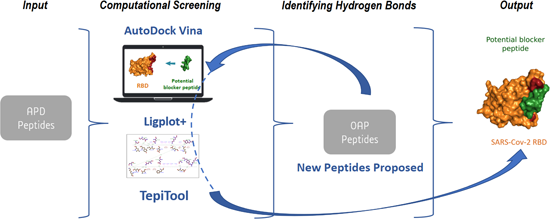
- . This suggests that the intermolecular interactions (hydrogen bonds and hydrophobic interactions) in the APD peptide–RBD complexes are favored. The secondary structure of the APDs changes and adopts a proper conformation to bind to the RBD protein. An analysis of the secondary structure for free and



Effects of drug concentration and PLGA addition on the properties of electrospun ampicillin trihydrate-loaded PLA nanofibers
Beilstein J. Nanotechnol. 2022, 13, 245–254, doi:10.3762/bjnano.13.19
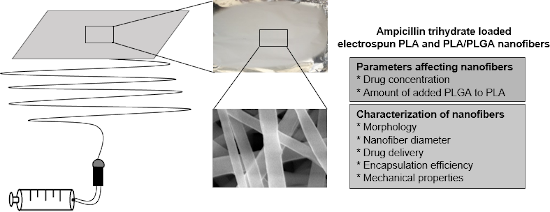
- intramolecular and intermolecular interactions that affect the physical properties of the electrospinning solution, thus leading to differences in the drug release properties of the electrospun nanofibers [2][24]. iii) PLGA is more hydrophilic compared to PLA [11]. iv) The increase in the molecular weight
- have thicker diameters due to the higher viscosity of PLGA/PLA solutions, ii) the difference in structure and hydrophobicity of PLGA causes differences in the intermolecular interactions of the electrospinning solution. The increase in the amount of drug caused an increase in the nanofiber diameter and


A comprehensive review on electrospun nanohybrid membranes for wastewater treatment
Beilstein J. Nanotechnol. 2022, 13, 137–159, doi:10.3762/bjnano.13.10
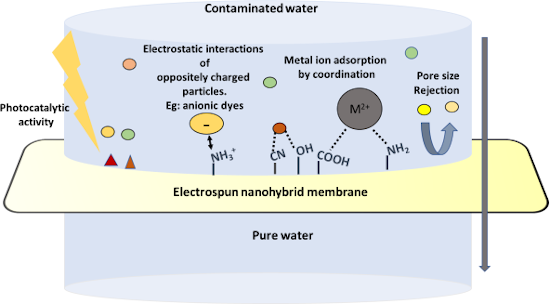
- physisorption, only a reversible physical bond due to electrostatic interactions or intermolecular interactions forms between adsorbate and the adsorbent. An ideal adsorption membrane should exhibit both high adsorption capacity and a high adsorption rate. ENH membranes have been widely used as adsorption




Identifying diverse metal oxide nanomaterials with lethal effects on embryonic zebrafish using machine learning
Beilstein J. Nanotechnol. 2021, 12, 1297–1325, doi:10.3762/bjnano.12.97
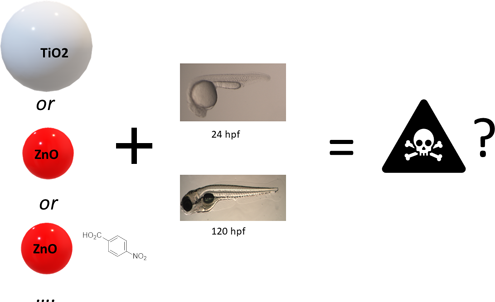
- characteristics related to intermolecular interactions, which could affect agglomeration or uptake by cells, and reactivity, which could trigger toxicity. (Dummy values, lower than the minimum of observed values, were inserted where the corresponding coating was absent, in keeping with recommended practice [45


Self-assembly of amino acids toward functional biomaterials
Beilstein J. Nanotechnol. 2021, 12, 1140–1150, doi:10.3762/bjnano.12.85
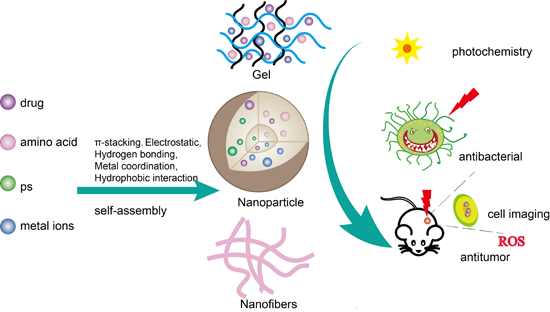
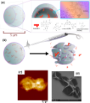
- biomaterials; intermolecular interactions; self-assembly; Review Introduction Biomaterials play a crucial role in the treatment of diseases and health care and have been widely used in prostheses and drug delivery devices [1]. Clinical applications of biomaterials include the use of metals, ceramics, and

Molecular assemblies on surfaces: towards physical and electronic decoupling of organic molecules
Beilstein J. Nanotechnol. 2021, 12, 950–956, doi:10.3762/bjnano.12.71

- feature heterogeneous adsorption sites, which can lead to the anchoring of organic molecules having specific functional groups. Hence, the interplay of the potential energy landscape of the substrate and the intermolecular interactions steers the self-assembly in such systems. Xiang et al. [90] studied
Nanoporous and nonporous conjugated donor–acceptor polymer semiconductors for photocatalytic hydrogen production
Beilstein J. Nanotechnol. 2021, 12, 607–623, doi:10.3762/bjnano.12.50
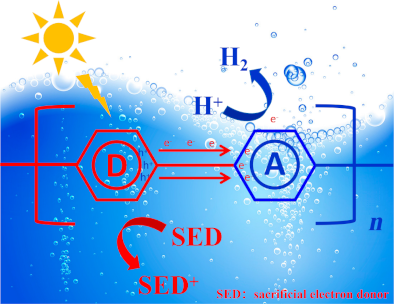
- the para carbon atom of the BT unit strengthens the intermolecular interactions and thus enhances the charge transfer effect among the polymer chains. This is due to the interaction between two p orbitals from the meta carbon atom on one molecule and a N atom on the other. In addition, a methoxy group




Surface-enhanced Raman scattering of water in aqueous dispersions of silver nanoparticles
Beilstein J. Nanotechnol. 2021, 12, 497–506, doi:10.3762/bjnano.12.40
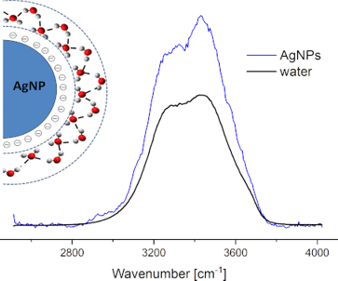
- expressed by the κ parameter (see Equation 4) as a function of the distance from the Ag surface for different variants of intermolecular interactions: black squares −Eb = Ew; red circles −Eb = 26 kJ/mol, Ew = 29.3 kJ/mol (Eb = 0.89Ew); blue triangles −Eb = 22.9 kJ/mol, Ew = 30.4 kJ/mol (Eb = 0.75Ew); purple


Interface interaction of transition metal phthalocyanines with strontium titanate (100)
Beilstein J. Nanotechnol. 2021, 12, 485–496, doi:10.3762/bjnano.12.39
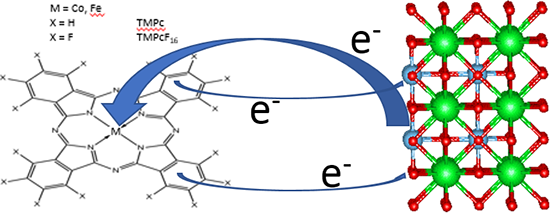
- arrangement of the molecules on the STO(100) surface due to the different size of the molecules and/or different intermolecular interactions. A strong repulsion is expected for CoPcF16 with its negatively charged outer fluorine atoms. Further, for CoPcF16, adsorption sites might be triggered by the observed C


TiOx/Pt3Ti(111) surface-directed formation of electronically responsive supramolecular assemblies of tungsten oxide clusters
Beilstein J. Nanotechnol. 2021, 12, 203–212, doi:10.3762/bjnano.12.16
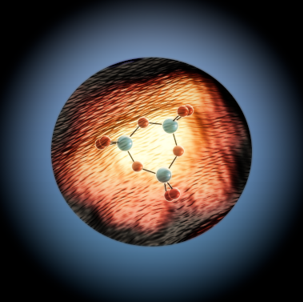
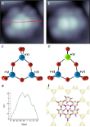
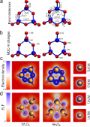
- at elevated temperatures, which allows for an energy contact by agglomeration due to strong intermolecular interactions. After annealing the sample at 900 K, the formation of larger islands is observed. The thickness of these islands is always approx. 0.6 nm, which indicates the formation of a WO3



The influence of an interfacial hBN layer on the fluorescence of an organic molecule
Beilstein J. Nanotechnol. 2020, 11, 1663–1684, doi:10.3762/bjnano.11.149
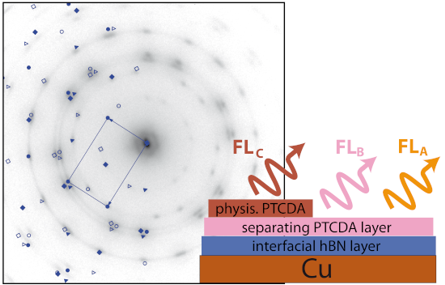
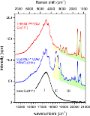
- ) (1,301.2 cm−1) and the monolayer on Cu(111) (1,312.9 cm−1). Actually, it is rather close to the value seen on Cu(111) within 3 cm−1 (see Table 1). This may indicate that intermolecular interactions between adjacent layers in a multilayer also have a significant impact on the vibrational properties and
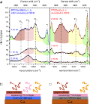
- intermolecular interactions and a modification in the interfacial bonding in the ordered domains of the RT state, which form upon annealing at room temperature. We propose that, in particular, the effect of intermolecular interactions is also relevant for the monolayer of PTCDA on hBN/Cu(111), whereas on Cu(111
- ) concomitant changes in the interfacial bonding may play a role, too. The increased temperature induces the formation of ordered domains (observed in LEED). The intermolecular interactions in the domains then cause a change in the structure and charge distribution within the molecule. This in turn increases





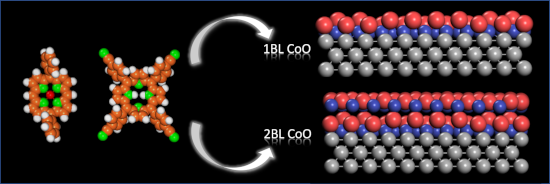
Adsorption and self-assembly of porphyrins on ultrathin CoO films on Ir(100)
Beilstein J. Nanotechnol. 2020, 11, 1516–1524, doi:10.3762/bjnano.11.134
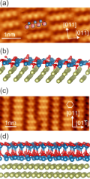
- structures [10]. Different superstructures are observed, which also differ in the type of intermolecular interactions. The structure marked by a white rectangle in Figure 6a, shown in detail in Figure 6b, contains two bonding motifs. The first is the dipolar interaction of CN groups of neighboring molecules




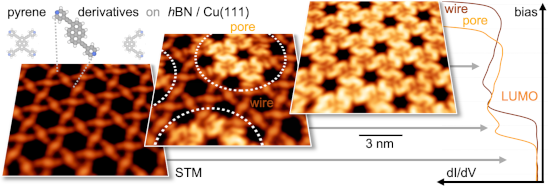
Self-assembly and spectroscopic fingerprints of photoactive pyrenyl tectons on hBN/Cu(111)
Beilstein J. Nanotechnol. 2020, 11, 1470–1483, doi:10.3762/bjnano.11.130
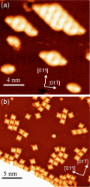
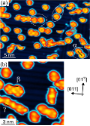
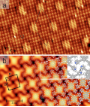
- image (0.1 V, 0.2 nA), partially overlaid by structural models. The black tetragon marks the unit cell (lattice vectors a and b) and the white square highlights the intermolecular interactions (see inset). Self-assembly of 1,6-bis(pyridin-4-ylethynyl)pyrene (2, trans-like) on hBN/Cu(111). a) Overview
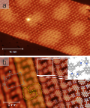
- intermolecular interactions, represented by the distances d in the inset. Self-assembly of 1,8-bis(pyridin-4-ylethynyl)pyrene (3, cis-like) on hBN/Cu(111). a) Overview image (1.38 V, 0.024 nA). Regular islands were formed after rt deposition. Several rows, each containing molecules in two opposite orientations




Impact of fluorination on interface energetics and growth of pentacene on Ag(111)
Beilstein J. Nanotechnol. 2020, 11, 1361–1370, doi:10.3762/bjnano.11.120
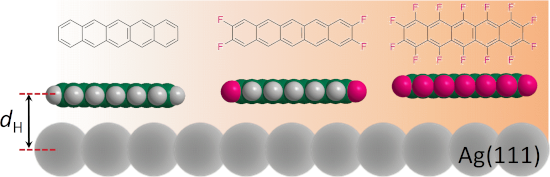
- increase in dH for PEN by raising the coverage was explained by a vertical ordering due to intermolecular interactions [51]. The small coverage-dependent changes of F4PEN showed an opposite trend, but the change in the vertical adsorption heights of the carbon atoms was only 0.02 Å, i.e., within the


High permittivity, breakdown strength, and energy storage density of polythiophene-encapsulated BaTiO3 nanoparticles
Beilstein J. Nanotechnol. 2020, 11, 1190–1197, doi:10.3762/bjnano.11.103
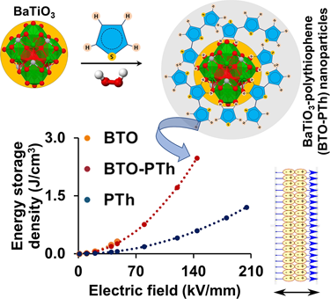
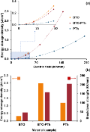
- -thiophene (BTO-PTh) nanoparticles. BTO nanoparticles and thiophene (Th) monomer are dispersed in water. Th-monomer molecules adsorb on the surface of BTO nanoparticles through weak intermolecular interactions. The chemical oxidative polymerization of Th initiated by H2O2 and catalyzed by Cu2+ ions yields




A 3D-polyphenylalanine network inside porous alumina: Synthesis and characterization of an inorganic–organic composite membrane
Beilstein J. Nanotechnol. 2020, 11, 938–951, doi:10.3762/bjnano.11.78
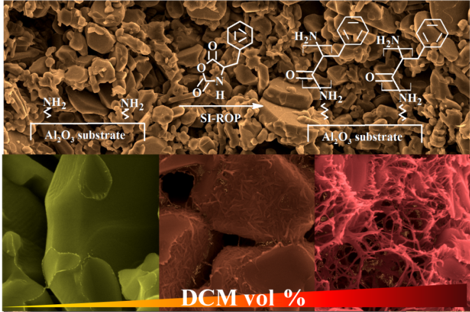
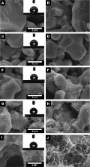
- , which are growing from the opposing surface region, due to intermolecular interactions. We assume that by increasing the volume fraction of DCM an alternative polymerization mechanism (activated monomer mechanism or carbamat mechanism) takes over, which enables free growing polymer chains and/or




Templating effect of single-layer graphene supported by an insulating substrate on the molecular orientation of lead phthalocyanine
Beilstein J. Nanotechnol. 2020, 11, 814–820, doi:10.3762/bjnano.11.66
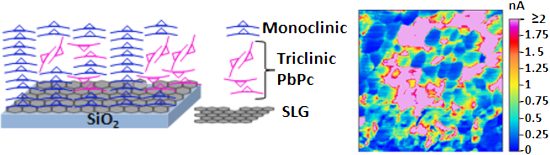
- intermolecular interactions on the top layers, influences the orientation of PbPc molecules leading to the formation of a very small fraction of triclinic moieties in edge-on or tilted configuration. Further, electrical characterization of these films in a vertical configuration shows enhanced conduction


Multilayer capsules made of weak polyelectrolytes: a review on the preparation, functionalization and applications in drug delivery
Beilstein J. Nanotechnol. 2020, 11, 508–532, doi:10.3762/bjnano.11.41
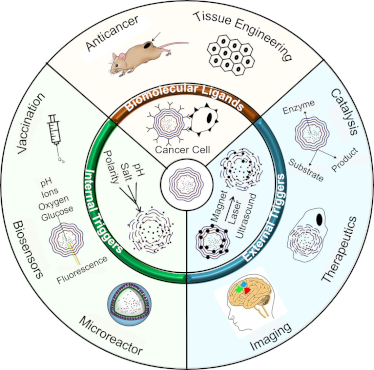
- strength. Various reactions have been reported to improve the binding strength in order to increase the mechanical resistance and long term stability of the capsules. Several post fabrication treatments have also been used to strengthen the weak intermolecular interactions to fabricate stable cross-linked



High-tolerance crystalline hydrogels formed from self-assembling cyclic dipeptide
Beilstein J. Nanotechnol. 2019, 10, 1894–1901, doi:10.3762/bjnano.10.184
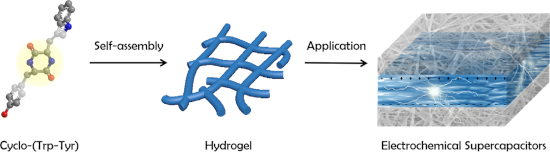
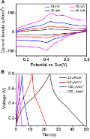
- introduction of the biopolymers whether the biopolymers were positively or negatively charged (Figure 3C,D). Clearly, the electrostatic repulsion or attraction between the C-WY and biopolymers contributes to the enhancement of intermolecular interactions in the hydrogel, leading to the improvement of the


Precise local control of liquid crystal pretilt on polymer layers by focused ion beam nanopatterning
Beilstein J. Nanotechnol. 2019, 10, 1691–1697, doi:10.3762/bjnano.10.164
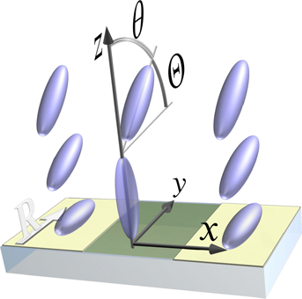
- their reliable electro-optical switching [1]. The reason is of fundamental nature: Anisotropic LC phases arise due to collective intermolecular interactions in the LC bulk that allow for different LC orientations in the laboratory frame. Without external alignment, LC samples are randomly multi-domain


Pure and mixed ordered monolayers of tetracyano-2,6-naphthoquinodimethane and hexathiapentacene on the Ag(100) surface
Beilstein J. Nanotechnol. 2019, 10, 1188–1199, doi:10.3762/bjnano.10.118
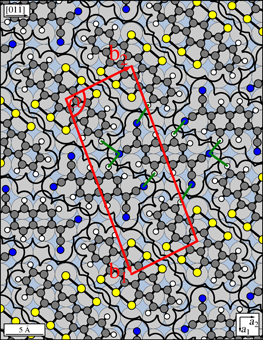
- of substrate surfaces. This aspect leads back to a detailed understanding of both the intermolecular interactions between the different types of molecules and their respective interfacial interactions to the surfaces. Over the last years, a variety of bicomponent layers composed of π-conjugated
- these layers from the underlying intermolecular interactions, the comparison of the intermolecular charge transfer on the metal surface in comparison with that in the respective CT crystals is of interest. Here we report an investigation on pure and mixed layers of a pair of about equally sized planar
- fluctuations in the STM current when apparently void surface regions are scanned. The occurrence of a gas-type phase is indicative of only very small or even repulsive intermolecular interactions that cannot compensate the loss in entropy related to the condensation of the HTPEN into islands. The LEED pattern


Polymorphic self-assembly of pyrazine-based tectons at the solution–solid interface
Beilstein J. Nanotechnol. 2019, 10, 494–499, doi:10.3762/bjnano.10.50
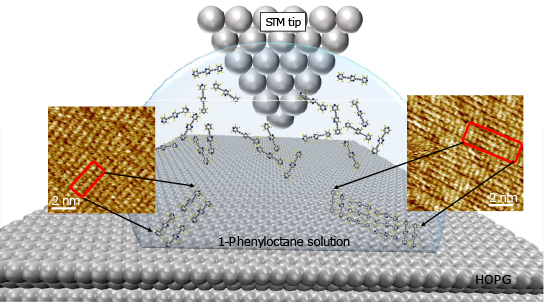
- Supporting Information File 1, sections 1–4. Crystallographic analysis reveals that these molecules crystallize in the monoclinic space group P21/c. In a bulk crystal both the nitrogen atoms, N1 of the pyrazine ring and N2 of the pyridyl group, have intermolecular interactions with the neighboring molecules
- via “hydrogen bridges” (Figure S1, Supporting Information File 1). The corresponding bond parameters for such intermolecular interactions (N···H–C) are listed in Table S3 of Supporting Information File 1. The N···H distances are in the range of 0.25–0.28 nm, while the C···N distances lie between 0.34
- especially important for self-assembly since the adsorbed molecules can move around on the substrate to optimize the packing structure as dictated by intermolecular interactions. For densely packed structures, both the molecule–substrate interaction as well as the intermolecular interactions are maximized. A


Induced smectic phase in binary mixtures of twist-bend nematogens
Beilstein J. Nanotechnol. 2018, 9, 1297–1307, doi:10.3762/bjnano.9.122
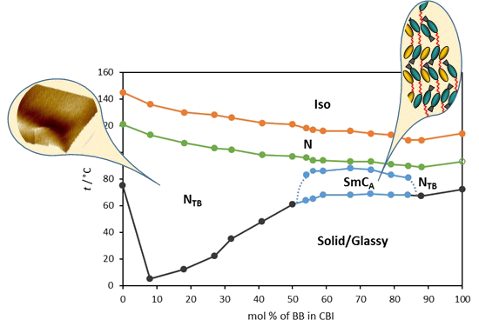
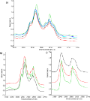
- not particularly strong. In the absence of electronic arguments, we envisaged other intermolecular interactions that might promote smectic arrangement. Further analysis of the spectra of the mixture show that the bands of the symmetric and asymmetric stretching vibrations of CH2 units (νs(C−H)CH2 and




Formation and development of nanometer-sized cybotactic clusters in bent-core nematic liquid crystalline compounds
Beilstein J. Nanotechnol. 2018, 9, 1288–1296, doi:10.3762/bjnano.9.121
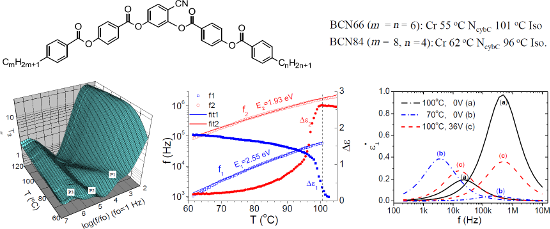
- clusters are formed by the molecular shape and the strong intermolecular interactions arising from the large molecular dipole moments parallel (μ║) and normal (μ┴) to the molecule’s long axis. In calamitics, however, molecules are rod-shaped, and the dipole moment lies either parallel (cyanobiphenyls) or
- normal (difluoroterphenyls) to the direction of the mesogen. The intermolecular interactions provide a basis for the mechanism in the formation of microscopic cybotactic clusters/domains in the nematic phase with C2v or higher symmetries [35][36]. The clusters are composed of nanometer-sized tilted (SmC


Electro-optical interfacial effects on a graphene/π-conjugated organic semiconductor hybrid system
Beilstein J. Nanotechnol. 2018, 9, 963–974, doi:10.3762/bjnano.9.90
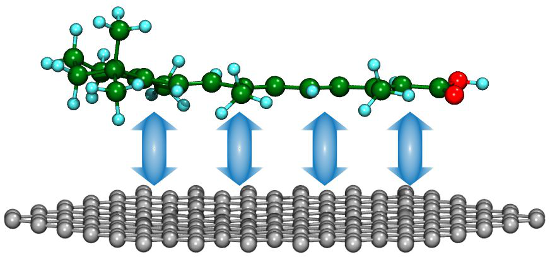
- packing and/or ordering [7]. Previous works have demonstrated that intermolecular interactions can dramatically reduce the luminescence quantum yield in solid-state devices [8][9][10][11][12][13]. In this context, it is important to control the ordering of π-conjugated organic molecules to make their use