


Search results
Search for "light source" in Full Text gives 208 result(s) in Beilstein Journal of Nanotechnology. Showing first 200.
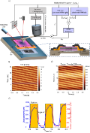
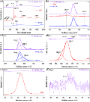
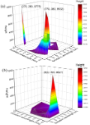
Spatial mapping of photovoltage and light-induced displacement of on-chip coupled piezo/photodiodes by Kelvin probe force microscopy under modulated illumination
Beilstein J. Nanotechnol. 2023, 14, 1059–1067, doi:10.3762/bjnano.14.87
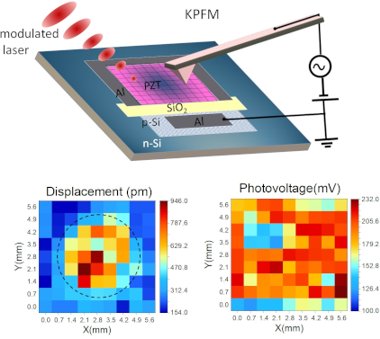
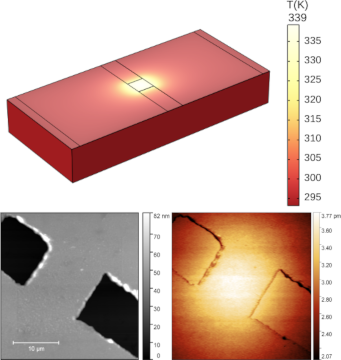
- the piezo/photodiode device. The device was illuminated from the top surface using a laser diode at a wavelength of 628 nm. The light source was installed inside the AFM chamber, and the light beam was aligned towards the active area of the device. The illumination source was modulated by a square


Nanostructured lipid carriers containing benznidazole: physicochemical, biopharmaceutical and cellular in vitro studies
Beilstein J. Nanotechnol. 2023, 14, 804–818, doi:10.3762/bjnano.14.66
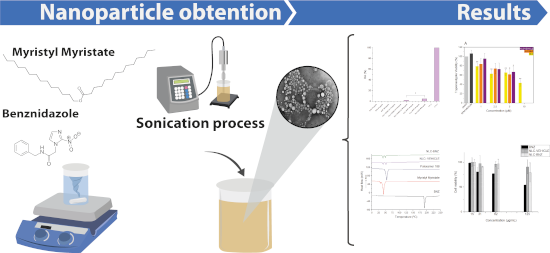
- , Universidad Nacional de San Martín (UNSAM), Campus Miguelete, 25 de Mayo y Francia, San Martín B1650KNA, Buenos Aires, Argentina, 6ALBA Synchrotron Light Source, Carrer de la Llum 2–26, Cerdanyola del Vallès, 08290 Barcelona, España, 7Nanomedicine Research Unit (Nanomed), Federal University of ABC (UFABC


Nanomaterials for photocatalysis and applications in environmental remediation and renewable energy
Beilstein J. Nanotechnol. 2023, 14, 722–724, doi:10.3762/bjnano.14.58

- development of advanced materials based on semiconductors (i.e., carbon-modified hexagonal boron nitride (MBN), MgO@g-C3N4, and TiO2@MWCNTs) have indicated a highly efficient photocatalytic performance for phenol removal using a low-power visible LED light source. For NO degradation, a visible light source

Observation of multiple bulk bound states in the continuum modes in a photonic crystal cavity
Beilstein J. Nanotechnol. 2023, 14, 544–551, doi:10.3762/bjnano.14.45
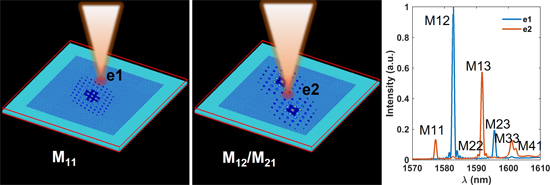
- influence and to obtain clear Lorentzian resonances, we applied a low-power broadband light source and finely tuned the illumination spot to obtain maximum excitation and collection efficiency of the setup for each mode. Different from the method applied in [30], the illumination spot size is not the same


The origin of black and white coloration of the Asian tiger mosquito Aedes albopictus (Diptera: Culicidae)
Beilstein J. Nanotechnol. 2023, 14, 496–508, doi:10.3762/bjnano.14.41
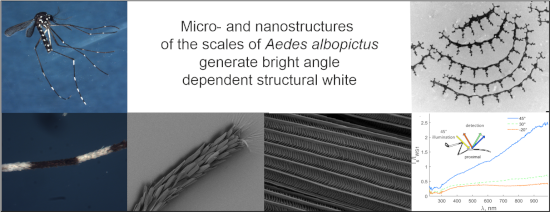
- (Figure 6c). The reason for this is that in the plane crossing the cylinder perpendicular to the cylinder axis, a point on the cylinder surface exists where the incident and reflected angles (from the light source and to the detector, respectively) are equal. Rayleigh scattering The contribution of the
- using a TEM Philips EM 208 (Philips, Eindhoven, Netherlands). Reflectance spectra measurements The light scattering spectra from the white areas on the proximal parts of the hind leg tarsus of Ae. albopictus male were measured at different orientations of the light source relative to the leg and at
- different detection angles. For this purpose, the observation area was illuminated at 45° with a light source (DH-2000-BAL, Ocean Optics Inc, Dunedin, Florida, USA) through an optical fiber (200 μm diameter) equipped with a one-lens condenser, which was placed 22 mm away from the sample. The illumination



A mid-infrared focusing grating coupler with a single circular arc element based on germanium on silicon
Beilstein J. Nanotechnol. 2023, 14, 478–484, doi:10.3762/bjnano.14.38
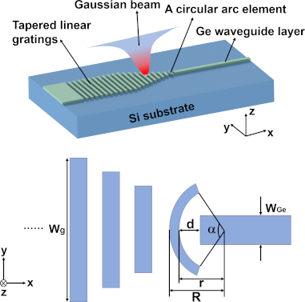
- depth. The incident angle is θ. In our work, the numerical simulations have been performed by using a commercial software of Lumerical FDTD solutions, which is based on the finite-difference time-domain method, and the light source we used for exciting the grating coupler is a Gaussian laser beam. The
- laser (the center wavelength is ca. 7 μm) as the light source to test the coupling efficiency of the experimental samples. The MIR laser is coupled into a single-mode ZrF4 optical fiber via a black diamond-2 aspheric lens [1]. The light from the single-mode ZrF4 optical fiber is coupled into the


Mixed oxides with corundum-type structure obtained from recycling can seals as paint pigments: color stability
Beilstein J. Nanotechnol. 2023, 14, 467–477, doi:10.3762/bjnano.14.37
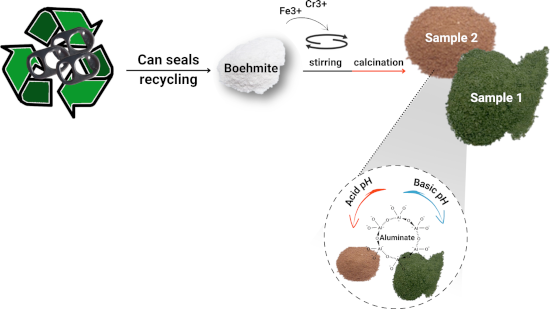
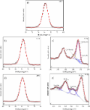
- , with a D65 light source (Shenzhen, China). XRD diffractograms of (a) alumina showing the θ-Al2O3 phase, (b) sample 1 showing a mixture of alumina and eskolaite phases Cr2O3, and (c) sample 2 showing a mixture of alumina and hematite phases (α-Fe2O3). Raman spectroscopy of (a) sample 1, which presents




Conjugated photothermal materials and structure design for solar steam generation
Beilstein J. Nanotechnol. 2023, 14, 454–466, doi:10.3762/bjnano.14.36
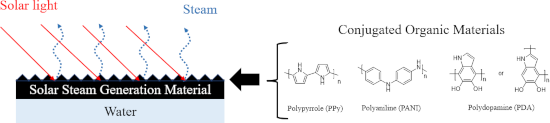
- photophysical properties and hydrophobicity through organic reactions. In general, DPP dyes have high photoluminescence quantum yields, but they have a relatively low photostability, degrading after 150 min under a collimated 300 W Xe lamp light source. It was previously reported that introducing electron


Bismuth-based nanostructured photocatalysts for the remediation of antibiotics and organic dyes
Beilstein J. Nanotechnol. 2023, 14, 291–321, doi:10.3762/bjnano.14.26
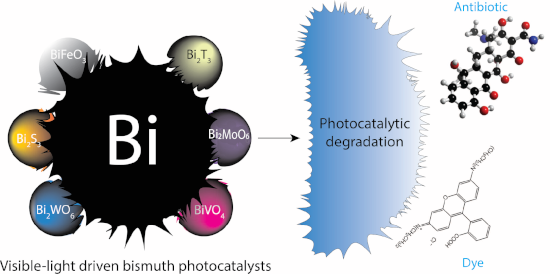
- pH value of the effluent, the dosage of the photocatalyst, the initial concentration of the target pollutant, the dosage of oxidants, and the type of light source. To lower the overall cost of water treatment, the photocatalyst must be effective under all types of light, including direct sunlight, UV


Cyclodextrins as eminent constituents in nanoarchitectonics for drug delivery systems
Beilstein J. Nanotechnol. 2023, 14, 218–232, doi:10.3762/bjnano.14.21
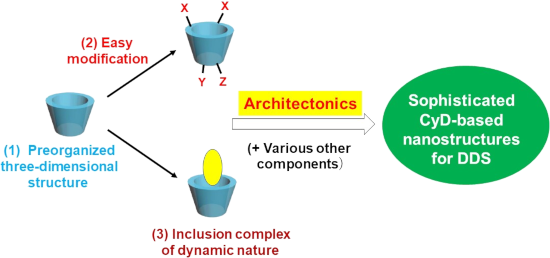
- therapy (PDT) employs a light-sensitive medicine (photosensitizer) and a light source to destroy abnormal cells [72][73]. The photosensitizer absorbs the light and is activated to kill target tissue. In many cases, reactive oxygen species (ROSs) such as singlet oxygen (1O2) generated from 3O2 by a




Concentration-dependent photothermal conversion efficiency of gold nanoparticles under near-infrared laser and broadband irradiation
Beilstein J. Nanotechnol. 2023, 14, 205–217, doi:10.3762/bjnano.14.20
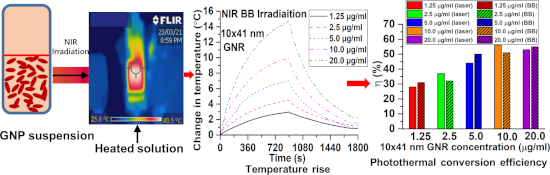
- , and the characteristics of irradiation source [12][13][14][15][16][17]. For biomedical applications, to achieve maximum light penetration, a light source of spectral output within 700–900 nm (NIR-I range, termed therapeutic window) is required [18][19][20]. Here, the photothermal conversion efficiency
- broadband light source and a near-infrared laser (for comparison). Gold nanospheres (GNSs) of 40 nm diameter and gold nanorods (GNRs) of sizes 25 × 47 nm, 10 × 38 nm, and 10 × 41 nm were examined. The photothermal conversion efficiency for these GNPs is reported for different nanoparticle concentrations and
- , respectively, the amounts of absorbed energy and energy dissipated to the medium. The absorbed energy Qabsorb is defined as: Here, Pinput is the incident optical power from the light source, Ptrans is the power transmitted through the GNP suspension, and η is the photothermal conversion efficiency. The energy


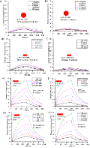


Structural, optical, and bioimaging characterization of carbon quantum dots solvothermally synthesized from o-phenylenediamine
Beilstein J. Nanotechnol. 2023, 14, 165–174, doi:10.3762/bjnano.14.17
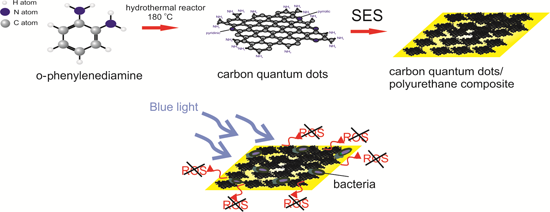
- light source and the 20 mL vials with samples was 5 cm. Hydroxyl radical production The CQDs/PU composite samples in the form of 1 × 1 × 0.1 cm3 rectangular slabs were immersed in 2 mL of terephthalic acid (TA, Sigma-Aldrich) water/NaOH (2 × 10⁻³ mol/L) solution. The concentration of TA was 5 × 10⁻⁴ mol


Characterisation of a micrometer-scale active plasmonic element by means of complementary computational and experimental methods
Beilstein J. Nanotechnol. 2023, 14, 110–122, doi:10.3762/bjnano.14.12
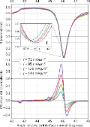
- 561.4 nm, typically incident at 0.2 mW after filtering, was used as the incident light source. The collimated light from an optical fibre was spatially filtered through a 300 μm aperture and a polariser aligned to the plane of rotation ensuring p-polarisation for SPP excitation as seen in Figure 2. The




Photoelectrochemical water oxidation over TiO2 nanotubes modified with MoS2 and g-C3N4
Beilstein J. Nanotechnol. 2022, 13, 1541–1550, doi:10.3762/bjnano.13.127
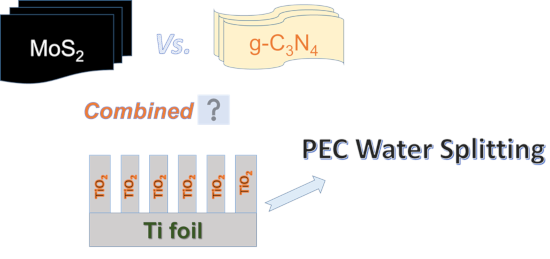
- electrodes were a Pt counter electrode, a Ag/AgCl 3 M reference electrode, and a MoS2/TNAs or g-C3N4/TNAs working electrode in a 1 M Na2SO4 (pH 7.4) electrolyte solution. The light source used in this study was a 150 W Xe lamp (ABET Instruments) with a calibrated luminous intensity of 100 mW·cm−2 and a UV


LED-light-activated photocatalytic performance of metal-free carbon-modified hexagonal boron nitride towards degradation of methylene blue and phenol
Beilstein J. Nanotechnol. 2022, 13, 1380–1392, doi:10.3762/bjnano.13.114
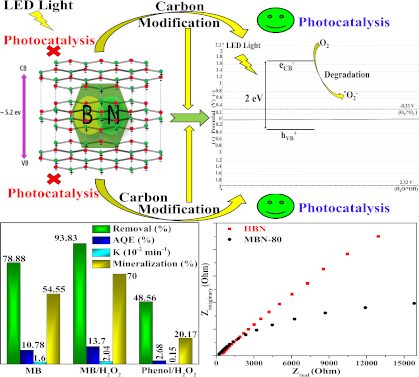
- , respectively. The setup consists of a 0.5 M Na2SO4 electrolyte/hole-scavenger solution along with LED lamps as a visible light source. The working electrode was fabricated through an ITO-PTFE electrode (dimensions: 1 cm × 1 cm) drop casted with a slurry of the studied materials, isopropanol and Nafion solution
- a voltage buildup which subsequently decayed upon quenching of the light source [31]. The obtained photovoltage plots were subsequently fitted with an exponential decay curve. The MBN-80 demonstrated a reduced decay time (4.55 s) in comparison to that of HBN (2.65 s) emphasizing an efficient charge



Microneedle-based ocular drug delivery systems – recent advances and challenges
Beilstein J. Nanotechnol. 2022, 13, 1167–1184, doi:10.3762/bjnano.13.98
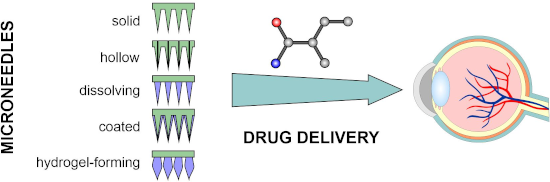
- plate where it quickly solidifies [151]. In the microstereolithographic method, a prepared polymer or a mixture of polymers undergoes polymerization under the influence of a high-energy light source (e.g., UV radiation) [150]. Digital light processing (DLP) is also a technology based on


Rapid fabrication of MgO@g-C3N4 heterojunctions for photocatalytic nitric oxide removal
Beilstein J. Nanotechnol. 2022, 13, 1141–1154, doi:10.3762/bjnano.13.96
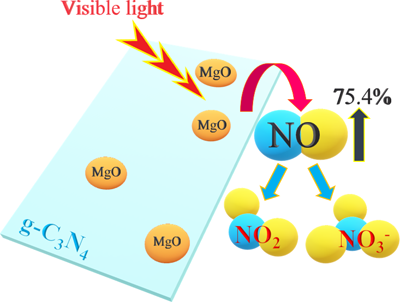
- photocatalytic activity of as-prepared MgO@g-C3N4 was evaluated by monitoring NO degradation. The photocatalytic NO removal experiments were performed using a 4.5 L reaction chamber and a Xenon lamp (300 W) as the visible light source. The initial NO concentration was 500 ppb, the flow rate was 1.5 L·min−1, and





Green synthesis of zinc oxide nanoparticles toward highly efficient photocatalysis and antibacterial application
Beilstein J. Nanotechnol. 2022, 13, 1108–1119, doi:10.3762/bjnano.13.94
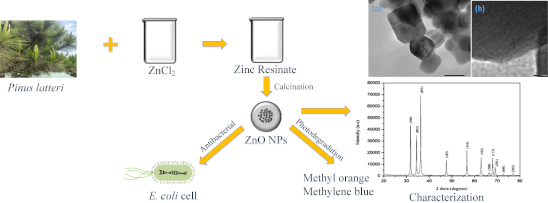
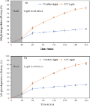
- in the dark for 30 min to equilibrate the adsorption. Subsequently, the suspensions were illuminated by a 30 W LED or an 18 W high-pressure mercury lamp. The light source was fixed at a distance of 20 cm from the surface of the reactor. After fixed illumination times, 5 mL was withdrawn and




Solar-light-driven LaFexNi1−xO3 perovskite oxides for photocatalytic Fenton-like reaction to degrade organic pollutants
Beilstein J. Nanotechnol. 2022, 13, 882–895, doi:10.3762/bjnano.13.79
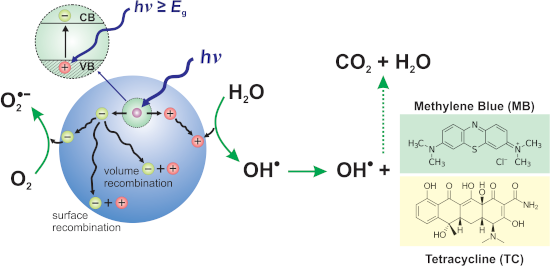
- complexes might compete with the hydroxyl radicals, eliciting a degradation of the reaction performance [18]. In recent years, the Fenton method has gradually developed into a new scenario of oxidation method, called photo-Fenton, which is facilitated or driven by the light source. Compared with a typical
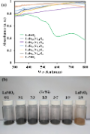
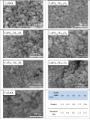
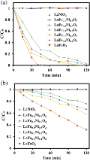
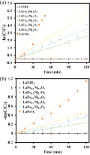
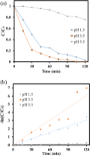
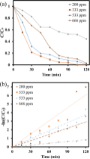
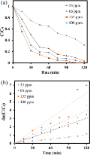
- photocatalytic activity of LaFexNi1−xO3 photocatalysts was examined by evaluating the performance of photocatalytic MB degradation. 300 W Xe-lamp equipped with AM 1.5G filter (Newport Corporation, USA) was used as the light source in the degradation experiment. The light intensity was adjusted to 100 mW/cm2



Hierarchical Bi2WO6/TiO2-nanotube composites derived from natural cellulose for visible-light photocatalytic treatment of pollutants
Beilstein J. Nanotechnol. 2022, 13, 745–762, doi:10.3762/bjnano.13.66
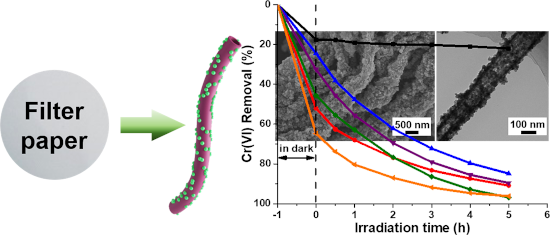
- × 1.0 cm2) and saturated calomel electrode (SCE) were used as the reference and counter electrodes, respectively. The Na2SO4 aqueous solution (0.5 M) was employed as the electrolyte and a xenon lamp with a 420 nm cutoff filter was used as the light source. The corresponding sample (5.0 mg) was
- electrode. Photocatalytic experiments The photocatalytic experiments were conducted on the XPA-1 photoreactor (Nanjing Xujiang, China) under a constant temperature (20 °C), and a 350 W xenon lamp with a 420 nm cutoff filter was employed as the visible-light source, which was kept in a horizontal distance of


Direct measurement of surface photovoltage by AC bias Kelvin probe force microscopy
Beilstein J. Nanotechnol. 2022, 13, 712–720, doi:10.3762/bjnano.13.63
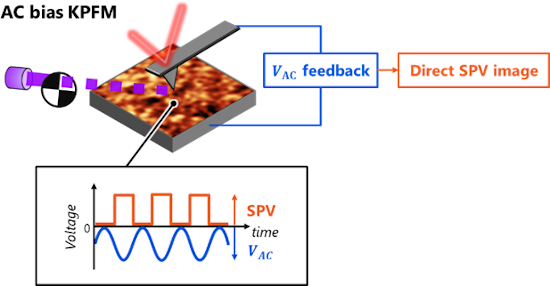
- influence of the photocurrent [35][36][37]. The ultraviolet (UV) light source was a He–Cd laser (Kimmon Koha) with a wavelength of 325 nm and a laser power of 2 mW. A lens was equipped on a xyz-scanner in the UHV chamber to focus the laser onto the sample with a beam diameter of 500 µm. A band-pass filter


Reliable fabrication of transparent conducting films by cascade centrifugation and Langmuir–Blodgett deposition of electrochemically exfoliated graphene
Beilstein J. Nanotechnol. 2022, 13, 666–674, doi:10.3762/bjnano.13.58
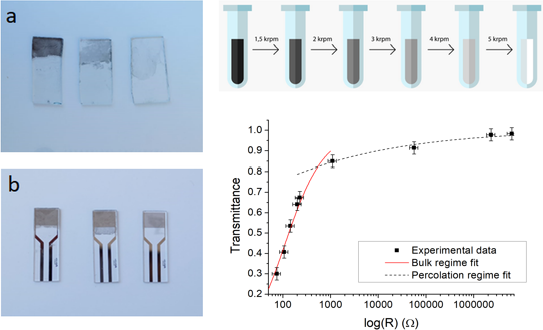
- , Madison, USA). A xenon lamp was used as a light source. The glass samples were mounted on a holder and inserted into the light path. Optical transmittance was measured by subtracting the signal from a baseline reference signal obtained when a clean glass substrate without graphene was inserted into the


Impact of device design on the electronic and optoelectronic properties of integrated Ru-terpyridine complexes
Beilstein J. Nanotechnol. 2022, 13, 219–229, doi:10.3762/bjnano.13.16
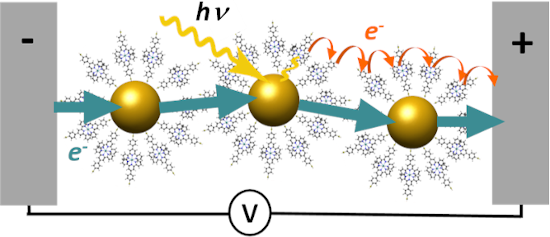
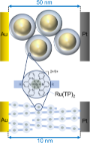
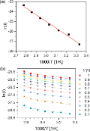
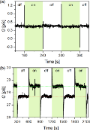
- devices upon irradiation at a wavelength of 490 to 540 nm and DC bias (USD) of 0.1 to 1.2 V (Figure 5a). Current vs time traces were recorded while the light source was switched on and off for a period needed until a stable current was recorded. The period was varied between 30 s and several minutes. The
- off of the light source. This peak is not observed for Ru(TP)2-complex wire devices. Obviously, local surface plasmons are excited by the incident light and the oscillating electron density on the AuNP surface in the electrical field between the nanoelectrodes leads to a parasitic current, which is
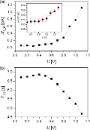
- dark current, ΔIL_D; inset: on/off ratio. Red bars indicate one standard deviation. (b) Half-life of current decline after the peak induced by switching the light source “on” or “off”. Binding energies (in eV) of C 1s, Ru 3d5/2, and O 1s core levels given for the consecutive wire growth steps shown in


Use of nanosystems to improve the anticancer effects of curcumin
Beilstein J. Nanotechnol. 2021, 12, 1047–1062, doi:10.3762/bjnano.12.78
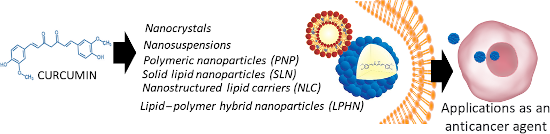
- promising application of gold nanostructures with CUR-loaded alginate microgels, which showed photothermal properties. High CUR retention and preferential toxicity against cancerous cells was also shown. The photoactive agent, wavelength, time of exposure, and distance to the light source are important


9.1% efficient zinc oxide/silicon solar cells on a 50 μm thick Si absorber
Beilstein J. Nanotechnol. 2021, 12, 766–774, doi:10.3762/bjnano.12.60
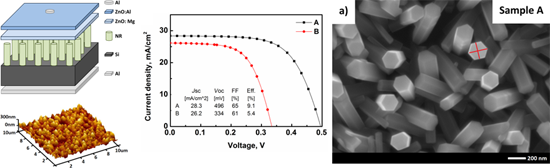
- large angles between cell and light source. The magnesium-doped zinc oxide films exhibited grain growth mode on sample B. Close to the silicon surface, only small grains were grown initially. The size of the MZO grains varies but does not exceed a value of 50 nm. Then (for larger distances from the Si





