


Search results
Search for "long-term stability" in Full Text gives 112 result(s) in Beilstein Journal of Nanotechnology.
Unveiling the potential of alginate-based nanomaterials in sensing technology and smart delivery applications
Beilstein J. Nanotechnol. 2024, 15, 1077–1104, doi:10.3762/bjnano.15.88

- alginate–CuO–glucose oxidase-based biosensor for glucose detection, which demonstrated high repeatability and long-term stability. Another research used horseradish peroxidase coated in calcium alginate beads to detect hydrogen peroxide in ambient water samples [127]. Ionotropic alginate hydrogel
- for glucose detection [131]. The high colloidal stability of alginate-based nanoparticles ensures their long-term stability and prevents aggregation, leading to more reliable and consistent glucose detection results [141]. Alginate-based nanoparticles can be easily functionalized to enhance their


Effect of wavelength and liquid on formation of Ag, Au, Ag/Au nanoparticles via picosecond laser ablation and SERS-based detection of DMMP
Beilstein J. Nanotechnol. 2024, 15, 1054–1069, doi:10.3762/bjnano.15.86

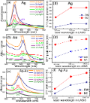
- . Stability tests revealed that NPs in the electrolyte (NaCl) solution displayed a quicker decline in SERS signal than those obtained in DW, despite satisfactory initial signal strengths. However, gold NPs in DW demonstrated optimal long-term stability, maintaining uniform SERS intensities over 60 days
- larger particle size. However, Au NPs in DW demonstrated optimal long-term stability, maintaining their SERS signal integrity for up to 60 days. Further, chemical warfare simulant MS and DMMP detection using a 325 nm Raman laser (UV resonance) demonstrated superior performance. (a)–(c) Absorption spectra


Intermixing of MoS2 and WS2 photocatalysts toward methylene blue photodegradation
Beilstein J. Nanotechnol. 2024, 15, 817–829, doi:10.3762/bjnano.15.68
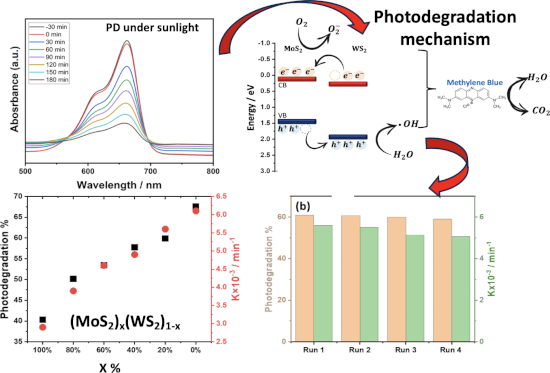
- -performing photocatalyst MoS2/WS2 for four consecutive PD runs, each cycle lasting 3 h (Figure 8b). The result indicated an excellent long-term stability of the composite photocatalyst suggesting that the association of both MoS2 and WS2 at the appropriate content, such as (MoS2)0.2/(WS2)0.8, not only
- : The WS2/MoS2 composite exhibited significant enhancement of PD in terms of long-term stability, reaching up to 97% as shown in Figure 11 compared to that of WS2 and MoS2 taken alone. We assume this performance is ascribed to the mechanism of PD occurring in the composite sample. Precisely, when the
- highest PD efficiency and PD rate constant of 67.6% and 6.1 × 10⁻³ min−1, respectively. Despite the low PD efficiency achieved, MoS2 has shown a very good PD stability of 63%. The intermixed composite (MoS2)0.2/(WS2)0.8 showed an enhancement in PD performance and long-term stability by up to 97%. Its


Simultaneous electrochemical determination of uric acid and hypoxanthine at a TiO2/graphene quantum dot-modified electrode
Beilstein J. Nanotechnol. 2024, 15, 719–732, doi:10.3762/bjnano.15.60
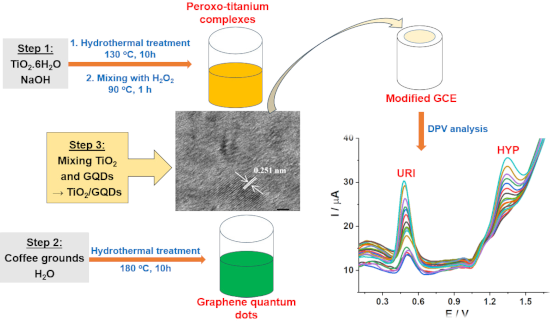
- precision (long term-stability). The repeatability of the method was evaluated by comparing the RSD of the measurement to the RSD of the Horwitz function (RSDH). If RSD is less than half of RSDH, the repeatability is acceptable. The repeatability of this method was determined by analyzing ten replicate
- 4 °C in the BR buffer pH 3 between the measurements, for a definite period. DPV measurements were periodically performed once a week. Peak currents with RSD smaller than 5% were found as IURI = 15.36 ± 0.43 (µA) (RSD = 2.82%) and IHYP = 9.03 ± 0.26 (µA) (RSD = 2.93%) indicating good long-term
- stability of the (1:4)TiO2/QGDs-GCE (Figure 9d). In order to study the selectivity of the (1:4)TiO2/GQDs-modified electrode, common co-existing substances, namely, NH4Cl, KCl, Na2SO4, NH4NO3, CaCl2, ZnCl2, glucose (GLC), glutamic acid (GLA), urea (URE), ʟ-cysteine (LCY) and xanthine (XTE), have been added


Fabrication of nanocrystal forms of ᴅ-cycloserine and their application for transdermal and enteric drug delivery systems
Beilstein J. Nanotechnol. 2024, 15, 465–474, doi:10.3762/bjnano.15.42
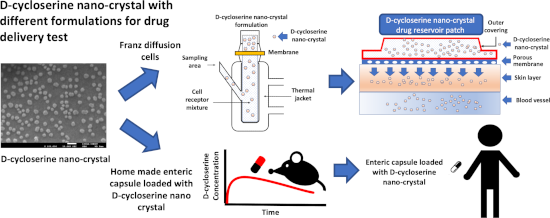
- commercial DCS, which is attributed to specific physicochemical properties of the nanocrystals, including faster dissolution and greater resistance to degradation in enteric capsules. Furthermore, with efficient delivery and long-term stability, the hydrophobic formulation of DCS nanocrystals is a potent


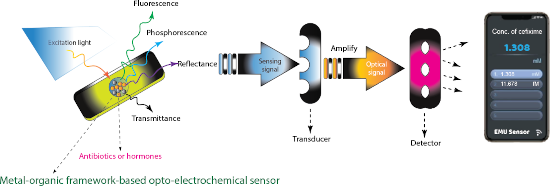
Metal-organic framework-based nanomaterials as opto-electrochemical sensors for the detection of antibiotics and hormones: A review
Beilstein J. Nanotechnol. 2023, 14, 631–673, doi:10.3762/bjnano.14.52


Dry under water: air retaining properties of large-scale elastomer foils covered with mushroom-shaped surface microstructures
Beilstein J. Nanotechnol. 2022, 13, 1370–1379, doi:10.3762/bjnano.13.113
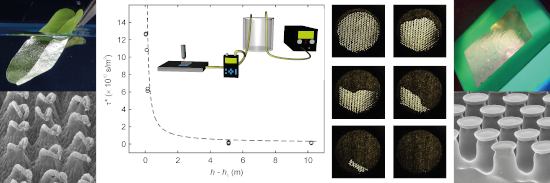
- . Here, we investigate the air retention capabilities of MSM for the first time. We analyzed the long term stability of the kept air layers as well as the behavior of the air layers at different pressures. Materials and Methods 1 Mushroom-shaped microstructured elastomer foil Microstructured elastomer
- mushroom-shaped surface microstructures (MSM) the long-term stability of the air layers was analyzed. Calculations according to Konrad et al. [33] predicted a maximum immersion depth underwater hmax of about 2 cm for a persistent air layer kept by MSM with the given geometric dimensions and the given
- air layer. The loss of air happened not only at the interface of water and air between the top side of the MSM, but also on the sides. This means the water-contact-area/volume ratio of the air layer is a crucial parameter for the long term stability of the kept air. Previous works have focused


A nonenzymatic reduced graphene oxide-based nanosensor for parathion
Beilstein J. Nanotechnol. 2022, 13, 730–744, doi:10.3762/bjnano.13.65
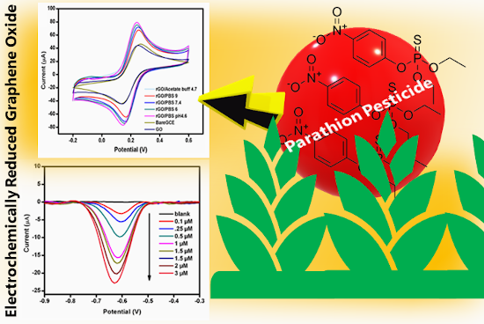
- detection limit and long-term stability at room temperature. Graphene oxide (GO), consisting of a monolayer of sp2-hybridized carbon atom network, has already been used in electrocatalysis, nanoelectronics, bionanosensors, and sustainable energy storage systems due to its larger active surface area


Antibacterial activity of a berberine nanoformulation
Beilstein J. Nanotechnol. 2022, 13, 641–652, doi:10.3762/bjnano.13.56
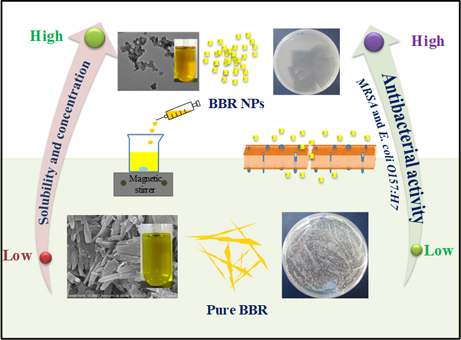
- ), and it remains a challenge to increase drug loading. Besides, the high cost and the complexity of nanoformulation production narrow the accessibility [32]. Regarding dendrimers, micelles, and polymeric nanoparticles, there are also issues with long-term stability, low drug loading efficiency, and



Influence of thickness and morphology of MoS2 on the performance of counter electrodes in dye-sensitized solar cells
Beilstein J. Nanotechnol. 2022, 13, 528–537, doi:10.3762/bjnano.13.44
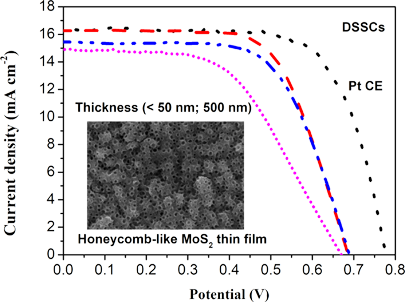
- . This suggested that the MoS2-1.25/FTO CE has reversible redox activity and electrochemical stability. The electrochemical stability of the MoS2/FTO CE should provide long-term stability for solar cell devices. However, more work needs to be done to improve the efficiency of this DSSC device [36][37][38


A non-enzymatic electrochemical hydrogen peroxide sensor based on copper oxide nanostructures
Beilstein J. Nanotechnol. 2022, 13, 424–436, doi:10.3762/bjnano.13.35
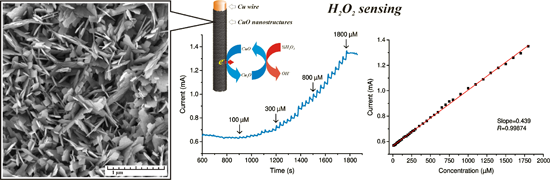
- long-term stability of the sensor, the obtained samples were stored under ambient conditions for one and four weeks. Measurements were taken every second day. The stabilities of each sample were assessed by the degree of reduction of the current peak value in the CV curve. For samples stored under
- storage, no significant morphological changes were observed, which proves the stability of the samples. These results show that the nanostructured CuO coating has long-term stability and resistance to environmental influences, which is another advantage compared to enzyme sensors. Conclusion This article
- study also showed high long-term stability of the resulting coating stored under ambient conditions (the signal level remained at 95% of the initial value after one week and at 90% after a month). Storage in a vacuum desiccator helps to improve the stability of samples (the signal level remained at 100




Sputtering onto liquids: a critical review
Beilstein J. Nanotechnol. 2022, 13, 10–53, doi:10.3762/bjnano.13.2







Recent progress in magnetic applications for micro- and nanorobots
Beilstein J. Nanotechnol. 2021, 12, 744–755, doi:10.3762/bjnano.12.58
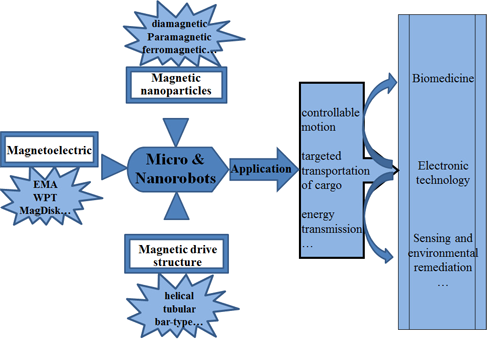
- field of medicine. Zhang et al. [32] used polymer-conjugated magnetic nanoparticles as a MNR to effectively carry nucleic acids in vitro. Their team developed a polyethylenimine-conjugated magnetic nanomaterial. While exhibiting long-term stability, this material can realize redox-activated and magnet


Nanoporous and nonporous conjugated donor–acceptor polymer semiconductors for photocatalytic hydrogen production
Beilstein J. Nanotechnol. 2021, 12, 607–623, doi:10.3762/bjnano.12.50
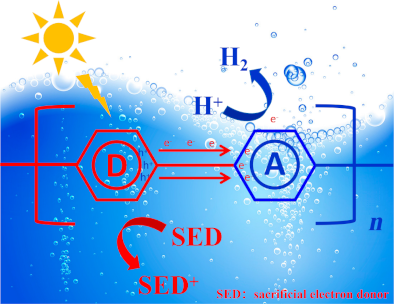
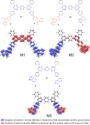
- , studies regarding the long-term stability of CPs are still needed. (Left) Schematic diagram of the mechanism of semiconducting catalyst-mediated photocatalytic hydrogen production (CB: conduction band, VB: valence band, SED: sacrificial electron donors). (Right) Charge separation in a CP-based




A stretchable triboelectric nanogenerator made of silver-coated glass microspheres for human motion energy harvesting and self-powered sensing applications
Beilstein J. Nanotechnol. 2021, 12, 402–412, doi:10.3762/bjnano.12.32
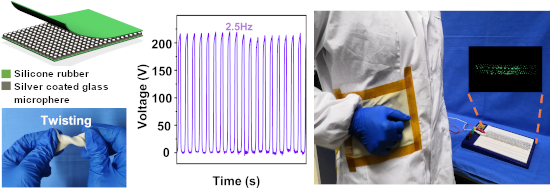
- and ISC of the S-TENG are nearly 200 V and 4.2 μA at a frequency of 2.5 Hz. Moreover, the device has good long-term stability with almost no degradation of the electrical output after 3000 cycles. In addition, the S-TENG can light up 235 LEDs and power a commercial calculator by padding the S-TENG



A review on the green and sustainable synthesis of silver nanoparticles and one-dimensional silver nanostructures
Beilstein J. Nanotechnol. 2021, 12, 102–136, doi:10.3762/bjnano.12.9


Walking energy harvesting and self-powered tracking system based on triboelectric nanogenerators
Beilstein J. Nanotechnol. 2020, 11, 1590–1595, doi:10.3762/bjnano.11.141
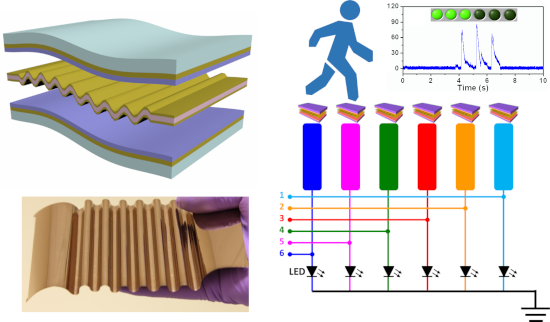
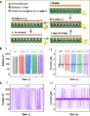
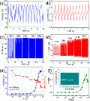
- -circuit current was 10.8 µA. The impedance dependence of the fabricated u-TENG is shown in Figure 3e. The maximum output power of 0.279 mW can be observed at a loading resistance of 300 MΩ in Figure 3f. A long-term stability test did not exhibit a noticeable response decline after 10000 cycles (inset of
- loading resistance; inset: long-term stability. The ability of the u-TENG to harvesting energy from human walking. The electric output profile of a man (a), a woman (b), and a child (c). (d) The output voltage of u-TENG under different stress values. (e) The dependence of the output voltage on the impact




Fabrication of nano/microstructures for SERS substrates using an electrochemical method
Beilstein J. Nanotechnol. 2020, 11, 1568–1576, doi:10.3762/bjnano.11.139
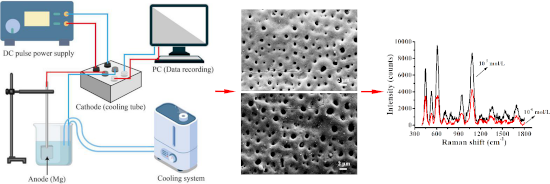
- could be detected. Thus, the electrochemical method can be used to create flexible Au-coated substrates of highly reproducible structure with long-term stability. SERS measurement of lysozyme on the nanopore substrates The enzyme lysozyme can rupture the cell walls of certain pathogens following


One-step synthesis of carbon-supported electrocatalysts
Beilstein J. Nanotechnol. 2020, 11, 1419–1431, doi:10.3762/bjnano.11.126

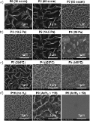
- applications as they show significantly improved electrochemical long-term stability compared to the industrial standard HiSPEC 4000. The PE-CVD process is furthermore expected to be extendable to the general deposition of metal-containing carbon materials from other commercially available metal
- acetylacetonate precursors. Keywords: electrocatalyst; fuel cells; hybrid nanomaterial; long-term stability; nanoparticle embedding; one-step synthesis; plasma-enhanced chemical vapor deposition (PE-CVD); Introduction The global fuel cell market reached a value of $4.5 billion USD in 2018 and is projected to
- commercial production of fuel cell catalysts, especially the scarcity of noble metals and the insufficient electrochemical long-term stability. Even though the surface-to-volume ratio can be drastically increased by the use of nanoparticles instead of thin films, the amount of noble metal (usually platinum




Photothermally active nanoparticles as a promising tool for eliminating bacteria and biofilms
Beilstein J. Nanotechnol. 2020, 11, 1134–1146, doi:10.3762/bjnano.11.98
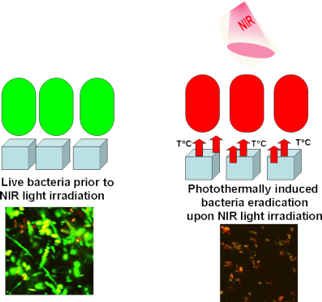
- as the FDA-approved Prussian blue nanoparticles, should be explored more systematically. Secondly, given the imposed restrictions on the use of colloidal nanoparticles due to long-term stability and reusability issues, alternative approaches such as nanocomposite materials (e.g., gels, thin films
- , printed surfaces) should be studied more intensively. Thirdly, since the use of high-intensity lasers to achieve pronounced photothermal effects should be avoided, highly concentrated colloidal solutions need to be used which in turn disfavor their long-term stability and increase their preparation costs


Effect of Ag loading position on the photocatalytic performance of TiO2 nanocolumn arrays
Beilstein J. Nanotechnol. 2020, 11, 717–728, doi:10.3762/bjnano.11.59
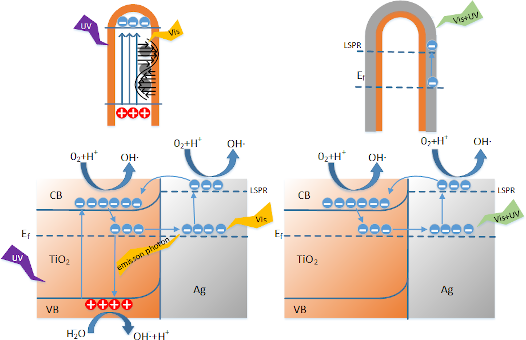
- addition, since the chemical transformation of MB molecules occurs at the Ag–TiO2 interface, Ag is more easily oxidized, which damages the long-term stability of the Ag–TiO2 heterojunctions [46]. Taken together, these factors can explain the difference of catalytic efficiency between AFT and ACT


Multilayer capsules made of weak polyelectrolytes: a review on the preparation, functionalization and applications in drug delivery
Beilstein J. Nanotechnol. 2020, 11, 508–532, doi:10.3762/bjnano.11.41

- strength. Various reactions have been reported to improve the binding strength in order to increase the mechanical resistance and long term stability of the capsules. Several post fabrication treatments have also been used to strengthen the weak intermolecular interactions to fabricate stable cross-linked
- and 2) the solvent exchange mechanism wherein lipid molecules dissolved in organic solvents were slowly exchanged with water [108]. The addition of the lipid layer not only provided long term stability but also slowed down the rate of permeation of small molecules through the capsule wall, making them



Phase inversion-based nanoemulsions of medium chain triglyceride as potential drug delivery system for parenteral applications
Beilstein J. Nanotechnol. 2020, 11, 213–224, doi:10.3762/bjnano.11.16
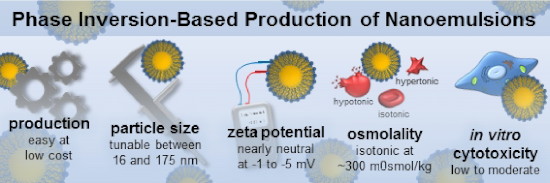
- the nanoemulsions depending on the Kolliphor HS 15:MCT ratio. Long-term stability of four selected nanoemulsions with particles of approximately 25 (NE25), 50 (NE50), 100 (NE100) and 150 nm (NE150) in diameter at the recommended storage conditions according to the ICH guidelines Q1A of 5 ± 3 °C, room




Nanosecond resistive switching in Ag/AgI/PtIr nanojunctions
Beilstein J. Nanotechnol. 2020, 11, 92–100, doi:10.3762/bjnano.11.9
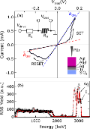
- is demonstrated in the inset of Figure 3b by displaying the long-term stability of the resistance states over 300 subsequent switching cycles recorded at = 0.5 V. All these results demonstrate that the Ag/AgI system shows characteristics and stability very similar to the Ag/Ag2S system with the
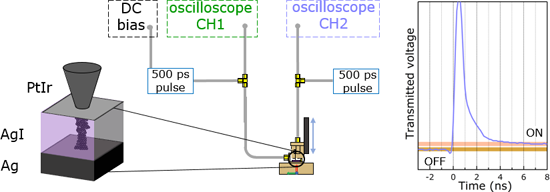
- subsequent 500 ps set and reset voltage pulses are demonstrated by displaying the voltage signals directly acquired at CH1 and CH2 in Figure 5a. The data recorded at a sampling rate of 10 Gs/s over 50 μs illustrates the long-term stability of the ON and OFF states between the switching events. The two
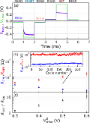
- voltage was applied. The simultaneously recorded Vbias (purple) trace shows the dynamics of the resistive switchings. (b) ROFF (red) and RON (blue) as a function of the voltage pulse amplitude. The inset demonstrates the long-term stability of the OFF and ON states evaluated during 300 repetitive duty


Recent progress in perovskite solar cells: the perovskite layer
Beilstein J. Nanotechnol. 2020, 11, 51–60, doi:10.3762/bjnano.11.5

- technology enables rapid and precise coating of films, and therefore is a promising method for large-scale PSC production at high yield. Stability of PSCs based on novel perovskite structures The poor long-term stability of PSCs is another challenge for future commercial applications. Although PSCs have





