


Search results
Search for "manganese" in Full Text gives 83 result(s) in Beilstein Journal of Nanotechnology.
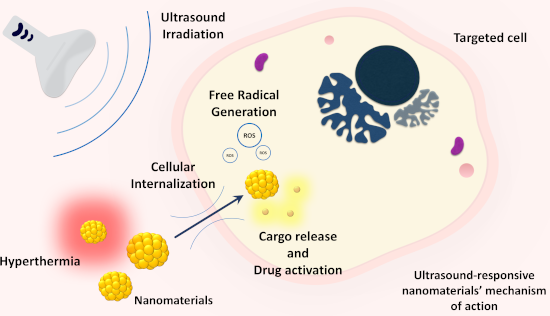
Comprehensive review on ultrasound-responsive theranostic nanomaterials: mechanisms, structures and medical applications
Beilstein J. Nanotechnol. 2021, 12, 808–862, doi:10.3762/bjnano.12.64


Spontaneous shape transition of MnxGe1−x islands to long nanowires
Beilstein J. Nanotechnol. 2021, 12, 366–374, doi:10.3762/bjnano.12.30
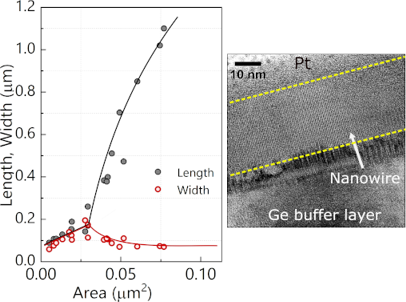
- silicides as an indispensable part of microelectronics [14][15]. In particular, the manganese germanide phase Mn5Ge3 is a semimetallic compound that has attracted attention due to its giant magnetoresistance and large spin polarization, which make it a proper candidate for spintronics applications [16][17
- ]. Several studies have been published on manganese germanide systems, from deposited films to free-standing nanoclusters and Mn embedded in a Ge matrix, but only few works have been devoted to one-dimensional Mn–Ge systems [11][12][13][20][21][22][23][27]. Semiconducting and alloyed nanowires can be


Free and partially encapsulated manganese ferrite nanoparticles in multiwall carbon nanotubes
Beilstein J. Nanotechnol. 2020, 11, 1891–1904, doi:10.3762/bjnano.11.170
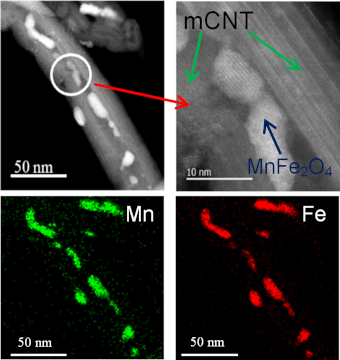
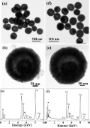
- , Kujirai, Kawagoe, Saitama 350 8585, Japan Department of Chemistry, Sultan Qaboos University, Muscat PC 123, Sultanate of Oman 10.3762/bjnano.11.170 Abstract Free and partially encapsulated manganese ferrite (MnFe2O4) nanoparticles are synthesized and characterized regarding structure, surface, and
- electronic and magnetic properties. The preparation method of partially encapsulated manganese ferrite enables the formation of a hybrid nanoparticle/tube system, which exhibits properties of manganese ferrite nanoparticles inside and attached to the external surface of the tubes. The effect of having
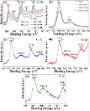
- manganese ferrite nanoparticles inside the tubes is observed as a shift in the X-ray diffraction peaks and as an increase in stress, hyperfine field, and coercivity when compared to free manganese ferrite nanoparticles. On the other hand, a strong charge transfer from the multiwall carbon nanotubes is


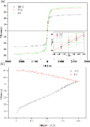


Structure and electrochemical performance of electrospun-ordered porous carbon/graphene composite nanofibers
Beilstein J. Nanotechnol. 2020, 11, 1280–1290, doi:10.3762/bjnano.11.112
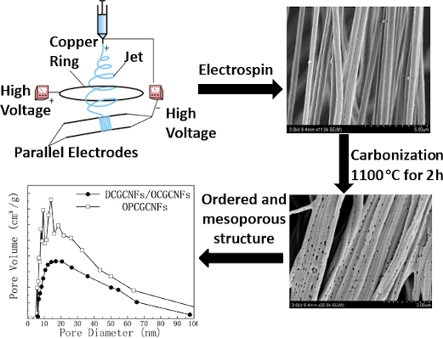
- nanofibers) or metal oxides (manganese oxide, nickel oxide, RuO2, Co3O4, etc.). Carbon is the primary material used to manufacture EDLC electrodes since it has a high specific surface area, which can easily form a double layer to store more electrical energy [6][7][8][9][10]. Since there is still room for


Role of redox-active axial ligands of metal porphyrins adsorbed at solid–liquid interfaces in a liquid-STM setup
Beilstein J. Nanotechnol. 2020, 11, 1264–1271, doi:10.3762/bjnano.11.110
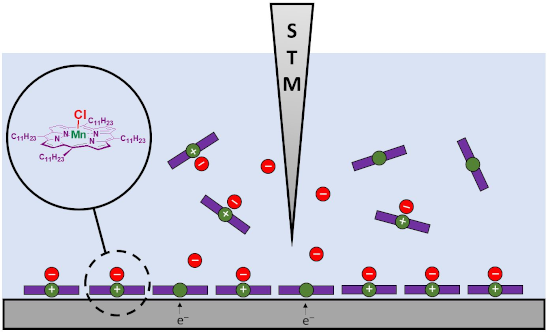
- , Albert-Einstein-Straße 25, 18059 Rostock, Germany 10.3762/bjnano.11.110 Abstract In a liquid-STM setup environment, the redox behavior of manganese porphyrins was studied at various solid–liquid interfaces. In the presence of a solution of Mn(III)Cl porphyrins in 1-phenyloctane, which was placed at a
- active acetate instead of chloride axial ligands, the currents remained absent. Keywords: manganese; porphyrins; redox reactions; scanning tunneling microscopy; solid–liquid interface; Introduction Manganese(III) porphyrins are well-known catalysts for the epoxidation of alkenes [1][2][3][4]. The
- manganese center of the porphyrin moiety serves as a coordination site for an oxygen atom, which subsequently is inserted into the double bond of the alkene. A variety of oxygen donors can be used to oxidize the manganese center to an active manganese-oxo (Mn=O) species, such as iodosylbenzene, hypochlorite


Scanning tunneling microscopy and spectroscopy of rubrene on clean and graphene-covered metal surfaces
Beilstein J. Nanotechnol. 2020, 11, 1157–1167, doi:10.3762/bjnano.11.100
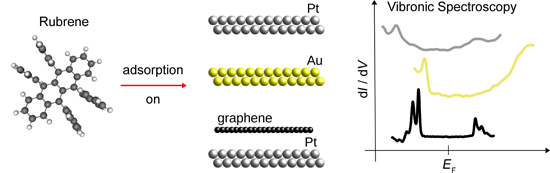
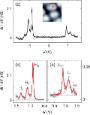
- phthalocyanine molecules on graphene-covered SiO2/Si samples [5] as well as on h-BN-covered Ir(111) [6], of conjugated oligohenylenes on h-BN-covered Cu(111) [7], of manganese phthalocyanine on h-BN-covered Rh(111) [8], and of 5,10,15,20-tetraphenylbisbenz[5,6]indendo[1,2,3-cd:1′,2′,3′-lm]perylene on graphene



Applications of superparamagnetic iron oxide nanoparticles in drug and therapeutic delivery, and biotechnological advancements
Beilstein J. Nanotechnol. 2020, 11, 1092–1109, doi:10.3762/bjnano.11.94
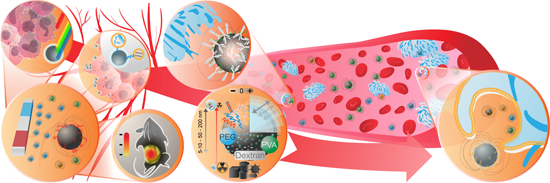
- types of nanoparticles used for MRI, but iron oxide is believed to be less harmful than other nanoparticles, such as lanthanides, which cannot be used on patients with kidney disorders [18], or manganese, which is neurotoxic [19]. Furthermore, excess iron oxides accumulate in liver and spleen as iron
- . They did not obtain a measurable difference in temperature while still more that 70% of the cells died by apoptosis after hyperthermia treatment [149]. There are nanoparticle combinations of iron with zinc, manganese or nickel that have better heating properties under an alternating magnetic field


Comparison of fresh and aged lithium iron phosphate cathodes using a tailored electrochemical strain microscopy technique
Beilstein J. Nanotechnol. 2020, 11, 583–596, doi:10.3762/bjnano.11.46
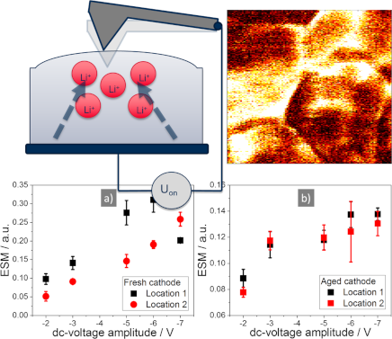
- [29][30] and nickel manganese cobalt oxide (NMC) [42][43] but, to the best of our knowledge, not for LFP. In this paper, we analyse the electrochemical activity and Li-ion concentration using the ESM technique and show a decrease of the electrochemical activity and a reduced active Li content in the



Multilayer capsules made of weak polyelectrolytes: a review on the preparation, functionalization and applications in drug delivery
Beilstein J. Nanotechnol. 2020, 11, 508–532, doi:10.3762/bjnano.11.41
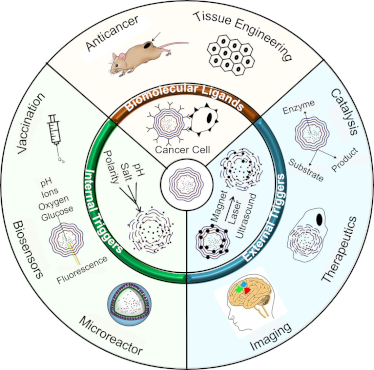
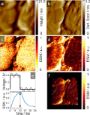
- size and dissolve under mild conditions at pH < 3 or by using ethylenediaminetetraacetic acid (EDTA) without affecting the PE multilayer shell. They do not form any complexes with PEs and provided intact hollow capsules after core dissolution [30]. Cores such as calcium, cadmium and manganese carbonate


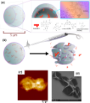

Selective gas detection using Mn3O4/WO3 composites as a sensing layer
Beilstein J. Nanotechnol. 2019, 10, 1423–1433, doi:10.3762/bjnano.10.140
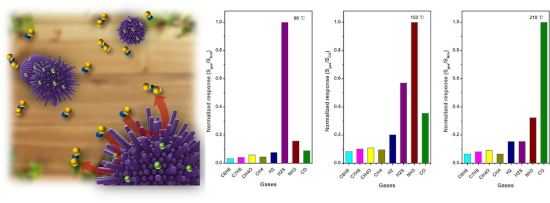
- best selectivity among the as-fabricated gas sensors. Finally, the possible sensing mechanism for the gas sensing enhancement of the 3 atom % Mn3O4/WO3 composite gas sensor is discussed in detail. Experimental Materials Tungsten hexachloride (WCl6), manganese acetate tetrahydrate (Mn(CH3COO)2·4H2O


Molecular attachment to a microscope tip: inelastic tunneling, Kondo screening, and thermopower
Beilstein J. Nanotechnol. 2019, 10, 1243–1250, doi:10.3762/bjnano.10.124
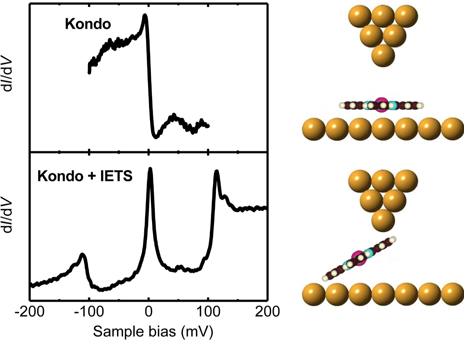
- Rouzhaji Tuerhong Mauro Boero Jean-Pierre Bucher Université de Strasbourg, IPCMS UMR 70504, 67034 Strasbourg, France 10.3762/bjnano.10.124 Abstract The vibrational excitation related transport properties of a manganese phthalocyanine molecule suspended between the tip of a scanning tunneling
- localized spin and the conduction electrons of the substrate. Manganese phthalocyanine (MnPc) molecules adsorbed on noble-metal surfaces have been studied quite extensively by STM and Kondo behavior of MnPc is well documented [19][20][21]. However the electron transport through a single MnPc molecule


Scavenging of reactive oxygen species by phenolic compound-modified maghemite nanoparticles
Beilstein J. Nanotechnol. 2019, 10, 1073–1088, doi:10.3762/bjnano.10.108
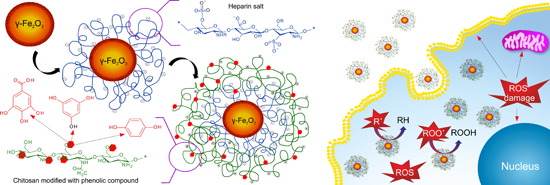
- catalyzed by metal-ion cofactors, such as iron, copper, zinc, and manganese [3]. The non-enzymatic antioxidant defense uses glutathione, vitamins C and E, melatonin, catecholamines, and substances of plant origin, such as phenols and carotenoids, to interrupt undesirable ROS action. Phenolic compounds are




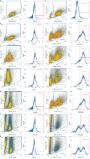


Co-doped MnFe2O4 nanoparticles: magnetic anisotropy and interparticle interactions
Beilstein J. Nanotechnol. 2019, 10, 856–865, doi:10.3762/bjnano.10.86
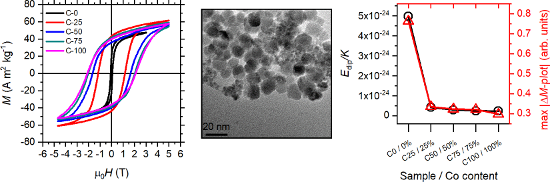
- different magnetic anisotropy opens interesting perspectives for applications in biomedical fields (e.g., MRI, drug delivery, hyperthermia) [20][21] and energy harvesting. Experimental Synthesis Several samples consisting of manganese ferrite nanoparticles with different cobalt doping, i.e., Mn1−xCoxFe2O4
- (x = 0, 0.25, 0.5, 0.75, 1) were synthesized following a simple method based on solid-state ball milling and calcination of nitrate precursors and citric acid, discussed previously to prepare pure MnFe2O4 [22]. Manganese nitrate (Mn(NO3)2·4H2O, Merck, 99%), iron nitrate (Fe(NO3)3·9H2O, Merck, 99


Integration of LaMnO3+δ films on platinized silicon substrates for resistive switching applications by PI-MOCVD
Beilstein J. Nanotechnol. 2019, 10, 389–398, doi:10.3762/bjnano.10.38
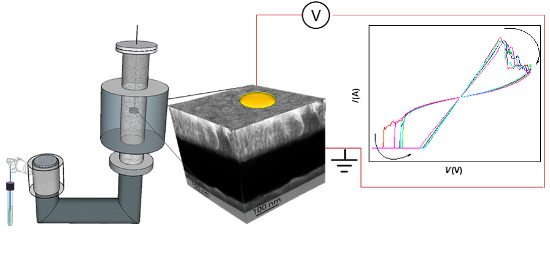
- films is expected to be compensated by a mixed valence state of the manganese cation (Mn3+/Mn4+). Particularly, RS in LMO has been reported to be larger for oxygen vacancy-rich films [6][7]. Depending on the oxygen content (δ), the LMO structure changes from orthorhombic to rhombohedral at high δ [8
- grown by pulsed injection metal–organic chemical vapour deposition (PI-MOCVD) in a JIPELEC reactor [26][27]. The precursor solutions were prepared using tris(2,2,6,6-tetramethyl-3,5-heptanedionato)lanthanum(III) [La(thd)3] and tris(2,2,6,6-tetramethyl-3,5-heptanedionato)manganese(III) [Mn(thd)3
- vapour deposition (PI-MOCVD). The structural transition between orthorhombic and rhombohedral phases has been correlated with δ and the manganese oxidation state of the films. Furthermore, the tuned LMO films integrated in a silicon-based substrate showed resistive switching behavior as a proof-of


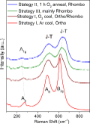


Zn/F-doped tin oxide nanoparticles synthesized by laser pyrolysis: structural and optical properties
Beilstein J. Nanotechnol. 2019, 10, 9–21, doi:10.3762/bjnano.10.2
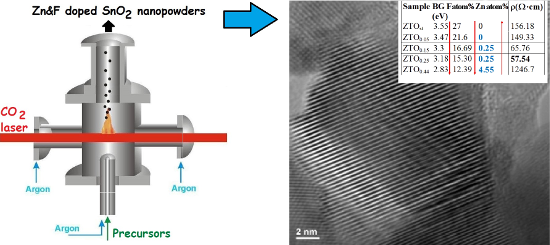
- .) antimony by spray pyrolysis [9] or by sol–gel methods followed by spin-coating and annealing in different environments [10], ii.) manganese by long-time annealing of Mn/SnO2 bilayers in air at 200 °C [11] or by co-precipitation [12], iii.) aluminum, copper or indium all by spray pyrolysis from ethanolic



Hydrothermal-derived carbon as a stabilizing matrix for improved cycling performance of silicon-based anodes for lithium-ion full cells
Beilstein J. Nanotechnol. 2018, 9, 2381–2395, doi:10.3762/bjnano.9.223
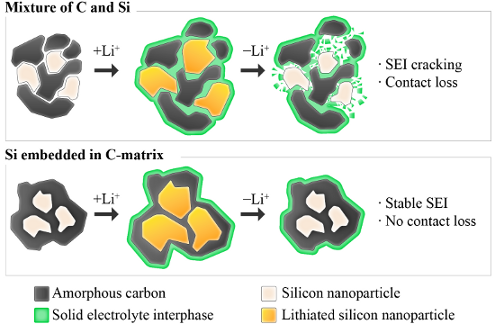
- containing the synthesized materials were used as working electrodes (WE), while lithium metal (Li; Albemarle Corporation) was used as counter and reference (RE) electrodes. In the full cell set-up, the Si/C composite electrodes were cycled vs lithium nickel manganese cobalt oxide (LiNi1/3Mn1/3Co1/3O2, NMC


Lead-free hybrid perovskites for photovoltaics
Beilstein J. Nanotechnol. 2018, 9, 2209–2235, doi:10.3762/bjnano.9.207
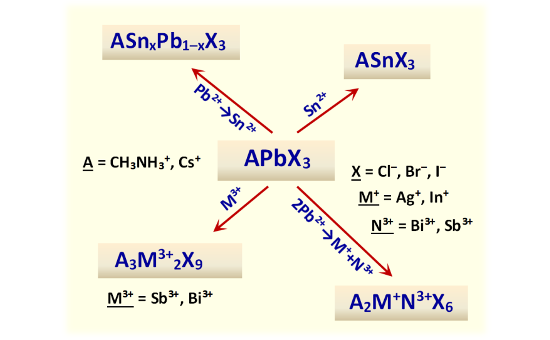
- photovoltaic materials. Additionally, the cell fitted with an encapsulating protective layer showed a remarkable stability with the PCE unchanged in a more than 2500 h test trial (Figure 3d) [69]. Manganese(II) ions were found to substitute Pb(II) in MA-Pb-Cl-Br HPs, the perovskite preserving the crystal


Synthesis of a MnO2/Fe3O4/diatomite nanocomposite as an efficient heterogeneous Fenton-like catalyst for methylene blue degradation
Beilstein J. Nanotechnol. 2018, 9, 1940–1950, doi:10.3762/bjnano.9.185
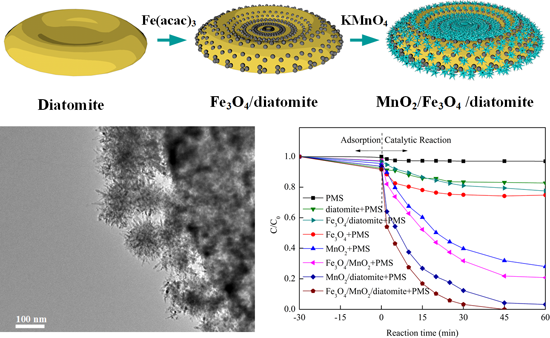
- ) oxide (Fe3O4); manganese(IV) oxide (MnO2); Introduction Organic contaminants are widely distributed in water and soil due to the excessive emissions of industrial processes, which causes a great threat to the ecosystem as well as to human health [1][2][3]. Most of the organic pollutants are toxic and
- successful loading of of iron oxide and manganese oxide in the two-step procedure. To further characterize the morphologies and structures of Fe3O4/diatomite and MnO2/Fe3O4/diatomite, transmission electron microscopy (TEM) and high-resolution transmission electron microscope (HRTEM) analyses were also


Heterostuctures of 4-(chloromethyl)phenyltrichlorosilane and 5,10,15,20-tetra(4-pyridyl)-21H,23H-porphine prepared on Si(111) using particle lithography: Nanoscale characterization of the main steps of nanopatterning
Beilstein J. Nanotechnol. 2018, 9, 1211–1219, doi:10.3762/bjnano.9.112
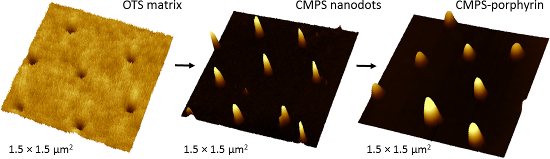
- with a surface orientation defined by the substituents [20]. The self-assembly of manganese meso-tetra(4-pyridyl)porphyrin on Cu(111) was studied using low temperature scanning tunneling microscopy (STM) and atomic force microscopy (AFM) to resolve molecular structures by Chen et al. [21]. A


Electrodeposition of reduced graphene oxide with chitosan based on the coordination deposition method
Beilstein J. Nanotechnol. 2018, 9, 1200–1210, doi:10.3762/bjnano.9.111
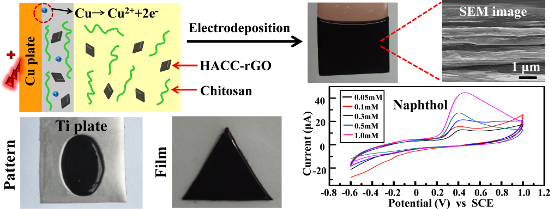
- nanoparticles, carbon nanotubes, manganese oxides nanoparticles, and carbon dots) on electrodes through codeposition with chitosan, which offers attractive applications in antimicrobial coatings, biosensors, microbial fuel cells, and energy storage materials [14][15][16][17][18]. Among the studies on the


Heavy-metal detectors based on modified ferrite nanoparticles
Beilstein J. Nanotechnol. 2018, 9, 762–770, doi:10.3762/bjnano.9.69
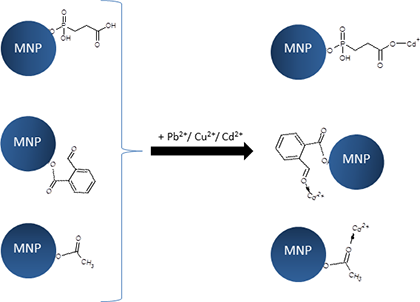
- Abstract In this work, we analyze artificial heavy-metal solutions with ferrite nanoparticles. Measurements of adsorption effectiveness of different kinds of particles, pure magnetite or magnetite doped with calcium, cobalt, manganese, or nickel ions, were carried out. A dependence of the adsorption
- , for example such as linker concentration, heavy ions concentration, pH value, or inorganic core composition, and such studies are in progress and will be a subject of subsequent papers. Conclusion Ferrite nanoparticles doped with calcium, cobalt, nickel, or manganese show differences in ion adsorption


A review of carbon-based and non-carbon-based catalyst supports for the selective catalytic reduction of nitric oxide
Beilstein J. Nanotechnol. 2018, 9, 740–761, doi:10.3762/bjnano.9.68
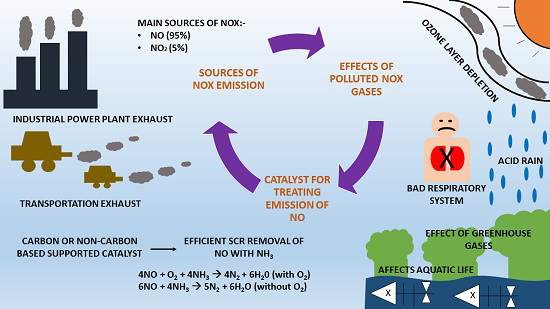
- sites and Brønsted acid sites and then oxidised into coordinated NH3 species and ionic NH4+, while NO is oxidised into NO2 via Equation 7 and Equation 8, respectively. The manganese and ceria cations used in this reaction contribute to the large amount of Lewis acid sites. It is noted that the NH4
- temperature was identified to be at 219 °C and 418 °C. Meanwhile, the 3% Mn-out-CNTs400 peaks were around 440 to 520 °C. Generally, the valance state and electron environment of manganese are two key components that affect the reduction steps and reduction temperature [50]. Previous work done by Cao et al
Fabrication of CeO2–MOx (M = Cu, Co, Ni) composite yolk–shell nanospheres with enhanced catalytic properties for CO oxidation
Beilstein J. Nanotechnol. 2017, 8, 2425–2437, doi:10.3762/bjnano.8.241
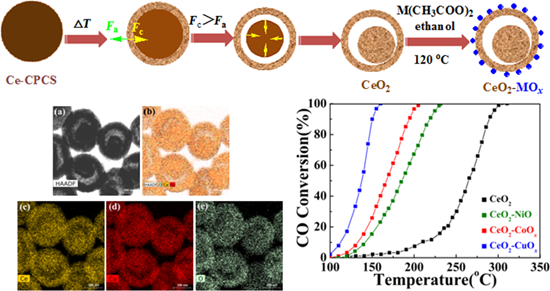
- interfacial oxidation–reduction under mild conditions. For example, Mn3O4/CeO2 hybrid nanotubes were created by a template-based process involving a redox reaction between the cryptomelane-type manganese oxide nanowire template and Ce(NO3)3 [20]. Ce–Mn nanotubes were also fabricated by treating Ce(OH)CO3





Electronic structure, transport, and collective effects in molecular layered systems
Beilstein J. Nanotechnol. 2017, 8, 2094–2105, doi:10.3762/bjnano.8.209
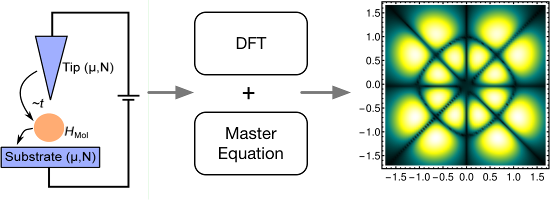
- heterostructures for organic device applications is exemplified by the targeted engineering of the electronic properties of phthalocyanine-based systems. The transport properties of two different phthalocyanine systems, a pure copper phthalocyanine (CoPc) and a flourinated copper phthalocyanine–manganese
- effects are metal-insulator transitions or superconductivity which were reported for organic charge-transfer crystals realized by a combination of strongly electron-accepting and strongly electron-donating molecules [9][10]. Recently, a heterostructure of manganese phthalocyanine (MnPc) and structurally
- density of states as obtained from the DFT calculations. While the electronic structure of CoPc and F16CoPc is qualitative similar after surface contact, the manganese center in the F16CoPc/MnPc yields a larger local magnetic moment and more strongly occupied metal 3d states close to the Fermi level. Both


![[Graphic 29]](/bjnano/content/inline/2190-4286-8-209-i41.png?max-width=637&scale=1.18182) between the occupations nA and nB of the two checkerboard sublattices for a) asy...
between the occupations nA and nB of the two checkerboard sublattices for a) asy...

![[Graphic 30]](/bjnano/content/inline/2190-4286-8-209-i42.png?max-width=637&scale=1.18182) per site for a) asymmetric tunneling, Γtop/Γbottom = 0.5, and b) symmetric tunneli...
per site for a) asymmetric tunneling, Γtop/Γbottom = 0.5, and b) symmetric tunneli...
Freestanding graphene/MnO2 cathodes for Li-ion batteries
Beilstein J. Nanotechnol. 2017, 8, 1932–1938, doi:10.3762/bjnano.8.193
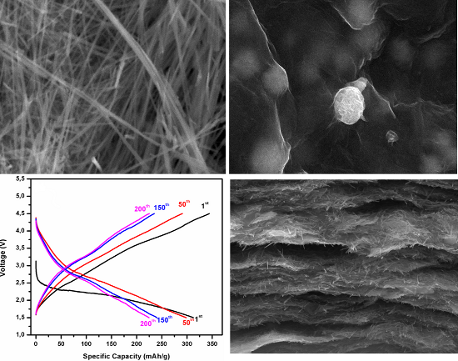
- as LiMn2O4 and LiFePO4, which have a capacity of merely 150 mAh/g and 170 mAh/g, respectively [5][6]. Manganese dioxide (MnO2) is one of the most promising metal oxide as a replacement for the Li-ion electrode material owing to its high theoretical capacity (308 mAh/g), environmental friendliness and
- ]. However, there are few reports explaining their electrochemical reaction response relating to their different manganese oxide crystalline structures. In this work, different polymorphs of MnO2 (α-, β-, and γ-) were produced by a microwave hydrothermal method. Freestanding graphene/MnO2 cathodes were





