


Search results
Search for "model" in Full Text gives 1656 result(s) in Beilstein Journal of Nanotechnology. Showing first 200.
Fast vortex dynamics and relaxation times in NbRe-based heterostructures
Beilstein J. Nanotechnol. 2026, 17, 292–302, doi:10.3762/bjnano.17.20
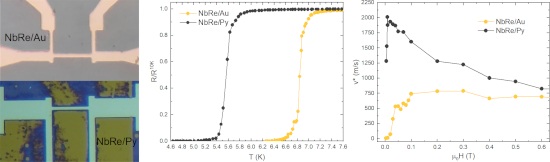
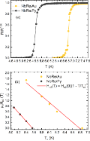
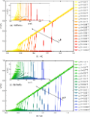
- superconducting coherence. This phenomenon, known as flux-flow instability (FFI), depends on several factors such as structural disorder and defects [3], pinning mechanisms [4][5], thermal effects [6], and sample geometry [7]. FFI is effectively described by the Larkin–Ovchinnikov (LO) model [8], which relates
- assumptions underlying the LO model remain valid and the deduced relaxation time can be regarded as an intrinsic property of the superconducting system [1]. Experimentally, biasing a superconducting strip with a current I, leads, in the flux flow regime, to the appearance of a jump to normal state at an


Advancing nanolithography: a comprehensive review of materials for local anodic oxidation with AFM
Beilstein J. Nanotechnol. 2026, 17, 275–291, doi:10.3762/bjnano.17.19
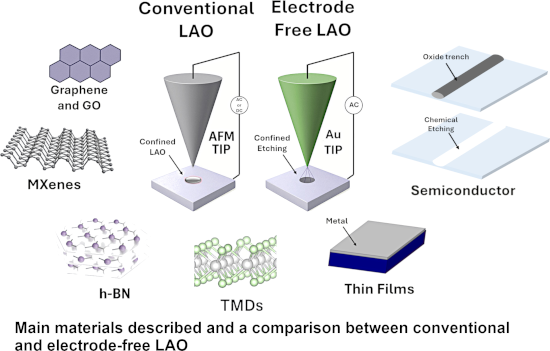
- authors agree with an oxidation kinetic consistent with the Cabrera–Mott model [44][45]. As an electrochemical process, LAO is inherently current-dependent. Early studies showed that oxide growth evolves from an initial electronic tunneling regime to ionic transport as the film develops [46]. Dagata and
- thickness, and voltage, following the Cabrera–Mott model. This clean, precise approach highlights LAO’s potential for photonic and nanoelectronics applications, aligning with advances in LAO research. 2.5.3 Two-dimensional materials. 2D materials are at the forefront of LAO research, owing to their


Multilayered hyperbolic Au/TiO2 nanostructures for enhancing the nonlinear response around the epsilon-near-zero point
Beilstein J. Nanotechnol. 2026, 17, 251–261, doi:10.3762/bjnano.17.17
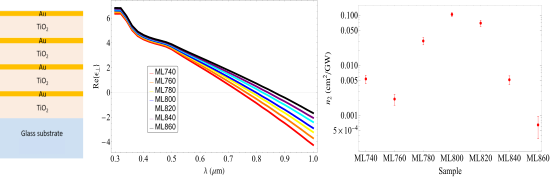
- followed by a postfocal maximum, albeit somehow deformed. This deformation is due to the complicated nonlinear absorption observed in the OA z-scan. In order to model the response, we used the approach found in [31], where the CA z-scan trace shows effects of both nonlinear absorption and refraction: where
- S is the aperture transmittance, I0 is the peak irradiance, and is the effective length. Setting S = 1, we are left with ΔΨ0, which is related only to nonlinear absorption effects, and we can then model the fit for the OA z-scan results. For the CA z-scan, we set S = 0.5 (from experiment), and we
- describe both effects. Substituting in Equation 6, we are now able to model the effect of both nonlinear absorption effects. Then, for each different sample, we must find a set of constants β+, β−, , and that can be used to fit every z-scan data set obtained at different I0 values. Figure 5 shows the fits


Comparative study on 3D morphologies of delignified, single tracheids and fibers of five wood species
Beilstein J. Nanotechnol. 2026, 17, 239–250, doi:10.3762/bjnano.17.16
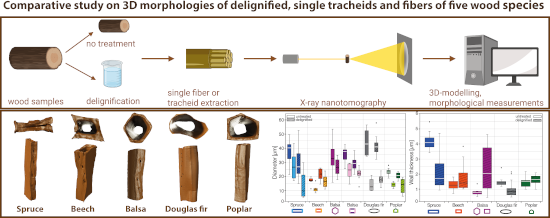
- 6.0.1 software (FEI SAS, Lyon, France). The segmented data were further processed in Blender software (Blender Foundation, Amsterdam, Netherlands, https://www.blender.org). Additional interactive 3D models of two samples for each species are available online with links for each model in Supporting


Gold nanoparticle-decorated reduced graphene oxide as a highly effective catalyst for the selective α,β-dehydrogenation of N-alkyl-4-piperidones
Beilstein J. Nanotechnol. 2026, 17, 218–238, doi:10.3762/bjnano.17.15
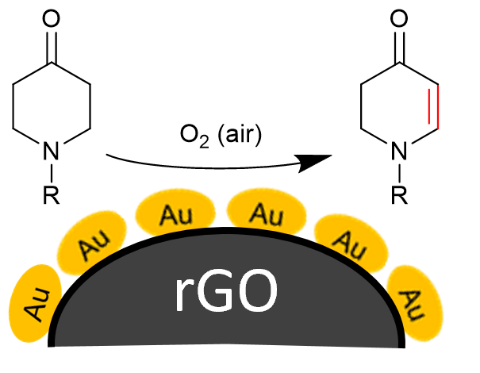
- size, stabilized by SiW9, and supported on the three-carbon materials AC, rGO, and CB by the RD and DP methods were synthesized as depicted in Figure 1. To assess the influence of the preparation methods and the type of the carbon supports, the catalytic activity was evaluated using the model reaction
- -, and N-benzyl-4-piperidone to the respective N-methyl-2,3-dihydropyridin-4(1H)-ones as a model reaction (Scheme 1). This transformation is an example of the synthesis of β-N-substituted α,β-unsaturated ketones and requires catalysts with strong oxidizing capabilities, such as gold-based catalysts. The


Micro- and nanoscale effects in biological and bioinspired materials and surfaces
Beilstein J. Nanotechnol. 2026, 17, 214–217, doi:10.3762/bjnano.17.14

- ] provided insights into biological plant materials combining experiments with simulations that provide inspiration for biomimetic actuators. For animals, Jain et al. [20] applied a multiscale computational model to gain detailed insights into the molecular and mechanical behavior of gecko setae during
Structure-dependent thermochromism of PAZO thin films: theory and experiment
Beilstein J. Nanotechnol. 2026, 17, 186–199, doi:10.3762/bjnano.17.12
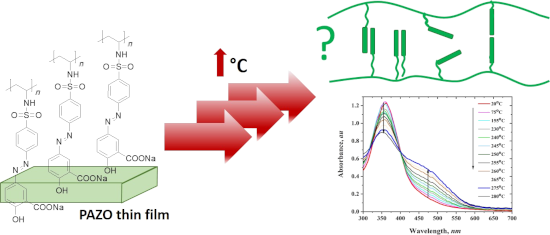
- ) calculations were employed to model possible supramolecular architectures, allowing us to explore the correlation between thermally induced optical responses and the underlying molecular-level organization. Results and Discussion Experimental results Temperature dependence of absorption spectra Absorption
- change in the optical properties of the isolated monomers. The possible dimers formed by the E-forms of the simplified PAZO side-chain model (shown in Figure 6D) are also presented in Figure 8. The aggregation upon heating hypothesis can be confirmed by simulating the absorption spectra of monomers and
- ωB97XD/6-31G(d,p) optimized structures in solvent chloroform (used to mimic the polarity of the polymer layer). Simulated (using the vertical excitation energies and oscillator strengths) UV spectra are given in Figure 9. One strong monomer band at 383 nm is predicted. The spectra of the model dimers


Safe and sustainable by design with ML/AI: A transformative approach to advancing nanotechnology
Beilstein J. Nanotechnol. 2026, 17, 176–185, doi:10.3762/bjnano.17.11
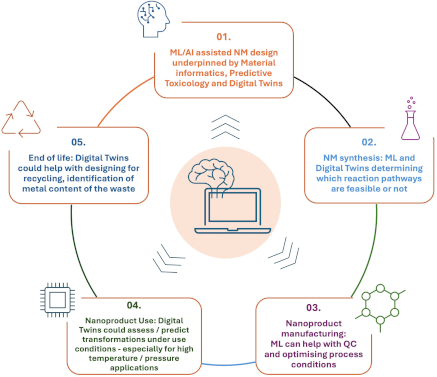
- networks, where standardized information on nanomaterial properties and toxicity profiles can be used to train increasingly robust ML models. Overall, the synergy between the SSbD concept, advanced ML/AI algorithms, and comprehensive regulatory directives fosters a future-oriented model of nanotechnology
- , inconsistently formatted, and insufficiently annotated for robust ML/AI model training [63][64]. Moreover, these datasets often arise from disparate sources – academic research labs, industrial R&D facilities, and public databases – each with its own protocols and measurement standards. Such heterogeneity
- annotations [65] and modelling-ready nanomaterials EHS and SSbD relevant databases including VINAS [66] and NanoPharos [67]. Another major hurdle is model interpretability, particularly for deep learning approaches that often function as “black boxes”. Despite their high predictive power, complex


Influence of surface characteristics on the in vitro stability and cell uptake of nanoliposomes for brain delivery
Beilstein J. Nanotechnol. 2026, 17, 139–158, doi:10.3762/bjnano.17.9
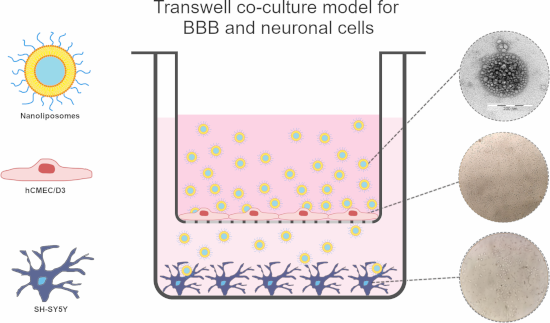
- interactions in complex organs like the brain, in vitro cell culture models, such as hCMEC/D3 and SH-SY5Y, are often used [9]. Therefore, the hCMEC/D3 model is useful for examining nanosystems, drug uptake, and transport across the BBB, with advantages like easy growth and mimicking basic BBB properties
- stability, toxicity, and therapeutic potential of nanodelivery systems, thus improving the translation of study results to real biological systems. In this direction, some of the prerequisites for establishing a relevant in vitro model for cell uptake studies include precise control over factors like
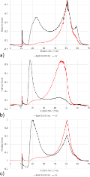
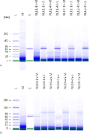
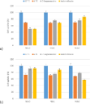
- set to 1.38 and 0.010, respectively. Water was set as the dispersant, the temperature was set to 25 °C, while the attenuation was set to 11. The 'general purpose (normal distribution)' was chosen as the analysis model. High-resolution automated electrophoresis of the adsorbed proteins onto




Capabilities of the 3D-MLSI software tool in superconducting neuron design
Beilstein J. Nanotechnol. 2026, 17, 122–138, doi:10.3762/bjnano.17.8

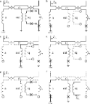
- primary subject of this article is the detailed verification of 3D-MLSI software tool. The main task of this inductance extractor is an evaluation of two-terminal partial inductances [48] associated with equivalent scheme ones. The general mathematical model for all superconductor inductance calculations



Development and in vitro evaluation of liposomes and immunoliposomes containing 5-fluorouracil and R-phycoerythrin as a potential phototheranostic system for colorectal cancer
Beilstein J. Nanotechnol. 2026, 17, 97–121, doi:10.3762/bjnano.17.7
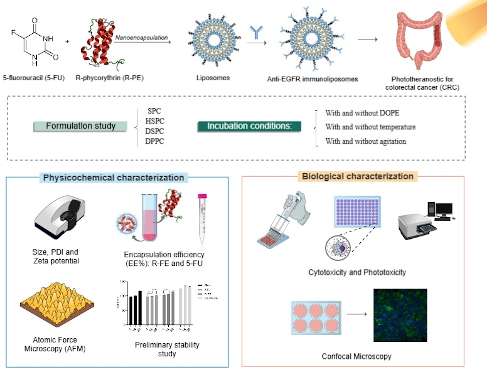
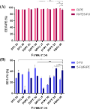
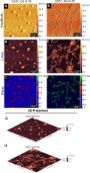
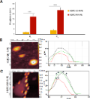
- 7.4 containing 5-FU and/or R -PE, respectively, at final concentrations of 260 μg/mL and 1 mg/mL. Subsequently, the formulations were subjected to an ultrasonic bath for 15 min. To reduce the size of the vesicles, the sonication method with a probe ultrasound was applied (Qsonica Sonicator – Model
- previously described [24]. 2.3.4.3 Release profile of R-PE and 5-FU. The release profile of R-PE and 5-FU from liposomes and immunoliposomes was analyzed using the Korsmeyer–Peppas (Equation 3) model, commonly employed in drug release kinetics studies, using the DDSolver software [24]. The Korsmeyer–Peppas
- is a semi-empirical model that encompasses release profiles of drugs through polymeric chains when the governing mechanism is a combination of Fickian and non-Fickian mechanisms: where Q is the amount of dose released at time t, k is the release rate constant, and n is the exponent. 2.3.5 Atomic



Microscopic study of the intermediate mixed state in intertype superconductors
Beilstein J. Nanotechnol. 2026, 17, 57–62, doi:10.3762/bjnano.17.5
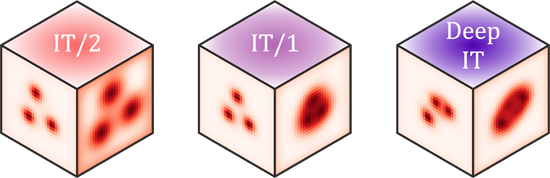
- /bjnano.17.5 Abstract We present a comprehensive microscopic study of the intermediate mixed state in superconductors of the intertype (IT) regime separating types I and II. Using fully self-consistent Bogoliubov–de Gennes calculations for a lattice model, we analyze few-vortex configurations across the
- increases, shrinking to a single point at Tc. Based on these findings, we construct a phase diagram of the IT regime, which appears qualitatively consistent with that obtained earlier from perturbation theory for the conventional BCS model with a spherical Fermi surface. Results and Discussion Model and
- method The vortex configurations are analyzed within a microscopic lattice model of a superconductor described by the attractive Hubbard Hamiltonian: where () are the annihilation (creation) operator for an electron with spin σ at site i, is the electron number operator, tij = −t is the nearest


Subdigital integumentary microstructure in Cyrtodactylus (Squamata: Gekkota): do those lineages with incipiently expressed toepads exclusively exhibit adhesive setae?
Beilstein J. Nanotechnol. 2026, 17, 38–56, doi:10.3762/bjnano.17.4
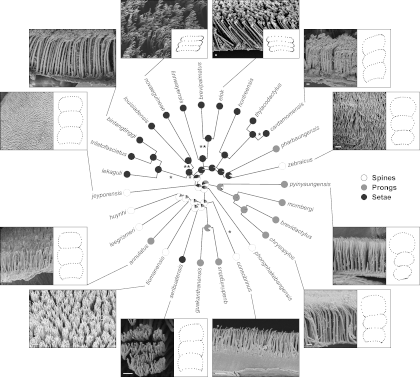
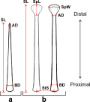
- The ER model revealed that the phylogeny of the sampled species is largely split into two groups (Figure 2). The first group [seta-group, i.e., a clade formed by the species groups pulchellus, intermedius, and brevipalmatus, as well as the species C. novaeguineae (novaeguineae group), C. louisiadensis
- (LMM) analysis, the ecotype model revealed highly significant effects between each ecotype (cave, crown, generalist, granite, intertidal, karst, terrestrial, and trunk) and apical diameter and effective bending stiffness, but only a significant effect between the crown ecotype and density (Supporting
- Information File 2). The structuretype-model revealed highly significant relationships between each derived microstructure type (prongs, spines, and setae) and apical diameter as well as effective bending stiffness. Only setae also had a highly significant relationship to density, showing lower densities than


Competitive helical bands and highly efficient diode effect in F/S/TI/S/F hybrid structures
Beilstein J. Nanotechnol. 2026, 17, 15–23, doi:10.3762/bjnano.17.2
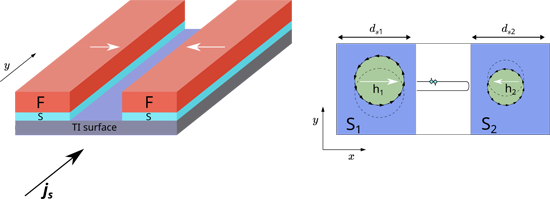
- Hamiltonian in Equation 1 within the microscopic approach based on the quasiclassical Green’s functions in the diffusive limit, that is, when the coherence length ξ is much larger than the electron mean free path l. Such model can be described by the Usadel equations [79][80][81] Here D is the diffusion
- develop the model.


![[Graphic 16]](/bjnano/content/inline/2190-4286-17-2-i31.svg?max-width=637&scale=1.18182)
![[Graphic 17]](/bjnano/content/inline/2190-4286-17-2-i32.svg?max-width=637&scale=1.18182)


Quantitative estimation of nanoparticle/substrate adhesion by atomic force microscopy
Beilstein J. Nanotechnol. 2026, 17, 1–14, doi:10.3762/bjnano.17.1

- observation, we refer to the approach of Weir and McGavin [8], who developed an analytic model for describing the coefficient of restitution of NPs rebounding from an ideally flat and rigid surface. Note that it delivers just a semi-quantitative trend and is not a rigorous description of the process. Their
- model provides a criterion to determine whether an NP escapes or is captured upon impact. This condition is expressed as: where F0 is the force acting to detach the NP from the surface, and 6πRγ is the adhesive force trying to hold the NP on the surface. R represents the radius of curvature defining the
- , and infinitely rigid, and its properties are therefore not considered in the model. The total velocity of a NP, vi, can be expressed as follows: where the first term corresponds to the initial NP velocity as it exits the NP source orifice, and the second term is the velocity added due to the substrate



Internal 3D temperature mapping in biological systems using ratiometric light-sheet imaging and lipid-coated upconversion nanothermometers
Beilstein J. Nanotechnol. 2025, 16, 2306–2316, doi:10.3762/bjnano.16.159
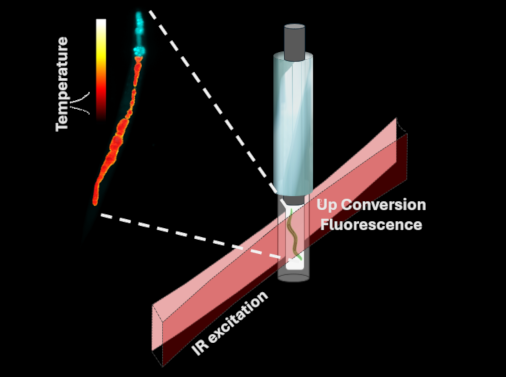
- optically transparent model organism ideally suited for LSFM due to its simple “tube-within-a-tube” anatomy and clearly defined internal organs. When the nematode is fed with lipid-coated UCNPs, the nanoparticles localize within its digestive tract, acting as thermosensitive markers and enabling voxel
- extending this technique to other small model organisms, organoids, or individual mammalian cells. In summary, LSFM-enabled upconversion nanothermometry emerges as a powerful, non-invasive platform for probing spatiotemporal temperature dynamics across diverse biomedical applications, from cellular


Terahertz-range on-chip local oscillator based on Josephson junction arrays for superconducting quantum-limited receivers
Beilstein J. Nanotechnol. 2025, 16, 2296–2305, doi:10.3762/bjnano.16.158
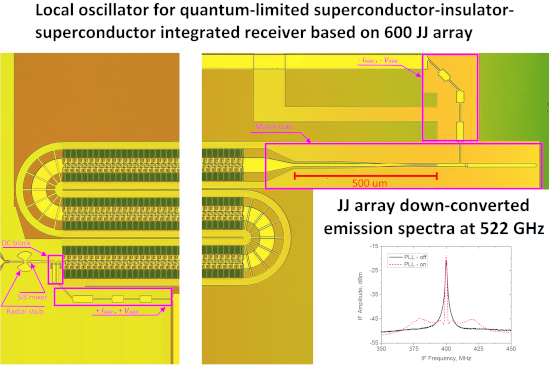
- corresponding resonance frequency is below the operating range of the samples, we will not discuss these effects here. At certain parameter values, the IVC of the single JJ exhibits a number of features that can be quantitatively described by the RLCSJ model, as shown in [38][45][46]. The image of the
- proportional to the incident power. The precise shape of the pumped IVC can be derived from the known autonomous IVC using the expressions from the Tucker–Feldman model [47]. The model is applicable for all frequencies and powers in the study, provided that a sufficient number of harmonics p are taken into
- and give rise to nonequilibrium effects, thus restricting the model applicability [48]. A set of IVCs for the SIS mixer at various pump power levels is shown in Figure 4. Experimental IVCs are indicated by colored markers, while the dashed curves represent approximations obtained using the Tucker


Geometry-controlled engineering of the low-temperature proximity effect in normal metal–superconductor junctions
Beilstein J. Nanotechnol. 2025, 16, 2265–2273, doi:10.3762/bjnano.16.155
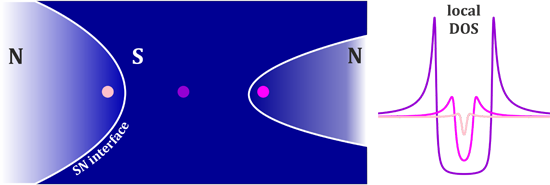
- control the proximity effect. This geometric degree of freedom provides a novel route for engineering and optimizing the performance of superconducting hybrid devices. Results and Discussion Model We perform the calculations on a system described by the two-dimensional Hubbard model, defined through the
- lines in Figure 1. For numerical simulations, we used a discretized lattice model with a system size of 128 unit cells along the z-direction (the principal axis of the NS transition) and 64 unit cells in the perpendicular x-direction. A total of twelve different geometries were modeled by varying η in


Chiral plasmonic nanostructures fabricated with circularly polarized light
Beilstein J. Nanotechnol. 2025, 16, 2245–2264, doi:10.3762/bjnano.16.154
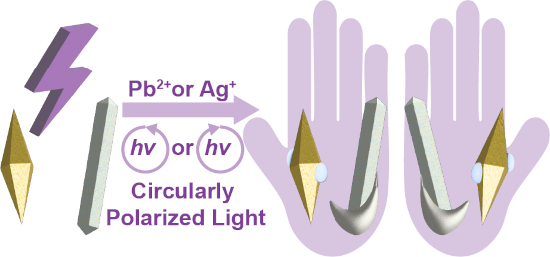
- geometrical profile that can asymmetrically distribute photochemical reactions. Numerous numerical simulations have demonstrated the dissymmetric near-field intensity profile of PNSs under CPL. This chirality can be explained by a simple model based on classical physics, which treats transverse (T) and
- polarized light waves with a π/2 phase difference, can further modulate the phase difference between the two modes by π/2. This generates a chiral EM field intensity profile at specific wavelengths. The full details of this model can be found in [72][73][74]. This model suggests that CPL spatially isolates
- heterostructures were fabricated using CPL from a lamp that had a broad distribution of photon energies. Despite the encouraging chiral nanostructures obtained, the mode interference model discussed at the start of Section 2 implies that broadband excitation is not ideal for fabricating cPNSs. This model describes





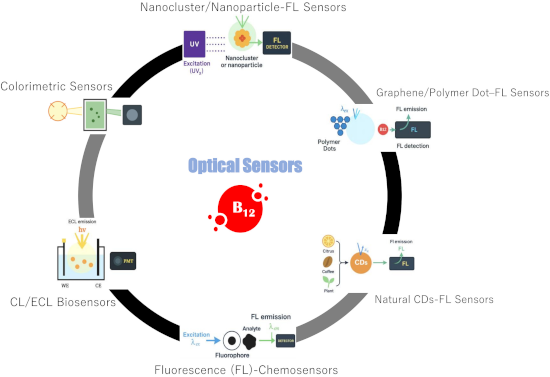
Optical bio/chemical sensors for vitamin B12 analysis in food and pharmaceuticals: state of the art, challenges, and future outlooks
Beilstein J. Nanotechnol. 2025, 16, 2207–2244, doi:10.3762/bjnano.16.153


Electromagnetic study of a split-ring resonator metamaterial with cold-electron bolometers
Beilstein J. Nanotechnol. 2025, 16, 2199–2206, doi:10.3762/bjnano.16.152
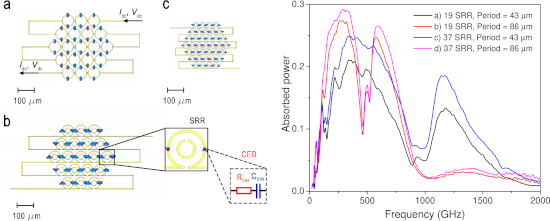
- -band behavior of the metamaterial, showing two broad peaks centered at approximately 350 and 1100 GHz. This agreement validates our simulation model. The AFC of the single-ring and SRR metamaterials with various scaling factors are presented in Figure 3. The optimal number and size of the resonators


Ultrathin water layers on mannosylated gold nanoparticles
Beilstein J. Nanotechnol. 2025, 16, 2183–2198, doi:10.3762/bjnano.16.151
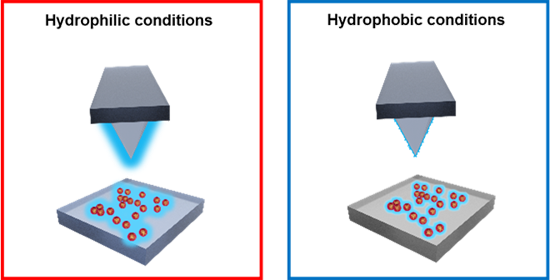
- increase. In contrast, we found that the water adsorption on the oligo(ethylene glycol) particles depends little on humidity. Our insights into structural changes on glyconanoparticles and the hydration properties of glycosylated particles are of application value for biosensors and help model the
- glycosylated AuNP can provide a simplified model of a viral spike, whenever the virus is very densely coated, for example, influenza by hemagglutinin [18][19]. Hence, our idea is not to emulate complete virions; rather, one NP is emulating one single spike protein. Although the density of the NPs is not very
- capable of exchanging back, as evidenced by a nonzero, tilted background-like feature between 3300 and 3700 cm−1. This observation supports the model of thin adsorbed water layers and further highlights the pronounced hydrophilicity of both PEG-AuNPs and dimanno-AuNPs. Adsorption of the particles on



Hartree–Fock interaction in superconducting condensate fractals
Beilstein J. Nanotechnol. 2025, 16, 2177–2182, doi:10.3762/bjnano.16.150
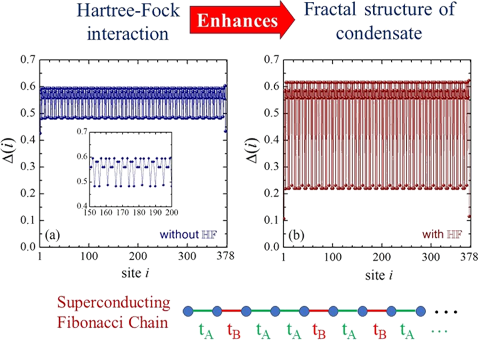
- the observables are not affected due to translational invariance. Hence, the HF field is a kind of “spectator” that defines the single-particle states and chemical potential but does not act on the pair formation and, thus, can be neglected, as in the standard formulation of the BCS model [2][3
- -dimensional model for superconducting quasicrystals [15]. Using this model, researchers explored a range of phenomena in quasiperiodic systems, including proximity effects in quasicrystal–metal hybrids [16][17][18], enhanced superconductivity from staggered hopping amplitudes [19], and the interplay between
- the Josephson effect and quasiperiodicity [20]. The model has also been used to investigate topological superconductivity [21] and anomalous local critical temperatures (at the left end, at the right end, and at the chain center) in quasiperiodic chains [22]. These investigations demonstrate that the


Microplastic pollution in Himalayan lakes: assessment, risks, and sustainable remediation strategies
Beilstein J. Nanotechnol. 2025, 16, 2144–2167, doi:10.3762/bjnano.16.148
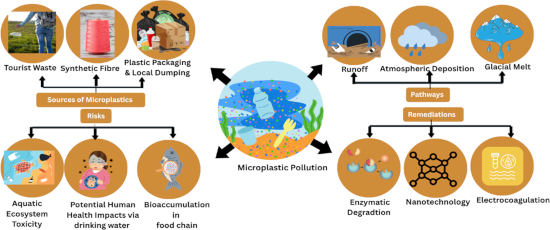
- filters for laundry, already taken up in France and debated in Australia, additionally limits MP discharge from clothes [137]. Encouraging a circular economy model can minimize plastic waste generation at the industrial level. EPR policies have been proposed to hold manufacturers accountable for post


Quality by design optimization of microemulsions for topical delivery of Passiflora setacea seed oil
Beilstein J. Nanotechnol. 2025, 16, 2116–2131, doi:10.3762/bjnano.16.146
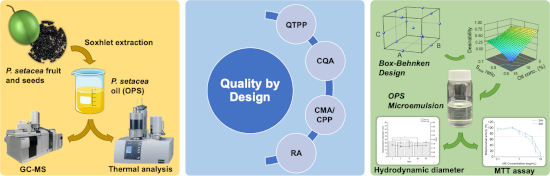
- , Tables S4 to S6). However, the presence of significant higher-order interactions limited the predictive capability and overall fit of the model. These limitations indicated the need for a more refined strategy with higher resolution and reduced confounding effects. Therefore, a Box–Behnken design (BBD
- of the experimental space. The prepared formulations corresponding to the experimental design runs are shown in Figure 4, and a summary of the BBD is presented in Table 5. To refine the model and improve predictive accuracy, the response data were subjected to Box–Cox transformation, an essential
- step when non-normal distribution is detected [25]. Following transformation, analysis of variance (ANOVA) was conducted to evaluate the statistical significance of the overall model and the individual formulation factors. To enhance model parsimony, backward regression elimination was applied to





