


Search results
Search for "molybdenum" in Full Text gives 90 result(s) in Beilstein Journal of Nanotechnology.
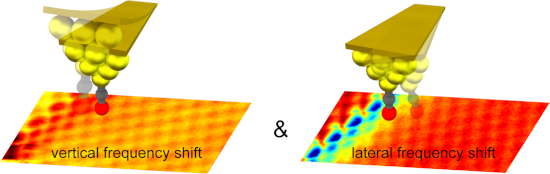
A cantilever-based, ultrahigh-vacuum, low-temperature scanning probe instrument for multidimensional scanning force microscopy
Beilstein J. Nanotechnol. 2022, 13, 1120–1140, doi:10.3762/bjnano.13.95
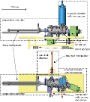
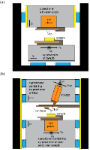
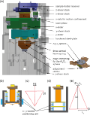
- the approached state. A further advantage of this design is that the instrument body can be manufactured as a single piece, in the form of a cylindrically shaped molybdenum tube (Figure 4a). As a result, only the sapphire plates, but not the piezo stacks, need to be glued on the inside walls of the





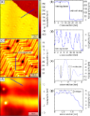


Revealing local structural properties of an atomically thin MoSe2 surface using optical microscopy
Beilstein J. Nanotechnol. 2022, 13, 572–581, doi:10.3762/bjnano.13.49
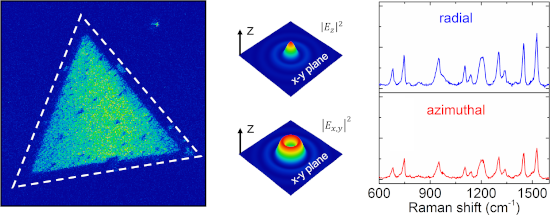
- molybdenum diselenide (MoSe2) flake as surface-enhanced Raman spectroscopy (SERS) platform, we demonstrate the dependency of the Raman enhancement on laser beam polarization and local structure using copper phthalocyanine (CuPc) as probe. Second harmonic generation (SHG) and photoluminescence spectroscopy
- dichalcogenide. Keywords: copper phthalocyanine; local structure; molybdenum diselenide; optical spectroscopy; surface-enhanced Raman spectroscopy; Introduction Two-dimensional (2D) materials have garnered interest for the next generation of optoelectronic and electrochemical devices, mainly owing to their


Influence of thickness and morphology of MoS2 on the performance of counter electrodes in dye-sensitized solar cells
Beilstein J. Nanotechnol. 2022, 13, 528–537, doi:10.3762/bjnano.13.44
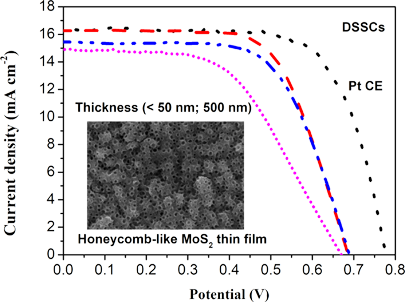
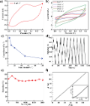
- City, 700000, Vietnam Vietnam National University Ho Chi Minh City, Linh Trung Ward, Thu Duc City, Ho Chi Minh City, 700000, Vietnam 10.3762/bjnano.13.44 Abstract Non-platinum electrodes for photoelectric devices are challenging and attractive to the scientific community. A thin film of molybdenum
- : cyclic voltammetry (CV); dye-sensitized solar cells (DSSCs); electrocatalytic activity; honeycomb-like; molybdenum disulfide (MoS2); thin film; Introduction Since Grätzel’s first report in 1991, dye-sensitized solar cells (DSSCs) have been the subject of much research due to the easy fabrication process
- compounds are considered a potential approach due to the high activity and acceptable price. Molybdenum disulfide (MoS2) has recently gained a lot of attention due to its layered structure, cost efficiency, and superior catalytic activity [9][10][11][12][13][14][15][16]. MoS2 exhibits layered structures


Low-energy electron interaction and focused electron beam-induced deposition of molybdenum hexacarbonyl (Mo(CO)6)
Beilstein J. Nanotechnol. 2022, 13, 182–191, doi:10.3762/bjnano.13.13
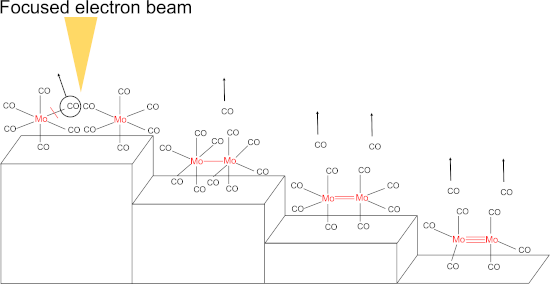
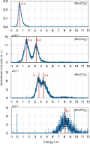
- , University of Iceland, Dunhagi 3, 107 Reykjavik, Iceland 10.3762/bjnano.13.13 Abstract Motivated by the potential role of molybdenum in semiconductor materials, we present a combined theoretical and experimental gas-phase study on dissociative electron attachment (DEA) and dissociative ionization (DI) of Mo
- ; dissociative ionisation; focused electron beam-induced deposition; molybdenum hexacarbonyl; Introduction Studies on Mo-based semiconductor materials for the application as thin films with wafer-scale thickness homogeneity [1] and for solar hydrogen production [2] have attracted interest in the last years. For
- applications of such types a good and target-oriented fabrication control of molybdenum nanostructures is important. Potentially, this may be achievable by focused electron beam-induced deposition (FEBID). In FEBID of metallic structures, organometallic precursor molecules are generally used as the metal


Chemical vapor deposition of germanium-rich CrGex nanowires
Beilstein J. Nanotechnol. 2021, 12, 1365–1371, doi:10.3762/bjnano.12.100
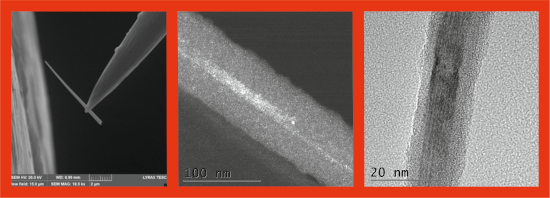
- Molybdenum substrates that were placed at the very beginning of the second part of the furnace were covered by a deposit (Figure 1a) containing chromium, germanium, and oxygen (Supporting Information File 1, Figure S1). The [Cr]/[Ge] atomic ratio was in the range of 1:(8–12). From a granular-like surface
- directly contact an as-grown single NW was developed. This method allowed us to measure the conductivity between the molybdenum substrate and the point of contact of the tungsten tip with the NW. To limit the contact resistance between the tungsten tip and the NW, the tip was soldered to the NW with a
- first part of the furnace. The Cr(acac)3 vapor in a continuous flow (3 sccm) of germane (GeH4) at 250 Pa was transported to the second part of the furnace where pyrolysis took place at 500 °C over molybdenum substrates. X-ray photoelectron spectrometry (XPS, Kratos ESCA 3400 with a base pressure below



Progress and innovation of nanostructured sulfur cathodes and metal-free anodes for room-temperature Na–S batteries
Beilstein J. Nanotechnol. 2021, 12, 995–1020, doi:10.3762/bjnano.12.75
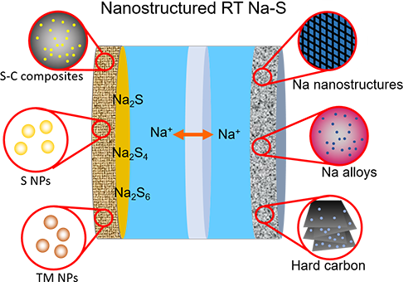
- nanocrystals [50], molybdenum trioxide [21], manganese dioxide [51], and vanadium carbide nanoparticles [12]. For instance, the electrocatalytic performance of cobalt nanoparticles (CoNPs) was reported by Zhang et al. [45] who studied a cathode comprising hollow carbon nanospheres. The cathode displayed a
- -workers [21]. Molybdenum trioxide prevents polysulfides from migrating due to its electrocatalytic and chemical sequestrant character. Therefore, a cycling stability of 2000 cycles was achieved. In the same way, a cathode with high capacity retention of 96.2% after 2000 cycles was presented by Tang and co




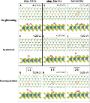
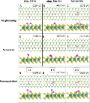
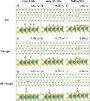
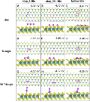
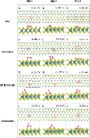
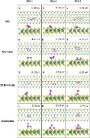
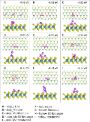
Prediction of Co and Ru nanocluster morphology on 2D MoS2 from interaction energies
Beilstein J. Nanotechnol. 2021, 12, 704–724, doi:10.3762/bjnano.12.56
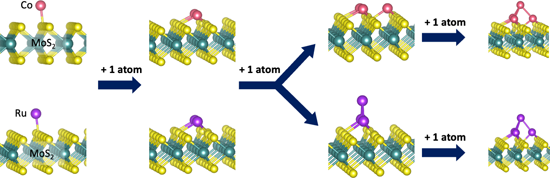
- . Based on this understanding, we propose Co on MoS2 as a suitable candidate for advanced interconnects, while Ru on MoS2 is more suited to catalysis applications. Keywords: cobalt (Co); 2D materials; molybdenum disulfide (MoS2); ruthenium (Ru); thin film nucleation; Introduction Layered materials that
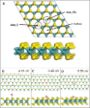



A review of defect engineering, ion implantation, and nanofabrication using the helium ion microscope
Beilstein J. Nanotechnol. 2021, 12, 633–664, doi:10.3762/bjnano.12.52
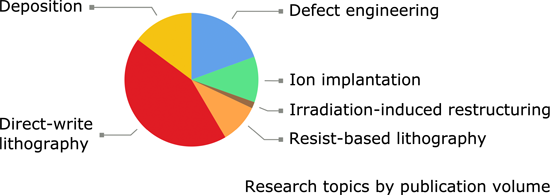
- to preferential sputtering of sulfur, increasing the relative amount of molybdenum in the material. Finally, at even higher doses, insulating behavior re-emerged, presumed to be due to excessive material removal by sputtering. In related work, a nearest-neighbor hopping mechanism mediated by the
- irradiation in the HIM, this time using a defocused beam to irradiate larger areas, has also been used to generate defects in exfoliated flakes of molybdenum dichalcogenides (MoS2 and MoSe2) to activate the catalytic activity of the basal planes of the crystal for hydrogen evolution reactions [69]. Thermal


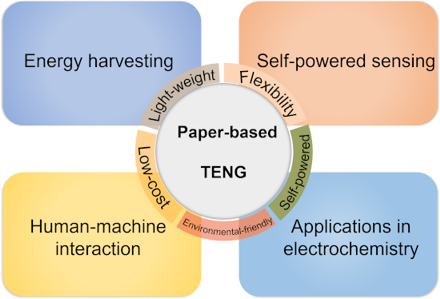
Paper-based triboelectric nanogenerators and their applications: a review
Beilstein J. Nanotechnol. 2021, 12, 151–171, doi:10.3762/bjnano.12.12






Free and partially encapsulated manganese ferrite nanoparticles in multiwall carbon nanotubes
Beilstein J. Nanotechnol. 2020, 11, 1891–1904, doi:10.3762/bjnano.11.170
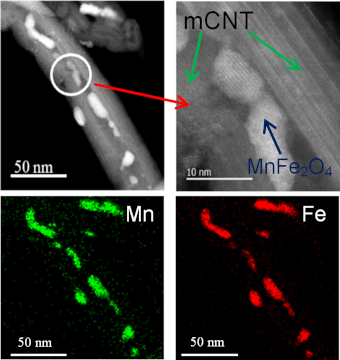
- removal of harmful pollutants [8], carbon nanotubes decorated with molybdenum disulfide are used in microbial fuel cells [9] and photoelectric detectors [10], supercapacitor electrodes use binary metal oxide/multiwall carbon nanotubes (MWCNTs) [11], among other numerous recently developed applications [12




Self-standing heterostructured NiCx-NiFe-NC/biochar as a highly efficient cathode for lithium–oxygen batteries
Beilstein J. Nanotechnol. 2020, 11, 1809–1821, doi:10.3762/bjnano.11.163
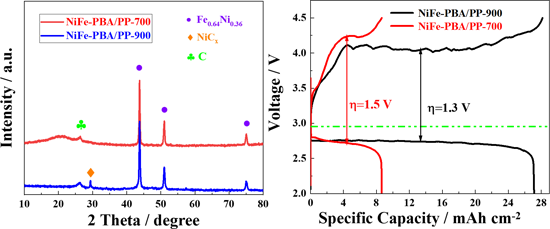
- [26]. For instance, molybdenum/tungsten carbide with a well-defined nanostructure was synthesized via a hydrothermal method, and the obtained metal carbide catalyst yielded a high capacity in lithium–oxygen batteries [15]. Also, titanium carbide was synthesized by Bruce et al. as cathode material for






Effect of localized helium ion irradiation on the performance of synthetic monolayer MoS2 field-effect transistors
Beilstein J. Nanotechnol. 2020, 11, 1329–1335, doi:10.3762/bjnano.11.117
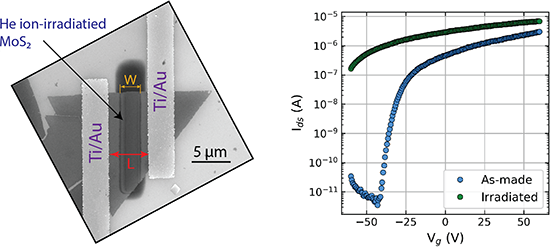
- study of the electrical performance of chemically synthesized monolayer molybdenum disulfide (MoS2) field-effect transistors irradiated with a focused helium ion beam as a function of increasing areal irradiation coverage. We determine an optimal coverage range of approx. 10%, which allows for the
- materials; Introduction Layered two-dimensional (2D) semiconductors have come to the fore in recent years as promising candidates for the implementation of flexible, transparent, and low-power electronics. In particular, transition metal dichalcogenides (TMDs), such as molybdenum disulfide (MoS2), have


Photothermally active nanoparticles as a promising tool for eliminating bacteria and biofilms
Beilstein J. Nanotechnol. 2020, 11, 1134–1146, doi:10.3762/bjnano.11.98
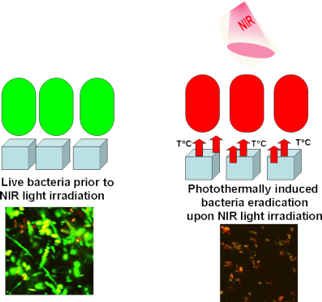
- NIR-photothermal ablation (>99.99%) of S. aureus both in biofilms and in infected tissues [98]. Molybdenum oxide nanoparticles display a strong absorption in the NIR region, originating from the intervalence charge-transfer transition between the Mo5+ and Mo6+ states [99]. Ag nanocubes supported on


Monolayers of MoS2 on Ag(111) as decoupling layers for organic molecules: resolution of electronic and vibronic states of TCNQ
Beilstein J. Nanotechnol. 2020, 11, 1062–1071, doi:10.3762/bjnano.11.91
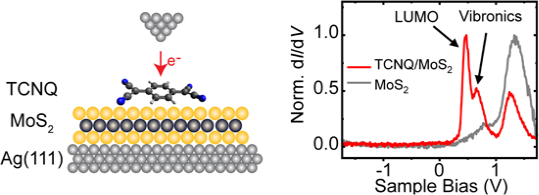
- the modes with strong electron–phonon coupling. Keywords: decoupling layer; molybdenum disulfide (MoS2); scanning tunneling microscopy, tetracyanoquinodimethane (TCNQ); vibronic states; Introduction When molecules are adsorbed on metal surfaces, their electronic states are strongly perturbed by


Epitaxial growth and superconducting properties of thin-film PdFe/VN and VN/PdFe bilayers on MgO(001) substrates
Beilstein J. Nanotechnol. 2020, 11, 807–813, doi:10.3762/bjnano.11.65
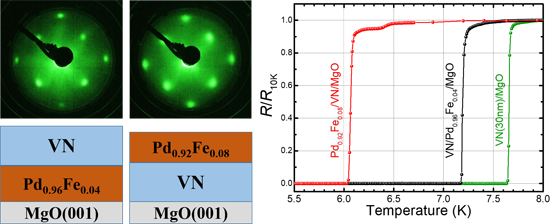
- was 20 cm, and the deposition rate was 0.2 nm/min. To grow heterostructures, the samples on the molybdenum holder were moved without breaking vacuum via the UHV transfer line between the MBE and MS deposition chambers as well as the analysis chamber (SPECS, Germany). To perform a comparative study


Exfoliation in a low boiling point solvent and electrochemical applications of MoO3
Beilstein J. Nanotechnol. 2020, 11, 662–670, doi:10.3762/bjnano.11.52
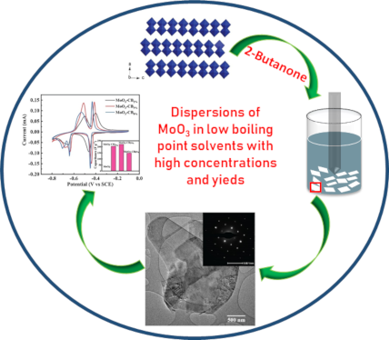
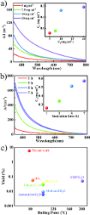
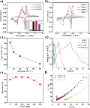
- mV·s−1. Keywords: 2-butanone; liquid-phase exfoliation; low-boiling point solvent; molybdenum trioxide (MoO3); supercapacitors; Introduction The advent of graphene has opened a new area of research in the field of two-dimensional materials [1]. The extraordinary properties of graphene have led
- layered materials, molybdenum oxide (MoO3) has gained special attention because of its numerous applications in electronics, catalysis, electrochemistry, solar cells and gas sensors [6]. Monolayered and few-layered MoO3 has been reported to have better properties than the bulk material [7]. Thus, it is
- boiling point, such as isopropyl alcohol (IPA) [5]. Alternative approaches for obtaining MoO3 dispersions in low boiling point solvents have also been reported. For instance, Alsaif et al. have exfoliated MoO3 in mixtures of water and alcohols (methanol, ethanol, IPA) [12]. In these dispersions molybdenum

DFT calculations of the structure and stability of copper clusters on MoS2
Beilstein J. Nanotechnol. 2020, 11, 391–406, doi:10.3762/bjnano.11.30
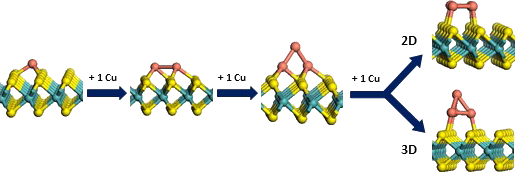
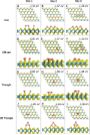
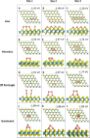
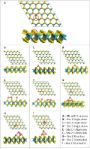
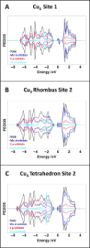
- character of Cu nanoclusters is preserved. Keywords: copper (Cu); density functional theory (DFT); 2D materials; molybdenum disulfide (MoS2); thin film nucleation; Introduction Since the successful exfoliation of monolayers of graphene by Novoselov et al., 2D materials have gained a large interest in a

Design and facile synthesis of defect-rich C-MoS2/rGO nanosheets for enhanced lithium–sulfur battery performance
Beilstein J. Nanotechnol. 2019, 10, 2251–2260, doi:10.3762/bjnano.10.217
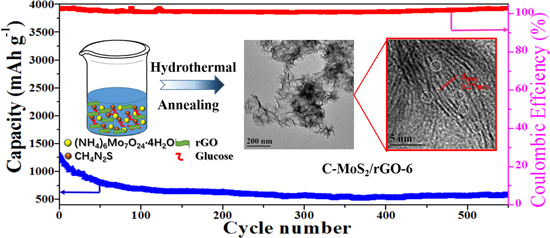
- construction of other high-performance metal disulfide electrodes for electrochemical energy storage. Keywords: annealing; double modification; high-performance electrodes; lithium–sulfur battery; molybdenum disulfide (MoS2); reduced graphene oxide (rGO); Introduction Lithium–sulfur (Li–S) batteries have


Improvement of the thermoelectric properties of a MoO3 monolayer through oxygen vacancies
Beilstein J. Nanotechnol. 2019, 10, 2031–2038, doi:10.3762/bjnano.10.199
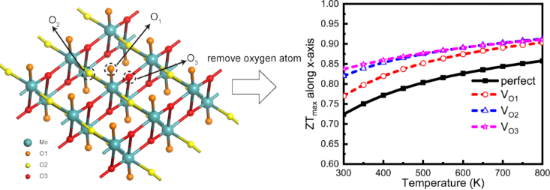
- calculations; molybdenum trioxides; MoO3 monolayer; oxygen vacancies; thermoelectric properties; Introduction Thermoelectric materials that can directly convert temperature gradients to voltage gradients and vice versa provide a valid strategy to mitigate the global energy crisis. Owing to the unique ability
- and fuel cells [5]. Meanwhile, the thermoelectric application of TMO-based materials has been explored and their poor efficiency is still the major difficulty [6]. Among the TMOs, layered molybdenum trioxide (MoO3) has attracted attention as a potential electrode material in electrochemical products
- atoms, that are connected to different molybdenum atoms, as indicated by different colors in Figure 1a. The relaxed lattice constants of the MoO3 monolayer are a = 3.68 Å and b = 3.93 Å, which are similar to the bulk experimental data of 3.70 and 3.96 Å [30]. In Figure 1b, we give the electronic band


Flexible freestanding MoS2-based composite paper for energy conversion and storage
Beilstein J. Nanotechnol. 2019, 10, 1488–1496, doi:10.3762/bjnano.10.147
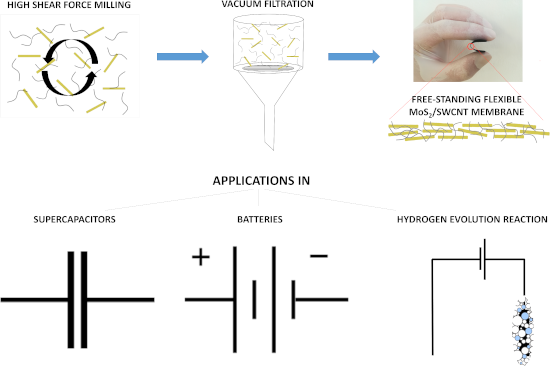
- devices where high flexibility and mechanical strength are desired. Keywords: flexible composites; hydrogen evolution reaction (HER); lithium ion batteries (LIBs); molybdenum disulfide; nanoarchitectonics; supercapacitors; Introduction The world’s growing population has a nearly ever-increasing demand
- extend their application to large energy storage systems or to the electromobility sector, an improvement in the energy storage capacity is necessary. Layered dichalcogenide materials such as molybdenum sulfide (MoS2) are promising candidates for the replacement of the commercial anode material graphite


Kelvin probe force microscopy of the nanoscale electrical surface potential barrier of metal/semiconductor interfaces in ambient atmosphere
Beilstein J. Nanotechnol. 2019, 10, 1401–1411, doi:10.3762/bjnano.10.138
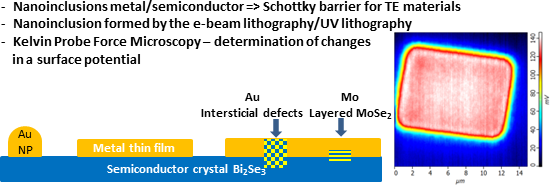
- crystals of 10–20 mm in length, 3–6 mm in width and up to 3 mm in thickness [31]. The surface of freshly cleaved layered Bi2Se3 single crystals was used as a substrate. The samples for the AFM measurement, Au nanoparticles (NPs) and thin films of gold or molybdenum, were prepared via DC sputtering in a SEM


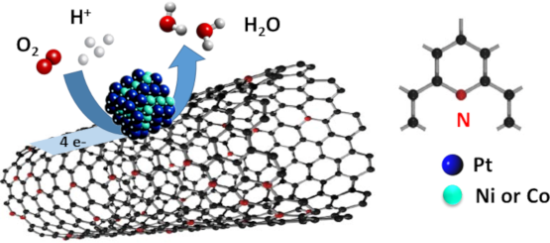
Alloyed Pt3M (M = Co, Ni) nanoparticles supported on S- and N-doped carbon nanotubes for the oxygen reduction reaction
Beilstein J. Nanotechnol. 2019, 10, 1251–1269, doi:10.3762/bjnano.10.125
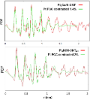
- performed on a diffractometer dedicated to pair distribution function (PDF) analyses: graphite-monochromatized molybdenum radiation (0.07169 nm), solid state detection and low background setup. The samples were sealed in Lindemann glass capillaries (diameter 1.5 mm). The MEA cross-sections were prepared by




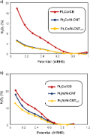




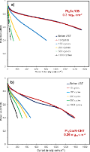
Tungsten disulfide-based nanocomposites for photothermal therapy
Beilstein J. Nanotechnol. 2019, 10, 811–822, doi:10.3762/bjnano.10.81
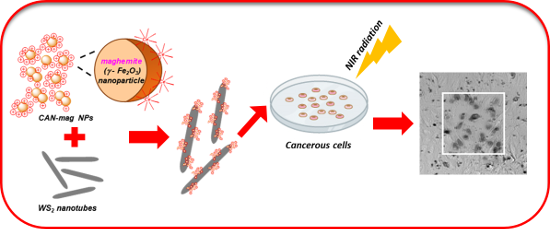
- latter group, nanostructures of metals [38], metal oxides (including iron oxides) [39], and metal chalcogenides [40][41] were studied. Tungsten oxides [42] and molybdenum oxides [43] were studied, as well as their disulfides. The disulfides were tested mainly in the forms of nanosheets [44], nanoflakes






Trapping polysulfide on two-dimensional molybdenum disulfide for Li–S batteries through phase selection with optimized binding
Beilstein J. Nanotechnol. 2019, 10, 774–780, doi:10.3762/bjnano.10.77
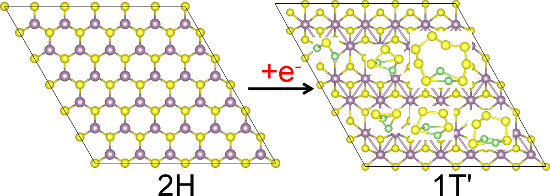
- batteries. Keywords: Li–S batteries; molybdenum disulfide; phase transformation; Introduction To satisfy the increasing demand for high-capacity energy storage systems, rechargeable lithium–sulfur (Li–S) batteries have attracted much attention in recent years due to a high theoretical specific energy


Direct observation of the CVD growth of monolayer MoS2 using in situ optical spectroscopy
Beilstein J. Nanotechnol. 2019, 10, 557–564, doi:10.3762/bjnano.10.57
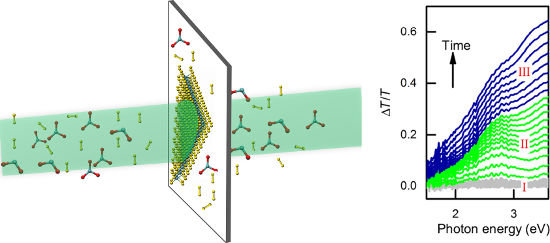
- dichalcogenide (2D TMDC) materials. However, it is very challenging to carry out such studies during chemical vapor deposition (CVD). Here, we report the first, real time, in situ study of the CVD growth of 2D TMDCs. More specifically, the CVD growth of a molybdenum disulfide (MoS2) monolayer on sapphire
- spectroscopy; molybdenum disulfide (MoS2) monolayer; two-dimensional transition-metal dichalcogenides (2D TMDC); Introduction Two-dimensional transition metal dichalcogenide (2D TMDC) materials have drawn wide attention because of their fascinating physical and chemical properties [1][2][3][4][5][6]. Given
- is sketched in Figure 3a. High purity MoO3 powder is used as the precursor for molybdenum, whereas the sulfur is supplied by vaporizing solid sulfur. High purity Ar was used as a carrier gas and a flow rate of 150 sccm was maintained during the whole process. The air in the reactor was evacuated





