


Search results
Search for "nanoelectronics" in Full Text gives 99 result(s) in Beilstein Journal of Nanotechnology.
Free and partially encapsulated manganese ferrite nanoparticles in multiwall carbon nanotubes
Beilstein J. Nanotechnol. 2020, 11, 1891–1904, doi:10.3762/bjnano.11.170
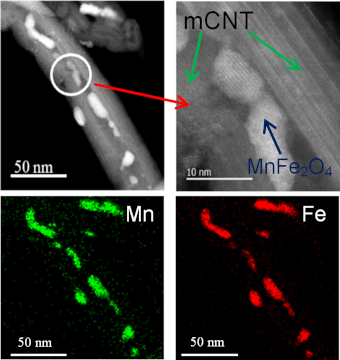
- agents [4]. In addition, encapsulating magnetic nanoparticles inside carbon nanotubes enables the handling of the tubes via magnetic forces, thereby avoiding the alteration of their electronic or mechanical properties when using them in nanoelectronics [5]. Moreover, carbon nanotubes filled with magnetic


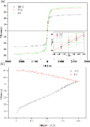


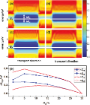
Molecular dynamics modeling of the influence forming process parameters on the structure and morphology of a superconducting spin valve
Beilstein J. Nanotechnol. 2020, 11, 1776–1788, doi:10.3762/bjnano.11.160
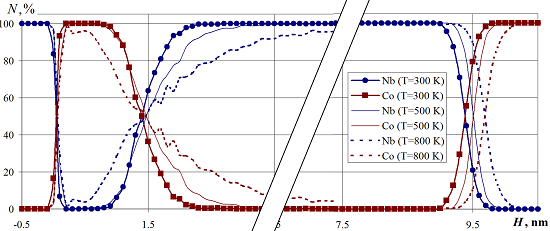
- nondissipative elements of spintronics, it is possible to create new superconducting nanoelectronics devices that consume minimum energy and have a high operation speed [8][9][10][11][12][13]. One type of magnetic nanostructure with wide potential use is the spin valve [14][15], consisting of several magnetic


Functional nanostructures for electronics, spintronics and sensors
Beilstein J. Nanotechnol. 2020, 11, 1704–1706, doi:10.3762/bjnano.11.152

- Anatolie S. Sidorenko D. Ghitu Institute of Electronic Engineering and Nanotechnologies, Chisinau, Moldova and Orel State University, Orel, Russia 10.3762/bjnano.11.152 Keywords: functional nanostructures; nanoelectronics; post-Moore generation; sensors; spintronics; supercomputers
- applications for quantum electronics and spintronics. In addition to these highlighted works, there are also other interesting functional nanostructures, sensors and quantum detectors presented, to highlight the fascinating world of nanoelectronics. The concept of this thematic issue emerged during the
Ultrasensitive detection of cadmium ions using a microcantilever-based piezoresistive sensor for groundwater
Beilstein J. Nanotechnol. 2020, 11, 1242–1253, doi:10.3762/bjnano.11.108
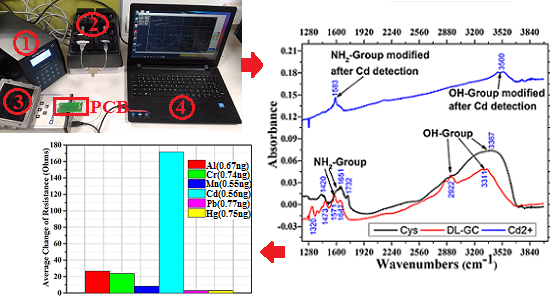
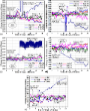
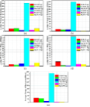
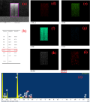
- . Comparison of different methods for cadmium detection. Funding The authors would like to thank Director of Indian Institute of Technology, Bombay for the support of atomic force microscopy under “Indian Nanoelectronics Users Program” and “Visvesvaraya Ph.D. Scheme for Electronics and IT” funded by the MeitY




Microwave photon detection by an Al Josephson junction
Beilstein J. Nanotechnol. 2020, 11, 960–965, doi:10.3762/bjnano.11.80
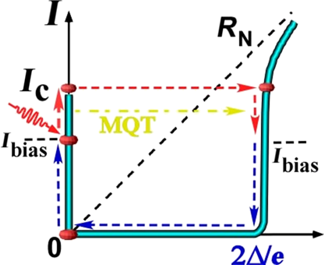
- Leonid S. Revin Andrey L. Pankratov Anna V. Gordeeva Anton A. Yablokov Igor V. Rakut Victor O. Zbrozhek Leonid S. Kuzmin Institute for Physics of Microstructures of RAS, GSP-105, Nizhny Novgorod, 603950, Russia Center of Cryogenic Nanoelectronics, Nizhny Novgorod State Technical University, Nizhny
- the measurements were performed using the facilities of the Center of Cryogenic Nanoelectronics of NNSTU. Funding The work is supported by Russian Science Foundation (Project No. 19-79-10170).


High dynamic resistance elements based on a Josephson junction array
Beilstein J. Nanotechnol. 2020, 11, 417–420, doi:10.3762/bjnano.11.32
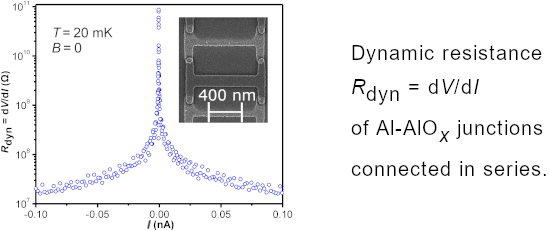
- effect. Keywords: dynamic resistance; Josephson junction array; nanoelectronics; quantum phase slip; superconductivity; Ti nanowires; Introduction The field of modern nanoelectronics is facing stagnation with respect to further miniaturization, deviating from Moore’s law [1]. Typically, two main reason

Anomalous current–voltage characteristics of SFIFS Josephson junctions with weak ferromagnetic interlayers
Beilstein J. Nanotechnol. 2020, 11, 252–262, doi:10.3762/bjnano.11.19
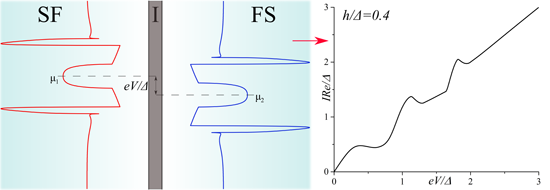
- sensitive electron thermometers [73]. However, junctions with a ferromagnetic interlayer as well as other normal metal junctions (for example, SFNFS), proposed as elements of novel superconducting nanoelectronics, have limited applicability since such junctions have low resistance values [74][75]. This
- . acknowledges the hospitality of the Quantum nanoelectronics laboratory of the Moscow Institute of Electronics and Mathematics in the National Research University Higher School of Economics during his stay in Moscow.


Nonequilibrium Kondo effect in a graphene-coupled quantum dot in the presence of a magnetic field
Beilstein J. Nanotechnol. 2020, 11, 225–239, doi:10.3762/bjnano.11.17
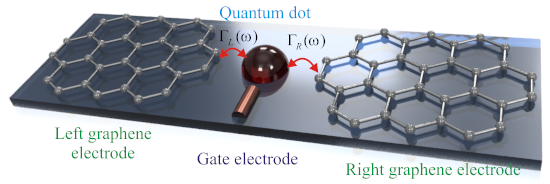
- graphene-based quantum dot system provides a platform for potential applications of nanoelectronics. Furthermore, we also propose an experimental setup for performing measurements in order to verify our model. Keywords: graphene; Kondo effect; magnetic field; pseudogap Anderson model; quantum dot


Molecular architectonics of DNA for functional nanoarchitectures
Beilstein J. Nanotechnol. 2020, 11, 124–140, doi:10.3762/bjnano.11.11
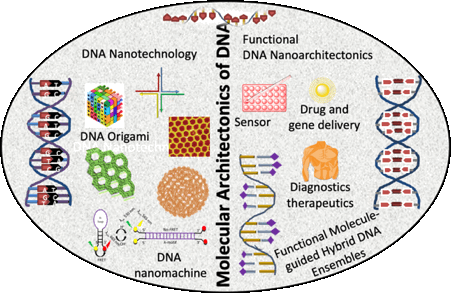
- , sensors, molecular or nanoelectronics, diagnostics, drug delivery, and biomedical sciences. The remarkable molecular fidelity and sequence-specific molecular recognition make DNA the ideal candidate in the scheme of molecular architectonics to design and construct functional DNA nanoarchitectures. In this


Nonlinear absorption and scattering of a single plasmonic nanostructure characterized by x-scan technique
Beilstein J. Nanotechnol. 2019, 10, 2182–2191, doi:10.3762/bjnano.10.211
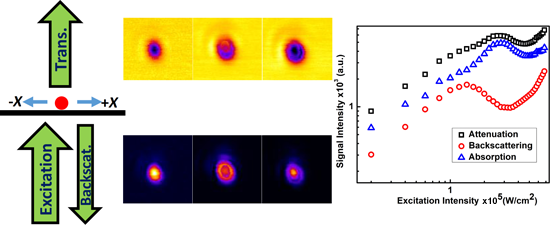
- plasmonic nanostructures [4][5][6]. The potential applications of nonlinear nanoplasmonics include nanolasers [7], nanoantennas [8], surface plasmon polariton (SPP)-based waveguides [9], nanostructure-based optical limiters [10], nanoscopy instruments [11][12], and nanoelectronics as integrated optical


First principles modeling of pure black phosphorus devices under pressure
Beilstein J. Nanotechnol. 2019, 10, 1943–1951, doi:10.3762/bjnano.10.190
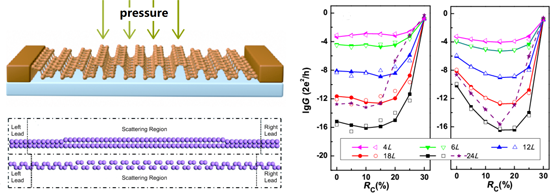
- sensors; WKB approximation; Introduction Black phosphorus (BP) has been regarded as one of the most popular two-dimensional (2D) materials due to their unique properties and potential applications in many fields of nanoelectronics [1][2][3]. So far, many studies have been carried out to explore the




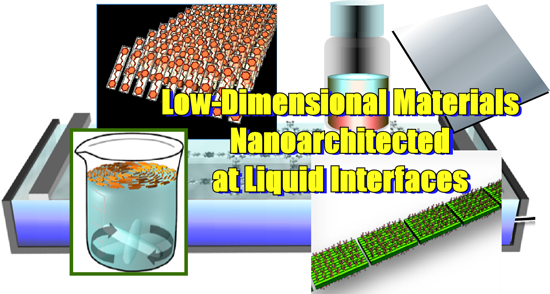
Materials nanoarchitectonics at two-dimensional liquid interfaces
Beilstein J. Nanotechnol. 2019, 10, 1559–1587, doi:10.3762/bjnano.10.153
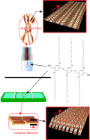
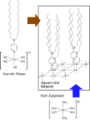
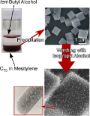
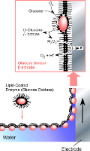
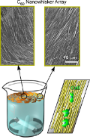
- consisting of two blocks, a fluorocarbon block and a hydrocarbon block, in a single chain) at the air–water interface is discussed. They expect possible applications of these two-dimensional nanodomains in sensors, nanoelectronics and nanophotonics. Pellerin, Bazuin, and co-workers investigated the













Magnetic segregation effect in liquid crystals doped with carbon nanotubes
Beilstein J. Nanotechnol. 2019, 10, 1464–1474, doi:10.3762/bjnano.10.145
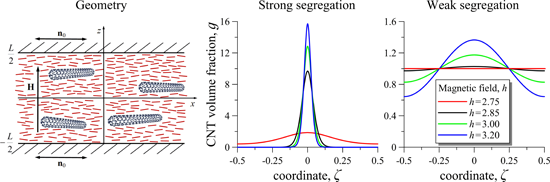
- ratio the physical properties of this carbon nanomaterial vary greatly in different directions. In this sense, the anisotropic properties of CNTs (for example, thermal and electrical conductivities) are attractive for a wide range of applications, including nanoelectronics and optics [2]. A distinctive


Tailoring the magnetic properties of cobalt ferrite nanoparticles using the polyol process
Beilstein J. Nanotechnol. 2019, 10, 1166–1176, doi:10.3762/bjnano.10.116
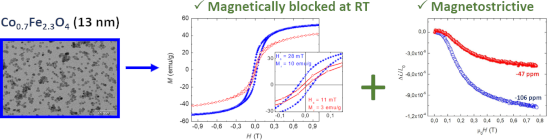
- nanoelectronics [1] and energy harvesting [2][3]. They consist of two components, one being ferromagnetic, and the other being ferroelectric. A wide range of inorganic nanostructures, defined by their connectivity, have been prepared using different synthetic approaches. Andrew et al. published a critical


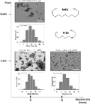


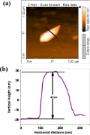
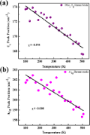
Temperature-dependent Raman spectroscopy and sensor applications of PtSe2 nanosheets synthesized by wet chemistry
Beilstein J. Nanotechnol. 2019, 10, 467–474, doi:10.3762/bjnano.10.46
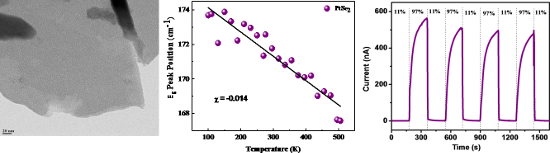
- for the Eg and A1g modes was found to be −0.014 and −0.008, respectively. A room temperature humidity sensor based on the PtSe2 nanosheets demonstrated an excellent recovery time of ≈5 s, indicating the great potential of PtSe2-based sensors for future nanoelectronics and sensor devices. PtSe2


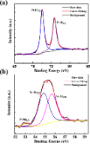

Transport signatures of an Andreev molecule in a quantum dot–superconductor–quantum dot setup
Beilstein J. Nanotechnol. 2019, 10, 363–378, doi:10.3762/bjnano.10.36
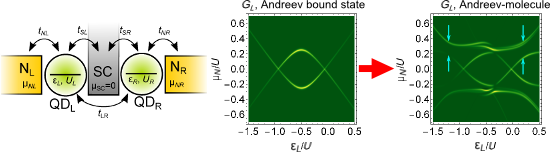
- Zoltan Scherubl Andras Palyi Szabolcs Csonka Department of Physics and MTA-BME Momentum Nanoelectronics Research Group, Budapest University of Technology and Economics, Budafoki út 8., 1111 Budapest, Hungary Department of Theoretical Physics and MTA-BME Exotic Quantum Phases ”Momentum” Research



Uniform Sb2S3 optical coatings by chemical spray method
Beilstein J. Nanotechnol. 2019, 10, 198–210, doi:10.3762/bjnano.10.18
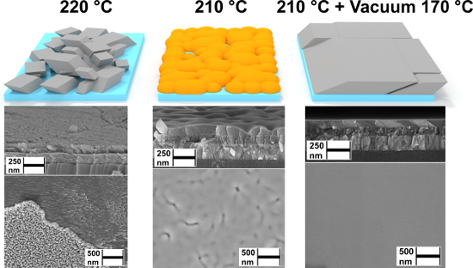
- materials and high-technology devices for sustainable energetics, sensorics and nanoelectronics” for funding.




Investigation of CVD graphene as-grown on Cu foil using simultaneous scanning tunneling/atomic force microscopy
Beilstein J. Nanotechnol. 2018, 9, 2953–2959, doi:10.3762/bjnano.9.274
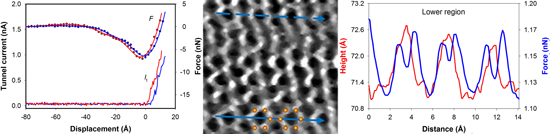
- nanoelectronics, as it provides unprecedented mobility of charge carriers at room temperature [1]. Moreover, very high conductivity at room temperature and a half-integer quantum Hall effect suggest the presence of relativistic charge carriers with vanishing mass [2]. Graphene has been investigated by using


Charged particle single nanometre manufacturing
Beilstein J. Nanotechnol. 2018, 9, 2855–2882, doi:10.3762/bjnano.9.266
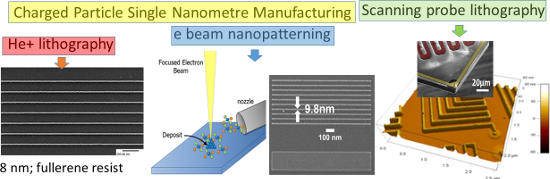
- ; electron; field emission; ion; nanolithography; Review 1 Introduction Methods for nanostructuring – the fabrication of structures with sizes on the nanoscale – are required for the fabrication of next-generation nanoelectronics, such as quantum-based devices, for nanophotonics, nanobiotechnology
- nanoelectronics and for the newer fields of micro and nanoelectromechanics (MEMS/NEMS). The current state of the art in EBL tools is represented by the EBPG5200 system from Raith GmBH which provides a high-intensity beam from a LaB6 thermal field emitter (TFE) electron source at energies up to 100 keV and is


Effect of electrospinning process variables on the size of polymer fibers and bead-on-string structures established with a 23 factorial design
Beilstein J. Nanotechnol. 2018, 9, 2466–2478, doi:10.3762/bjnano.9.231
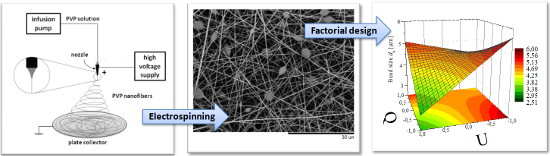
- technologies, as well as in new fields of scientific and industrial interest. They are considered to be potentially useful in areas such as nanoelectronics, medicine (e.g., wound healing, tumor therapy, inhalation therapy), filtration processes, textile manufacture, nanocatalysis production, etc. [5][6


Directional light beams by design from electrically driven elliptical slit antennas
Beilstein J. Nanotechnol. 2018, 9, 2361–2371, doi:10.3762/bjnano.9.221
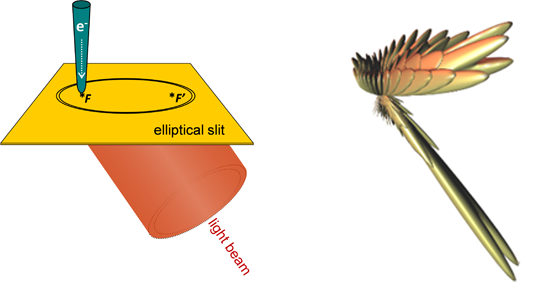
- ; surface plasmon polariton; Introduction With the ever-growing demand for higher information capacity and the diversification of applications, the integration of nanophotonics with nanoelectronics in microdevices has never been more relevant than now [1][2][3][4][5][6][7][8][9]. In this context





A variable probe pitch micro-Hall effect method
Beilstein J. Nanotechnol. 2018, 9, 2032–2039, doi:10.3762/bjnano.9.192
- materials characterization, conventional metrology for thin-film characterization still plays an important role in development of materials used in nanoelectronics [1]. Hall effect measurements have been employed for decades to electrically characterize samples and extract important metrics, such as


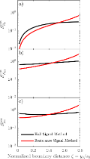
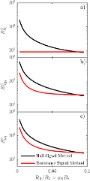
![[Graphic 11]](/bjnano/content/inline/2190-4286-9-192-i25.svg?max-width=637&scale=1.18182) for a) R0, b) NHS and c) μH when in- and off-line errors are present during ...
for a) R0, b) NHS and c) μH when in- and off-line errors are present during ...

![[Graphic 15]](/bjnano/content/inline/2190-4286-9-192-i29.svg?max-width=637&scale=1.18182) for the sheet resistance, Hall mobility and Hall sheet carrier density, due ...
for the sheet resistance, Hall mobility and Hall sheet carrier density, due ...
Tunable fractional Fourier transform implementation of electronic wave functions in atomically thin materials
Beilstein J. Nanotechnol. 2018, 9, 1828–1833, doi:10.3762/bjnano.9.174
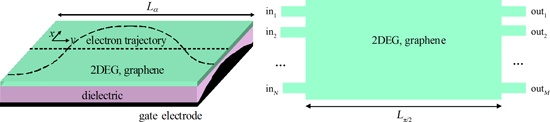
- forward in this paper is that, besides the fact that it works for both 2DEGs and graphene, it does not require magnetic fields, being thus more suited for integration in nanoelectronics circuits, and that it implements a tunable FrFT that could eventually be discretized in more than four input or output


Toward the use of CVD-grown MoS2 nanosheets as field-emission source
Beilstein J. Nanotechnol. 2018, 9, 1686–1694, doi:10.3762/bjnano.9.160
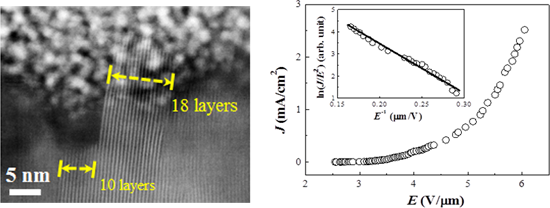
- the fabricated MoS2 NSs could have a great potential as robust high-performance electron-emitter material for various applications such as microelectronics and nanoelectronics, flat-panel displays and electron-microscopy emitter tips. Keywords: chemical vapor deposition (CVD); field emission



Computational exploration of two-dimensional silicon diarsenide and germanium arsenide for photovoltaic applications
Beilstein J. Nanotechnol. 2018, 9, 1247–1253, doi:10.3762/bjnano.9.116
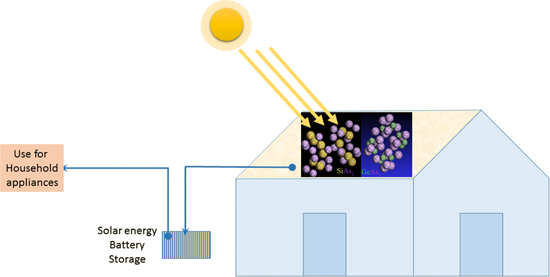
- The potential applications of two-dimensional (2D) materials are one of the key research areas for many researchers since graphene was isolated and characterized in 2004 [1]. The number of applications is vast including photovoltaics, nanoelectronics, Dirac materials and solar fuels through water





