Search results
Search for "normal distribution" in Full Text gives 43 result(s) in Beilstein Journal of Nanotechnology.
Droplet-based synthesis of homogeneous magnetic iron oxide nanoparticles
Beilstein J. Nanotechnol. 2018, 9, 2413–2420, doi:10.3762/bjnano.9.226
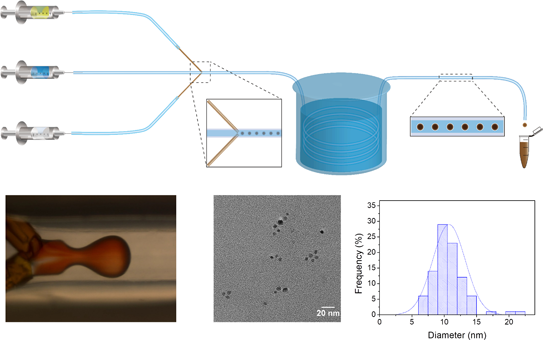
- distributions were compared after reactions under the same conditions (Figure 4). The size of particles synthesized in a batch reactor and in droplets followed a normal distribution (Figure 4A,B) with an almost identical mean particle size (µbatch = 10.6 ± 0.16 nm, µdroplet = 10.5 ± 0.11 nm). However, comparing


Fabrication of photothermally active poly(vinyl alcohol) films with gold nanostars for antibacterial applications
Beilstein J. Nanotechnol. 2018, 9, 2040–2048, doi:10.3762/bjnano.9.193
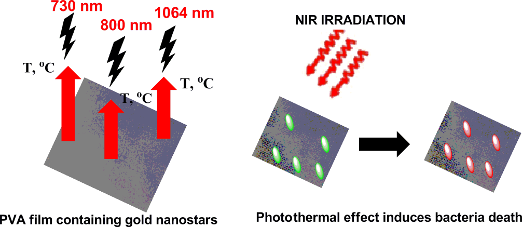
- ± standard deviation of the values of the three specimens tested. Statistical analysis Statistical analysis (GraphPad Prism 6.0 software) was performed using a t-test (Student’s test), with significance level p = 0.05. Normal distribution was verified by normal probability plots. Photothermal effect upon NIR


Patterning of supported gold monolayers via chemical lift-off lithography
Beilstein J. Nanotechnol. 2017, 8, 2648–2661, doi:10.3762/bjnano.8.265
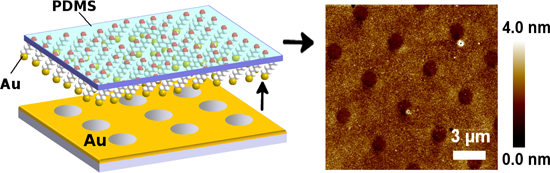
- intensities of foreground and background classifications of pixels. Each histogram was fit to a Gaussian distribution and was consistent with a normal distribution. The calculated apparent height, Ha, determined from each image was the difference in the mean of the foreground and background pixel intensities


Involvement of two uptake mechanisms of gold and iron oxide nanoparticles in a co-exposure scenario using mouse macrophages
Beilstein J. Nanotechnol. 2017, 8, 2396–2409, doi:10.3762/bjnano.8.239
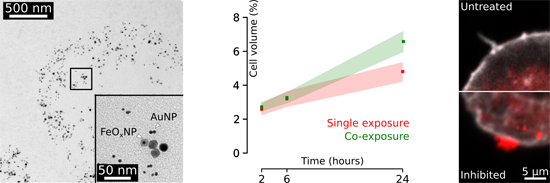
- by a normal distribution (μ being the mean and σ being the standard deviation) whose third raw moment is given by Since ICP-OES measures only the elemental core and not the polymer shell, Equation 6 is adapted as follows: The mass density of the gold was taken as 19.2 g/cm3, and 5.24 g/cm3 was taken



Bio-inspired micro-to-nanoporous polymers with tunable stiffness
Beilstein J. Nanotechnol. 2017, 8, 906–914, doi:10.3762/bjnano.8.92
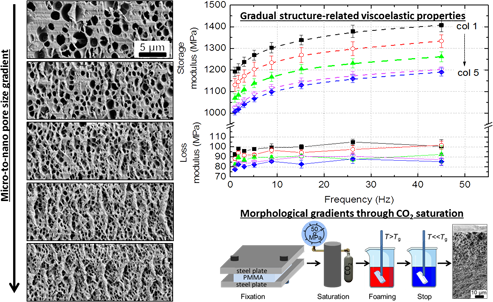
- of pores per SEM image gradually increases from 110 to 624, while the pore-area fraction decreases. The distributions of pore area, diameter and thickness of polymeric walls fit to a log-normal distribution [27] (Figure 3 and Table 1) with the exception of the wall thickness of column 4, which fits
- distribution are added to Table 1 as well. By definition, a log-normal distribution cannot be negative or have a zero value, which is inevitable for the application to porous polymers. In micro- and nanocellular foams there is a critical pore radius, i.e., a minimum pore size that can exist in the fixed foam
- . In order to account for this minimum pore size, Ramesh et al. [28] introduced a cut-off to a log-normal distribution of pore sizes, so the resulting distribution is cut around zero-values. As the pores were analysed based on automated image processing, we introduced a minimum detectable pore size of


Modeling adsorption of brominated, chlorinated and mixed bromo/chloro-dibenzo-p-dioxins on C60 fullerene using Nano-QSPR
Beilstein J. Nanotechnol. 2017, 8, 752–761, doi:10.3762/bjnano.8.78
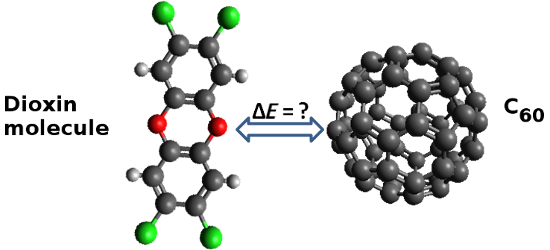
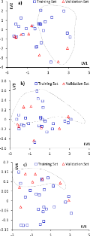
- congeners (Figure 1b) shows that the values have a normal distribution. Mechanistic interpretation of the Nano-QSPR model By analyzing scatter plots and loading values of the LVs, it is possible to interpret the obtained model. LV loadings show the contribution of a particular descriptor to a given latent



“Sticky invasion” – the physical properties of Plantago lanceolata L. seed mucilage
Beilstein J. Nanotechnol. 2016, 7, 1918–1927, doi:10.3762/bjnano.7.183
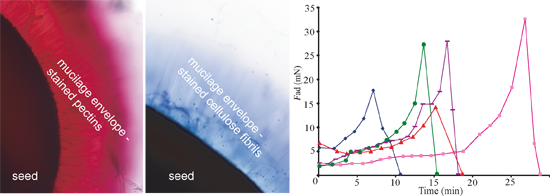
- 7.10 (The MathWorks, Natick, NA, USA). Statistical analysis Statistical analyses were performed with OriginPro 8 (OriginLab Corporation, Northampton, MA, USA). Comparison of means was performed with a two-sample t-test. Normal distribution and constant variance of data were verified before statistical


Biomechanics of selected arborescent and shrubby monocotyledons
Beilstein J. Nanotechnol. 2016, 7, 1602–1619, doi:10.3762/bjnano.7.154
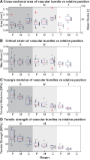
- vascular bundles not all groups showed normal distribution, therefore the statistics were computed by Kruskal–Wallis test on mean ranks and only three groups differed significantly (chi-squared = 25.00, 7, P less than 0.001; see Supporting Information File 4 - Inferential statistics). No significant
- differences in group means were obtained for critical strain (Figure 6B) of the vascular bundles, where normal distribution was not rejected and the multiple comparisons was based on an ANOVA on means (ANOVA; F7,66 = 1.36, P = 2.3) and a post hoc test with Bonferroni adjustment. The normality assumption was
- each plant species the descriptive statistics for the MoE, including mean, standard error of the mean (SE), standard deviation (STD), median, quartiles, interquartile range (IQR) and a Lilliefors test for normal distribution (H0: normal distribution), were computed in axial and radial direction (see



Microwave synthesis of high-quality and uniform 4 nm ZnFe2O4 nanocrystals for application in energy storage and nanomagnetics
Beilstein J. Nanotechnol. 2016, 7, 1350–1360, doi:10.3762/bjnano.7.126
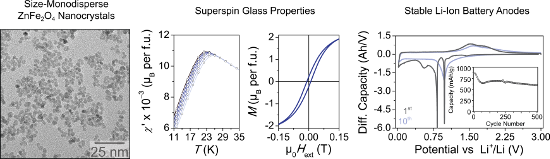
- can be fitted by a log-normal distribution with a mean of 3.3 nm and standard deviation of 0.2 nm. The microstructure of the as-prepared ZFO nanoparticles was analyzed in more detail by powder X-ray diffraction (XRD). The XRD pattern in Figure 2 corroborates the SAED results, showing only reflections


Impact of ultrasonic dispersion on the photocatalytic activity of titania aggregates
Beilstein J. Nanotechnol. 2015, 6, 2423–2430, doi:10.3762/bjnano.6.250
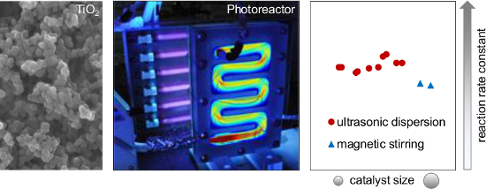
- approached the 90% quantile, x90,int, which is 90% of the intensity-weighted cumulative distribution. For a log–normal distribution x90,int is derived from the median of the intensity-weighted distribution function x50,int and the standard deviation, σLN [36][37]: The influence of agglomerate size on MB


Evidence for non-conservative current-induced forces in the breaking of Au and Pt atomic chains
Beilstein J. Nanotechnol. 2015, 6, 2338–2344, doi:10.3762/bjnano.6.241
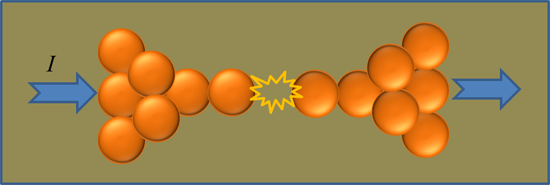
- giving rise to variations in the barrier. The tensile force was assumed to be given by a normal distribution centred at 0.95 nN, and a width of 0.3 nN. A simulation of breaking events based on these assumptions reproduces the main characteristics of the second peak in the experimental distribution


Electrical properties and mechanical stability of anchoring groups for single-molecule electronics
Beilstein J. Nanotechnol. 2015, 6, 1558–1567, doi:10.3762/bjnano.6.159
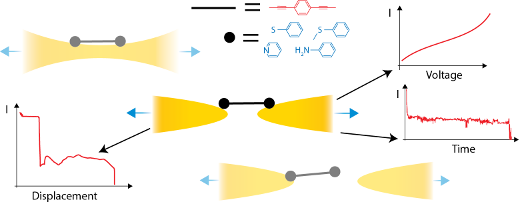
- conductance axis. The histograms show regions of high counts above 1G0, due to stable atomic configurations of the gold electrodes. In the sub-G0 region, the most probable conductance value of each molecule is extracted from the peaks in the histograms, fitted by a log-normal distribution. In this
- distribution, the logarithm of the random variable is normally distributed and the two fit parameters are μ, the location parameter, and σ, the scale parameter, respectively related to the mean and the geometric standard deviation of the normal distribution. The parameters extracted from the fit are listed in
- an asymmetric peak, with a tail at larger energies. To quantify injection barrier and coupling we fit each parameter distribution to a log-normal distribution, as shown in Section 3 of Supporting Information File 1. We calculate subsequently the geometric mean of each distribution corresponding in a


The convenient preparation of stable aryl-coated zerovalent iron nanoparticles
Beilstein J. Nanotechnol. 2015, 6, 1192–1198, doi:10.3762/bjnano.6.121
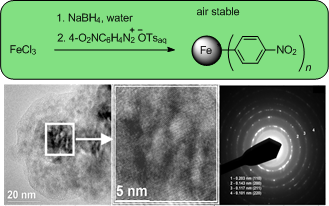
- an organic layer coating of 10 ± 2 nm. The ZVI NP size distribution was calculated by visual particle counting with no less than 500 particles and fitted to a log–normal distribution with a number-based geometric standard deviation of 1.6 according to [22][31]. The mean particle core size was


Observing the morphology of single-layered embedded silicon nanocrystals by using temperature-stable TEM membranes
Beilstein J. Nanotechnol. 2015, 6, 964–970, doi:10.3762/bjnano.6.99

- ultrathin layers suffer from significant electron beam damage that needs to be minimized in order to image the pristine sample morphology. Finally we demonstrate how the silicon nanocrystal size distribution develops from a broad to a narrow log-normal distribution, when the initial precipitation layer
- -normal distribution. The results strongly reflect the ability to control the Si NC size by geometrical one-dimensional confinement of the SRON layers. Furthermore, the influence of the SRON stoichiometry on Si nanoparticle formation is demonstrated in Figure 4c–e. Interestingly, increasing the Si excess
- nm SiO0.93), (b) S6 (4.5 nm SiO0.93), (c) S7 (3.5 nm SiO0.93), (d) S8 (3.5 nm SiO0.85), (e) S9 (3.5 nm SiO0.64). List of TEM membrane samples fabricated within this work. Extracted parameters from the EFTEM analysis, dNC indicates the maximum of the log-normal distribution fit, whereas ANC is the Si


Ni nanocrystals on HOPG(0001): A scanning tunnelling microscope study
Beilstein J. Nanotechnol. 2013, 4, 406–417, doi:10.3762/bjnano.4.48
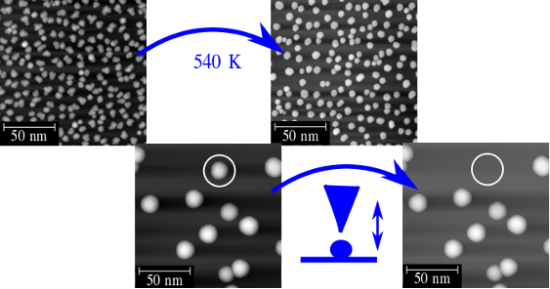
- dimensions were determined by fitting these cross sections with a rectangular function. After fitting a large number (79–150) of clusters randomly selected from several scanning areas for each experiment, height and width histograms were plotted (not shown). The resulting histograms showed a monomodal normal
- distribution for the diameter and the height of the clusters. To determine the mean values for each experiment, the histograms were fitted with Gaussian curves, and details are given below. The relative coverage of the surface and the number of clusters were extracted by implementing the appropriate options in



Formation of SiC nanoparticles in an atmospheric microwave plasma
Beilstein J. Nanotechnol. 2011, 2, 665–673, doi:10.3762/bjnano.2.71
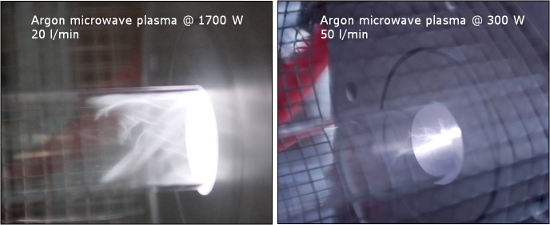
- equation describes the growth rate of larger particles, which is known as Ostwald ripening, resulting in the well-known log-normal distribution of the particle sizes. Taking into account, that D = ƒ(1 = ptotal, Tx), with 1 ≤ x ≤ 2, one can give the following proportionalities for the growth rate of a



Effect of large mechanical stress on the magnetic properties of embedded Fe nanoparticles
Beilstein J. Nanotechnol. 2011, 2, 268–275, doi:10.3762/bjnano.2.31
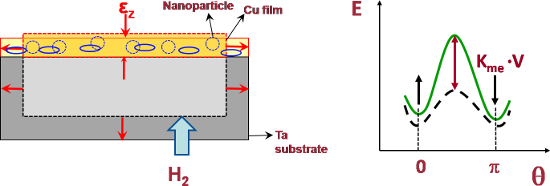
- distribution generated under these conditions was examined by scanning electron microscopy (SEM) and atomic force microscopy (AFM). Figure 1 shows a representative sample of Fe nanoparticles deposited on a silicon wafer. The particle diameters follow a log-normal distribution, typical for the gas condensation


Functional morphology, biomechanics and biomimetic potential of stem–branch connections in Dracaena reflexa and Freycinetia insignis
Beilstein J. Nanotechnol. 2011, 2, 173–185, doi:10.3762/bjnano.2.21
- ). Therefore parametric tests (normal distribution) or non-parametric tests (no normal distribution) were used for calculating statistical significance of parameter correlation or difference amongst groups (Table 1). - The (parametric) ‘One Way Analysis of Variance’ or the (non-parametric) ‘Kruskal–Wallis One