


Search results
Search for "photocatalysts" in Full Text gives 129 result(s) in Beilstein Journal of Nanotechnology.
Bismuth-based nanostructured photocatalysts for the remediation of antibiotics and organic dyes
Beilstein J. Nanotechnol. 2023, 14, 291–321, doi:10.3762/bjnano.14.26
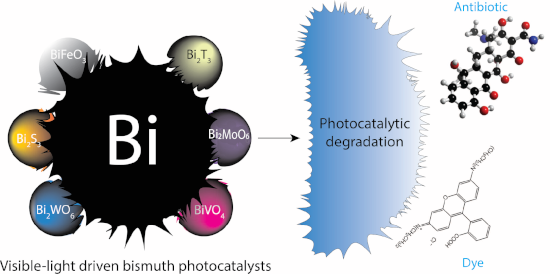
- promising green and sustainable wastewater treatment method for a cleaner environment. Due to their narrow bandgaps, distinctive layered structures, plasmonic, piezoelectric and ferroelectric properties, and desirable physicochemical features, bismuth-based nanostructure photocatalysts have emerged as one
- of the most prominent study topics compared to the commonly used semiconductors (TiO2 and ZnO). In this review, the most recent developments in the use of photocatalysts based on bismuth (e.g., BiFeO3, Bi2MoO6, BiVO4, Bi2WO6, Bi2S3) to remove dyes and antibiotics from wastewater are thoroughly
- covered. The creation of Z-schemes, Schottky junctions, and heterojunctions, as well as morphological modifications, doping, and other processes are highlighted regarding the fabrication of bismuth-based photocatalysts with improved photocatalytic capabilities. A discussion of general photocatalytic


Non-stoichiometric magnetite as catalyst for the photocatalytic degradation of phenol and 2,6-dibromo-4-methylphenol – a new approach in water treatment
Beilstein J. Nanotechnol. 2022, 13, 1531–1540, doi:10.3762/bjnano.13.126
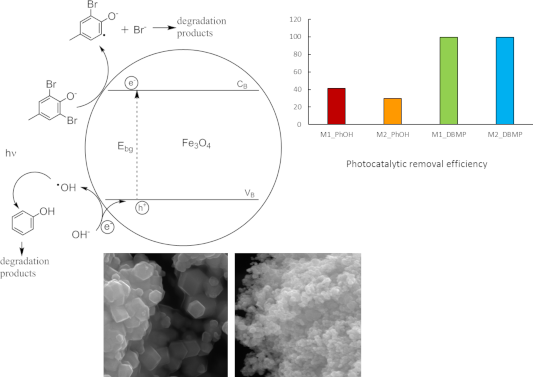
- solar radiation as an energy source [11]. The photocatalysts are activated by radiation and produce highly reactive photo-induced charge carriers, which can react with the contaminants adsorbed on the surface of the catalyst. Understanding the properties of the photocatalyst material is critical to
- catalysts has been investigated by us in our previous article [17] as photocatalysts for the degradation of 4,4′-isopropylidenebis(2,6-dibromophenol) in comparison with ozonolysis. Magnetite was chosen as a photocatalyst because of its low cost, interesting electron properties, and indisputably low
- as possible photocatalysts. The morphology, optical properties, and structural properties of the M1 and M2 samples were investigated. The stoichiometry of magnetite noticeably impacted the optical and surface properties. Direct photolysis indicated that the bromine substituent facilitated the


A TiO2@MWCNTs nanocomposite photoanode for solar-driven water splitting
Beilstein J. Nanotechnol. 2022, 13, 1520–1530, doi:10.3762/bjnano.13.125
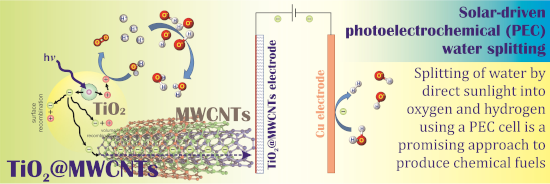
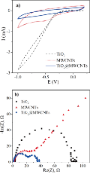
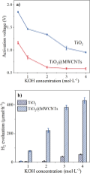
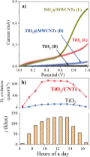
- . This approach improves solar water splitting performance [7][9]. However, an excess amount of CNTs can deteriorate the photoactivity of TiO2 nanoparticles because CNTs block and cover the surface of TiO2 [9]. There are three categories of water splitting techniques applying photocatalysts, namely
- research focuses on synthesizing and modifying photocatalysts for photoanodes and photocathodes for photoelectrochemical water splitting [11]. Several TiO2-based photocatalysts have been developed and applied in photoelectrochemical water splitting. The results showed that the solar-to-hydrogen (STH




LED-light-activated photocatalytic performance of metal-free carbon-modified hexagonal boron nitride towards degradation of methylene blue and phenol
Beilstein J. Nanotechnol. 2022, 13, 1380–1392, doi:10.3762/bjnano.13.114
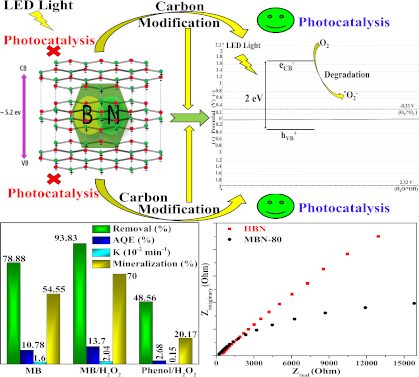
- mL of a solution containing 20 ppm of MB and 10 ppm of phenol under continuous stirring. All the batches were subjected to a dark reaction until adsorption–desorption equilibrium was achieved. A control experiment in the absence of photocatalysts was performed to study the removal percentage due to
- ]. Additionally, the photon harvesting ability of the studied photocatalysts was also evaluated by determining the light harvesting efficiency (LHE). The LHE of the material was determined from the following equation and has been demonstrated in Figure 5g [29]. where T and R denote the transmittance and



Recent trends in Bi-based nanomaterials: challenges, fabrication, enhancement techniques, and environmental applications
Beilstein J. Nanotechnol. 2022, 13, 1316–1336, doi:10.3762/bjnano.13.109
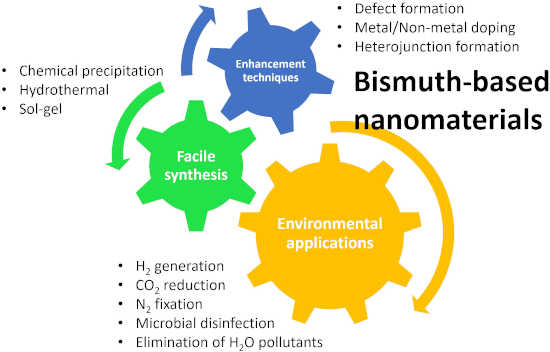
- environmental restoration and energy conversion is photocatalysis powered by solar light. Traditional photocatalysts have limited practical uses due to inadequate light absorption, charge separation, and unknown reaction mechanisms. Discovering new visible-light photocatalysts and investigating their
- modification is crucial in photocatalysis. Bi-based photocatalytic nanomaterials have gotten much interest as they exhibit distinctive geometric shapes, flexible electronic structures, and good photocatalytic performance under visible light. They can be employed as stand-alone photocatalysts for pollution
- photocatalysts, upgrading the photocatalytic ability, and understanding essential reactions of the photocatalytic process. This paper provides insights into the characteristics of Bi-based photocatalysts, making them a promising future nanomaterial for environmental remediation. The current review discusses the


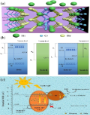


Rapid fabrication of MgO@g-C3N4 heterojunctions for photocatalytic nitric oxide removal
Beilstein J. Nanotechnol. 2022, 13, 1141–1154, doi:10.3762/bjnano.13.96
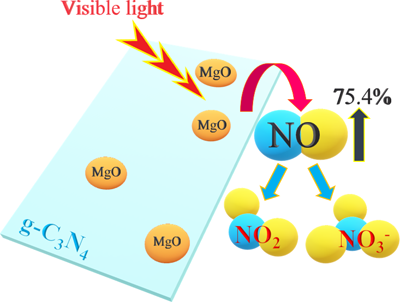
- heterojunction photocatalysts were synthesized by one-step pyrolysis of MgO and urea at 550 °C for two hours. The photocatalytic NO removal efficiency of the MgO@g-C3N4 heterojunctions was significantly improved and reached a maximum value of 75.4% under visible light irradiation. Differential reflectance
- simple way to synthesize photocatalytic heterojunction materials with high reusability and the potential of heterojunction photocatalysts in the field of environmental remediation. Keywords: g-C3N4; MgO; nitric oxide; photocatalyst; visible light; Introduction The rapid development of industrialization
- redox potential by coupling two or more semiconductors [23][24], such as Bi2MoO6-based [25][26][27][28][29], BiOCl-based [30][31], g-C3N4-based [32][33][34], ZnO-based [35][36][37], TiO2-based [38][39], and MgO-based heterostructured photocatalysts [40]. Among these, the combination of MgO and g-C3N4








Green synthesis of zinc oxide nanoparticles toward highly efficient photocatalysis and antibacterial application
Beilstein J. Nanotechnol. 2022, 13, 1108–1119, doi:10.3762/bjnano.13.94
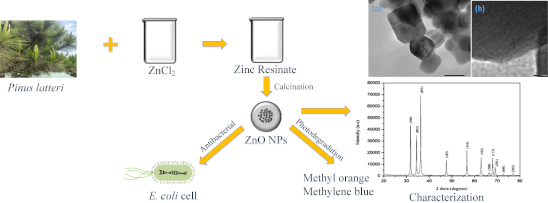
- technologies have been proposed to remove organic pollutants from water, including coagulation coupled with sedimentation, biological processes, membrane filtration, adsorption, advanced oxidation, catalysis, and photocatalysis [1][2][3]. Using semiconductors as photocatalysts has been a widely studied
- photocatalysts. ZnO has a higher quantum efficiency than that of TiO2 since it absorbs more energy in the UV region [4][5][6][7]. Furthermore, ZnO is a low-cost photocatalyst with high photocatalytic activity, nontoxicity, light sensitivity, and stability [8][9][10]. The photodegradation of organic substances by
- and zinc chloride salt. The antibacterial activity of the synthesized ZnO material against Escherichia coli (E. coli) was studied. In addition, the study also determined the ability of ZnO NPs to act as photocatalysts and to degrade dyes including MB and methyl orange (MO). Experimental Design





Spindle-like MIL101(Fe) decorated with Bi2O3 nanoparticles for enhanced degradation of chlortetracycline under visible-light irradiation
Beilstein J. Nanotechnol. 2022, 13, 1038–1050, doi:10.3762/bjnano.13.91
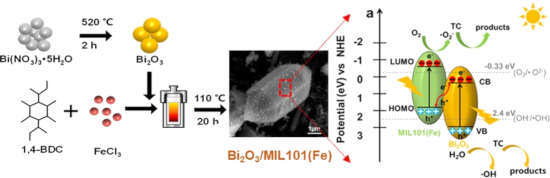
- . The intermediate products were analyzed by liquid chromatography–mass spectrometry (LC–MS), and a possible photocatalytic degradation path of CTC was proposed. This work provides a new perspective for the preparation of efficient MOF-based photocatalysts. Keywords: Bi2O3; chlortetracycline; metal
- –organic frameworks; MIL101(Fe); photocatalysts; Z-scheme heterojunction; Introduction Tetracyclines, as the second most widely used antibiotic in the world, have been widely applied in clinics, aquaculture, and livestock due to its broad-spectrum antibacterial properties and low price [1][2
- efficient photocatalysts for CTC degradation. Metal–organic frameworks (MOFs) are a kind of micro- or mesoporous materials established by the self-assembly of organic linkers and metal-cluster or metal-ion nodes [19]. The MOF materials possess large surface areas, high pore volume, tunability, uniform


Solar-light-driven LaFexNi1−xO3 perovskite oxides for photocatalytic Fenton-like reaction to degrade organic pollutants
Beilstein J. Nanotechnol. 2022, 13, 882–895, doi:10.3762/bjnano.13.79
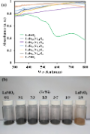
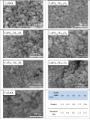
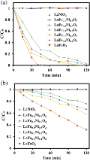
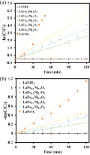
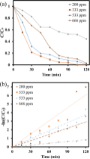
- decompose the methylene blue molecules. Accordingly, the synthesis condition of pH 0, calcination temperature at 700 °C, and Fe/Ni ratio = 7/3 could form LaFe0.7Ni0.3O3 perovskite oxides as highly efficient photocatalysts. Moreover, various conditions during the photocatalytic degradation were verified
- ]. LaFeO3 perovskite oxides are promising materials to conduct Fenton-like oxidation to decompose organic pollutants with light irradiation. Some literature exhibits the capability of LaFeO3 perovskite oxides as photocatalysts to degrade organic contaminants. Li et al. prepared intrinsic LaFeO3 or SmFeO3
- precursor for VOCs combustion [32], hydrogen production from ethanol [33], hydrocarbon fuels production from CO2 and H2O [34], syngas production from dry reforming [35], steam reforming of methane [36], or combined reforming of methane with CO2 and O2 [37]. Meanwhile, LaNiO3 photocatalysts also played an




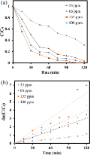
Hierarchical Bi2WO6/TiO2-nanotube composites derived from natural cellulose for visible-light photocatalytic treatment of pollutants
Beilstein J. Nanotechnol. 2022, 13, 745–762, doi:10.3762/bjnano.13.66

- method for the reduction of Cr(VI) into Cr(III) due to its high efficiency, energy-saving, and nonpolluting advantages [4]. Among the various photocatalysts, traditional titania (TiO2) photocatalysts have received great attention due to their high reactivity, excellent stability, and nontoxicity [5][6][7
- -responsive semiconductors with suitable band structures provides a pathway for the advancement of highly efficient photocatalysts [9]. It has been demonstrated that the assembly of various nanoscale building blocks to form the corresponding nanoarchitectonics provides an ideal pathway for the syntheses of a
- large variety of functional materials [10][11][12][13][14][15]; in particular, for the fabrication of specific catalytic materials [16][17][18][19]. Recently, several bismuth-based photocatalysts have drawn extensive attention owing to their unique band structures and excellent stability against


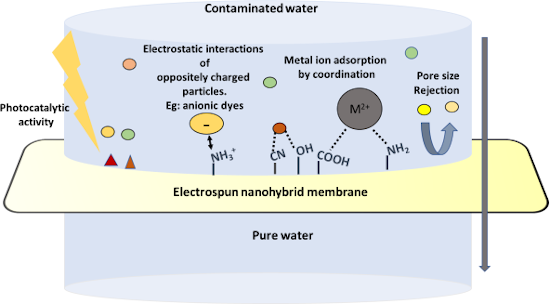
A comprehensive review on electrospun nanohybrid membranes for wastewater treatment
Beilstein J. Nanotechnol. 2022, 13, 137–159, doi:10.3762/bjnano.13.10





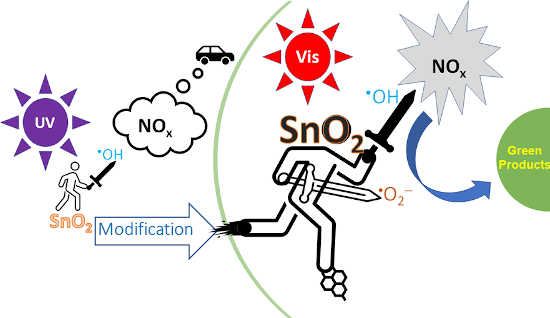
Tin dioxide nanomaterial-based photocatalysts for nitrogen oxide oxidation: a review
Beilstein J. Nanotechnol. 2022, 13, 96–113, doi:10.3762/bjnano.13.7
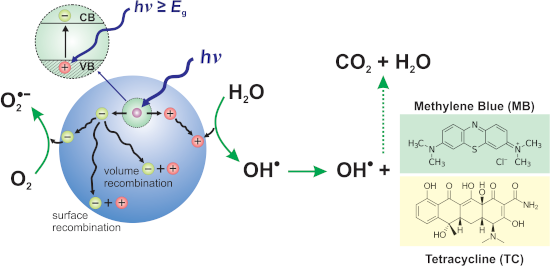
- working scheme of semiconductor photocatalysts for NO oxidation. Light generates holes (h+) in the valence band (VB) and electrons (e–) in the conduction band (CB) of the photocatalytic material. Electrons at the material surface will react with oxygen molecules to form superoxide radicals (•O2
- to the reduction of O2 to •O2− [31][33] and the rapid recombination rate of photoinduced electron–hole pairs [34], the photocatalytic ability of SnO2 is less efficient than that of other semiconductor photocatalysts (Figure 2b). Despite literature relating to the unfavorable CB edge of SnO2, many
- reflectance spectroscopy (DRS) [35][36][37][38][39][40]. This promotes a new avenue for diverse analyses of semiconductor photocatalysts in addition to the traditional theories and conclusions. Previous studies have shown that the photocatalytic activity of NOx decomposition of materials in general and SnO2


Self-assembly of amino acids toward functional biomaterials
Beilstein J. Nanotechnol. 2021, 12, 1140–1150, doi:10.3762/bjnano.12.85
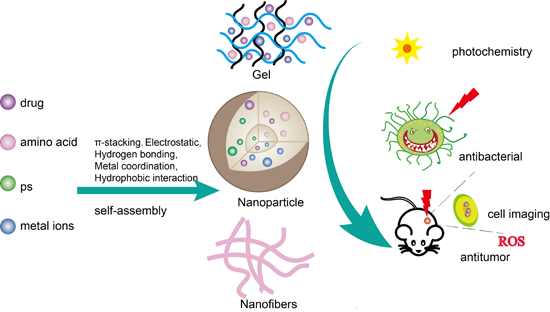
- photosensitizers and limit their severe self-aggregation. Dopamine was chosen as the model substrate to illustrate the photooxidative properties of nanocapsules. After illumination, dopamine is converted to leucine on the nanocapsules. Hence, nanocapsules can be used as photocatalysts to improve the

Nanoporous and nonporous conjugated donor–acceptor polymer semiconductors for photocatalytic hydrogen production
Beilstein J. Nanotechnol. 2021, 12, 607–623, doi:10.3762/bjnano.12.50
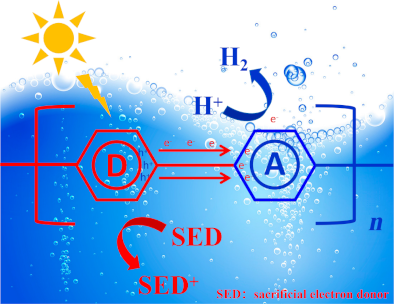
- Conjugated polymers (CPs) as photocatalysts have evoked substantial interest. Their geometries and physical (e.g., chemical and thermal stability and solubility), optical (e.g., light absorption range), and electronic properties (e.g., charge carrier mobility, redox potential, and exciton binding energy) can
- tuning the bandgap, enlarging the surface area, enabling more efficient separation of electron–hole pairs, and enhancing the charge carrier mobility. In particular, donor–acceptor (D–A) polymers were demonstrated as a promising platform to develop high-performance photocatalysts due to their easily
- units. The challenges and prospects associated with D–A polymer-based photocatalysts are described as well. Keywords: π-conjugated polymeric photocatalysts; donor–acceptor junctions; nanostructure semiconductors; photocatalytic hydrogen production; Introduction To date, fossil fuels still are the





Boosting of photocatalytic hydrogen evolution via chlorine doping of polymeric carbon nitride
Beilstein J. Nanotechnol. 2021, 12, 473–484, doi:10.3762/bjnano.12.38
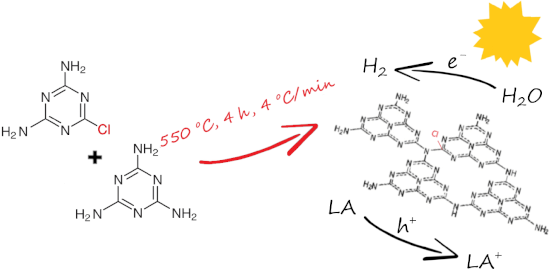
- visible light compared to catalysts doped with one heteroatom [39]. Other studies showed that S- and P-doped photocatalysts showed significantly increased photocatalytic activity in the degradation of methylene blue under visible light compared to bulk PCN. The improvement was attributed to lone-pair
- three cycles of light on–off, the performance of both electrodes tends to stabilize, indicating that the photocatalysts are stable under visible-light irradiation [55]. The measurements obtained from electrochemical impedance spectroscopy (EIS) are shown in Figure 9b. It is known that the arc radius of
- . Fabricated 2D nanomaterials were used as photocatalysts for hydrogen evolution from water splitting. It was found that the Cl-modification had an effect on the photocatalytic efficiency. Also, main aspects were revealed: (i) a unique location of Cl atoms at the interlayers of PCN and not on its π-conjugated


Unravelling the interfacial interaction in mesoporous SiO2@nickel phyllosilicate/TiO2 core–shell nanostructures for photocatalytic activity
Beilstein J. Nanotechnol. 2020, 11, 1834–1846, doi:10.3762/bjnano.11.165
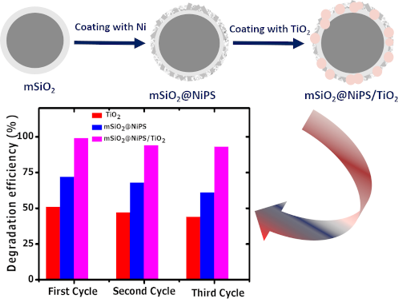
- were used as photocatalysts for the degradation of methyl violet dye and the degradation efficiencies were found to be 72% and 99% for the mSiO2@NiPS and the mSiO2@NiPS/TiO2 nanostructures, respectively. Furthermore, a recyclability test revealed good stability and recyclability of the mSiO2@NiPS/TiO2
- the core–shell nanostructure and yielded superior photocatalytic properties. Keywords: bandgap energy; core–shell; dye degradation; nickel phyllosilicate; photocatalysts; Introduction Textile dyes and organic compounds are major water pollutants, which create an environmental hazard to aquatic
- efficient, reliable, and eco-friendly water-treatment and decontamination techniques in order to mitigate this issue [3][4]. Among the various techniques, the use of semiconducting photocatalysts for light-stimulated degradation of dye pollutants has been extensively investigated [5]. Owing to its chemical


Nanocasting synthesis of BiFeO3 nanoparticles with enhanced visible-light photocatalytic activity
Beilstein J. Nanotechnol. 2020, 11, 1822–1833, doi:10.3762/bjnano.11.164
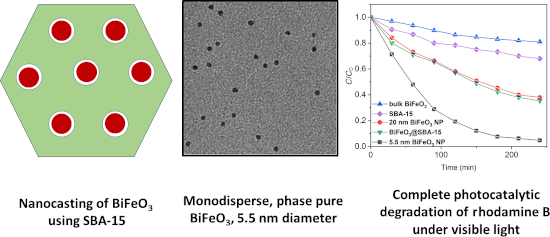
- the complete mineralization of dyes is achieved by the generation of hydroxyl and superoxide anion radicals [10][11]. Traditional photocatalysts, such as TiO2 or ZnO, provide chemical stability and facile preparation methods [12][13]. However, their environmental benefit in large-scale industrial
- photocatalysts with narrow bandgaps in the visible-light region in combination with a slow electron–hole recombination has attracted a great deal of interest [18]. Bismuth ferrite (BiFeO3) is one of those photocatalysts and has been intensively researched in the past few years due to its narrow bandgap in the
- lead to a decrease in photocatalytic activity due to crystal defects and local distortions altering the skin layer of the BiFeO3 photocatalysts [28][53][56]. From this results we conclude that the nanocasting method for the synthesis of BiFeO3 does not only produce pure-phase, uniform BiFeO3 with a


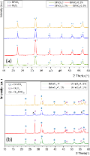


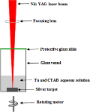
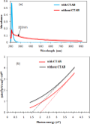
High-responsivity hybrid α-Ag2S/Si photodetector prepared by pulsed laser ablation in liquid
Beilstein J. Nanotechnol. 2020, 11, 1596–1607, doi:10.3762/bjnano.11.142
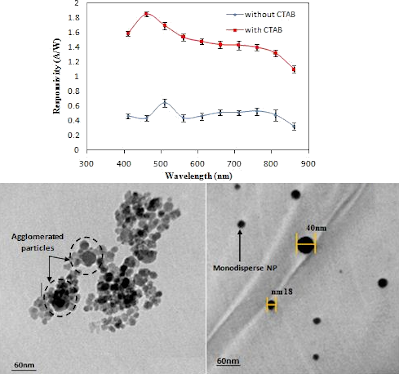
- ][6]. Silver sulfide nanoparticles (NPs) are extensively used in many applications, such as photoconductors, solar cells, infrared (IR) photodetectors, biosensors, photocatalysts, and probes [7][8][9]. A number of techniques have been used to synthesize nanostructured Ag2S, including facile




Cu2O nanoparticles for the degradation of methyl parathion
Beilstein J. Nanotechnol. 2020, 11, 1546–1555, doi:10.3762/bjnano.11.137
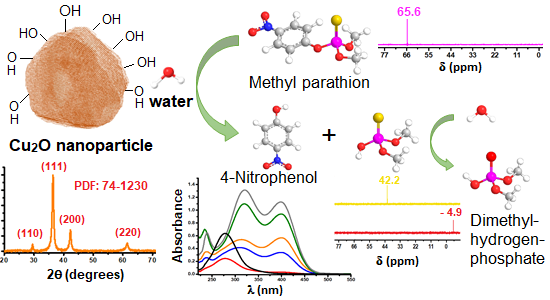
- degradation time while increasing the degradation efficacy. Our results suggest that the surface basicity of Cu2O NPs leads to degradation of MP without the need of other chemical substances or the use of photocatalysts that generate free radicals. The presence of free radicals is undesired since there is a


Effect of Ag loading position on the photocatalytic performance of TiO2 nanocolumn arrays
Beilstein J. Nanotechnol. 2020, 11, 717–728, doi:10.3762/bjnano.11.59
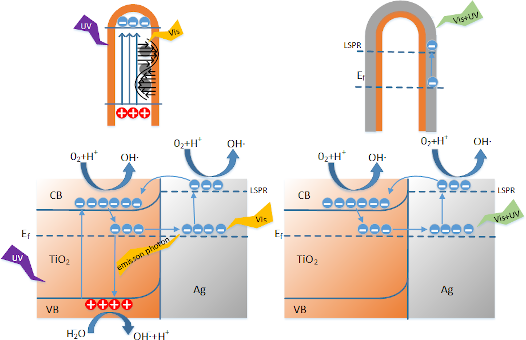
- ) of Ag and the absorption of light by TiO2. These results represent a promising step forward to the development of high-performance photocatalysts for energy conversion and storage. Keywords: anodic aluminum oxide template; nanocolumn arrays; photocatalysis; surface plasmon resonance; Introduction


Synthesis and enhanced photocatalytic performance of 0D/2D CuO/tourmaline composite photocatalysts
Beilstein J. Nanotechnol. 2020, 11, 407–416, doi:10.3762/bjnano.11.31
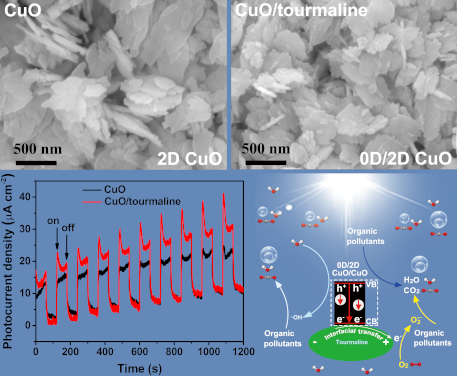
- tourmaline-based functional composite photocatalysts for the treatment of organic contaminants in water. Keywords: 0D/2D CuO; organic contaminants; photocatalytic activity; photoinduced charge separation; tourmaline; Introduction Developing a novel semiconductor with excellent photoreactive activity toward
- the treatment of organic contaminants in wastewater is in urgent need owing to the deterioration of the ecological environment [1]. Metal oxides, such as ZnO [2], TiO2 [3], Fe2O3 [4], and CuO [5], have been demonstrated to be promising photocatalysts. In particular, the band gap energy (Eg) of the p
- way to promote the photocatalytic activity of CuO by coupling with the polar mineral tourmaline, and provides an ideal example for the development of easily synthesized and low-cost tourmaline-based photocatalysts. The morphology, microstructure, pore structure, optical properties, and durability of


Improved adsorption and degradation performance by S-doping of (001)-TiO2
Beilstein J. Nanotechnol. 2019, 10, 2116–2127, doi:10.3762/bjnano.10.206
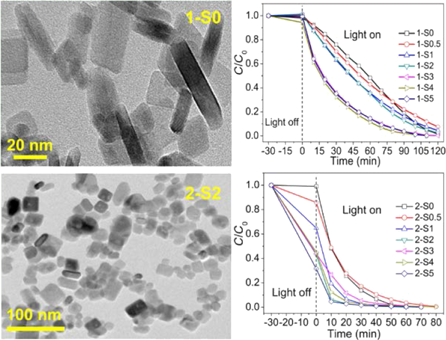
- spectra (UV–vis DRS) of the samples were measured on a Shimadazu U-4100 spectrometer (U-4100, Shimadazu Corporation, Tokyo, Japan). X-ray photoelectron spectroscopy (XPS) was performed using a Thermo Scientific ESCALAB 250Xi (Thermo Scientific Inc., USA). The chemical bonds of the photocatalysts were





Pulsed laser synthesis of highly active Ag–Rh and Ag–Pt antenna–reactor-type plasmonic catalysts
Beilstein J. Nanotechnol. 2019, 10, 1958–1963, doi:10.3762/bjnano.10.192
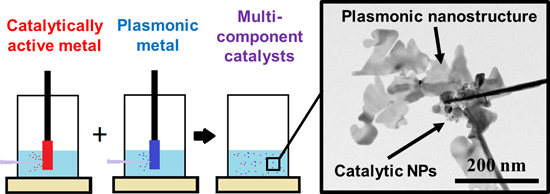
- forming multicomponent, antenna–reactor-type photocatalysts. Highly elevated LSPR-induced electric fields in the angular concavities increase the number of energetic charge carriers of adsorbed Rh/Pt NPs, and subsequently increase the reduction rate of 4-nitrophenolate. This effect is isolated to the NP


BiOCl/TiO2/diatomite composites with enhanced visible-light photocatalytic activity for the degradation of rhodamine B
Beilstein J. Nanotechnol. 2019, 10, 1412–1422, doi:10.3762/bjnano.10.139
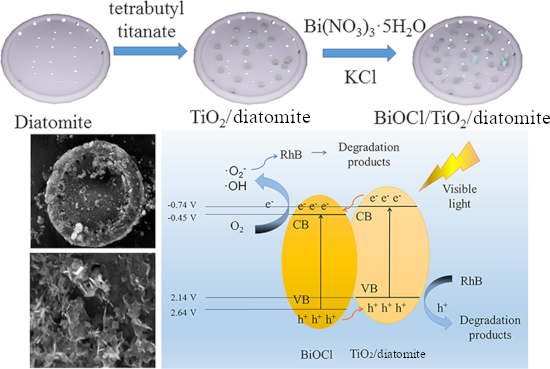
- [10]. As one of the most promising photocatalysts, in terms of its chemical stability, non-toxicity, photo-corrosion resistance in aqueous media and advanced oxidation properties, titanium dioxide (TiO2) has been widely studied [11][12] and employed for water splitting [13], energy storage [14], and
- of TiO2/diatomite and pure BiOCl were analyzed by the same method. In addition, cyclic experiments were carried out to prove the recyclability of photocatalysts. The photocatalyst was collected by centrifugation and the surface organic matter was removed by ethanol and water washing several times
- mineralized, although it has been completely decolorized under the same conditions. The result shows that about 45% of carbon is degraded to CO2. Photoelectrons and holes in photocatalysts have strong reductive and oxidative abilities, so they react with oxygen and other substances to form a variety of active


Construction of a 0D/1D composite based on Au nanoparticles/CuBi2O4 microrods for efficient visible-light-driven photocatalytic activity
Beilstein J. Nanotechnol. 2019, 10, 1360–1367, doi:10.3762/bjnano.10.134
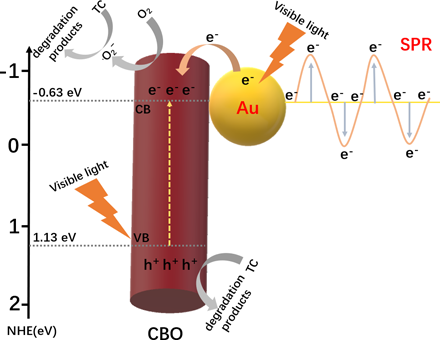
- , enhancing photoresponse and providing more active sites. Our work shows a possible design of efficient photocatalysts for environmental remediation. Keywords: Au nanoparticles; 0D/1D composite; CuBi2O4 microrods; photocatalysis; photocatalytic degradation; Introduction Heterogeneous semiconductor
- photocatalysis as an advanced green technology has been widely studied and applied for the removal of organic pollutants from water [1][2][3]. The catalytic activity of many wide-bandgap (Eg) semiconductor photocatalysts is restricted to UV light radiation, which is only 5% of the solar spectrum. Hence, the
- development of visible-light-driven photocatalysts is highly desirable because visible light accounts for about 43% of the solar spectrum. Currently, bismuth-based semiconductor materials, including Bi2O3 [4], BiVO4 [5][6], Bi2WO6 [7], Bi2MoO6 [8], BiOX (X = Cl, Br, I) [9], and Bi2O2CO3 [10], are explored as





