Search results
Search for "photocatalytic performance" in Full Text gives 79 result(s) in Beilstein Journal of Nanotechnology.
Engineered titania nanomaterials in advanced clinical applications
Beilstein J. Nanotechnol. 2022, 13, 201–218, doi:10.3762/bjnano.13.15
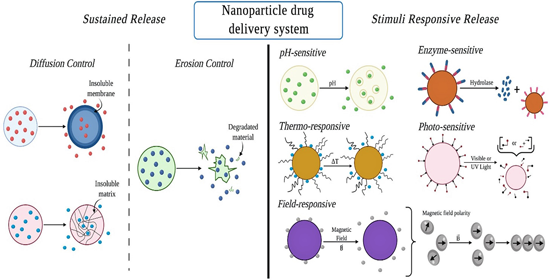
- generated free electrons (e−) react with molecular oxygen to generate superoxide radicals by reduction. Several factors contribute to the photocatalytic performance of TiO2, such as the structural phase (anatase, brookite, or rutile), defects in the lattice, the degree of crystallinity, morphology


Tin dioxide nanomaterial-based photocatalysts for nitrogen oxide oxidation: a review
Beilstein J. Nanotechnol. 2022, 13, 96–113, doi:10.3762/bjnano.13.7
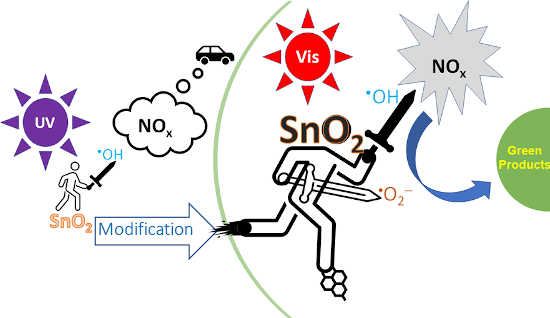
- % after 30 min under solar light irradiation, and the conversion efficacy from NO to NO2 is 1.66%. The high photocatalytic performance and the stability of SnO2 NPs under solar light is promising for potential application [69]. Recent approaches in the modification of SnO2 for photocatalytic NOx oxidation


Self-assembly of amino acids toward functional biomaterials
Beilstein J. Nanotechnol. 2021, 12, 1140–1150, doi:10.3762/bjnano.12.85
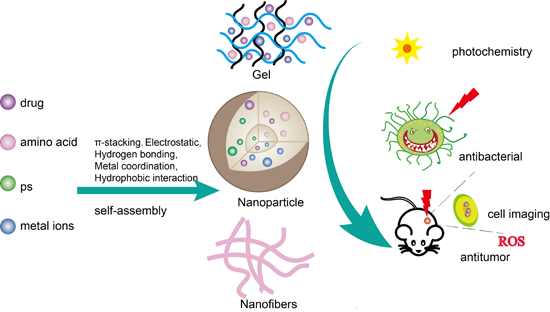
- (Cd2+) to form a three-dimensional crystal of Cys/Cd nanorods. Then, upon the introduction of Na2S, the Cys/Cd template mediates the mineralization of cadmium sulfide (CdS) into a layered CdS quantum dot structure, finally making a simple bionic daylight antenna with sustainable photocatalytic
- performance [58]. In addition, Liu et al. [59], inspired by the cystine pathological biomineralization process, developed a zinc-directed cystine assembly to mimic chloroplast photosynthesis. Zn2+ promotes rapid nucleation of cystine crystals and regulates crystal morphology through splitting growth

Nanoporous and nonporous conjugated donor–acceptor polymer semiconductors for photocatalytic hydrogen production
Beilstein J. Nanotechnol. 2021, 12, 607–623, doi:10.3762/bjnano.12.50
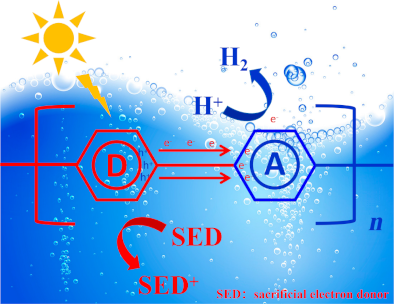
- be easily tuned via structural design. In addition, they are of light weight (i.e., mainly composed of C, N, O, and S). To improve the photocatalytic performance of CPs and better understand the catalytic mechanisms, many strategies with respect to material design have been proposed. These include
- , for example, La, Bi, and Ta, which are often rare, toxic, and expensive [6]. Also, expensive noble metal-based cocatalysts (e.g., Pt) are required to improve the photocatalytic performance. As such, an ideal photocatalyst for water splitting reaction should fit the following criteria: suitable bandgap
- trimerization of nitrile under harsh conditions [43], Tan et al. developed a new condensation reaction of aldehydes with amidines to construct covalent triazene frameworks (CTFs) under mild conditions [45]. They investigated the effects of donor units with different heteroatoms on the photocatalytic performance




Unravelling the interfacial interaction in mesoporous SiO2@nickel phyllosilicate/TiO2 core–shell nanostructures for photocatalytic activity
Beilstein J. Nanotechnol. 2020, 11, 1834–1846, doi:10.3762/bjnano.11.165
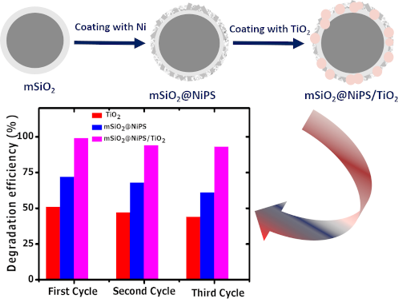
- photodegradation activity. Charge transfer between mSiO2@NiPS and TiO2 led to a faster charge-carrier separation and transportation at the interface, improving the photoactivity. The photocatalytic results showed that the mSiO2@NiPS/TiO2 composite exhibited excellent photocatalytic performance with a methyl violet


Nanocasting synthesis of BiFeO3 nanoparticles with enhanced visible-light photocatalytic activity
Beilstein J. Nanotechnol. 2020, 11, 1822–1833, doi:10.3762/bjnano.11.164
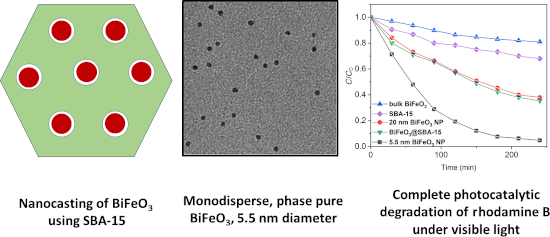
- 1.75 g/L result in an increased opacity of the heterogeneous reaction mixture, which consequently leads to a decrease of the photocatalytic performance. Thus, we conclude that the optimum concentration of the nanocast BiFeO3 catalyst for the photodegradation of RhB is 1.25 g/L. The stability and




Effect of Ag loading position on the photocatalytic performance of TiO2 nanocolumn arrays
Beilstein J. Nanotechnol. 2020, 11, 717–728, doi:10.3762/bjnano.11.59
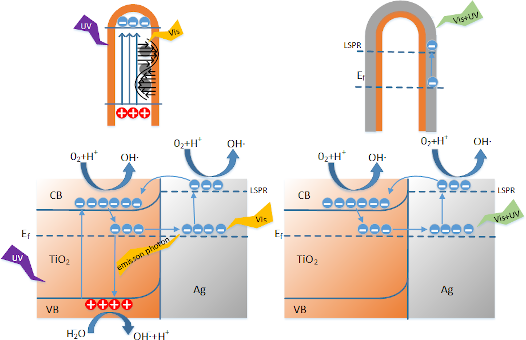
- efficiency of methylene blue (MB) compared with Ag-coated TiO2 (ACT) nanocolumn arrays and pure TiO2 nanocolumns arrays. Both experimental and theoretical simulation results demonstrated that the enhanced photocatalytic performance of AFT nanocolumn arrays was attributed to the surface plasmon resonance (SPR
- affords specimens with different electron transfer characteristics than those of rutile and anatase TiO2, and the as-prepared films fit the template well. When Ag particles are combined with TiO2, the photocatalytic performance of the film can be significantly enhanced by hot electron injection [24


Preparation, characterization and photocatalytic performance of heterostructured CuO–ZnO-loaded composite nanofiber membranes
Beilstein J. Nanotechnol. 2020, 11, 631–650, doi:10.3762/bjnano.11.50
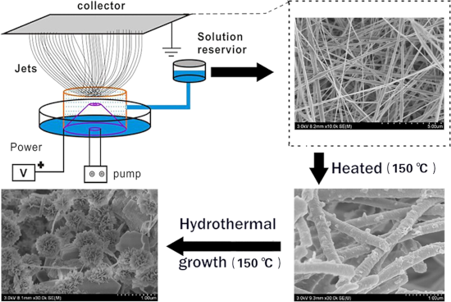
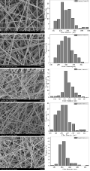
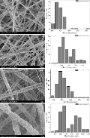
- using cathodic co-electrodeposition and observed their photocatalytic performance. Fierro et al. [25] synthesized CuO–ZnO composite catalysts by temperature-programmed reduction and applied them in photocatalytic degradation. Nanocomposites loaded with metal oxide semiconductors have excellent optical
- electrospinning and observed their photocatalytic performance. Yuan et al. [35] obtained TiO2/WO3 CNFs using electrospinning and applied them in the photocatalytic removal of mercury. Teng et al. [36] prepared TiO2/NiO CNFs by electrospinning and used them for photocatalysis. Polyacrylonitrile (PAN) has been











Synthesis and enhanced photocatalytic performance of 0D/2D CuO/tourmaline composite photocatalysts
Beilstein J. Nanotechnol. 2020, 11, 407–416, doi:10.3762/bjnano.11.31
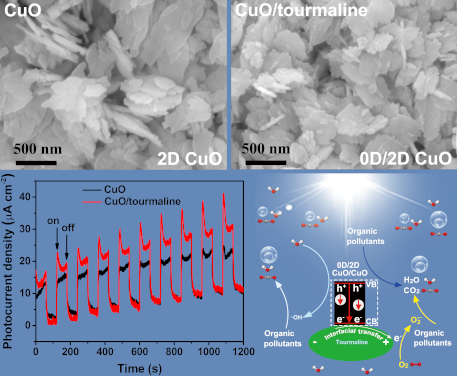
- NANO ZS90 instrument (Malvern, UK). Photocatalytic activity evaluation The photocatalytic performance was examined by the degradation of MB with light irradiation simulated by a 300 W Xe lamp with a 420 nm cut-off filter. In detail, 0.05 g of the as-synthesized photocatalyst was added into 100 mL of
- photocatalytic performance of the CuO/tourmaline composite was also tested under different conditions. The composite with the synthesis temperature of 180 °C exhibited optimum photocatalytic activity (Supporting Information File 1, Figure S2), implying that the synthesis temperature of 180 °C could optimize the
- 0D/2D CuO structure and interfacial interaction between CuO and tourmaline. The initial solution pH affected the photocatalytic performance mainly via changing the adsorption of dye molecules onto photocatalysts (Figure 7a), as adsorption occurred firstly during the photodegradation reactions [42


Improved adsorption and degradation performance by S-doping of (001)-TiO2
Beilstein J. Nanotechnol. 2019, 10, 2116–2127, doi:10.3762/bjnano.10.206
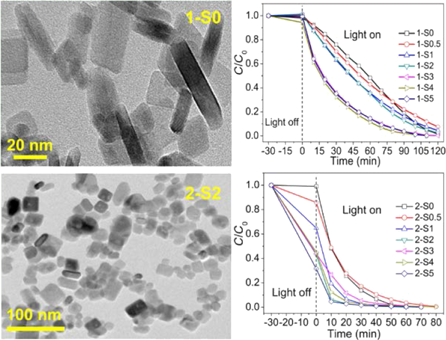
- , 2, 3, 4 and 5. The S-doped samples synthesized at 250 °C exhibit a significantly improved photocatalytic performance. More precisely, S-doping has the following effects on the material: (1) S can adopt different chemical states in the samples. Specifically, it exists in the form of S2− replacing O2
- high photocatalytic activity [10]. However, Yu et al. demonstrated that an appropriate proportion of exposed (001) and (101) crystal faces, which forms a “surface heterojunction”, facilitates the separation of photo-generated carriers [8]. Consequently, this improves the photocatalytic performance
- performance. Li et al. synthesized composites of mesoporous (001)-TiO2 and C applying a one-pot hydrothermal strategy in the presence of glucose and hydrofluoric acid (HF). The composites an exhibited excellent visible-light-driven photocatalytic performance [14]. Chen et al. synthesized a composite of g-C3N4




Direct observation of oxygen-vacancy formation and structural changes in Bi2WO6 nanoflakes induced by electron irradiation
Beilstein J. Nanotechnol. 2019, 10, 1434–1442, doi:10.3762/bjnano.10.141
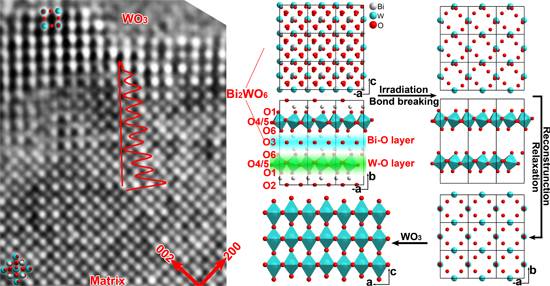
- prominent role of oxygen vacancies in the photocatalytic performance of bismuth tungsten oxides is well recognized, while the underlying formation mechanisms remain poorly understood. Here, we use the transmission electron microscopy to investigate the formation of oxygen vacancies and the structural


BiOCl/TiO2/diatomite composites with enhanced visible-light photocatalytic activity for the degradation of rhodamine B
Beilstein J. Nanotechnol. 2019, 10, 1412–1422, doi:10.3762/bjnano.10.139
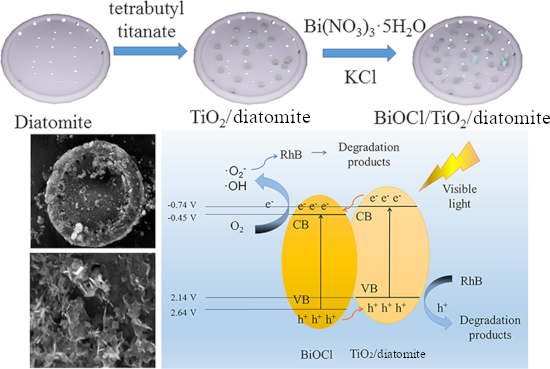
- , low-cost and ease of application, which are superior to other approaches of environmental remediation [8][9]. However, the application of photocatalysis is still hindered due to the agglomeration of photocatalyst particles, the difficulty of photocatalyst recovery and low photocatalytic performance
- . The recyclability of the photocatalysts is of great significance for the evaluation of photocatalytic performance and practical application [43]. Five cycles of photocatalytic activity of the BTD composite were investigated and the results (Supporting Information File 1, Figure S3b) show that BTD has
- , the lower the recombination rate, and the better the photocatalytic performance. Although BTD only slightly reduces the band gap and enhances the light response ability, it has the lowest PL spectral intensity shown in Figure 10a, indicating that BTD can efficiently promote photogenerated electron


Construction of a 0D/1D composite based on Au nanoparticles/CuBi2O4 microrods for efficient visible-light-driven photocatalytic activity
Beilstein J. Nanotechnol. 2019, 10, 1360–1367, doi:10.3762/bjnano.10.134
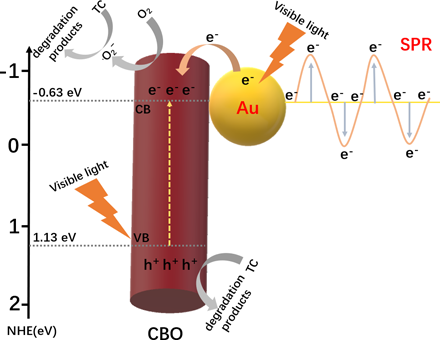
- photocatalyst consisting of Au nanoparticles (NPs) and CuBi2O4 microrods (Au/CBO) was designed and prepared by a simple thermal reduction–precipitation approach. It shows excellent photocatalytic performance in the degradation of tetracycline (TC). The maximum photocatalytic degradation rate constant for Au/CBO
- composites with 2.5 wt % Au NPs was 4.76 times as high as that of bare CBO microrods. Additionally, the 0D/1D Au/CBO composite also exhibited ideal stability. The significant improvement of the photocatalytic performance could be attributed to the improved light harvesting and increased specific surface area
- degradation of organic contaminants in water [13][14]. However, bare CuBi2O4 shows poor photocatalytic performance under visible-light irradiation because of the rapid recombination rate of photo-induced charge carriers and the low chemical affinity to substrate ions. This results in only a small portion of


A highly efficient porous rod-like Ce-doped ZnO photocatalyst for the degradation of dye contaminants in water
Beilstein J. Nanotechnol. 2019, 10, 1157–1165, doi:10.3762/bjnano.10.115
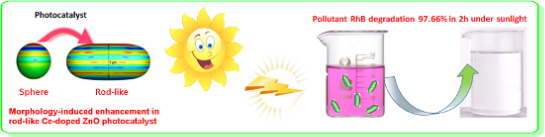
- –hole pairs are easy to recombine. The photocatalytic performance can be greatly affected by the particle size, morphology and concentration [8][9]. As such, it is possible to modify these ZnO properties to enhance its photocatalytic efficiency. Doping ZnO with rare-earth ions is an attractive strategy
- %, and 4%, respectively. The experimental results demonstrated that all CZO samples show significantly higher photocatalytic activity than ZnO. CZO-4 has the highest photocatalytic performance. It can be found that the degradation rate of RhB first increases and then decreases with the increase of Ce
- exhibits a superior catalytic performance to pristine ZnO. The change of morphology also contributes to the improvement of the photocatalytic performance of CZO, which will be further discussed in a later section. However, a further increase in the cerium concentration acts to lower the photocatalytic


Synthesis of novel C-doped g-C3N4 nanosheets coupled with CdIn2S4 for enhanced photocatalytic hydrogen evolution
Beilstein J. Nanotechnol. 2019, 10, 912–921, doi:10.3762/bjnano.10.92
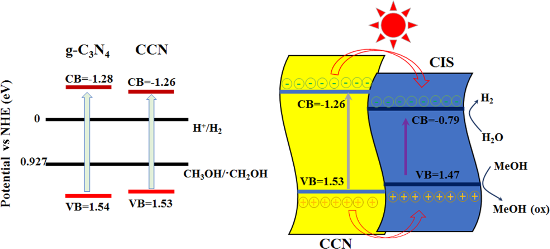
- devoted to improving the transport and separation of electron–hole pairs [10][11][12][13][14][15][16]. Among them, C atom doping for N atoms in g-C3N4 is highly promising due to its π-rich nature, which can evidently improve the photocatalytic performance of g-C3N4 [17][18][19][20][21]. For instance
- photocatalytic performance of CdIn2S4 alone is barely satisfactory, mainly due to the low separation and migration efficiency of photogenerated charge carriers. The construction of a heterojunction by combination with semiconductor materials is expected to be a strategy to improve the separation of
- charges apparently, leading to the enhancement of photocatalytic activity of the hybrid photocatalyst. Photocatalytic performance Time-dependent visible-light-induced photocatalytic H2 formation over different samples has been measured in the presence of methanol (sacrificial electron donor) without the


Deposition of metal particles onto semiconductor nanorods using an ionic liquid
Beilstein J. Nanotechnol. 2019, 10, 718–724, doi:10.3762/bjnano.10.71
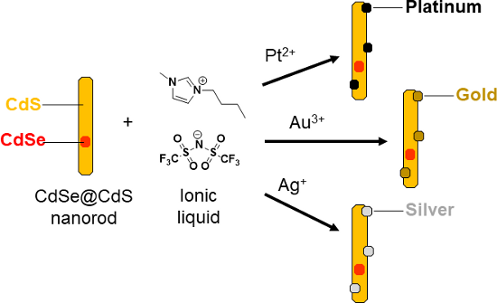
- similar morphologies as determined by analysis of TEM images. Inductively coupled plasma-atomic emission spectroscopy (ICP-AES) analysis of the elemental ratios in the samples confirmed the similarity of these materials, and we compared photocatalytic performance of these two samples for degradation of


Impact of the anodization time on the photocatalytic activity of TiO2 nanotubes
Beilstein J. Nanotechnol. 2018, 9, 2628–2643, doi:10.3762/bjnano.9.244
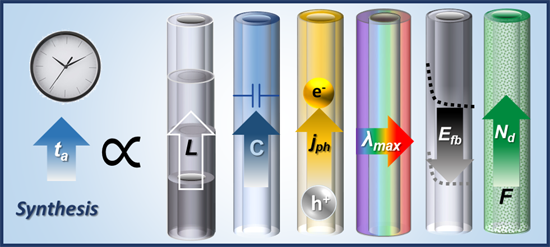
- along the [004] direction [44], accompanied by a higher photocatalytic performance in the degradation of an organic pollutant [45]. Lee et al. also reported an enhanced photoelectrochemical behavior in photovoltaic devices ascribed to the preferred crystalline orientation due to faster electron


Hierarchical heterostructures of Bi2MoO6 microflowers decorated with Ag2CO3 nanoparticles for efficient visible-light-driven photocatalytic removal of toxic pollutants
Beilstein J. Nanotechnol. 2018, 9, 2297–2305, doi:10.3762/bjnano.9.214
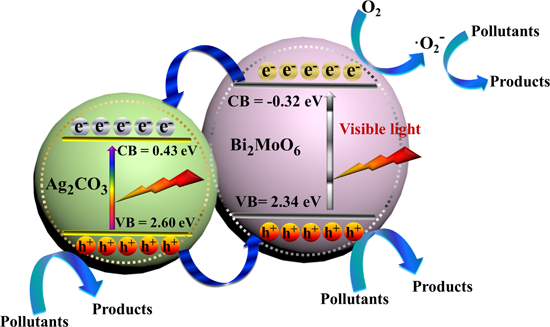
- regarded as a promising visible-light-driven (VLD) photocatalyst because of its good activity, chemical stability and nontoxicity [15][16][17]. However, the low carrier-separation rate and narrow photo-response range of Bi2MoO6 substantially lower its photocatalytic performance [18][19]. To overcome this
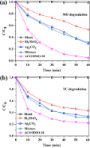
- /Ag2CO3/Bi2MoO6 [32] and Ag2MoO4/Bi2MoO6 [22]. This result shows that the charge separation efficiency is enhanced in ACO/BMO-30. Photocatalytic performance The efficiency of Ag2CO3/Bi2MoO6 heterostructures in the photocatalytic degradation of industrial dyes (RhB, MO and MB), and the antibiotic TC of the
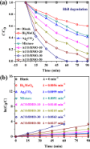
- % Bi2MoO6 exhibited a much lower activity than ACO/BMO-30, verifying that the close contact between the components also has a significant influence on the photocatalytic performance of the heterostructures. The pseudo-first-order kinetic plots and rate constants of RhB degradation for various catalysts are




Controllable one-pot synthesis of uniform colloidal TiO2 particles in a mixed solvent solution for photocatalysis
Beilstein J. Nanotechnol. 2018, 9, 1715–1727, doi:10.3762/bjnano.9.163
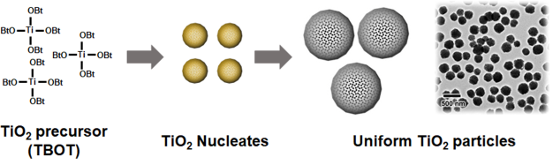
- indicated that our TiO2 particles photo-chemically degraded the RhB molecule completely under UV–vis light irradiation conditions. The photocatalytic performance of the TiO2 sample towards RhB degradation, determined by monitoring the peak intensity change at 553 nm vs time, was summarized in Figure 6b
- , 12, 20 and 0.7 m2/g, respectively. Supporting Information File 1, Figure S7 compares the photocatalytic performance of TiO2 samples prepared using different concentrations of HPC followed by calcination at a fixed temperature of 500 °C. The samples TiO2(HPC-1666.67)-500 and TiO2(HPC-416.67)-500
- crystalline phase transformed to its rutile counterpart, the surface area correspondingly decreased. This study determined the optimum crystallinity and surface area that yields the highest photocatalytic performance towards RhB degradation under UV–vis irradiation. Our systematic investigation may provide a




Sheet-on-belt branched TiO2(B)/rGO powders with enhanced photocatalytic activity
Beilstein J. Nanotechnol. 2018, 9, 1550–1557, doi:10.3762/bjnano.9.146
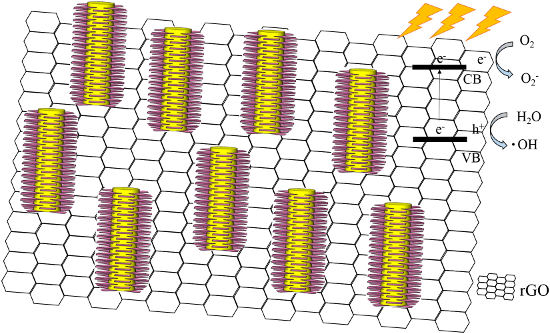
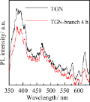
- all three photocatalysts. The TGN-branch 4 h sample demonstrated enhanced photocatalytic performance as compared to TiO2 nanobelts and the TGN sample. Figure S3 in Supporting Information File 1 shows the photodegradation curves in the presence of TGN and TGN-branches with different deposition times


Cr(VI) remediation from aqueous environment through modified-TiO2-mediated photocatalytic reduction
Beilstein J. Nanotechnol. 2018, 9, 1448–1470, doi:10.3762/bjnano.9.137
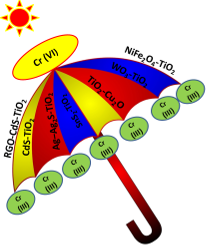
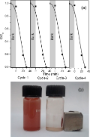
- electrons from TiO2 are efficiently transported to graphene, leading to enhanced photocatalytic activity (Figure 7). Liu et al. reported that TiO2–RGO composites exhibited enhanced photocatalytic performance for the reduction of Cr(VI) by UV light illumination as compared to pure TiO2 and commercial P25
- increases with increasing RGO content and reaches a maximum value of 91% for a sample containing 0.8 wt % of RGO. However, upon further increase of the RGO content, the photocatalytic performance deteriorated [125]. This may be due to formation of recombination centers by excess RGO, which facilitates
- [150]. Hence, ZnO is considered as a suitable semiconductor to be coupled with TiO2 [151][152][153]. Joubani and coworkers reported that a ZnO/TiO2 composite photocatalysts exhibited superior photocatalytic performance by reducing a maximum of 99.99% of Cr(VI) as compared to TiO2 and ZnO, which reduced


Ag2WO4 nanorods decorated with AgI nanoparticles: Novel and efficient visible-light-driven photocatalysts for the degradation of water pollutants
Beilstein J. Nanotechnol. 2018, 9, 1308–1316, doi:10.3762/bjnano.9.123
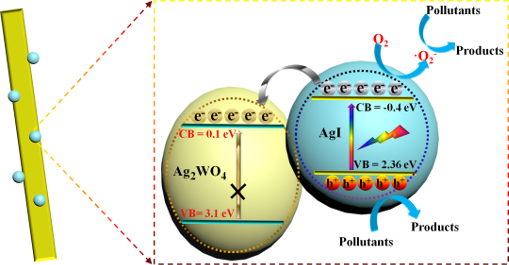
- photocatalytic performance. Keywords: AgI/Ag2WO4; nanocomposites; photocatalysis; visible light; Introduction The development of high-performance novel photocatalysts for the degradation of pollutants has received great interest due to the worsening of environmental pollution [1][2][3][4][5][6][7][8][9][10][11
- photocatalytic performance for dye degradation under light irradiation [30][31][36][37]. Unfortunately, due to its wide bandgap of about 3.1 eV, Ag2WO4 has limited photocatalytic activity under sunlight, which severely limits its application and illustrates the urgency for optimization of Ag2WO4 to overcome
- , to enhance the photocatalytic performance of Ag2WO4, AgI (possessing matched energy band levels) was chosen as a suitable component to combine with Ag2WO4, AgI/Ag2WO4 heterojunctions at different mole ratios. These heterojunctions were prepared via an in situ ion-exchange approach, utilizing Ag2WO4




Noble metal-modified titania with visible-light activity for the decomposition of microorganisms
Beilstein J. Nanotechnol. 2018, 9, 829–841, doi:10.3762/bjnano.9.77
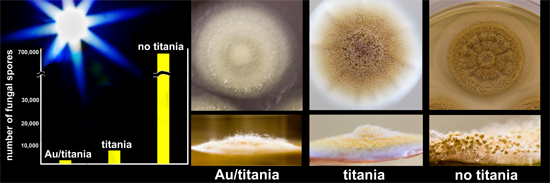
- wide band gap of titania of 3.0–3.2 eV and the recombination of charge carriers). There are various ways to improve photocatalytic performance of titania photocatalysts: (1) to inhibit the recombination of charge carriers, and (2) to extend its working abilities to the visible-light region, for example


Facile synthesis of a ZnO–BiOI p–n nano-heterojunction with excellent visible-light photocatalytic activity
Beilstein J. Nanotechnol. 2018, 9, 789–800, doi:10.3762/bjnano.9.72
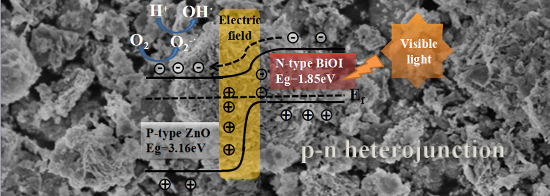
- Bi/Zn molar ratio of 1:3 is the most optimal sample for photocatalytic performance. Other very critical criteria of the photocatalyst for practical application are stability and reusability. Figure 6e presents the recycling test results of the B-4 sample. After being circularly used for five times


Surface-plasmon-enhanced ultraviolet emission of Au-decorated ZnO structures for gas sensing and photocatalytic devices
Beilstein J. Nanotechnol. 2018, 9, 771–779, doi:10.3762/bjnano.9.70
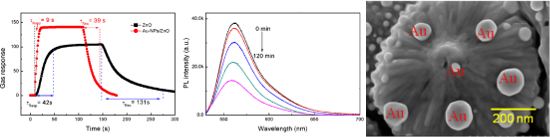
- target gases [14][15][16]. In another research strategy to obtain high photocatalytic performance materials, ZnO, a wide-band gap semiconductor (Eg > 3 eV), can also be used as a suitable material for photocatalysts based on the particular plasmonic characteristics of the nanostructures. Herein, it was
- of ZnO was assumed to play an important role in improving their photocatalytic performance. In detail, high-energy electrons in Au NPs were injected into the conduction band of the ZnO matrix upon illumination. These electrons then drifted to the conduction band of ZnO, producing active oxygen
- cycles of photocatalytic testing, no significant difference in the photocatalytic degradation process was found, indicating excellent reversibility and stable photocatalytic performance, as shown in Figure 5b. Cascade processes have been previously reported involving the morphology, specific surface and