Search results
Search for "photostability" in Full Text gives 68 result(s) in Beilstein Journal of Nanotechnology.
Recent advances in green carbon dots (2015–2022): synthesis, metal ion sensing, and biological applications
Beilstein J. Nanotechnol. 2022, 13, 1068–1107, doi:10.3762/bjnano.13.93
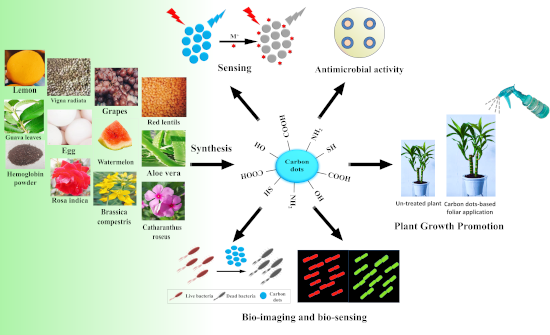
- organic dyes. Moreover, CDs have unparalleled extraordinary properties, including cell compatibility, chemical inertness, emission at tunable wavelengths, low cost, high quantum yield (QY), water dispersibility, small size, tunability, high biocompatibility, strong photostability (resistance to
- no other chemical reagent. The lignin content of the leaves and shafts of date palm leaves is 25 g/100 g, which helped to obtain mesoporous CDs of high quality having high storage and photostability [68]. Leaves of Prosopis juliflora as a natural and inexpensive precursor yielded CDs that acted as a
- , minimal cytotoxicity, high water solubility and photostability [127]. Fiber-rich peanut shells were used to produce fluorescent CDs (1.8–4.2 nm) that had a QY of 10.6% and better photostability than rhodamine B. The CDs were produced using a straightforward one-pot pyrolysis procedure at 400 °C for 4 h




Zinc oxide nanostructures for fluorescence and Raman signal enhancement: a review
Beilstein J. Nanotechnol. 2022, 13, 472–490, doi:10.3762/bjnano.13.40
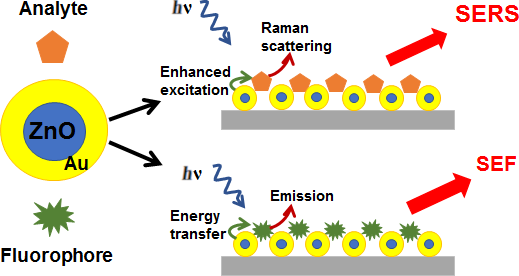
- concentrations is a key tool in clinical medicine because it can provide a better diagnostic tool. Fluorescence is also broadly used in biotechnology as a sensitive detection method for different molecules. For all of these applications, high fluorescence quantum yield, photostability, and brightness of the used




Tin dioxide nanomaterial-based photocatalysts for nitrogen oxide oxidation: a review
Beilstein J. Nanotechnol. 2022, 13, 96–113, doi:10.3762/bjnano.13.7
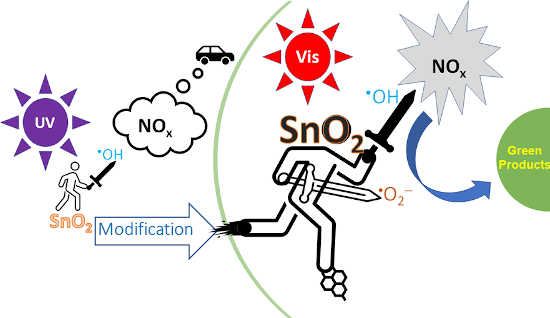
- resulting heterojunction photocatalytically removed 40% NO (initial concentration of 500 ppb) and showed excellent photostability under visible light. The NO2 production from the photocatalytic reaction was also negligible. The good photocatalytic NO degradation of the 2D/0D g-C3N4/SnO2 catalyst is due to
- photocatalytic NO removal under solar light for the first time. Furthermore, they found that the introduction of SnO2 NPs increases the photostability of PANI during the photocatalytic process, which holds great potential for scalable manufacturing. Also, this work thoroughly discussed the adsorption and


Self-assembly of amino acids toward functional biomaterials
Beilstein J. Nanotechnol. 2021, 12, 1140–1150, doi:10.3762/bjnano.12.85
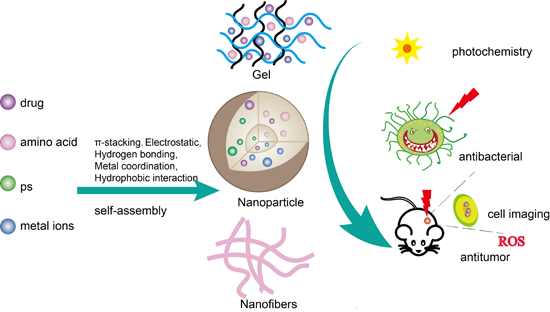
- cancer cells [50]. Furthermore, naphthalimide (NI) derivatives can also be used as end-capping materials for amino acids. Naphthalimide has unique photophysical properties and photostability as a luminescent material for aggregation-induced emission (AIE), which can display high emission properties in
- photothermal therapy. Geniposide is a natural crosslinking agent that provides strong covalent interactions to enhance stability. In addition, they attached disulfide groups to phenylalanine in response to glutathione. The obtained nanoparticles (GDSP) have high stability and can improve the photostability and
- photosensitization activity and photostability of phthalocyanine. Camptothecin can induce tumor apoptosis by inhibiting the activity of topoisomerase I [90]. However, camptothecin has some major limitations in therapeutic applications, such as poor water solubility and rapid lactone ring hydrolysis at physiological

Nanocasting synthesis of BiFeO3 nanoparticles with enhanced visible-light photocatalytic activity
Beilstein J. Nanotechnol. 2020, 11, 1822–1833, doi:10.3762/bjnano.11.164
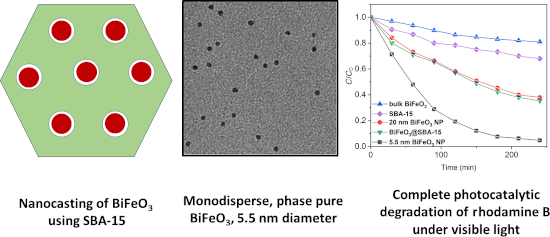
- reusability of the catalyst are very important factors in practical applications. Thus, the recyclability and photostability of the synthesized BiFeO3 nanoparticles was assessed in the degradation of RhB for five cycling runs (see Figure 10). After each run, the catalyst was separated from the reaction




Hexagonal boron nitride: a review of the emerging material platform for single-photon sources and the spin–photon interface
Beilstein J. Nanotechnol. 2020, 11, 740–769, doi:10.3762/bjnano.11.61




Soybean-derived blue photoluminescent carbon dots
Beilstein J. Nanotechnol. 2020, 11, 606–619, doi:10.3762/bjnano.11.48
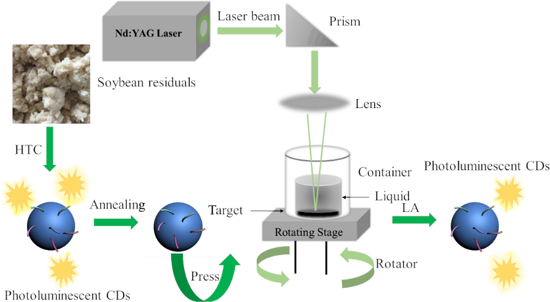
- quantum dots, which are referred to as carbon dots (CDs) [1] and are less-toxic and ecologically friendly [2][3], have attracted great interest due to their unique properties, such as high water solubility [4], high chemical stability [5], high photostability [6], tunable excitation and emission


Luminescent gold nanoclusters for bioimaging applications
Beilstein J. Nanotechnol. 2020, 11, 533–546, doi:10.3762/bjnano.11.42
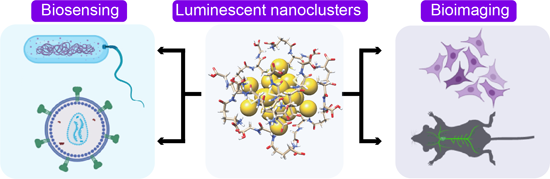
- emerged as attractive candidates for sensing, catalysis and bioimaging applications in recent years. For practical use in bioimaging, nanomaterials with high photoluminescence, quantum yield, photostability and large Stokes shifts are needed. While offering high photoluminescence and quantum yield
- , semiconductor quantum dots suffer from toxicity and are susceptible to oxidation. In this context, atomically precise gold nanoclusters protected by thiol monolayers have emerged as a new class of luminescent nanomaterials. Low toxicity, bioavailability, photostability as well as tunable size, composition, and
- photostability, and the PL can be tuned from the visible to the NIR region [29]. Similar to SCQDs, SQDs undergo oxidation at room temperature and have limited water solubility. Recently, gold nanoparticles (AuNPs) with tunable size and shape-specific physicochemical properties have emerged as attractive


Deterministic placement of ultra-bright near-infrared color centers in arrays of silicon carbide micropillars
Beilstein J. Nanotechnol. 2019, 10, 2383–2395, doi:10.3762/bjnano.10.229
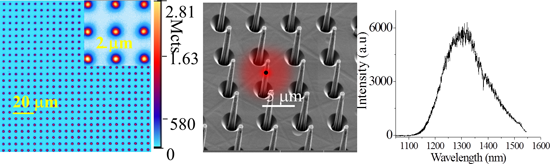
- using confocal microscopy is compared to the emission spectra in the gap and the background arising from the deeper implanted areas. Fluorescence photostability, PL enhancement, lifetime Photostability measurements showed a photostable emission for all color centers. The inset of Figure 6c shows the
- photostability of the NCVSi centers with an enhancement by a factor of four. However, the emission brightness can be different from pillar to pillar with a maximum emission enhancement by a factor of seven seen in the 1350 nm region. In Figure 7a the photostability of VSi of sample 1 and sample 4 is shown. For
- InGaAs CCD camera using a LP at 1100 nm. The PL of the pillars is compared with emission from the gap and from the background. (c) Lifetime measurement of a single pillar emission using a LP at 1319 nm and of the emission from the gap. Inset: Photostability of a single pillar emission using a BP at 1350


Nitrogen-vacancy centers in diamond for nanoscale magnetic resonance imaging applications
Beilstein J. Nanotechnol. 2019, 10, 2128–2151, doi:10.3762/bjnano.10.207
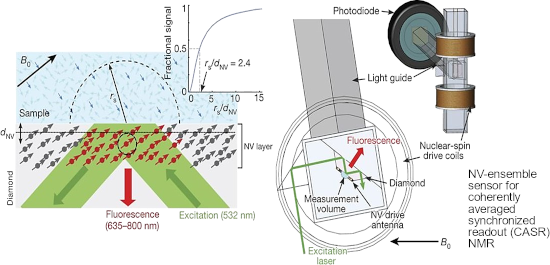
- illumination [7]. The characterization of single NV centers became popular at the end of the 1990s. It was demonstrated that the fluorescence of single NV centers can be detected by room-temperature fluorescence microscopy and that the defect shows perfect photostability [8]. Room-temperature optically


Optimization and performance of nitrogen-doped carbon dots as a color conversion layer for white-LED applications
Beilstein J. Nanotechnol. 2019, 10, 2004–2013, doi:10.3762/bjnano.10.197
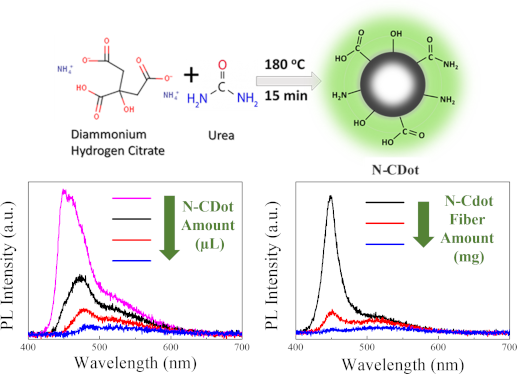
- nanomaterials showing unique optical performance characterized by a wide wavelength tunability, high quantum yield and high photostability, while they show low toxicity and can be produced easily and at low cost [1][2][3][4][5]. The combination of such significant features renders CDots attractive for various


Correlation of surface-enhanced Raman scattering (SERS) with the surface density of gold nanoparticles: evaluation of the critical number of SERS tags for a detectable signal
Beilstein J. Nanotechnol. 2019, 10, 1016–1023, doi:10.3762/bjnano.10.102
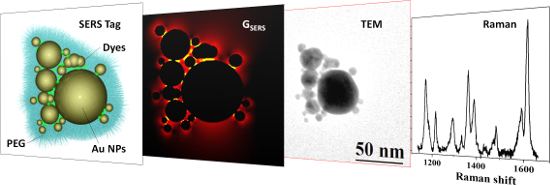
- narrowness of the Raman bands allows multiplexing analysis by associating Raman reporters with different, non-overlapping peaks, which serve as a spectroscopic fingerprint that can be associated with different analytes [18][29][30]. Additional favorable features of SERS tags are their photostability, namely
- , Mie theory fit results, MG-AuNT reproducibility, and MG-AuNT photostability. Acknowledgements This research was performed with the support of the University of Padova STARS grant “4NANOMED” and the European Cooperation in Science and Technology COST Action MP1302 “Nanospectroscopy”.


An efficient electrode material for high performance solid-state hybrid supercapacitors based on a Cu/CuO/porous carbon nanofiber/TiO2 hybrid composite
Beilstein J. Nanotechnol. 2019, 10, 781–793, doi:10.3762/bjnano.10.78
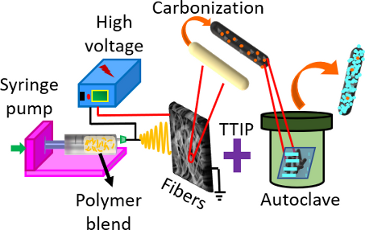
- cost, long-term thermodynamic stability, abundance in nature, ecologically friendliness, photostability, and exceptional structural stability [19][20][21]. Thus, TiO2 nanoparticles can execute faradaic charge transfer reactions and provide the high cycle stability needed to enhance the supercapacitor


Outstanding chain-extension effect and high UV resistance of polybutylene succinate containing amino-acid-modified layered double hydroxides
Beilstein J. Nanotechnol. 2019, 10, 684–695, doi:10.3762/bjnano.10.68
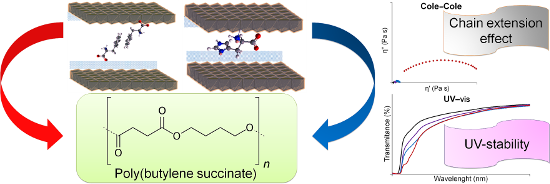
- °C for PBS, −10 °C for PBS–LDH/PHE, −9 °C for PBS–LDH/nitrate and PBS–LDH/HIS) highlight a slight increase with respect to the homopolymer, and therefore, the filler can be assumed to affect the mobility of the chains as a nucleating agent. Photostability of PBS nanocomposites Because all synthesized


Ultrasonication-assisted synthesis of CsPbBr3 and Cs4PbBr6 perovskite nanocrystals and their reversible transformation
Beilstein J. Nanotechnol. 2019, 10, 666–676, doi:10.3762/bjnano.10.66
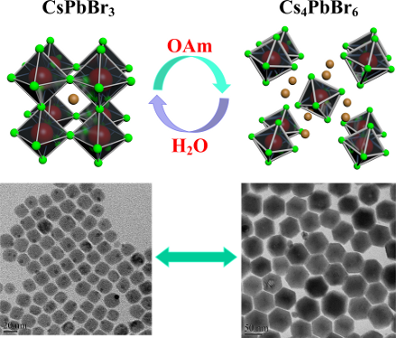
- improved photostability and chemical stability of CsPbBr3 PNCs. Effect of synthesis conditions Our previous study has shown that ultrasound power and radiation time have a great influence on the optical properties of the CsPbBr3 PNCs [30]. In this study, we found that the immersion height of the vibrating
- emission of CsPbBr3 PNCs could be easily tuned. More importantly, with lower the immersion heights of the vibrating spear higher PL QY of CsPbBr3 PNCs were achieved. The as-prepared CsPbBr3 PNCs show a high PL QY of up to 85% and a considerable photostability and chemical stability. The Cs4PbBr6 PNCs are



Ceria/polymer nanocontainers for high-performance encapsulation of fluorophores
Beilstein J. Nanotechnol. 2019, 10, 522–530, doi:10.3762/bjnano.10.53
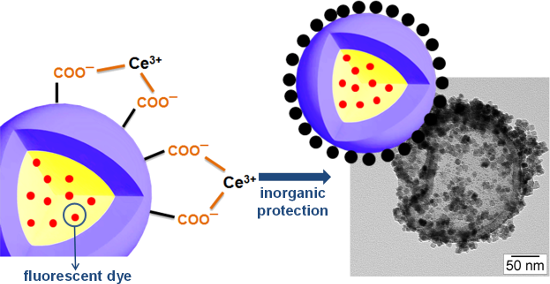
- , acetyl modification, fluoro- and cyano-substitution leads to increased photostability of the fluorophore [5]. However, unfortunately, all these oxygen-protection strategies affect the properties of core and shell materials that are used to form nanoconfined materials. Our main goal is to develop a


Reduced graphene oxide supported C3N4 nanoflakes and quantum dots as metal-free catalysts for visible light assisted CO2 reduction
Beilstein J. Nanotechnol. 2019, 10, 448–458, doi:10.3762/bjnano.10.44
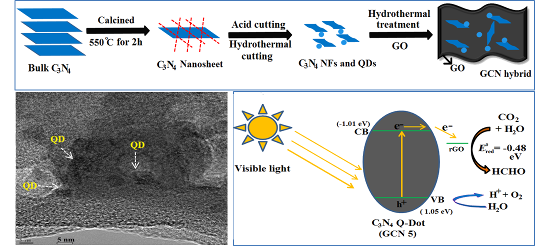
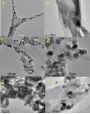
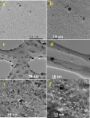
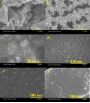
- rate of HCHO in the presence of different GCN photocatalysts. Apparent yield of HCHO in the presence of the various photocatalysts. Photostability of the GCN-5 sample against the production of HCHO. Possible photoreduction mechanism of CO2 to HCHO in the presence of the GCN-5 catalyst sample under





Surface plasmon resonance enhancement of photoluminescence intensity and bioimaging application of gold nanorod@CdSe/ZnS quantum dots
Beilstein J. Nanotechnol. 2019, 10, 22–31, doi:10.3762/bjnano.10.3
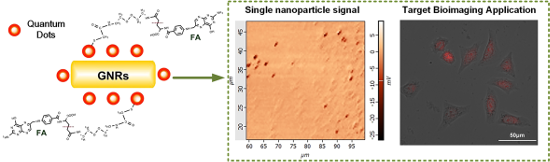
- biological application and therapy of human diseases [26][27]. In this work, we demonstrated a novel GNR@CdSe/ZnS multimodal nanostructure in aqueous phase. We chose CdSe/ZnS QDs as a PL contributor due to its high degree of brightness, excellent photostability, and good spectral overlap with GNRs. We then


Photoluminescence of CdSe/ZnS quantum dots in nematic liquid crystals in electric fields
Beilstein J. Nanotechnol. 2018, 9, 1544–1549, doi:10.3762/bjnano.9.145
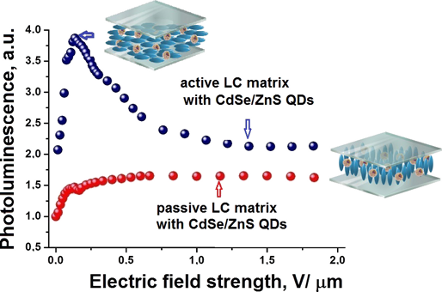
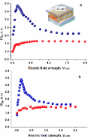
- demonstrate unique properties such as high quantum yield, narrow symmetric luminescence peak and high photostability, which are used in optical molecular sensor systems [1], bioanalysis [2], solar cells [3][4], and light-emitting devices [5]. The application of external electric fields to semiconductor NPs


Cr(VI) remediation from aqueous environment through modified-TiO2-mediated photocatalytic reduction
Beilstein J. Nanotechnol. 2018, 9, 1448–1470, doi:10.3762/bjnano.9.137
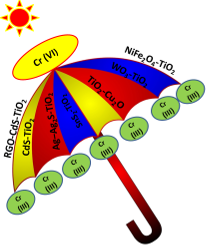
- charge carriers, extension of the light absorption range and intensity, increase of the surface active sites, and higher photostability. Advantages and limitations for photoreduction of Cr(VI) over modified TiO2 are depicted in the Conclusion. The various challenges that restrict the technology from
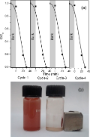
- enhanced Cr(VI) removal from tannery wastewater. Transition metal ferrites have also been combined with TiO2 for photocatalytic reduction of Cr(VI) not only due to their efficient visible-light-induced photocatalytic activity, but also due to their high photostability, good super-paramagnetic behavior


Room-temperature single-photon emitters in titanium dioxide optical defects
Beilstein J. Nanotechnol. 2018, 9, 1085–1094, doi:10.3762/bjnano.9.100
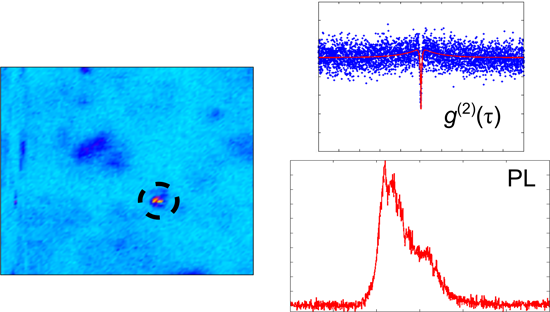
- surface defect sites [59] and surface oxygen vacancies on anatase nanocrystal films [60]. Similar photoluminescence in the red was also observed from ZnO defects [7][8][9]. The photodynamics of D1 was also recorded and can be seen for a pump power of 82 μW in Figure 4b. The time trace shows photostability
- fluorescing defect, had ceased to the background count rate (3 × 10³ c/s). A histogram of the count rates at 118 μW shows a peak frequency above the background count rate. This behaviour can only be due to photoionisation of D1. The fluorescence photostability was different from previous works on ZnO defects
- histogram observed for D2 at 99.0 ± 0.5 μW pump power exhibiting relative photostability. When the power is increased to 148.0 ± 0.5 μW, the defect exhibits blinking between two distinct levels of an “off” and an “on” state, i.e., a ground state and a bright state, which can be seen in Figure 5d. D2 showed


Perovskite-structured CaTiO3 coupled with g-C3N4 as a heterojunction photocatalyst for organic pollutant degradation
Beilstein J. Nanotechnol. 2018, 9, 671–685, doi:10.3762/bjnano.9.62
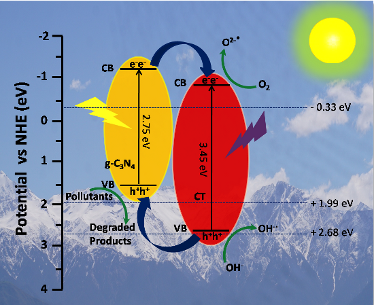
- of the CTCN heterojunction, while for BPA, only 7% adsorption was observed over the CTCN heterojunction, as depicted in Figure S7b, Supporting Information File 1. Photocatalyst reusability studies It is of immense importance to explore the photostability and recyclability of the photocatalyst


Bright fluorescent silica-nanoparticle probes for high-resolution STED and confocal microscopy
Beilstein J. Nanotechnol. 2017, 8, 1283–1296, doi:10.3762/bjnano.8.130
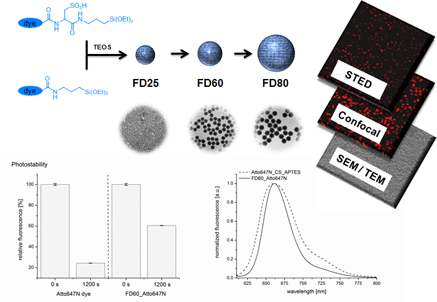
- , but indicate a much higher photostability and brightness. As revealed by dynamic light scattering and ζ-potential measurements, all particle suspensions were stable in water and cell culture medium. In addition, uptake studies on A549 cells were performed, using confocal and stimulated emission
- ]. All in all, STED microscopy requires fluorescently labelled markers with high photostability to identify relevant interactions between nanoparticles and cellular structures. In the last years different types of markers have been used for fluorescence-based microscopy, such as modified inorganic gold
- . Photostability In addition to high quantum yields and a high brightness, the fluorescence stability of the dye is of particular importance for STED imaging [59]. Especially, when this technique is used to address more complex tasks such as time-resolved or three-dimensional imaging. Therefore, the photostability


Evaluation of quantum dot conjugated antibodies for immunofluorescent labelling of cellular targets
Beilstein J. Nanotechnol. 2017, 8, 1238–1249, doi:10.3762/bjnano.8.125
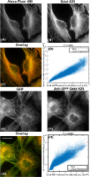
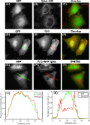
- , United Kingdom 10.3762/bjnano.8.125 Abstract Semiconductor quantum dots (Qdots) have been utilised as probes in fluorescence microscopy and provide an alternative to fluorescent dyes and fluorescent proteins due to their brightness, photostability, and the possibility to excite different Qdots with a




Nano-engineered skin mesenchymal stem cells: potential vehicles for tumour-targeted quantum-dot delivery
Beilstein J. Nanotechnol. 2017, 8, 1218–1230, doi:10.3762/bjnano.8.123
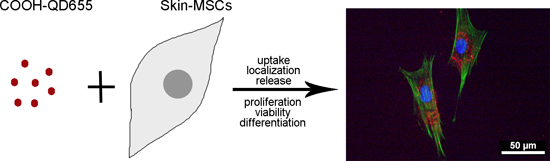
- , quantum dots (QDs) have demonstrated extensive application capabilities. High photostability and brightness, broad excitation and narrow fluorescence-emission spectra are some of the main properties required for the generation of new fluorescent nano-agents. The unique optical and electronic properties of