


Search results
Search for "physisorption" in Full Text gives 70 result(s) in Beilstein Journal of Nanotechnology.
One-step nonhydrolytic sol–gel synthesis of mesoporous TiO2 phosphonate hybrid materials
Beilstein J. Nanotechnol. 2019, 10, 356–362, doi:10.3762/bjnano.10.35
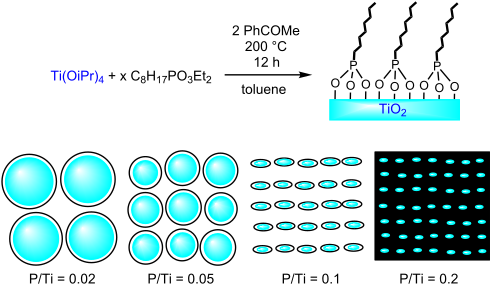
- infrared spectroscopy, Raman spectroscopy, X-ray diffraction, and nitrogen physisorption. For P/Ti ratios up to 0.1, the hybrid materials can be described as aggregated, roughly spherical, crystalline anatase nanoparticles grafted by octylphosphonate groups via Ti–O–P bonds. The crystallite size decreases
- materials and TiO2. N2 physisorption isotherms at 77 K (left) and Barrett–Joyner–Halenda (BJH) mesopore size distribution (desorption branch, right) of TiO2–octylphosphonate hybrid materials and TiO2. Open and filled symbols in the isotherms refer to adsorption and desorption, respectively. Ideal reaction


Hydrothermal-derived carbon as a stabilizing matrix for improved cycling performance of silicon-based anodes for lithium-ion full cells
Beilstein J. Nanotechnol. 2018, 9, 2381–2395, doi:10.3762/bjnano.9.223
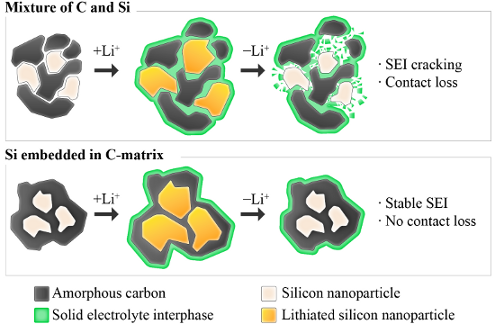
- -sections were prepared by a focused ion beam (FIB) milling process using gallium ions extracted from a high brightness liquid metal ion source. Nitrogen adsorption experiments were performed on a 3Flex Physisorption device (Micromeritics GmbH) at the temperature of liquid nitrogen (−196 °C). Before the


SO2 gas adsorption on carbon nanomaterials: a comparative study
Beilstein J. Nanotechnol. 2018, 9, 1782–1792, doi:10.3762/bjnano.9.169

- found to dominate the adsorption behavior in activated carbon, SO2 adsorption on carbon nanomaterials occurs by a physisorption mechanism. Keywords: adsorption; carbon nanohorns; carbon nanotubes; heat of adsorption; sulfur dioxide; vertically aligned carbon nanotubes; Introduction Compared to the
- physisorption was theoretically studied by Furmaniak and co-workers [42]. Using the hyper-parallel tempering Monte Carlo method, they found that the influence of the oxygen functionalities is more pronounced at lower relative pressures (P/P0 < 0.3) and attributed it to the increase in the adsorption energy
- . Physisorption alone cannot account for such a high value of the heat of adsorption. In activated carbons, it is known that the presence of oxygen functional groups and micropores in the 0.7 nm range can promote SO2 chemisorption [52][53]. The extensive microporous structure and the presence of oxygen functional


Response under low-energy electron irradiation of a thin film of a potential copper precursor for focused electron beam induced deposition (FEBID)
Beilstein J. Nanotechnol. 2018, 9, 57–65, doi:10.3762/bjnano.9.8
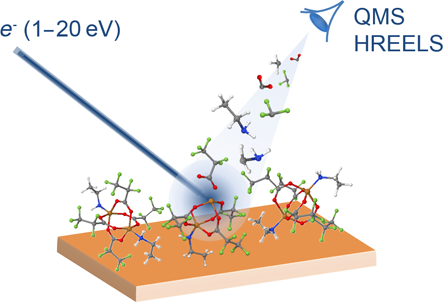
- –5 eV, considerably enhancing the probability of DEA. Moreover, the ESD experiments presented here were done at 300 K and are more susceptible to detect light species. At this temperature, heavier fragments can remain trapped by physisorption on the surface, but lighter neutral species would desorb




Adsorption of iron tetraphenylporphyrin on (111) surfaces of coinage metals: a density functional theory study
Beilstein J. Nanotechnol. 2017, 8, 2484–2491, doi:10.3762/bjnano.8.248
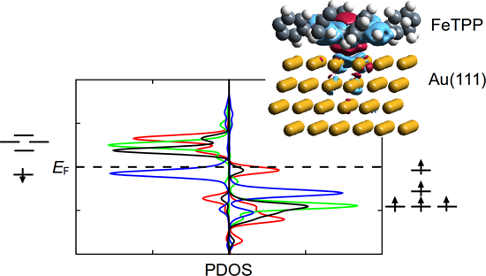
- reference configuration (HS, fcc), the adsorption energy is calculated to be −1.86 eV while the vdW contribution is found to be −1.70 eV. This small energy difference confirms the physisorption of FeTPP on Au(111). The molecule–surface distance of 3.63 ± 0.06 Å is consistent with the presence of the four
- , has an adsorption energy of −1.83 ± 0.02 eV with a contribution of vdW interactions of −1.70 eV, and the central porphyrin macrocyle is at a distance of 3.63 ± 0.06 Å above the surface. These physisorption characteristics were confirmed by a small charge transfer (0.24e) from the molecule to the
- interactions in self-assembled monolayers on Au(111), Ag(111) and Cu(111) surfaces. In spite of the presence of two stable magnetic states in the free molecule, only the high-spin (S = 2) state is stable when adsorbed on metal. These results show that the physisorption of FeTPP on coinage metal surfaces is




Modelling focused electron beam induced deposition beyond Langmuir adsorption
Beilstein J. Nanotechnol. 2017, 8, 2151–2161, doi:10.3762/bjnano.8.214
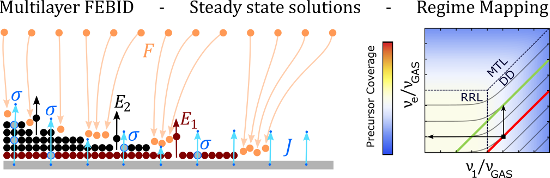
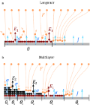
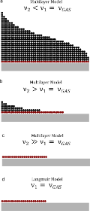
- adsorption processes. Two types of adsorption energies, describing both physisorption and spontaneous chemisorption, are included. Steady state solutions under no diffusion are investigated and compared under a wide range of conditions. The different growth regimes observed are fully explained by relative
- various growth regimes when considering a single adsorbate, and has been restricted to physisorption processes, except for a few exceptions [28][29]. Relevant effects present in common FEBID precursors, such as autocatalytic effects [15][16][30][31][32] cannot be described either. Moreover, current
- employed in FEBID for physisorption [1]. The ML model presented here assumes several simplifications. First, chemisorption processes considered are spontaneous; energy barriers for activated chemisorption, which can be modelled via the inclusion of Arrhenius terms in the sticking coefficient [29], are not


Bi-layer sandwich film for antibacterial catheters
Beilstein J. Nanotechnol. 2017, 8, 1982–2001, doi:10.3762/bjnano.8.199
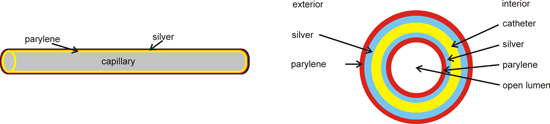
- of the depositing molecules decreases exponentially with penetration depth not only by diffusion but also by deposition losses, which causes a steeply dropping layer thickness. The reaction can occur in the gas phase as well as during or after the process of condensation (physisorption). By diluting


Fabrication of carbon nanospheres by the pyrolysis of polyacrylonitrile–poly(methyl methacrylate) core–shell composite nanoparticles
Beilstein J. Nanotechnol. 2017, 8, 1897–1908, doi:10.3762/bjnano.8.190

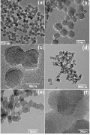
- /IG of CP6 suggests the extent of graphitization of the obtained carbon nanospheres is still very low. This is due to the fairly low carbonization temperature. The pore structure of the carbonized sample CP6 was characterized by nitrogen physisorption. As shown in Figure 8a, CP6 displayed a IV-type



Application of visible-light photosensitization to form alkyl-radical-derived thin films on gold
Beilstein J. Nanotechnol. 2017, 8, 1863–1877, doi:10.3762/bjnano.8.187
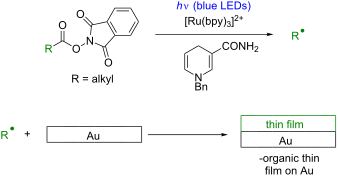
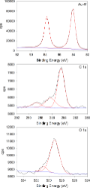
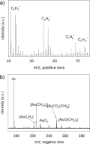
- (bpy)3Cl2. While this film deposition is poorly understood, a combination of the physisorption of molecules and processes owing to radicals generated through uncatalyzed processes may explain this outcome. In particular, Overman and co-workers have demonstrated that visible-light irradiation of



Fabrication of hierarchically porous TiO2 nanofibers by microemulsion electrospinning and their application as anode material for lithium-ion batteries
Beilstein J. Nanotechnol. 2017, 8, 1297–1306, doi:10.3762/bjnano.8.131
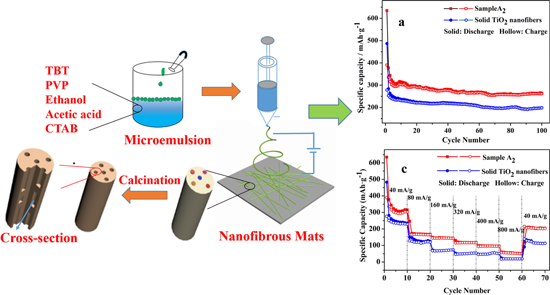
- porous TiO2 nanofibers were characterized with a physisorption analyzer (ASAP 2020, Micromeritics). Electrochemical measurements The electrodes were prepared by mixing thoroughly porous TiO2 nanofibers (60 wt %), carbon black (20 wt %) and poly(tetrafluoroethylene) (20 wt %) to form a homogeneous paste




CVD transfer-free graphene for sensing applications
Beilstein J. Nanotechnol. 2017, 8, 1015–1022, doi:10.3762/bjnano.8.102
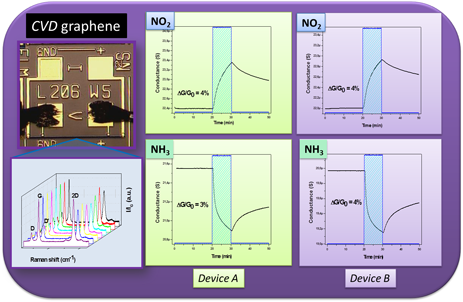
- than a more realistic environment (i.e., by employing synthetic air) was chosen because of the undesired influence of oxygen. The number of active sites on the graphene surface decreases due to binding of O2 molecules via weak physisorption [26]. This phenomenon tends to impair the quantitative study


Impact of air exposure and annealing on the chemical and electronic properties of the surface of SnO2 nanolayers deposited by rheotaxial growth and vacuum oxidation
Beilstein J. Nanotechnol. 2017, 8, 514–521, doi:10.3762/bjnano.8.55
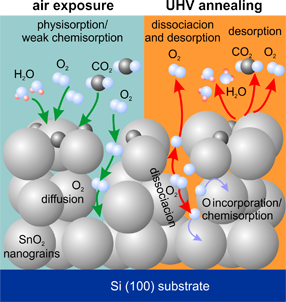
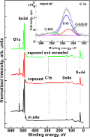
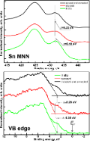
- annealing of the air-exposed samples the XPS survey spectrum is very similar to that observed for the pristine RGVO SnO2 nanolayers. Most importantly, after annealing the C 1s peak almost disappeared. It could indicate that the C contamination is mainly the physisorption of carbonaceous species from ambient
- nanolayers. The porosity of the nanolayers was confirmed by AFM investigation. The XPS data analysis performed for SnO2 nanolayers after UHV annealing suggested that most of the ambient–layer interactions during air exposure were based on physisorption or weak chemisorption. The air exposure process caused



Surface-enhanced Raman scattering of self-assembled thiol monolayers and supported lipid membranes on thin anodic porous alumina
Beilstein J. Nanotechnol. 2017, 8, 74–81, doi:10.3762/bjnano.8.8
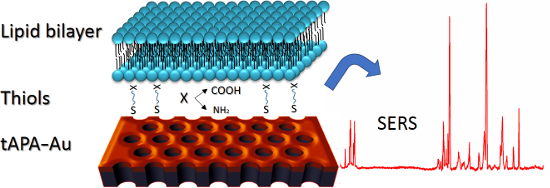
- the physisorption of coating layers of functional materials [20][21]. The main component of the biological membrane that separates and protects the interior of all living cells from the outside environment is a phospholipid bilayer. For this reason, as well as for the complexity of real samples of
- coated onto them by electrostatically-driven physisorption. We used two thiols, namely 4-mercaptobenzoic acid (MbA) and 11-amino-1-undecanethiol hydrochloride (AT), from Sigma (Milan, Italy), and three lipids, namely 1-palmitoyl-2-oleoyl-sn-glycero-3-phosphocholine (POPC), 1-palmitoyl-2-oleoyl-sn-glycero
- unilamellar vesicles. Preparation of the Raman target analytes: SLBs The lipid vesicles were diluted to 0.5 g/L in the PBS buffer and vortexed immediately before use. The thiol SAM was incubated overnight with the lipid vesicle dispersion, to allow vesicle physisorption and fusion onto the substrate. The



Scanning probe microscopy studies on the adsorption of selected molecular dyes on titania
Beilstein J. Nanotechnol. 2016, 7, 1642–1653, doi:10.3762/bjnano.7.156
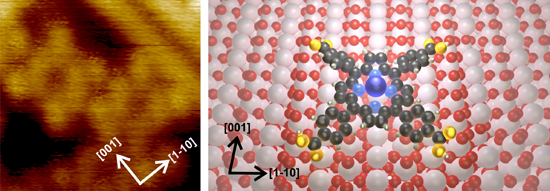
- layers of physisorbed species. Interestingly, an increased density of the molecular adsorbates leads to changes in the adsorption mode from physisorption to chemisorption, leaving the molecules arranged in a well-ordered brick-wall-like structure. In a more recent study, the same authors examined the


Nano- and microstructured materials for in vitro studies of the physiology of vascular cells
Beilstein J. Nanotechnol. 2016, 7, 1620–1641, doi:10.3762/bjnano.7.155
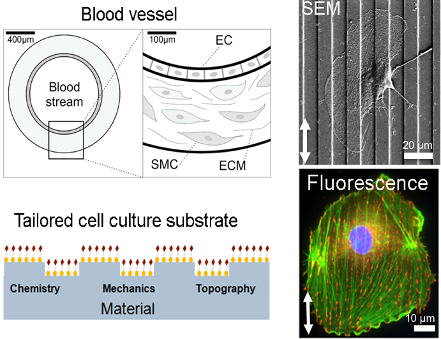
- functionalization. It will be beyond the scope of this review to give a detailed account; only a few examples can be depicted. One simple and often used way to functionalize a surface non-specifically with molecules is by simple physisorption, often after enhancing the surface charge of hardly adhesive surfaces
- [139]. The latter is typically achieved by oxidizing the surface. Surface oxidation can be performed by means of oxygen plasma treatment, ultra violet (UV) light (for polymers) or chemical treatment [140][141][142][143][144]. Physisorption of molecules is typically an easy method for coating a surface



Mesoporous hollow carbon spheres for lithium–sulfur batteries: distribution of sulfur and electrochemical performance
Beilstein J. Nanotechnol. 2016, 7, 1229–1240, doi:10.3762/bjnano.7.114
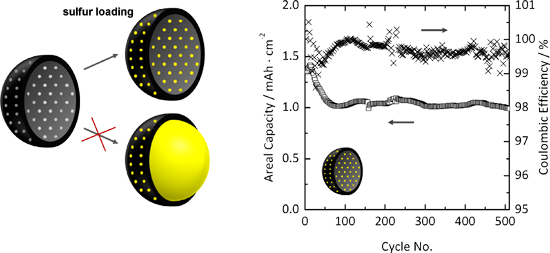
- application of unsuitable high-vacuum methods for the analysis of sulfur distribution. Here we describe the distribution of sulfur in hollow carbon spheres by powder X-ray diffraction and Raman spectroscopy along with results from scanning electron microscopy and nitrogen physisorption. The results of these
- analysis of sulfur distribution in hollow carbon spheres with a mesoporous shell by combining the results from non-vacuum methods, namely X-ray diffraction (XRD) and Raman spectroscopy, with those from vacuum-based ones (SEM and nitrogen physisorption). Moreover, we examined the influence of the pressure
- carbon structure [38]. From the nitrogen physisorption isotherm (Figure 4a) of the HCS a Brunauer–Emmet–Teller (BET) surface of 1123 m2·g−1 can be determined. The pore size distribution (Figure 4b) was calculated by a quenched solid density functional theory (QSDFT) model from the adsorption branch and


Rigid multipodal platforms for metal surfaces
Beilstein J. Nanotechnol. 2016, 7, 374–405, doi:10.3762/bjnano.7.34

- electrical properties [20]. Moreover, transistor-type devices from the same molecule have displayed fundamentally different transport characteristics [21][22]. The organization of the molecules within the junction is usually based on some sort of self-assembly using chemisorption or physisorption methods to
- monolayers with a well-defined bonding configuration on gold substrates. Film formation from solution was investigated in situ by second harmonic generation (SHG) and ellipsometry, which revealed a two-step process (fast adsorption ≈ physisorption, followed by slow film ordering ≈ chemisorption). The SAMs
- revealed that the π orbitals of the pyridines contributed to the physisorption of the tripodal platform on gold. Measurements of single-molecule conductance were successfully carried out using modified STM techniques for single-molecule junctions that consisted of the tripodal anchors and a diphenyl










Controlled graphene oxide assembly on silver nanocube monolayers for SERS detection: dependence on nanocube packing procedure
Beilstein J. Nanotechnol. 2016, 7, 9–21, doi:10.3762/bjnano.7.2
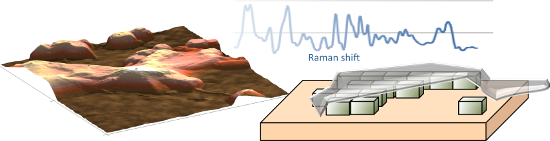
- means of two procedures differing for the method used in the assembly of the silver nanocubes onto the surface: Langmuir–Blodgett (LB) transfer and direct sequential physisorption of silver nanocubes (AgNCs). Adsorption of graphene oxide (GO) flakes on the AgNC assemblies obtained with both procedures
- with two different approaches: Langmuir–Blodgett (LB) transfer onto the solid support of a floating monolayer of AgNCs (procedure A) and sequential self-assembly of AgNCs by physisorption onto the surface (procedure B). The standard LB technique implies the preparation of a stable floating monolayer at
- aggregates [36]. AgNC arrays were prepared with two different approaches: Langmuir–Blodgett (LB) transfer onto the solid support of a floating monolayer of AgNC (procedure A) and sequential self-assembly of AgNCs by physisorption onto the surface (procedure B). Procedure A. Controlled assembly of AgNCs by


Continuum models of focused electron beam induced processing
Beilstein J. Nanotechnol. 2015, 6, 1518–1540, doi:10.3762/bjnano.6.157
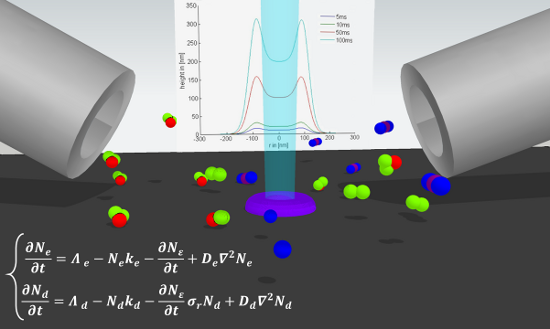
- simulate a wide range of processes reported in the FEBIP literature. These include: (i) etching and deposition performed using precursors that interact with a surface through physisorption and activated chemisorption, (ii) gas mixtures used to perform simultaneous focused electron beam induced etching and
- temperature. The simplest case of gas-molecule adsorption onto a substrate surface is that of physisorption, described by a single potential well at the surface as shown in Figure 2. The flux Λa of precursor molecules physisorbing to vacant surface sites is given by: where sa is the sticking coefficient (in
- that can undergo physisorption and activated chemisorption can be described by the potential energy diagram shown in Figure 12 [68], comprised of a physisorbed state (denoted “p”) and a chemisorbed state (denoted “c”) separated by an activation barrier for conversion between these states. The


![[Graphic 37]](/bjnano/content/inline/2190-4286-6-157-i117.png?max-width=637&scale=1.18182) and chemisorbed
and chemisorbed ![[Graphic 38]](/bjnano/content/inline/2190-4286-6-157-i118.png?max-width=637&scale=1.18182) adsorbates versus pressure, calcul...
adsorbates versus pressure, calcul...


Scalable, high performance, enzymatic cathodes based on nanoimprint lithography
Beilstein J. Nanotechnol. 2015, 6, 1377–1384, doi:10.3762/bjnano.6.142
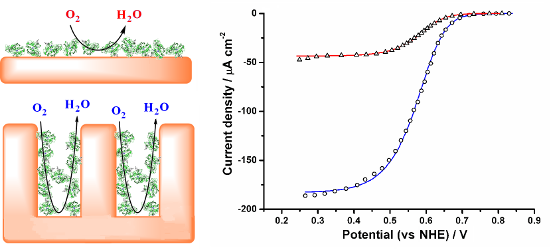
- 39 s−1, respectively (Supporting Information File 1, Table S1), whereas kcat in homogeneous solution was 57 s−1 (see above). Thus, the kcat and kcatapp values do not differ much, suggesting retention of enzymatic activity after physisorption, which is in good agreement with our recently published


Pt- and Pd-decorated MWCNTs for vapour and gas detection at room temperature
Beilstein J. Nanotechnol. 2015, 6, 919–927, doi:10.3762/bjnano.6.95
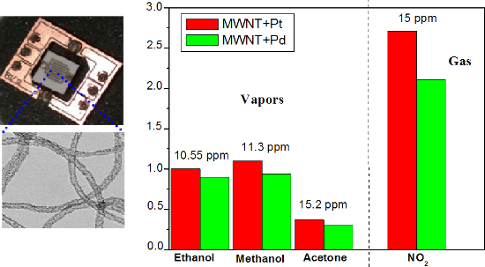
- physisorption, as shown by the large bond length (≈3.9 Å) and a low binding energy (0.193 eV), with no significant charge transfer between the adsorbed molecule and the Au–carbon nanotube system [26]. This indicates that Au-decorated carbon nanotubes are not suitable for detecting benzene. This is in contrast



Morphology control of zinc oxide films via polysaccharide-mediated, low temperature, chemical bath deposition
Beilstein J. Nanotechnol. 2015, 6, 799–808, doi:10.3762/bjnano.6.83
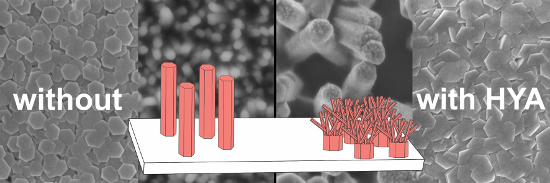
- both of which charged molecules can be chemisorbed by electrostatic interactions. In addition, the uncharged {100} faces of ZnO can support the physisorption of molecules. Such adsorption phenomena can influence the growth rates of the corresponding faces, leading to different crystal habits. Solvent




A versatile strategy towards non-covalent functionalization of graphene by surface-confined supramolecular self-assembly of Janus tectons
Beilstein J. Nanotechnol. 2015, 6, 632–639, doi:10.3762/bjnano.6.64
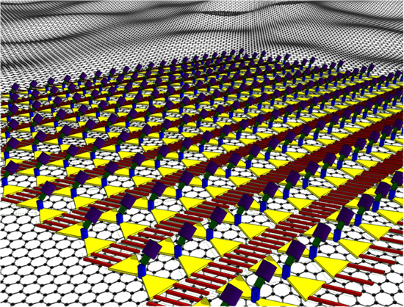
- molecular weight molecules under UHV conditions, in our approach, the self-assembly is achieved at the liquid–solid interface, additionally allowing the physisorption of higher molecular weight molecules. Conclusion Using the molecular clip concept as a tool for supramolecular bonding on C(sp2)-based




Self-assembled anchor layers/polysaccharide coatings on titanium surfaces: a study of functionalization and stability
Beilstein J. Nanotechnol. 2015, 6, 617–631, doi:10.3762/bjnano.6.63
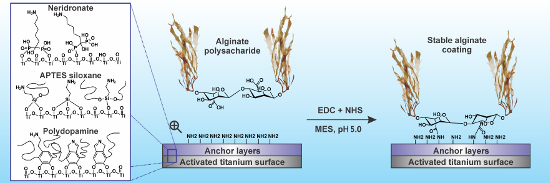
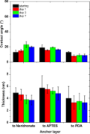
- titanium surfaces. Bio-related titanium surface modifications based on polysaccharides and synthetic polymers have been performed by physisorption and electrostatic interactions. In comparison with polylactide coatings, physisorbed alginate coatings are capable of exhibiting pronounced cell adhesion [17


Kelvin probe force microscopy in liquid using electrochemical force microscopy
Beilstein J. Nanotechnol. 2015, 6, 201–214, doi:10.3762/bjnano.6.19
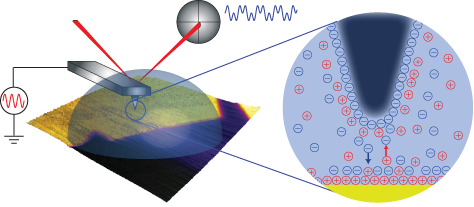
- observed in decane (85 ± 2 mV). The discrepancies between the measured CPD values likely result from physisorption of molecules at the solid–liquid interface [39]. The error is greater for the measured CPD recorded in ionically-active polar solvents than in decane due to gradual changes of the measured CPD


![[Graphic 6]](/bjnano/content/inline/2190-4286-6-19-i11.png?max-width=637&scale=1.18182) response collected 200 nm above a grounded Au electrode in (a, b, c) air, (d, e, f) decane an...
response collected 200 nm above a grounded Au electrode in (a, b, c) air, (d, e, f) decane an...


![[Graphic 22]](/bjnano/content/inline/2190-4286-6-19-i27.png?max-width=637&scale=1.18182) spectra [bias-on] collected 500 nm above HOPG in aqueous solutions of increasing salt concent...
spectra [bias-on] collected 500 nm above HOPG in aqueous solutions of increasing salt concent...

![[Graphic 25]](/bjnano/content/inline/2190-4286-6-19-i30.png?max-width=637&scale=1.18182) spectra [bias-on] collected 500 nm above (a) HOPG and (b) Au in milli-Q water (vertical color...
spectra [bias-on] collected 500 nm above (a) HOPG and (b) Au in milli-Q water (vertical color...

![[Graphic 27]](/bjnano/content/inline/2190-4286-6-19-i32.png?max-width=637&scale=1.18182) spectra [bias-on] recorded 500 nm above a HOPG/Au boundary in milli-Q water. T...
spectra [bias-on] recorded 500 nm above a HOPG/Au boundary in milli-Q water. T...




