


Search results
Search for "piezoelectric" in Full Text gives 155 result(s) in Beilstein Journal of Nanotechnology.
A wearable nanoscale heart sound sensor based on P(VDF-TrFE)/ZnO/GR and its application in cardiac disease detection
Beilstein J. Nanotechnol. 2023, 14, 819–833, doi:10.3762/bjnano.14.67
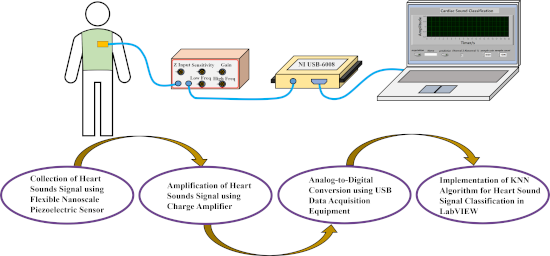
- University, Hangzhou 310018, China School of Cyberspace Security, Hangzhou DIANZI University, Hangzhou 310018, China 10.3762/bjnano.14.67 Abstract This paper describes a method for preparing flexible composite piezoelectric nanofilms of P(VDF-TrFE)/ZnO/graphene using a high-voltage electrospinning method
- . Composition and β-phase content of the piezoelectric composite films were analyzed using X-ray diffraction. The morphology of the composite film fibers was observed through scanning electron microscopy. Finally, the P(VDF-TrFE)/ZnO/graphene composite film was encapsulated in a sandwich-structure heart sound
- system designed in this paper can collect heart sound signals in real time and predict whether the heart sounds are normal or abnormal, providing a new solution for the diagnosis of heart diseases. Keywords: composite piezoelectric nanofilm; electrospinning; heart sound classification algorithm; heart


Metal-organic framework-based nanomaterials as opto-electrochemical sensors for the detection of antibiotics and hormones: A review
Beilstein J. Nanotechnol. 2023, 14, 631–673, doi:10.3762/bjnano.14.52
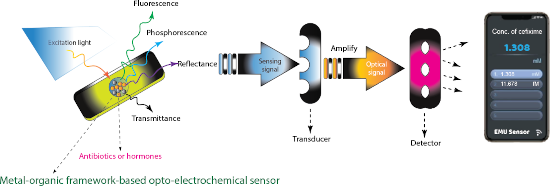
- of their exceptionally high thermal and electrical conductivities, effective catalytic properties, high chemical stability, rapid rate of electron transfer, adequate surface area, and favourable piezoelectric, electronic and gravimetric properties, metal and metal oxide materials with sizes less than


Bismuth-based nanostructured photocatalysts for the remediation of antibiotics and organic dyes
Beilstein J. Nanotechnol. 2023, 14, 291–321, doi:10.3762/bjnano.14.26
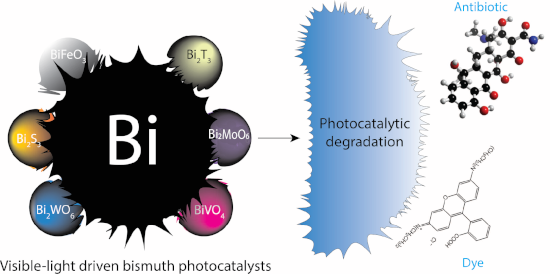
- promising green and sustainable wastewater treatment method for a cleaner environment. Due to their narrow bandgaps, distinctive layered structures, plasmonic, piezoelectric and ferroelectric properties, and desirable physicochemical features, bismuth-based nanostructure photocatalysts have emerged as one
- d10 configuration (6s26p3) in the sixth period of group V of the periodic table. Because of their intriguing optical, catalytic, electrical, ferroelectric, and piezoelectric properties, bismuth-based nanostructures are used in several significant fields, including optoelectronics, pollutant sensing
- lowering the cost of treatment. Aside from its magnetic and optical properties, BiFeO3 also exhibits piezoelectric characteristics, photovoltaic effects, switchable ferroelectric diode effects, and spontaneous polarisation enhancement. It is also sensitive to epitaxial strain [88]. Given its intriguing


Intermodal coupling spectroscopy of mechanical modes in microcantilevers
Beilstein J. Nanotechnol. 2023, 14, 123–132, doi:10.3762/bjnano.14.13
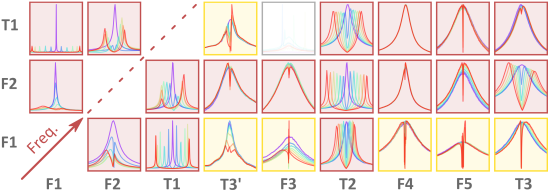
- filled, although there are several exceptions with no indication of coupling. There are multiple explanations for the empty spaces, and all can have an impact on the lack of coupling. First, a piezoelectric actuator can have a minimum in its response function at the pump frequency. Second, the intermodal


Enhanced electronic transport properties of Te roll-like nanostructures
Beilstein J. Nanotechnol. 2022, 13, 1284–1291, doi:10.3762/bjnano.13.106
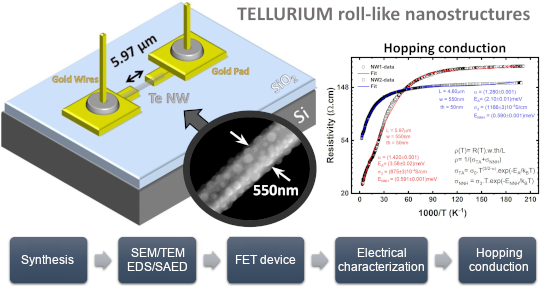
- Earth’s crust and a well-known p-type and narrow-bandgap (≈0.35 eV at room temperature) semiconductor material. Tellurium is widely used in thermoelectric devices, piezoelectric devices, photoconductive devices, gas sensing, nonlinear optical devices, solar cells, photonic crystals, holographic recording
- ) = 881 cm2/V·s) in these nanostructures. Thermoelectric devices, piezoelectric devices, photoconductive devices, gas sensing, solar cells, and field-effect transistors would have better performance if the mobility of charge carriers in the active region of the devices was greater. In addition, the low




Application of nanoarchitectonics in moist-electric generation
Beilstein J. Nanotechnol. 2022, 13, 1185–1200, doi:10.3762/bjnano.13.99
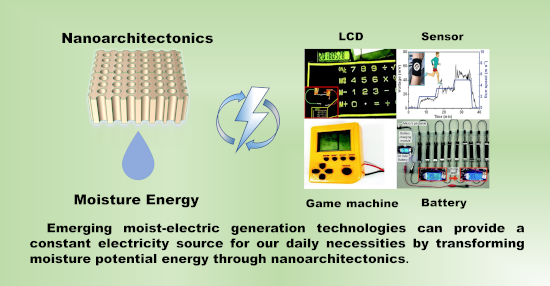
- . Different nanostructures also have an influence on the performance of MEGs, which is worth further investigation. Metal compound nanomaterials have been successfully used in many fields, such as optoelectronic, thermoelectric, and piezoelectric devices [56][57][58][59][60]. With the knowledge about


Microneedle-based ocular drug delivery systems – recent advances and challenges
Beilstein J. Nanotechnol. 2022, 13, 1167–1184, doi:10.3762/bjnano.13.98
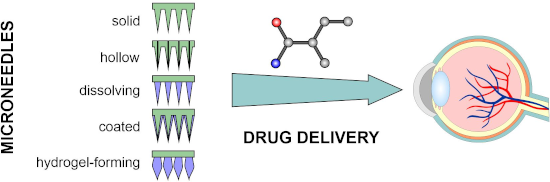
- deposited on the microneedle surface, has been mentioned. As in piezoelectric inkjet printing, the droplets are released from the nozzle as a result of the application of an electrical field to a piezoelectric crystal, which distorts and pushes the liquid out. The most important techniques applied in


Optimizing PMMA solutions to suppress contamination in the transfer of CVD graphene for batch production
Beilstein J. Nanotechnol. 2022, 13, 796–806, doi:10.3762/bjnano.13.70
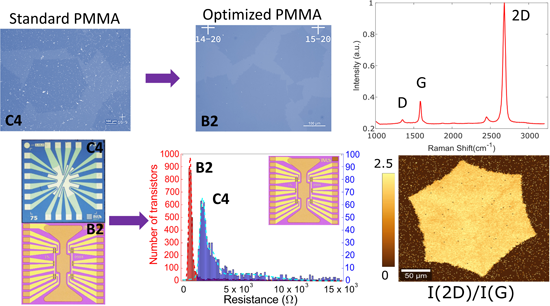
- frequency. The AFM measurement was carried out in tapping mode. A 633 nm laser light aimed at the back side of the cantilever tip was reflected toward a position-sensitive photodetector, which provides feedback signals to piezoelectric scanners that maintain the cantilever tip at constant height (force




Electrostatic pull-in application in flexible devices: A review
Beilstein J. Nanotechnol. 2022, 13, 390–403, doi:10.3762/bjnano.13.32
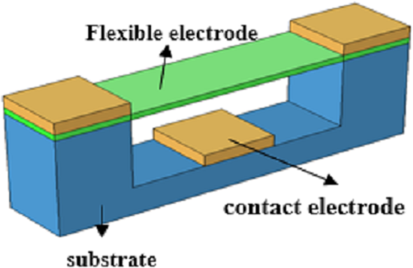
- development of new materials and microelectromechanical and nanoelectromechanical systems (MEMS/NEMS), MEMS devices have become an essential part of flexible electronic systems. Common flexible MEMS devices are based on electrostatic, piezoelectric, and thermal actuation. Electrostatic actuation is one of the
- [85], pyroelectric [86], piezoelectric [87][88][89], and other power generation forms to form a microscale energy system. In this system, microswitches can be used as either rectifier to connect the power source to the load circuit or as an actuator structure, which plays an important role in the
- electrostatic switches. In addition, Cui et al. [92][93][94][95] showed that the self-powered triboelectrification nanogenerator (TENG) can also be used for human health detection and wound healing. Piezoelectric power generation: Piezoelectric materials can produce very precise tiny motions and have


The effect of metal surface nanomorphology on the output performance of a TENG
Beilstein J. Nanotechnol. 2022, 13, 298–312, doi:10.3762/bjnano.13.25
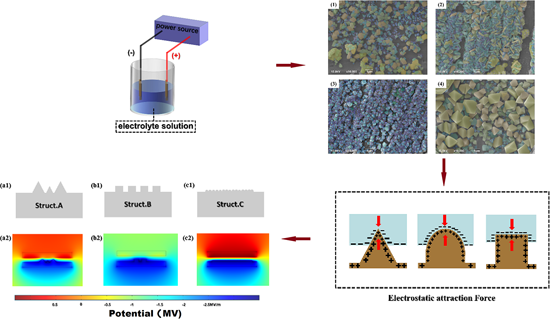
- can replace non-renewable resources such as coal and oil [3]. In order to convert mechanical energy into electrical energy, various methods were developed, such as electromagnetic generators [4][5][6], piezoelectric materials [7][8][9][10], and pyroelectric materials [11][12]. The underlying


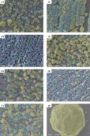
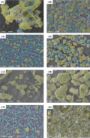


Piezoelectric nanogenerator for bio-mechanical strain measurement
Beilstein J. Nanotechnol. 2022, 13, 192–200, doi:10.3762/bjnano.13.14
- , Pakistan Sapphire Finishing Mills Limited, Lahore, Pakistan Department of Clothing, Faculty of Textile Engineering, National Textile University, Karachi Campus, Pakistan 10.3762/bjnano.13.14 Abstract Piezoelectric materials have attracted more attention than other materials in the field of textiles
- . Piezoelectric materials offer advantages as transducers, sensors, and energy-harvesting devices. Commonly, ceramics and quartz are used in such applications. However, polymeric piezoelectric materials have the advantage that they can be converted into any shape and size. In smart textiles, polyvinylidene
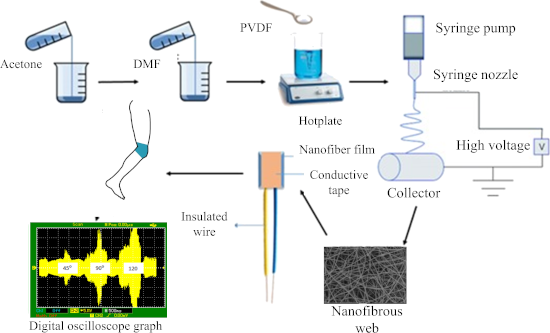
- fluoride (PVDF) and other piezoelectric polymers are used in the form of fibers, filaments, and composites. In this research, PVDF nanofibers were developed and integrated onto a knitted fabric to fabricate a piezoelectric device for human body angle monitoring. Scanning electron microscopy and X-ray


Cantilever signature of tip detachment during contact resonance AFM
Beilstein J. Nanotechnol. 2021, 12, 1286–1296, doi:10.3762/bjnano.12.96
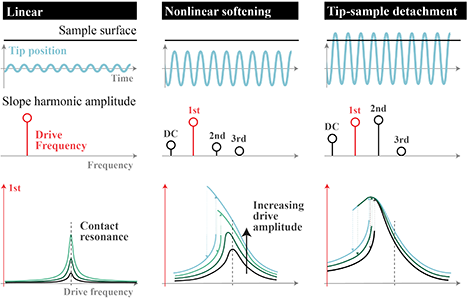
- of a sample [6] and observe subsurface features in some biological and electronics samples [7][8][9][10][11][12]. PFM can measure piezoelectric and ferroelectric properties of a sample [13][14][15][16]. ESM can measure the ion diffusion in battery materials [4][17][18][19]. These different AFM
- signature are provided in Supporting Information File 1. These were performed using the same Cypher S AFM microscope with an ACLA AFM cantilever (Applied NanoStructures, Inc., Mountain View, CA, USA) on a silicon sample, but driven by a piezoelectric actuator under the sample instead of via photothermal


Enhancement of the piezoelectric coefficient in PVDF-TrFe/CoFe2O4 nanocomposites through DC magnetic poling
Beilstein J. Nanotechnol. 2021, 12, 1262–1270, doi:10.3762/bjnano.12.93
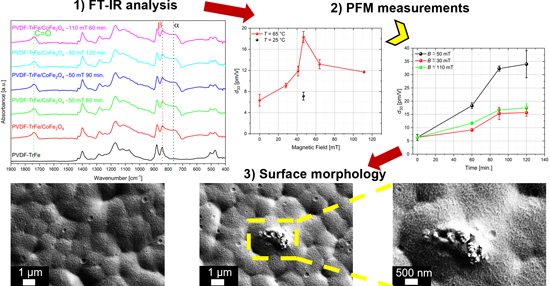
- Rome, 00184 Rome, Italy Department of Chemical Engineering Materials and Environment, Sapienza University of Rome, 00184 Rome, Italy 10.3762/bjnano.12.93 Abstract In the last years flexible, low-cost, wearable, and innovative piezoelectric nanomaterials have attracted considerable interest regarding
- the development of energy harvesters and sensors. Among the piezoelectric materials, special attention has been paid to electroactive polymers such as poly(vinylidene fluoride) (PVDF) and its copolymer poly(vinylidene fluoride-co-trifluoroethylene) (PVDF-TrFe), which is one of the most extensively
- investigated piezoelectric polymers, due to the high β phase content resulting from specific curing or processing conditions. However, to obtain a high piezoelectric coefficient (d33) alignment of the β phase domains is needed, which is usually reached through applying a high electric field at moderate


Two dynamic modes to streamline challenging atomic force microscopy measurements
Beilstein J. Nanotechnol. 2021, 12, 1226–1236, doi:10.3762/bjnano.12.90
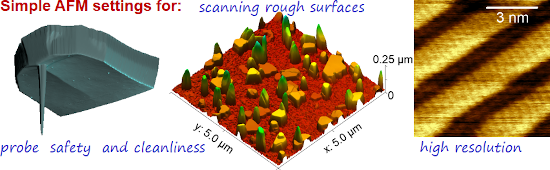
- related to changing the scanning procedure itself. Vertical mode The vertical mode (VM) is similar to amplitude modulation, that is, the probe oscillates near the resonant frequency, the driving frequency and power of the piezoelectric transducer are fixed. A key element of VM is a complete decoupling of


An overview of microneedle applications, materials, and fabrication methods
Beilstein J. Nanotechnol. 2021, 12, 1034–1046, doi:10.3762/bjnano.12.77
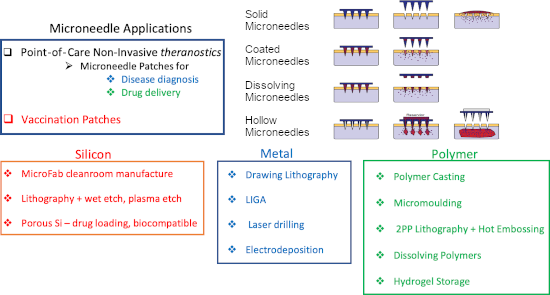
- in a study which integrated hollow silicon microneedles with a reservoir unit, a piezoelectric actuator system, and a flow sensor for real-time measurements of fluid dynamics [46]. In other research, much smaller microneedles – just 8 μm in height and 1 μm in diameter – were fabricated by DRIE for


The role of convolutional neural networks in scanning probe microscopy: a review
Beilstein J. Nanotechnol. 2021, 12, 878–901, doi:10.3762/bjnano.12.66
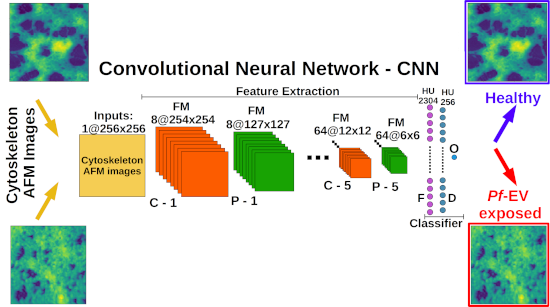
- quantities, that is, frequency (giving the stiffness), amplitude (giving the piezoresponse), Q (dissipation), and phase (directionality of polarization). PFM can map piezoelectric domains and the inverse piezoresponse of a sample, but signals are notoriously low. In this work, two arrays (real and imaginary







Comprehensive review on ultrasound-responsive theranostic nanomaterials: mechanisms, structures and medical applications
Beilstein J. Nanotechnol. 2021, 12, 808–862, doi:10.3762/bjnano.12.64
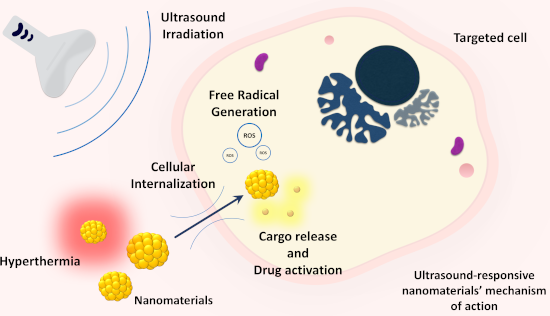
- [60]. Ultrasound is generally produced by the passage of electric current through a piezoelectric crystal [61]. The interaction of acoustic waves with the interfaces that exist between different tissues causes an alteration in the energy of the US. When these waves encounter tissues with different


Recent progress in actuation technologies of micro/nanorobots
Beilstein J. Nanotechnol. 2021, 12, 756–765, doi:10.3762/bjnano.12.59
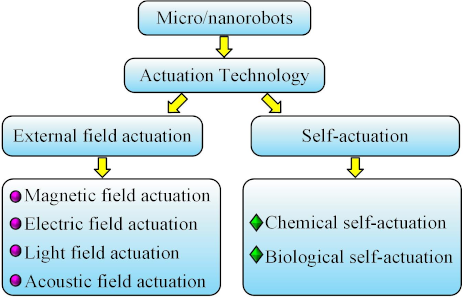
- –polypyrrole) oscillates, and then, due to the piezoelectric effect, the ferroelectric tail bends and the electric polarization changes. Experimental analysis shows that changing the magnitude and frequency of the magnetic field can transform the motion of the nanoeel from surface walking to three-dimensional
- micro/nanorobots. Traditional piezoelectric actuators are suitable for millimeter-sized robots, but not for the micro/nanoscale. Therefore, the innovation was to design a new type of electrochemical actuator and to use it as legs of the robot. It was made of nanoscale platinum and manufactured by a


Recent progress in magnetic applications for micro- and nanorobots
Beilstein J. Nanotechnol. 2021, 12, 744–755, doi:10.3762/bjnano.12.58
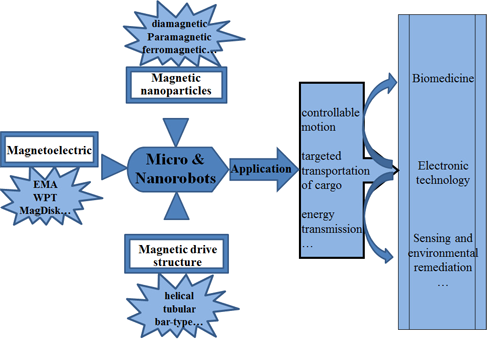
- magnetoelectric core–shell composite nanowires had a magnetostrictive core and a piezoelectric shell, and it exhibited a strain-mediated magnetoelectric effect. In terms of device design and manufacturing, this biphasic core–shell configuration offered greater flexibility than single-phase magnetoelectric
- trigger drug release. The fabrication method of Chen’s team yielded not only easily adjustable length and diameter of the nanowires, but also excellent interface coupling between the piezoelectric and magnetostrictive phases. It enabled precise magnetic manipulation on patterned surfaces and 3D swimming


Nanogenerator-based self-powered sensors for data collection
Beilstein J. Nanotechnol. 2021, 12, 680–693, doi:10.3762/bjnano.12.54
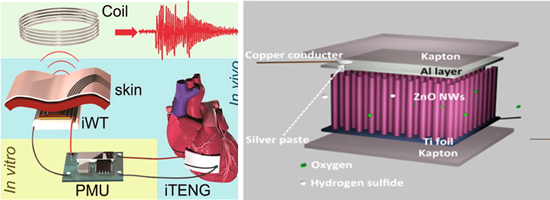
- energy supplies. Triboelectric nanogenerators (TENGs) were used as electronic skin for pressure detection and material identification [50][51]. Pressure sensors based on piezoelectric nanogenerators (PENGs) were used to detect tiny pressure deviations from water droplets [52][53], wind flow [53][54][55
- changes through the output response signal. Gas molecules can be adsorbed on the surface of piezoelectric/triboelectric materials, causing changes in the carrier density [95]. Thus, the gas concentration can be obtained from the output voltage of the PENG/TENGs. The output of a PENG based on ZnO NWs is
- under exposure to oxygen (O2), hydrogen sulfide (H2S) gas, and water vapor. The sensitivity to H2S gas was as low as 100 ppm. The design of the whole self-powered sensor system consists of three parts. A ZnO NW array as the piezoelectric energy generation module, Ti foil and Al layer as electrodes, and



Properties of graphene deposited on GaN nanowires: influence of nanowire roughness, self-induced nanogating and defects
Beilstein J. Nanotechnol. 2021, 12, 566–577, doi:10.3762/bjnano.12.47
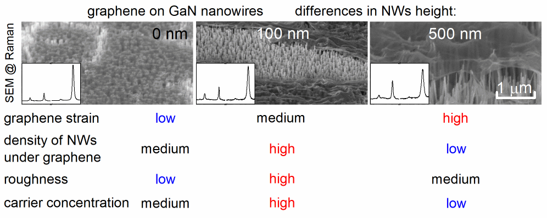
- graphene deposited on gallium nitride nanowires (GaN NWs) with different variations in height. The electric field induced in GaN predicted by theoretical calculations could reach 5 MV/cm [21]. This is an effect of high spontaneous and piezoelectric polarisations in the wurtzite structure of GaN




Determining amplitude and tilt of a lateral force microscopy sensor
Beilstein J. Nanotechnol. 2021, 12, 517–524, doi:10.3762/bjnano.12.42
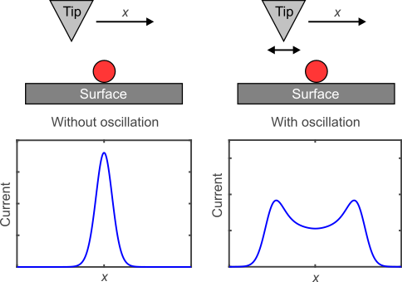
- energy to excite the sensor is very small and mechanical vibrations can dominate the excitation [19]. For low-temperature LFM, the lattice of the substrate can be used to calibrate the amplitude if the periodicity of the lateral features is known [20]. For electrically excited piezoelectric-based sensors


Numerical analysis of vibration modes of a qPlus sensor with a long tip
Beilstein J. Nanotechnol. 2021, 12, 82–92, doi:10.3762/bjnano.12.7
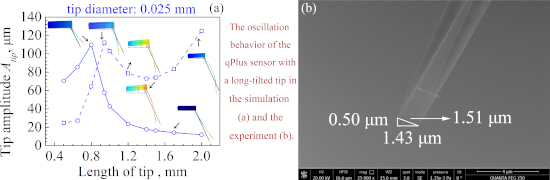
- temperature range [1]. In addition, quartz tuning forks have a high elastic constant, a high quality factor (Q factor), and are self-sensing due to the piezoelectric effect [1]. Therefore, a quartz tuning fork can be used as a force sensor. The central part of the “qPlus sensor” is a quartz tuning fork of
- 32.19 kHz. After considering the electrostatic and piezoelectric effects, the eigenfrequency is shifted to 32.23 kHz, which is only 0.12% higher. Therefore, the effect of the shunt capacitance of the tuning fork is negligible. As shown in Figure 2a, the tungsten tip is attached to one prong using a
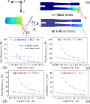
- , caused by the piezoelectric effect of the tuning fork [1], is smaller than that of the in-phase mode, the maximum value of the partial derivative of q with respect to the time (i.e., the peak output current) can be larger than that of the in-phase mode. The result illustrates that the changes of the






Towards 3D self-assembled rolled multiwall carbon nanotube structures by spontaneous peel off
Beilstein J. Nanotechnol. 2020, 11, 1865–1872, doi:10.3762/bjnano.11.168
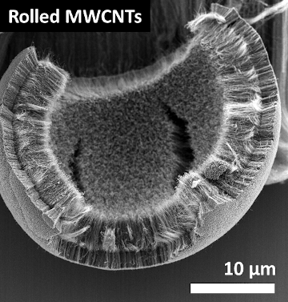
- piezoelectric generator, a quartz tube (2.2 cm inner diameter), a 50 cm long horizontal tube furnace, a gas flow controller, and an acetone gas trap. The total gas flow was 2500 sccm for all experiments. In order to obtain different compositions within the MWCNTs, different sequences of different precursors



Piezotronic effect in AlGaN/AlN/GaN heterojunction nanowires used as a flexible strain sensor
Beilstein J. Nanotechnol. 2020, 11, 1847–1853, doi:10.3762/bjnano.11.166
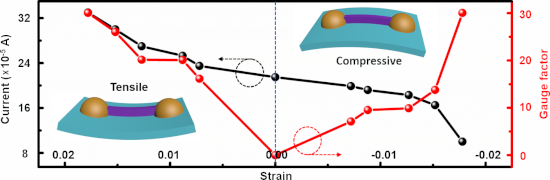
- effect; strain sensors; strain tests; top-down method; Introduction Due to the non-centrosymmetric structure of the group-III nitride semiconductor materials (e.g., GaN, AlN, and AlGaN), spontaneous polarization (Psp) and piezoelectric polarization induced by lattice mismatch (Plm) are inevitably
- polarization distribution inside the heterojunction [7][8]. The piezotronic effect, described first by Zhong Lin Wang in 2007, is a combination of the piezoelectric effect and the properties of non-centrosymmetric semiconductor materials [9]. 1D semiconductor nanowires (NWs) are more suitable candidates for
- piezoelectric polarization along the negative direction of the c axis, which resulted in a negative piezoelectric charge on the +c-plane of the GaN layer. The corresponding net polarization charge at the heterojunction interface decreases, resulting in a decrease in the density of the 2DEG. Therefore, as the





