


Search results
Search for "protein corona" in Full Text gives 68 result(s) in Beilstein Journal of Nanotechnology.
Recent progress in cancer cell membrane-based nanoparticles for biomedical applications
Beilstein J. Nanotechnol. 2023, 14, 262–279, doi:10.3762/bjnano.14.24
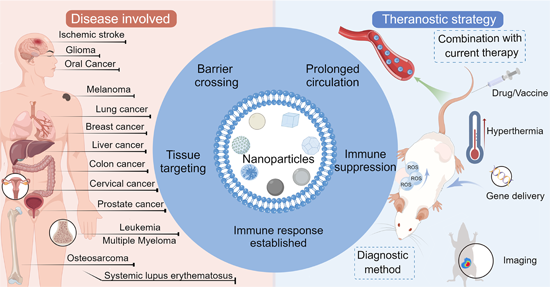
- system (RES) or the mononuclear phagocytosis system (MPS) [4]. The subsequent rapid clearance from blood circulation by the liver and kidneys results in insufficient drug accumulation in the target tissue [5]. In addition, NPs can interact with proteins to form a protein corona, which affects the
- intended function of the NPs, resulting in changes of biological behavior and loss of function [6][7]. Moreover, the protein corona can accelerate RES/MPS uptake and interfere with the targeting ability of NPs [8]. The biomimetic technique of cell membrane coating, which employs naturally cell-derived


Engineered titania nanomaterials in advanced clinical applications
Beilstein J. Nanotechnol. 2022, 13, 201–218, doi:10.3762/bjnano.13.15
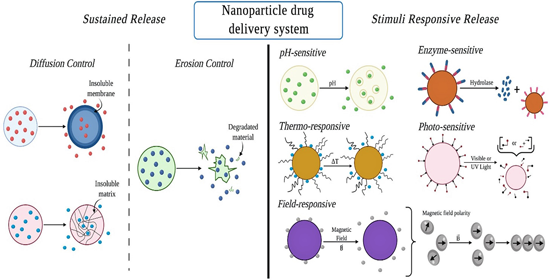
- excretion [33]. When a TiO2 nanomaterial circulates through the body, certain biomolecules (such as proteins, phospholipids, or DNA contained in biological fluids or present in living cells) get adsorbed onto the surface of it very quickly, which is termed as “protein corona (PC)” formation. This protein
- corona alters the surface properties and transforms the physical, chemical, and biological characteristics of the nanomaterial. The types and amounts of adsorbed proteins are influenced by certain physiochemical qualities of the nanomaterial, such as the size, shape, charge as well as topography


Biocompatibility and cytotoxicity in vitro of surface-functionalized drug-loaded spinel ferrite nanoparticles
Beilstein J. Nanotechnol. 2021, 12, 1339–1364, doi:10.3762/bjnano.12.99
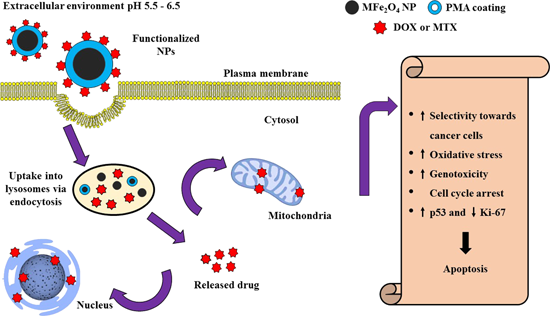
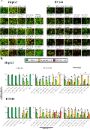
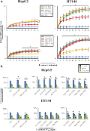
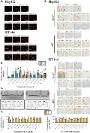
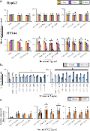
- potential values is the interaction between NPs and serum proteins present in DMEM [30]. In cell culture media, NPs agglomerate with serum proteins and are therefore recruited in cells via the protein corona effect, which increases the bioavailability of NPs by many folds [31]. PMA-coated samples have a





Comprehensive review on ultrasound-responsive theranostic nanomaterials: mechanisms, structures and medical applications
Beilstein J. Nanotechnol. 2021, 12, 808–862, doi:10.3762/bjnano.12.64


Fate and transformation of silver nanoparticles in different biological conditions
Beilstein J. Nanotechnol. 2021, 12, 665–679, doi:10.3762/bjnano.12.53
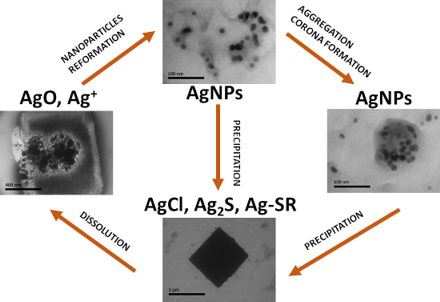
- significantly affect AgNPs and determine their colloidal stability and cellular interactions as evidenced earlier [27][31][32][33]. In the acidic medium of the stomach, AgNPs both agglomerate and dissolve [15][26][34]. The transformation will likely be incomplete due to protein corona formation and short
- behaviour can be attributed to the loss of electrostatic repulsion between particles due to the complexation with counter ions present in media with high ionic strength [8][47]. The presence of proteins prevented AgNP agglomeration in m(CCM+BSA), m(CYS+BSA), m(GSH+BSA) due to the formation of protein corona
- AgNPs enter the body where they gain a protein corona, aggregate, and dissolve to Ag+. Ionic silver may precipitate in the anion-rich environment of different tissues, where Ag binds to S, resulting in nanocrystals. Aggregation and corona–NP destabilisation can also lead to precipitation. Whole blood





A review on nanostructured silver as a basic ingredient in medicine: physicochemical parameters and characterization
Beilstein J. Nanotechnol. 2021, 12, 440–461, doi:10.3762/bjnano.12.36
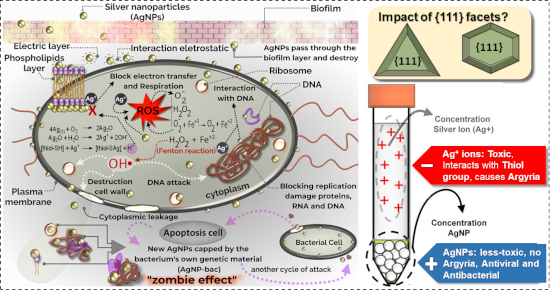
- human serum albumin (HSA), fibrinogen and immunoglobulin (IgG), metallothionein (MT), and ceruloplasmin (CP), forming a protein corona (PC) during silver homeostasis [121][122]. The PC is a highly dynamic system and its composition dynamically changes over time, undergoing various transformations until


Differences in surface chemistry of iron oxide nanoparticles result in different routes of internalization
Beilstein J. Nanotechnol. 2021, 12, 270–281, doi:10.3762/bjnano.12.22
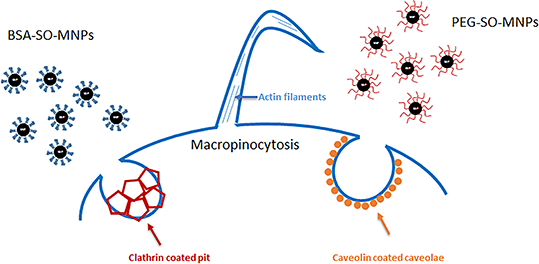
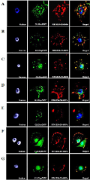
- affect the uptake. Once NPs enter biological fluids (blood or culture medium with serum), proteins immediately adsorb onto the surface of the NPs, forming a layer called protein corona (PC). The PC changes the surface composition and structure of NPs, directly influences the cell–NP interactions
- the protein corona in terms of the amount and specificity of proteins adsorbed from the serum, overall affecting the final size of the nanoparticles in the biological fluid [46]. Because the cellular entry mechanism of identical nanoparticles can differ between cancer cells and non-malignant cells [47



Effect of different silica coatings on the toxicity of upconversion nanoparticles on RAW 264.7 macrophage cells
Beilstein J. Nanotechnol. 2021, 12, 35–48, doi:10.3762/bjnano.12.3
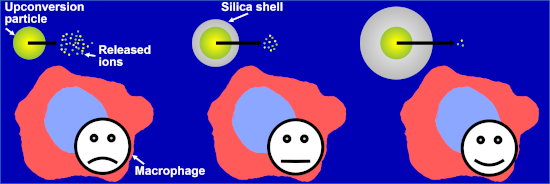
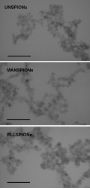
- -average values of the samples after redispersion in DMEM were lower than in water, except for the samples UC@thin_NH2, UC@thick_RBITC_NH2, and SiO2@RBITC_NH2. The lower Z-average values of these samples may indicate an increased stabilization by a protein corona [52][53][54][55][56]. However, the high
- aggregation of silica nanoparticles that occurred after redispersion in buffered solution and in physiological medium [54]. They reported that various proteins in a medium containing FBS were adsorbed onto the surface of bare SiO2 and amine-functionalized SiO2 nanoparticles, forming a protein corona with a
- new surface charge, which depended on the type of proteins that built the corona. The adsorbed protein corona, consisting of the proteins present in FBS, could increase or reduce the stability of the particles and, consequently, their hydrodynamic diameter [53][54][55][56][57]. The non-functionalized


Key for crossing the BBB with nanoparticles: the rational design
Beilstein J. Nanotechnol. 2020, 11, 866–883, doi:10.3762/bjnano.11.72
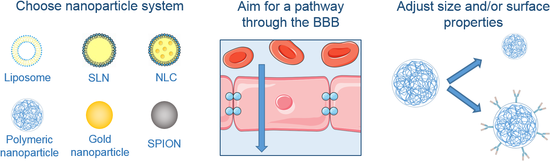
- protein corona forming around them, by investigating the particle–cell interactions or by looking for biomimetic solutions. Blood–brain barrier anatomy. Inspired by [5]. Brain delivery routes. A) Local delivery. Drugs can reach the brain by direct injection through the meninges. B) Intranasal delivery


Identification of physicochemical properties that modulate nanoparticle aggregation in blood
Beilstein J. Nanotechnol. 2020, 11, 550–567, doi:10.3762/bjnano.11.44
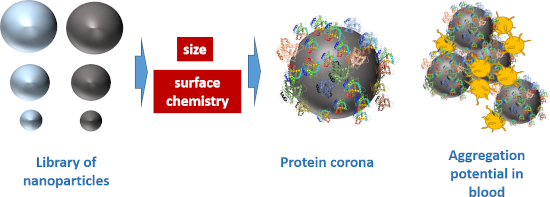
- purpose of investigating the role of surface curvature and chemistry on platelet aggregation, activation and adhesion. Substantial differences were found in the composition of the protein corona depending on the chemical nature of the nanoparticles, while the surface curvature was found to play a minor
- –protein interaction may lead to bridging among particles, thus promoting agglomeration [23]. In the present study, a set of six silica and carbon NPs of known size and morphology was used to evaluate the effect of the size and surface properties on the protein corona composition, platelet activation and
- polystyrene cuvette, at 25 °C. PBS 0.01 M, pH 7.4, Sigma-Aldrich, was used as the diluent in the case of the evaluation of the size after the protein corona formation. Nanoparticle tracking analysis (NTA) An analysis of the size distribution and concentration of CNPs and SNPs were performed by NTA using a




Interactions at the cell membrane and pathways of internalization of nano-sized materials for nanomedicine
Beilstein J. Nanotechnol. 2020, 11, 338–353, doi:10.3762/bjnano.11.25
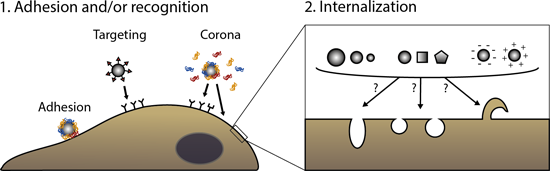
- to predict the evolution of their protein corona [60][61][198]. Other studies are trying to understand not only whether certain biomolecules are present on the nanoparticle surface, but also their orientation, which might influence their recognition by cell receptors [17][199]. In order to take into


Using gold nanoparticles to detect single-nucleotide polymorphisms: toward liquid biopsy
Beilstein J. Nanotechnol. 2020, 11, 263–284, doi:10.3762/bjnano.11.20
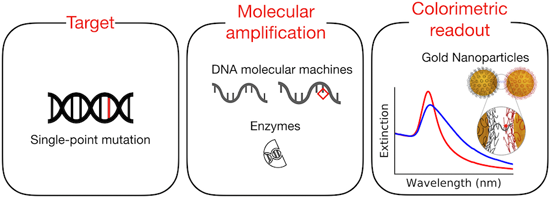
- . Specifically, the recently proposed protein corona sensor arrays in which the composition of protein corona reflects the presence of a given cancer enabled new venues in detecting diseases directly from a blood sample [140]. Moreover, the simultaneous detection of genetic mutations and disease-specific
- ]. Several limitations need to be addressed as well. One of the known issues in colloidal biosensing is the spontaneous formation of a protein corona on the surface of the particles in physiological media [146], inhibiting the interaction of the biomarkers with the colloid, thereby altering the sensitivity




Rational design of block copolymer self-assemblies in photodynamic therapy
Beilstein J. Nanotechnol. 2020, 11, 180–212, doi:10.3762/bjnano.11.15






Bombesin receptor-targeted liposomes for enhanced delivery to lung cancer cells
Beilstein J. Nanotechnol. 2019, 10, 2553–2562, doi:10.3762/bjnano.10.246
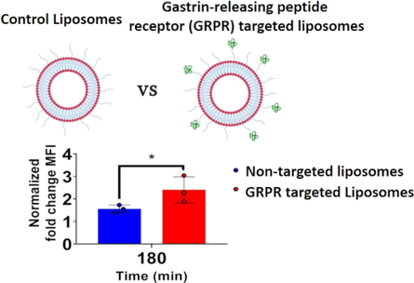
- polydisperse proteins of different sizes [27]. Indeed, the surface properties of various nanoparticles have been shown to change dramatically in the presence of plasma or serum [28] with the establishment of an adsorbed protein corona around the nanoparticle. It is now widely accepted that the particle protein
- corona presents a new biomolecular interface that underpins the dynamic interactions of nanosystems and their biological targets. The presentation of a high affinity GRPR antagonist peptide on the liposomal surface is expected to maintain liposomal cell-binding affinity by virtue of its high affinity for

Engineered superparamagnetic iron oxide nanoparticles (SPIONs) for dual-modality imaging of intracranial glioblastoma via EGFRvIII targeting
Beilstein J. Nanotechnol. 2019, 10, 1860–1872, doi:10.3762/bjnano.10.181
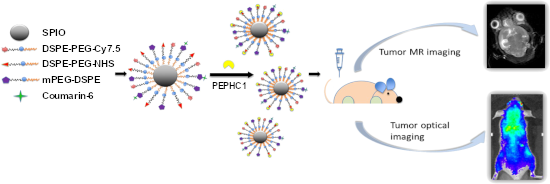
- proteins, resulting in the formation of protein corona [48][49]. To minimize the adverse effects of the presence of the protein corona in vivo, the surface coating using PEG can endow the NPs with so-called “stealth” properties to reduce the adsorption of high molecular weight proteins, allowing them to




Serum type and concentration both affect the protein-corona composition of PLGA nanoparticles
Beilstein J. Nanotechnol. 2019, 10, 1002–1015, doi:10.3762/bjnano.10.101
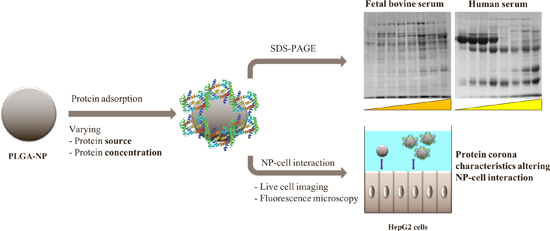
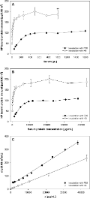
- /bjnano.10.101 Abstract Background: When nanoparticles (NPs) are applied into a biological fluid, such as blood, proteins bind rapidly to their surface forming a so-called “protein corona”. These proteins are strongly attached to the NP surface and confers them a new biological identity that is crucial
- for the biological response in terms of body biodistribution, cellular uptake, and toxicity. The corona is dynamic in nature and it is well known that the composition varies in dependence of the physicochemical properties of the NPs. In the present study we investigated the protein corona that forms
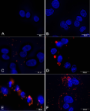
- assay, zeta potential measurements, and liquid chromatography–mass spectrometry/mass spectrometry (LC–MS/MS). Additionally, the time-dependent cell interaction of PLGA NPs in the absence or presence of a preformed protein corona was assessed by in vitro incubation experiments with the human liver cancer



Engineering of oriented carbon nanotubes in composite materials
Beilstein J. Nanotechnol. 2018, 9, 415–435, doi:10.3762/bjnano.9.41
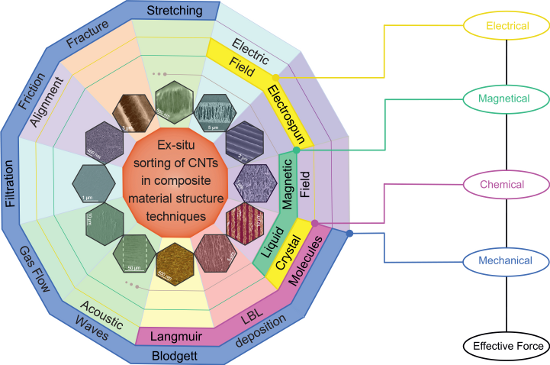
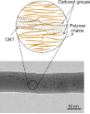
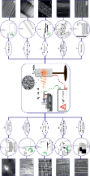
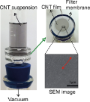
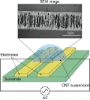
- the CNT diameter and length are critical parameters in protein corona formation and biocompatibility [11][12]. In another research investigating the effect of aligning CNTs in composite material structures, a remarkable improvement in the electrical properties of CNT composites was observed, as








Methionine-mediated synthesis of magnetic nanoparticles and functionalization with gold quantum dots for theranostic applications
Beilstein J. Nanotechnol. 2017, 8, 1734–1741, doi:10.3762/bjnano.8.174
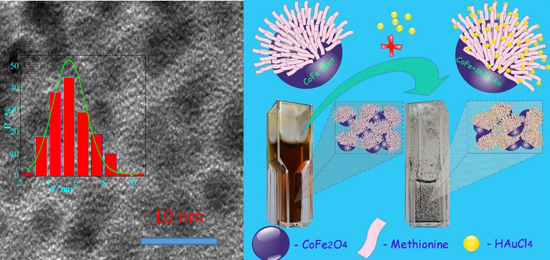
- have a dramatic effect on the formation of the surface protein corona in the bloodstream that affects CoFe2O4@Met–Au NPs passive targeting and uptake into tumor cells. The elaborated functionalization of magnetic NPs with gold QDs represents a promising multi-task platform for linking magnetic NPs with


Bright fluorescent silica-nanoparticle probes for high-resolution STED and confocal microscopy
Beilstein J. Nanotechnol. 2017, 8, 1283–1296, doi:10.3762/bjnano.8.130
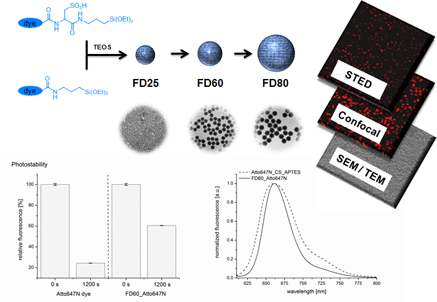
- amounts of salts, amino acids and proteins. In aqueous media, electrostatic repulsion contributes to particle stabilisation. In presence of salts at neutral pH values, this type of stabilisation might be ineffective. In contrast, the formation of a protein corona at the interface between particle surface


Evaluation of quantum dot conjugated antibodies for immunofluorescent labelling of cellular targets
Beilstein J. Nanotechnol. 2017, 8, 1238–1249, doi:10.3762/bjnano.8.125
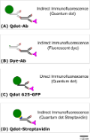
- between Qdots and functional antibodies, the overall surface charge of Qdot-Ab conjugates, and whether there is a presence of a protein corona. The labelling ratio of Qdots to antibodies present within commercially available Qdot-Ab conjugates has been previously evaluated, where the non-specific
- protein adsorption and thus the formation of a protein corona [38]. Qdots with a zwitterionic surface have a zeta potential of near zero, are resistant to non-specific binding onto cells, and have a high colloidal stability [39]. Commercially available Qdot-Abs evaluated in this report were used in fixed

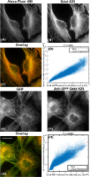


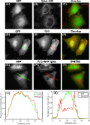

Nano-engineered skin mesenchymal stem cells: potential vehicles for tumour-targeted quantum-dot delivery
Beilstein J. Nanotechnol. 2017, 8, 1218–1230, doi:10.3762/bjnano.8.123
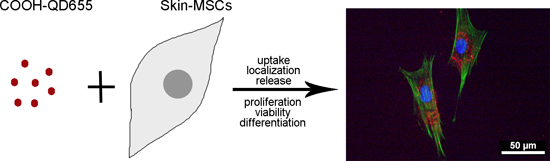
- , which could be a desirable event in targeted tumour therapy. The optimal uptake conditions for NPs could depend on the particle size, surface modifications, protein corona, and recipient cell line. Previous studies have suggested the incubation of NIH3T3 mouse fibroblasts with 16 nM QDs for 6 h as the
- varies depending on the cell and particle type. One of the factors affecting uptake is the protein corona that forms around NPs in serum-containing medium. Protein aggregates decrease gold NP uptake depending on size and cell type [41]. In the present study, we analysed the QD uptake pathways under both
- QDs possessing a protein corona are differently recognized by NIH3T3 cells and internalized by different pathways [23], consistent with the data from the present study. Interestingly, MSCs showed more effective internalization of QDs under serum-free conditions, as the protein corona interferes with

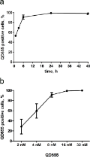




Uptake of the proteins HTRA1 and HTRA2 by cells mediated by calcium phosphate nanoparticles
Beilstein J. Nanotechnol. 2017, 8, 381–393, doi:10.3762/bjnano.8.40
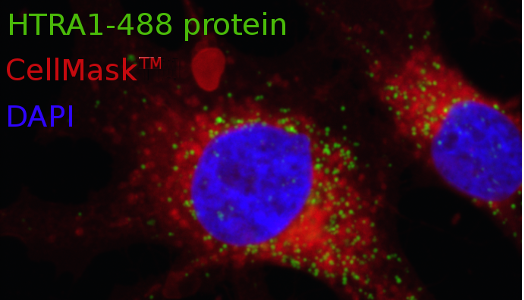
- dispersion in biological media containing proteins (like RPMI/10% FCS) is much better due to the formation of a protein corona [48][49]. The concentration of the labelled proteins was determined by UV–vis spectroscopy (Table 2). Table 3 gives the quantification data of the functionalized nanoparticles, where
- also influence their uptake [64][65][66][67]. Krais et al. have shown that serum proteins were necessary for cancer cells to take up folic acid-conjugated iron oxide nanoparticles [68]. The nature of the protein corona on the protein-loaded calcium phosphate nanoparticles after immersion in cell


On the pathway of cellular uptake: new insight into the interaction between the cell membrane and very small nanoparticles
Beilstein J. Nanotechnol. 2016, 7, 1296–1311, doi:10.3762/bjnano.7.121
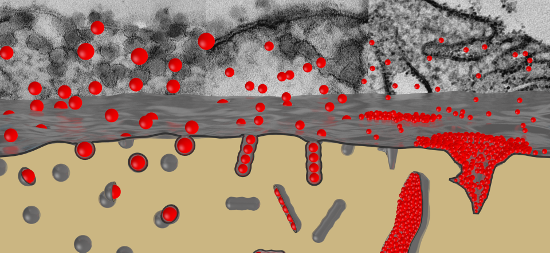
- dependent on particle size and the serum content in the culture medium [11][12]. In serum-free conditions the uptake of SiNPs has been determined to be much higher than in the presence of fetal calf serum (FCS), which is attributed to the fact that SiNPs build up a protein corona and tend to agglomerate in




Surface coating affects behavior of metallic nanoparticles in a biological environment
Beilstein J. Nanotechnol. 2016, 7, 246–262, doi:10.3762/bjnano.7.23
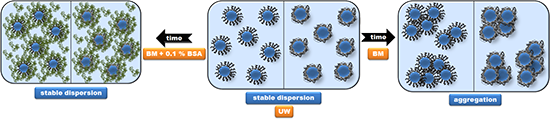
- may serve as desirable barriers preventing NPs from agglomeration in biomedical applications [18]. Moreover, when NPs enter a biological fluid, electrostatic, dispersive, and covalent interactions cause proteins to adsorb on NP surfaces, leading to the formation of a dynamic protein corona [30][36][37
- uptake and toxicity of metallic NPs [41][42], whereas differences in surface coatings influence cytotoxicity and surface charge [43]. However, it is still unclear how different surface coatings affect the interaction of NPs with biological environments and the formation of the protein corona. Because
- evaluation of metallic NPs in biological environments. Effect of albumin on the dispersibility of AgNPs and SPIONs in biological media When suspended in biological fluids, NPs rapidly interact with proteins that form a dynamical layer all over the NP surface, known as a protein corona (PC) [36][37][39




The eNanoMapper database for nanomaterial safety information
Beilstein J. Nanotechnol. 2015, 6, 1609–1634, doi:10.3762/bjnano.6.165
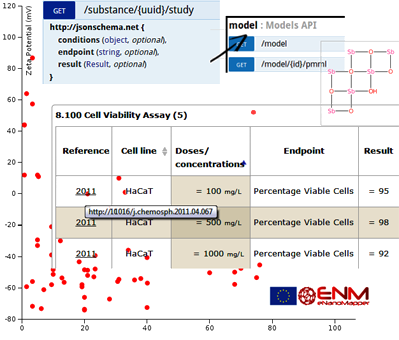
- templates (e.g., Protein Corona CSV files or ModNanoTox Excel files), and custom formats, provided by partners (e.g., the NanoWiki RDF dump [27]). ISA-Tab [15] files are converted by compressing the chain of protocols into a single entry, yet retaining all the protocol parameters and recording the material
- allowing parsing of the entire ModNanoTox complex organisation into the internal eNanoMapper data model. Protein Corona The demonstration data set, extracted from [28], focuses on the biological identity of ENMs. The authors used the composition of the protein corona “fingerprint” to predict the cell
- . Among the factors in play in protein corona, biological interaction was chosen to be represented by cell association because of its relevance to biodistribution, inflammatory response potential, and in vivo toxicity. The eNanoMapper prototype described in this paper is able to capture this protein





