Search results
Search for "roughness" in Full Text gives 481 result(s) in Beilstein Journal of Nanotechnology. Showing first 200.
Deep learning for enhancement of low-resolution and noisy scanning probe microscopy images
Beilstein J. Nanotechnol. 2025, 16, 1129–1140, doi:10.3762/bjnano.16.83
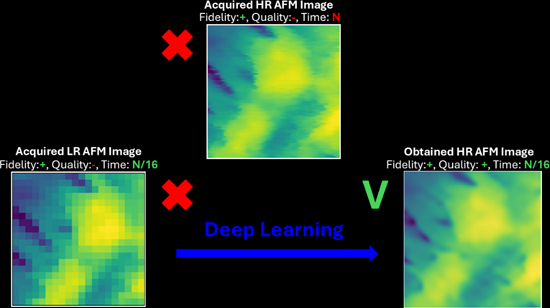
- . Results and Discussion In this study, 4× upscaled images were obtained from real measured low-resolution AFM images of Celgard® 2400 membrane and high-roughness titanium film used for tip characterization (Figure 1 and Figure 2, respectively). 4× upscaling means upscaling both the x and y directions and


Influence of ion beam current on the structural, optical, and mechanical properties of TiO2 coatings: ion beam-assisted vs conventional electron beam evaporation
Beilstein J. Nanotechnol. 2025, 16, 1097–1112, doi:10.3762/bjnano.16.81
- high refractive index and thickness up to 400 nm are required. Although the density and the refractive index of crystalline TiO2 are higher than those of the amorphous phase, it is often preferred in optical devices due to its lower surface roughness and light scattering [65]. Nanoindentation
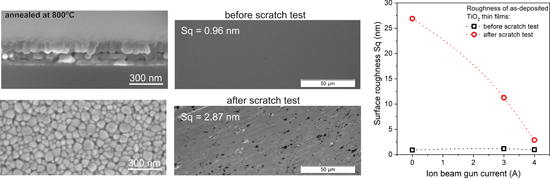
- scratches was reduced by half (Figure 8b). In contrast, when an ion beam gun current of 4 A was applied, the scratches almost disappeared, and the cross-sectional surface profile showed that they were only a few nanometers deep (Figure 8c). The surface roughness of the coating deposited without the ion gun
- properties tests. The results of surface topography measurements before and after abrasion tests for the annealed TiO2 thin films are included in Figure 9. Before the abrasion test, all coatings were homogeneous and had low roughness values from 2.0 to 2.5 nm. However, after the steel wool tests, the film




Single-layer graphene oxide film grown on α-Al2O3(0001) for use as an adsorbent
Beilstein J. Nanotechnol. 2025, 16, 1082–1087, doi:10.3762/bjnano.16.79
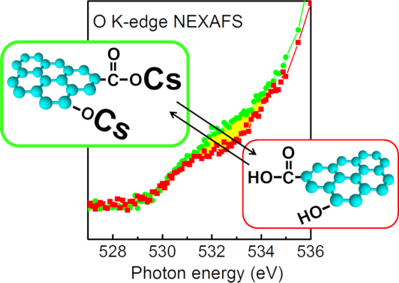
- intensity analysis and profiles of normal-incidence X-ray standing wave (NIXSW) spectroscopy [18]. In the SLGO film, the wrinkles disappeared and the surface roughness increased. The root mean square surface roughness (RMS) of the SLGO film is estimated to be less than 0.13 nm. The changes of the local


Ar+ implantation-induced tailoring of RF-sputtered ZnO films: structural, morphological, and optical properties
Beilstein J. Nanotechnol. 2025, 16, 872–886, doi:10.3762/bjnano.16.66
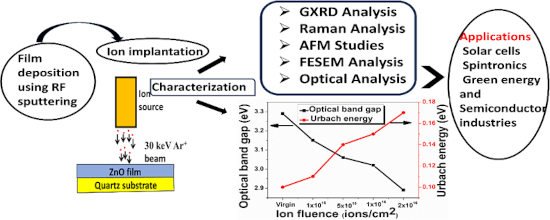
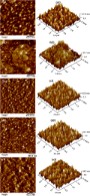
- in grazing incidence angle X-ray diffraction patterns. Atomic force microscopy images show grain size reduction and a fall in the surface roughness value of films after implantation. The implantation-induced structural modifications are further correlated with the variation in diffuse reflectance
- foreign ions in the ZnO film lattice can create an impact on its surface roughness and particle size. Previous reports available discuss the implantation-induced optical longitudinal phonon symmetry in ZnO films using heavy ions with high energy and low implantation fluences [12][13][14][15]. Singh et al
- were implanted with 30 keV Ar+ at fluences varying from 1 × 10¹⁵ to 2 × 10¹⁶ ions·cm−2. Surface variables (roughness and particle size), structural variables (crystallite size and dislocation density), and optical properties (diffuse reflectance, Urbach energy, and optical bandgap) were studied in






High-temperature epitaxial growth of tantalum nitride thin films on MgO: structural evolution and potential for SQUID applications
Beilstein J. Nanotechnol. 2025, 16, 690–699, doi:10.3762/bjnano.16.53
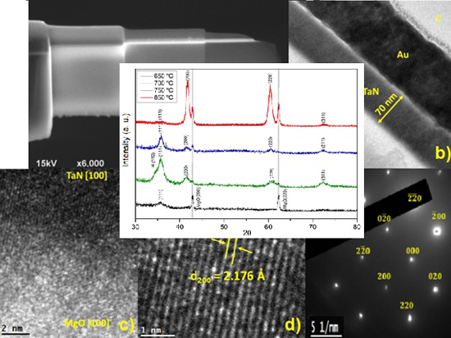
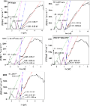
- makes this film an excellent candidate for superconducting applications, particularly in devices such as superconducting quantum interference devices (SQUIDs). Figure 7 presents an AFM image revealing the low surface roughness (2.2 nm) of even the film deposited at an elevated growth temperature of 850
- °C. This observation suggests that while deposition parameters significantly influence the structural and superconducting properties of the TaN thin films, they had only minimal impact on the surface roughness. Notably, the film roughness remains largely unaffected by variations in growth temperature
- surface roughness. Comparison of Ta 4f XPS peaks determined for different samples. (a) pN2 = 60 mTorr, (b) pN2 = 70 mTorr, (c) pN2 = 90 mTorr, T = 700 °C, and (d) pN2 = 90 mTorr, T = 750 °C. Ta 4f XPS spectra of samples deposited at (a) pN2 = 60 mTorr, T = 800 °C and (b) pN2 = 60 mTorr, T = 850 °C. XRD


Colloidal few layered graphene–tannic acid preserves the biocompatibility of periodontal ligament cells
Beilstein J. Nanotechnol. 2025, 16, 664–677, doi:10.3762/bjnano.16.51
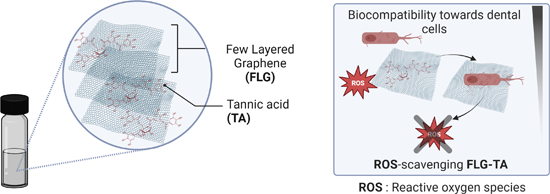
- . The cellular response on different graphene surfaces was previously studied, and it was demonstrated that substrate characteristics such as surface roughness, surface chemistry, and electronic properties can influence cell response [38]. The implications of these results are particularly significant




N2+-implantation-induced tailoring of structural, morphological, optical, and electrical characteristics of sputtered molybdenum thin films
Beilstein J. Nanotechnol. 2025, 16, 495–509, doi:10.3762/bjnano.16.38
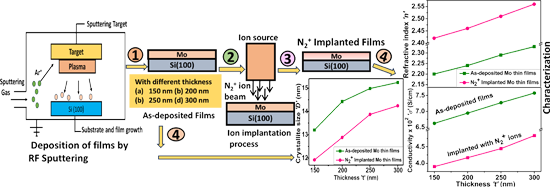
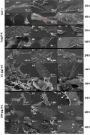
- thickness of the as-deposited films. This pattern persists with film thickness even after N2+ implantation. After implantation, crystallinity decreases relative to as-deposited films with the same nominal thickness. The AFM analysis reveals that RMS roughness increases with the thickness of Mo films
- . The RMS roughness values of Mo thin films with 150, 200, 250, and 300 nm thickness are around 1.09, 1.23, 1.41, and 1.73 nm, respectively. After N2+ implantation, the RMS roughness increases to 1.28, 1.43, 1.58, and 1.89 nm, respectively. A similar trend in roughness has been observed after N2
- + implantation for all Mo films. Table 3 reveals a continuous increase in particle size with Mo film thickness before and after N2+ implantation. This increase in roughness and particle size is related to structural alterations due to the increasing film thickness. At the lowest thickness, a greater number of


Performance optimization of a microwave-coupled plasma-based ultralow-energy ECR ion source for silicon nanostructuring
Beilstein J. Nanotechnol. 2025, 16, 484–494, doi:10.3762/bjnano.16.37

- nanopatterned surfaces depending on the dimensions of the nanopatterns (i.e., wavelength and rms roughness). The potential applications of such nanopatterned silicon surfaces are highlighted. This article underscores the versatility of an optimized broad-beam ultralow-energy ion source, specifically in the
- , where variations of ripple wavelength, rms roughness, and power spectral density are discussed. Figure 5g shows the cross-sectional TEM image after 450 eV Ar-ion bombardment of the Si surface at an angle of 60° for a time of 3 h. The presence of Ar-ion-induced surface corrugation in terms of ripple-like
- shown in Figure 6a–c. Further, the fluctuation in ripple height or amplitude, generally termed as rms roughness, is also investigated in Figure 6d. The rms roughness increases linearly with the irradiation time (i.e., fluence). Further, the ordering of the nanostructure with bombardment time, examined


ReactorAFM/STM – dynamic reactions on surfaces at elevated temperature and atmospheric pressure
Beilstein J. Nanotechnol. 2025, 16, 397–406, doi:10.3762/bjnano.16.30
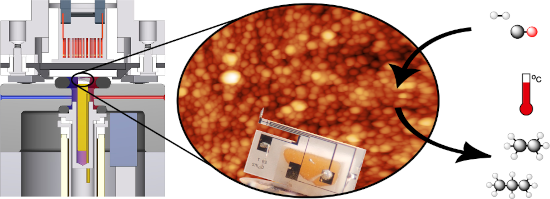
- the same color contrast as in Figure 5c). By observing the root-mean-squared (RMS) surface roughness (Rq) under UHV conditions of 0.17 nm in topography and 50 pA in the current signal, we determine that the surface is rather smooth and flat. In contrast, under oxidation conditions, the surface
- roughness in topography is increased to 0.63 nm because of the more challenging scanning conditions. However, the current signal surface roughness increases by an order of magnitude to 760 pA with respect to Figure 5c. This significant increase in surface roughness, which can be observed as the appearance
- voltage of −1 V applied to the sample. RMS surface roughness and RMS current for each image are, correspondingly, (a) 0.17 nm, (b) 50 pA, (c) 0.63 nm, and (d) 760 pA. AFM images of cobalt nanoparticles on a thick (50 nm) Al2O3 film taken (a) before reaction, at RT and high vacuum, (b) at 430 K and 2 bar


Tailoring of physical properties of RF-sputtered ZnTe films: role of substrate temperature
Beilstein J. Nanotechnol. 2025, 16, 333–348, doi:10.3762/bjnano.16.25
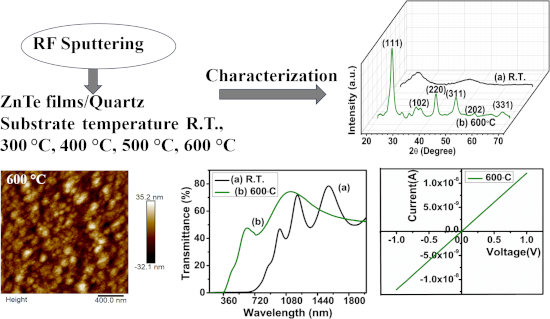
- the optical bandgap of the films can be tuned from 1.47 ± 0.02 eV to 3.11 ± 0.14 eV. The surface morphology of the films studied using atomic force microscopy reveals that there is uniform grain growth on the surface. Various morphological parameters such as roughness, particle size, particle density
- obtained micrographs were then analysed regarding various statistical parameters such as roughness, skewness, kurtosis, and power spectral density using the NanoScope Analysis software. Surface morphology and composition of the films were studied by field-emission scanning electron microscopy attached with
- ) reveal a columnar growth on the surface of the films. The AFM micrographs were analysed using NanoScope software, and various morphological parameters including roughness, particle density, particle size, skewness, and kurtosis were summarized in Table 3. To investigate the quality of the surface and the




Enhancing mechanical properties of chitosan/PVA electrospun nanofibers: a comprehensive review
Beilstein J. Nanotechnol. 2025, 16, 286–307, doi:10.3762/bjnano.16.22

- , and an increase in surface roughness, which reduced the water contact angle, without altering the bulk properties of the material. Similar observations of improved mechanical strength of plasma-treated chitosan/PVA/hydroxyapatite were reported using DBD plasma air, which is considered more cost


Advanced atomic force microscopy techniques V
Beilstein J. Nanotechnol. 2025, 16, 54–56, doi:10.3762/bjnano.16.6

- inaccuracy caused by electrostatic or capillary forces, this is an additional mechanism having an impact on AFM height measurements. Closely related is the measurement of conductivity. Skolaut et al. investigate conductivity in dependence on the roughness of the substrate using alkanethiol self-assembled
Fabrication of hafnium-based nanoparticles and nanostructures using picosecond laser ablation
Beilstein J. Nanotechnol. 2024, 15, 1639–1653, doi:10.3762/bjnano.15.129
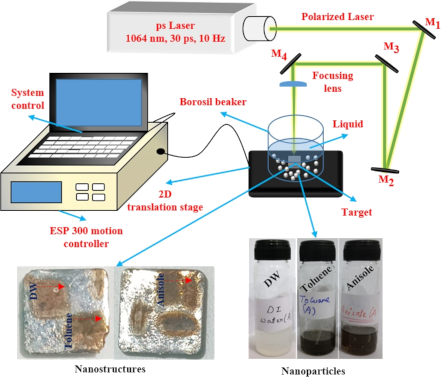
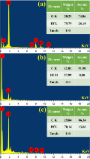
- carbides. For a given Hf target (regarding purity and surface roughness), the ablation products depend critically on the surrounding liquid, input pulse duration, input pulse energy, and the number of pulses incident on the sample. Figure 7 illustrates the EDX data for the particles synthesised in DW




Facile synthesis of size-tunable L-carnosine-capped silver nanoparticles and their role in metal ion sensing and catalytic degradation of p-nitrophenol
Beilstein J. Nanotechnol. 2024, 15, 1576–1592, doi:10.3762/bjnano.15.124
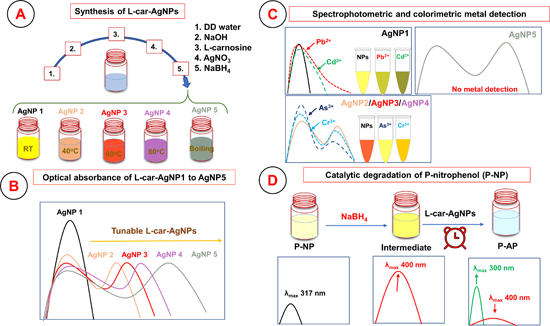
- > ʟ-car-AgNP5. Therefore, the results show maximum SERS enhancement for AgNP4. This is probably because of the greater surface roughness of the nanoparticles, leading to maximum electromagnetic enhancement in AgNP4. The SERS spectra of the ʟ-car-AgNPs are almost similar and show Raman bands at 1623 cm




A biomimetic approach towards a universal slippery liquid infused surface coating
Beilstein J. Nanotechnol. 2024, 15, 1376–1389, doi:10.3762/bjnano.15.111
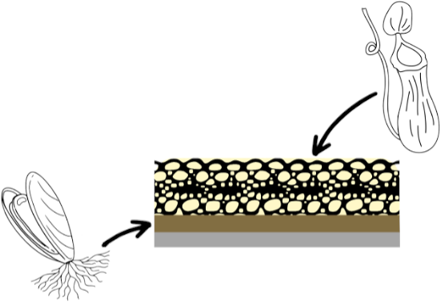
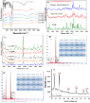
- composition of the layer was determined by XPS. Surface roughness was evaluated using AFM to confirm successful formation of a porous structure. Finally, ordering of specific chemical groups within our PDA SLIPS layer was explored via SFG spectroscopy. Initially, each functionalization step was assessed
- substrates and were representative of a covalent carbon-sulfur bond [43]. AFM highlighted the level of roughness at each stage of the coating to show a rougher topography for the final layer. Results for each layer of the coating are shown in Supporting Information File 1, Figure S1 and reported as root mean
- square roughness (Rq), a useful metric for comparing surface roughness. The final layer with FDT should increase the surface roughness as only a monolayer is expected to bond. The final value layer of the coating that contains FDT showed Rq values of 70.5 ± 23.5 nm for COC, 46.9 ± 26 nm for Si, and 47.8




Investigation of Hf/Ti bilayers for the development of transition-edge sensor microcalorimeters
Beilstein J. Nanotechnol. 2024, 15, 1353–1361, doi:10.3762/bjnano.15.108

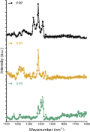
- hafnium makes the film properties, such as the critical temperature and the shape of the superconducting transition, stable over time, which is necessary for successful operation of the detectors. For hafnium, the optimal growth rate was 2 Å/s. Films deposited at this rate have a roughness of about 1 nm
- . Titanium was deposited on hafnium at a growth rate of 0.5 Å/s. The roughness of hafnium films coated with titanium decreased compared to hafnium-only films. Because of the slow deposition rate of Ti, small crystallites with sizes below 10 nm are visible in Figure 2. The A1–A4 samples of square geometry


Hymenoptera and biomimetic surfaces: insights and innovations
Beilstein J. Nanotechnol. 2024, 15, 1333–1352, doi:10.3762/bjnano.15.107
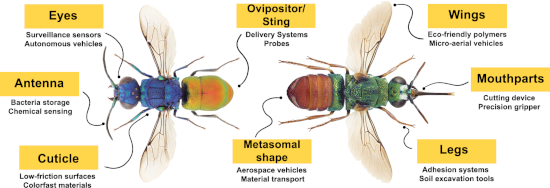
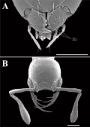
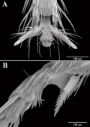
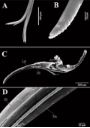
- morphological features and the principles behind their functionality, we aim to identify key characteristics that can inspire innovative materials and technologies. Review General features of body cuticle The cuticle of Hymenoptera exhibits several fascinating properties. Cuticle roughness The cuticle surfaces
- and durability. For instance, low-friction coatings inspired by Hymenoptera cuticles can be applied to materials to reduce wear and tear, thereby enhancing performance, and extending the lifespan of the material. Surface roughness can have beneficial effects on the overall aerodynamic characteristics
- of artificial surfaces, such as rough coatings on high-speed trains [12], dimples on golf balls [13], and shark skin denticles on aircrafts [14]. Some micromachines can also benefit from micro- and nanostructures that create roughness on surfaces and influence aerodynamics and heat transfer [15]. The





Mn-doped ZnO nanopowders prepared by sol–gel and microwave-assisted sol–gel methods and their photocatalytic properties
Beilstein J. Nanotechnol. 2024, 15, 1283–1296, doi:10.3762/bjnano.15.104
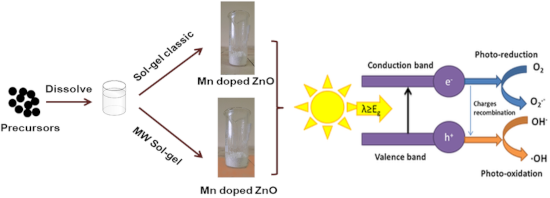
- previous studies, the authors demonstrated that Mn-doped ZnO films exhibit superior optical and piezoelectric properties compared to undoped ZnO, with a more compact microstructure and reduced surface roughness [41]. Building on this foundation, the current article aims to focus on the methods of


The role of a tantalum interlayer in enhancing the properties of Fe3O4 thin films
Beilstein J. Nanotechnol. 2024, 15, 1253–1259, doi:10.3762/bjnano.15.101

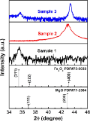
- . Sample 3, grown on the MgO/Ta/SiO2 multilayer structure, reveals the largest value of 31.4 ± 1.4 nm. In addition, the Fe3O4 samples present quite different root-mean-square (RMS) roughness values of 0.94 ± 0.09 nm, 1.29 ± 0.14 nm, and 3.58 ± 0.58 nm for samples 1, 2 and 3, respectively. Sample 3 with the
- highest value has the roughest surface among the three. These results indicate that the substrate type does have an effect on grain size and roughness of Fe3O4 thin films. Tantalum in the multilayer structure prevents the diffusion of oxygen atoms from SiO2 into MgO leading to enhanced stability of MgO
- and RMS roughness, and in the formation of a polycrystalline structure. Changes in grain size and structure have a strong impact on saturation magnetization and coercivity of the Fe3O4 thin films. Our results indicate that the combination of Ta and MgO buffer layers can influence the morphology and


Direct electron beam writing of silver using a β-diketonate precursor: first insights
Beilstein J. Nanotechnol. 2024, 15, 1117–1124, doi:10.3762/bjnano.15.90

- expense of a reduced shape fidelity [9]. This is also true for the recently established direct electron beam writing of silver, which demonstrated high purities of up to 74 atom % [27] but with large surface roughness and low vertical growth rates [28][29][30]. For silver, only few solid metalorganic


Interface properties of nanostructured carbon-coated biological implants: an overview
Beilstein J. Nanotechnol. 2024, 15, 1041–1053, doi:10.3762/bjnano.15.85
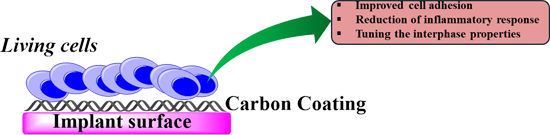
- environments represented by implant–tissue interfaces [18] through the tuning of different parameters (i.e., surface roughness and potential as well as hydrophobicity). Cells and biomolecules can selectively adhere to or be repelled from artificial implanted surfaces, triggering several metabolic pathways of
- roughness, inducing macrophage polarization to the pro-inflammatory state without producing a great excess of pro-inflammatory factors. Furthermore, GO-coated implants showed a reduction of the expression of the fibrosis-related protein α-SMA and collagen deposition in the presence of both fibroblasts and
- both anticorrosion and antithrombotic elements. The authors used PVD for the deposition of a micrometer-thick coating on stainless steel, controlling morphology, roughness, and mechanical parameters. The coated surfaces showed a reduction of hemolysis of 40% and a corrosion resistance increment of 96



Atomistic insights into the morphological dynamics of gold and platinum nanoparticles: MD simulations in vacuum and aqueous media
Beilstein J. Nanotechnol. 2024, 15, 995–1009, doi:10.3762/bjnano.15.81
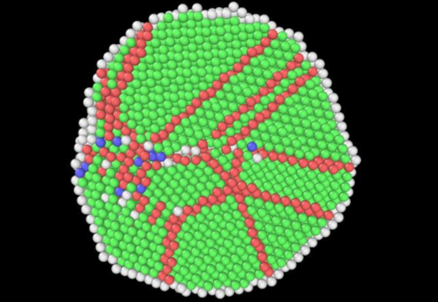
- measure of surface roughness, as well as a proxy to NP reactivity, is the surface area-to-volume ratio [83]. Its variation with the NP diameter for Au (blue line) and Pt (orange line) NPs at 100 K is shown in Figure 8. In general, it is expected to be inversely proportional to where N is the number of


Beyond biomimicry – next generation applications of bioinspired adhesives from microfluidics to composites
Beilstein J. Nanotechnol. 2024, 15, 965–976, doi:10.3762/bjnano.15.79
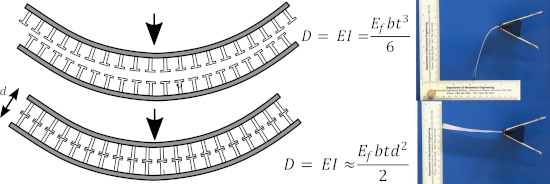
- surface roughness and are far more cost-effective. The significant influence of mechanical properties on identical fiber designs has also been extensively studied by our group and others, including work on shape memory polymers (SMPs) for biomimetic pillars [29]. These uniformly mushroom-shaped SMP fibers


The effect of age on the attachment ability of stick insects (Phasmatodea)
Beilstein J. Nanotechnol. 2024, 15, 867–883, doi:10.3762/bjnano.15.72

- 1 µm and 12 µm roughness according to Büscher and Gorb [33] to test for differences in the attachment performance on different degrees of surface roughness during ageing. This range of substrate roughness was selected to test for different aspects of the functionality of the attachment pads without
- major influences of the claws [33][37]. On smooth surfaces (0 µm), smooth pads generate proper contact with the surface. Microrough surfaces interfere with the contact formation of smooth pads; however, the dimension of the nubs on the euplantulae yield different responses to the roughness because fine
- roughness (1 µm) matches the size of the tips and course roughness (12 µm) matches the size of the entire nubs [33]. The combination of these three levels of roughness was used to investigate potential effects in the three mentioned perspectives of the attachment pads. For details on the fabrication process


Effect of repeating hydrothermal growth processes and rapid thermal annealing on CuO thin film properties
Beilstein J. Nanotechnol. 2024, 15, 743–754, doi:10.3762/bjnano.15.62
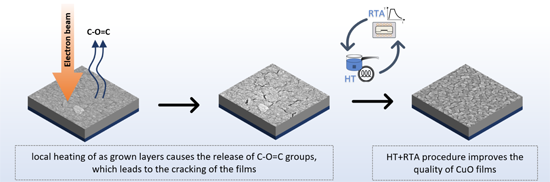
- discontinuities are observed on the surface, which are narrow and shallow compared to the average thickness of the films. Based on the surface parameters determined from AFM data, that is, root mean square (Rq) and arithmetic average (Ra) of height deviations, it was noticed that the surface roughness
- represents the sum of chemical potential and surface dipoles, which are sensitive to numerous factors. In addition to the stoichiometry of the material and the presence of impurities, their value may also be affected by, among others, surface roughness, exposed crystal plane, and exposure to radiation or