Search results
Search for "scale-up" in Full Text gives 63 result(s) in Beilstein Journal of Nanotechnology.
A visible-light photodetector based on heterojunctions between CuO nanoparticles and ZnO nanorods
Beilstein J. Nanotechnol. 2023, 14, 1018–1027, doi:10.3762/bjnano.14.84
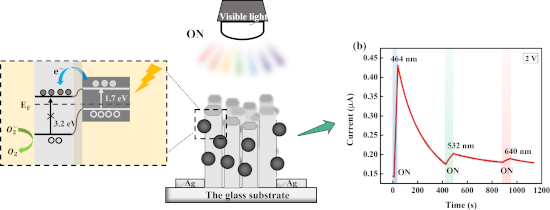
- , these methods still face problems, including the requirements of controlling defects, scale-up for mass production, or troubles relating to decoration uniformity [31][32]. Another method is to form heterojunctions of ZnO and other narrow-bandgap semiconductors (NiO [33], PbS [34], CdS [35], and MoS2[36


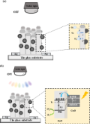
Upscaling the urea method synthesis of CoAl layered double hydroxides
Beilstein J. Nanotechnol. 2023, 14, 927–938, doi:10.3762/bjnano.14.76
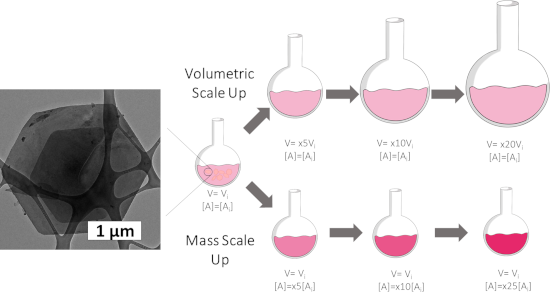
- development of efficient and reproducible large-scale synthesis processes. Unfortunately, reliable methods that allow for the production of large quantities of two-dimensional LDHs with well-defined morphologies and high crystallinity are very scarce. In this work, we carry out a scale-up of the urea-based
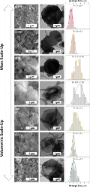
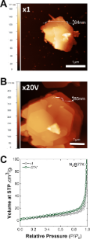
- CoAl-LDH synthesis method. We thoroughly study the effects of the mass scale-up (25-fold: up to 375 mM) and the volumetric scale-up (20-fold: up to 2 L). For this, we use a combination of several structural (XRD, TGA, and N2 and CO2 isotherms), microscopic (SEM, TEM, and AFM), magnetic (SQUID), and
- spectroscopic techniques (ATR-FTIR, UV–vis, XPS, ICP-MS, and XANES-EXAFS). In the case of the volumetric scale-up, a reduction of 45% in the lateral dimensions of the crystals (from 3.7 to 2.0 µm) is observed as the reaction volume increases. This fact is related to modified heating processes affecting the


Antibody-conjugated nanoparticles for target-specific drug delivery of chemotherapeutics
Beilstein J. Nanotechnol. 2023, 14, 912–926, doi:10.3762/bjnano.14.75
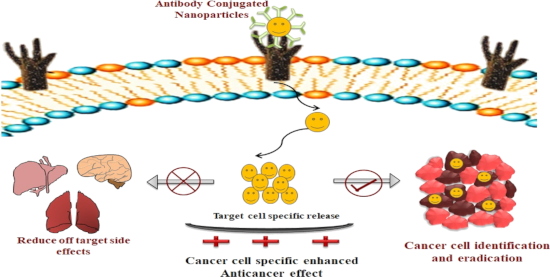
- lack of tumor specificity and selectivity, antibody selection issues, immune reactions against ACNPs, stability of ACNPs, heterogeneity of tumors, regulatory approvals, scale-up and production, and cost considerations. Advantages of antibody-conjugated NPs. Schematic representation of (a) an antibody



Biomimetics on the micro- and nanoscale – The 25th anniversary of the lotus effect
Beilstein J. Nanotechnol. 2023, 14, 850–856, doi:10.3762/bjnano.14.69

- tune and then scale up the fabrication of tools to handle nanofibres in industrial processes. Fibre–surface interactions are also the main theme in “Growing up in a rough world: scaling of frictional adhesion and morphology of the Tokay gecko (Gekko gecko)” by Cobos and Higham [15]. In the excitement


Carbon nanotube-cellulose ink for rapid solvent identification
Beilstein J. Nanotechnol. 2023, 14, 535–543, doi:10.3762/bjnano.14.44
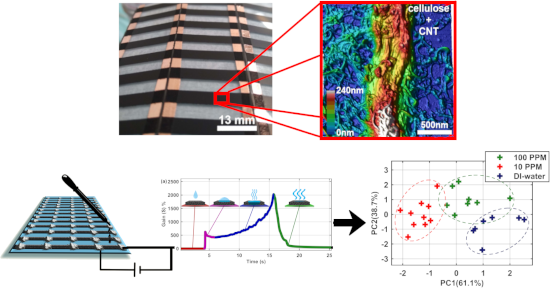
- ) was performed in different devices and on flexible and rigid substrates, providing a step forward towards scale-up and commercialization of the technology. Experimental Materials and apparatus Microfibrillated cellulose (MFC) with a nominal fiber width of 50 nm and several hundred micrometers of
- scale-up and reproducibility limitations of other liquid sensor devices and has great potential to be applied in various industrial fields for liquid monitoring. (a) Array of transducers; (b) histogram of sensor resistance distribution; (c) transducer resistance change as a function of time during


On the use of Raman spectroscopy to characterize mass-produced graphene nanoplatelets
Beilstein J. Nanotechnol. 2023, 14, 509–521, doi:10.3762/bjnano.14.42
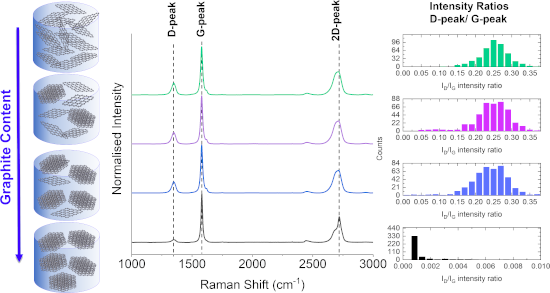
- need to maximise the amount of GNP material extracted, while to maintain product quality, it is important to prevent sediment accidentally ending up in the extracted GNP fraction. To allow for a commercially viable, industrial scale-up, it is important to understand the performance of this separation


Conjugated photothermal materials and structure design for solar steam generation
Beilstein J. Nanotechnol. 2023, 14, 454–466, doi:10.3762/bjnano.14.36
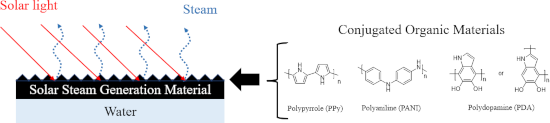
- hydrophobicity allows the material to float on water. Microporous structures were obtained by NaCl particulate leaching. The pore sizes could be flexibly controlled by the size of the NaCl template. This method is simple, low-cost, and easy to scale up. The surface structures of the foam were visualized by SEM


Bismuth-based nanostructured photocatalysts for the remediation of antibiotics and organic dyes
Beilstein J. Nanotechnol. 2023, 14, 291–321, doi:10.3762/bjnano.14.26
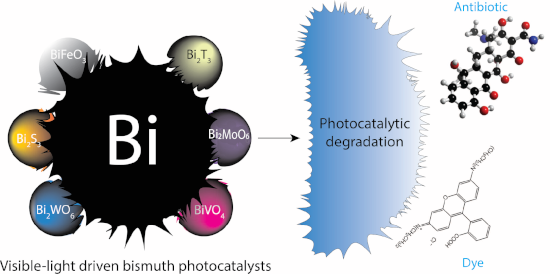
- operational factors affect how well they perform. These parameters need to be investigated and optimised to scale up the process to design a system that is cost-effective, energy-efficient, and effective in treating water. Some of the factors that can affect the performance of the photocatalysts include the


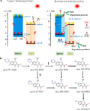
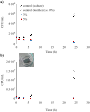
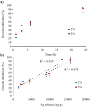
Antimicrobial and mechanical properties of functionalized textile by nanoarchitectured photoinduced Ag@polymer coating
Beilstein J. Nanotechnol. 2023, 14, 95–109, doi:10.3762/bjnano.14.11
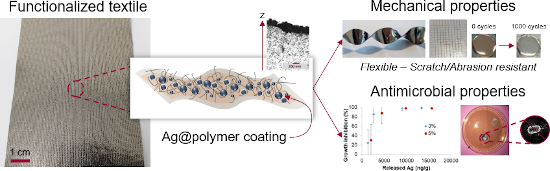
- adhesion, etc.) [32][33]. The deposition techniques are also costly, time-consuming and restrictive (under vacuum, numerous steps, toxic chemicals, etc.), which limits industrial scale-up options. Nanometal-polymer coatings offer an interesting alternative to the aforementioned metallized textiles. Such



A review on the green and sustainable synthesis of silver nanoparticles and one-dimensional silver nanostructures
Beilstein J. Nanotechnol. 2021, 12, 102–136, doi:10.3762/bjnano.12.9
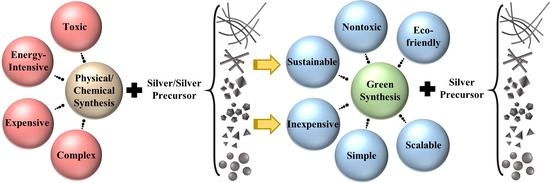
- attention has been recently given to plant-mediated synthesis because of its simple culturing procedures and potential for scale-up [181][219]. Various green synthesis studies from the literature were gathered and compared, giving one a clear and broad overview of the green synthesis processes. We then show
- , preparation of AgNPs using this method does not need any specific equipment, intense temperature, or pressure conditions [235]. The scale-up of the system is also relatively simple [235]. However, the downside of this method is the low productivity of particles per volume as a result of low reactant
- size distribution and morphology [241]. The disadvantages of this method are associated with the high process cost, complexity, and low scale-up capability [158]. 2.2.4 Wet chemical synthesis. Currently, most synthesis methods still rely on wet chemical reduction using a chemical reducing agent. The


Long-term stability and scale-up of noncovalently bound gold nanoparticle-siRNA suspensions
Beilstein J. Nanotechnol. 2019, 10, 2568–2578, doi:10.3762/bjnano.10.248
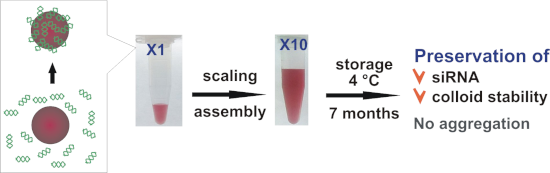
- nanoconstruction demonstrated integrity of the siRNA duplex and high stability of the siRNA surface density during storage for seven months at 4 °C. Thus, it can be concluded that it is possible to scale-up the synthesis of noncovalent AuNP-siRNA and to obtain a nanoconstruction possessing high stability in terms
- of physicochemical characteristics and siRNA surface density for a long period. Keywords: colloidal stability; gold nanoparticles; scale-up; siRNA delivery; siRNA duplex stability; therapeutic nucleic acids; Introduction Drug delivery to cells is only one application of nanoparticles in biomedicine
- decided to determine whether it is possible to scale-up the synthesis and to store a core of nanoconstructions with an example of noncovalent AuNP-siRNA without loss of their physicochemical properties and the integrity of siRNA duplexes for an extended period. To do this, we analyzed the colloidal


Semitransparent Sb2S3 thin film solar cells by ultrasonic spray pyrolysis for use in solar windows
Beilstein J. Nanotechnol. 2019, 10, 2396–2409, doi:10.3762/bjnano.10.230
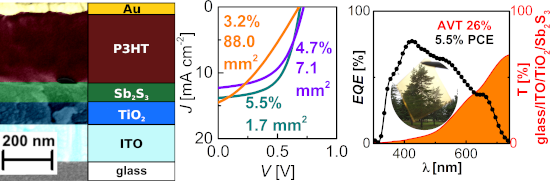
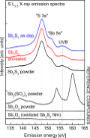
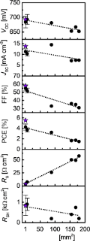
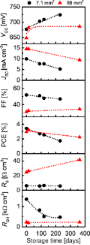
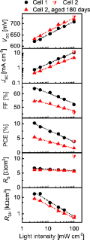
- -deposited Sb2S3 solar cells. An average visible transparency (AVT) of 26% of the back-contact-less ITO/TiO2/Sb2S3 solar cell stack in the wavelength range of 380–740 nm is attained by tuning the Sb2S3 absorber thickness to 100 nm. In scale-up from mm2 to cm2 areas, the Sb2S3 hybrid solar cells show a



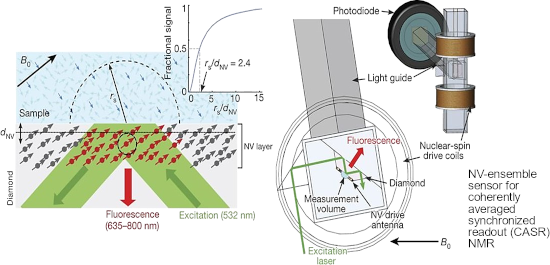
Nitrogen-vacancy centers in diamond for nanoscale magnetic resonance imaging applications
Beilstein J. Nanotechnol. 2019, 10, 2128–2151, doi:10.3762/bjnano.10.207


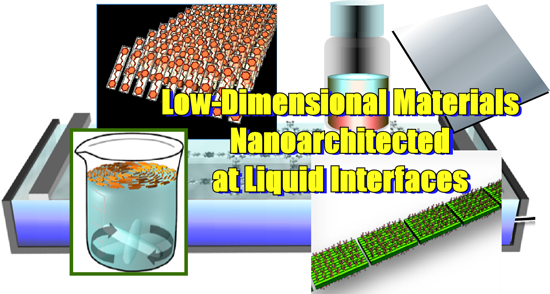
Materials nanoarchitectonics at two-dimensional liquid interfaces
Beilstein J. Nanotechnol. 2019, 10, 1559–1587, doi:10.3762/bjnano.10.153
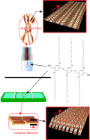
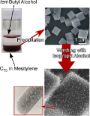
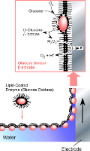
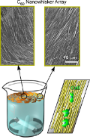
- . This fact suggests that crystal lattice and molecular packing within low-dimensional fullerene assemblies significantly modify the optoelectronic properties. The rapid synthesis with the possibility to scale-up and the enhanced optoelectronic properties make the above-mentioned nanoarchitectonics













Porous N- and S-doped carbon–carbon composite electrodes by soft-templating for redox flow batteries
Beilstein J. Nanotechnol. 2019, 10, 1131–1139, doi:10.3762/bjnano.10.113
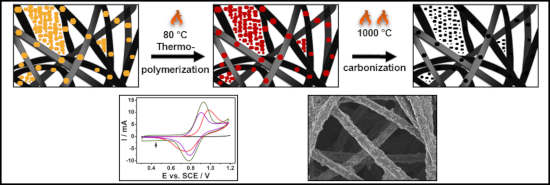
- possible to scale-up the method to industrial standards [21]. In earlier studies we reported on a salt-templating method, where we embedded a PAN-based carbon felt into a eutectic mixture containing zinc chloride and sodium chloride mixed with an ionic liquid as the carbon source [22]. Herein, we present



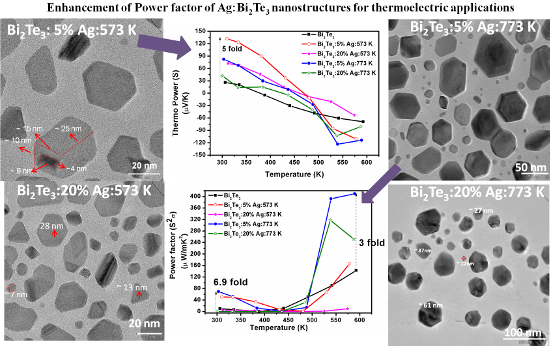
Enhancement in thermoelectric properties due to Ag nanoparticles incorporated in Bi2Te3 matrix
Beilstein J. Nanotechnol. 2019, 10, 634–643, doi:10.3762/bjnano.10.63
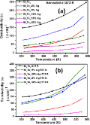
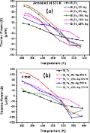
- conditions, one can control S, σ, or k independently. The above approaches showed issues regarding high cost and complicated syntheses that were difficult to repeat and unsuitable for scale-up. The enhancement in TE properties through Ag metal in a Bi2Te3 matrix motivated us to work on a detailed
- investigation of Ag in a Bi2Te3 matrix while focusing on an easy, reproducible low-cost synthesis suitable for scale-up. We show how to tune S and σ independently to achieve high S2σ values. One objective is to see which fraction of metal nanoparticles is required for the TE enhancement of a Bi2Te3 matrix and



Polymorphic self-assembly of pyrazine-based tectons at the solution–solid interface
Beilstein J. Nanotechnol. 2019, 10, 494–499, doi:10.3762/bjnano.10.50
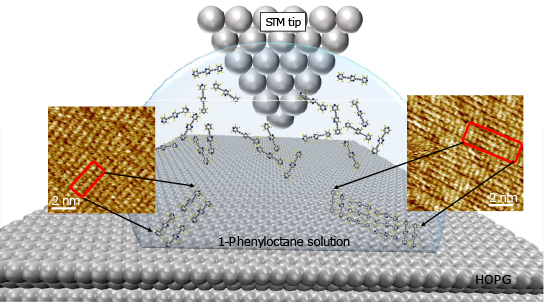
- topographic image of the 2,5-bis(pyridin-4-ylethynyl)pyrazine molecular monolayer at the 1-phenyloctane–HOPG interface. Molecules of 1 self-assemble to form ordered structures on a very large scale up to 500 nm × 500 nm. As clearly discernible in Figure 2a, these molecules undergo polymorphic self-assembly


Block copolymers for designing nanostructured porous coatings
Beilstein J. Nanotechnol. 2018, 9, 2332–2344, doi:10.3762/bjnano.9.218
- , robust, and well-consolidated technique that guarantees high performance and easy scale up, as compared to other more fascinating (albeit still at the laboratory scale) approaches, such as the use of magnetic adsorbing materials [116] or advanced oxidized processes [117][118]. On the other hand, future


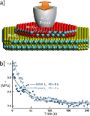
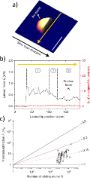
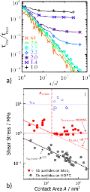
Recent highlights in nanoscale and mesoscale friction
Beilstein J. Nanotechnol. 2018, 9, 1995–2014, doi:10.3762/bjnano.9.190


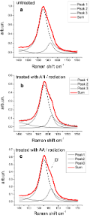
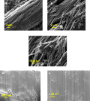
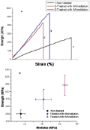
Single-step process to improve the mechanical properties of carbon nanotube yarn
Beilstein J. Nanotechnol. 2018, 9, 545–554, doi:10.3762/bjnano.9.52
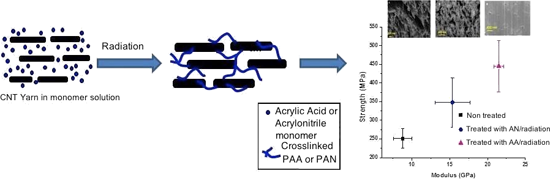
- high-strength CNT yarns continuously with industrial scale-up [16]. To date, the solution is to increase the interactions among CNTs in a fiber (covalent bonds among the tubes). In doing so, the sliding of CNTs will be minimized and this may lead to an increase in the mechanical strength of the fiber




Wafer-scale bioactive substrate patterning by chemical lift-off lithography
Beilstein J. Nanotechnol. 2018, 9, 311–320, doi:10.3762/bjnano.9.31
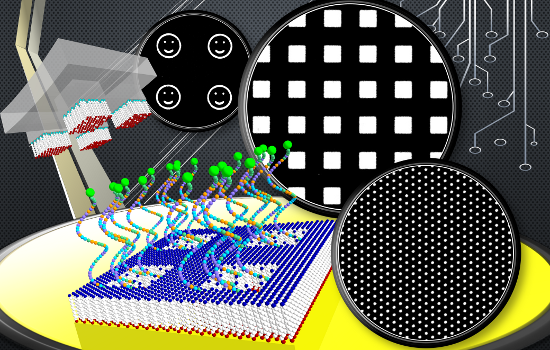
- the CLL process can also be made very uniform over a large area. As demonstrated in Figure 6, fluorescence images obtained from distinct sampling spots on a 4 inch silicon wafer substrate represent the same results with minimized signal fluctuation. The high repeatability and scale up capability of


Co-reductive fabrication of carbon nanodots with high quantum yield for bioimaging of bacteria
Beilstein J. Nanotechnol. 2018, 9, 137–145, doi:10.3762/bjnano.9.16
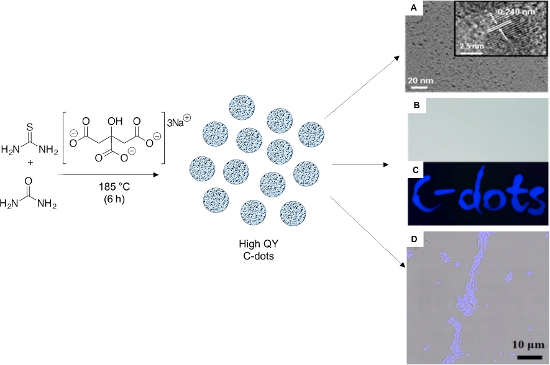
- -dots with co-reduction using urea and thiourea is much higher than when urea or thiourea are used individually during reduction. Moreover, during the scale-up synthesis, it was determined that the C-dots tend to aggregate due to their larger magnitude in mass, leading to an increase in the size of the
- -reduction method with urea and thiourea to obtain C-dots, the scale-up synthesis of C-dots, TEM and size distribution of Sb50, XRD patterns of Sa, Sb and Se, Raman spectra of Sa, Sb and Se, deconvoluted C 1s XPS spectra of different C-dots with peak area (A) ratios of the sp3 C or oxidized C to the sp2 C


Systematic control of α-Fe2O3 crystal growth direction for improved electrochemical performance of lithium-ion battery anodes
Beilstein J. Nanotechnol. 2017, 8, 2032–2044, doi:10.3762/bjnano.8.204
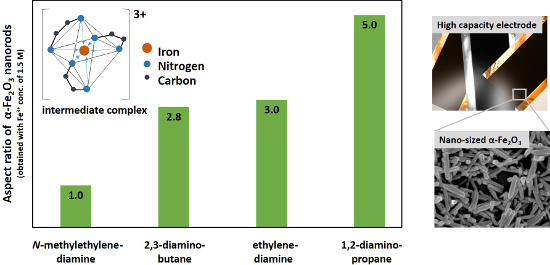
- can be easily removed. With this technique, expensive, difficult to scale-up, structure-directing approaches involving sacrificial hard templates can be avoided. The aspect ratio of the resulting nanorod morphology is adjustable by the type of diamine derivative used and other reaction parameters. Li


The longstanding challenge of the nanocrystallization of 1,3,5-trinitroperhydro-1,3,5-triazine (RDX)
Beilstein J. Nanotechnol. 2017, 8, 452–466, doi:10.3762/bjnano.8.49
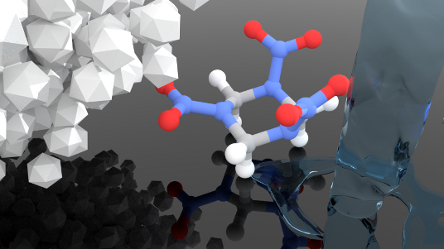
- crystallize RDX at a submicrometer scale or smaller. Several key points are highlighted then discussed, such as the smallest particle size and its morphology, and the scale-up capacity and the versatility of the process. Keywords: crystallization; nanoparticles; RDX; review; submicrometer; 1,3,5
- ][67][68][69]. The formed n-RDX particles had a mean particle diameter ranging from 110 to 220 nm and an irregular spherical morphology. He performed a scale-up of the RESS process in order to increase the production capacity of RDX to 6 g/h but with a CO2 consumption of 35 kg/h. Through RESS, a slight
- acetone around 5 wt %, whereas scCO2 is formed from 74–500 bar for a solubility from null to 0.025 wt %. The SFE technology has proven its high level of versatility and reliability, and is now entering advanced stages of development. Scale-up studies are performed and advanced in situ characterization is


Study of the surface properties of ZnO nanocolumns used for thin-film solar cells
Beilstein J. Nanotechnol. 2017, 8, 446–451, doi:10.3762/bjnano.8.48
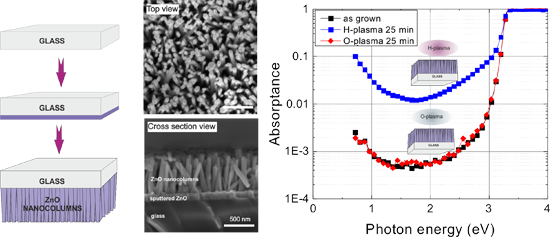
- [6][14][15]. The last mentioned is an attractive and preferable method for growing one-dimensional structures of ZnO, as it is simple, does not require expensive equipment, is safe and environmentally friendly since water is used as a solvent, and it is easy to scale-up for further mass production