Search results
Search for "scanning electron microscopy" in Full Text gives 779 result(s) in Beilstein Journal of Nanotechnology. Showing first 200.
Visualizing nanostructures in supramolecular hydrogels: a correlative study using confocal and cryogenic scanning electron microscopy
Beilstein J. Nanotechnol. 2025, 16, 2274–2284, doi:10.3762/bjnano.16.156
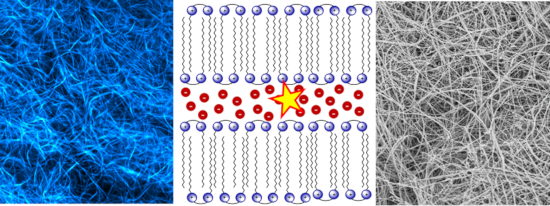
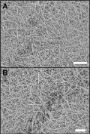
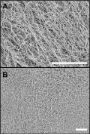
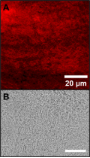
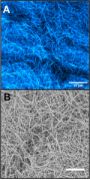
- ) fluorophores were imaged using confocal laser scanning microscopy (CLSM) of fully solvated gels and cryogenic scanning electron microscopy (cryo-SEM) was used to observe the corresponding xerogels. The DPP@Gel systems exhibit strong fluorescence and are effectively imaged using CLSM, with fibre morphologies
- [11]. Cryogenic scanning electron microscopy (cryo-SEM) bypasses many of these resolution limits by preserving the hydrogel through rapid freezing and subsequent fracture, thereby maintaining native-like morphology in the microscope in the form of a xerogel (no solvent) nature [12][13][14]. High



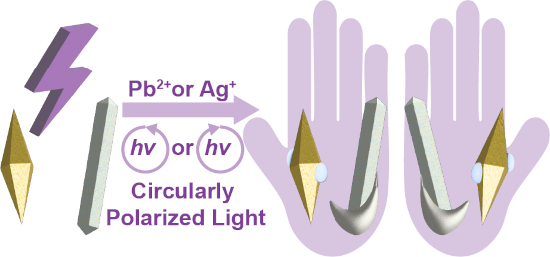
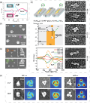
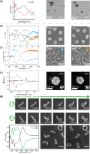
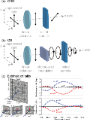
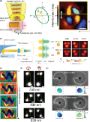
Chiral plasmonic nanostructures fabricated with circularly polarized light
Beilstein J. Nanotechnol. 2025, 16, 2245–2264, doi:10.3762/bjnano.16.154





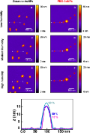
Ultrathin water layers on mannosylated gold nanoparticles
Beilstein J. Nanotechnol. 2025, 16, 2183–2198, doi:10.3762/bjnano.16.151
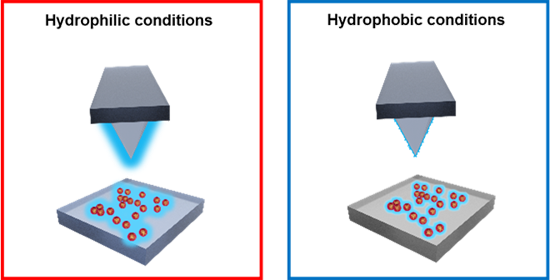
- short oligo(ethylene glycol) chains. The particles were first characterized by dynamic light scattering (DLS) and zeta potential (ZP) measurements in solution, and by scanning electron microscopy (SEM) and scanning transmission electron microscopy (STEM) in vacuum. Samples were adsorbed on flat



Microplastic pollution in Himalayan lakes: assessment, risks, and sustainable remediation strategies
Beilstein J. Nanotechnol. 2025, 16, 2144–2167, doi:10.3762/bjnano.16.148
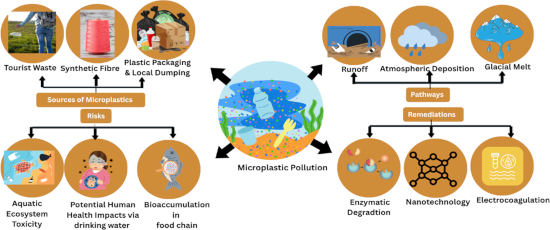
- polymers that result from local tourist waste and those transported by atmospheric deposition in Himalayan lakes of high elevation [37]. 4.2.2 Microscopy. Microscopic techniques remain crucial for the initial description of MPs, particularly when assessing their physical properties. Scanning electron
- microscopy (SEM) produces high-resolution images of particle shapes. It also indicates surface wear and tear patterns that reflect how old the MP is and how long it has been in the environment [38]. Ease of operation and minimal cost of optical microscopy make it widely used, despite being less sophisticated


Molecular and mechanical insights into gecko seta adhesion: multiscale simulations combining molecular dynamics and the finite element method
Beilstein J. Nanotechnol. 2025, 16, 2055–2076, doi:10.3762/bjnano.16.141
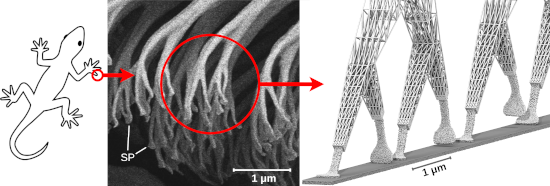
- to more spatula–substrate sites is straightforward but would increase runtime. Models Multiscale seta–spatula model A seta branches into spatulae as seen in scanning electron microscopy (SEM) images of gecko setae (Figure 1). A single seta on a gecko’s foot can have dozens of sub-branches, which






Stereodiscrimination of guests in chiral organosilica aerogels studied by ESR spectroscopy
Beilstein J. Nanotechnol. 2025, 16, 2034–2054, doi:10.3762/bjnano.16.140
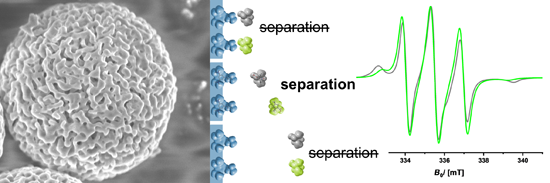
- prepare chiral oSILs by co-condensation of Si(OiPr)4 with a sol–gel precursor that already contains the amino acid. An example is an Ala-modified 1,3-bis(triisopropoxysilyl)aniline [45][49] as shown in Scheme 1. The resulting material was characterized by scanning electron microscopy (SEM; Figure 2a); it
- using a Bruker AVANCE III spectrometer operating at 400 MHz equipped with a 4 mm PH MAS DVT 400W1 BL4 N-P/H CGR probe head with magic angle gradient. 1H NMR measurements were performed on a Bruker Ascend 400 MHz spectrometer. Scanning electron microscopy and energy-dispersive X-ray spectroscopy were




Beyond the shell: exploring polymer–lipid interfaces in core–shell nanofibers to carry hyaluronic acid and β-caryophyllene
Beilstein J. Nanotechnol. 2025, 16, 2015–2033, doi:10.3762/bjnano.16.139
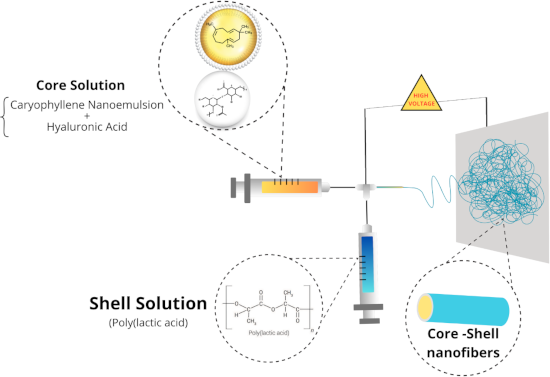
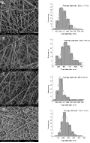
- fibers without the lipid core. Furthermore, maintaining ambient relative humidity below 45% proved essential for processing stability. Comprehensive morphological characterization via scanning electron microscopy confirmed the uniformity of the fibers. At the same time, confocal microscopy, cross
- core–shell structure indicates the absence of core material at the surface, and that the shell structure does not possess pores that would allow permeation or direct contact of water molecules with the core, as evidenced by scanning electron microscopy (SEM) images. Electrospun nanofibers organize into
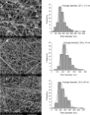
- average of readings performed in triplicate for each sample analyzed using the ZetaSizer software 7.11. Scanning electron microscopy The morphology of the obtained nanofibers (porosity, average diameter, uniformity, and roughness) was evaluated using a scanning electron microscope under different




The cement of the tube-dwelling polychaete Sabellaria alveolata: a complex composite adhesive material
Beilstein J. Nanotechnol. 2025, 16, 1998–2014, doi:10.3762/bjnano.16.138
- % paraformaldehyde in phosphate-buffered saline, rinsed, and air-dried. Worms were left in the remaining proximal part of the tube and were provided with glass beads (425–600 µm in diameter; Sigma) to reconstruct the missing part [25]. Scanning electron microscopy and elemental composition analyses For secondary
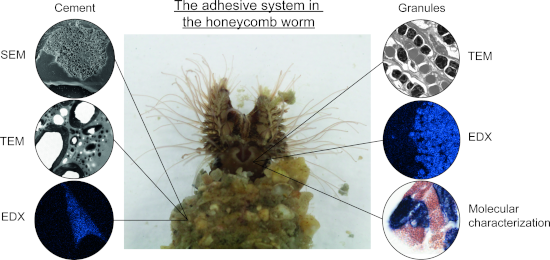
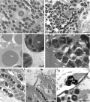
- composition of cement cell granules, we used energy-dispersive X-ray spectroscopy (EDS) coupled with scanning electron microscopy (SEM). Elemental composition was measured on four secretory granules of both types of cement cells in the parathoracic part of worms embedded in Spurr resin (TEM blocks). Using the
- the inclusions of the heterogeneous granules occurring through a still unknown process. This swelling was also suggested in P. californica based on the similar bright appearance of heterogeneous granule inclusions and spheroid cortex under scanning electron microscopy using backscattered electrons, as



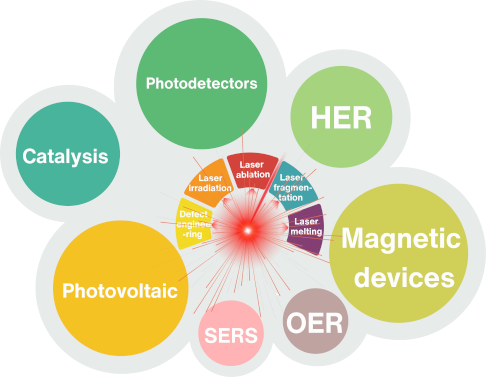
Laser ablation in liquids for shape-tailored synthesis of nanomaterials: status and challenges
Beilstein J. Nanotechnol. 2025, 16, 1963–1997, doi:10.3762/bjnano.16.137
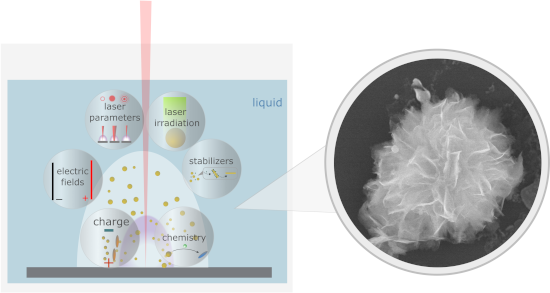
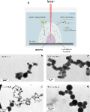
- observed the formation of a mixture of nanosheets and spherical NPs for the ablation using the 1064 nm laser wavelength, while at 532 nm only spherical NPs were observed. The authors observed nanosheets only in scanning electron microscopy, while transmission electron microscopy showed only spherical




Mechanical property measurements enabled by short-term Fourier-transform of atomic force microscopy thermal deflection analysis
Beilstein J. Nanotechnol. 2025, 16, 1952–1962, doi:10.3762/bjnano.16.136
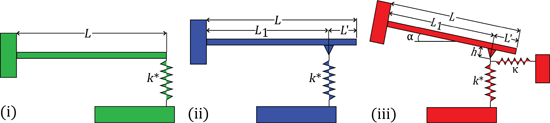
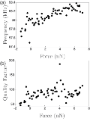
- glass colloid probe on a HOPG sample (red circles), and (d) a diamond-coated silicon on silicon sample (blue circles). A red dashed line in each figure shows a fit to the experimental data using Equation 7. (a, b) Scanning electron microscopy images of the borosilicate glass colloid glued onto the
- tipless silicon cantilever. (c, d) Scanning electron microscopy images of the PtSi-coated AFM cantilever with integrated tip. Mechanical properties of the examined samples. Values for silicon, HOPG, and platinum are from [17], [18], and [19], respectively. The values for PEO and PDMS were measured using a




Evaluating metal-organic precursors for focused ion beam-induced deposition through solid-layer decomposition analysis
Beilstein J. Nanotechnol. 2025, 16, 1942–1951, doi:10.3762/bjnano.16.135
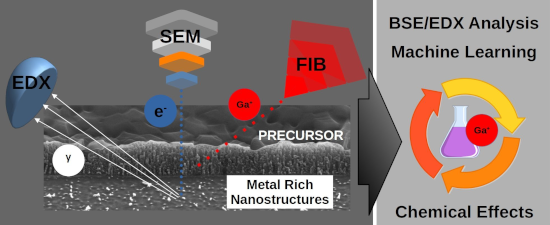
- create a new precursor, extensive testing using specialized gas injection systems is required along with time-consuming and costly chemical analysis typically conducted using scanning electron microscopy (SEM). This process can be quite challenging due to its complexity and expense. Here, the response of
- -dispersive X-ray spectroscopy (EDX); focused ion beam (FIB); focused ion beam-induced deposition (FIBID); machine learning; scanning electron microscopy (SEM); Introduction A variety of nanomanufacturing techniques, such as optical and electron-beam lithography, nanoimprint lithography, atomic layer
- studies. Here, we present a pathway for unraveling how the chemical composition of metal-organic precursors affects their decomposition when irradiated with FIB in the form of supported layers. A decomposition process of the studied layer was quantitatively monitored by scanning electron microscopy


Beyond the bilayer: multilayered hygroscopic actuation in pine cone scales
Beilstein J. Nanotechnol. 2025, 16, 1695–1710, doi:10.3762/bjnano.16.119
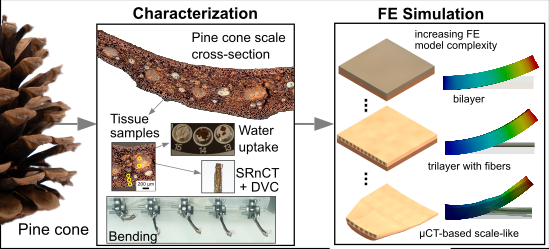
- electron microscopy (abaxial: 9%, adaxial: 1%, [18]). Although their exact values of measured longitudinal expansion may differ from ours due to differences in methodology and pine species studied, our results do support the ability of individual fibers to bend independently in response to moisture changes
- abaxial side exhibiting about 70% greater median shrinkage (Table 1). This gradient is consistent with spiral secondary cell wall thickenings only being observed on the abaxial side, leading to a differential longitudinal extension rate within the sclerenchyma fibers measured using environmental scanning


Prospects of nanotechnology and natural products for cancer and immunotherapy
Beilstein J. Nanotechnol. 2025, 16, 1644–1667, doi:10.3762/bjnano.16.116

- CXCL9/10 expression in Schwann cells [114]. Particle size and stability of the formulation in the patent were characterized using scanning electron microscopy (SEM). The nanoparticles demonstrated enhanced uptake in HepG2 cells, as confirmed by flow cytometry and confocal microscopy, and achieved a


Venom-loaded cationic-functionalized poly(lactic acid) nanoparticles for serum production against Tityus serrulatus scorpion
Beilstein J. Nanotechnol. 2025, 16, 1633–1643, doi:10.3762/bjnano.16.115
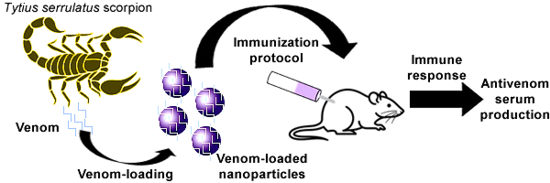
- analysis supported small and narrow-sized cationic functionalized nanoparticles. Atomic force microscopy and scanning electron microscopy images showed nanoparticles with a spherical and smooth shape. The stability of tested formulations was accessed for six weeks, and the sustained release of proteins
- corroborates the high encapsulation efficiency obtained by the BCA assay. Field emission gun scanning electron microscopy and atomic force microscopy analyses Field emission gun scanning electron microscopy (FEGSEM) and atomic force microscopy (AFM) analyses were realized to access shape and surface features
- . serrulatus venom protein-loaded PLA nanoparticles at 1.0% (NPs + Tsv 1.0%). MM: molecular mass marker. Gel stained with Coomassie brilliant blue R-250. 2D and 3D atomic force microscopy and field emission gun scanning electron microscopy images, respectively, of formulations of Tityus serrulatus venom-loaded


Nanotechnology-based approaches for the removal of microplastics from wastewater: a comprehensive review
Beilstein J. Nanotechnol. 2025, 16, 1607–1632, doi:10.3762/bjnano.16.114
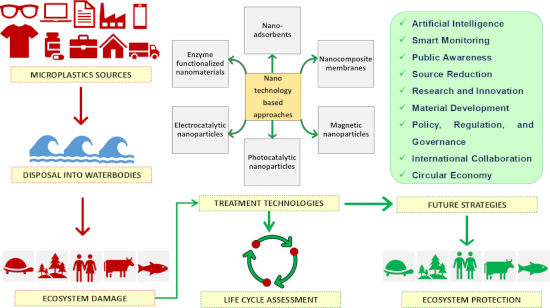
- electron microscopy combined with energy dispersive X-ray spectroscopy, and terahertz time domain spectroscopy. These modern approaches enhance both accuracy and efficiency of detection compared to conventional methods. Nonetheless, they often involve complex sample preparation steps, which may result in
- -noise ratio and is affected by surface fluorescence from the samples, making careful sample preparation essential before analysis [134]. In recent years, advancements in MPs research have led to the development of innovative analytical tools for their detection, such as digital holography, scanning


Photocatalytic degradation of ofloxacin in water assisted by TiO2 nanowires on carbon cloth: contributions of H2O2 addition and substrate absorbability
Beilstein J. Nanotechnol. 2025, 16, 1567–1579, doi:10.3762/bjnano.16.111
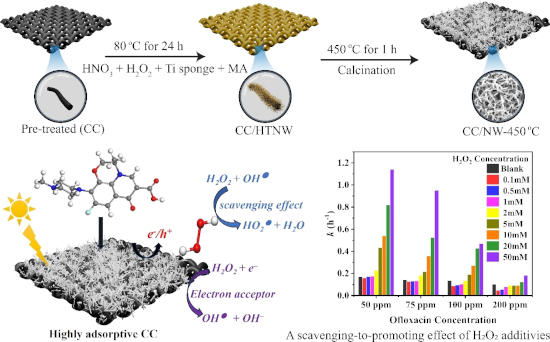
- drying. The P25 loading was ca. 50.0 mg (≈1.0 mg/cm2), nearly the same as that of the TiO2 nanowires on carbon cloth. Characterizations The morphologies were analyzed using field-emission scanning electron microscopy (FESEM, Zeiss Germany Sigma 300) and high-resolution transmission electron microscopy


Influence of laser beam profile on morphology and optical properties of silicon nanoparticles formed by laser ablation in liquid
Beilstein J. Nanotechnol. 2025, 16, 1533–1544, doi:10.3762/bjnano.16.108
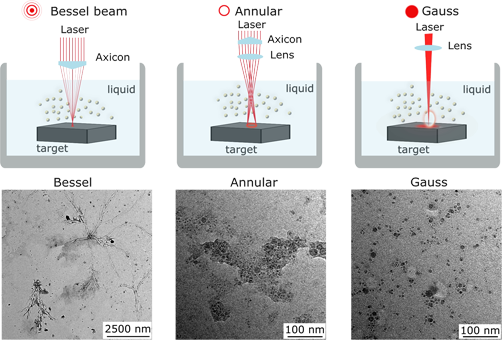
- , phase composition, and lattice parameters of the formed Si nanostructures were determined from HRTEM images by fast Fourier transformation (FFT). The morphology of the produced nanoparticles was also evaluated using scanning electron microscopy (SEM) with a SUPRA 55WDS microscope (Carl Zeiss, Germany


Laser processing in liquids: insights into nanocolloid generation and thin film integration for energy, photonic, and sensing applications
Beilstein J. Nanotechnol. 2025, 16, 1428–1498, doi:10.3762/bjnano.16.104
- thin films was analyzed using field-emission scanning electron microscopy (FESEM). Both sets of films exhibited a porous surface with layered structures. However, thin films made from SnS nanocolloids in DMF showed more compact NPs compared to those in IPA. This difference was attributed to the higher






Photochemical synthesis of silver nanoprisms via green LED irradiation and evaluation of SERS activity
Beilstein J. Nanotechnol. 2025, 16, 1417–1427, doi:10.3762/bjnano.16.103
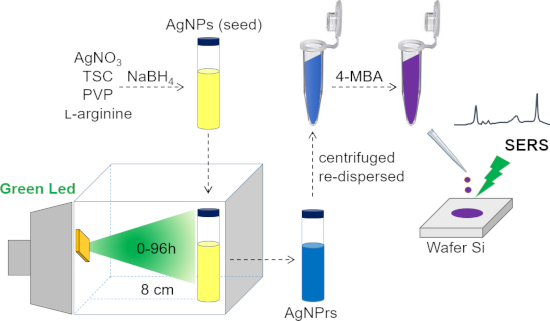
- ± 20 nm) for various periods of time up to 72 h. The growth mechanism was investigated through ultraviolet–visible spectroscopy, field-emission scanning electron microscopy, X-ray diffraction, and transmission electron microscopy analyses, confirming the gradual transformation of spherical seeds into
- nm. Samples were diluted tenfold with deionized water prior to measurement. To determine the morphology, particle size of the synthesized nanostructures, the samples were analyzed using field-emission scanning electron microscopy (FESEM, Hitachi S-4800, Japan) and transmission electron microscopy


Synthesis and antibacterial properties of nanosilver-modified cellulose triacetate membranes for seawater desalination
Beilstein J. Nanotechnol. 2025, 16, 1380–1391, doi:10.3762/bjnano.16.100
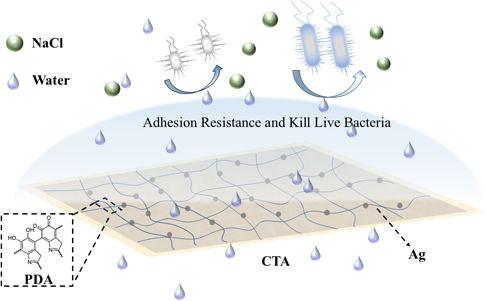
- , which can manifest as a metallic sheen when they are present on a substrate [47]. Surface alterations of the membranes are documented using scanning electron microscopy (SEM) (Figure 4). The CTA membrane’s surface appears smooth and uniform, devoid of visible defects (Figure 4a). Cross-sectional SEM


Ferroptosis induction by engineered liposomes for enhanced tumor therapy
Beilstein J. Nanotechnol. 2025, 16, 1325–1349, doi:10.3762/bjnano.16.97
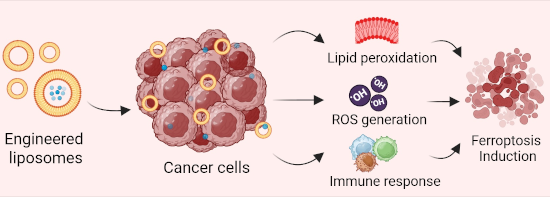
- ]. Different techniques are used to evaluate the characteristics of liposomes [122][123][124]. In the case of average particle size, DLS and microscopy techniques such as scanning electron microscopy (SEM), TEM, cryogenic TEM, and AFM are used to determine the size of liposomes [122]. The size of liposomes is


Deep-learning recognition and tracking of individual nanotubes in low-contrast microscopy videos
Beilstein J. Nanotechnol. 2025, 16, 1316–1324, doi:10.3762/bjnano.16.96
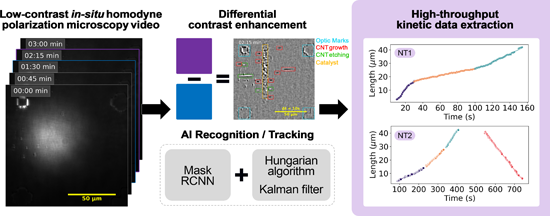
- , finding numerous applications in scientific research. Deep learning models have been used to identify two-dimensional materials in microscopic images [6], characterize mineral composition in scanning electron microscopy (SEM) samples [7], and determine nanotube chirality from transmission electron
- situ imaging platforms for nanomaterials, such as environmental transmission electron microscopy (ETEM) of CNTs [31][33] and environmental scanning electron microscopy (ESEM) of graphene growth and etching processes [34]. Snapshots from (a) the raw video of carbon nanotube (CNT) synthesis on a stable


Enhancing the photoelectrochemical performance of BiOI-derived BiVO4 films by controlled-intensity current electrodeposition
Beilstein J. Nanotechnol. 2025, 16, 1289–1301, doi:10.3762/bjnano.16.94
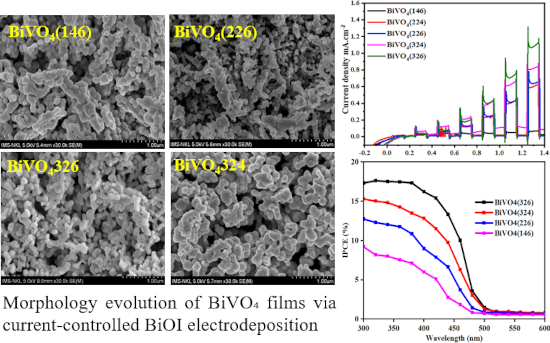
- sizes, indicating an improved crystalline quality. BiVO4(326) exhibited the largest average crystallite size (≈40 nm), consistent with the enhanced PEC performance and reduced lattice strain observed in the Raman analysis. Morphological characterization (FESEM) Field-emission scanning electron
- microscopy (FESEM) images highlighted the evolution of the surface morphology under different fabrication conditions. The transition from two-dimensional plate-like BiOI crystals to three-dimensional BiVO4 particles was accompanied by the formation of submicrometer-scale voids, indicative of grain growth and



Functional bio-packaging enhanced with nanocellulose from rice straw and cinnamon essential oil Pickering emulsion for fruit preservation
Beilstein J. Nanotechnol. 2025, 16, 1234–1245, doi:10.3762/bjnano.16.91
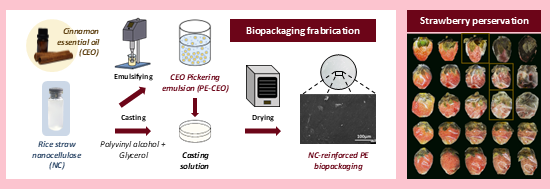
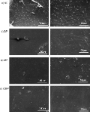
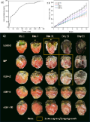
- stability, making PE-CEO-infused films promising candidates for biopackaging applications requiring controlled moisture permeability. The surface morphology of the biopackaging materials was examined using scanning electron microscopy (SEM) (Figure 3). As shown in our previous research, nanocellulose in



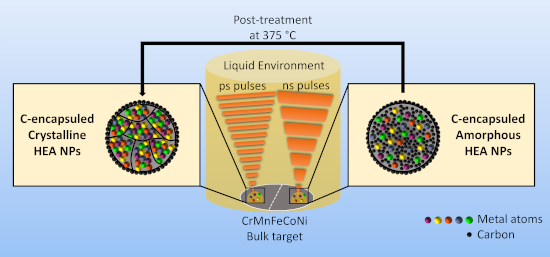
Crystalline and amorphous structure selectivity of ignoble high-entropy alloy nanoparticles during laser ablation in organic liquids is set by pulse duration
Beilstein J. Nanotechnol. 2025, 16, 1141–1159, doi:10.3762/bjnano.16.84