


Search results
Search for "surface morphology" in Full Text gives 273 result(s) in Beilstein Journal of Nanotechnology. Showing first 200.
Characterization of ZnO nanoparticles synthesized using probiotic Lactiplantibacillus plantarum GP258
Beilstein J. Nanotechnol. 2025, 16, 78–89, doi:10.3762/bjnano.16.8
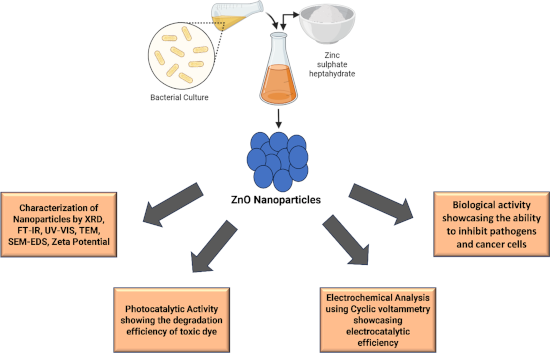
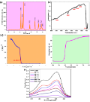
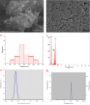
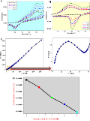
- ZnO NPs confirms the XRD results, that is, the hexagonal wurtzite structure (Figure 3). SEM and EDX analysis SEM was used to analyze the surface morphology of a modified nanocomposite film, and the image displays a consistent coverage of a web-like structure. Close-up views revealed a crumpled and



Ultrablack color in velvet ant cuticle
Beilstein J. Nanotechnol. 2024, 15, 1554–1565, doi:10.3762/bjnano.15.122

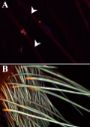
- spectroscopy, we conducted a comprehensive analysis of the cuticle to elucidate its unique optical properties. SEM imaging provided a detailed surface morphology, while TEM provided insights into the internal structure. CLSM showed that the cuticle exhibits no autofluorescence. Our findings reveal a highly



The role of a tantalum interlayer in enhancing the properties of Fe3O4 thin films
Beilstein J. Nanotechnol. 2024, 15, 1253–1259, doi:10.3762/bjnano.15.101

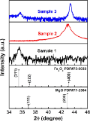
- indicates the potential to facilitate the development of novel magnetic and spintronic architectures. Results and Discussion AFM and line-cut method were used to examine the surface morphology and grain sizes of the Fe3O4 films that were formed on SiO2/Si(100), MgO(100), and MgO/Ta/SiO2/Si(100) multilayer
- annealed at a temperature of 723 K for a duration of 2 h under a base pressure of 2.3 × 10⁻⁸ Torr. The Fe3O4 films were analyzed regarding their surface morphology, magnetic properties, and structural properties using atomic force microscopy (EasyScan2, Nanosurf), vibration sample magnetometry (Quantum


Synthesis, characterization and anticancer effect of doxorubicin-loaded dual stimuli-responsive smart nanopolymers
Beilstein J. Nanotechnol. 2024, 15, 1189–1196, doi:10.3762/bjnano.15.96
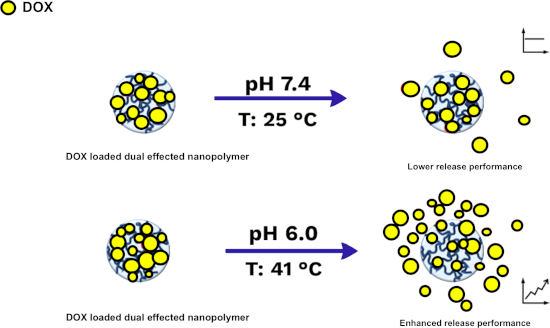
- increasing intensity in DOX-SNPs [33]. The inset in Figure 2 shows DOX-SNPs (red) and pure SNPs (white). Based on these results, the successful incorporation of DOX into SNPs has been demonstrated. Surface morphology and structure of the obtained SNPs were investigated by SEM. As seen in Figure 3, the SNPs


Photocatalytic methane oxidation over a TiO2/SiNWs p–n junction catalyst at room temperature
Beilstein J. Nanotechnol. 2024, 15, 1132–1141, doi:10.3762/bjnano.15.92
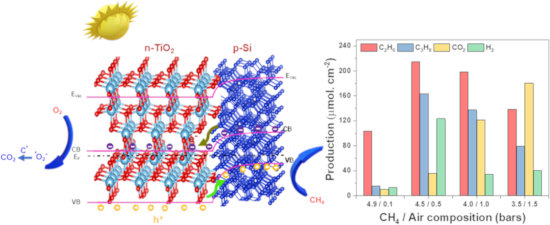
- forces generated charge carriers to move in opposite directions and suppresses charge recombination. Besides, surface morphology and optical properties of the the p–n TiO2/SiNWs catalyst are also beneficial for the photocatalytic activity. It is expected that the results of this study will provide


Interface properties of nanostructured carbon-coated biological implants: an overview
Beilstein J. Nanotechnol. 2024, 15, 1041–1053, doi:10.3762/bjnano.15.85
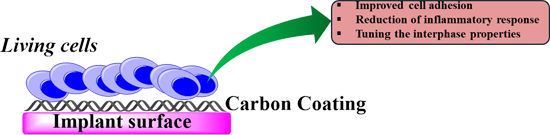
- NDs by CVD at 400 °C and observed good proliferation of osteogenic cells on a bone implant, even better than on a commonly used surface. They suggested that the osteoblast proliferation was mainly due to the surface morphology and the good match between cells and surface potentials. Carbon-based



Effects of cutting tool geometry on material removal of a gradient nanograined CoCrNi medium entropy alloy
Beilstein J. Nanotechnol. 2024, 15, 925–940, doi:10.3762/bjnano.15.76
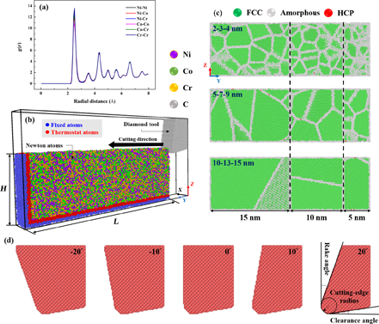
- radius was fixed at 1 nm to analyze the surface morphology, atomic-scale wear, shear strain distribution, temperature distribution, and crystal structure evolution during cutting. Figure 2a–f shows the atoms that pile-up on the surface of the CoCrNi MEA substrates. The number of wear atoms during cutting
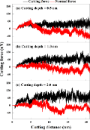
- chip thickness has the lowest average resultant force, consistent with the results of the surface morphology analysis in Figure 2. The subsurface quality of the workpiece significantly affects accuracy and durability in the machining process. To investigate the deformation mechanism of the subsurface




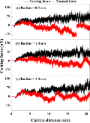


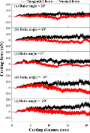


Investigation on drag reduction on rotating blade surfaces with microtextures
Beilstein J. Nanotechnol. 2024, 15, 833–853, doi:10.3762/bjnano.15.70
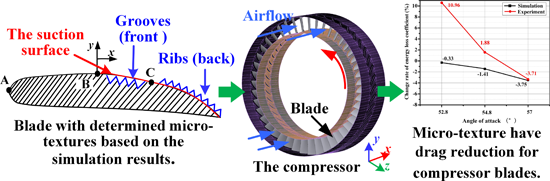
- and no obvious defects. In order to further analyze the processing quality, a HIROX KH-7700 three-dimensional video microscope was used to examine the microtexture and blade surface morphology, as shown in Figure 19. The rib surface morphology and dimensional data are shown in Figure 19a. The
- morphology and (b) blade surface morphology. Machining error analysis diagram of (a) the microtexture and (b) plane processing. Distribution of LCTP of the single flow channel at angles of attack of (a) 52.8°, (b) 54.8°, and (c) 57.0°. Distribution of Ma in the outlet of the single flow channel at angles of
- and (b) eddy viscosity ratio around blades. Images used courtesy of ANSYS, Inc. The effect of microtexture on (a) turbulent vortex and (b) overall shear stress distribution. Figure 17a used courtesy of ANSYS, Inc. The processed blade with microtexture. Microscopy observation of (a) microribs surface


Potential of a deep eutectic solvent in silver nanoparticle fabrication for antibiotic residue detection
Beilstein J. Nanotechnol. 2024, 15, 426–434, doi:10.3762/bjnano.15.38
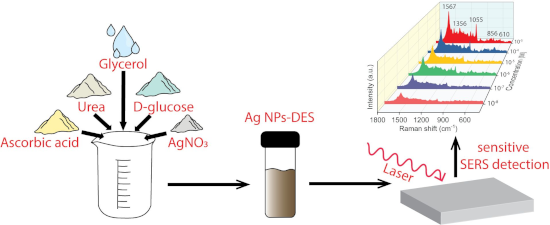
- the nanostructure and surface morphology of the nanoparticles, as well as the elemental distribution of silver on the substrate, a S4800 field-emission scanning electron microscope purchased from Hitachi, Japan, and an M4 TORNADOPlus Micro X-ray fluorescence spectrometer with a Rh tube at 30 W micro


Controllable physicochemical properties of WOx thin films grown under glancing angle
Beilstein J. Nanotechnol. 2024, 15, 350–359, doi:10.3762/bjnano.15.31
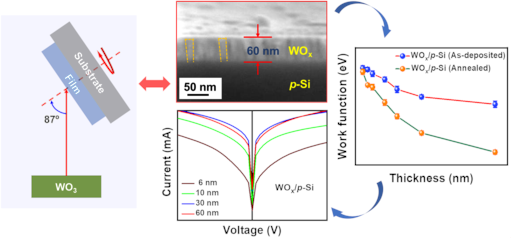
- −7 mbar). The thickness of the films was measured using a surface profilometer (Ambios, XP 200). The surface morphology of the as-deposited and the annealed films was acquired using tapping mode AFM (Asylum Research). AFM images were recorded at different places on each sample to confirm the film


Ultrasensitive and ultrastretchable metal crack strain sensor based on helical polydimethylsiloxane
Beilstein J. Nanotechnol. 2024, 15, 270–278, doi:10.3762/bjnano.15.25
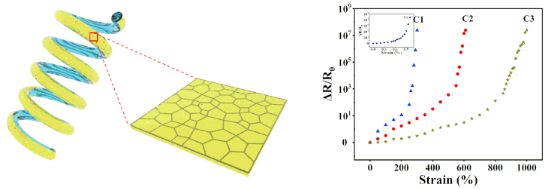
- with PDMS. Parts of the experimental procedure are shown in Figure S6 (Supporting Information File 1). Characterization The surface morphology of the samples prepared in this study was examined through the utilization of scanning electron microscopy (SEM) (TESCAN MIRA3, Czech Republic) and an optical


CdSe/ZnS quantum dots as a booster in the active layer of distributed ternary organic photovoltaics
Beilstein J. Nanotechnol. 2024, 15, 144–156, doi:10.3762/bjnano.15.14
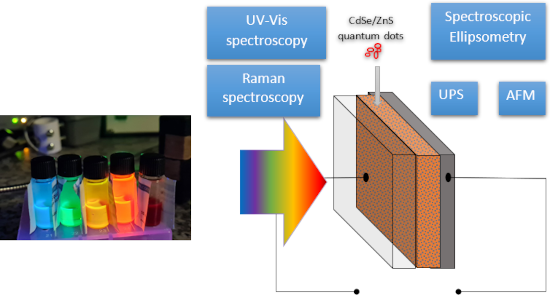
- observed in our study. Atomic force microscopy Surface examinations of the sample mixtures were performed. Figure 7 illustrates the surface morphology in a two-dimensional format. Three-dimensional images of the surface are in Supporting Information File 1, Figure S1. The roughness profile parameters for
- wavelengths. The maximum refractive indices values for layers with QDs were lower than those for pure P3HT:PC71BM. An increase in the roughness of the active layers with additives used in ternary solar cells was determined using surface morphology studies. The HOMO and LUMO levels of the studied nanodots were




SERS performance of GaN/Ag substrates fabricated by Ag coating of GaN platforms
Beilstein J. Nanotechnol. 2023, 14, 552–564, doi:10.3762/bjnano.14.46
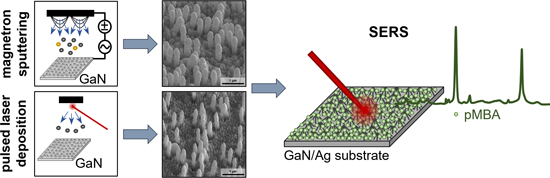
- following the procedure described elsewhere [31][32]. The surface morphology depends on the time of photoetching and the overall dislocation density [32]. Next, the fabricated nanostructured GaN platforms were coated with a Ag layer using PLD and MS to form GaN/Ag SERS substrates (Figure 1). To compare SERS
- , 420, and 560 s, that is, with Ag layer thicknesses of 212 ± 2, 423 ± 5, 627 ± 4, and 833 ± 4 nm, respectively. The above thickness values were directly measured on a flat Si platform coated in the same processes as the GaN platforms. However, due to the different surface morphology of GaN platforms


Conjugated photothermal materials and structure design for solar steam generation
Beilstein J. Nanotechnol. 2023, 14, 454–466, doi:10.3762/bjnano.14.36
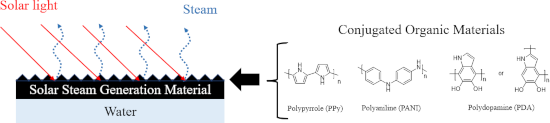
- , Copyright (2021), with permission from Elsevier. This content is not subject to CC BY 4.0. Fabrication process of PPy nanofiber light-trapping coatings by ultrasonic spray coating. (Figure 9 was reproduced with permission from [29], Copyright 2021 American Chemical Society). Surface morphology of (a) filter


Structural, optical, and bioimaging characterization of carbon quantum dots solvothermally synthesized from o-phenylenediamine
Beilstein J. Nanotechnol. 2023, 14, 165–174, doi:10.3762/bjnano.14.17
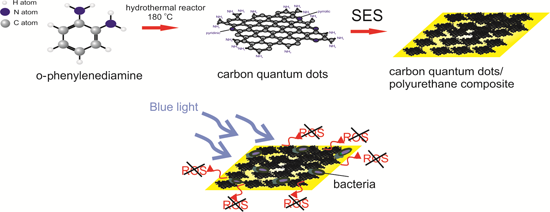
- cytotoxic properties of CQDs and CQD/polyurethane composites. Results and Discussion Surface morphology Figure S1 (Supporting Information File 1) presents the surface morphology of the CQD samples. Figure S1a shows a TEM micrograph of CQDs. The average diameter of these dots is 4 ± 1 nm. A top-view AFM
- nm (Figure S1c,d in Supporting Information File 1). Figure 1 shows the surface morphology of neat PU and a CQDs/PU sample. The RMS roughness values of these samples are 4.45 and 14.04 nm, respectively. FTIR, UV–vis, and PL spectra of CQDs and CQDs/PU To study the chemical and optical properties of


Electrical and optical enhancement of ITO/Mo bilayer thin films via laser annealing
Beilstein J. Nanotechnol. 2022, 13, 1589–1595, doi:10.3762/bjnano.13.133
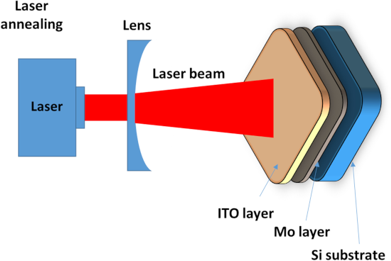
- 3.21 × 10¹⁴ lines/m2. Figure 2 displays the surface morphology in 3D images of ITO/Mo for the as-deposited and annealed samples. These images were scanned over an area of 1.0 × 1.0 µm using AFM. Figure 2 shows the different morphologies for as-deposited and annealed samples using a laser for different


A TiO2@MWCNTs nanocomposite photoanode for solar-driven water splitting
Beilstein J. Nanotechnol. 2022, 13, 1520–1530, doi:10.3762/bjnano.13.125
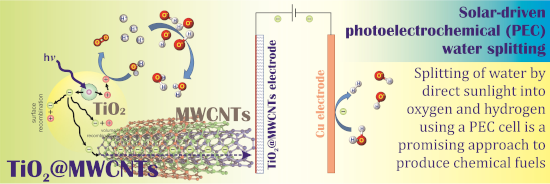
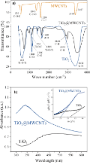
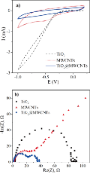
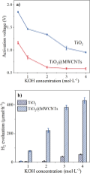
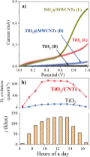
- nanocomposite characterizations The surface morphology of MWCNTs and the TiO2@MWCNTs nanocomposite is characterized by using field-emission scanning electron microscopy (FE-SEM, S4800) and transmission electron microscopy (TEM, JEOL-1400). The crystallization behavior of the catalysts is analyzed by X-ray



Rapid and sensitive detection of box turtles using an electrochemical DNA biosensor based on a gold/graphene nanocomposite
Beilstein J. Nanotechnol. 2022, 13, 1458–1472, doi:10.3762/bjnano.13.120
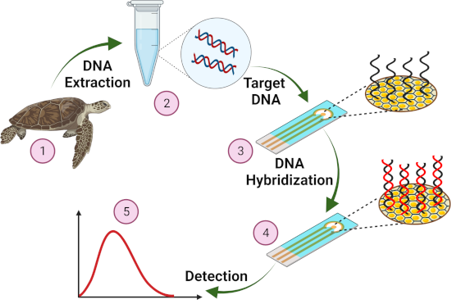
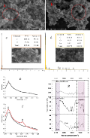
- modified screen-printed carbon electrode Surface morphology and structural characterisation Field-emission scanning electron microscopy (FESEM) images of nanoparticles and their composites are depicted in Figure 2a–b, where the wrinkled regions represent specific patterns of different materials. In Figure
- Gr/SPCE surface, which was then labelled as AuNPs/Gr/SPCE. Morphological and structural studies of nanomaterials The surface morphology of the nanoparticles and their nanocomposites were analysed using a field-emission scanning electron microscope (model SU8030 Hitachi, Japan), equipped with an



Orally administered docetaxel-loaded chitosan-decorated cationic PLGA nanoparticles for intestinal tumors: formulation, comprehensive in vitro characterization, and release kinetics
Beilstein J. Nanotechnol. 2022, 13, 1393–1407, doi:10.3762/bjnano.13.115
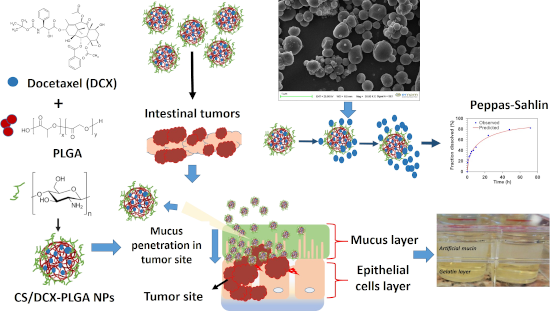
- potential (mV) was stated as the average of three subsequent measurements ± SD. Particle shape and surface morphology The shape and surface morphology of DCX-PLGA NPs and CS/DCX-PLGA NPs were investigated by SEM (Zeiss evo LS-10, Germany). For this purpose, NPs were covered with a 100 Å thick coating of


LED-light-activated photocatalytic performance of metal-free carbon-modified hexagonal boron nitride towards degradation of methylene blue and phenol
Beilstein J. Nanotechnol. 2022, 13, 1380–1392, doi:10.3762/bjnano.13.114
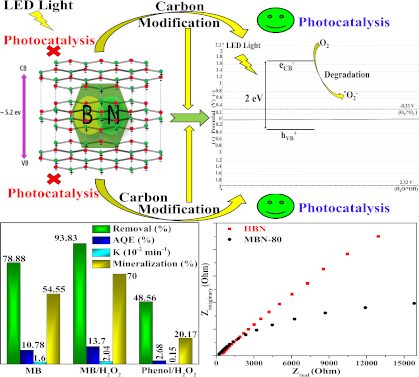
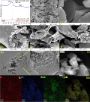
- turbostratic and poor crystalline nature of the as-synthesized MBN. The characteristic peak shift and widening can be attributed to the surface modification through simultaneous replacement of nitrogen atoms with larger carbon atoms [18][21][22]. The surface morphology of HBN, MBN-25, MBN-50, and MBN-80


Near-infrared photoactive Ag-Zn-Ga-S-Se quantum dots for high-performance quantum dot-sensitized solar cells
Beilstein J. Nanotechnol. 2022, 13, 1337–1344, doi:10.3762/bjnano.13.110
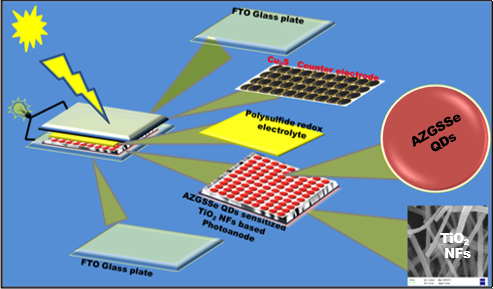
- ]. Studies of Ag-Zn-Ga-S-Se QD-sensitized TiO2 NFs The surface morphology of AZGSSe/TiO2 was examined through HRTEM and EDX analysis. The HRTEM image (Figure 5a) shows the presence of AZGSSe QDs on the TiO2 NFs. The EDX spectrum (Figure 5b) shows the peaks of Ti, O, Ag, Zn, Ga, S, and Se. These analyses


Studies of probe tip materials by atomic force microscopy: a review
Beilstein J. Nanotechnol. 2022, 13, 1256–1267, doi:10.3762/bjnano.13.104
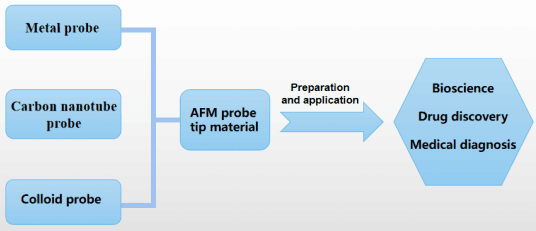
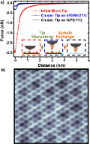
- Ke Xu Yuzhe Liu School of Electrical & Control Engineering, Shenyang Jianzhu University, Shenyang 110168, China 10.3762/bjnano.13.104 Abstract As a tool that can test insulators' surface morphology and properties, the performance index of atomic force microscope (AFM) probes is the most critical
Application of nanoarchitectonics in moist-electric generation
Beilstein J. Nanotechnol. 2022, 13, 1185–1200, doi:10.3762/bjnano.13.99
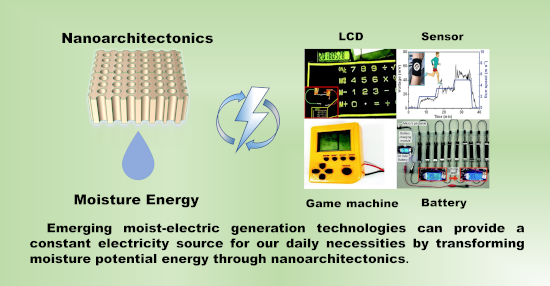
- content is not subject to CC BY 4.0. (f) Schematic diagram of the liquid flow-induced streaming potential in a natural microchannel. (a) Surface morphology of an Al2O3 layer. Figure 4a was reprinted with permission from [49], Copyright 2021 American Chemical Society. This content is not subject to CC BY


Electrocatalytic oxygen reduction activity of AgCoCu oxides on reduced graphene oxide in alkaline media
Beilstein J. Nanotechnol. 2022, 13, 1020–1029, doi:10.3762/bjnano.13.89
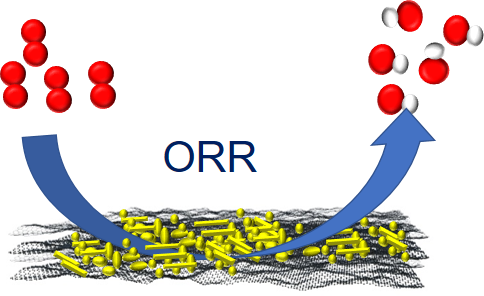
- slight changes of the peak positions by varying the silver fraction in the trimetallic catalysts (Figure S2a,b, Supporting Information File 1). The surface morphology of rGO-supported bimetallic (Ag-CuO and Ag-Co3O4) and trimetallic (ACC-1, ACC-2 and ACC-3) NPs, as well as the supportless ACC-2*, were


Self-assembly of C60 on a ZnTPP/Fe(001)–p(1 × 1)O substrate: observation of a quasi-freestanding C60 monolayer
Beilstein J. Nanotechnol. 2022, 13, 857–864, doi:10.3762/bjnano.13.76
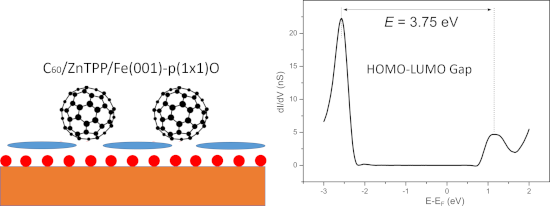
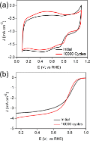
- displayed in Figure 1b, where individual ZnTPP molecules are resolved. Figure 2 focuses on the surface morphology for a sub-monolayer coverage of C60 on the ZnTPP/Fe(001)–p(1 × 1)O substrate. C60 forms a compact film, composed of hexagonal domains extending for hundreds of nanometers. By considering that





