


Search results
Search for "topography" in Full Text gives 451 result(s) in Beilstein Journal of Nanotechnology. Showing first 200.
Development of a mucoadhesive drug delivery system and its interaction with gastric cells
Beilstein J. Nanotechnol. 2025, 16, 371–384, doi:10.3762/bjnano.16.28

- ) nanoparticles, topography, surface composition, size, and charge distribution of the delivery system were determined. The topography of the nanoparticles was studied with SEM (Figure 1). Both Alg and EudAlg nanoparticles are spherical with smooth surfaces (Figure 1A,B). It should be noted that during SEM


Tailoring of physical properties of RF-sputtered ZnTe films: role of substrate temperature
Beilstein J. Nanotechnol. 2025, 16, 333–348, doi:10.3762/bjnano.16.25
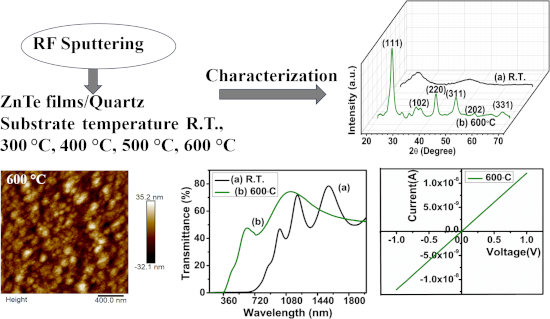
- ) spectrophotometer under 320 nm excitation produced by a xenon arc lamp. For investigating the surface topography, atomic force microscopy (AFM) micrographs of ZnTe/Qz films were recorded (scan area 2 × 2 µm2) using a Bruker multimode-8 AFM in the ScanAsyst mode at the Ion Beam Centre, Kurukshetra University. The




Graphene oxide–chloroquine conjugate induces DNA damage in A549 lung cancer cells through autophagy modulation
Beilstein J. Nanotechnol. 2025, 16, 316–332, doi:10.3762/bjnano.16.24
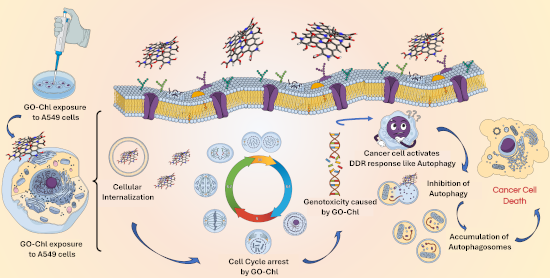
- ][51]. Further, the morphology and topography of GO nanosheets were analyzed employing atomic force microscopy. Supporting Information File 1, Figure S2 reveals the appearance of few layered interlocked GO nanosheets, and the topographical analysis reveals the thickness in the range of 0.6 to 1.06 nm



Advanced atomic force microscopy techniques V
Beilstein J. Nanotechnol. 2025, 16, 54–56, doi:10.3762/bjnano.16.6

- monolayers (SAMs) and conducting AFM [10]. The authors find that rougher surfaces lead to stronger variations in conductivity, and it is suggested that a correlation of topography and conductivity maps is carried out to identify suitable areas for a representative averaging of conductivity values. Müller et
Ultrablack color in velvet ant cuticle
Beilstein J. Nanotechnol. 2024, 15, 1554–1565, doi:10.3762/bjnano.15.122

- underlying cuticle features a microstructured topography [26]. These concave structures scatter light and enhance absorption by melanin, serving as an antireflective feature and creating ultrablack colors [26]. In another beetle species, Euprotaetia inexpectata (Coleoptera: Scarabaeidae), a complex



A biomimetic approach towards a universal slippery liquid infused surface coating
Beilstein J. Nanotechnol. 2024, 15, 1376–1389, doi:10.3762/bjnano.15.111
- with a fluid similar to blood [24]. AFM is a technique that provides topographical information through a nanoscale probe [25]. After each successive layer of the coating the topography of the surface will change and can be measured via AFM. SFG is a surface-sensitive non-linear spectroscopic technique
- substrates and were representative of a covalent carbon-sulfur bond [43]. AFM highlighted the level of roughness at each stage of the coating to show a rougher topography for the final layer. Results for each layer of the coating are shown in Supporting Information File 1, Figure S1 and reported as root mean




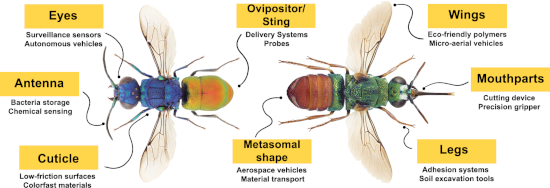
Hymenoptera and biomimetic surfaces: insights and innovations
Beilstein J. Nanotechnol. 2024, 15, 1333–1352, doi:10.3762/bjnano.15.107
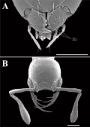
- , bioabsorbable surgical clamps modeled after the morphology and topography of the A. laevigata mandible, characterized by smooth internal regions and rougher external surfaces, could significantly improve grip and functionality [65]. Furthermore, the unique kinematic features of ant mandibles, such as the mobile




Interaction of graphene oxide with tannic acid: computational modeling and toxicity mitigation in C. elegans
Beilstein J. Nanotechnol. 2024, 15, 1297–1311, doi:10.3762/bjnano.15.105
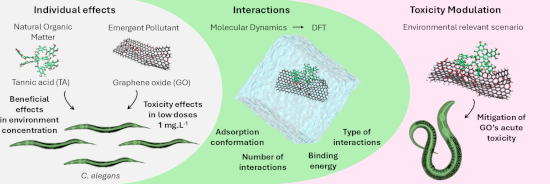
- possible to identify interactions between these groups and GO’s carbon structure and between carbon atoms of both structures. Furthermore, we analyzed the maximum heights of TA-plus-GO conformations among the snapshots. The values range from 1.5 to 3.0 nm, which corroborates with AFM topography results and


The role of a tantalum interlayer in enhancing the properties of Fe3O4 thin films
Beilstein J. Nanotechnol. 2024, 15, 1253–1259, doi:10.3762/bjnano.15.101

- substrates (referred to as samples 1, 2, and 3, recpectively). Topography images, with dimensions of 1 × 1 μm2, are shown in Figure 1. They show spherical particles with rather consistent grain sizes. In particular, samples 1 and 2 present grain size values of 7.6 ± 0.5 nm and 9.9 ± 0.6 nm, respectively


Local work function on graphene nanoribbons
Beilstein J. Nanotechnol. 2024, 15, 1125–1131, doi:10.3762/bjnano.15.91
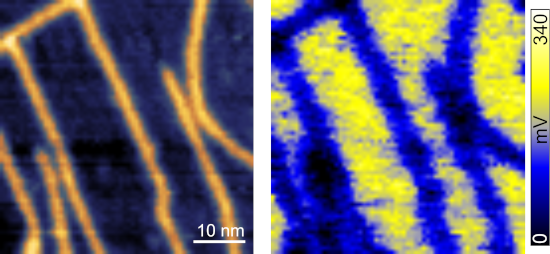
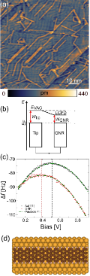
- difference of graphene nanoribbons fabricated by on-surface synthesis on Au(111). The GNRs can be clearly discerned from the substrate through their topography, but also through their contact potential difference. GNRs have a measured contact potential that is about 100 meV smaller than that of a Au
- irregularities such as kinks or defects at the edge are observed in the topography measurement. For example for the GNR where the cross section has been taken, marked by a black line, there is a kink associated with a darker region in the local work function, and in the topography image there are some small
- properties in nanoelectronics. (a) Topography image of GNRs on Au, measured with a Si tip, f0 = 170.91 kHz, cL = 40 N/m, A = 1 nm, Q = 20,000, and Δf = −21 Hz. (b) In KPFM, local variations in contact potential (CPD) can be measured by applying a voltage between the sample and the AFM tip so that the

![[Graphic 1]](/bjnano/content/inline/2190-4286-15-91-i4.svg?max-width=637&scale=1.18182)
Direct electron beam writing of silver using a β-diketonate precursor: first insights
Beilstein J. Nanotechnol. 2024, 15, 1117–1124, doi:10.3762/bjnano.15.90

- fluorine in the halo region but showed a significant amount of both in the carbon-rich deposit (cf. Supporting Information File 1 for more details). Of note is that the surrounding of the deposit as well as the surface topography changed after deposition. Tiny particles of few nanometers in size appeared


The effect of age on the attachment ability of stick insects (Phasmatodea)
Beilstein J. Nanotechnol. 2024, 15, 867–883, doi:10.3762/bjnano.15.72

- different attachment mechanisms evolved in insects, namely, hairy pads consisting of flexible setae, which adapt to the surface topography, and smooth pads possessing a soft and deformable cuticle to comply with the substrate profile [9]. Both pad types, hairy and smooth, aim to maximize contact area with
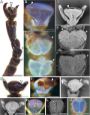
- could also be due to contamination. SEM revealed most of such cases as not being caused by contaminations. They rather arose from a strong alteration of the cuticle (Figure 8E), also including changes of the surface topography of the terminal layer of the attachment pad cuticle. Profound hardening of
- . (A, G) Stereomicroscopy images showing the appearance of the attachment pads. (B, C, H, K, M) WMF images showing native bluish regions and those stiffened due to the ageing. (D–F, I, J, K) SEM images showing the topography of the surface. Scale bars: (A) 1 mm, (B–M) 500 µm. Supporting Information


Exploring surface charge dynamics: implications for AFM height measurements in 2D materials
Beilstein J. Nanotechnol. 2024, 15, 767–780, doi:10.3762/bjnano.15.64
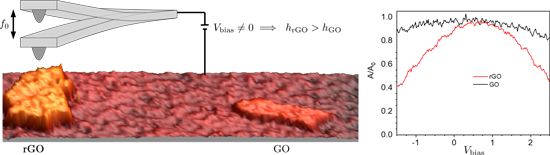
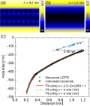
- monolayer flakes of 2D materials is the inaccurate height derived from topography images, often attributed to capillary or electrostatic forces. Here, we show the existence of a Joule dissipative mechanism related to charge dynamics and supplementing the dissipation due to capillary forces. This particular
- addition, it can be integrated with classical optical spectroscopy methods such as Raman and fluorescence [20][28][29], enabling a multidimensional characterization approach. A well-recognized issue within the AFM community is the inaccurate height determination derived from topography images on
- [30]. This issue can be addressed with Kelvin probe force microscopy (KPFM). Under ambient conditions, the most common mode is amplitude modulation (AM-AFM), which uses the oscillation amplitude reduction as the input for the topography feedback. Its main aspects are summarized in [31]. At large free


Effect of repeating hydrothermal growth processes and rapid thermal annealing on CuO thin film properties
Beilstein J. Nanotechnol. 2024, 15, 743–754, doi:10.3762/bjnano.15.62
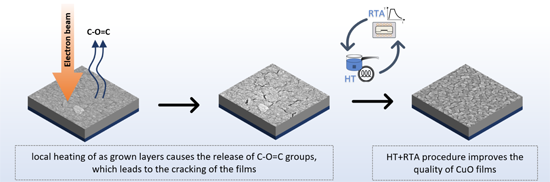
- , which allowed for the investigation of both topography and electrical properties of the films. Surface topography analysis was performed by utilizing an atomic force microscopy (AFM) operating in Peak Force Tapping mode. The surface was scanned at a resolution of 1024 × 1024 measurement points using a
- as-grown films, the distribution of carriers is homogeneous and does not show any correlation with the surface topography. The results obtained for the sequenced samples are different. With each successive cycle there is an increasing differentiation of the values of capacitance changes. In the case
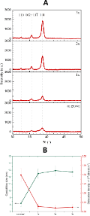
- × samples, as well as topography profiles along the marked lines (every 500 nm) presented at the same scale. (A) Diffractograms and (B) variations in crystallite sizes and dislocation density determined for as-grown and HT+RTA films. Raman spectra of as-grown (B), 2× (C), and 3× (D) CuO/Si structures along




Level set simulation of focused ion beam sputtering of a multilayer substrate
Beilstein J. Nanotechnol. 2024, 15, 733–742, doi:10.3762/bjnano.15.61
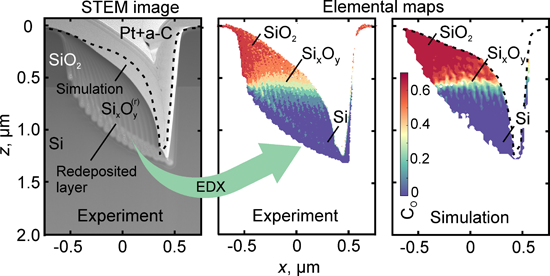
- possible to deterministically produce a nanoscale topography on the surface of almost any substrate [1]. FIB milling was originally established in semiconductor technology [2] and materials science applications [3]. Now it is increasingly used for fabrication of complex micro- and nanoscale structures and
- application of the FIB method requires the creation and optimization of scanning patterns [16][17] as well as the quantitative prediction of ion-induced surface topography [18], which is a challenging task even for single-component substrates. A straightforward analytical description of surface topography is

![[Graphic 55]](/bjnano/content/inline/2190-4286-15-61-i68.svg?max-width=637&scale=1.18182)


Elastic modulus of β-Ga2O3 nanowires measured by resonance and three-point bending techniques
Beilstein J. Nanotechnol. 2024, 15, 704–712, doi:10.3762/bjnano.15.58
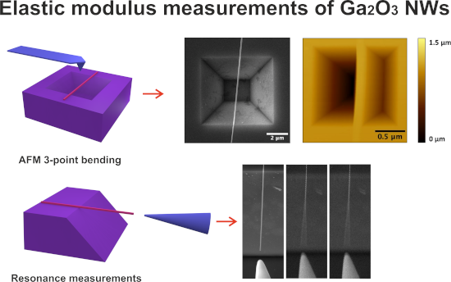
- the length and width of NWs for three-point bending were measured in SEM, the heights were taken from the topography data obtained by AFM in the adhered parts of the NW at each end. In Figure 5a, an SEM image captures the morphology of a Ga2O3 NW positioned over an inverted pyramid structure. Notably
- , both ends of the NW are fixed, laying the foundation for a controlled three-point bending experiment. Figure 5b presents the AFM topography of the Ga2O3 NW. The loading and unloading spectra, illustrating one instance of the three-point bending test, is shown in Figure 5c. Since the elastic modulus
- (resonance). Elastic modulus plotted with respect to the width of Ga2O3 NWs: a) obtained via SEM resonance tests; b) obtained via AFM three-point bending tests. a) SEM image of Ga2O3 NW suspended over the inverted pyramid with both ends fixed. b) AFM topography image of Ga2O3 NW suspended over the inverted


Enhancing higher-order modal response in multifrequency atomic force microscopy with a coupled cantilever system
Beilstein J. Nanotechnol. 2024, 15, 694–703, doi:10.3762/bjnano.15.57

- resonant mode tracking the sample topography and the higher-order resonant mode providing information about mechanical properties [5][6]. Bimodal AFM is relatively simple to operate and offers improved imaging quality. Hence, it is widely applicable in diverse fields such as physics, chemistry, and biology


Gold nanomakura: nanoarchitectonics and their photothermal response in association with carrageenan hydrogels
Beilstein J. Nanotechnol. 2024, 15, 678–693, doi:10.3762/bjnano.15.56

- their 3D topography, which were performed to confirm the nanomakura shape from a three-dimensional view. Table 2 represents average length, width, and aspect ratio of the nanoparticles where DTAB-AuNM showed the lowest aspect ratio of 1.73. CTAB-AuNM and MTAB-AuNM showed aspect ratios of 2.34 and 1.98
- images were captured using AFM as shown in Figure 4d–f confirming the topography of AuNMs. Therefore, it was clearly observed from the complementing results obtained through TEM and AFM that the shape of the nanoparticles is makura. It can be assumed that the breaking of nanorod-shape symmetry into a
- , and (c) DTAB-AuNM, respectively; (d), (e), and (f) showed AFM images of CTAB-AuNM, MTAB-AuNM, and DTAB-AuNM, respectively, along with their 3D topography. (a) FTIR spectra of CTAB-AuNM, MTAB-AuNM, and DTAB-AuNM, respectively. (b) XRD diffractogram showing diffraction peaks of CTAB-AuNM, MTAB-AuNM, and






Comparative analysis of the ultrastructure and adhesive secretion pathways of different smooth attachment pads of the stick insect Medauroidea extradentata (Phasmatodea)
Beilstein J. Nanotechnol. 2024, 15, 612–630, doi:10.3762/bjnano.15.52
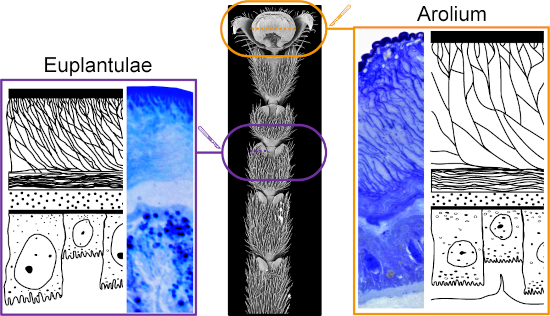
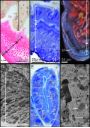
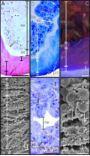
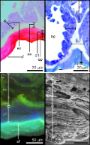
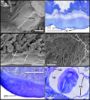
- the ventral side of the euplantulae revealed a dense hull (lighter grey) and a more X-ray transparent body (darker grey) (Figure 4A). Toluidine blue staining detected a darker blue stained hull and a lighter blue body (Figure 4B). The SEM images unveiled a rather smooth surface topography (Figure 4C



AFM-IR investigation of thin PECVD SiOx films on a polypropylene substrate in the surface-sensitive mode
Beilstein J. Nanotechnol. 2024, 15, 603–611, doi:10.3762/bjnano.15.51
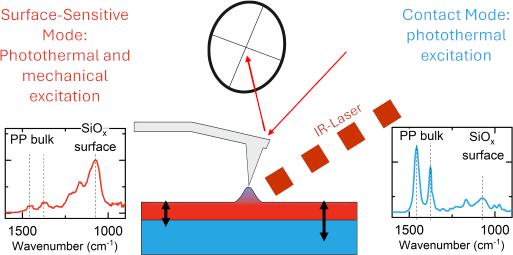
- image of the sample with the 50 nm SiOx layer (Figure 4a), a column-like grown SiOx film is visible. The surface became rougher. In addition to that, small cracks in the SiOx layer are recognizable. These cracks were induced by uniaxial stretching of about 10%. The topography of the 5 nm sample (Figure
- topography image in Figure 7a shows a surface with elevations and valleys. The hyperspectral measurement of this area indicates an overall signal of the Si–O–Si stretching band at 1080 cm−1 with some islands with a higher intensity. These can originate from small differences in the film thickness. The


Investigating ripple pattern formation and damage profiles in Si and Ge induced by 100 keV Ar+ ion beam: a comparative study
Beilstein J. Nanotechnol. 2024, 15, 367–375, doi:10.3762/bjnano.15.33
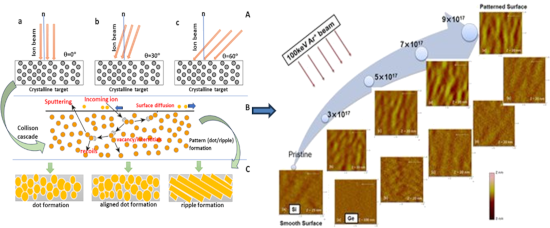
- samples were studied via AFM for the surface topography and change in root-mean-square (RMS) surface roughness. Figure 1 shows AFM images of pristine and 100 keV Ar+ ion-irradiated Si samples. Pristine samples show a smooth surface with a surface roughness of ≈0.5 nm as observed in Figure 1A (a). Figure
- 1A (b–e) shows the surface topography of the irradiated samples at respective ion fluences of (b) 3 × 10¹⁷, (c) 5 × 10¹⁷, (d) 7 × 10¹⁷, and (e) 9 × 10¹⁷ ions/cm2. The surface roughness (Rq) is found to be increased with ion fluence from ≈1.0 nm to 1.6 nm due to ion-induced sputtering at a 60


Quantitative wear evaluation of tips based on sharp structures
Beilstein J. Nanotechnol. 2024, 15, 230–241, doi:10.3762/bjnano.15.22
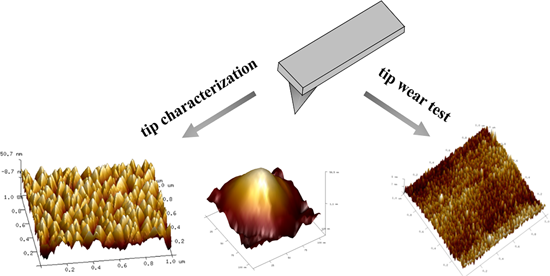
- nanotechnology [1][2][3][4][5]. Compared to optical and electron microscopy, AFM enables three-dimensional (3D) measurements of nanostructures in air and liquid environments [6]. The interaction between the tip and sample influences the measurement results of AFM by convoluting the tip topography with the sample
- surface topography [7]. A sharper needle tip leads to more accurate measurements [8]. During the scanning process, tip and sample come into mutual contact, causing wear on the tip [9]. Tip wear or damage in practical applications can have severe consequences, including reduced image quality and erroneous
- topography images of standard nanoscale spherical particles and rectangular parallelepiped nanostructures of known shapes and to quantitatively estimate the shape of the tip by measuring the known nanostructures in advance. However, tip characterizers with fixed bodies present significant cost and




Graphene removal by water-assisted focused electron-beam-induced etching – unveiling the dose and dwell time impact on the etch profile and topographical changes in SiO2 substrates
Beilstein J. Nanotechnol. 2024, 15, 190–198, doi:10.3762/bjnano.15.18
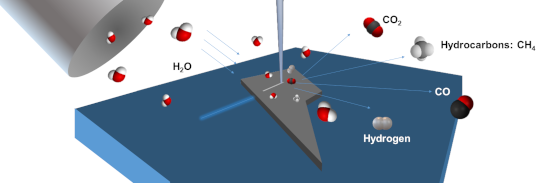
- of concept of water-assisted graphene etching. Moreover, the effects of changes in the topography of Si/SiO2 substrate during this process have not been addressed so far, as they may be observed only under certain experimental conditions. In a standard scanning electron microscope, the morphological
- . Complementary studies performed using both in situ and ex situ AFM reveal the modification in SiO2/Si substrate topography. Our results are important not only for applications of water-assisted FEBIE to etching carbon allotropes and SiO2 materials but also in other fields. For example, where electron-driven


Enhanced feedback performance in off-resonance AFM modes through pulse train sampling
Beilstein J. Nanotechnol. 2024, 15, 134–143, doi:10.3762/bjnano.15.13
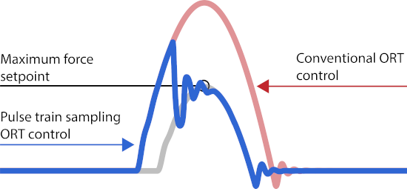
- limits the topography tracking quality and hence the imaging speed. The closed-loop controller in conventional ORT restricts the sampling rate to the ORT rate and introduces a large closed-loop delay. We present an alternative ORT control method in which the closed-loop controller samples and tracks the
- vertical force changes during a defined time window of the tip–sample interaction. Through this, we use multiple samples in the proximity of the maximum force for the feedback loop, rather than only one sample at the maximum force instant. This method leads to improved topography tracking at a given ORT
- the mechanical bandwidth of scanner and cantilever. In most ORT applications, the piezo that tracks the topography changes is also used to generate a periodic Z axis motion. However, the resonance frequency of the piezo sets a limit on the actuation frequency. To overcome this problem, one approach is


Determination of the radii of coated and uncoated silicon AFM sharp tips using a height calibration standard grating and a nonlinear regression function
Beilstein J. Nanotechnol. 2023, 14, 1200–1207, doi:10.3762/bjnano.14.99
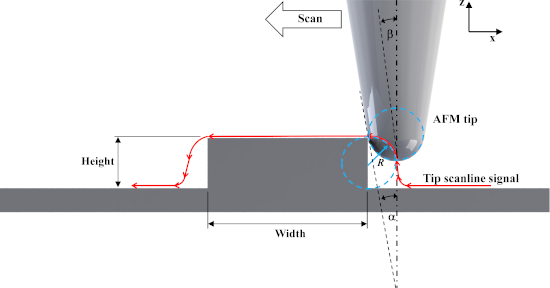
- and the reduced modulus [14]. Real-time measurements of tip radii based on analysis of the power spectral density (PSD) of the topography of a surface of an ultrananocrystalline diamond were carried out to detect changes in tip radius during tapping mode scanning. For each scan, the frequency data in





