


Search results
Search for "Si(100)" in Full Text gives 83 result(s) in Beilstein Journal of Nanotechnology.
Impact of air exposure and annealing on the chemical and electronic properties of the surface of SnO2 nanolayers deposited by rheotaxial growth and vacuum oxidation
Beilstein J. Nanotechnol. 2017, 8, 514–521, doi:10.3762/bjnano.8.55
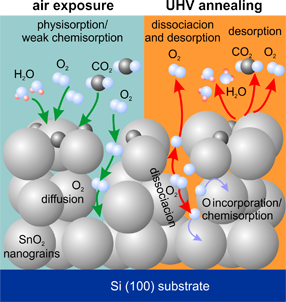
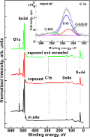
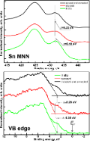
- controlled) were deposited under UHV conditions (system base pressure: 3·10−9 mbar) by thermal evaporation of Sn pellets (KJLC®) from a resistively heated source on Si(100) substrates (Bosch GmbH, n-type, P-doped, 5–10 Ω·cm) maintained at a temperature of 265 °C at an oxygen partial pressure of 10−4 mbar for



Role of oxygen in wetting of copper nanoparticles on silicon surfaces at elevated temperature
Beilstein J. Nanotechnol. 2017, 8, 425–433, doi:10.3762/bjnano.8.45
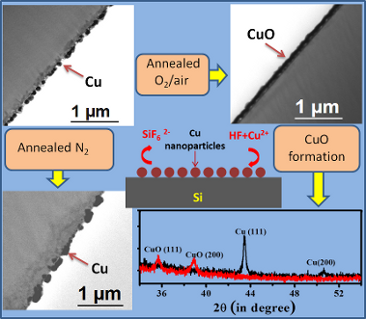
- oxidation of Cu nanoparticles deposited by the galvanic displacement reaction on silicon surfaces at various ambient conditions. Experimental Copper nanoparticles have been deposited on Si(100) substrates by an easy, one-step galvanic displacement reaction. 5 mL of 10 mM CuSO4 (Merck, >99%) solution was
- discs each of 3 mm diameter were cut from the Si(100) substrate and mechanically thinned to 100 μm, then dimpled and polished to achieve a thickness of approximately 30 μm. Finally, Ar-ion milling was performed to make them electron transparent. The Cu nanoparticles, after these procedures deposited by


Template-controlled piezoactivity of ZnO thin films grown via a bioinspired approach
Beilstein J. Nanotechnol. 2017, 8, 296–303, doi:10.3762/bjnano.8.32
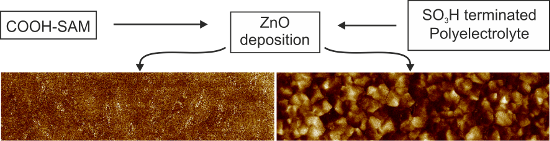
- pm V−1 to 6.4 pm V−1. This leads to responses comparable to ZnO structures till now only obtained by RF magnetron sputtering [14] or after high temperature treatment (e.g., at 500 °C) [15]. Experimental Template preparation Boron-doped Si (100) wafers were cleaned first in Milli-Q water and then in


Colorimetric gas detection by the varying thickness of a thin film of ultrasmall PTSA-coated TiO2 nanoparticles on a Si substrate
Beilstein J. Nanotechnol. 2017, 8, 229–236, doi:10.3762/bjnano.8.25
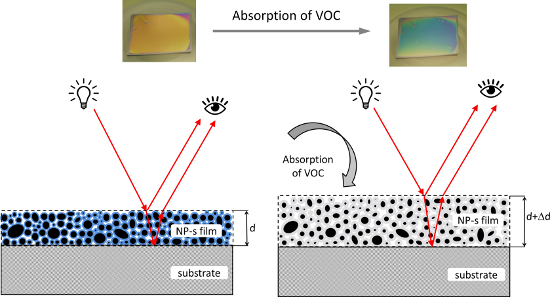
- % after washing. Thin films based on TiO2 nanoparticles were prepared from the NP colloidal solution (5.9% by mass in ethanol) by spin coating on Si(100) substrates in ambient atmosphere. The substrates were cleaned prior to coating with ethanol to remove small dust particles. The rotation frequency


Influence of hydrofluoric acid treatment on electroless deposition of Au clusters
Beilstein J. Nanotechnol. 2017, 8, 183–189, doi:10.3762/bjnano.8.19
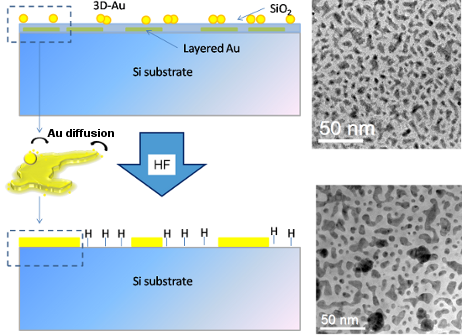
- , we found that metal nanoparticles nucleate instantaneously and their subsequent growth is governed by diffusion in the solution [23]. In detail, we showed that by immersion of a Si(100) substrate for a few seconds in a solution containing 1 mM KAuCl4 and 4.8 M HF, AuNPs with a mean radius of less
- were mechanically thinned and gently milled for TEM observations. HF treatment before Au deposition The Si(100) substrates were cleaned following the procedure described in the experimental section. Some of them were subsequently immersed in DHF (diluted HF, 6% HF) for 10 s and some others for 240 s
- silicon. The SAED and the XRD measurements showed a pronounced heteroepitaxial component but also a polycrystalline phase for Au on Si(100) obtained by galvanic displacement. The layered gold regions could be altered by means of postdeposition HF treatments. TEM observations and XRD analysis showed that


Nanostructured germanium deposited on heated substrates with enhanced photoelectric properties
Beilstein J. Nanotechnol. 2016, 7, 1492–1500, doi:10.3762/bjnano.7.142
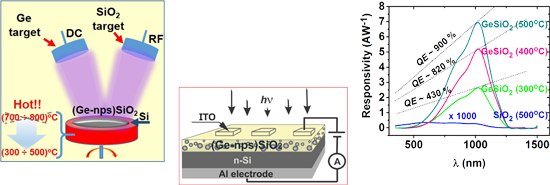
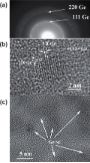
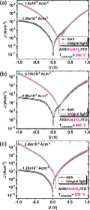
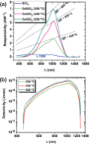
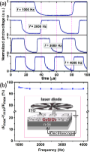
- Nanosystems, Gamma 1000, sputtering equipment. Clean 1 cm2 substrates of n-type Si(100) with a resistivity of 10–20 Ω·cm were used and they were firstly degassed for 5 min at 200 °C in vacuum. To obtain the desired Ge/SiO2 (50:50) concentration ratio on the Si substrate at a base pressure of 1 × 10⁻⁷ Torr




Au nanoparticle-based sensor for apomorphine detection in plasma
Beilstein J. Nanotechnol. 2015, 6, 2224–2232, doi:10.3762/bjnano.6.228
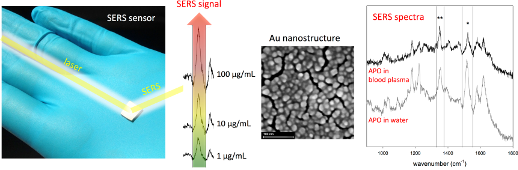
- nm, pulse width 25 ns, repetition rate 10 Hz) was focused onto a pure gold target (99.99%) mounted on a rotating holder. The substrates were deposited on pieces of Corning Glass 5049, or Si(100), placed at a distance of 35 mm from the target and held at room temperature. The target holder was rotated


Nanostructuring of GeTiO amorphous films by pulsed laser irradiation
Beilstein J. Nanotechnol. 2015, 6, 893–900, doi:10.3762/bjnano.6.92
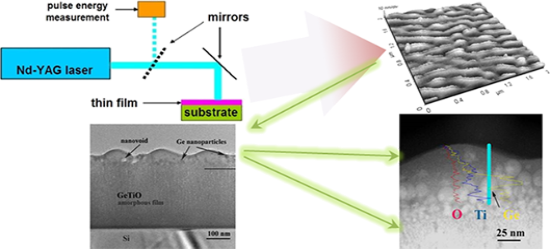
- GeTiO matrix. Experimental Amorphous GeTiO films with a thickness of 330 nm were deposited by RF magnetron sputtering on Si(100) wafer substrates using Ge:TiO2 with 50:50 atomic ratio. Details on the film deposition are found in [23]. These GeTiO amorphous films were irradiated with laser fluences from


Structure and mechanism of the formation of core–shell nanoparticles obtained through a one-step gas-phase synthesis by electron beam evaporation
Beilstein J. Nanotechnol. 2015, 6, 874–880, doi:10.3762/bjnano.6.89
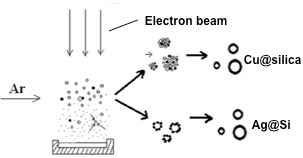
- of core–shell structures. As the vapour pressure of Ag (100 kPa at 2433 K [19]) is higher than that of Si (100 kPa at 3537 K [19]), at higher beam currents, the Si:Ag vapour ratio would decrease. Only at the beam current of 4 mA was the Si content in the vapour sufficient to create the core–shell


A scanning probe microscope for magnetoresistive cantilevers utilizing a nested scanner design for large-area scans
Beilstein J. Nanotechnol. 2015, 6, 451–461, doi:10.3762/bjnano.6.46
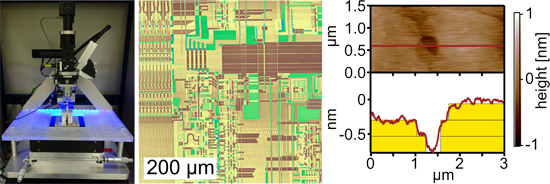
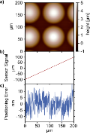
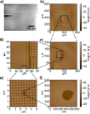
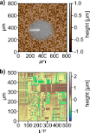
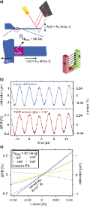
- exchange bias [55]. The TMR stack is grown by sputtering techniques on a 4'' Si(100) wafer substrate with 300 ± 2 μm thickness (Si-Mat Silicon Materials, Germany) with thermally grown 2 μm-thick and 100 nm-thick SiO2 layers on the rear and front side, respectively. The TMR sensor AFM cantilevers are


Boosting the local anodic oxidation of silicon through carbon nanofiber atomic force microscopy probes
Beilstein J. Nanotechnol. 2015, 6, 215–222, doi:10.3762/bjnano.6.20
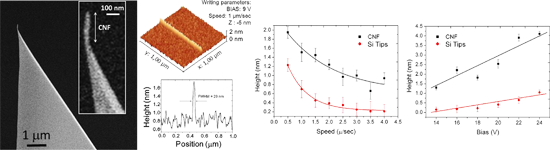
- captured and subtracted. All tests are performed at room conditions, with a temperature of 25 °C and under a controlled relative humidity ranging from 20 to 40%. The Si substrates consist of chips cut from Si(100) wafers. Organic contamination on the chips was removed by oxygen plasma etching before the


In situ metalation of free base phthalocyanine covalently bonded to silicon surfaces
Beilstein J. Nanotechnol. 2014, 5, 2222–2229, doi:10.3762/bjnano.5.231
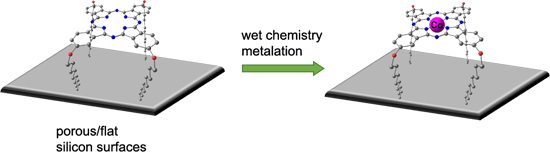
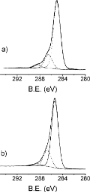
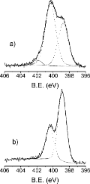
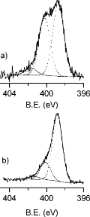
- 17/A, 43124 Parma, Italy 10.3762/bjnano.5.231 Abstract Free 4-undecenoxyphthalocyanine molecules were covalently bonded to Si(100) and porous silicon through thermic hydrosilylation of the terminal double bonds of the undecenyl chains. The success of the anchoring strategy on both surfaces was
- synthesized to allow for a silicon grafting by functionalization with four undecenyl chains each having a terminal double bond. Phthalocyanine covalent anchoring was performed through thermic hydrosilylation on flat Si(100) and on porous silicon (Si-1-Pc and PSi-1-Pc, respectively). The success of the
- flat Si(100) and porous Si was performed through thermally activated hydrosilylation and the functionalized samples (Si-1-Pc and PSi-1-Pc, respectively) were characterized through XPS. In addition, further experiments were performed to demonstrate that the surface anchoring is not due to physisorption

Electron-beam induced deposition and autocatalytic decomposition of Co(CO)3NO
Beilstein J. Nanotechnol. 2014, 5, 1175–1185, doi:10.3762/bjnano.5.129
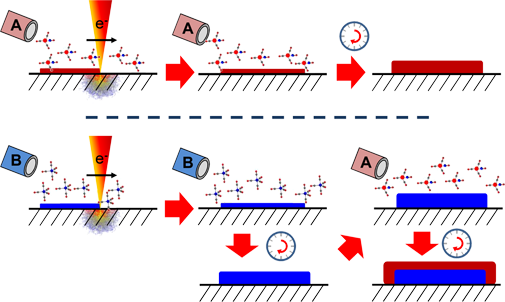
- bilayer and even multilayer nanostructures. Results and Discussion EBID plus autocatalytic growth EBID structures were deposited from Co(CO)3NO on native SiOx on Si(100) and 100 nm Si3N4 membranes, and on commercially available, thermal 300 nm SiO2 on Si(100). The beam energy was 15 keV at a beam current
- subsequently exposed to Co(CO)3NO. The investigated surfaces were SiOx layers on Si(100) and Si3N4, both of which are suitable substrates for EBISA using Fe(CO)5 [7][16]. On these surfaces, electron stimulated desorption of oxygen and the thereby created oxygen vacancies were identified as the active sites for
- comparable structures on SiOx/Si(100) (not shown); note that severe charging prevents Auger electron spectroscopy on the Si3N4 membrane samples. Figure 7 shows the optical density (left vertical axis) at the Co L3 edge and average apparent Co thickness dA (right vertical axis) of CoOxNyCz layers grown on




Organic and inorganic–organic thin film structures by molecular layer deposition: A review
Beilstein J. Nanotechnol. 2014, 5, 1104–1136, doi:10.3762/bjnano.5.123
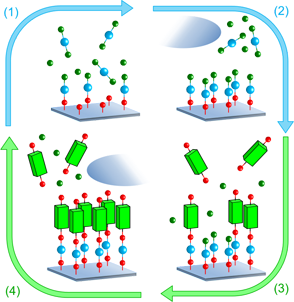
- precursor exposure lengths, although some ammonium chloride salt formation was observed. The highest GPC values for nylon 66 were 13.1 Å per cycle when deposited at 60 °C on pretreated Si(100) [8] and up to 19 Å per cycle on KBr substrates at the deposition temperature of 83 °C [50]. The latter value is
- -diamine and terephthaloyl dichloride to grow semi-aromatic polyamide thin films. The highest achieved growth rate of this type of polyamide on Si(100) substrates was only 2 Å per cycle at 85 °C. The near-edge X-ray absorption fine structure spectroscopy measurements showed that the oligomer units of the
- was 4.9 Å per cycle on Si(100) and soda lime glass substrates at 160 °C. Yoshida et al. [63][64] employed Au-coated Si substrates, modified with 4-aminothiophenol to obtain NH2-group terminated surfaces. They conducted the experiments at 170 °C, achieving a GPC value of 2.0 Å per cycle. As the




Scale effects of nanomechanical properties and deformation behavior of Au nanoparticle and thin film using depth sensing nanoindentation
Beilstein J. Nanotechnol. 2014, 5, 822–836, doi:10.3762/bjnano.5.94
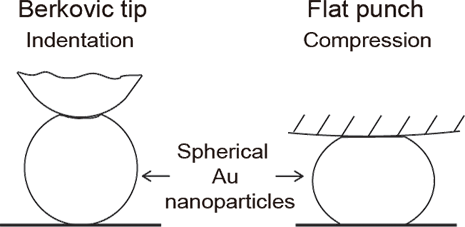
- deformation. This results in greater resistance to deformation and increased yield stress [28][36][37]. Experimental Materials and sample preparation Si(100) wafers with a native oxide layer (University Wafers, Boston, MA) were ultrasonically cleaned in deionized (DI) water, followed by isopropyl alcohol (IPA
- ) image (S-4300 SEM, Hitachi HTA Inc., Pleasanton, CA) of the nanoparticles. For the nanoparticle experiments conducted, several droplets of Au nanoparticles suspended in DI water were deposited onto the clean Si(100) substrates by using a syringe. A solution concentration of 0.01 mg/mL was used. The
- substrate was then placed on a hot plate and heated to a temperature of about 70–80 °C and left until the water was evaporated. For thin film experiments, a polycrystalline Au film of approximately 100 nm thickness was deposited onto the surface of the Si(100) substrate by thermal evaporation at an






3D-nanoarchitectured Pd/Ni catalysts prepared by atomic layer deposition for the electrooxidation of formic acid
Beilstein J. Nanotechnol. 2014, 5, 162–172, doi:10.3762/bjnano.5.16
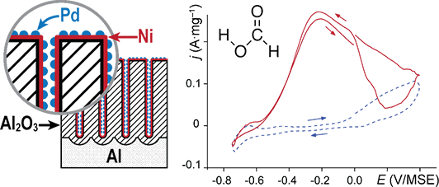
- . A typical AAO template is shown in Figure 14. The Pd/Ni catalysts have been prepared by ALD in a Fiji 200 reactor from Ultratech/Cambridge Nanotech. The catalysts (Ni and Pd) were deposited both on AAO membranes and on flat Si(100) wafers that were cleaned beforehand by sonication in acetone
- /Ni catalysts have been deposited both on 3D alumina templates and flat Si(100) wafers in order to facilitate the chemical and structural characterizations. In situ monitoring of the relative mass gain and loss was performed by using a quartz crystal microbalance (QCM from Inficon). The QCM is


Structural development and energy dissipation in simulated silicon apices
Beilstein J. Nanotechnol. 2013, 4, 941–948, doi:10.3762/bjnano.4.106
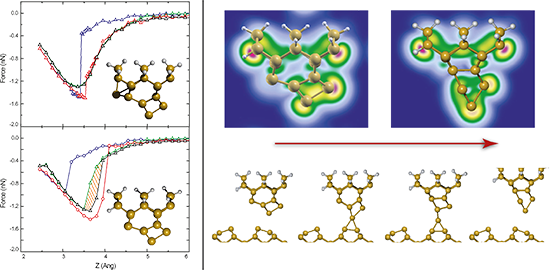
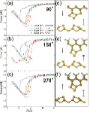
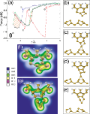
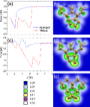
- artefact caused by mechanical coupling between the sensor and the piezo actuator [38]. In the current study we use the Si(100)-c(4×2) surface as a prototypical system, chosen because of its known dissipative behaviour in NCAFM experiments [8][13][37][39]. In particular, we have previously shown that a
- large variety of tip types are possible on the Si(100) surface, each demonstrating a different tip–sample interaction, and importantly, each exhibiting markedly different levels of measured dissipation [40]. Here we examine the effect that simple rotations of the simulated cluster can have on the tip
- structure was considered relaxed when forces on atoms fell below 0.01 eV/Å. To obtain calculated F(z) curves the silicon tip clusters were placed at an initial vertical position of 8 Å above the Si(100) surface upper dimer atom. The vertical distance, z, is defined as the distance between the surface upper


In situ growth optimization in focused electron-beam induced deposition
Beilstein J. Nanotechnol. 2013, 4, 919–926, doi:10.3762/bjnano.4.103
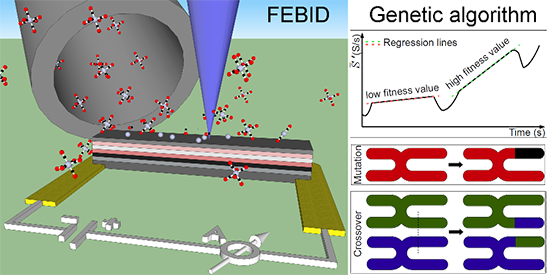
- material n-doped Si(100) (350 μm)/LPCVD Si3N4 (300 nm) was used, which was equipped with 10/200 nm thick Cr/Au contacts with a separation of 3 μm that were prepared by using UV-lithography and a lift-off process. The optimization process by using the GA in combination with in situ electrical conductance


Synthesis of indium oxi-sulfide films by atomic layer deposition: The essential role of plasma enhancement
Beilstein J. Nanotechnol. 2013, 4, 750–757, doi:10.3762/bjnano.4.85
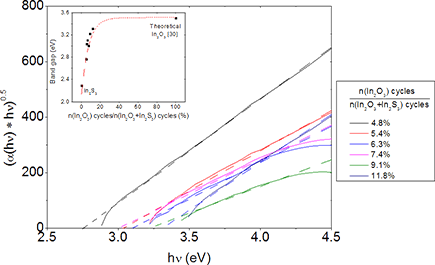
- suitability as Cd-free buffer layer for thin film solar cells. Experimental In2S3 and In2(S,O)3 thin films were deposited on borosilicate glass and Si(100) substrates in a SUNALE R-200 ALD reactor (Picosun Oy.) with a modified 15 cm × 15 cm square reaction chamber. All samples were deposited performing a
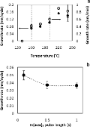
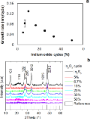
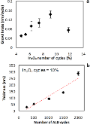
- detector INCASynergy 350. All EDX measurements were carried out on Si(100) substrates and the values reported are atomic percentages (atom %). Growth rate of pure In2S3 a) as function of the process temperature b) as function of the In(acac)3 pulse length. Influence of the number of In2O3 cycles on (a) the


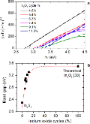

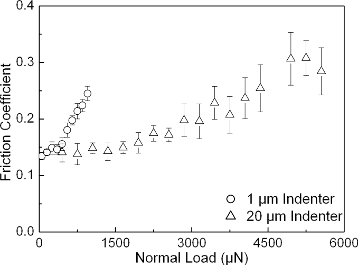
Effect of normal load and roughness on the nanoscale friction coefficient in the elastic and plastic contact regime
Beilstein J. Nanotechnol. 2013, 4, 66–71, doi:10.3762/bjnano.4.7
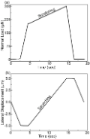
- nanoindentation-based scratch test with linearly increasing load. Experimental Samples: As mentioned above, fused silica and DLC were chosen as sample materials. The fused silica was provided as a standard sample by Hysitron Inc. The DLC samples, 1µm thick films on Si(100) wafer, were synthesized by chemical


Tuning the properties of magnetic thin films by interaction with periodic nanostructures
Beilstein J. Nanotechnol. 2012, 3, 831–842, doi:10.3762/bjnano.3.93
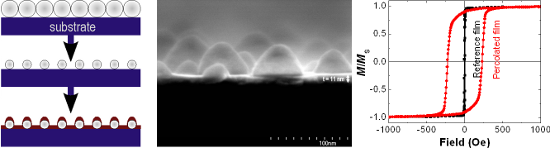
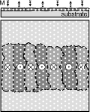
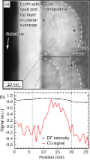
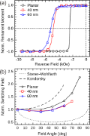
- monolayers of self-assembled Au particles on thermally oxidized Si(100) substrates [28]. The Au colloid solution was diluted with pure ethanol in the volume ratio of 2:1. A volume of 60 µL of such solution was dispersed onto the substrates and dried under ambient conditions in a covered box to prevent air


Effect of spherical Au nanoparticles on nanofriction and wear reduction in dry and liquid environments
Beilstein J. Nanotechnol. 2012, 3, 759–772, doi:10.3762/bjnano.3.85
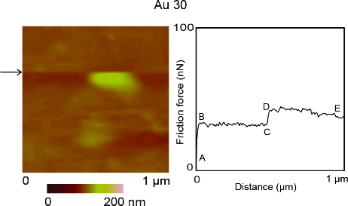
- also attractive due to its environmentally friendly nature. Materials and sample preparation Si (100) silicon wafers with a native oxide layer (University Wafers, Boston, MA) were ultrasonically cleaned in DI water, followed by isopropyl alcohol (IPA) and finally acetone for 15 min each. For
- experiments involving nanoparticle-coated surfaces under dry conditions, several droplets of Au nanoparticles suspended in DI water (Nanopartz, Inc., Loveland, CO) were deposited onto the clean Si (100) substrate by using a syringe. A 25% concentration of an initial 0.05 mg/mL solution was used for all



Ordered arrays of nanoporous gold nanoparticles
Beilstein J. Nanotechnol. 2012, 3, 651–657, doi:10.3762/bjnano.3.74
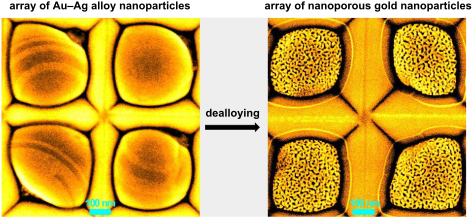
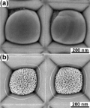
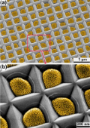
- schematically presented in Figure 1. The surface of a Si(100) wafer was patterned into a periodic array of pyramidal pits (Figure S1, Supporting Information File 1) by using SCIL, reactive ion etching (RIE), and KOH etching. The spatial period of these pits is 520 nm. A 200 nm layer of SiO2 was thermally grown
- areas of both the nanoparticles and nanoporous materials. Experimental The surface of a Si(100) wafer was structured into periodic array of pyramidal pits by using SCIL, reactive ion etching (RIE, Oxford Plasmalab 100), and KOH etching. Before application of the resist for SCIL, 200 nm of SiO2 was



Focused electron beam induced deposition: A perspective
Beilstein J. Nanotechnol. 2012, 3, 597–619, doi:10.3762/bjnano.3.70
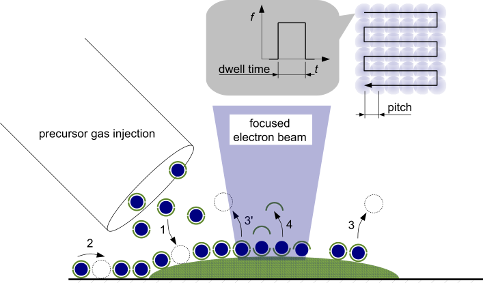
- current were 5 kV and 930 pA, respectively. The molecular flux ratio of the two precursor species was controlled by the distance of the Si5H12 gas injection capillary to the substrate surface (p-doped Si(100) with 300 nm thermally grown oxide), as well as a fine-dosing valve to control the Si5H12
- Nova NanoLab 600) at 5 keV beam energy and 1.6 nA current. The writing parameters were 20 nm pitch and 1 μs dwell time. p-Doped Si (100) substrates with 200 nm of thermally grown oxide were used. The structures were deposited between Au/Cr contacts previously defined by standard lithographic means. The


Synthesis and electrical characterization of intrinsic and in situ doped Si nanowires using a novel precursor
Beilstein J. Nanotechnol. 2012, 3, 564–569, doi:10.3762/bjnano.3.65
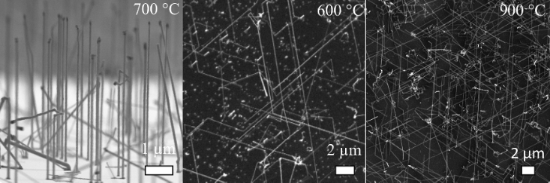
- precursor gas flow was stopped, and the quartz tube was purged with He for a further 5 min before the sample was removed from the APCVD system. For contacting the NWs, 200 × 200 µm2 Au pads were structured on a highly doped Si (100) wafer, capped with 80 nm Al2O3, by photolithography and lift-off techniques
- . VLS-grown Si-NWs were then removed from their growth substrates by ultrasonication in propan-2-ol. Subsequently the NWs were randomly distributed by dropping the suspension onto the above mentioned Si(100) wafer with prepatterned Au pads. Finally the NWs were connected to the prepatterned Au pads by





