


Search results
Search for "TGA" in Full Text gives 149 result(s) in Beilstein Journal of Nanotechnology.
Novel hollow titanium dioxide nanospheres with antimicrobial activity against resistant bacteria
Beilstein J. Nanotechnol. 2019, 10, 1716–1725, doi:10.3762/bjnano.10.167
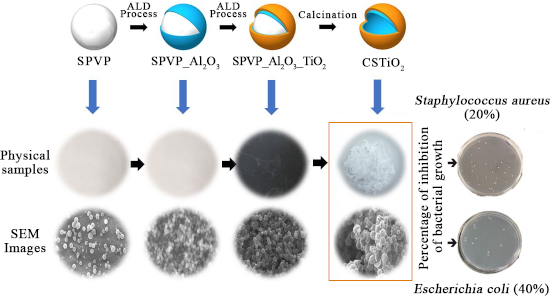
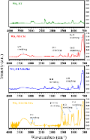
- chemical composition was also performed by Fourier-transform infrared spectroscopy (FTIR) in order to study the main functional groups of the sample (data found in Supporting Information File 1). Thermogravimetric analysis (TGA) curves representing the mass loss with respect to temperature of SPVP, coated
- expected, the TGA curves of structures containing PVP clearly evidenced both typical PVP degradation processes: i) the carbonic backbone decomposition around 200 °C; and ii) pyrrolidone group decomposition between 350 and 470 °C [24][25][26]. TGA was used to verify two important facts: i) The calcination
- process effectively removed the PVP polymer, since CSTiO2 presented the same TGA curve as the commercial TiO2 NPs. TGA curves of CSTiO2 did not show any PVP degradation process thereby demonstrating that CSTiO2 was PVP-free. ii) The aluminum oxide and titanium dioxide deposited during the ALD processes


Highly ordered mesoporous silica film nanocomposites containing gold nanoparticles for the catalytic reduction of 4-nitrophenol
Beilstein J. Nanotechnol. 2019, 10, 1368–1379, doi:10.3762/bjnano.10.135
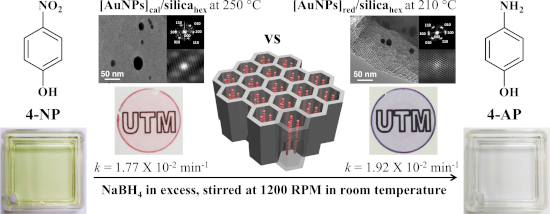
- of sodium borohydride (NaBH4). Results and Discussion Thermal decomposition of [Au3Pz3]C10TEG Thermogravimetric analysis (TGA) was used to examine the process of weight loss as a function of temperature change [34]. The thermal behavior of the [Au3Pz3]C10TEG was further supported by its TGA
- 200 kV. For the TEM tomography, the sample was visualized using a Hitachi HT7700 instrument for high-resolution imaging at low accelerating voltage (80 kV) where the 3D reconstruction was performed using a Hitachi EMIP tomography acquisition. Thermogravimetric analysis (TGA) was performed using a
- Mettler-Toledo TGA/SDTA851e device at a heating rate of 10 °C min−1. For the fabrication, the sol–gel solution was spin-coated on a quartz plate using a Laurell spin coater, model WS-400-6NPP-LITE. Calcination was carried out under atmospheric conditions using a Nabertherm model LE6/11 muffle furnace


The effect of magneto-crystalline anisotropy on the properties of hard and soft magnetic ferrite nanoparticles
Beilstein J. Nanotechnol. 2019, 10, 1348–1359, doi:10.3762/bjnano.10.133
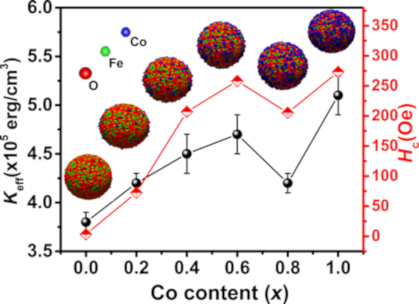
- the CoFe2O4 samples was checked by thermogravimetric analysis (TGA). Figure 7 shows two weight-loss stages. The first weight loss (about 2.8%), observed in the temperature range of 30–200 °C, is attributed to the vaporization of water from the sample. Since the possible decomposition of spinel ferrite
- . The diffraction patterns were analyzed using the FullProf-Suite (Version 6.0) software. Thermogravimetric analysis (TGA) was carried out in the temperature range from 30 to 650 °C with a heating rate of 10 °C/min under N2 flow using a TGA/SDTA 851 Mettler Toledo thermogravimetric analyzer. Fourier
- correspond to the tetrahedral A-sites and octahedral B-sites, respectively. TGA curve of the CoFe2O4 sample. Room-temperature magnetization curves of the CoxFe3−xO4 samples measured. The inset shows the magnetization behavior at low fields. The M–1/H2 dependence of the CoxFe3−xO4 samples at high field


Scavenging of reactive oxygen species by phenolic compound-modified maghemite nanoparticles
Beilstein J. Nanotechnol. 2019, 10, 1073–1088, doi:10.3762/bjnano.10.108
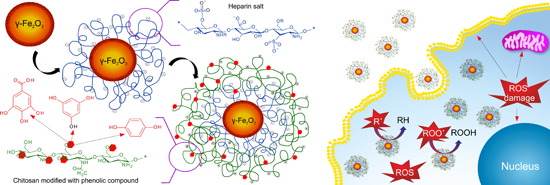
- -FeO were located below this range, and only one weak peak at ca. 896 cm−1 was ascribed to pure γ-Fe2O3 [25]. The absorption peak above 3000 cm−1 corresponds to the O–H stretching vibration (Figure 3a). According to the TGA results, the γ-Fe2O3 weight loss occurred in two temperature ranges (Figure 3b
- magnetization of the γ-Fe2O3@Hep colloid (by 2%) at 260 K was observed compared to the saturation magnetization of γ-Fe2O3 at the same particle concentration (inset in Figure 3c). This decrease was caused by the increased content of the nonmagnetic fraction in the particles. The TGA result of the γ-Fe2O3@Hep
- ; however, the peaks were slightly shifted to lower values. For example, peaks at 1038 and 1072 cm−1 in the spectra of the modified chitosan-coated particles corresponded to the peaks at 1028 and 1064 cm−1 in the spectrum of the modified chitosans (Figure 3a), respectively. Additionally, the TGA thermograms





Structural and optical properties of penicillamine-protected gold nanocluster fractions separated by sequential size-selective fractionation
Beilstein J. Nanotechnol. 2019, 10, 955–966, doi:10.3762/bjnano.10.96
- source at 1253.6 eV (10 kV, 20 mA). Thermogravimetric analysis (TGA) measurements were conducted with a Perkin-Elmer TGA 6 thermogravimetric analyzer (Waltham, MA, USA). In addition, the UV–vis absorption spectra of the crude AuNC product and the AuNC fractions were recorded on a Cary 100 Scan UV–vis
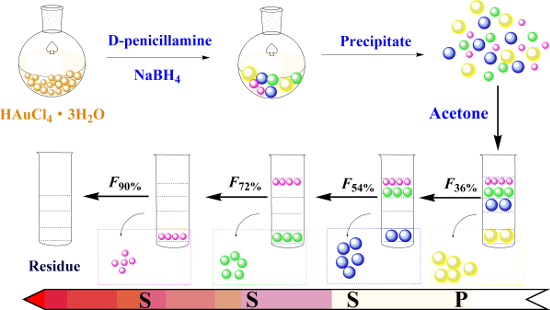
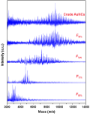
- (TGA) of the AuNC samples was carried out and the weight loss of the crude AuNCs product, F36%, F54%, F72%, and F90% fractions were calculated as well. Based on the TGA and MS results, the average molecular formula of the four fractions could be determined as Au38(SR)18, Au28(SR)15, Au18(SR)12, and
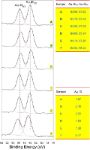
- (the smaller NCs are protected by relative more hydrophilic ligand). The Au/S ratio decreases with the decrease in the cluster core size which is also verified by the TGA results. TGA data showed that the percentage of ligands in AuNCs increased as the cluster size decreased. A small amount of Na and



Tungsten disulfide-based nanocomposites for photothermal therapy
Beilstein J. Nanotechnol. 2019, 10, 811–822, doi:10.3762/bjnano.10.81
- performed using OMNIC 9 spectra software (Thermo Scientific, Waltham, MA, US). Thermogravimetric analysis (TGA) was performed by employing a TGA/DSC1 analyzer (Mettler-Toledo, Greifensee, Switzerland). All thermograms were recorded in a nitrogen (50 mL/min) environment at a heating rate of 10 °C·min−1 over
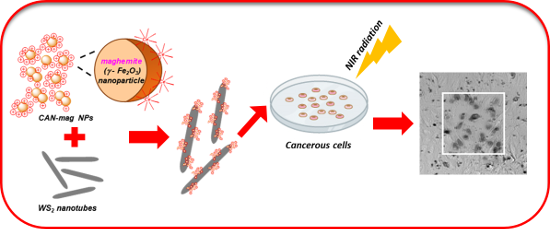
- nanoparticles. The preparation procedures are facile and make use of readily available reagents and equipment. Electron microscopy, FTIR, zeta potential, TGA, and ICP analyses demonstrated the attachment of CAN-mag nanoparticles to the nanotubes. CAN-mag attachment around the nanotubes was not conformal, and in
- enabled the attachment of PEI and PAA onto the nanocomposite, as shown by TEM, FTIR, TGA, and zeta potential. The ability for further attachment of polymers and other molecules can be utilized to enhance the therapeutic activity. One way is the attachment of a second PTT agent, such as a polypyrrole, and






An efficient electrode material for high performance solid-state hybrid supercapacitors based on a Cu/CuO/porous carbon nanofiber/TiO2 hybrid composite
Beilstein J. Nanotechnol. 2019, 10, 781–793, doi:10.3762/bjnano.10.78
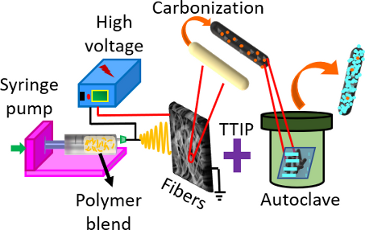
- . Thermogravimetric analysis was carried out using SDT Q600 with a TGA/DTA 6200 thermogravimetric analyzer from room temperature to 1000 °C under N2 flow. Electrochemical measurements A CH Instruments device (model CHI 900B) was employed to examine the electrochemical properties of the samples. The working electrode
- composite, TGA analysis was performed from room temperature to 1000 °C in inert atmosphere at a heating rate of 5 °C/min. Figure 9 shows the TGA curve of the Cu/CuO/PCNF/TiO2 composite. The weight loss below 200 °C is due to the removal of the absorbed water molecules. The weight loss around 700 °C is due


Towards rare-earth-free white light-emitting diode devices based on the combination of dicyanomethylene and pyranine as organic dyes supported on zinc single-layered hydroxide
Beilstein J. Nanotechnol. 2019, 10, 760–770, doi:10.3762/bjnano.10.75
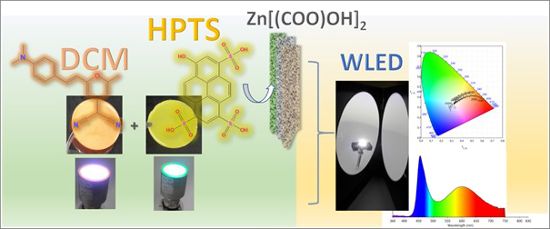
- before the measurement. Dye molecules used for the preparation of the organic phosphor film. (a) Normalized emission spectra of blue LED light and selected dyes in ethanol solution: DCM and HPTS and (b) their predicted combined spectrum. (a) SEM image, (b) XRD pattern and (c) TGA/DTA of zinc


Outstanding chain-extension effect and high UV resistance of polybutylene succinate containing amino-acid-modified layered double hydroxides
Beilstein J. Nanotechnol. 2019, 10, 684–695, doi:10.3762/bjnano.10.68
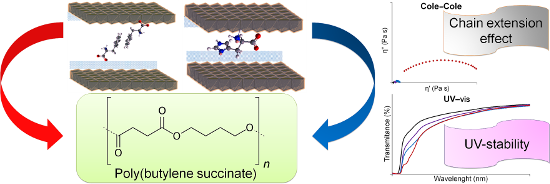
- spectroscopy (FTIR) and thermogravimetric analysis (TGA). As expected, the UV–vis spectra showed absorbance in the UVC and UVB regions and the potential role as UV stabilizers. In a second part, PBS composites were prepared with 5 wt % of LDH filler by melt blending and once again fully characterized (XRD, TGA
- associated with the glass-to-rubber transition. The crystallization temperature (Tc) and the enthalpy of crystallization (∆Hc) were measured during the cooling scan. Thermogravimetric analysis (TGA) of LDH fillers and composites was performed in air atmosphere (gas flow 30 mL min−1) using a Perkin Elmer TGA7
- , C–N) overlap in the range of 1700–1480 cm−1 and the lattice vibration of M–O in the platelet structure can be depicted at a low wavenumber (800–650 cm−1). The experimental chemical composition of all synthesized LDHs has been estimated based on TGA analysis and collected in Table 1. All the


Ceria/polymer nanocontainers for high-performance encapsulation of fluorophores
Beilstein J. Nanotechnol. 2019, 10, 522–530, doi:10.3762/bjnano.10.53
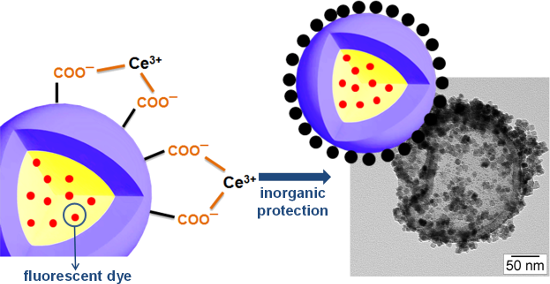
- ). Thermogravimetric analysis of the freeze-dried sample was conducted using a Mettler Toledo TGA-851 at a heating rate of 10 °C·min−1. Fluorescence spectra were recorded for the dispersions containing 0.75 wt % capsule content by using in a custom-built setup containing a diode laser with wavelength 635 nm (Roithner
- (sample NC-CeO2 at ambient conditions). Characteristics of the samples reported in this work. Supporting Information Supporting Information File 80: Chemical structure of TDI, absorption and emission spectra of TDI, EDX spectra, TGA, and additional photoluminescence emission spectra of samples
- . Acknowledgements The source of this article is the doctoral dissertation of the first author, Dr. Katheek Katta (Uniform Resource Name: urn:nbn:de:hebis:77-diss-1000007157). Michael Steiert, Petra Räder, Gunnar Glaßer, and Katrin Kirchhoff are acknowledged for XRD, TGA, EDX, and high-resolution TEM measurements


A porous 3D-RGO@MWCNT hybrid material as Li–S battery cathode
Beilstein J. Nanotechnol. 2019, 10, 514–521, doi:10.3762/bjnano.10.52
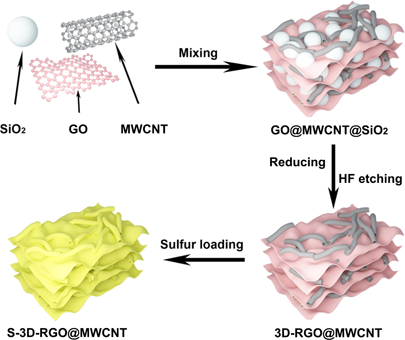
- immobilize sulfur and polysulfides within S-3D-RGO@MWCNT, reducing the shuttle effect and improving the cycling life of Li–S batteries. The thermogravimetric analysis (TGA) analysis (Figure 4f) shows that the S-3D-RGO@MWCNT composite exhibits a very high weight loss (62 wt %) between 30 and 300 °C
- (HRTEM, JEOL JEM-2100F) images were used for investigating surface topology. The content of sulfur in the S-3D-RGO@MWCNT composite was confirmed using thermogravimetric analysis (TGA, SHIMADZU DTG-60) in Ar atmosphere. Raman spectra were recorded on Raman spectrometer (Raman, Renishaw) using 532 nm
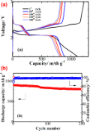
- @MWCNT; (c) TGA of S-3D-RGO@MWCNT; (d) The XPS survey spectrum of S-3D-RGO@MWCNT composite; high-resolution XPS spectra of (e) C 1s, (f) S 2p. CV curves of the S-3D-RGO@MWCNT cathode at 0.1 mV·s−1 in the first four cycles. (a) CV measurement of the S-3D-RGO@MWCNT cathode (1st, 50th, 100th, 150th and



Removal of toxic heavy metals from river water samples using a porous silica surface modified with a new β-ketoenolic host
Beilstein J. Nanotechnol. 2019, 10, 262–273, doi:10.3762/bjnano.10.25
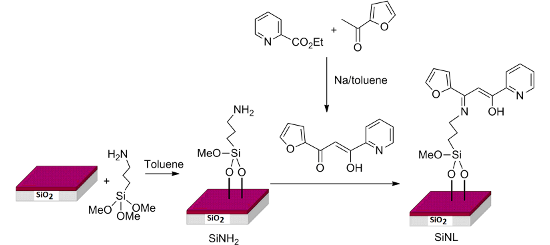
- characterized by elemental analysis, Fourier transform infrared spectroscopy (FTIR), scanning electron microscopy (SEM) images, thermogravimetric analysis (TGA) and nitrogen adsorption–desorption isotherms. Physical methods. Atomic adsorption measurements were performed on a Varian A.A. 400 spectrophotometer
- , respectively, demonstrate the modification of SiNH2 with L1. Compared to the blank silica, the surface of the new material (SiNL) shown by SEM (Figure 2) became rough, which confirms the success of organic moieties filling the surface. The thermal stability of SiG, SiNH2 and SiNL was evaluated by TGA (Figure 3
- different metals. Stability and reusability of the adsorbent. Our hybrid material can be reused more than five times without significant loss in adsorption efficiency (Table 4). This can be explained by the high stability of organic groups onto SiNL which was confirmed by TGA, showing no distinct changes in


Thermal control of the defunctionalization of supported Au25(glutathione)18 catalysts for benzyl alcohol oxidation
Beilstein J. Nanotechnol. 2019, 10, 228–237, doi:10.3762/bjnano.10.21
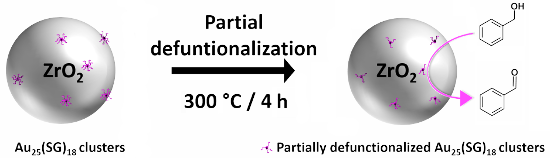
- diagrams and no indication of reflection of bulk gold (Figure S4, Supporting Information File 1). These observations mean that there is no modification of the support and that the quantity of gold is too small to be detected. Thermal studies of the materials were done by thermogravimetric analysis (TGA
- ) under air on pure Au25(SG)18 gold clusters, gold clusters deposited on ZrO2 and ZrO2 alone. From the TGA curve of the clusters, a first gradual weight loss of 6.5% is observed before 200 °C, corresponding to the evaporation of the solvent (Figure 1a). Then a second gradual weight loss of 46.2% happens
- to completely remove the glutathione molecules from the gold surface. For the TGA of the ZrO2 support, 2.4% weight loss was observed at low temperature that corresponds to trace water (Figure 2). After the deposition of 1 wt % Au using Au25(SG)18 on ZrO2, a first weight loss of 2.4% is observed and a




pH-mediated control over the mesostructure of ordered mesoporous materials templated by polyion complex micelles
Beilstein J. Nanotechnol. 2019, 10, 144–156, doi:10.3762/bjnano.10.14
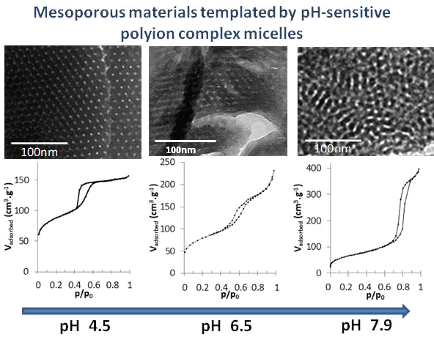
- determination of the volume-averaged hydrodynamic diameters (Dhv); the polydispersity index (PDI) values were obtained from the cumulant method. The chemical composition of the hybrid materials was calculated by combining thermogravimetric analysis (TGA), which allows quantifying the silica content, and N and C
- elemental analyses (EA), which allow determining the quantity of OC and PEO-b-PAA in the material. The results were expressed as N/AA and EO/Si ratios given with ±5% relative error. TGA was performed on a Perkin Elmer STA 6000 instrument at a heating rate of 10 °C·min−1 under an air flow (20 mL·min−1) up to


New micro/mesoporous nanocomposite material from low-cost sources for the efficient removal of aromatic and pathogenic pollutants from water
Beilstein J. Nanotechnol. 2019, 10, 119–131, doi:10.3762/bjnano.10.11
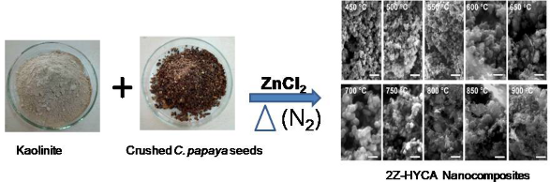
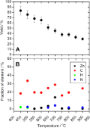
- , the samples made at 750 °C and higher also contain plate-like or fiber-like features. Thermogravimetric and differential thermal analysis Figure 7 shows representative thermogravimetric analysis/differential thermal analysis (TGA/DTA) data obtained from measurements in nitrogen. Consistent with the
- data shown above, there are clear differences between samples produced at reaction temperatures up to 450 °C and the samples obtained at higher temperatures. The samples made between 500 and 900 °C only show a weak and very gradual weight loss of ≈5–6% of the total mass at the end of the TGA/DTA
- processes cannot be separated here. TGA/DTA data analysis therefore indicates that the reaction temperature is indeed a key parameter to obtain a stable material that will resist rapid attrition during use. Comparison with the nitrogen sorption data suggests that a reaction temperature of ≈500 °C is




A novel polyhedral oligomeric silsesquioxane-modified layered double hydroxide: preparation, characterization and properties
Beilstein J. Nanotechnol. 2018, 9, 3053–3068, doi:10.3762/bjnano.9.284
- anions and the metal-hydroxide sheets. This largely reduces the contribution of the water layer accommodated in the interlayer region to the basal spacing [15][19][33]. Here, it is proposed that the less strongly bound interlayer water, which is further verified later by TGA results, might be another
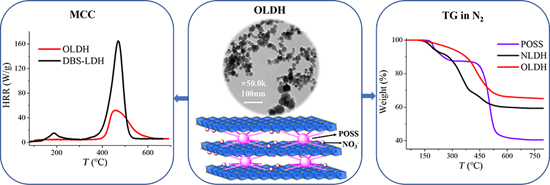
- Thermal stability The thermal decomposition behavior was investigated to evaluate the thermal stability of LDHs, and the TGA thermograms are presented in Figure 10, with the measured data being summarized in Table 3. As can be seen in Figure 10a, the decomposition of NLDH under N2 atmosphere mainly
- slopes of these lines using the following expression: The fitting results and Eα data are summarized in Table 4. Results show that the apparent activation energy increases as a whole with increasing conversion. Combined with the TGA data and the data of α as a function of T, the Eα values of NLDH can be







Co-intercalated layered double hydroxides as thermal and photo-oxidation stabilizers for polypropylene
Beilstein J. Nanotechnol. 2018, 9, 2980–2988, doi:10.3762/bjnano.9.277
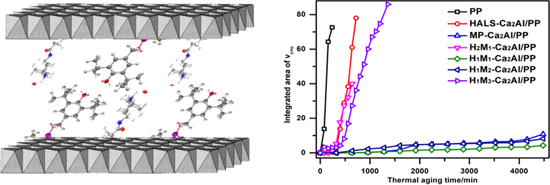
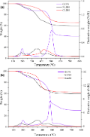
- transmittance spectra of Ca2Al/PP composites. (c) SEM image and (d) Al (left) and Ca (right) element mapping of the H1M1-Ca2Al/PP composite. (a) TGA curves of HnMn′-Ca2Al/PP composites. (b) FTIR spectra of PP after different periods of thermal aging. (c) Thermal aging and (d) photo-oxidation aging of HnMn


Magnetic and luminescent coordination networks based on imidazolium salts and lanthanides for sensitive ratiometric thermometry
Beilstein J. Nanotechnol. 2018, 9, 2775–2787, doi:10.3762/bjnano.9.259
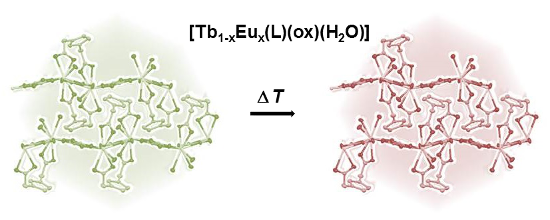
- Figure S2 (Supporting Information File 1), the experimental powder patterns fit well with the patterns calculated from the single crystal structure and show no additional phases. In order to investigate the thermal stability, thermogravimetric analysis (TGA) was realized under air stream from 25 to 900
- a JEOL 6700F (scanning electron microscope (SEM) equipped with a field-emission gun (FEG), operating at 3 kV in the SEI mode instrument. FTIR spectra were collected on a Perkin Elmer Spectrum Two UATR-FTIR spectrometer. TGA-TDA experiments were performed using a TA instrument SDT Q600 (heating rates
- Information Supporting Information contains a representation of the coordination polyhedron, a table of selected bonds, a comparison of the experimental powder X-ray diffraction patterns of the different compounds and the simulated pattern from single crystals X-ray data, SEM analysis, TGA/TDA analysis, a



Accurate control of the covalent functionalization of single-walled carbon nanotubes for the electro-enzymatically controlled oxidation of biomolecules
Beilstein J. Nanotechnol. 2018, 9, 2750–2762, doi:10.3762/bjnano.9.257
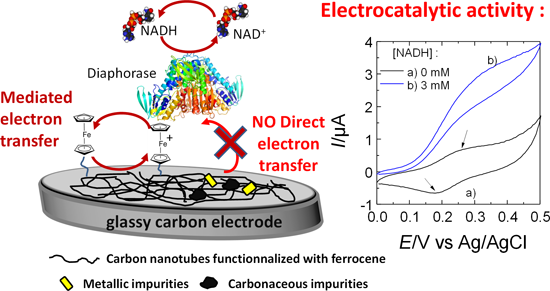
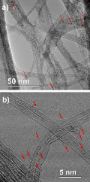
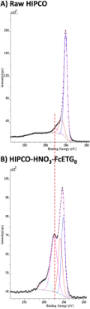
- defects introduced by tuning the irradiation time. A few milligrams of the corresponding oxidized SWCNTs were analyzed in each case before proceeding to step 2. At this stage, the samples were protected under argon gas to avoid any moisture contamination and directly analyzed by HRTEM, XPS and TGA-MS
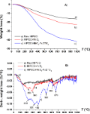
- derivatives at the surface of CNT bundles, but they cannot confirm the covalent nature of the functionalization process. To do this, we have performed TGA-MS analyses of our samples under an inert gas (He). Figure 6A gives an example of the TGA curves obtained for raw, HIPCO-HNO3 and HIPCO-HNO3-FcETG2 samples
- . The mass spectrometer coupled to the TGA system allowed for the examination of the nature of the departing groups. Compared to the raw sample (curve a), the TGA curve after oxidation clearly shows an increase of weight loss above 300 °C for the oxidized sample due to additional oxygenated functions on






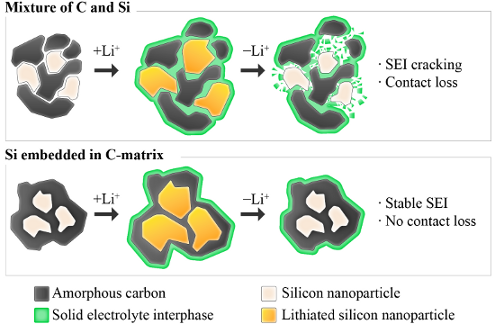
Hydrothermal-derived carbon as a stabilizing matrix for improved cycling performance of silicon-based anodes for lithium-ion full cells
Beilstein J. Nanotechnol. 2018, 9, 2381–2395, doi:10.3762/bjnano.9.223
- power of 5.00 mW. X-ray diffraction (XRD) patterns in a 2θ range of 20° to 80° were recorded with the help of a Bruker D8 Advance X-ray diffractometer (Bruker AXS GmbH) with a Cu Kα-wavelength of λ = 0.154 nm and a step size of 0.039°. Thermogravimetric analysis (TGA) was carried out in a temperature
- range between 25 °C and 800 °C on a TGA Q500 (TA Instruments) in an oxygen/nitrogen atmosphere (nitrogen flow: 10 mL min−1, oxygen flow: 25 mL min−1) in order to determine the Si content. A heating ramp of 20 °C min−1 was applied. Scanning electron microscopy (SEM) with a field emission gun (Schottky
- content of the Si/C composites, TGA was carried out in an oxidative atmosphere, as presented in Figure 3a. While the pure carbon matrix burns off completely and the remaining weight at a temperature of 630 °C is ≈0%, the Si-containing samples exhibit a small plateau at a temperature of ≈630 °C where the


High-throughput synthesis of modified Fresnel zone plate arrays via ion beam lithography
Beilstein J. Nanotechnol. 2018, 9, 2049–2056, doi:10.3762/bjnano.9.194
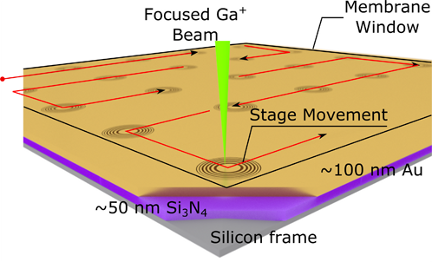
- in Table 1, calculated using TGA for the nominal film thickness grossly overestimates the theoretical diffraction efficiency of the actual fabricated device. The third and a critical factor contributing to the strongly suppressed DE is the parasitic Pt deposition during the fabrication of the


Synthesis of rare-earth metal and rare-earth metal-fluoride nanoparticles in ionic liquids and propylene carbonate
Beilstein J. Nanotechnol. 2018, 9, 1881–1894, doi:10.3762/bjnano.9.180
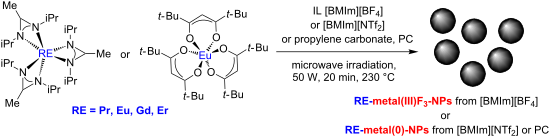
- and low toxicity [41]. Results and Discussion Decomposition of RE(amd)3 and Eu(dpm)3 Thermogravimetric analysis (TGA) revealed decomposition of the rare-earth metal(III) tris(N,N′-diisopropyl-2-methylamidinate) (RE(amd)3; RE = Pr(III), Gd(III), Er(III) and tris(2,2,6,6-tetramethyl-3,5-heptanedionato
- )europium(III) (Eu(dpm)3) at temperatures between 160 and 230 °C (Table S1 and Figure S2, Supporting Information File 1). To keep the formation of by-products as low as possible and to achieve complete decomposition of the precursors, a temperature of 230 °C was selected on the basis of these TGA
- images were calibrated with Debye–Scherrer patterns recorded from a gold reference sample (S106, Plano GmbH, Wetzlar, Germany). Thermogravimetric analysis: TGA was performed with Netzsch TG 209 F3 Tarsus equipped with an Al crucible by using a heating rate of 10 K·min−1. Electrochemical measurements: The


Controllable one-pot synthesis of uniform colloidal TiO2 particles in a mixed solvent solution for photocatalysis
Beilstein J. Nanotechnol. 2018, 9, 1715–1727, doi:10.3762/bjnano.9.163
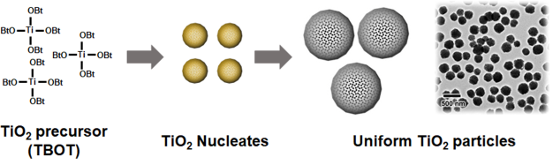
- samples were subjected to calcination at high temperatures, small TiO2 crystallites were grown, severely fused and finely shirked, which resulted in decreased mesoporosity and a small BET surface area but increased crystallinity. To estimate the carbon content and thermal behavior of the TiO2 samples, TGA
- analysis was conducted. Since only a surfactant (HPC), titanium precursor (TBOT) and solvent were used during the synthesis, the final TiO2 sample should mainly consist of elements such as Ti, O, H and C, respectively. Therefore, weight loss during a thermogravimetric analysis (TGA) experiment originates
- from desorption of water, dihydroxylation and the combustion reaction of carbon contents. The TGA analysis was conducted using the surfactant HPC as a reference run to monitor the decomposition temperature (Supporting Information File 1, Figure S3a). It should be noted that HPC is dramatically




Nitrogen-doped carbon nanotubes coated with zinc oxide nanoparticles as sulfur encapsulator for high-performance lithium/sulfur batteries
Beilstein J. Nanotechnol. 2018, 9, 1677–1685, doi:10.3762/bjnano.9.159
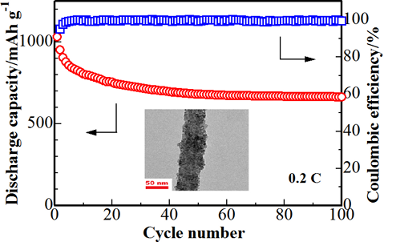
- was calculated based on the (101) peak using the Scherrer equation [13][19] and was found to be around 6.2 nm. In order to determine the sulfur content in the S/ZnO@NCNT composite, the samples were studied by thermogravimetric analysis (TGA) in nitrogen gas. Figure 2 shows that the sulfur content in
- a battery testing system (Neware, Shenzhen) in the potential range of 1–3 V vs Li/Li+. XRD patterns of S, ZnO@NCNT and S/ZnO@NCNT composite. TGA curve of the S/ZnO@NCNT composite. (a) HRTEM image; (b) SAED patterns; (c) TEM image; (d–g) EDX mapping images of the ZnO@NCNT composite. (a) SEM image; (b


Sulfur-, nitrogen- and platinum-doped titania thin films with high catalytic efficiency under visible-light illumination
Beilstein J. Nanotechnol. 2018, 9, 1629–1640, doi:10.3762/bjnano.9.155
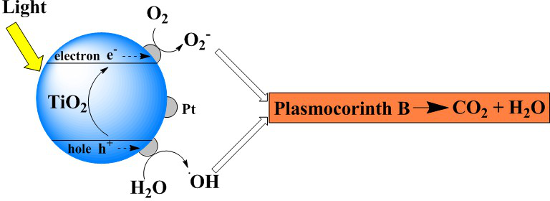
- (ammonium nitrate, urea), sulfur (thiourea) and platinum (chloroplatinic acid), coated onto glass substrates by dip-coating, and thermally treated in a muffle furnace to promote crystallization. The resulting thin films were then characterized by various techniques (i.e., TGA-DSC-MS, XRD, BET, XPS, SEM
- dispersions [45]. The prepared samples were analyzed using thermogravimetric analysis–differential scanning calorimetry–mass spectrometry (TGA-DSC-MS), X-ray diffraction spectroscopy (XRD), specific surface area measurements via Brunauer–Emmett–Teller method (BET), X-ray photoelectron spectroscopy (XPS
- determined by XPS measurements. The platinum in sample S3_N0.5+0.015 M Pt was added as the final layer in the form of chloroplatinic acid by dip-coating. The last number describes molar concentrations of the deposited solution. Thermal analysis The purpose of thermal analysis measurements (TGA-DSC-MS) was to





