Search results
Search for "assembly" in Full Text gives 575 result(s) in Beilstein Journal of Nanotechnology. Showing first 200.
AI-assisted models to predict chemotherapy drugs modified with C60 fullerene derivatives
Beilstein J. Nanotechnol. 2024, 15, 1170–1188, doi:10.3762/bjnano.15.95
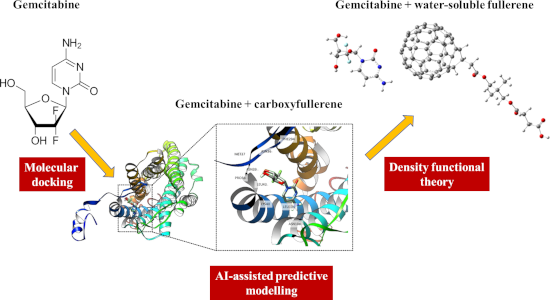
- because of the large size of the complexes. The atypical chemokine receptor 3, also known as CXCR7 or G-protein-coupled receptor 159 (GPR159) [16][18][43], was selected as the target protein for molecular docking. The iterative assembly refinement server (I-Tasser) was used to produce an initial structure


Unveiling the potential of alginate-based nanomaterials in sensing technology and smart delivery applications
Beilstein J. Nanotechnol. 2024, 15, 1077–1104, doi:10.3762/bjnano.15.88
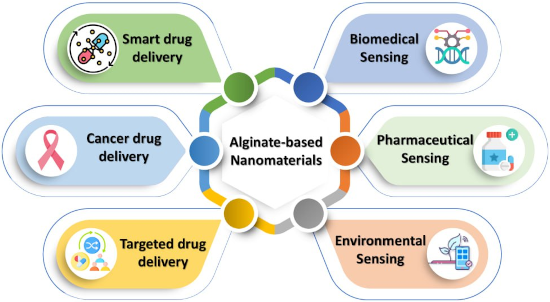
- catalytic and enzymatic peroxidase mimicking activity was synthesized via self-assembly. The decorated Fe3O4@AMALG12@Ag was incorporated into an agarose hydrogel structure, and o-phenylenediamine (OPD) was used as a peroxidase substrate to detect H2O2 calorimetrically (Figure 6). The solid kit demonstrated


Signal generation in dynamic interferometric displacement detection
Beilstein J. Nanotechnol. 2024, 15, 1070–1076, doi:10.3762/bjnano.15.87
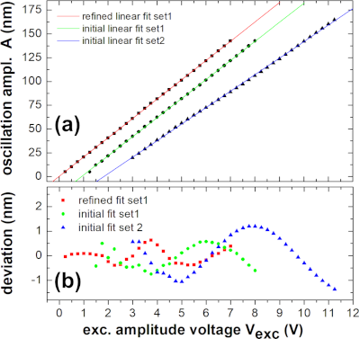
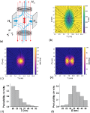
- setup. Michelson-type interferometer formed by an optical fiber end and a microcantilever. Graph and physical quantities are explained in the text. (a) Photo of the AFM scanhead showing the fiber and fiber coarse approach assembly (top), the removable cantilever holder (middle) and the sample plate with


Beyond biomimicry – next generation applications of bioinspired adhesives from microfluidics to composites
Beilstein J. Nanotechnol. 2024, 15, 965–976, doi:10.3762/bjnano.15.79
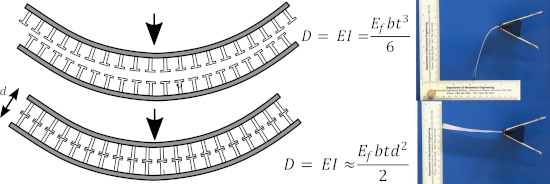
- early 2012, and the focus was then switched to specific applications integrating biomimetic adhesives rather than adhesive development. Compilation showing the assembly and integration of shape memory polymer dry adhesives with embedded heaters and soft robotic actuators. When in the soft state (T > 35


Electrospun nanofibers: building blocks for the repair of bone tissue
Beilstein J. Nanotechnol. 2024, 15, 941–953, doi:10.3762/bjnano.15.77
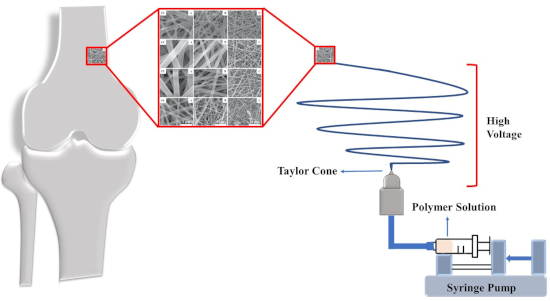
- the literature including inter-surface polymerization, phase separation, drawing, self-assembly, melt blowing, template melt extrusion, forcespinning, and electrospinning [36][37][38][39][40]. Only electrospinning will be further explained in detail in order to remain within the scope. Electrospinning
- 2. There are basically four main elements in an electrospinning assembly. These are (i) a high-voltage power source, (ii) a feeding unit (i.e., nozzle, syringe, or metal needle), (iii) a collector (i.e., plate, cylinder, disc, or rotating drum), and (iv) a viscous polymer (melt or solution) in


When nanomedicines meet tropical diseases
Beilstein J. Nanotechnol. 2024, 15, 830–832, doi:10.3762/bjnano.15.69

- ; Chagas disease; leishmaniasis; nanomedicine; nanotechnology; neglected tropical diseases; schistosomiasis; In May 2021, the World Health Assembly from the World Health Organization (WHO) decided to officially recognize January 30th as the World Neglected Tropical Diseases Day. This initiative was done
Synthesis of silver–palladium Janus nanoparticles using co-sputtering of independent sources: experimental and theorical study
Beilstein J. Nanotechnol. 2024, 15, 808–816, doi:10.3762/bjnano.15.67
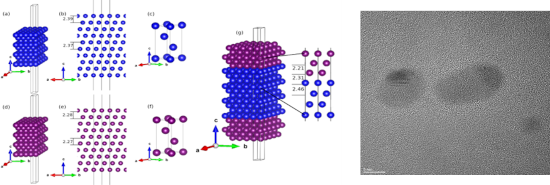
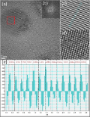
- this paper. Figure 2 shows two TEM micrographs. In Figure 2a, it can be seen that the nanoparticles have a Janus-type structure. Their growth in a preferential orientation in the assembly process enabled the formation of this complex and hierarchical structure. In addition, it is observed that, in the




Gold nanomakura: nanoarchitectonics and their photothermal response in association with carrageenan hydrogels
Beilstein J. Nanotechnol. 2024, 15, 678–693, doi:10.3762/bjnano.15.56

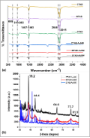
- diffractogram (Figure 5b) also confirmed the preferred longitudinal growth towards the {111} facet. The XRD results as shown in Figure 5b along with SEM/EDX results (Supporting Information File 1, Figure S4) confirmed that the AuNMs were made of gold. The formation of bilayer assembly of surfactants was
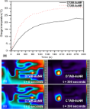
- capped with CTAB and DTAB showed a temporal rise in temperature of ≈16.7 and ≈20.0 °C in the colloidal form. However, upon incorporation into k-CG hydrogels, the temporal temperature rise was ≈9.9 and ≈11.3 °C, respectively. This could be attributed to the morphology and assembly of the nanostructures






Directed growth of quinacridone chains on the vicinal Ag(35 1 1) surface
Beilstein J. Nanotechnol. 2024, 15, 556–568, doi:10.3762/bjnano.15.48
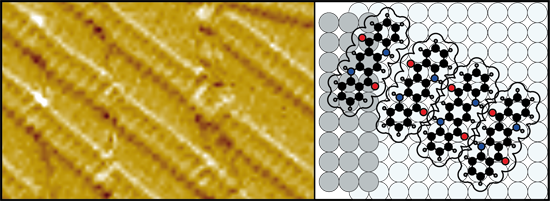
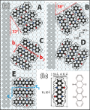
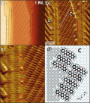
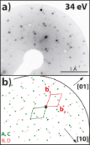
- step edges. Keywords: Ag(100); intermolecular hydrogen bonds; one-dimensional aggregates; organic nanostructures; quinacridone; step-molecule interactions; vicinal surface; Introduction A versatile and powerful method to create nanostructures on surfaces is the self-assembly of atoms and molecules
- . Here, the physical and chemical properties of the substrate and the adsorbate are the key that can be tuned to create nanostructures that fit specific needs [1][2][3][4]. A research focus over the recent years has been the self-assembly of molecules or atoms into one-dimensional (1D) linear aggregates
- displayed in Figure 1b. The self-assembly of QA has already been investigated on some nominally flat surfaces such as Ag(111) [22], Ag(100) and Cu(111) [23], and graphene and MoS2 [24][25]. These studies have shown that QA grows in long one-dimensional chains connected by H-bonds. The chains exhibit a small


Potential of a deep eutectic solvent in silver nanoparticle fabrication for antibiotic residue detection
Beilstein J. Nanotechnol. 2024, 15, 426–434, doi:10.3762/bjnano.15.38
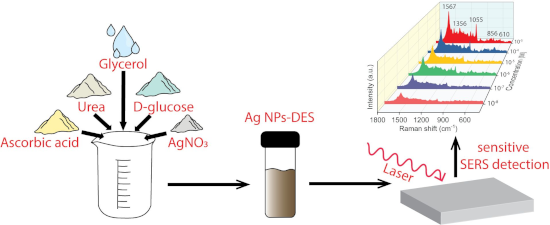
- stirring, the obtained Ag NPs-DES were washed with DI water several times, and the pellets were re-dispersed in DI water for further use. The Ag NPs-DES thin film was prepared following the procedure for self-assembly monolayer construction. A clean glass substrate was treated with oxygen plasma to form


Classification and application of metal-based nanoantioxidants in medicine and healthcare
Beilstein J. Nanotechnol. 2024, 15, 396–415, doi:10.3762/bjnano.15.36
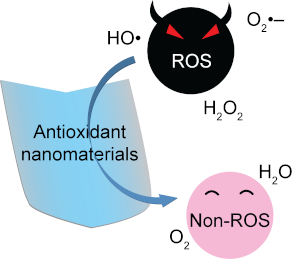
- ]. Similarly, gallic acid was covalently grafted on magnetite with an average size of 5 and 8 nm. The functionalization of ultrasmall magnetite with gallic acid increased free radical scavenging two- to fourfold compared to free magnetite [60]. Centurion et al. investigated the assembly of natural polyphenolic


Investigating ripple pattern formation and damage profiles in Si and Ge induced by 100 keV Ar+ ion beam: a comparative study
Beilstein J. Nanotechnol. 2024, 15, 367–375, doi:10.3762/bjnano.15.33
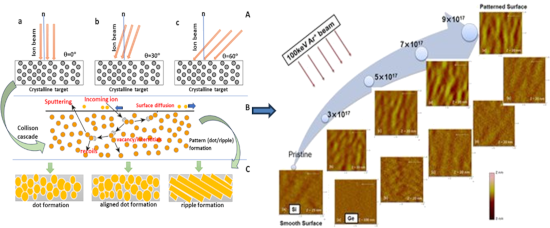
- photoluminescence spectroscopy. Stupp et al. [14] have explored possible applications of self-assembly of biomolecules with controlled stereochemistry in materials technology. However, the fundamental reasoning behind how this self-organization process evolves in terms of defect creation or damage still needs to be
- understood. Despite controlled fabrication of patterns has been achieved, details that influence the process of self-assembly still remain open. Ion beam sputtering is an important method for inducing topographical changes in specific materials. For silicon, self-organized dots, ripples, and cones have been


Multiscale modelling of biomolecular corona formation on metallic surfaces
Beilstein J. Nanotechnol. 2024, 15, 215–229, doi:10.3762/bjnano.15.21
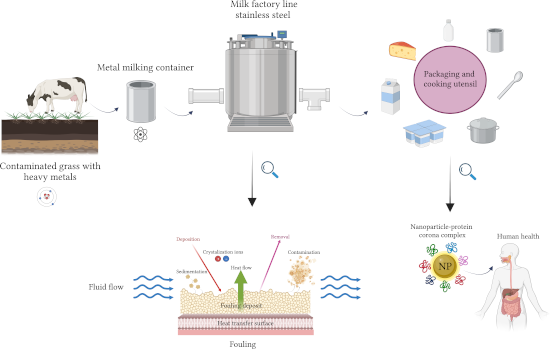
- proteins, we utilize the I-TASSER (Iterative Threading ASSEmbly Refinement) 5.1 software [41], which uses the protein’s AA sequences as an input. For this study, we have chosen six representative cow milk proteins and lactose, which constitute most of the non-fat milk solids. Table 1 displays properties of





Ion beam processing of DNA origami nanostructures
Beilstein J. Nanotechnol. 2024, 15, 207–214, doi:10.3762/bjnano.15.20
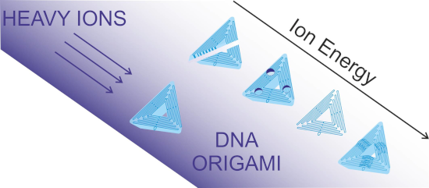
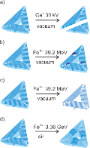
- nanometer scale and the nanometric precision of DNA origami-based assembly open possibilities in more precise tuning and control of nanofabrication. Here we analyze the consequences of ion beam irradiation on 2D DNA origami nanotriangles deposited on Si as a model substrate and resulting nanostructure


Ferromagnetic resonance spectra of linear magnetosome chains
Beilstein J. Nanotechnol. 2024, 15, 157–167, doi:10.3762/bjnano.15.15
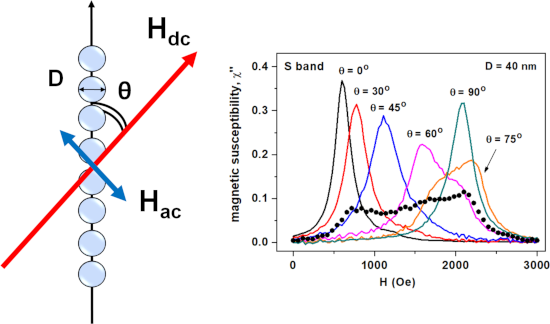
- ferromagnetic resonance (FMR) spectra of oriented and non-oriented assemblies of linear magnetosome chains are calculated by solving the stochastic Landau–Lifshitz equation. The dependence of the shape of the FMR spectrum of a dilute assembly of chains on the particle diameter, the number of particles in a
- chain and a number of particle magnetic parameters. It has been shown recently [26][27][28] that the true geometry of the magnetosome chains has a great influence on the magnetostatic properties of the chain assembly. In this regard, it should be noted that the correct calculation of the FMR spectra of
- [1][2][3][4][7][8][9][16][17][18][19][20][21][22][23] accumulated to date for assemblies of magnetosome chains. Numerical Simulation Consider a dilute assembly of linear chains of magnetosomes consisting of Np spherical nanoparticles of average diameter D. Dynamics of the unit magnetization vector


CdSe/ZnS quantum dots as a booster in the active layer of distributed ternary organic photovoltaics
Beilstein J. Nanotechnol. 2024, 15, 144–156, doi:10.3762/bjnano.15.14
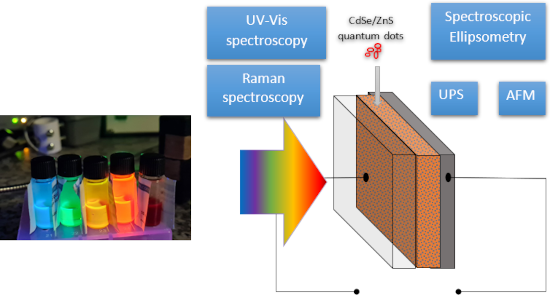
- studies on CdSe/ZnS nanodots as dopants in a polymer–fullerene matrix for application in organic solar cells. An assembly of poly(3-hexylthiophene-2,5-diyl) and 6,6-phenyl-C71-butyric acid methyl ester was used as the active reference layer. Absorption and luminescence spectra as well as the dispersion




In situ optical sub-wavelength thickness control of porous anodic aluminum oxide
Beilstein J. Nanotechnol. 2024, 15, 126–133, doi:10.3762/bjnano.15.12
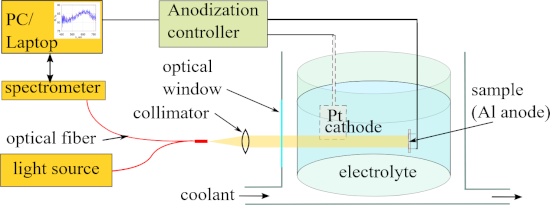
- of templates, including evaporation masks [8][9][10], molds for nanowire array production using the supercritical fluid method [11], electrochemical deposition [12], atomic layer deposition [13], or traps for colloidal nanoparticle assembly [14]. Several applications, for example, color filtering [15


Curcumin-loaded nanostructured systems for treatment of leishmaniasis: a review
Beilstein J. Nanotechnol. 2024, 15, 37–50, doi:10.3762/bjnano.15.4
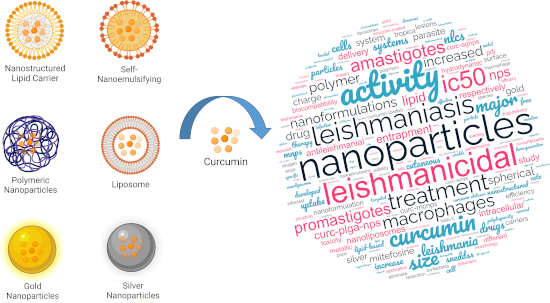
- , assembly, and optical properties [113]. These nanoformulations can be synthesized through chemical, physical, or biological processes and are solely generated from metal precursors such as silver and gold [114][115]. In addition, MNPs have been widely used in therapy, drug delivery, targeting, and imaging


Two-dimensional molecular networks at the solid/liquid interface and the role of alkyl chains in their building blocks
Beilstein J. Nanotechnol. 2023, 14, 872–892, doi:10.3762/bjnano.14.72
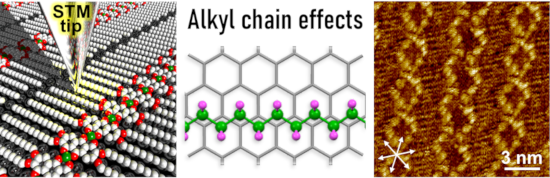
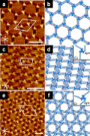
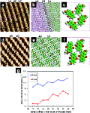
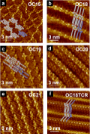
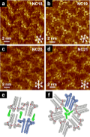
- related to energy and environment, among others. However, the fabrication of ordered nanoarchitectures remains a challenge, even in two dimensions. Therefore, a deeper understanding of the self-assembly processes and substantial factors for building ordered structures is critical for tailoring flexible
- -assembly; solid/liquid interface; two-dimensional networks; Introduction The fabrication of ordered nanostructures using the concept of nanoarchitectonics [1][2][3][4] for various applications such as nanomachines, nanoelectronics, catalysis, and nanopatterning remains challenging [5][6][7]. Design and
- synthesis of molecular building blocks have enabled the construction of well-organized nanoarchitectures with various dimensions [8][9][10][11]. These characteristic structural formations are governed by self-assembly processes via non-covalent intermolecular interactions, such as hydrogen bonding, metal









Silver-based SERS substrates fabricated using a 3D printed microfluidic device
Beilstein J. Nanotechnol. 2023, 14, 793–803, doi:10.3762/bjnano.14.65
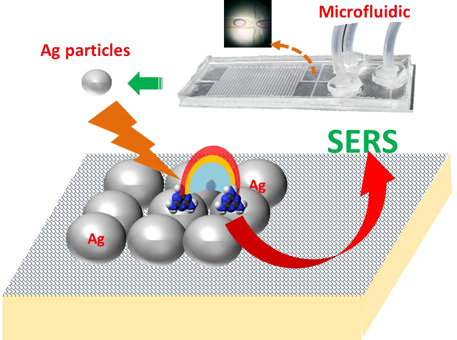
- expensive and time-consuming photolithography. The resulting devices were utilized to produce uniformly distributed silver nanoparticles that were then applied to the surface of a porous silicon substrate via a self-assembly technique. This created SERS substrates detecting RhB and MLM with detection limits



Humidity-dependent electrical performance of CuO nanowire networks studied by electrochemical impedance spectroscopy
Beilstein J. Nanotechnol. 2023, 14, 683–691, doi:10.3762/bjnano.14.54
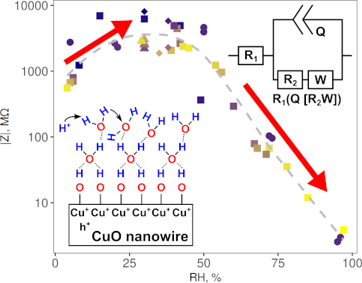
- effect of humidity on dielectrophoretically assembled CuO nanowire network systems with multiple interconnects, which may become very advantageous for the scalable assembly of CuO nanowire-based devices as NEMS [5], sensors [2], and thermoelectric modules [4], is yet to be reported. In this work, CuO


Metal-organic framework-based nanomaterials as opto-electrochemical sensors for the detection of antibiotics and hormones: A review
Beilstein J. Nanotechnol. 2023, 14, 631–673, doi:10.3762/bjnano.14.52
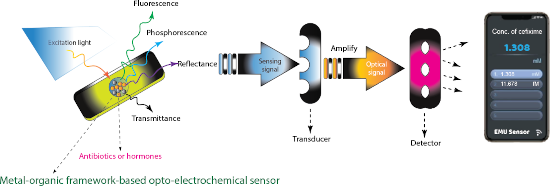
- extremely low densities (0.1–1 g·cm−3), the highest specific surface areas (165–7800 m2·g−1) currently known, tunable surface properties, good mechanical and thermal stability, intriguing and controllable morphologies, and uniform yet tunable pores that are created by the self-assembly of metal ions or


Nanoarchitectonics to entrap living cells in silica-based systems: encapsulations with yolk–shell and sepiolite nanomaterials
Beilstein J. Nanotechnol. 2023, 14, 522–534, doi:10.3762/bjnano.14.43
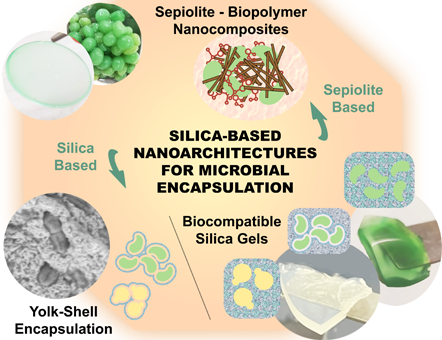
- assembly of biological and inorganic components is being increasingly developed with the aim of achieving high-quality functional materials exhibiting properties of living species, but entrapped within inorganic solid structures [2][3]. When such assembly processes are carried out at the nanometre scale
- nanoarchitectonics approach involves the manipulation at the nanometre or molecular level, using chemical reactions, processes of self-assembly and self-organization, as well as modulation under external stimuli. This strategy represents a path of great interest to develop new biohybrid materials harbouring
- systems studied during the past decades were based on the encapsulation of enzymes and yeast spores within silica gels for the design of biosensors and bioreactors [9][10][11][12]. Biological entities can be considered themselves excellent examples of self-assembly occurring in nature [13]. Based on these


Specific absorption rate of randomly oriented magnetic nanoparticles in a static magnetic field
Beilstein J. Nanotechnol. 2023, 14, 485–493, doi:10.3762/bjnano.14.39
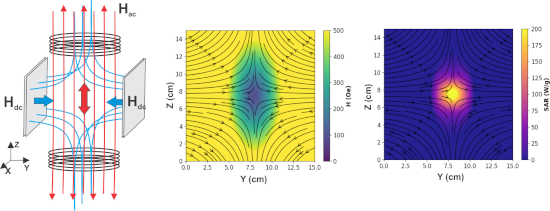
- amplitude, Hac = 100–200 Oe [1][7][8]. In magnetic hyperthermia, magnetic nanoparticles are introduced into the tumor and heated by absorbing the energy of the ac magnetic field. The intensity of heat release is characterized by the specific absorption rate (SAR) of an assembly. Maintaining a temperature in
- hysteresis loops of assemblies under the influence of ac and dc magnetic fields were carried out in [13][14]. It was shown [13] that an application of dc magnetic fields with Hdc ≥ 400 Oe is sufficient to completely suppress the SAR of an assembly of FeCo nanoparticles. It was also found [14] that for
- biological media can be considered fixed and random. In this case, the dynamics of the assembly magnetization depends on the parameters of the external magnetic field, as well as on the magnetic and geometric parameters of an assembly [20][22][25][26]. To develop the joint MPI-MH technique, it is necessary


Molecular nanoarchitectonics: unification of nanotechnology and molecular/materials science
Beilstein J. Nanotechnol. 2023, 14, 434–453, doi:10.3762/bjnano.14.35
- imaging at the atomic and molecular level has revealed the self-assembly mechanisms of crystal nuclei in organic crystals and metal-organic frameworks [42]. It has become possible to obtain statistical information on the size and structure of individual prenucleation clusters that cannot be examined by
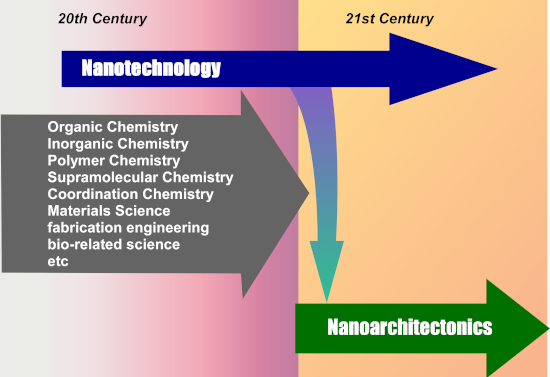
- , fabrication engineering, and bio-related science (Figure 1) [51][52]. Materials synthesis by nanoarchitectonics is envisioned to integrate and use various processes [53]. For example, physical/chemical material transformation, atomic/molecular manipulation, self-assembly/self-organization, arrangement and
- asymmetric and hierarchical. Compared to structures created by self-assembly based on simple equilibrium processes, more hierarchical and complex structures are obtained in nanoarchitectonics processes [54]. In addition, several uncertainties in the nanoscale world from which architectures are derived have a