


Search results
Search for "bandgap" in Full Text gives 289 result(s) in Beilstein Journal of Nanotechnology. Showing first 200.
Various CVD-grown ZnO nanostructures for nanodevices and interdisciplinary applications
Beilstein J. Nanotechnol. 2024, 15, 1390–1399, doi:10.3762/bjnano.15.112
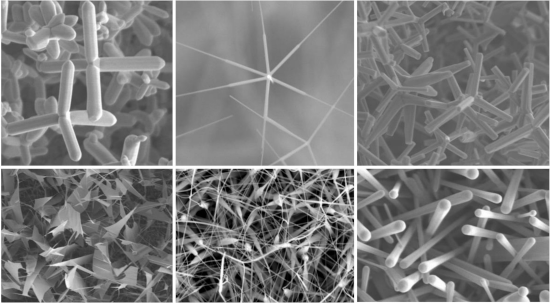
- comparison to other compounds [4][5][6]. Specifically, its large bandgap energy Eg ≈ 3.4 eV is comparable to GaN – a typical material for blue-light-emitting diode (LED) technology [7][8]. Also, its exciton binding energy is higher than the thermal energy at 300 K, and it has high-quality optical



Green synthesis of carbon dot structures from Rheum Ribes and Schottky diode fabrication
Beilstein J. Nanotechnol. 2024, 15, 1369–1375, doi:10.3762/bjnano.15.110
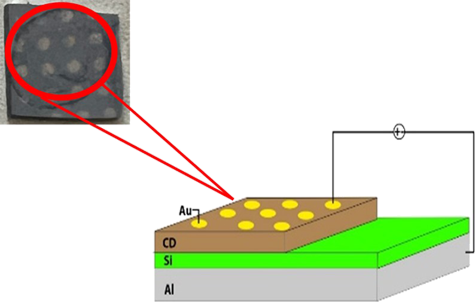
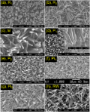
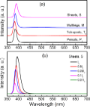
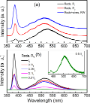
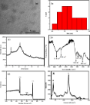
- this diode were examined. The synthesized CDs are spherical with an average size of 5.5 nm, have a negative surface charge and contain 73.3 atom % C, 24.0 atom % O, and 2.7 atom % N. The CDs exhibit fluorescence at approximately 394 nm. The layer thickness and bandgap energy of the prepared CDs film
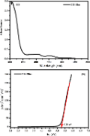
- the structure of the coated CDs film (Figure 5); the CDs film thickness was determined as ca. 566 nm. In addition, a UV–vis absorption spectrum of the CDs layer was taken (Figure 6a), and the bandgap value of the layer was determined from the graph of hν versus (αhν)2 using the Tauc equation [23]. The
- bandgap value of the CDs layer was 5.25 eV (Figure 6b). The current–voltage (I–V) characteristics of the Si/CDs/Au-based Schottky diode were investigated. I–V measurements of the CDs-based thin film device were carried out using a semiconductor parameter analyzer between −2.5 V and +2.5 V at room




Out-of-plane polarization induces a picosecond photoresponse in rhombohedral stacked bilayer WSe2
Beilstein J. Nanotechnol. 2024, 15, 1362–1368, doi:10.3762/bjnano.15.109
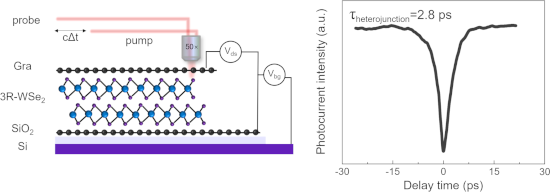
- lead to a high-efficiency photoelectric conversion that has the potential to surpasses the Shockley–Queisser limit [24][31][32][33][34]. In this regard, constructing 2D vdW semiconductors with OOP polarization and moderate bandgap holds great promise for high-performance self-powered BPVE devices. More


Mn-doped ZnO nanopowders prepared by sol–gel and microwave-assisted sol–gel methods and their photocatalytic properties
Beilstein J. Nanotechnol. 2024, 15, 1283–1296, doi:10.3762/bjnano.15.104
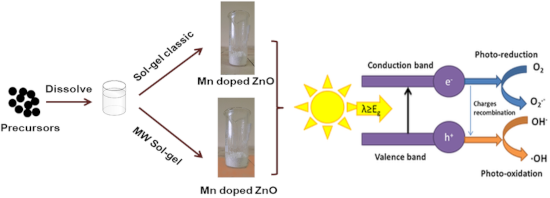
- catalyst bandgap and its surface chemistry relative to reactant adsorption and photocatalytic activity were also clearly shown [56]. According to the abovementioned data, the possible routes for the present photocatalytic process can be described as follows: The main question to be answered is which of
- determined using the Tauc plot method, considering direct transitions. The method consists in the extrapolation of the linear region of the rising part of the curve (αhν)1/η as a function of hν to zero to get the bandgap (where α is the Kubelka–Munk function, hν is the energy of the photons, and η has the
- value 1/2 for direct-bandgap semiconductors and 2 for indirect-bandgap semiconductors or amorphous compounds. Photoluminescence measurements (PL) were carried out using a Carry Eclipse fluorescence spectrometer from Agilent Technologies and the following parameters: scan rate of 120 nm·min−1, spectral


Quantum-to-classical modeling of monolayer Ge2Se2 and its application in photovoltaic devices
Beilstein J. Nanotechnol. 2024, 15, 1153–1169, doi:10.3762/bjnano.15.94
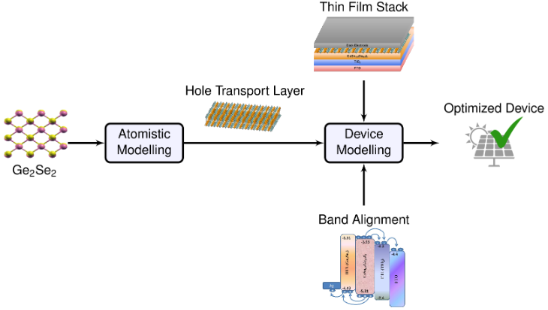
- –k dispersion reveals the investigated material’s key electronic properties. The calculations reveal a direct bandgap of 1.12 eV for monolayer Ge2Se2. We further extract critical optical parameters using the Kubo–Greenwood formalism and Kramers–Kronig relations. A significantly large absorption
- extensive applications in photodevices. This is mainly because of the exceptional optoelectronic behavior of the TMDCs, especially the layer-dependent bandgap and the high absorption of incident sunlight [22][23][24][25]. Motivated by this, various TMDCs, including MoS2, WS2, WSe2, and TiS2, have been used
- . Figure 3 depicts that the monolayer Ge2Se2 is a direct-bandgap semiconductor with a bandgap of the order of 1.12 eV. Valence band maximum (VBM) and conduction band minimum (CBM) are located along the Γ-X path. The computed bandgap value and its dispersion nature are consistent with earlier reported works




Photocatalytic methane oxidation over a TiO2/SiNWs p–n junction catalyst at room temperature
Beilstein J. Nanotechnol. 2024, 15, 1132–1141, doi:10.3762/bjnano.15.92
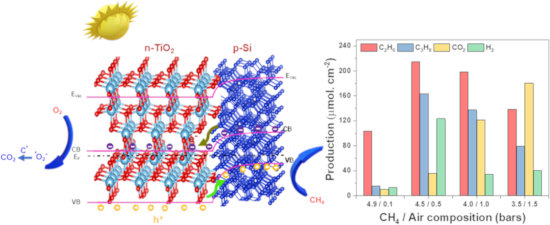
- because of its high stability, good dispersibility, and narrow energy bandgap. However, pristine TiO2 shows only low photocatalytic efficiency because of the high recombination rate between holes and electrons and the low visible-light harvesting ability [20][21][22]. The rapid recombination of charge
- electron–hole pairs. Additionally, TiO2/SiNWs offer flexibility, improved bandgap energy, and enhanced light harvesting across a broad spectrum, leading to higher photocatalytic efficiency. Combining SiNWs and TiO2 presents an opportunity to leverage the strengths of both materials while mitigating their
- TiO2/SiNWs catalyst may be attributed to the vertical wires, which enable strong light scattering leading to enhancement in light harvesting. The optical bandgap values of SiNWs and TiO2/SiNWs are estimated at around 3.8 and 3.3 eV, respectively. Figure 3b displays the current–voltage (I–V) curves of


Local work function on graphene nanoribbons
Beilstein J. Nanotechnol. 2024, 15, 1125–1131, doi:10.3762/bjnano.15.91
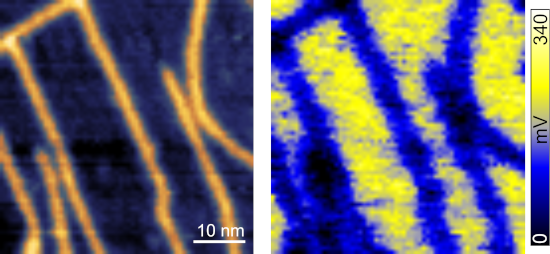
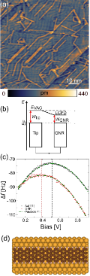
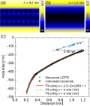
- bandgap [12], which is also related to the work function. GNRs can be synthesized with atomic precision in an ultrahigh-vacuum environment using on-surface synthesis [13]. This synthesis is well known on coinage metals, namely, Cu, Ag, and Au, which possess a high electron density. To study these unique

![[Graphic 1]](/bjnano/content/inline/2190-4286-15-91-i4.svg?max-width=637&scale=1.18182)
Interface properties of nanostructured carbon-coated biological implants: an overview
Beilstein J. Nanotechnol. 2024, 15, 1041–1053, doi:10.3762/bjnano.15.85
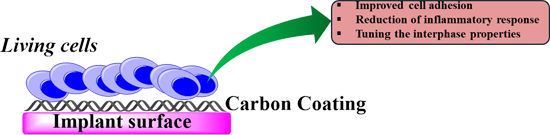
- quantum confinement as reported by Bolker and co-workers [77]. Authors reported that the bandgap of NDs is strongly correlated to the NDs’ size, and it increases with decreasing crystallite size. However, the ND properties can be altered by heteroatomic doping and through the introduction of surface



Recent progress on field-effect transistor-based biosensors: device perspective
Beilstein J. Nanotechnol. 2024, 15, 977–994, doi:10.3762/bjnano.15.80
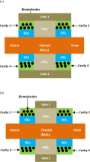
- of the electrode gate (with metal 2) is interfaced with HfO2 high-k dielectric with the body channel. The source region is P+ doped but the drain region is N+ doped, as shown in Figure 17. In this context, a low bandgap material (InAs) was implemented in the source region to achieve better band-to
- to other TFET-based biosensor topologies [126][127] and conventional FET-based biosensors [128] by utilizing a gate-engineered heterostructure and low bandgap materials in the source region, which facilitates efficient carrier band-to-band tunneling. Furthermore, extended gate architecture is




Intermixing of MoS2 and WS2 photocatalysts toward methylene blue photodegradation
Beilstein J. Nanotechnol. 2024, 15, 817–829, doi:10.3762/bjnano.15.68
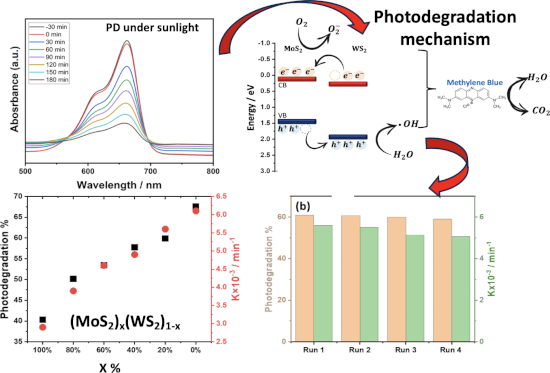
- ]. Typically, semiconductor-based photocatalysts, such as TiO2, ZnO2, and some other high-bandgap transition-metal dichalcogenides (TMD) have shown their ability to efficiently degrade the activated MB by irradiation [10][11]. Recently, TMD such as MoS2 and WS2, have displayed remarkable potential as
- adsorbed onto the surface of the catalyst [20], then the illumination with energy greater than that of the bandgap will promote electrons (e−) to the conduction band (CB), leaving holes (h+) in the valence band (VB). Simultaneously, oxygen molecules on the surface of the catalyst capture the excited
- materials while taking into account their bandgap energies, as per the following equations: where ECB is the energy level of the conduction band, EVB is the energy level of the valence band, Eg(x) and X(x) are the bandgap and the electronegativity of the respective material. E0 represents the scaling


Effect of repeating hydrothermal growth processes and rapid thermal annealing on CuO thin film properties
Beilstein J. Nanotechnol. 2024, 15, 743–754, doi:10.3762/bjnano.15.62
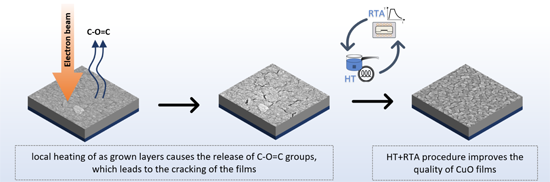
- devices. Keywords: CuO; hydrothermal method; rapid thermal annealing; thin films; Introduction Copper(II) oxide is a p-type semiconductor possessing a narrow bandgap, along with many beneficial electrical, optical, and magnetic properties. Particularly at the nanoscale, these properties set themselves




Simultaneous electrochemical determination of uric acid and hypoxanthine at a TiO2/graphene quantum dot-modified electrode
Beilstein J. Nanotechnol. 2024, 15, 719–732, doi:10.3762/bjnano.15.60
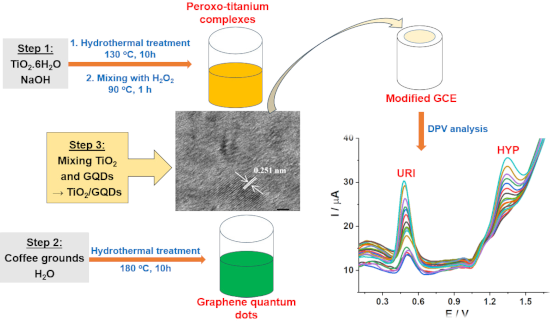
- properties. Graphene quantum dots (GQDs) are zero-dimensional graphene derivatives consisting of one to few layers of graphene sheets with a size of less than 20 nm in width [11]. The missing bandgap results in an absence of luminescence in pristine graphene. However, a bandgap can be generated in GQDs


Reduced subthreshold swing in a vertical tunnel FET using a low-work-function live metal strip and a low-k material at the drain
Beilstein J. Nanotechnol. 2024, 15, 713–718, doi:10.3762/bjnano.15.59
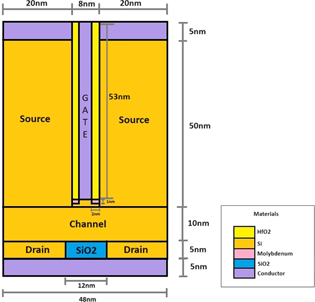
- characteristics grow when Cgd rises [8]. The gate-to-drain capacitance increases as a result of a high-k material in the drain region [9]. Ambipolar leakage and Miller capacitance are two drawbacks of TFETs. The Miller capacitance can be reduced through oxide overlap and low-bandgap materials [10]. The solution
- to reduce gate oxide leakage are high-k materials. The device’s ability to keep a charge is increased by using high-k materials, which also aids in downsizing. HfO2 is compatible with a silicon substrate and possesses a high dielectric constant (ε ≈ 25), a large bandgap (5.68 eV), band offsets with
- compared to the VTFET in [12] to demonstrate the effects of the low-work-function live strip and the low-k material. The device parameters used are listed in Table 1. Reference [12] used bandgap narrowing, Shockley–Read–Hall recombination, Lombardi's mobility model, and band-to-band (non-local) modeling


Elastic modulus of β-Ga2O3 nanowires measured by resonance and three-point bending techniques
Beilstein J. Nanotechnol. 2024, 15, 704–712, doi:10.3762/bjnano.15.58
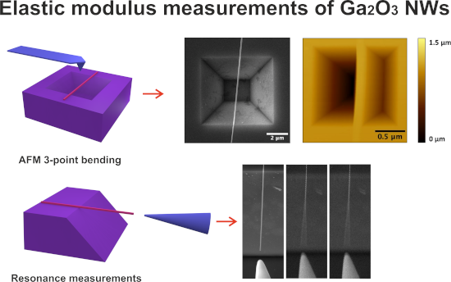
- , University of Tartu, Nooruse 1, 50411 Tartu, Estonia Estonian Military Academy, Riia 12, 51010 Tartu, Estonia 10.3762/bjnano.15.58 Abstract Due to the recent interest in ultrawide bandgap β-Ga2O3 thin films and nanostructures for various electronics and UV device applications, it is important to understand


Aero-ZnS prepared by physical vapor transport on three-dimensional networks of sacrificial ZnO microtetrapods
Beilstein J. Nanotechnol. 2024, 15, 490–499, doi:10.3762/bjnano.15.44
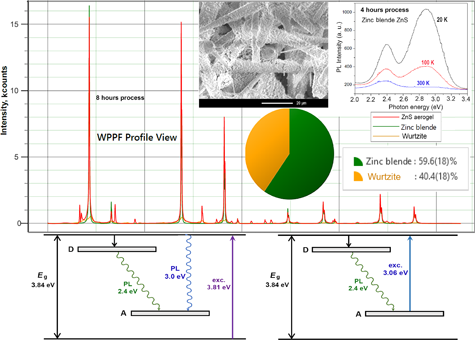
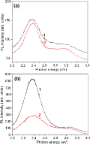
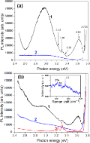
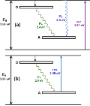
- a phase with hexagonal wurtzite structure. The good crystalline quality of the ZnS component of the aeromaterial was revealed by the XRD analysis. In order to assess the optical quality, PL spectra were analyzed under resonant near-bandgap and intraband excitation. The PL spectra of samples prepared
- the bandgap of the wurtzite ZnS phase is larger than that of the zinc blende phase. The behavior of these PL bands is also different in the two samples when changing the environment, as deduced from Figure 5. The intensity of the PL bands in the sample prepared in the 4 h procedure is not
- measured at low temperature in the near-bandgap region, as shown in Figure 6. Apart from that, a narrow emission peak is observed at 3.726 eV. This peak is assigned to multiphonon resonant Raman scattering (RRS) in ZnS since the quantum energy difference between the excitation laser line (3.814 eV) and the



Photocatalytic degradation of methylene blue under visible light by cobalt ferrite nanoparticles/graphene quantum dots
Beilstein J. Nanotechnol. 2024, 15, 475–489, doi:10.3762/bjnano.15.43
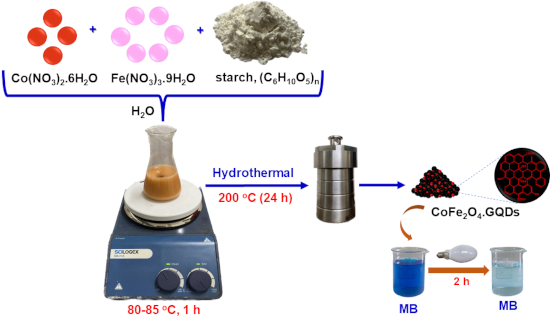
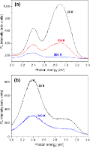
- that the resulting composite can enhance the absorption capacity [11]. This observation is an agreement with previous works [11]. In addition, a slight shift of the PL emission peak is also observed because of the blue shift in the UV–vis spectrum, which is consistent with their bigger bandgap energy




Controllable physicochemical properties of WOx thin films grown under glancing angle
Beilstein J. Nanotechnol. 2024, 15, 350–359, doi:10.3762/bjnano.15.31
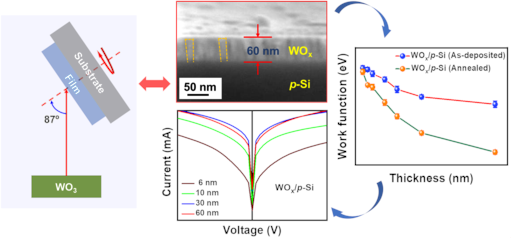
- fascinating optical and electrical properties [1]. WOx is a wide-bandgap oxide semiconductor with a large excitonic binding energy of 0.15 eV and a high optical absorption coefficient (≥104 cm−1 in the UV region) [2]. These, in conjunction with decent carrier mobility (12 cm2·V−1·s−1), make this material an
- , bandgap, and electrical conductivity, to a large extent by controlling the cationic oxidation state and the film stoichiometry [2]. As a matter of fact, adjustments in the film stoichiometry and microstructure are experimentally viable by the choice of a suitable growth technique [9][10][11]. As a result
- optical bandgap and work function is thoroughly investigated by employing various spectroscopic and microscopic techniques. The systematic investigation of the work function of the films reveals a distinct trend with thickness, originating from the thickness-dependent defect concentration within the films


Investigating structural and electronic properties of neutral zinc clusters: a G0W0 and G0W0Г0(1) benchmark
Beilstein J. Nanotechnol. 2024, 15, 310–316, doi:10.3762/bjnano.15.28
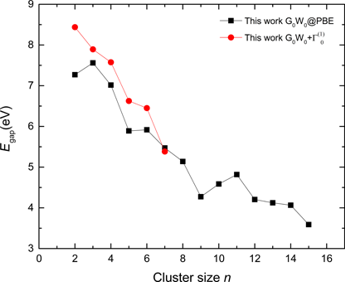
- trend, which follows the behavior of metallic bandgaps. One exception is the zinc dimer, for which our bandgap from calculations is relatively high, which may be attributed to the van der Waals forces. The HOMO–LUMO gap trend shows that, at larger sizes, the behavior of the cluster becomes close to
- that of the bulk material, that is, the HOMO–LUMO gap decreases. As seen in Figure 4, the bandgap values obtained from GW calculations are far from the bulk limit of metals. In our work, the HOMO–LUMO gap decreases from ca. 8.5 eV to approximately 3.5 eV, but it is still sizable compared with the bulk
- metal energy gap. Apart from this situation, for small-size clusters or nanoparticles, it is possible to observe quantum confinement effects resulting in an indeterminate bandgap, such as in the case of semiconductor clusters. As the size of the cluster decreases, the electronic energy levels become


![[Graphic 14]](/bjnano/content/inline/2190-4286-15-28-i15.svg?max-width=637&scale=1.18182)
Determining by Raman spectroscopy the average thickness and N-layer-specific surface coverages of MoS2 thin films with domains much smaller than the laser spot size
Beilstein J. Nanotechnol. 2024, 15, 279–296, doi:10.3762/bjnano.15.26
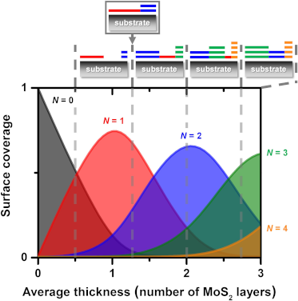
- transition to a direct bandgap semiconductor with very high photoluminescence quantum yield when thinned down to a monolayer [13][14][15][16][17]. Its unique electronic and optical properties could provide an edge in many future applications. The multilayers MoS2 structures are of the most common 2Hc type


A visible-light photodetector based on heterojunctions between CuO nanoparticles and ZnO nanorods
Beilstein J. Nanotechnol. 2023, 14, 1018–1027, doi:10.3762/bjnano.14.84
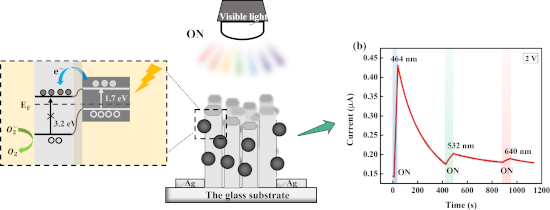
- ][18]. Semiconductors are the heart of photodetectors as their bandgap allows for the absorption of photons in the desired wavelength range [19]. There are many semiconductor materials developed for this application. Among them, zinc oxide (ZnO) has been studied extensively over the last decades
- [21]. Regardless, pure ZnO still has the considerable drawback of a wide bandgap (ca. 3.35 eV), which limits its usability for visible-light photodetectors. ZnO absorbs light only in the UV region (less than 4% of the sunlight spectrum) [23]. Extending the operation range of ZnO nanomaterials toward
- properties of ZnO nanostructures, such as bandgap or conductivity [26]. Decorating ZnO with metals such as Ag, Au, Pd, Pt, and Al [27][28] can provide surface plasmonic effects that assist the electron transfer process in materials and extend the light absorption range of a photodetector [29][30]. However


Nanoarchitectonics of photothermal materials to enhance the sensitivity of lateral flow assays
Beilstein J. Nanotechnol. 2023, 14, 988–1003, doi:10.3762/bjnano.14.82
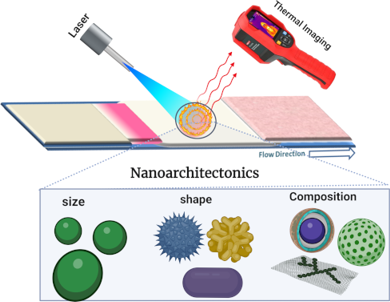
- nanomaterials. When excited by photons with an energy greater than or equal to the bandgap of the materials, electron–hole pairs are generated. The electrons excited to the conduction band will leave holes in the valence band. The relaxation of these electrons can occur radiatively in the form of photons and


Isolation of cubic Si3P4 in the form of nanocrystals
Beilstein J. Nanotechnol. 2023, 14, 971–979, doi:10.3762/bjnano.14.80
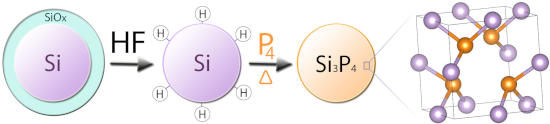
- , and UV–vis spectrophotometry. For the isolated cubic Si3P4 phase, a cell parameter of a = 5.04 Å was determined, and the bandgap was estimated to be equal to 1.25 eV. Because of the nanoscale dimensions of the obtained Si3P4 nanoparticles, the product may exhibit several exceptional properties as a
- agglomeration for at least a month. The synthesized samples were brown powders that formed brown sols in acetonitrile, quite similar in appearance to those of Si NPs. Upon examination of the UV–vis absorption spectra, a bandgap of 1.25 eV was established using Tauc plot (Figure 5). A simpler approach for a
- disordered semiconductor material would be to find the energy at which the attenuation coefficient exceeds 104 cm−1 (the optical gap estimated this way amounts to 2.3 eV). All of these observations disprove earlier theoretical assumptions of defective zinc blende Si3P4 as being a narrow-bandgap semiconductor


Cross-sectional Kelvin probe force microscopy on III–V epitaxial multilayer stacks: challenges and perspectives
Beilstein J. Nanotechnol. 2023, 14, 725–737, doi:10.3762/bjnano.14.59
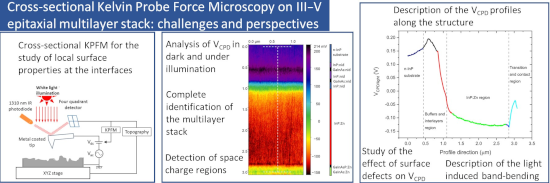
- 600 °C. Note that the GaInAsP:Zn layer is an intermediate layer with a doping concentration of 6 × 1018 cm−3 with the purpose to smooth the InP:Zn/GaInAs:Zn transition bandgap and to reduce contact resistances. Finally, a GaInAs:Zn contact layer was made at a lower temperature of 580 °C in order to
- crosstalk [17]. The laser beam deflection system in our AFM employs a laser wavelength of 1310 nm, which is well below the bandgap of our sample; therefore, the parasitic laser absorption, which may interfere with the KPFM measurement, is reduced to negligible levels [13]. Highly doped n+-Si ARROW EFM tips
- have compared the ideal structure free of surface defects to three different cases in which identical acceptor-like and donor-like surface defects densities of 1 × 10¹², 1 × 10¹³, and 5 × 10¹³ eV−1·cm−2 (taken to be constant throughout the bandgap) were introduced at the surface. The results are


The microstrain-accompanied structural phase transition from h-MoO3 to α-MoO3 investigated by in situ X-ray diffraction
Beilstein J. Nanotechnol. 2023, 14, 692–700, doi:10.3762/bjnano.14.55
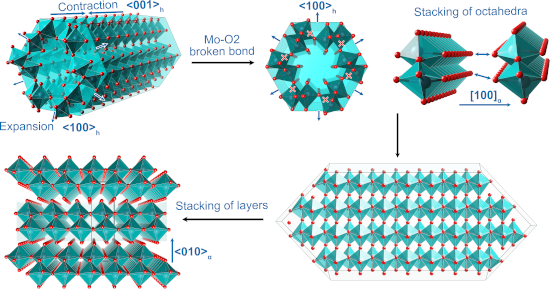
- from +2 to +6 [1][2], leading to a range of molybdenum oxides. Molybdenum oxides include the fully stoichiometric MoO3 with a large bandgap above 2.7 eV, the reduced oxides MoO3−x with oxygen vacancies, and the semimetal MoO2. The degree of reduction influences the bandgap energy of molybdenum oxides


Metal-organic framework-based nanomaterials as opto-electrochemical sensors for the detection of antibiotics and hormones: A review
Beilstein J. Nanotechnol. 2023, 14, 631–673, doi:10.3762/bjnano.14.52
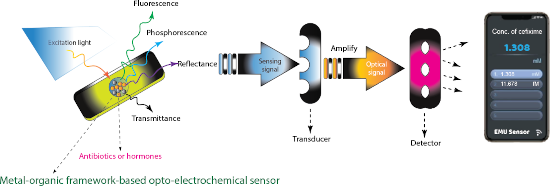
- already described, the following is a brief outline of some of the desirable qualities of MOFs that are required for developing opto-electrochemical sensors. Electronic properties: Electrostatic potential, density of states, electron density, bandgap, and conductivity are some of a MOF’s crucial
- simulations based on density functional theory with periodic boundary conditions. In comparison to the building units, they noticed that MOFs have a charge distribution that remains constant, and their electronic properties show a wide range of bandgap energies categorized as insulators or semiconductors. The
- authors pointed out that metal clusters (for example, isoreticular MOFs) essentially define the overall electronic properties of MOFs and provide MOFs with the characteristics of a wide-bandgap semiconductor like ZnO. The size of the organic linker and the hybridization of the central atom of the linker





