


Search results
Search for "binding energies" in Full Text gives 185 result(s) in Beilstein Journal of Nanotechnology.
Unravelling the interfacial interaction in mesoporous SiO2@nickel phyllosilicate/TiO2 core–shell nanostructures for photocatalytic activity
Beilstein J. Nanotechnol. 2020, 11, 1834–1846, doi:10.3762/bjnano.11.165
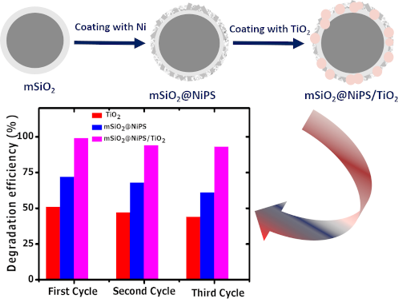
- 2p3/2 binding energies for 1:1 phyllosilicates compared to that of 2:1 phyllosilicates [59][60]. Moreover, no peak originating from NiO (which has a lower binding energy at Ni 2p3/2 levels of less than 855 eV) was observed. This was confirmed by the appearance of the satellite splitting peaks with a
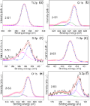
- separation between the Ni 2p3/2 primary line and the satellite of less than 6 eV, which is smaller than that of nickel oxides [60][61]. The data for the mSiO2@NiPS/TiO2 suggest a decrease in binding energies (Ni 2p1/2 at 872.6 eV and Ni 2p3/2 at 853 eV), possibly indicative of an interaction with TiO2 and
- ) [60][62][63][64]. This illustrates that the samples were comprised of silicate and composites of nickel phyllosilicate with SiO2. The lower binding energies of the Si 2p peak in mSiO2@NiPS/TiO2 indicate a possible interaction between the silicates and TiO2 [65]. The O 1s spectrum was deconvoluted into


Hybridization vs decoupling: influence of an h-BN interlayer on the physical properties of a lander-type molecule on Ni(111)
Beilstein J. Nanotechnol. 2020, 11, 1168–1177, doi:10.3762/bjnano.11.101
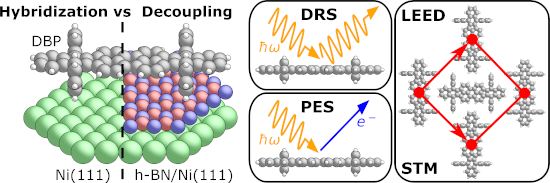
- identification of the underlying orbitals very difficult. The UPS features of DBP on h-BN/Ni(111), on the other hand, are much sharper and shifted to higher binding energies. The reduction of the line width can be explained by an increase of the structural order, which was already discussed in the last section
- , as well as by a decrease in hybridization. Probable reasons for the shift of the molecular orbitals to higher binding energies are the work function change as well as the less efficient photo hole screening compared to DBP on bare Ni(111). The adsorption of DBP molecules on the bare Ni(111) surface
- the binding energies (BE) of the N 1s, C 1s and B 1s core levels for DBP on bare Ni(111) (approx. 1.0 MLE) as well as h-BN on Ni(111) and DBP on h-BN/Ni(111) (less ordered (approx. 1.0 MLE) and highly ordered (approx. 1.6 MLE)). The uncertainty of the numerical fitting procedure is given in


Excitonic and electronic transitions in Me–Sb2Se3 structures
Beilstein J. Nanotechnol. 2020, 11, 1045–1053, doi:10.3762/bjnano.11.89
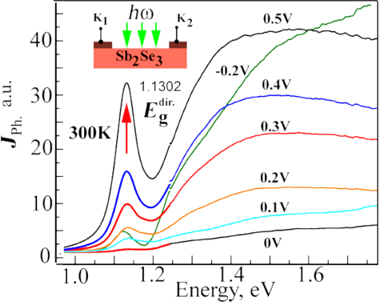
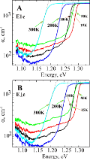
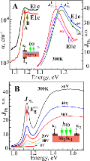
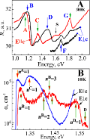
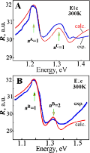
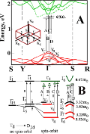
- single crystals was carried out by our group [24]. Since Sb2S3 and Sb2Se3 have a similar band structure, the four excitonic states (A, B, C and D) were also obtained for the Sb2S3 single crystals. Based in our previous work [24], the exciton binding energies, valence band parameters, valence band


Epitaxial growth and superconducting properties of thin-film PdFe/VN and VN/PdFe bilayers on MgO(001) substrates
Beilstein J. Nanotechnol. 2020, 11, 807–813, doi:10.3762/bjnano.11.65
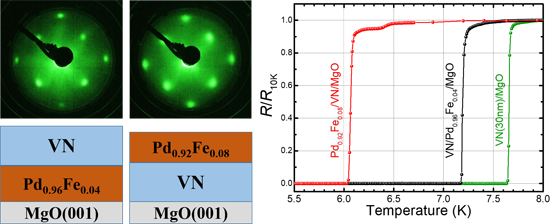
- ). Figure 3a,b shows the XPS spectra of the as-deposited VN/Pd0.92Fe0.08 thin film heterostructure. The binding energies of the Fe 2p1/2, Fe 2p3/2, and Pd 3d3/2 and Pd 3d5/2 states are 721.0, 707.7, and 340.2 and 335.0 eV, respectively, which agrees well with literature data [33][36]. Figure 3c,d shows the
- XPS spectra of the VN thin film on MgO. The binding energies of the V 2p1/2, V 2p3/2 and N 1s states are 521.1, 513.6 and 397.4 eV, respectively, which are very close to that given in the literature for crystalline VN [37][38]. The presence of a characteristic satellite at a binding energy of ca. 515
- an accuracy of ±0.5%. Neither impurities nor surface contaminations were detected (compare with [40]). All recorded high-resolution XPS spectra of VN and Pd1−xFex films were calibrated to the binding energies of crystalline VN at 513.6 eV and of metallic Pd at 335.0 eV [33][37], respectively


Nickel nanoparticles supported on a covalent triazine framework as electrocatalyst for oxygen evolution reaction and oxygen reduction reactions
Beilstein J. Nanotechnol. 2020, 11, 770–781, doi:10.3762/bjnano.11.62
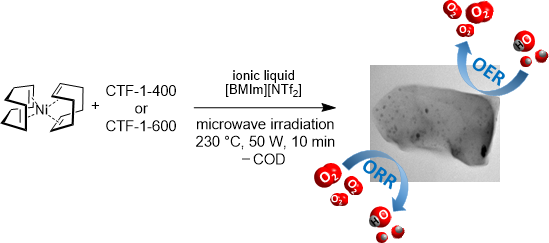
- -OOH* formation steps, whereas the ORR activity is limited by the S-OH* and O2 reduction steps. In this regard, ORR and OER catalysts need to have different binding energies for intermediates for optimum activity. In addition to this, metal species undergo oxidation at the high positive potentials


Silver-decorated gel-shell nanobeads: physicochemical characterization and evaluation of antibacterial properties
Beilstein J. Nanotechnol. 2020, 11, 620–630, doi:10.3762/bjnano.11.49
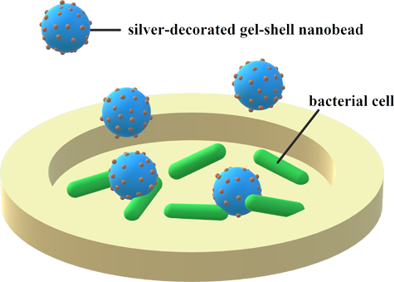
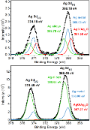
- the spectra suggests another spin–orbit pair with binding energies at 368.8 and 374.8 eV. This indicates the presence of some other form of silver, e.g., Ag bonded to organic molecules [32] or non-reduced silver ions [33] embedded in the gel layer. The content of this form of silver is ca. 37.1% (w/w


Soybean-derived blue photoluminescent carbon dots
Beilstein J. Nanotechnol. 2020, 11, 606–619, doi:10.3762/bjnano.11.48
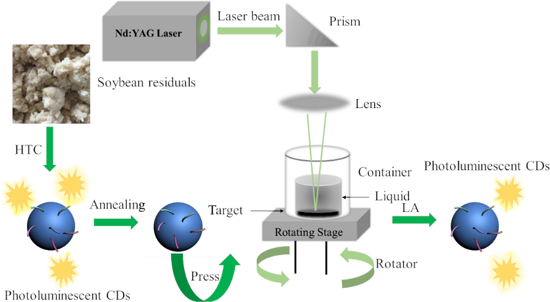
- measurement shown in Figure 7. This result confirms again the important role of nitrogen in the PL response of the soybean-derived CDs. Figure 8b–f shows the deconvoluted high-resolution spectra of O 1s, N 1s and C 1s in the soybean-derived CDs. The binding energies of O 1s are 532, 533, and 533 eV for the
- HTC-CDs, annealed-CDs and LA-CDs-10%, respectively, which are deconvoluted to C–O and C=O bonds. For the HTC-CDs, the binding energies of N 1s determined from the deconvoluted high-resolution spectrum of N 1s are 398.1, 399.3, 401.5, and 402.1 eV, which are assigned to pyridinic, amine, pyrrolic and
- graphitic nitrogen, respectively [49][50]. For the LA-CDs-10%, the binding energies of the corresponding N 1s are 398.7, 399.6, 401.0 and 402.1 eV, respectively. Thus, both of the HTC-CDs and the LA-CDs-10% likely possess the same types of surface-functional groups but with different fractions. The


Evolution of Ag nanostructures created from thin films: UV–vis absorption and its theoretical predictions
Beilstein J. Nanotechnol. 2020, 11, 494–507, doi:10.3762/bjnano.11.40
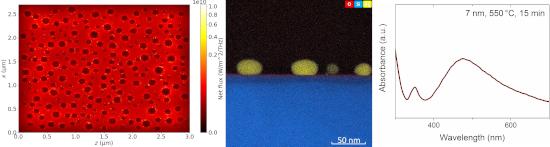
- of 4 mm was used for analyzing the emitted photoelectrons. The binding energies were corrected using the background C 1s line (285.0 eV). XPS spectra were analyzed with the Casa-XPS software using a Shirley background subtraction and Gaussian–Lorentzian curves as fitting algorithm. The theoretical




DFT calculations of the structure and stability of copper clusters on MoS2
Beilstein J. Nanotechnol. 2020, 11, 391–406, doi:10.3762/bjnano.11.30
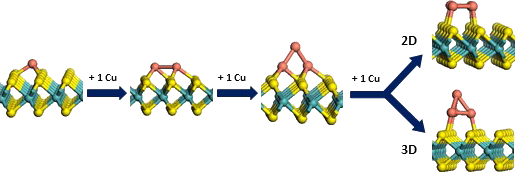
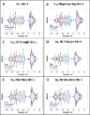
- monolayer is presented by Rawal et al. [25] to study the effect of defects in MoS2 on the catalytic activity of the supported nanoparticles. They observe that the magnitude of binding energy and charge transfer follows the trend Cu > Ag > Au. On the pristine surface the binding energies of the nanoparticles
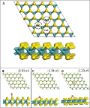
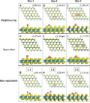
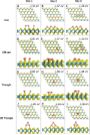
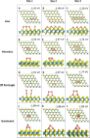
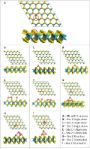
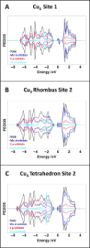
- investigate how Cu begins to nucleate on a monolayer of MoS2, we start by adsorbing small Cun (n = 1–4) species on a MoS2 monolayer. All binding energies for the different structures calculated from Equation 1 are shown in Table 1. Binding energies calculated with Equation 2 are shown in Table 2 and addition
- and Figure 4, respectively. The binding energies shown in these images are the binding energies per atom from Equation 1. When a single Cu atom adsorbs at each of the three adsorption sites, Cu binds exothermically with adsorption energies of −0.81, −1.32 and −1.18 eV at sites 1, 2 and 3, respectively
Size effects of graphene nanoplatelets on the properties of high-density polyethylene nanocomposites: morphological, thermal, electrical, and mechanical characterization
Beilstein J. Nanotechnol. 2020, 11, 167–179, doi:10.3762/bjnano.11.14
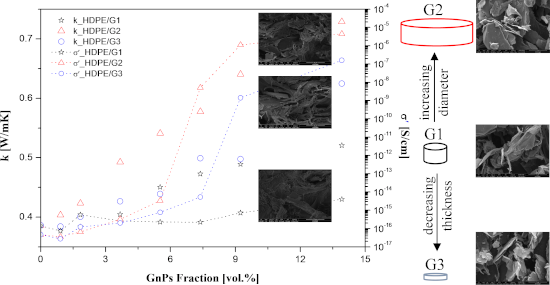
- (C 1s at ≈284.6 eV) and contained a small amount of oxygen (O 1s at ≈531–534 eV). The C 1s peak centered at ≈284.6 eV, with an asymmetry towards higher binding energies, which is characteristic for an sp2 carbon atom. The broad peak observed at ca. 291 eV (labeled ‘Pi–Pi*’ in Figure 2b) occurred due



Fabrication of Ag-modified hollow titania spheres via controlled silver diffusion in Ag–TiO2 core–shell nanostructures
Beilstein J. Nanotechnol. 2020, 11, 141–146, doi:10.3762/bjnano.11.12
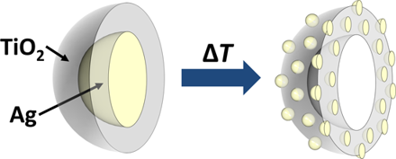
- ]. The peak associated with silver oxide appears at lower binding energies than the peak of metallic silver [26][27]. Due to the very small offset for different forms of silver oxide, only one peak located between 367.27 and 367.58 eV with a half-width of 1.03–1.07 eV was modeled in the spectra. The



Design and facile synthesis of defect-rich C-MoS2/rGO nanosheets for enhanced lithium–sulfur battery performance
Beilstein J. Nanotechnol. 2019, 10, 2251–2260, doi:10.3762/bjnano.10.217
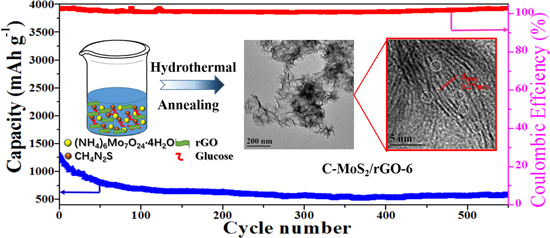
- 4c). The two peaks of pristine MoS2 at 228.9 and 232.1 eV in Figure 4d are assigned to binding energies of Mo 3d5/2 and 3d3/2 for Mo4+, respectively, corresponding to the 2H phase of MoS2[20]. The two peaks at 162.78 and 161.7 eV are attributed to the S 2p1/2 and S 2p3/2 orbital of divalent sulfide
- in order to utilize its defect sites to catalyze the conversion of polysulfides and to improve the energy storage performance. The binding energies of Mo 3d5/2 and Mo 3d3/2 in C-MoS2/rGO composite shift to 228.6 and 231.8 eV, respectively (Figure 4d). Similarly, the binding energies of S 2p3/2 and S
- 2p1/2 in the C-MoS2/rGO composite shift to lower energies by about 0.2 eV relative to pristine MoS2. This can be attributed to the interactions of MoS2, amorphous carbon and rGO, which weakens the binding energy of Mo and S [39]. However, after annealing, the binding energies of Mo 3d5/2, Mo 3d3/2, S


Ultrathin Ni1−xCoxS2 nanoflakes as high energy density electrode materials for asymmetric supercapacitors
Beilstein J. Nanotechnol. 2019, 10, 2207–2216, doi:10.3762/bjnano.10.213
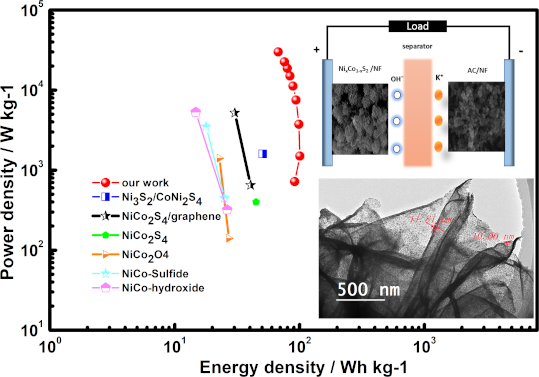
- 2p1/2 and Ni 2p3/2 (Figure 2b) with binding energies of 855.9 eV and 873.3 eV are observed, respectively, with an energy gap of 17.4 eV. Two satellite (indicated as “Sat.”) peaks are also observed at 859.9 eV and 878.4 eV. Thus, the existence of Ni2+ is confirmed in the sulfurised resultants [30][31


Improved adsorption and degradation performance by S-doping of (001)-TiO2
Beilstein J. Nanotechnol. 2019, 10, 2116–2127, doi:10.3762/bjnano.10.206
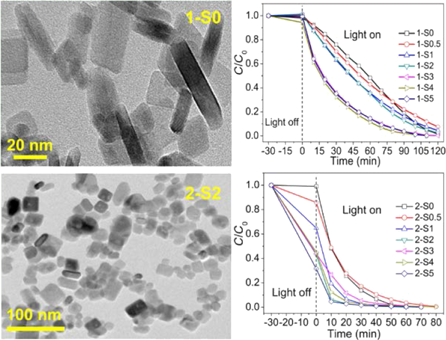
- °C were measured, and Figure 4 representatively shows the results for 2-S1 and 2-S3. The chemical states of Ti, O and S, the corresponding binding energies (BE) and the CS ratios derived for 2-S0, 2-S0.5, 2-S1, 2-S2, 2-S3, 2-S4 and 2-S5 are listed in Table 3. For all samples synthesized at 250 °C
- dispersions, (e, f, g, h) DMPO–•O2− formed in methanol dispersion. The unit cell parameters a, c and the c/a value for S-doped (001)-TiO2 at 250 °C. Position of the FTIR absorption peaks and the corresponding vibrational modes. The chemical states (CSs) of Ti, O and S and the corresponding binding energies




Review of advanced sensor devices employing nanoarchitectonics concepts
Beilstein J. Nanotechnol. 2019, 10, 2014–2030, doi:10.3762/bjnano.10.198

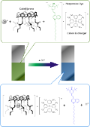
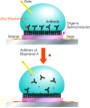
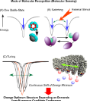
- binding energies that are controlled by external stimuli. This can also be regarded as the origination of molecular function control by external stimuli. It shares working principles with molecular machines which are usually operated by switching between several states [186][187][188]. Unlike these





Synthesis of nickel/gallium nanoalloys using a dual-source approach in 1-alkyl-3-methylimidazole ionic liquids
Beilstein J. Nanotechnol. 2019, 10, 1754–1767, doi:10.3762/bjnano.10.171
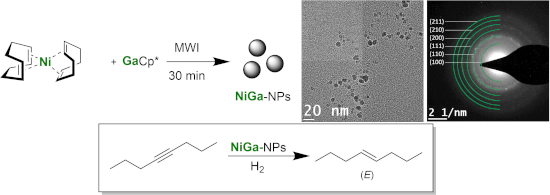
- Information File 1, Figure S6) indicates only one Ga species, but we note that the binding energies of the different Ga oxidation states are within 1 eV [50], which does not allow for an unequivocal assignment. The O 1s peaks at 531.30 eV and 531.18 eV clearly show only the presence of organic oxygen and no




TiO2/GO-coated functional separator to suppress polysulfide migration in lithium–sulfur batteries
Beilstein J. Nanotechnol. 2019, 10, 1726–1736, doi:10.3762/bjnano.10.168
- analysis (SDTQ600) was taken under air flow (RT to 800 °C, 10 °C min−1). The N2 adsorption/desorption tests were analyzed using Brunauer–Emmett–Teller (BET) theory on a Micromeritics ASAP 2020 device. The surface composition was analyzed by XPS (VG ESCALAB MK II USA). The binding energies of all the


Materials nanoarchitectonics at two-dimensional liquid interfaces
Beilstein J. Nanotechnol. 2019, 10, 1559–1587, doi:10.3762/bjnano.10.153
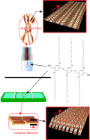
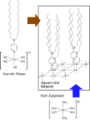
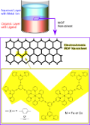
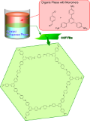
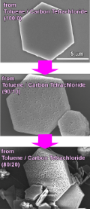
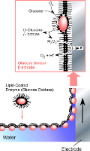
- functional group, the recognition energy was monitored as a function of the relative location. The most stable relative distance was estimated from the energy minimum in the energy diagram, and the binding energies and binding constants were calculated at those interfacial positions. A series of calculations













High-temperature resistive gas sensors based on ZnO/SiC nanocomposites
Beilstein J. Nanotechnol. 2019, 10, 1537–1547, doi:10.3762/bjnano.10.151
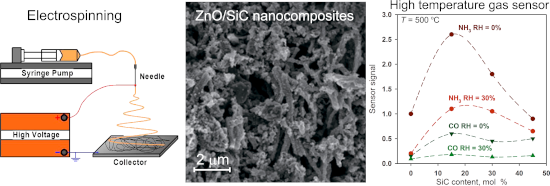
- convolution functions with simultaneous optimization of the background parameters. The background was simulated using a combination of a Shirley and a Tougaard background. The binding energies (BE) were corrected for the charge shift using the C 1s peak of graphitic carbon (BE = 284.8 eV) as a reference. Gas



Rapid thermal annealing for high-quality ITO thin films deposited by radio-frequency magnetron sputtering
Beilstein J. Nanotechnol. 2019, 10, 1511–1522, doi:10.3762/bjnano.10.149
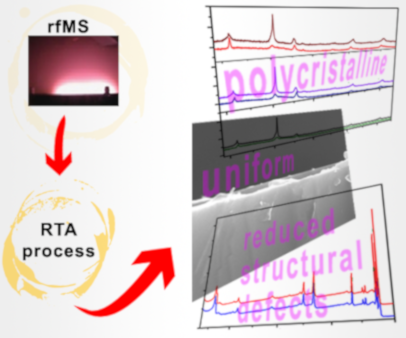
- energies (0–1150 eV), which revealed the presence of all the intended elements on the surface. The data was calibrated relative to the standard peak of adventitious C 1s with an energy of 284.8 eV. The binding energies of the XPS core peaks (O 1s, In 3d, and Sn 3d), for the as-deposited and RTA-treated
- exhibited a different electrical charge, so it is reasonable to assume that the associated binding energies are slightly higher. The amount of oxides decreases in the treated samples as compared to untreated ones (Table 3). Separate phases of In2O3 and SnO2, respectively, are observed in all studied samples
- the increase in the crystallite size (Table 2) and the reduction of structural defects. To evaluate the chemical composition of the surface for the as-deposited and RTA-processed films, the XPS spectra were recorded, as shown in Figure 3a–c. The spectra were recorded over a wide range of binding


Synthesis of P- and N-doped carbon catalysts for the oxygen reduction reaction via controlled phosphoric acid treatment of folic acid
Beilstein J. Nanotechnol. 2019, 10, 1497–1510, doi:10.3762/bjnano.10.148
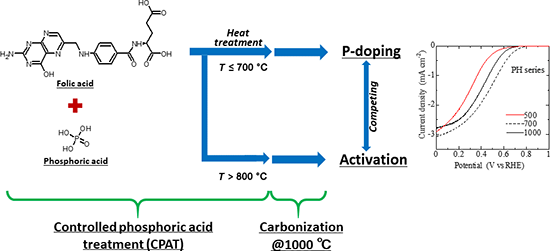
- are donated to the π-electron system. These differences in the number of electrons supplied to the π-electron system result in differences in the N 1s peak binding energies. Strelko et al. conducted quantum chemical calculations to characterize N-doped graphene, revealing that the electronic states of





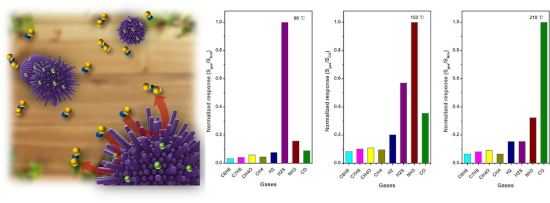
Selective gas detection using Mn3O4/WO3 composites as a sensing layer
Beilstein J. Nanotechnol. 2019, 10, 1423–1433, doi:10.3762/bjnano.10.140
- -resolution XPS spectrum of W 4f is shown in Figure 5b, which exhibits two symmetric peaks with binding energies around 35.4 eV and at 37.6 eV, originating from W 4f7/2 and W 4f5/2, respectively. These values are indicative of stoichiometric WO3, indicating the presence of W6+ ions [17]. The detailed O 1s XPS
- spectrum is enlarged in Figure 5c. As shown, the O 1s spectrum is fitted by three peaks with binding energies at ≈529.5 eV, ≈530.6 eV and ≈531.6 eV, which could be assigned to lattice oxygen, surface-adsorbed oxygen and hydroxyl on the surface of Mn3O4/WO3, respectively [18]. As can be seen in Figure 5d


Construction of a 0D/1D composite based on Au nanoparticles/CuBi2O4 microrods for efficient visible-light-driven photocatalytic activity
Beilstein J. Nanotechnol. 2019, 10, 1360–1367, doi:10.3762/bjnano.10.134
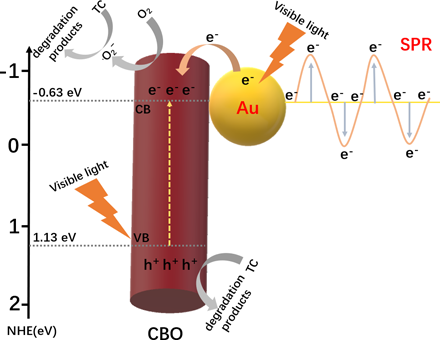
- heterojunction was formed in the composite photocatalyst. The chemical and electronic states of the elements on the Au/CBO surface were characterized by XPS. In the Au 4f XPS spectrum (Figure 5a) peaks at binding energies of 84.1 and 87.7 eV pertaining to Au 4f7/2 and Au 4f5/2, respectively, indicate that the


A biomimetic nanofluidic diode based on surface-modified polymeric carbon nitride nanotubes
Beilstein J. Nanotechnol. 2019, 10, 1316–1323, doi:10.3762/bjnano.10.130
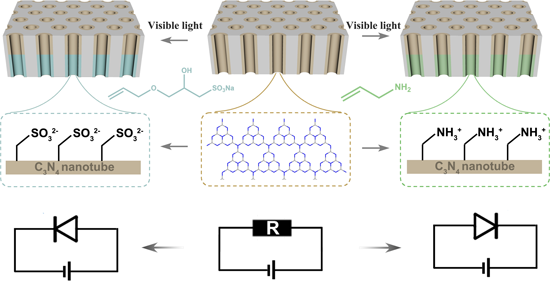
- × 10−9 mbar. The binding energies were referenced to the C 1s line at 284.8 eV from adventitious carbon. A scanning electron microscope (SEM) JSM-7500F (JEOL) at an accelerating voltage of 3 kV was used to get the top view of the CNNs. X-ray diffraction (XRD) patterns were recorded with a Bruker D8


A silver-nanoparticle/cellulose-nanofiber composite as a highly effective substrate for surface-enhanced Raman spectroscopy
Beilstein J. Nanotechnol. 2019, 10, 1270–1279, doi:10.3762/bjnano.10.126
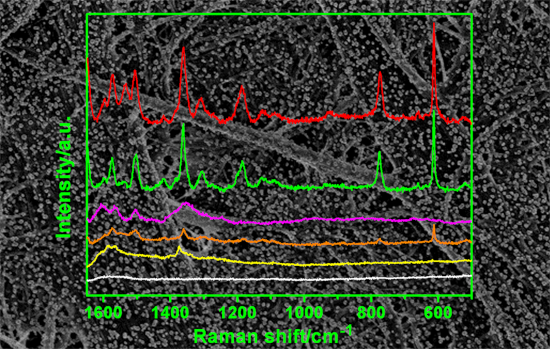
- corresponding high-resolution spectrum of the Ag 3d region, where the two peaks located at 368.4 and 374.4 eV are attributed to the binding energies of Ag 3d5/2 and Ag 3d3/2 of metallic silver, respectively [60]. This result indicates metallic silver in the as-prepared paper-based SERS substrate, which is in





