Search results
Search for "biosensing" in Full Text gives 103 result(s) in Beilstein Journal of Nanotechnology.
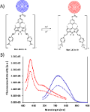
Surface plasmon resonance enhancement of photoluminescence intensity and bioimaging application of gold nanorod@CdSe/ZnS quantum dots
Beilstein J. Nanotechnol. 2019, 10, 22–31, doi:10.3762/bjnano.10.3
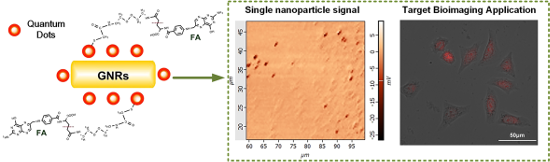
- can be easily tuned from the visible to the near-infrared (NIR) spectrum. QDs have emerged as the next generation of luminescence materials, and they have been widely used as nanoprobes for bioimaging and biosensing. As semiconductor nanocrystals, their large surface-to-volume ratio is advantageous


Accurate control of the covalent functionalization of single-walled carbon nanotubes for the electro-enzymatically controlled oxidation of biomolecules
Beilstein J. Nanotechnol. 2018, 9, 2750–2762, doi:10.3762/bjnano.9.257
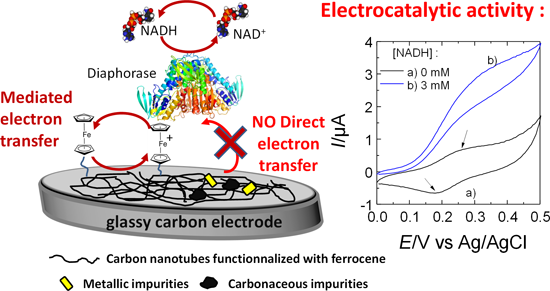
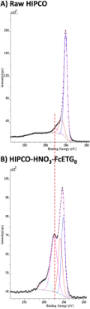
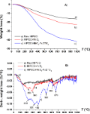
- surface of the CNTs. This system can be applied to biosensing, as exemplified for glucose detection. The well-controlled and well-characterized functionalization of essentially clean SWCNTs enabled us to establish the maximum level of impurity content, below which the f-SWCNT intrinsic electrochemical
- activity is not jeopardized. Keywords: biosensing; carbon nanotubes; covalent functionalization; electrocatalysis; ferrocene; Introduction Carbon nanotubes (CNTs) have been recognized as interesting candidates for developing electrochemical sensors for almost two decades [1][2][3]. They have been used to
- application of these f-SWCNTs in biosensing, the electrode was further modified with HIPCO-H2SO4-FcEtG2, diaphorase, NADH and glucose dehydrogenase (GDH). Upon addition of glucose into the solution, the molecules were oxidized by GDH in gluconolactone and NADH cofactor was simultaneously produced. NADH was






Self-assembled quasi-hexagonal arrays of gold nanoparticles with small gaps for surface-enhanced Raman spectroscopy
Beilstein J. Nanotechnol. 2018, 9, 1977–1985, doi:10.3762/bjnano.9.188
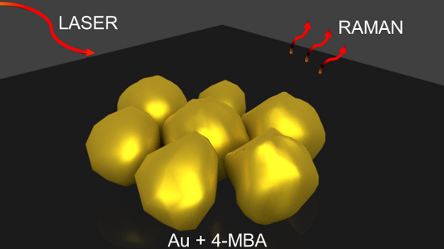
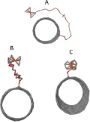
- remarkable optical properties make them attractive for applications in biosensing, biomedical science and as optical antennas [6][7][8]. In particular, metal nanoparticles can be employed to strongly enhance the signal intensity in chemically specific Raman sensing [9]. This technique is known as surface



Excitation of nonradiating magnetic anapole states with azimuthally polarized vector beams
Beilstein J. Nanotechnol. 2018, 9, 1478–1490, doi:10.3762/bjnano.9.139

- useful applications in biosensing, i.e., in the detection of molecules that interact strongly once exposed to magnetic field hotspots, which nanoparticles in a magnetic anapole state can offer in their near field. Moreover, the signal-to-noise ratio of an MRI machine, that is defined as the ratio of the



Review on nanoparticles and nanostructured materials: history, sources, toxicity and regulations
Beilstein J. Nanotechnol. 2018, 9, 1050–1074, doi:10.3762/bjnano.9.98



Green synthesis of fluorescent carbon dots from spices for in vitro imaging and tumour cell growth inhibition
Beilstein J. Nanotechnol. 2018, 9, 530–544, doi:10.3762/bjnano.9.51
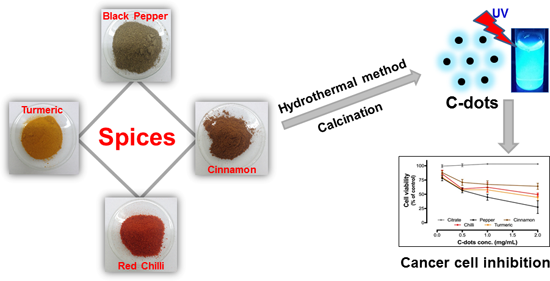
- , multiplexing capabilities, cost-effectiveness and ease of use [1]. Although inorganic semiconductor quantum dots are the most widely studied fluorescent nanoparticles in bioimaging, biosensing and drug delivery applications, carbon-based ultra-small nanoparticles including carbon quantum dots (C-dots) and


Fabrication of gold-coated PDMS surfaces with arrayed triangular micro/nanopyramids for use as SERS substrates
Beilstein J. Nanotechnol. 2017, 8, 2271–2282, doi:10.3762/bjnano.8.227
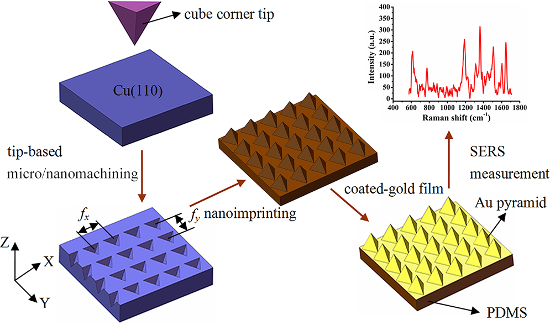
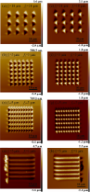
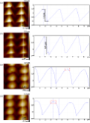
- detection of chemical molecules and biological species at low concentrations. SERS has recently attracted wide-ranging attention from researchers in many fields, including biosensing and bioanalysis [1][2][3], cancer cell work [4], virus identification [5][6], food safety [7][8] and gas vapor research [9





Carbon nano-onions as fluorescent on/off modulated nanoprobes for diagnostics
Beilstein J. Nanotechnol. 2017, 8, 1878–1888, doi:10.3762/bjnano.8.188
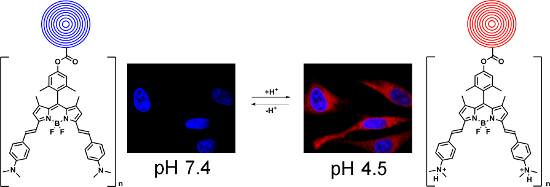
- biocompatibility [20]. We have previously shown that the pH-dependent switching ability of a dye is preserved when attached to CNOs [21] and on single-wall carbon nanotubes, [22] both in solution and in vitro. Thus, CNOs are suitable nanomaterials for biosensing applications. We exploited the photoinduced electron




Near-infrared-responsive, superparamagnetic Au@Co nanochains
Beilstein J. Nanotechnol. 2017, 8, 1680–1687, doi:10.3762/bjnano.8.168
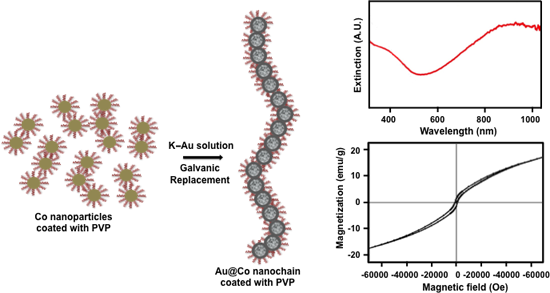
- various applications, such as energy conversion in solar cells [10][11], biosensing [12], photothermal therapy [13], and biomedical imaging [14]. Surface modification with an inorganic coating, such as silica, can lend biocompatibility to the nanoparticles [15][16][17][18]. A gold shell on magnetic


Uptake and intracellular accumulation of diamond nanoparticles – a metabolic and cytotoxic study
Beilstein J. Nanotechnol. 2017, 8, 1649–1657, doi:10.3762/bjnano.8.165
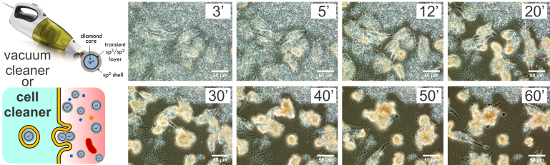
- in its nanostructured forms (nanoparticles, nanostructured diamond films and composite scaffolds) [9]. ND particles can act in the single particle form (bioimaging and biosensing) [10][11], can serve as a stable delivery platform for therapeutic antibodies [12], or can be incorporated into various


Nanostructures for sensors, electronics, energy and environment III
Beilstein J. Nanotechnol. 2017, 8, 1530–1531, doi:10.3762/bjnano.8.154

- ., silicene, phosphorene, transition metal dichalcogenides, MXenes), which now number more than 6,000. The topic of nanoparticles is the focus of this Thematic Series, the use of which spans from biosensing to gas detection and from removing pollutants from water to new generations of solar cells. The
- interaction between light and plasma electrons generated by gold nanoparticles is critical for the development of biosensing platforms [2] and for sensors based on surface enhanced Raman scattering [3]. New methods for creating thin films are expected to provide enhanced efficiency in solar cells [4] at a
A biofunctionalizable ink platform composed of catechol-modified chitosan and reduced graphene oxide/platinum nanocomposite
Beilstein J. Nanotechnol. 2017, 8, 1508–1514, doi:10.3762/bjnano.8.151
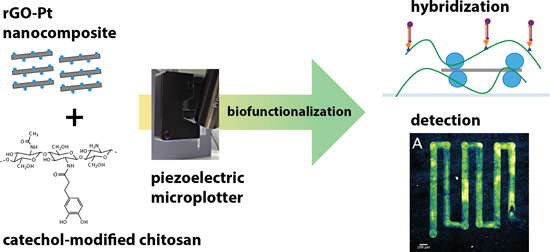
- polymerase chain reaction (PCR) products and low non-specific binding. Our results demonstrate that catechol-modified chitosan/rGO–Pt nanocomposites can be used as inks for piezoelectric printing and facilitate the attachment of biorecognition elements for biosensor applications. Keywords: biosensing
- . The seminal work of Novoselov and Geim [2] introduced graphene, a two-dimensional sheet form of carbon. From the point of view of biosensing, graphene possesses a number of extremely attractive properties [3], including large specific surface area and high electron mobility. Importantly, graphene can
- aqueous polymer solution and can be printed by using a commercial non-contact piezoelectric microplotter. While the application of chitosan/graphene nanocomposites for biosensing is established [4], to our knowledge, this is the first time that such a nanocomposite has been formulated as ink. Importantly


Selective detection of Mg2+ ions via enhanced fluorescence emission using Au–DNA nanocomposites
Beilstein J. Nanotechnol. 2017, 8, 762–771, doi:10.3762/bjnano.8.79
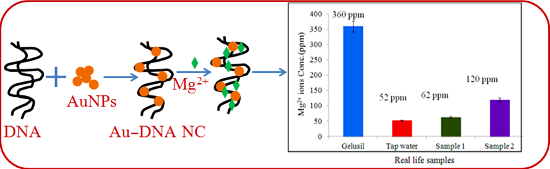
- nanoparticles (AuNPs) have attracted a great deal of research interest for various applications in biosensing. AuNPs have strong binding capability to the phosphate and sugar groups in DNA, rendering unique physicochemical properties for detection of metal ions. The formation of Au–DNA nanocomposites is evident


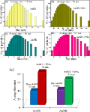


Comparison of four methods for the biofunctionalization of gold nanorods by the introduction of sulfhydryl groups to antibodies
Beilstein J. Nanotechnol. 2017, 8, 372–380, doi:10.3762/bjnano.8.39
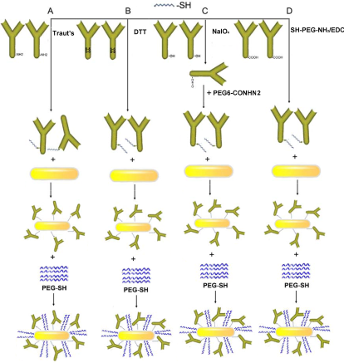
- GNR biofunctionalization and can be easily extended to other sensing applications based on other gold nanostructures or new biomolecules. Keywords: biofunctionalization; biosensing; four methods; gold nanorod; introduction of sulfhydryl groups; Introduction Gold nanorods (GNRs) are widely used in
- biomedicine, including biosensing [1][2][3], photothermal therapy [4][5][6], molecular imaging [7][8], and controlled drug delivery [5][9] because of their distinct optical properties, i.e., high refractive index sensitivity and a tunable longitudinal plasmon band by varying the aspect ratio [10][11]. However
- bond, respectively [22][23]. Joshi et al. reported that antibodies can directly bind with GNRs via modified Fc portions for specific molecular imaging by using PEG6-CONHNH2 [23]. However, the preparation of GNRs for biosensing through PEG6-CONHNH2 modification has yet to be examined. Another


Flexible photonic crystal membranes with nanoparticle high refractive index layers
Beilstein J. Nanotechnol. 2017, 8, 203–209, doi:10.3762/bjnano.8.22
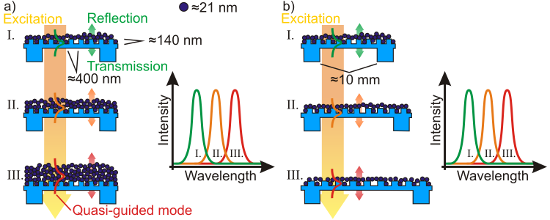
- gratings properties, the waveguide properties, and the angle of incidence. Many different fabrication approaches have been presented and recent publications show high potential for future products, including multiparametric label-free biosensing [4], photonic crystal enhanced microscopy [5], single


Tunable plasmons in regular planar arrays of graphene nanoribbons with armchair and zigzag-shaped edges
Beilstein J. Nanotechnol. 2017, 8, 172–182, doi:10.3762/bjnano.8.18
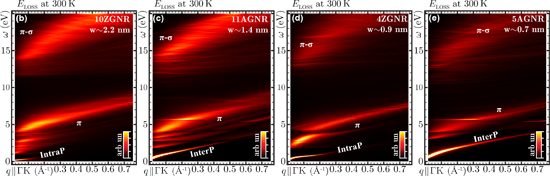
- been attracting significant interest, due their capability to couple with light and other charged particles, thus paving the way to novel applications in a wide range of technologies, as diverse as biosensing, light harvesting or quantum information [1][2][3][4][5]. On more fundamental grounds, plasmon


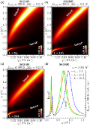
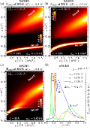
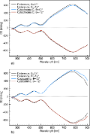
![[Graphic 8]](/bjnano/content/inline/2190-4286-8-18-i16.png?max-width=637&scale=1.18182) , Equation 6) and EL function (ELOSS, Equation 8) at room temperature for the GNR arrays of Figure 1 ...
, Equation 6) and EL function (ELOSS, Equation 8) at room temperature for the GNR arrays of Figure 1 ...

Surface-enhanced Raman scattering of self-assembled thiol monolayers and supported lipid membranes on thin anodic porous alumina
Beilstein J. Nanotechnol. 2017, 8, 74–81, doi:10.3762/bjnano.8.8
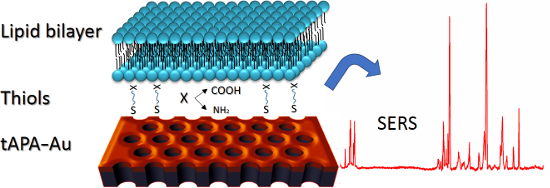
- a functional substrate for biosensing based on SERS effect are presented. In particular, it is reported on SERS effect on SLBs obtained from spontaneous lipid vesicle fusion and representing a simplified model of living cells membrane. Since the vesicle fusion is not trivial to achieve on Au



Streptavidin-coated gold nanoparticles: critical role of oligonucleotides on stability and fractal aggregation
Beilstein J. Nanotechnol. 2017, 8, 1–11, doi:10.3762/bjnano.8.1
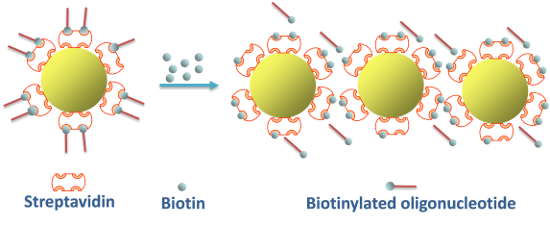
- AuNPs are increasingly used for biosensing purposes. We report here a study of AuNPs surface-functionalized with streptavidin-biotinylated oligonucleotide, focussing on the role played by the oligonucleotide probes in the stabilization/destabilization of the functionalized nanoparticle dispersion. The
- further studies on oligodeoxyribonucleotide (ODN)-functionalized SA-conjugated AuNPs. SA-conjugated AuNPs have not been so widely studied as thiol-conjugated AuNPs. Nevertheless, ODN-functionalized SA-conjugated AuNPs are largely used for different purposes including biosensing [15][16][17]. Results from
- spectroscopic, dynamic light scattering (DLS), zeta-potential (ζ), transmission electron microscopy (TEM) and SPR investigations of ODN-functionalized SA-mediated AuNPs are here presented with the aim to provide fundamental information useful to improve performances of biosensing assays using SA-mediated AuNPs




From iron coordination compounds to metal oxide nanoparticles
Beilstein J. Nanotechnol. 2016, 7, 2074–2087, doi:10.3762/bjnano.7.198
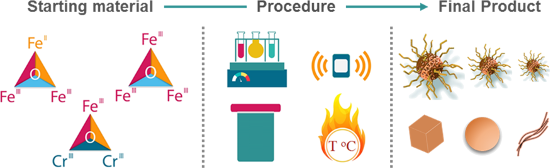
- surfaces are often used for biomedical applications (e.g., biosensing, hyperthermia and MRI) [10]. In biomedical applications, the morphology of the nanoparticle significantly influences both pharmacokinetics and cell uptake [11]. Nanoparticles are also preferred as fillers for polymers to induce certain


A novel electrochemical nanobiosensor for the ultrasensitive and specific detection of femtomolar-level gastric cancer biomarker miRNA-106a
Beilstein J. Nanotechnol. 2016, 7, 2023–2036, doi:10.3762/bjnano.7.193
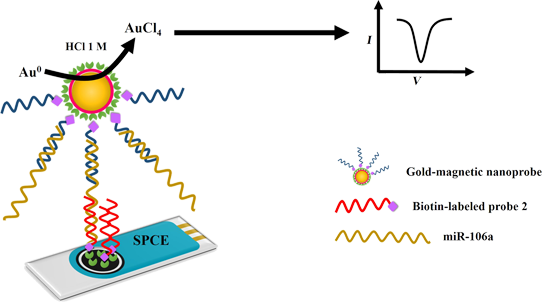
- pretreatment or amplification. Consequently, our biosensing strategy offers such a promising application to be used for clinical early detection of GC and additionally the screen of any miRNA sequence. Keywords: electrochemical nanobiosensor; gastric cancer; gold–magnetic nanoparticle; miR-106a; Introduction
- -characterized nanomaterial and the complementarity principle of nucleic acid molecules, this electrochemical nanobiosensor showed remarkable accuracy in evaluating miRNA target concentrations via differential pulse voltammetry (DPV) analyses. The principal steps of the biosensing procedure are schematically
- revealed that better streptavidin coating at the primer step can significantly result in higher probe immobilization efficacy and surely elevate the sensitivity and stability of following biosensing procedure. Characterization of modified electrodes and assessment of the fabrication procedure The


Layered composites of PEDOT/PSS/nanoparticles and PEDOT/PSS/phthalocyanines as electron mediators for sensors and biosensors
Beilstein J. Nanotechnol. 2016, 7, 1948–1959, doi:10.3762/bjnano.7.186
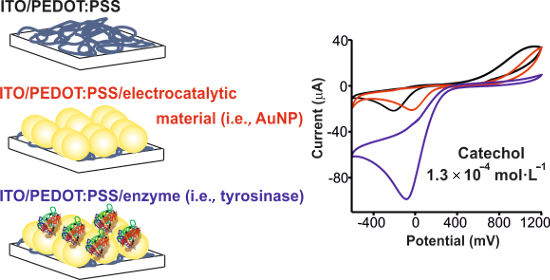
- electron mediators to facilitate the transfer of electrons from the enzyme to the electrode [20]. PEDOT/PSS is becoming popular as an electron mediator in biosensing [21][22]. Gold nanoparticles and phthalocyanines have also been positively demonstrated as electron mediators in tyrosinase biosensors [16
- composites of PEDOT/PSS and AuNPs, CuPc or LuPc2 as electron mediators and to investigate the existence of synergistic effects in the electron transfer occurring during biosensing. In order to pursue the two objectives proposed, PEDOT/PSS/EM electrodes were prepared by depositing a layer of AuNPs, CoPc or


Low temperature co-fired ceramic packaging of CMOS capacitive sensor chip towards cell viability monitoring
Beilstein J. Nanotechnol. 2016, 7, 1871–1877, doi:10.3762/bjnano.7.179
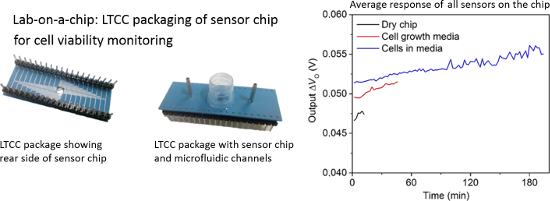
- viability screening are lethal to the cells. Hence there is a growing interest in noninvasive, label-free, real-time, data-rich biosensing systems that measure electrical, optical, magnetic, or mass related properties of the biological sample. Such sensing techniques include surface plasmon resonance
- and spread out over the surface of the chip and LTCC. The Dupont 951 LTCC material has also been reported as biocompatible by others [25]. Cell measurements To demonstrate the feasibility of using the LTCC package in biosensing applications, data were recorded for several hours from a CMOS sensor chip


Large-scale fabrication of achiral plasmonic metamaterials with giant chiroptical response
Beilstein J. Nanotechnol. 2016, 7, 914–925, doi:10.3762/bjnano.7.83
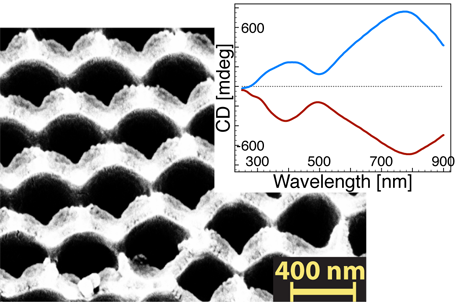
- previously used for biosensor applications [10]. Furthermore, compared to PCMs fabricated by another scalable technique [29], the CD linewidths of the honeycomb ECMs are more narrow. Hence the heterogeneity and 3D structure has not limited the use of the honeycomb ECMs for biosensing applications. While the

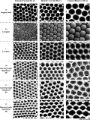


![[Graphic 2]](/bjnano/content/inline/2190-4286-7-83-i2.png?max-width=637&scale=1.18182) , of incident light with respect to the ECM structures.
, of incident light with respect to the ECM structures.



Direct formation of gold nanorods on surfaces using polymer-immobilised gold seeds
Beilstein J. Nanotechnol. 2016, 7, 809–816, doi:10.3762/bjnano.7.72
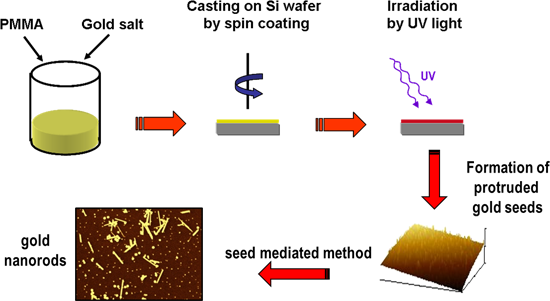
- ], photocatalysis [25], chemical sensing, biosensing [26][27] and surface-enhanced Raman spectroscopy (SERS) [28]. Last but not least, the synthesis process can be easily extended to screen printing or other thick film deposition processes for batch synthesis procedures [29]. Results and Discussion There are


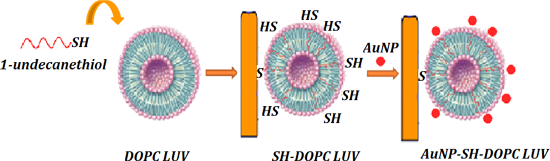
Gold nanoparticles covalently assembled onto vesicle structures as possible biosensing platform
Beilstein J. Nanotechnol. 2016, 7, 655–663, doi:10.3762/bjnano.7.58