Search results
Search for "charge separation" in Full Text gives 90 result(s) in Beilstein Journal of Nanotechnology.
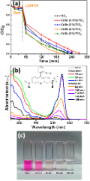
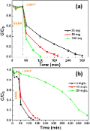
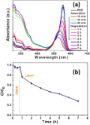
CdSe nanorod/TiO2 nanoparticle heterojunctions with enhanced solar- and visible-light photocatalytic activity
Beilstein J. Nanotechnol. 2017, 8, 2741–2752, doi:10.3762/bjnano.8.273
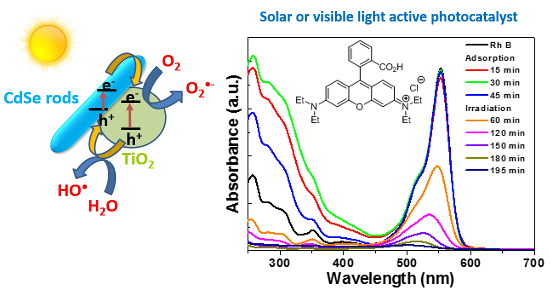
- recombination of photogenerated charge carriers (electrons and holes). To address these problems, a number of studies have been devoted to the improvement of light absorption and charge separation by hybridizing TiO2 with narrow bandgap semiconductors, doping with metal or nonmetal elements, association with
- separation. The interfacial electron transfer between two semiconductors has gained significant interest because the heterojunction improves both the optical absorption in the visible range and the charge separation yield and thus the charge carrier lifetime [3][4][5][6][7][8]. The photocatalytic activity is
- structure, the CdSe/TiO2 composites exhibit full visible and near-infrared light absorption and improved photocatalytic activity via charge separation between CdSe and TiO2 materials. The CdSe (2 wt %)/TiO2 composite was demonstrated to be the more efficient for the degradation of rhodamine B both under






Enhanced photoelectrochemical water splitting performance using morphology-controlled BiVO4 with W doping
Beilstein J. Nanotechnol. 2017, 8, 2640–2647, doi:10.3762/bjnano.8.264
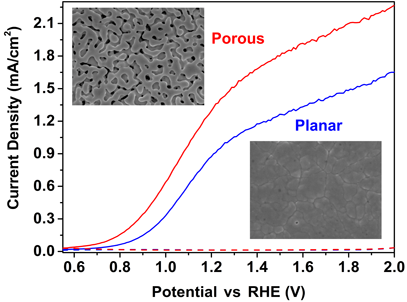
- BiVO4 by simply tuning the solvent ratio in precursor solutions. Planar and porous W-doped BiVO4 thin films were prepared and compared. The porous film, which exhibits increased surface area and enhanced light absorption, has displayed enhanced charge separation and interfacial charge injection. Our
- quantitative analysis showed an enhancement of about 50% of the photoelectrochemical performance for the porous structure compared to the planar structure. This enhancement is attributed to improved light absorption (13% increase), charge separation (14% increase), and interfacial charge injection (20
- % increase). Keywords: bismuth vanadate; charge separation; nanostructure; photoelectrochemical water splitting; Introduction Solar hydrogen generation is one of the most promising approaches to create clean energy and to overcome the environmental problems associated with use of conventional fossil fuels


Systematic control of α-Fe2O3 crystal growth direction for improved electrochemical performance of lithium-ion battery anodes
Beilstein J. Nanotechnol. 2017, 8, 2032–2044, doi:10.3762/bjnano.8.204
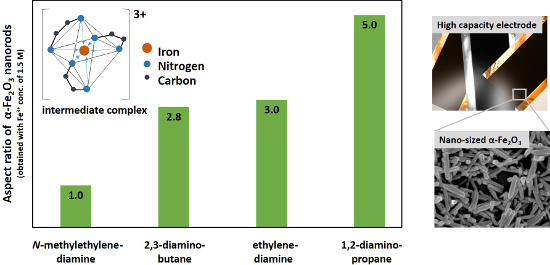
- interfacial lithium accommodation along with charge separation at phase boundaries proposed by Jamnik and Maier [56]. After conversion of α-Fe2O3, resulting in Fe finely dispersed in a Li2O matrix, additional lithium is supposed to be accommodated on the Li2O surfaces, whereas the electrons are transferred to


Spin-dependent transport and functional design in organic ferromagnetic devices
Beilstein J. Nanotechnol. 2017, 8, 1919–1931, doi:10.3762/bjnano.8.192
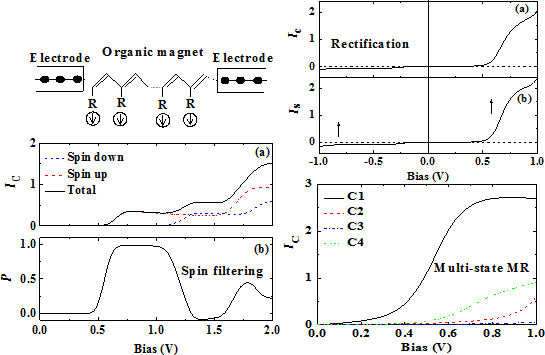
- organic magnetic devices with one ferromagnetic and one nonmagnetic electrode. Wang et al. [27][28] have performed theoretical studies of electron transport in OFs and have proposed spin–charge separation and spin filtering. π-Conjugated OFs with spin radicals are ideal materials for device design since


Two-dimensional carbon-based nanocomposites for photocatalytic energy generation and environmental remediation applications
Beilstein J. Nanotechnol. 2017, 8, 1571–1600, doi:10.3762/bjnano.8.159
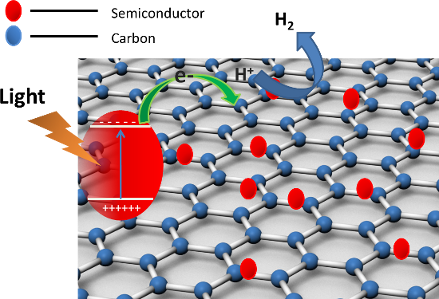
- semiconductor material occurs in three main steps, (1) absorption of light, (2) charge separation, (3) redox reactions on the catalyst surface. The first step involves the absorption of light by the photocatalyst and generation of electron–hole pairs in the CB and VB. The second step involves the charge
- nanoparticles and accelerate the photocatalytic rate by introducing more reaction sites and promoting charge separation in semiconductors [115]. In water splitting reactions, generally noble metals (e.g., Pt, Rh) and some metal oxides (e.g., NiO) act as the cocatalyst and these are loaded on the surface of
- photocatalysts to produce more reactive sites and to reduce the activation energy for H2 and O2 gas evolution. Cocatalysts also enhances the charge separation in photocatalytic materials because of their high work function. This high work function of noble metals and some metal oxides accelerates the transfer of


Energy-level alignment at interfaces between manganese phthalocyanine and C60
Beilstein J. Nanotechnol. 2017, 8, 927–932, doi:10.3762/bjnano.8.94
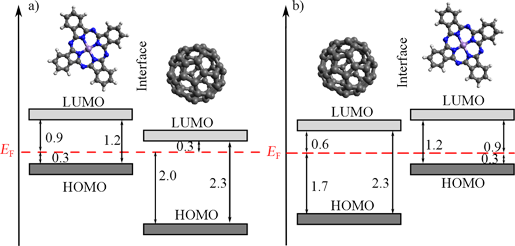
- (opto-)electronic devices [1][2][3][4][5][6][7][8][9][10]. A key issue in any device is the energetics at the device interfaces as it determines charge transport across or charge separation at the corresponding interface [11][12]. Thus, it is not surprising that the investigation of organic
- phthalocyanine-based (model) devices have been realized [28][29][30][31][32][33]. In particular, organic photovoltaic cells containing, e.g., copper phthalocyanine (CuPc) can be found rather frequently in the literature [28][30][34][35][36]. There, the charge separation at interfaces between the phthalocyanine
- charge separation at the interface is significantly reduced. Interestingly, the energy-level alignment at the interface between MnPc and C60, prepared on a gold substrate depends on the deposition sequence. The HOMO offset differs by about 0.3 eV. Furthermore, the position of the Fermi level in MnPc is


High photocatalytic activity of Fe2O3/TiO2 nanocomposites prepared by photodeposition for degradation of 2,4-dichlorophenoxyacetic acid
Beilstein J. Nanotechnol. 2017, 8, 915–926, doi:10.3762/bjnano.8.93
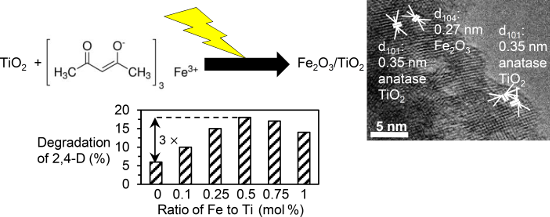
- of the best modifiers, the use of a co-catalyst has been recognized to improve the photocatalytic performance of semiconductor photocatalysts as it promotes charge separation and suppresses photocorrosion of the semiconductor photocatalyst [3][4]. One of the potential co-catalyst modifiers is iron


Synthesis of graphene–transition metal oxide hybrid nanoparticles and their application in various fields
Beilstein J. Nanotechnol. 2017, 8, 688–714, doi:10.3762/bjnano.8.74
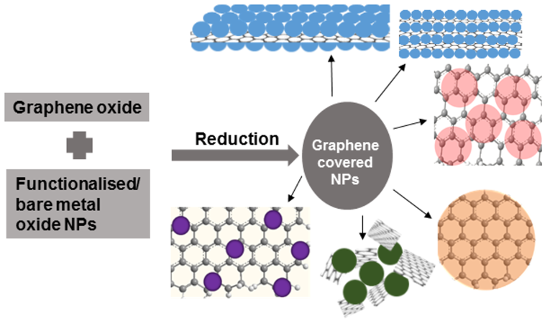
- significantly. The introduction of graphene into TiO2 results in increased conductivity of the hybrid material, higher transparency and efficient charge separation of the system which causes enhanced photocatalytic activity and other novel properties [81]. Also, due to its high conductivity, graphene is highly






Study of the surface properties of ZnO nanocolumns used for thin-film solar cells
Beilstein J. Nanotechnol. 2017, 8, 446–451, doi:10.3762/bjnano.8.48
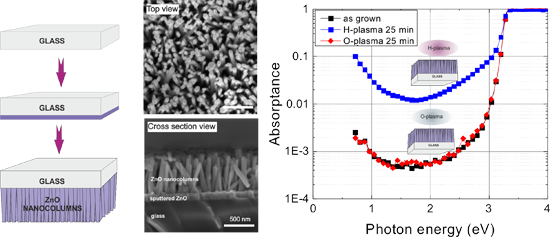
- developed solar cells based on a three dimensional (3-D) design, in which periodically ordered zinc oxide nanocolumns (ZnO NCs) are used as a front electrode, have been of great interest, because they would exceed in the ultimate light trapping and provide excellent charge separation [5][6][7]. Due to the



Photo-ignition process of multiwall carbon nanotubes and ferrocene by continuous wave Xe lamp illumination
Beilstein J. Nanotechnol. 2017, 8, 134–144, doi:10.3762/bjnano.8.14
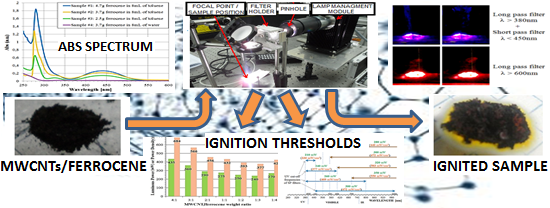
- point of view, the suggested evolution of ignition process has been summarized in the Figure 17. As reported in Figure 17, the photo-induced process of charge separation, promoted by UV–vis–IR light irradiation (photon energy h∙ν = h∙c/λ with 380 nm < λ < 1000 nm, c speed of light and h Planck constant




Role of RGO support and irradiation source on the photocatalytic activity of CdS–ZnO semiconductor nanostructures
Beilstein J. Nanotechnol. 2016, 7, 1684–1697, doi:10.3762/bjnano.7.161
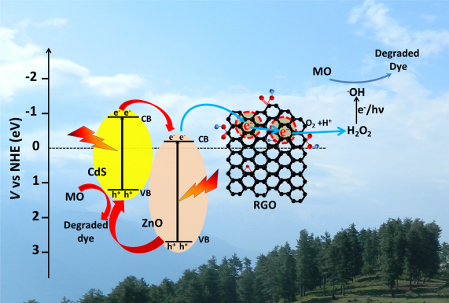
- occurs in both. Hence, the generation of higher number of electron–hole pairs, their effective charge separation and charge transfer are the major factors responsible for the better activity of the photocatalysts under natural sunlight compared to the visible light irradiation using a solar simulator
- , which could be attributed to the enhanced photo-generated charge separation, facile charge transfer and strong adsorption of dye on to RGO. In addition, superior photocatalytic activity was observed for the nanocomposites irradiated under natural sunlight than visible light from solar simulator. This




Scanning probe microscopy studies on the adsorption of selected molecular dyes on titania
Beilstein J. Nanotechnol. 2016, 7, 1642–1653, doi:10.3762/bjnano.7.156
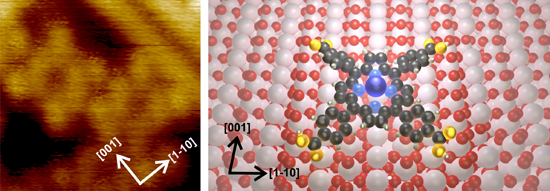
- charge separation and transport functions are separated. Now, the properties of the semiconductor–sensitizer junction may increase the conversion efficiency in the photovoltaic device. In view of this, it is essential to study the adsorption properties and the charge transfer of organic dyes on the


Synthesis and applications of carbon nanomaterials for energy generation and storage
Beilstein J. Nanotechnol. 2016, 7, 149–196, doi:10.3762/bjnano.7.17
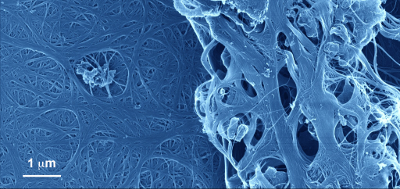
- for the transport of free carriers and more efficient charge separation in comparison to the other structures [184][185][186]. The first kind of BHJ architecture was originally proposed by Sariciftci et al. [187] and is based on an active blend of a conducting polymer (electron donor material) mixed















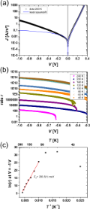
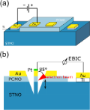
Current–voltage characteristics of manganite–titanite perovskite junctions
Beilstein J. Nanotechnol. 2015, 6, 1467–1484, doi:10.3762/bjnano.6.152
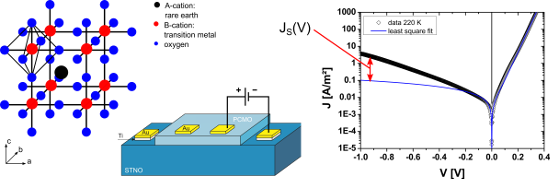
- binding energy can be high due to the low dielectric constant of the organic semiconductors and can exceed 1 eV. Charge separation is typically hindered by a high exciton binding energy, however, it can be facilitated at a heterojunction due to formation of a more loosely bound exciton–polaron pair, which





Electronic interaction in composites of a conjugated polymer and carbon nanotubes: first-principles calculation and photophysical approaches
Beilstein J. Nanotechnol. 2015, 6, 1138–1144, doi:10.3762/bjnano.6.115
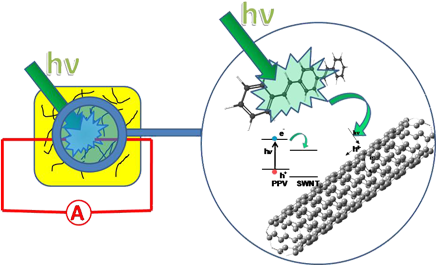
- photoexcitation techniques and density functional theory. Charge separation is confirmed experimentally by rapid quenching of PPV photoluminescence and changes in photocurrent starting at relatively low concentrations of SWNT. Calculations predict strong electronic interaction between the polymer and the SWNT
- molecules, and semiconducting nanocrystals have been extensively studied, in order to understand the photophysical changes observed on varying the particles concentration [8][9][10][11]. Notably, polymer-composite materials with different electron affinity have been used to enhance charge separation upon


Multiscale modeling of lithium ion batteries: thermal aspects
Beilstein J. Nanotechnol. 2015, 6, 987–1007, doi:10.3762/bjnano.6.102
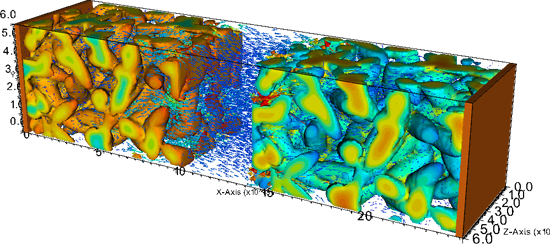
- the free energy density φH is defined. Charge neutral systems Most of the battery literature deals with locally charge-neutral systems, i.e., ρF = 0. This assumption is based on the observation that in a battery, under normal operating conditions, the potential differences required for charge
- separation exist only in a very thin layer around the active particles in the form of a double layer. To include the double layer, it is either necessary to solve the equations derived above without further assumptions on charge neutrality [27], or specific models for the double layer [60] or the form of the


Effects of swift heavy ion irradiation on structural, optical and photocatalytic properties of ZnO–CuO nanocomposites prepared by carbothermal evaporation method
Beilstein J. Nanotechnol. 2015, 6, 928–937, doi:10.3762/bjnano.6.96
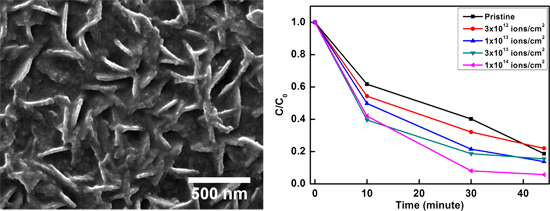
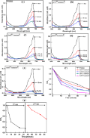
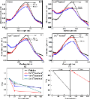
- of CuO. This helps to inhibit the recombination of photogenerated electrons and holes and improves the charge separation efficiency. The oxygen molecules adsorbed on the photocatalyst form superoxide anion radicals (•O2−) due to their interaction with electrons in the conduction band of ZnO. Surface



Observation of a photoinduced, resonant tunneling effect in a carbon nanotube–silicon heterojunction
Beilstein J. Nanotechnol. 2015, 6, 704–710, doi:10.3762/bjnano.6.71
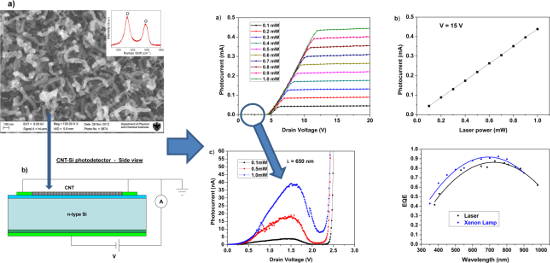
- -based devices have been attributed to the photon-induced generation of charge carriers in single-wall CNTs and the subsequent charge separation across the carbon nanotube–metal contact interface [11]. To the best of our knowledge, there is a lack of measurements in the UV region [8], and moreover, there


Tm-doped TiO2 and Tm2Ti2O7 pyrochlore nanoparticles: enhancing the photocatalytic activity of rutile with a pyrochlore phase
Beilstein J. Nanotechnol. 2015, 6, 605–616, doi:10.3762/bjnano.6.62
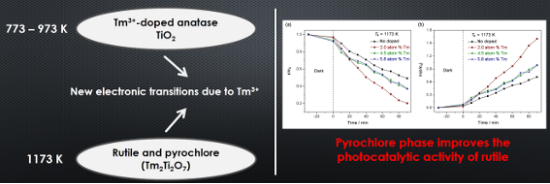
- charge separation efficiency. The process of catalytic photodegradation of organic compounds can be described as follows: a continuous irradiation (with an energy higher than band gap energy) of an aqueous semiconductor dispersion excites an electron from the valence band to the conduction band, creating
- the recombination of the electron–hole pairs, because the recombination is usually much easier than the subsequent steps required for organic degradation [10]. In our case, the heterojunction that exists at the interface of the mixed phases in the doped samples promotes charge separation, that is, the
- separation of electron–hole pairs. This has been reported previously for NaTaO3/Na2Ta2O6 phases [43]. An efficient charge separation implies low recombination, and this has been observed from the Raman results for the pyrochlore-based samples. Moreover, the higher photocatalytic activity in the ordered


Inorganic Janus particles for biomedical applications
Beilstein J. Nanotechnol. 2014, 5, 2346–2362, doi:10.3762/bjnano.5.244
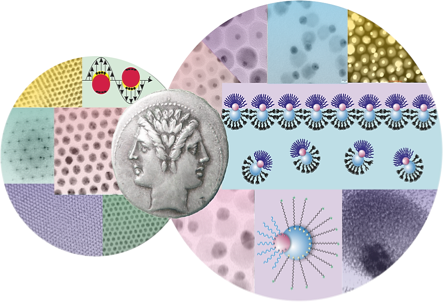
- orthogonal functionalization of the surfaces [30][40][41]. In addition to the extrinsic characteristics arising from exploiting the anisotropy, efficient charge separation [42], magnetic interaction [43], or spin-polarization transfer [44] at the interface of the hetero-nanoparticle can be realized by
- conjugation to Ag nanoparticles when combined to form Ag@Fe3O4 dumbbell-like hetero-nanoparticles [47]. Moreover, plasmonic photocatalysts combine two prominent features: a Schottky junction enhancing charge separation and surface plasmon resonance, which is responsible for strong absorption of visible light






Donor–acceptor graphene-based hybrid materials facilitating photo-induced electron-transfer reactions
Beilstein J. Nanotechnol. 2014, 5, 1580–1589, doi:10.3762/bjnano.5.170
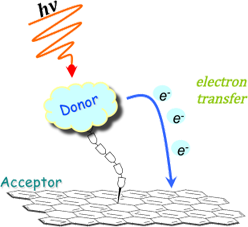
- such graphene-based ensembles will be described. Important parameters, such as the generation of the charge-separated state upon photoexcitation of the organic electron donor, the lifetimes of the charge-separation and charge-recombination as well as the incident-photon-to-current efficiency value for
- proceeds via nitrenes as generated upon the thermal (or photochemical) decomposition of azides and the liberation of dinitrogen. Characterization, charge-separation and incident-photon-to-current efficiency Raman spectroscopy is an extremely useful tool for characterizing graphene-based materials. Pristine
- , charge-separation takes place and the efficiency of the whole process is governed by how fast or slow the recombination of charges occurs. A schematic description of such a process, which sometimes may be quite complex involving triplet states as derived upon intersystem crossing, is presented in Figure


An insight into the mechanism of charge-transfer of hybrid polymer:ternary/quaternary chalcopyrite colloidal nanocrystals
Beilstein J. Nanotechnol. 2014, 5, 1235–1244, doi:10.3762/bjnano.5.137
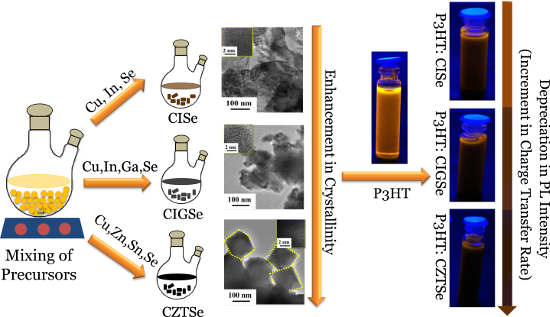
- donor and the charge separation mechanism across the donor–acceptor interface from the extent of crystallinity of the chalcopyrite semiconductors (CISe/CIGSe/CZTSe). Quaternary CZTSe chalcopyrites with their high crystallinity and controlled morphology in conjunction with regioregular P3HT polymer is an
- , a charge-separation at donor–acceptor heterojunctions is a key process, which takes center stage in determining the energy conversion efficiency of hybrid photovoltaics. Hybrid solar cells enjoy an advantage of intrinsically high carrier mobility, which is caused by inorganic materials dispersed in
- polymer P3HT, the generation of excitons takes place (process 1). The excitons then diffuse to the polymer–chalcopyrite interface where charge separation occurs (process 2). The overall energetic driving force ∆E for the electron transfer from the donor to the acceptor depends on the energy difference


Functionalized nanostructures for enhanced photocatalytic performance under solar light
Beilstein J. Nanotechnol. 2014, 5, 994–1004, doi:10.3762/bjnano.5.113
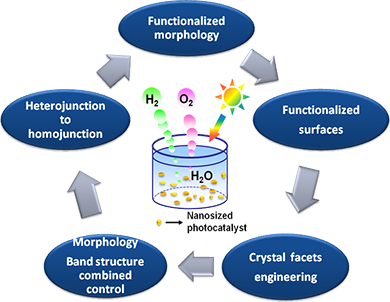
- efficient hydrogen evolution. Generally, MCM-41 is not photo-reactive. But it can be activated by coupling with a semiconductor or doping a transitional metal. Figure 3 shows the proposed charge separation mechanism within a representative transitional metal-containing molecular sieve photocatalyst [21]. In
- simple one-step hydrothermal method [33]. As schematically illustrated in Figure 5, the CdS nanoparticle was intimately enwrapped by the TNTs, resulting in a remarkably enhanced charge separation efficiency and thereby photocatalytic hydrogen production activity. The similar enwrapped structure can also
- accumulate on high-indexed facets, while photogenerated holes tended to migrate to {100} facets, leading to an efficient spatial charge separation and thereby enhanced photocatalytic hydrogen production from reforming of glucose over the Cu2O polyhedron [45]. The origin of the charge separation on different


Optical modeling-assisted characterization of dye-sensitized solar cells using TiO2 nanotube arrays as photoanodes
Beilstein J. Nanotechnol. 2014, 5, 895–902, doi:10.3762/bjnano.5.102
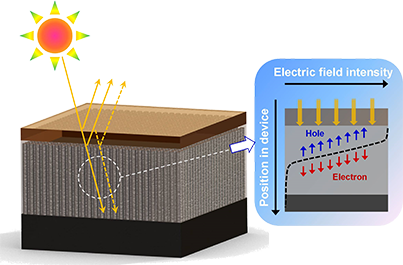
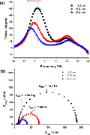
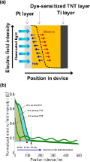
- . Figure 5 shows the calculated electric field intensity of the DSSCs with different TNT lengths by using GTMM. The electric field formed between active layers of solar cells triggers the charge separation of electron and hole generated in the solar cell system. The electric field intensity in Figure 5a
- shows the behavior of charge separation occurring at an interface between multi-layers as a function of the position in the device. The position in the device refers to the distance from the first layer (Pt layer) illuminated by light. Herein, for the modeling analysis, the configuration of DSSCs was
- dye is usually considered as a volume. Therefore, with the longer TNT array, the larger magnitude of the electric field intensity and the thicker electric field-valid layer contribute to the higher light harvesting with an enhanced charge separation. This is well matched with the Jsc and IPCE results


Biomolecule-assisted synthesis of carbon nitride and sulfur-doped carbon nitride heterojunction nanosheets: An efficient heterojunction photocatalyst for photoelectrochemical applications
Beilstein J. Nanotechnol. 2014, 5, 770–777, doi:10.3762/bjnano.5.89
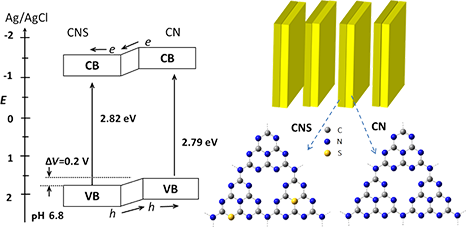
- ). This type-II band alignment means that once CN and CNS are electronically coupled, a well-matched band structure for charge separation will be formed. In this case, the photogenerated electrons are transferred from CN to CNS, while the photogenerated holes are transferred from CNS to CN, leading to an
- improved charge separation. To test our hypothesis, we designed a strategy to construct CN/CNS heterostructures. In our method, we firstly grow CNS nanosheets by using a biomolecule-assisted pyrolysis method, followed by growing CN on preformed CNS nanosheets to form a well-mixed CN/CNS heterostructure
- is worth mentioning that the shape of the three EQE curves are similar with the same cut off at nearly 470 nm, indicating that the enhanced photocurrent of CN/CNS heterostructure mainly comes from improved charge separation at the CN/CNS heterojunction interface. Conclusion In conclusion, we have