


Search results
Search for "coalescence" in Full Text gives 93 result(s) in Beilstein Journal of Nanotechnology.
The role of ligands in coinage-metal nanoparticles for electronics
Beilstein J. Nanotechnol. 2017, 8, 2625–2639, doi:10.3762/bjnano.8.263
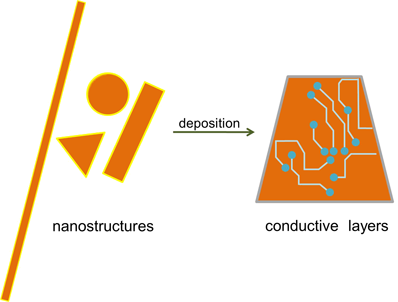
- particles and the aliphatic chains stabilize the particles sterically; steric repulsion was strong enough only for chains above twelve carbon atoms to prevent rapid coalescence of the nanoparticles [28]. Karg et al. prepared gold nanoparticles in aqueous solutions and transferred them to chloroform and
- sintering at 140 °C. The authors suggest that the shorter acid first disassociated, which caused partial nanoparticle coalescence, released heat, and led to partial dissociation of the decanoic acid, and the formation of conductive patterns [125]. Copper nanoparticles with glycolic (Figure 3) and lactic


Localized growth of carbon nanotubes via lithographic fabrication of metallic deposits
Beilstein J. Nanotechnol. 2017, 8, 2592–2605, doi:10.3762/bjnano.8.260
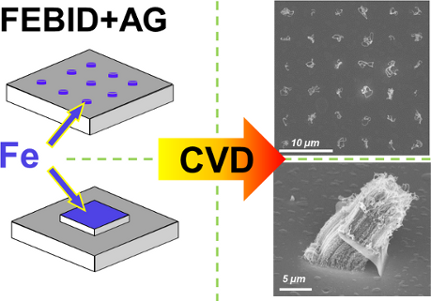
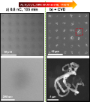
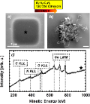
- , hindering the coalescence of Fe nanoparticles, resulting in more active sites for CNT nucleation [28][29][30]. A peculiar lift-up of the CNT nanostructure was also observed for the first time. Based on energy dispersive X-ray (EDX) spectroscopy and SEM data, the corresponding mechanism is also discussed




Strategy to discover full-length amyloid-beta peptide ligands using high-efficiency microarray technology
Beilstein J. Nanotechnol. 2017, 8, 2446–2453, doi:10.3762/bjnano.8.243
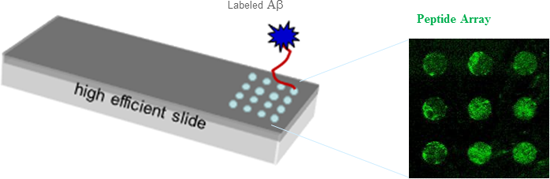
- spreading and coalescence of the spots. As far as reference slide is concerned, in order to minimize effects due to different wettability, stored slide with similar contact angle and very low fluorescence background were used. The background level of the epoxysilane slide does not essentially increase after


Comparing postdeposition reactions of electrons and radicals with Pt nanostructures created by focused electron beam induced deposition
Beilstein J. Nanotechnol. 2017, 8, 2410–2424, doi:10.3762/bjnano.8.240
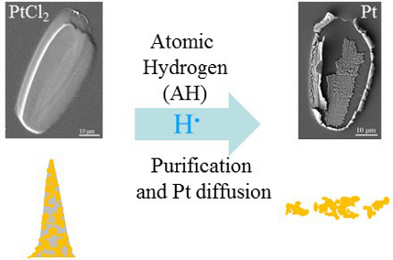
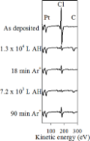
- purification by LAEBID resulted not only in higher platinum content but also in an improved platinum coalescence and a transition from amorphous to graphitic carbon. The net effect of these chemical and structural transformations was a 100-fold improvement in nanowire resistivity, while maintaining a high
- measured by EDS. The Pt atoms in this region could be less susceptible to the effects of subsequent AH exposure, possibly due to Pt nucleation and coalescence in the electron beam purification step and/or a decrease in local heating from the exothermicity of the AH purification step (which would enhance




Ta2N3 nanocrystals grown in Al2O3 thin layers
Beilstein J. Nanotechnol. 2017, 8, 2162–2170, doi:10.3762/bjnano.8.215
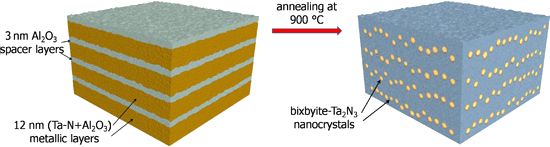
- through the coalescence of NPs that were grown in adjacent metallic layers and, consequently, the regular ML structure is destroyed. On the contrary, thicker metallic layers at 900 °C contain smaller NPs and the dmetal/Dz ratio is about two. This indicates that the NPs are still confined within the


Self-assembly of chiral fluorescent nanoparticles based on water-soluble L-tryptophan derivatives of p-tert-butylthiacalix[4]arene
Beilstein J. Nanotechnol. 2017, 8, 1825–1835, doi:10.3762/bjnano.8.184
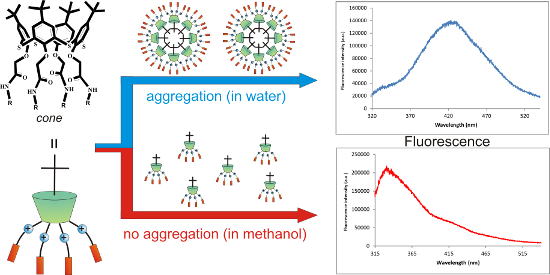
- charged fragments. The concentration of the solutions leads to the coalescence of the particles by hydrophobic fragments, and the particles are hence considerably enlarged. This results in aggregates that are much larger than those in solution which are visible in the SEM images. Tryptophan is an amino



Process-specific mechanisms of vertically oriented graphene growth in plasmas
Beilstein J. Nanotechnol. 2017, 8, 1658–1670, doi:10.3762/bjnano.8.166
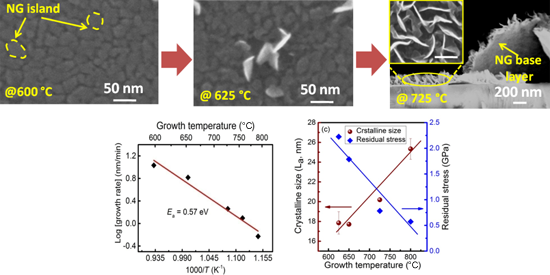
- nanostructures in plasmas are C2 and CH, as well as atomic and molecular hydrogen [26]. The rapid nucleation of nanoislands, self-organization and coalescence between them take place through direct adsorption and surface diffusion of carbon-containing species on the substrate surface [24]. Hence, the commonly


Preparation of thick silica coatings on carbon fibers with fine-structured silica nanotubes induced by a self-assembly process
Beilstein J. Nanotechnol. 2017, 8, 1145–1155, doi:10.3762/bjnano.8.116
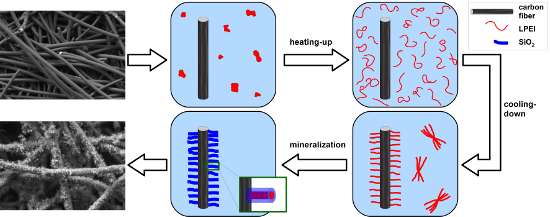
- atmosphere associated with disappearance and coalescence of the fine-structure (Supporting Information File 1, Figure S7). Variation of the fiber substrate The surface of carbon fibers of which the sizing agent is removed by calcination at 400 °C is attractive enough for the molecular-level interactions with


Investigation of growth dynamics of carbon nanotubes
Beilstein J. Nanotechnol. 2017, 8, 826–856, doi:10.3762/bjnano.8.85
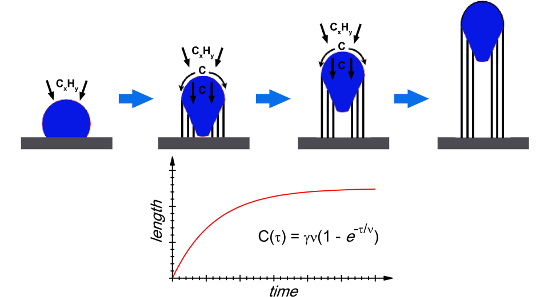
- can also be obtained by the “cloning growth” and organic synthesis, as described in detail in review [132]. Inner tube growth inside SWCNTs While the coalescence mechanism is generally accepted for the formation of inner tubes from fullerene-filled SWCNTs [133][134][135][136][137][138][139][140][141


3D Nanoprinting via laser-assisted electron beam induced deposition: growth kinetics, enhanced purity, and electrical resistivity
Beilstein J. Nanotechnol. 2017, 8, 801–812, doi:10.3762/bjnano.8.83
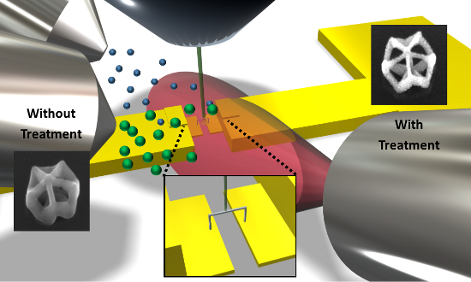
- and a coalescence of the otherwise Pt–C nanogranular material, 2) a slight enhancement in the deposit resolution and 3) a 100-fold improvement in the conductivity of suspended nanowires grown with the in situ photothermal assist process, while retaining a high degree of shape fidelity. Keywords


Influence of hydrofluoric acid treatment on electroless deposition of Au clusters
Beilstein J. Nanotechnol. 2017, 8, 183–189, doi:10.3762/bjnano.8.19
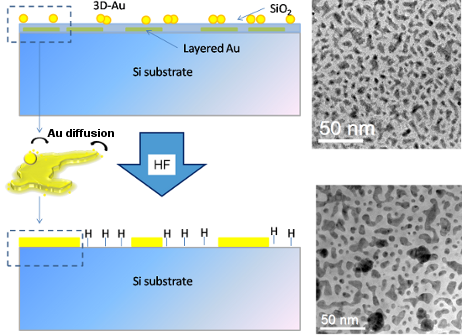
- layers of a few nanometers in length. The samples were also treated with HF after the deposition and we found out a general thickening of flat regions, as revealed by TEM and AFM analysis. This result is in contrast to the coalescence observed in similar experiments performed with Ag. It is suggested
- papers dealing with dynamic coalescence of metal nanoparticles in liquids [34][35][36]. In a previous work, we found that silver nanoparticles are subjected to Smoluchowski [37] ripening in DHF solutions by increasing their size and decreasing their surface density. For the case of gold nanoparticles on


Fundamental properties of high-quality carbon nanofoam: from low to high density
Beilstein J. Nanotechnol. 2016, 7, 2065–2073, doi:10.3762/bjnano.7.197
- individual units which are weakly connected, forming the foam structure. Their interaction is not strong enough for coalescence to occur. The hydrothermal process allows for the variation of growth parameters which may lead to further foam morphologies. The study of the parameter–morphology relationship can
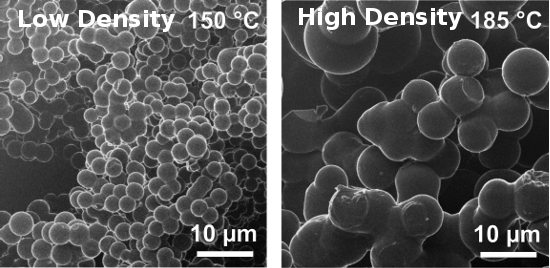
- cases, the micropearls are individually separated from each other. This is different for the high-density foams, displayed in Figure 1c,d. Here, the individual carbon spheres are larger in size and show a strong tendency for coalescence. In particular, Figure 1d shows that the spheres are connected with
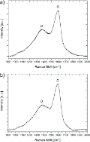
- formation of ordered graphitic wall structures. On the other hand, it also leads to extended growth of the micropearls to larger sizes and to the coalescence of the spheres. In disordered carbon, the G- and D-peaks are usually grown together forming one broad peak. In this respect it is interesting to note


Cubic chemically ordered FeRh and FeCo nanomagnets prepared by mass-selected low-energy cluster-beam deposition: a comparative study
Beilstein J. Nanotechnol. 2016, 7, 1850–1860, doi:10.3762/bjnano.7.177
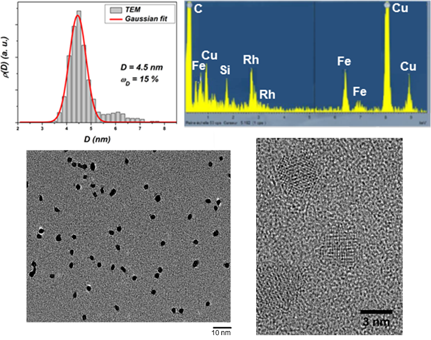
- energy to reach its thermodynamic equilibrium [1]. Considering chemical syntheses, Jia et al. [7] have shown that the coalescence of initially 4–5 nm FeRh NPs to structures of 20 nm in diameter after annealing is necessary to observe AF–FM transition in chemically ordered NPs. Recently, a strong
- protect the sample from oxidation but also to allow vacuum high-temperature annealing and so to reach the equilibrium phase without coalescence of the NPs. To characterise the structure of the clusters by transmission electron microscopy (TEM), we prepared discontinuous thin layers of NPs deposited on an


Functionalized platinum nanoparticles with surface charge trigged by pH: synthesis, characterization and stability studies
Beilstein J. Nanotechnol. 2016, 7, 1822–1828, doi:10.3762/bjnano.7.175
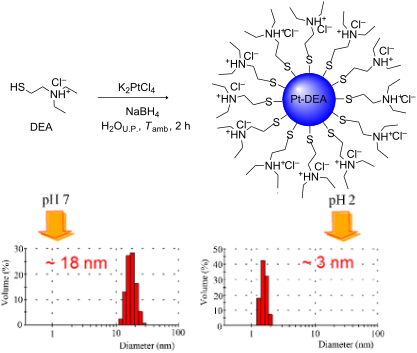
- , such as an organic thiol, is present in solution, it gives rise to a passivation layer that hinders the coalescence and precipitation, allowing the colloidal suspension to remain stable [22]. Among reducing agents, hydrazine and sodium borohydride are the most commonly used but also natural-origin


Three-gradient regular solution model for simple liquids wetting complex surface topologies
Beilstein J. Nanotechnol. 2016, 7, 1377–1396, doi:10.3762/bjnano.7.129

- shape, do not take molecular details into account, and often require the contact angle as input parameter. Furthermore, air entrapment and coalescence [29] cannot be obtained by solving the Young–Laplace equation, and surfaces with re-entrant curvatures give impossible solutions [29]. Phase field


![[Graphic 10]](/bjnano/content/inline/2190-4286-7-129-i31.png?max-width=637&scale=1.18182) and standard deviation as a function of the cavity diameter d (in...
and standard deviation as a function of the cavity diameter d (in...

![[Graphic 20]](/bjnano/content/inline/2190-4286-7-129-i41.png?max-width=637&scale=1.18182) and the corresponding fluctuations (measured along the x-direction) indica...
and the corresponding fluctuations (measured along the x-direction) indica...

![[Graphic 28]](/bjnano/content/inline/2190-4286-7-129-i49.png?max-width=637&scale=1.18182) and the corresponding standard deviation as measure of variation in the ...
and the corresponding standard deviation as measure of variation in the ...

![[Graphic 39]](/bjnano/content/inline/2190-4286-7-129-i60.png?max-width=637&scale=1.18182) and standard deviation as function of cut-off fraction c for fixed ...
and standard deviation as function of cut-off fraction c for fixed ...
On the pathway of cellular uptake: new insight into the interaction between the cell membrane and very small nanoparticles
Beilstein J. Nanotechnol. 2016, 7, 1296–1311, doi:10.3762/bjnano.7.121
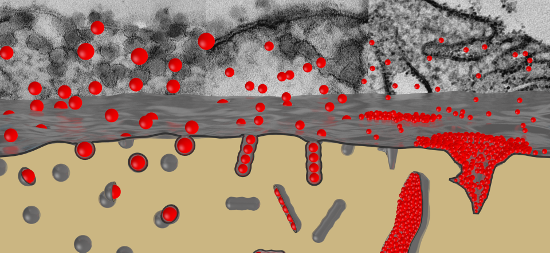
- assume that this large area coverage hinders the final vesicle pinch-off from the cell membrane. The additional silica layer on the cell membrane prevents the intimate membrane–membrane contact necessary for the coalescence of the membrane lipid bilayer at the point of pinch-off. Furthermore, the




Development of highly faceted reduced graphene oxide-coated copper oxide and copper nanoparticles on a copper foil surface
Beilstein J. Nanotechnol. 2016, 7, 1010–1017, doi:10.3762/bjnano.7.93
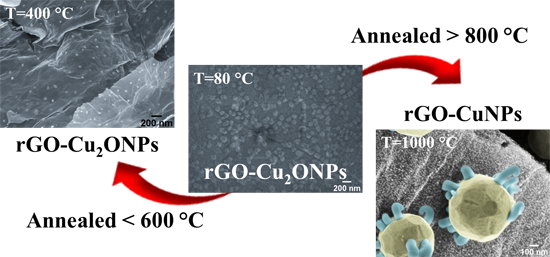
- diffuse on the partially melted surface to agglomerate and coalesce and so to form bigger nanostructures. During coalescence, rGO catalytically decomposes producing carbon oxygenated species (epoxide, COOH, C–OH, CO2 and CO) and water vapor [28]. Once the nanoparticles attain a certain size, the rGO
- sheets rearrange at the nanoparticle surface to produce a hermetic rGO coating for Cu2O or CuNPs (Figure 3). It is thought that, at 800–1000 °C, carbonaceous species produced during coalescence could establish carbon supersaturation conditions at the partially melted particle surface, and then to promote
- polydisperse rGO-Cu and rGO-Cu2ONPs were obtained, some of them displayed a highly faceted morphology. Temperatures lower than 1000 °C resulted in particles 5–170 nm in size with irregular shapes. The considerable dispersion in size and shape can be attributed to nanoparticle coalescence, as indicated by the


Templated green synthesis of plasmonic silver nanoparticles in onion epidermal cells suitable for surface-enhanced Raman and hyper-Raman scattering
Beilstein J. Nanotechnol. 2016, 7, 834–840, doi:10.3762/bjnano.7.75
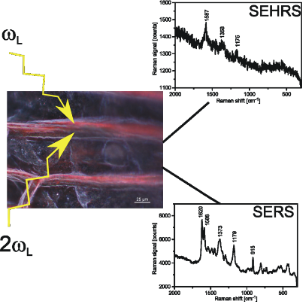
- absorption measurements in this study show a band at 270 nm, confirming the existence of Ag42+ clusters, which, via intermediate larger clusters, eventually form metallic particles Agn [27]. From these small metal particles, plasmonic silver particles grow by coalescence [27][28]. The dark red color of the


Orientation of FePt nanoparticles on top of a-SiO2/Si(001), MgO(001) and sapphire(0001): effect of thermal treatments and influence of substrate and particle size
Beilstein J. Nanotechnol. 2016, 7, 591–604, doi:10.3762/bjnano.7.52
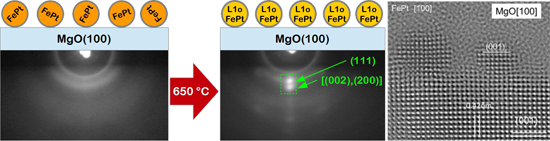
- coalescence, growth or Ostwald ripening by annealing can be completely avoided [15]. In the present study we investigate the possibility of a structural (re)orientation of FePt NPs and thin films on a-SiO2/Si(001), MgO(001), and sapphire(0001) after different in situ annealing steps by HRTEM and RHEED
- marked by blue circles belong to the sapphire substrate as above. After annealing at 530 °C for 30 min and 600 °C for 30 min, the vertical width of the (111) feature sharpens, whereas no significant change in the other parts of the pattern is observed. The absence of particle coalescence induced by
- as the absence of any particle coalescence during the annealing up to temperatures of 650 °C. The height distribution of the nanoparticles (right panel of Figure 10) yields an average value of 2.7 ± 0.7 nm identical to the as-prepared value. Thus, thermal evaporation of the FePt NPs during annealing


Characterization of spherical domains at the polystyrene thin film–water interface
Beilstein J. Nanotechnol. 2016, 7, 581–590, doi:10.3762/bjnano.7.51
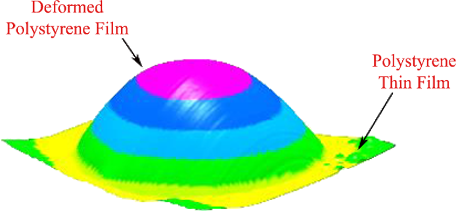
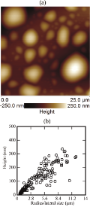
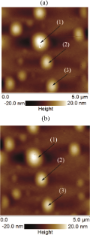
- were studied and characterized using atomic force microscopy (AFM). The study showed that these domains have similar characteristics to micro- and nanobubbles, such as a spherical shape, smaller contact angle, low line tension, and they exhibit phase contrast and the coalescence phenomenon. However
- films. This study employs AFM and optical microscopy to characterize the spherical-shaped domains that readily nucleate on the PS film after immersion in DI water. The radius, height, contact angle (CA) and line tension are analyzed in detail. The coalescence, stiffness and phase contrast analysis were
- magnitude of the line tension of these objects is several orders of magnitude larger (30 nN to 800 nN) than some of the previously reported values of the line tension for nanobubbles [19][33][35]. However, the magnitude is still within the range proposed in other studies (10 pN to 10 µN) [35]. Coalescence




In situ observation of deformation processes in nanocrystalline face-centered cubic metals
Beilstein J. Nanotechnol. 2016, 7, 572–580, doi:10.3762/bjnano.7.50
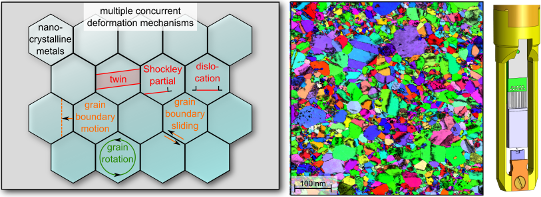
- rotations, which are accommodated along GBs. Our observations are in line with previous work on NC Pt [34] and NC Ni [45]. Focusing on the large angle crystallite rotations (0–65°), Figure 4b shows the coalescence of two Σ3 boundaries (white/blue dashed lines at 0%) to one Σ9 boundary (white/red dashed line
- schematic shows a single twin domain (T1) in a grain. The twin-in-twin morphology, a secondary twin (T2) developed in the primary twin domain (T1), is shown in the middle schematic. The lower schematic shows the coalescence of two twin boundaries of two distinct twin variant disorientations, T1 and T2
- coalescence of two crystallites with an initial disorientation of ≈4–7° at 0% strain. During deformation (at 1.1% strain), the disorientation between the crystallites partially disappears predominantly by the ≈4° rotation of the lower grain relative to its environment (Figure 5c). Grain boundary migration can


Two step formation of metal aggregates by surface X-ray radiolysis under Langmuir monolayers: 2D followed by 3D growth
Beilstein J. Nanotechnol. 2015, 6, 2406–2411, doi:10.3762/bjnano.6.247
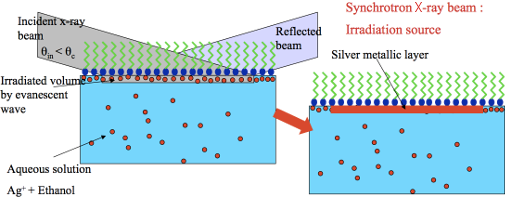
- oriented 2D crystals, the irradiation induced the in-plane coalescence of these 2D crystals. One then obtains a 2D crystal with a surface area of approximately 10 µm2 with thickness of about 4.5 nm (equal to the X-ray penetration depth) [4]. However, the surface energy of the two surfaces of this platelet


The Kirkendall effect and nanoscience: hollow nanospheres and nanotubes
Beilstein J. Nanotechnol. 2015, 6, 1348–1361, doi:10.3762/bjnano.6.139
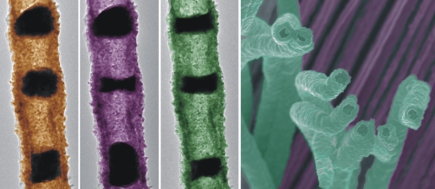
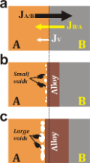
- region will be more extended within metal B and vacancies will be injected at the interface region within metal A (Figure 2b). The coalescence of excess of vacancies leads to the formation of small voids distributed all along the interface. As the annealing process progresses in time, vacancies will be
- multiple supersaturated vacancy clouds all over the metal/metal oxide interface along the wire axis which, in a further stage, condense and form multiple separated small voids within the metal core (Figure 9b,c) [63]. The coalescence of voids is the final mechanism occurring during the synthesis, which



Tunable magnetism on the lateral mesoscale by post-processing of Co/Pt heterostructures
Beilstein J. Nanotechnol. 2015, 6, 1082–1090, doi:10.3762/bjnano.6.109
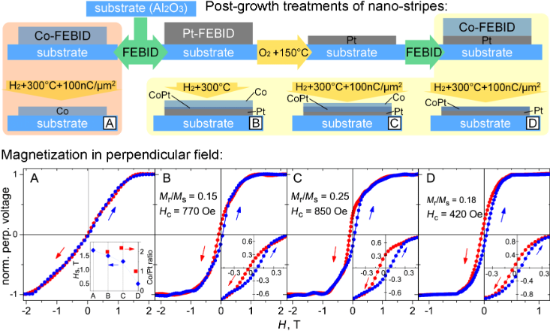
- activated oxidation of carbon at the Pt/C interface occurs, leading to the formation of CO and a reorganization and coalescence of Pt nanocrystallites by surface diffusion. The latter, in turn, results in a nanoporous morphology, which is clearly seen in the SEM images of samples B and C in the insets to


Characterization of nanostructured ZnO thin films deposited through vacuum evaporation
Beilstein J. Nanotechnol. 2015, 6, 971–975, doi:10.3762/bjnano.6.100
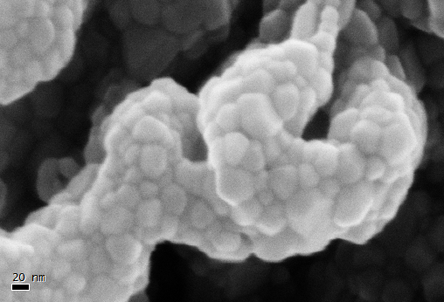
- physical change, and this is correlated to the reorganization of the particles in a preferential way, activating the boundaries of the nanoparticles. As shown in Figure 2d inset, the heat treatment provokes coalescence and the rapid formation of worm-shaped nanostructured thin films. According to Figure 3
- reorganization and coalescence of the nanoparticles and the formation of the worm-shape nanostructured thin films. In these films, a lot of space at the substrate is unoccupied by these nanostructures. Thus, it is assumed that the crystallization is improved when the temperature increases. The shoulder that





