


Search results
Search for "electrostatic interactions" in Full Text gives 141 result(s) in Beilstein Journal of Nanotechnology.
Colloidal particle aggregation: mechanism of assembly studied via constructal theory modeling
Beilstein J. Nanotechnol. 2021, 12, 413–423, doi:10.3762/bjnano.12.33
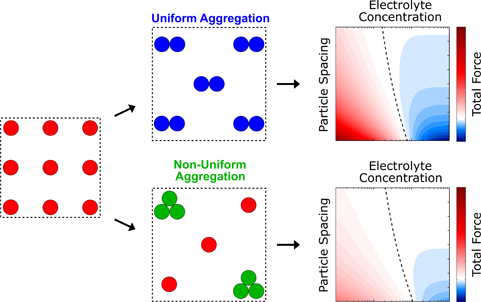
- natural coalescence, is decreased faster and more efficiently when the masses coalesce non-uniformly toward a state of equilibrium [10]. Similarly, Reis et al. used these principles to analyze how the electrostatic interactions between dust particles are minimized during particle agglomeration in air


Bulk chemical composition contrast from attractive forces in AFM force spectroscopy
Beilstein J. Nanotechnol. 2021, 12, 58–71, doi:10.3762/bjnano.12.5
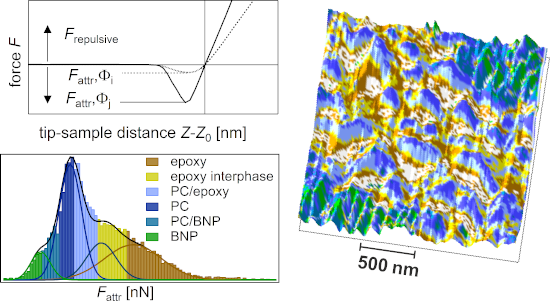
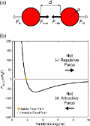
- electrostatic interactions since the zero line, Figure 1(I), is stable up to distances of Z < −5 nm. Hence, as the main source of the measured attractive forces we consider electrodynamic interactions (caused by charge fluctuations in dipoles), commonly summarized under the term van der Waals forces. For the


Nanocasting synthesis of BiFeO3 nanoparticles with enhanced visible-light photocatalytic activity
Beilstein J. Nanotechnol. 2020, 11, 1822–1833, doi:10.3762/bjnano.11.164
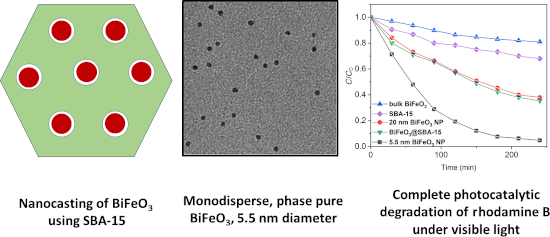
- catalyst surfaces are negatively charged, which leads to a repulsion of the negatively charged carboxylate functional groups of the dye molecule [51][54][59]. In addition, due to electrostatic interactions, RhB dimers are formed, which affects the charge density throughout the molecule and possibly leads




Gram-scale synthesis of splat-shaped Ag–TiO2 nanocomposites for enhanced antimicrobial properties
Beilstein J. Nanotechnol. 2020, 11, 1119–1125, doi:10.3762/bjnano.11.96
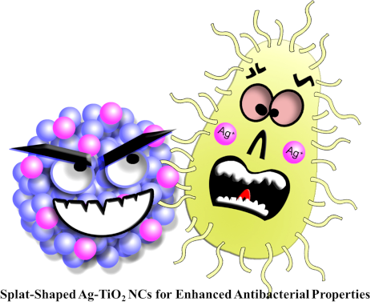
- TiO2 NP nucleation started after adding the urea and PVP surfactant. Then, the aqueously dispersed AgNO3 solution was poured into the prepared TiO2/PVP mixture. It was assumed that the positively charged Ag+ ions interacted with the negatively charged PVP-modified TiO2 NPs due to electrostatic
- interactions. In addition, the PVP also acted as a reducing agent and facilitated the formation of small Ag nanoparticles at the surface of the TiO2 spheres to form a splat-shaped structure (Scheme 1). PVP played a significant role in generating these nanocomposites, serving as a growth modifier, stabilizer


Adsorptive removal of bulky dye molecules from water with mesoporous polyaniline-derived carbon
Beilstein J. Nanotechnol. 2020, 11, 597–605, doi:10.3762/bjnano.11.47
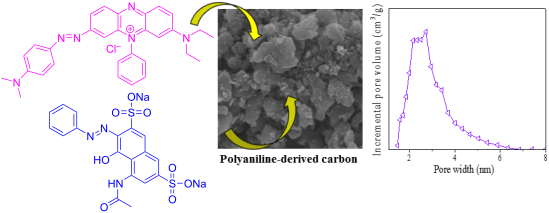
- adsorption of JGB showed an opposite trend. This very opposite trend, observed in anionic AR1 and cationic JGB, could be explained via electrostatic interactions considering the opposite charges on the studied dyes. Moreover, the studied PDC or KOH-900 might have both positive and negative charges, depending


Identification of physicochemical properties that modulate nanoparticle aggregation in blood
Beilstein J. Nanotechnol. 2020, 11, 550–567, doi:10.3762/bjnano.11.44
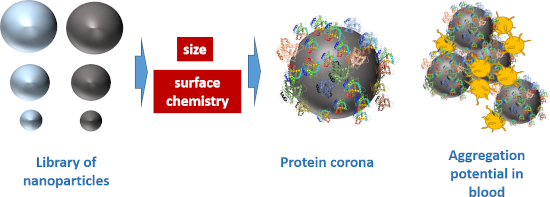
- interact with the proteins [22]. The affinity of a protein for a certain surface and the mode of interaction rise from the interplay of electrostatic interactions, hydrogen bondings, and hydrophobic forces [32]. Both nanomaterials are negatively charged at physiological pH. However, SNPs exhibit a less




Multilayer capsules made of weak polyelectrolytes: a review on the preparation, functionalization and applications in drug delivery
Beilstein J. Nanotechnol. 2020, 11, 508–532, doi:10.3762/bjnano.11.41
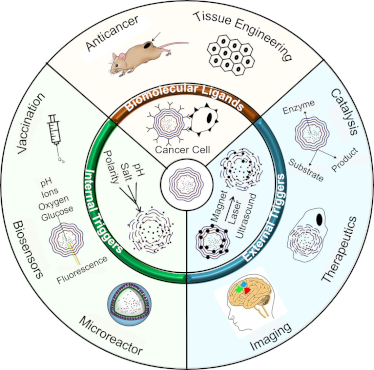
- manipulate the shell permeability [4]. However, most of the work uses strong PEs such as polystyrene sulfonate (PSS) as one of the polymers, and thus, in order to release the payload, a disturbance in the intermolecular forces (e.g., covalent binding, hydrogen bonding and electrostatic interactions) guarding
- various forces, mostly electrostatic interactions, hydrogen bonding, covalent bonding, host–guest interactions and other interactions (e.g., hydrophobic and biospecific recognition) as shown in Figure 3. Electrostatic interactions The LbL assemblies were originally applied to both charged planar
- formation and aggregation. This sequential adsorption of layers finally leads to electrostatically bound multilayers in which charge inversion is the main driving force controlling the assembly [40]. The strength and physical principles governing electrostatic interactions was recently explored by Lytle et



Poly(1-vinylimidazole) polyplexes as novel therapeutic gene carriers for lung cancer therapy
Beilstein J. Nanotechnol. 2020, 11, 354–369, doi:10.3762/bjnano.11.26
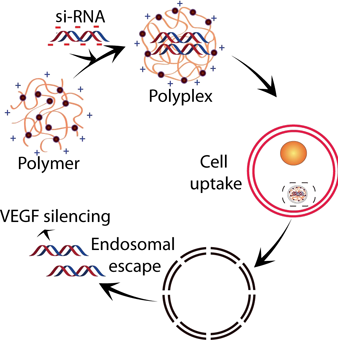
- differential thermal calorimetric profile (Figure 2B) reveals that the melting point of the pristine polymer is about 65 °C. Upon complexation with siRNA the melting point shifts to 98 °C. This can be attributed to the electrostatic interactions between the anionic phosphate moieties in the siRNA with the
- glycosaminoglycan associated with the inhibition of the coagulation process by activating anti-thrombin [23]. The sulfate groups present in heparin compete with the oligonucleotide sequences to associate with the polymer chains and based on the relative strength of the electrostatic interactions between the


Using gold nanoparticles to detect single-nucleotide polymorphisms: toward liquid biopsy
Beilstein J. Nanotechnol. 2020, 11, 263–284, doi:10.3762/bjnano.11.20
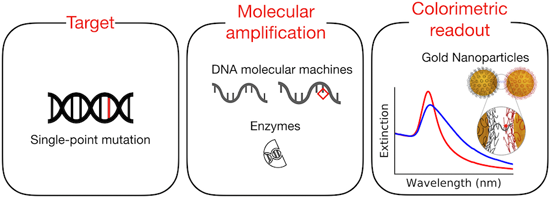
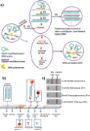
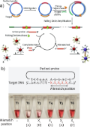
- principle of this system rests on the fact that ssDNA exhibits a higher affinity to the surface of metallic gold as dsDNA. This is because ssDNA molecules contain a large number of functional groups facilitating electrostatic interactions with the gold surface (Figure 3c). Therefore, at a high salt




Rational design of block copolymer self-assemblies in photodynamic therapy
Beilstein J. Nanotechnol. 2020, 11, 180–212, doi:10.3762/bjnano.11.15
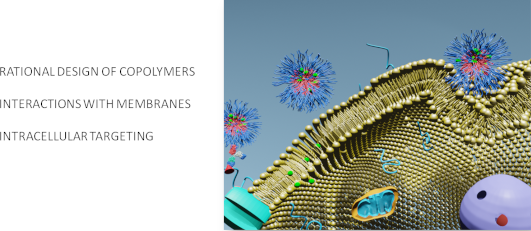
- different from hydrophobic interactions have been proposed. For example, electrostatic interactions can improve the photosensitizer loading. Mostly amino acid-based polymers with poly(ʟ-lysine) [46][47] or poly(aspartic acid) [48][49] charged blocks have been employed for poly ion complex assemblies (PICs
- the formation of H aggregates between photosensitizer molecules, which hampers the production of singlet oxygen [50][51]. Hence, a careful choice of the hydrophobic block of the copolymer–photosensitizer couple for electrostatic interactions is needed. Interestingly, host–guest complexation of
- diameter and ζ-potential values switch from negative to positive thus accelerating cellular internalization [36]. Poly ion complexes formed thanks to electrostatic interactions between positively charged weak bases and negatively charged weak acids are ideal pH-responsive nanocarriers. PICs formed by




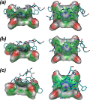


Molecular architectonics of DNA for functional nanoarchitectures
Beilstein J. Nanotechnol. 2020, 11, 124–140, doi:10.3762/bjnano.11.11
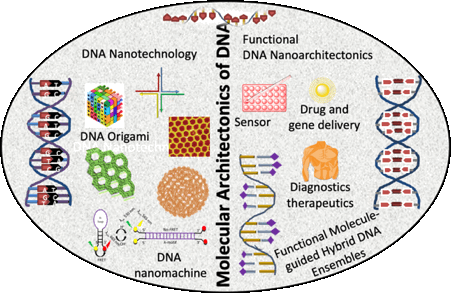
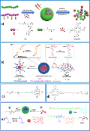
- approach results in single-stranded overhang regions, so-called sticky ends. The binding interaction between two different but complementary sticky ends guides the sequential assembly of building blocks. The weak interactions, viz., hydrogen bonding and electrostatic interactions, act as driving forces for
- efficient FRET. In acidic pH, the N1 of adenine became protonated, which triggered the structural transition of the LMB device from a closed to an open state through reverse Hoogsteen base pairing and electrostatic interactions. The pH-responsive structural transition of LMB from a closed to an open state
- growth of polyadenine strands with a very high aspect ratio. The secondary structure of biomolecules depends on weak noncovalent interactions, especially ionic interactions, between oppositely charged moieties or surfaces. In fact, ionic or electrostatic interactions can play an important role in the


The different ways to chitosan/hyaluronic acid nanoparticles: templated vs direct complexation. Influence of particle preparation on morphology, cell uptake and silencing efficiency
Beilstein J. Nanotechnol. 2019, 10, 2594–2608, doi:10.3762/bjnano.10.250
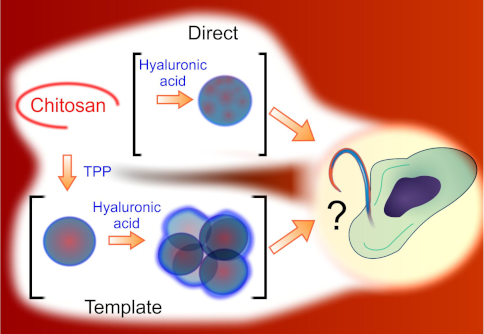
- anions, which effectively act as cross-linkers. Electrostatic complexation allows for very mild preparative processes, carried out in water under mild and almost physiological conditions and without the use of chemical reactions. Additionally, electrostatic interactions may not only be used to hold
- polymeric structure and therefore it is not displaced by HA. We cannot, however, exclude the siRNA/chitosan interactions to be somehow weakened by the presence of HA. The TPP–HA exchange may also be facilitated by the rather low degree of protonation of chitosan, which make its electrostatic interactions



Microfluidics as tool to prepare size-tunable PLGA nanoparticles with high curcumin encapsulation for efficient mucus penetration
Beilstein J. Nanotechnol. 2019, 10, 2280–2293, doi:10.3762/bjnano.10.220
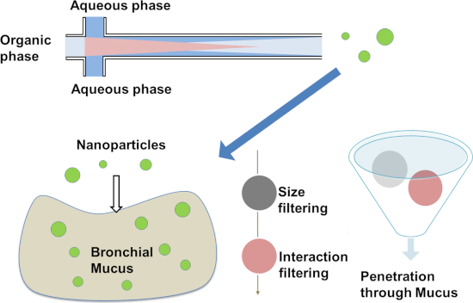
- such as H-bond interaction and electrostatic interactions [15][17][20][21][22][23][24]. Moreover, NPs as a carrier system have shown the ability to protect the loaded drug from inactivation, reduce unwanted side effects and enhance the efficacy of the active pharmaceutical ingredient (API) due to


Porous silver-coated pNIPAM-co-AAc hydrogel nanocapsules
Beilstein J. Nanotechnol. 2019, 10, 1973–1982, doi:10.3762/bjnano.10.194
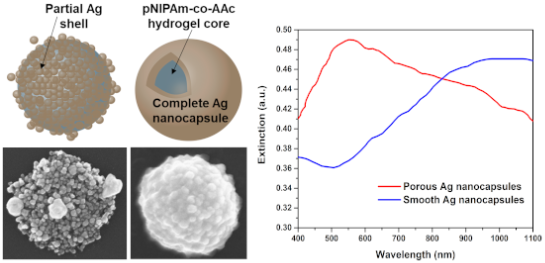
- to the collapse of the hydrogel polymer due to increased hydrophobic interactions in the polymer hydrogel network [58]. Ionizable groups such as AAc and AAm are grafted into the polymer backbone to increase electrostatic interactions. The introduction of AAc, which has ionizable COOH groups, induces


High-tolerance crystalline hydrogels formed from self-assembling cyclic dipeptide
Beilstein J. Nanotechnol. 2019, 10, 1894–1901, doi:10.3762/bjnano.10.184
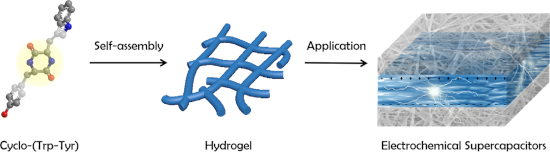
- , which provide a substantial tendency for self-assembly and the formation of gels. In addition, other weak forces, such as π–π stacking, hydrophobic effect, electrostatic interactions, and van der Waals forces, are also serviceable in driving molecular self-assembly of CDPs toward the formation of gels


Janus-micromotor-based on–off luminescence sensor for active TNT detection
Beilstein J. Nanotechnol. 2019, 10, 1324–1331, doi:10.3762/bjnano.10.131
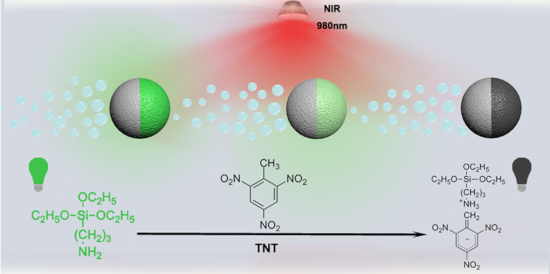
- hydrochloride) (PAH) and poly(styrene sulfonate) (PSS) were alternately deposited onto the surface of 5 μm silica particles by layer-by-layer (LbL) assembly [38][39][40][41]. The as-prepared particles were subsequently modified with amine-functionalized UCNPs through electrostatic interactions and then were


A biomimetic nanofluidic diode based on surface-modified polymeric carbon nitride nanotubes
Beilstein J. Nanotechnol. 2019, 10, 1316–1323, doi:10.3762/bjnano.10.130
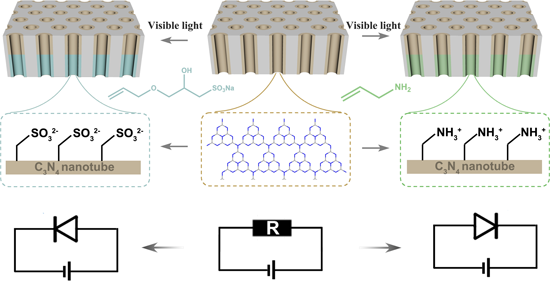
- ]. In a charged nanochannel, only one ionic component can be transported across the nanochannel when the diameter of the nanochannel matches or falls below the Debye screening length because of the electrostatic interactions between the ions and the charged channel walls. As a result, positively charged


Multicomponent bionanocomposites based on clay nanoarchitectures for electrochemical devices
Beilstein J. Nanotechnol. 2019, 10, 1303–1315, doi:10.3762/bjnano.10.129
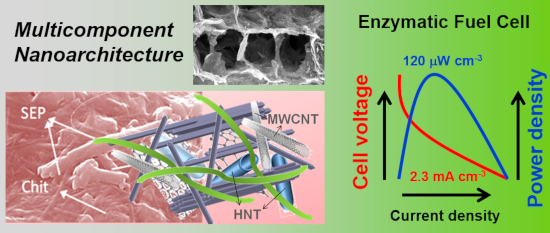
- significant variation in the amide I and amide II vibrations of the immobilized GOx enzyme with respect to unsupported GOx. This observation strongly supports that the adsorption of GOx in HNTs occurs via non-deteriorating electrostatic interactions [57]. This physical entrapment, in contrast to


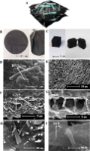

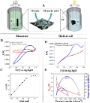
Scavenging of reactive oxygen species by phenolic compound-modified maghemite nanoparticles
Beilstein J. Nanotechnol. 2019, 10, 1073–1088, doi:10.3762/bjnano.10.108
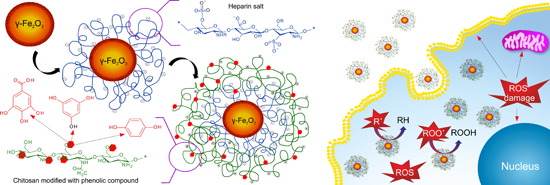
- nanoparticles via the LbL technique. Heparin was attached to the γ-Fe2O3 surface via electrostatic interactions. The TEM micrograph of the γ-Fe2O3@Hep particles showed the heparin layer as a thin bright halo around the iron oxide core (Figure 2c). Compared to γ-Fe2O3, the Dh value of the γ-Fe2O3@Hep particles
- accompanied by a decrease in the polydispersity (PD = 0.11), a decrease in the absolute ζ-potential value to ca. 28 mV, and a change in the ζ-potential value from negative to positive. These characteristics suggested that the modified chitosans were attached to the heparin layer via electrostatic interactions
- augment particle internalization compared to heparin modification alone. Previous studies have suggested that electrostatic interactions, oxidation-dependent conjugation, and hydrogen bonds between the phenolic OH groups and polysaccharide moieties and/or amino acid residues of the cell membrane may


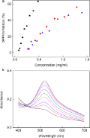



Influence of dielectric layer thickness and roughness on topographic effects in magnetic force microscopy
Beilstein J. Nanotechnol. 2019, 10, 1056–1064, doi:10.3762/bjnano.10.106
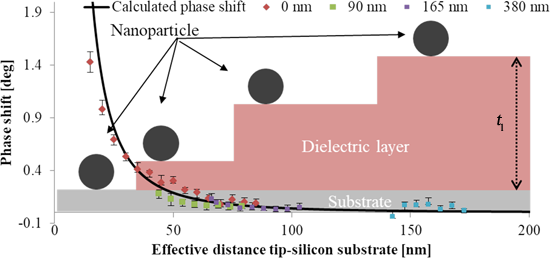
- electrostatic interactions. Origin of these artifacts is the work-function difference between tip and sample material. Yu et al. [10] demonstrated that topographic features can be avoided by combining MFM with electrostatic force microscopy (EFM) compensating the contact potential difference by an appropriate
- SPIONs are often hidden by repulsive electrostatic interactions due to the changes in capacitive coupling. In [14] possibilities are discussed to minimize the capacitive coupling, e.g., by using a substrate with minimized work-function difference between tip and substrate or by using a sharper tip
- signal from capacitive coupling. This behavior is in accordance with our simulations combining magnetic and electrostatic interactions resulting in a ring of negative phase shift (Figure 6). Hence, MFM measurements on single SPIONs reveal contributions of electrostatic forces in form of a positive phase


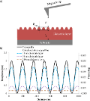


![[Graphic 2]](/bjnano/content/inline/2190-4286-10-106-i7.svg?max-width=637&scale=1.18182) ; black line) and measured phase shift for single nanoparticles with 10 ± 2 nm diameter...
; black line) and measured phase shift for single nanoparticles with 10 ± 2 nm diameter...


Tailoring the stability/aggregation of one-dimensional TiO2(B)/titanate nanowires using surfactants
Beilstein J. Nanotechnol. 2019, 10, 1024–1037, doi:10.3762/bjnano.10.103
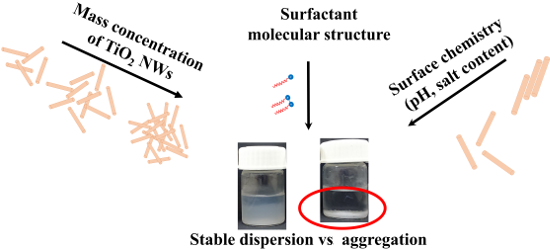
- pHiep to higher pH and resulted in less negative values of the zeta potential, thus confirming the adsorption of the surfactants on the TNWs. The shift in pHiep is more prominent for the 12-2-12 due to two positively charged head groups, which caused stronger electrostatic interactions with TNWs. The
- hydrophobic interactions. Surfactants adsorb already at low concentrations due to electrostatic interactions between their charged head groups and the oppositely charged solid surface. As the surfactant concentration increases, so do the hydrophobic interactions between hydrophobic tails of the adjacent
- charged due to the deprotonation of surface groups. The negative charge enables favorable interaction of the TNW surface groups with positively charged surfactant molecules. Hence, at lower surfactant concentrations, electrostatic interactions dominate. Consequently, adsorption of DTAB and 12-2-12 results


Tungsten disulfide-based nanocomposites for photothermal therapy
Beilstein J. Nanotechnol. 2019, 10, 811–822, doi:10.3762/bjnano.10.81
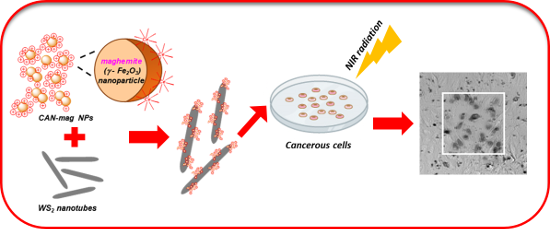
- -mag nanoparticles are more stable in water than WS2-NT-CM (see also the zeta potential results), meaning there are strong electrostatic interactions successfully competing with the magnetic force. Conclusion To summarize, we prepared a nanocomposite of WS2-NTs functionalized with CAN-maghemite






Hydrophilicity and carbon chain length effects on the gas sensing properties of chemoresistive, self-assembled monolayer carbon nanotube sensors
Beilstein J. Nanotechnol. 2019, 10, 565–577, doi:10.3762/bjnano.10.58
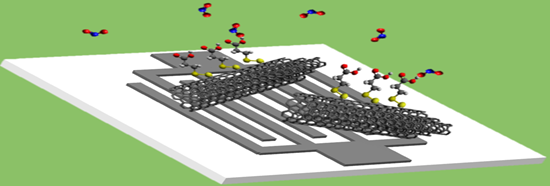
- hydrophobic ones. Probably the cause of this effect is due to the stronger electrostatic interactions between nitrogen dioxide and hydrophilic thiols, leading to the formation of stronger hydrogen bonds. The effect of ambient moisture on the sensor response was studied. In order to do so, the gas flow was
- to nitrogen dioxide exposure and recovery cycles in air, and b) calibration curves for the different nitrogen dioxide concentrations tested. Electrostatic interactions pathways between –COOH functional groups and nitrogen dioxide (a, b), water (c, d) and ethanol (e, f). Calibration curves for


Nitrous oxide as an effective AFM tip functionalization: a comparative study
Beilstein J. Nanotechnol. 2019, 10, 315–321, doi:10.3762/bjnano.10.30
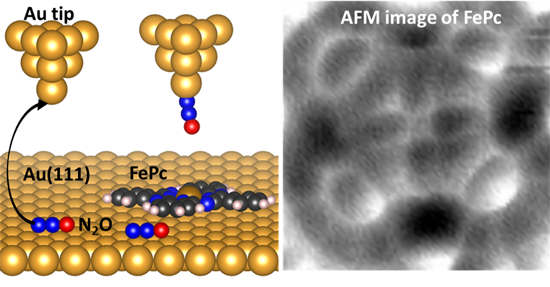
- was estimated to be 3.5 Å. Based on this finding, we construct an atomic model of the three flat-lying N2O molecules on Au(111) and optimize it with total-energy DFT calculations. We find that the trimer is stabilized by electrostatic interactions between the N and O atoms of adjacent N2O molecules
- , whereas N2O is bent strongly. The bent adsorption configuration of the N2O molecule is caused by electrostatic interactions between the molecule and the Au tip, which arise from the mutual dipole–dipole interaction. Furthermore, the calculated adsorption energies of the two molecules on the tip differ as
- probe-particle model [32][45], which takes into account van der Waals (vdW) and electrostatic interactions between the tip and the sample. The calculations were performed varying the effective charge of the probe particle in order to obtain the best possible agreement between the experimental findings


Targeting strategies for improving the efficacy of nanomedicine in oncology
Beilstein J. Nanotechnol. 2019, 10, 168–181, doi:10.3762/bjnano.10.16
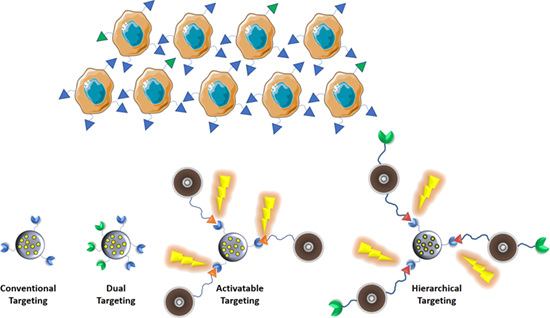
- mitochondria membrane by electrostatic interactions. The nucleus contains practically all the genetic information (except for the mitochondrial DNA) and is of paramount importance for the correct function of the entire cell. Targeting nuclei has received huge attention regarding the delivery of cytotoxic





