


Search results
Search for "feedback" in Full Text gives 232 result(s) in Beilstein Journal of Nanotechnology. Showing first 200.
The nanomorphology of cell surfaces of adhered osteoblasts
Beilstein J. Nanotechnol. 2021, 12, 242–256, doi:10.3762/bjnano.12.20
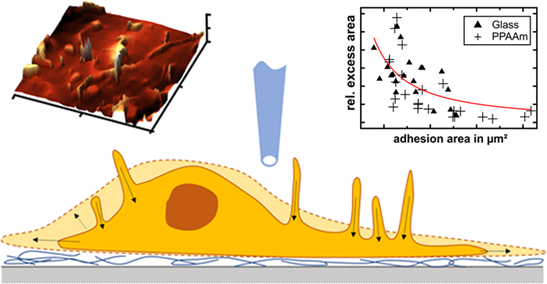
- microscopy is an option to study the membrane surface nanoscopically without dye labeling or laser light exposure. In scanning probe microscopy a nanoprobe is kept at a constant distance from the sample surface by maintaining a local interaction signal constant via a feedback loop [16]. If the interaction
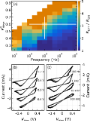
- surface and cell migration happen rather slowly, they should only contribute to low-frequency fluctuations. To investigate the frequency behavior we focus on measuring the height with activated feedback loop in the frequency range of 0.2 to 500 Hz. Most systems exhibit an f−m spectral power density (SPD
- nanopipette was kept at constant lateral position over the cell and either temporal height variations with activated feedback loop or current variations at deactivated feedback loop were acquired. Temporal current and height spectra were evaluated using the Igor Pro software (WaveMetrics, Inc.). As main


Scanning transmission imaging in the helium ion microscope using a microchannel plate with a delay line detector
Beilstein J. Nanotechnol. 2020, 11, 1854–1864, doi:10.3762/bjnano.11.167
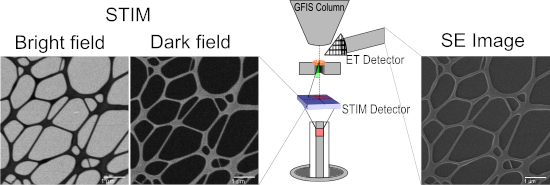
- controlled by a motion controller (Nanomotion XCDX) using a closed feedback loop with optically encoded linear rails (Schneeberger Miniscale Plus). This construction is compatible with the high-vacuum requirements, is self-locking, requires no mechanical feedthroughs nor lubricants, and provides high


Direct observation of the Si(110)-(16×2) surface reconstruction by atomic force microscopy
Beilstein J. Nanotechnol. 2020, 11, 1750–1756, doi:10.3762/bjnano.11.157
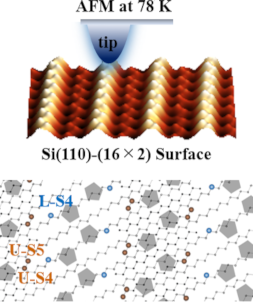
- cantilever was used, which was cleaned by Ar+ sputtering to remove the oxide and contamination on the tip. The deflection of the cantilever was measured by the optical beam deflection method. The topography of the surface was imaged while feedback electronics were used to adjust the tip–sample distance to



Cu2O nanoparticles for the degradation of methyl parathion
Beilstein J. Nanotechnol. 2020, 11, 1546–1555, doi:10.3762/bjnano.11.137
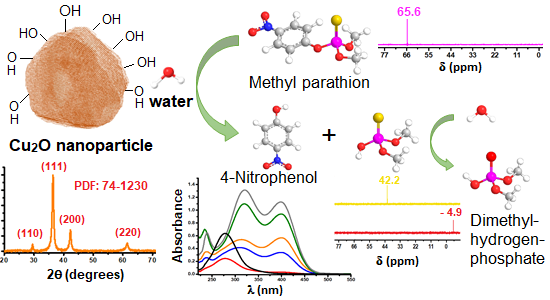
- comments, suggestions, and feedback from his colleagues Inti Zumeta Dubé and Fabián Ruiz Ruiz. Funding Juan Rizo would like to thank CONACyT for his PhD fellowship (grant # 240056). David Diaz wants to thank FQ-UNAM for the financial support from “Programa de Apoyo a los Estudios de Posgrado” (PAEP # 5000


Triboelectric nanogenerator based on Teflon/vitamin B1 powder for self-powered humidity sensing
Beilstein J. Nanotechnol. 2020, 11, 1394–1401, doi:10.3762/bjnano.11.123
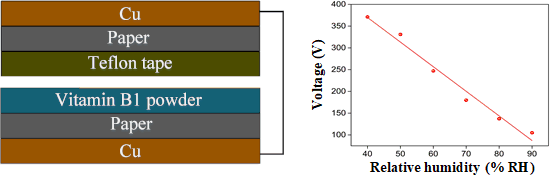
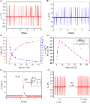
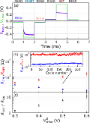
- output voltage sensor feedback at different humidity levels: 40% (a), 50% (b), 60% (c), 70% (d), 80% (e) and 90% (f). (a) The output voltage of the TVB-TENG as a function of RH (40–90%). (b) A representative photograph of the TVB-TENG. (a) Reversibility of a TVB-TENG-based humidity sensor. (b) The change




Atomic defect classification of the H–Si(100) surface through multi-mode scanning probe microscopy
Beilstein J. Nanotechnol. 2020, 11, 1346–1360, doi:10.3762/bjnano.11.119
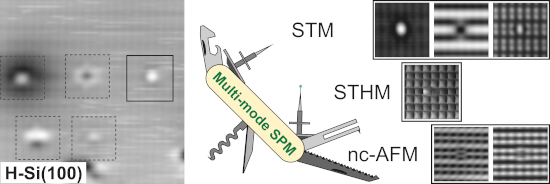
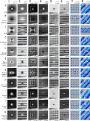
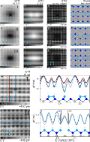
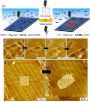
- will foster further investigation with more robust theoretical frameworks such as by density functional theory. Results and Discussion SPM imaging modes The variability observed in differing scanning probe imaging modes originates from the applied feedback mode, different tunnelling parameters, or the



Growth of a self-assembled monolayer decoupled from the substrate: nucleation on-command using buffer layers
Beilstein J. Nanotechnol. 2020, 11, 1291–1302, doi:10.3762/bjnano.11.113
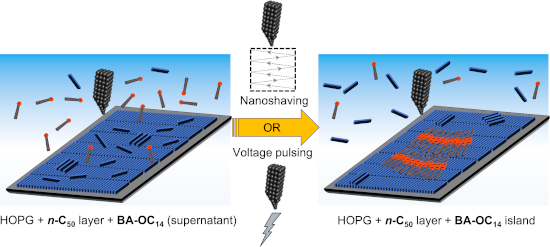
- retracting the STM tip at a certain distance (around 1 nm) from the surface. The feedback loop was turned off to maintain the separation between the tip and the sample during the period of voltage pulse in order to avoid the tip crash onto the surface. The software used for STM imaging does not log the


An atomic force microscope integrated with a helium ion microscope for correlative nanoscale characterization
Beilstein J. Nanotechnol. 2020, 11, 1272–1279, doi:10.3762/bjnano.11.111
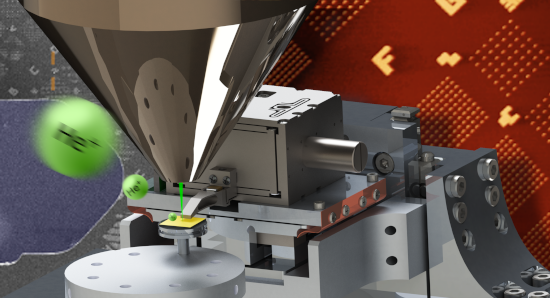
- down the sample using the z-piezo of the scanner, causing intermittent contact between the cantilever and the sample [25]. The maximum interaction force is computed and used as feedback by the controller, providing fine force control, reducing shear forces and thus preserving the tip and the sample [26


Scanning tunneling microscopy and spectroscopy of rubrene on clean and graphene-covered metal surfaces
Beilstein J. Nanotechnol. 2020, 11, 1157–1167, doi:10.3762/bjnano.11.100
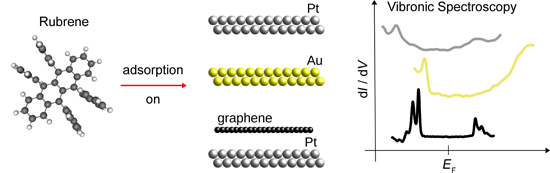
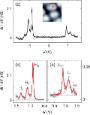
- reveal the two rotational senses. Spectra of dI/dV (dots) recorded above the different lobes of C42H28 on Pt(111) (feedback loop parameters prior to spectroscopy: 2.5 V, 100 pA). The solid lines represent smoothed data. The bottom (top) spectrum was acquired atop the left (right) lobe of the molecule as
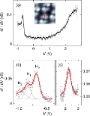
- appearing at approx. −0.67 V (feedback loop parameters: −1 V, 50 pA). The solid line represents smoothed data. Inset: STM image of a single C42H28 molecule on Au(111) (−0.65 V, 100 nA, 2 × 2 nm2) with the asterisk marking the position of spectroscopy. (b) Close-up view of the HOMO (H0) vibronic fine
- structure (feedback loop parameters: −1 V, 50 pA). The presented data (dots) are normalized [38]. Vibronic side bands are labeled H1 and H2. The thick solid line represents a fit of three Lorentzian line shapes (thin gray lines) and a constant background to the data. (c) Normalized dI/dV data (dots) showing



Revealing the local crystallinity of single silicon core–shell nanowires using tip-enhanced Raman spectroscopy
Beilstein J. Nanotechnol. 2020, 11, 1147–1156, doi:10.3762/bjnano.11.99
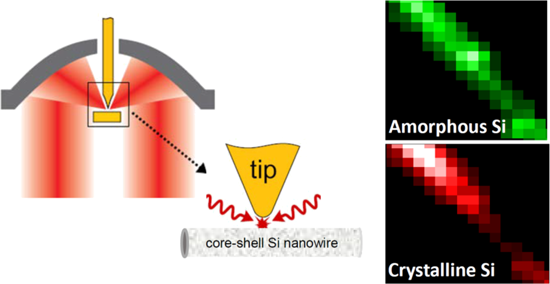
- ) along the perimeter of a SiNW. The tip–sample distance is controlled by a shear-force feedback. For this purpose, the tip is mounted on an oscillating tuning fork, which experiences a phase shift of the oscillation upon approach. This phase shift is recorded with a lock-in amplifier and fed to a
- feedback loop that maintains a constant distance to the sample. The scanned SiNW perimeter is indicated in Figure 5a. Along the white arrow, there is about 250 nm height difference between the SiNW and the underlying substrate. The white square shown in the optical image in Figure 5b highlights the SiNW


Thermophoretic tweezers for single nanoparticle manipulation
Beilstein J. Nanotechnol. 2020, 11, 1126–1133, doi:10.3762/bjnano.11.97
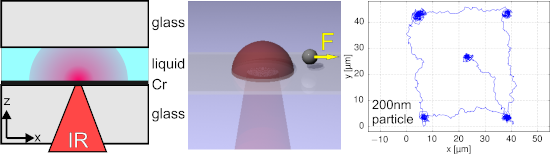
- electrokinetic (ABEL) trap [10][11][12] was invented. In the ABEL trap, the Brownian motion of a particle is optically monitored, and then a feedback electric field is applied so that the resulting electrokinetic forces induce a drift that exactly cancels the Brownian motion. This can also be achieved by moving
- the surrounding fluid via electroosmosis where an applied feedback electric field moves a layer of surface ions, which subsequently pulls the fluid, along with any suspended objects, by viscous drag. In such a manner, quantum dots in a liquid have been manipulated with nanometer precision [13]. Real
- -time force feedback can also be implemented with optical tweezers [14][15][16]. Recently, systems based on high-precision position detection and feedback control running at 100 kHz have been employed to generate arbitrary potentials for micrometer-sized particles [17][18]. A less commonly used


Monolayers of MoS2 on Ag(111) as decoupling layers for organic molecules: resolution of electronic and vibronic states of TCNQ
Beilstein J. Nanotechnol. 2020, 11, 1062–1071, doi:10.3762/bjnano.11.91
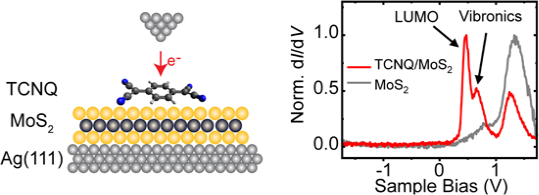
- (V = 5 mV, I = 1 nA). d) Constant-height dI/dV spectra of MoS2/Ag(111) recorded on a top and on a hollow region of the moiré structure as shown on the inserted STM topography (feedback opened at V = 2.5 V, I = 0.5 nA, Vmod = 10 mV). The inset shows the gap region of MoS2/Ag(111) on a logarithmic
- , which are labeled by Q, Γ1 and Γ2 according to their location in the Brillouin zone. The assignment follows that in [38]. Constant-height dI/dV spectra recorded (a) on a top and (b) on a hollow site of the moiré structure of MoS2 on Ag(111) (red curves) and on Au(111) (blue curves). Feedback opened at V
- recorded on a bare MoS2 layer for reference. Feedback opened at V = 2 V, I = 100 pA, with Vmod =20 mV. a–d) Constant-height dI/dV maps of a TCNQ island on MoS2 recorded at the resonance energies derived in Figure 4b. Feedback opened in panels (a–c) V = 2 V, I = 100 pA and (d) V = −2 V, I = 30 pA on the


Measurement of electrostatic tip–sample interactions by time-domain Kelvin probe force microscopy
Beilstein J. Nanotechnol. 2020, 11, 911–921, doi:10.3762/bjnano.11.76
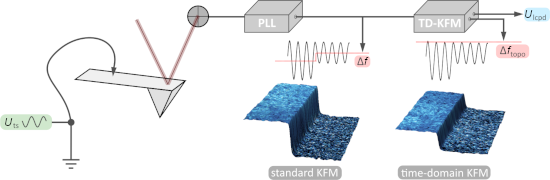
- conventional frequency-modulated (FM-) KFM, the contributions at ωm and 2ωm are detected via lock-in techniques, either at the Δf output of a phase-locked loop (PLL) [12] or by detecting the sidebands of the cantilever oscillation [13]. In closed-loop FM-KFM, a feedback loop is employed to nullify the
- properties of tip and sample, e.g., the dielectric properties of a sample or the quantum capacitance [14]. Furthermore, this signal can be used to adjust the sensitivity of the KFM feedback loop [15]. Open-loop KFM techniques exploit the relationship of the contributions at ωm and 2ωm. Namely, Ulcpd can be
- a state observer to continuously recover the full Δf(Uts) parabola, also named Kelvin parabola. The maximum frequency shift Δftopo, the contact potential difference Ulcpd, and the capacitance gradient C′′ are evaluated in real time. When applied as closed-loop technique, the height feedback can be


Quantitative determination of the interaction potential between two surfaces using frequency-modulated atomic force microscopy
Beilstein J. Nanotechnol. 2020, 11, 729–739, doi:10.3762/bjnano.11.60
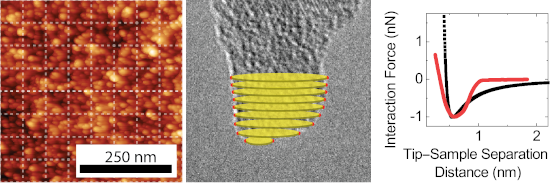
- laterally relative to the sample. A piezoactuator acting in the z-direction brings the probe closer or further from the sample. Due to non-linear tip–sample interaction forces, the resonance frequency of the oscillating cantilever will shift. This shift can be used as a feedback signal to measure the sample


Electromigration-induced directional steps towards the formation of single atomic Ag contacts
Beilstein J. Nanotechnol. 2020, 11, 680–687, doi:10.3762/bjnano.11.55
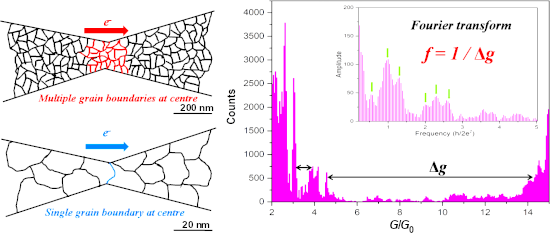
- between many of them leads to the formation of filament-like structures with, as far as we can judge, larger grains than before EM. However, since EM is a process with partial positive feedback, also thinning takes place, but the location cannot be well controlled. Nevertheless, after a competition of
- mechanical) contact with the contact pads produced by photolithography. To perform EM measurements, an in-house LabVIEW program was developed (following Motto et al. [34]), which allowed for a precise control of the conductance in order to obtain atomic point contacts. Suitable feedback parameters and ramp
- speeds for the applied bias voltage were selected in the program which consisted of two feedback loops. The starting resistance of the structures was typically between 50 and 100 Ω. When the resistance change between two consecutive measurements was less than the preset value, the ramp voltage was


Comparison of fresh and aged lithium iron phosphate cathodes using a tailored electrochemical strain microscopy technique
Beilstein J. Nanotechnol. 2020, 11, 583–596, doi:10.3762/bjnano.11.46
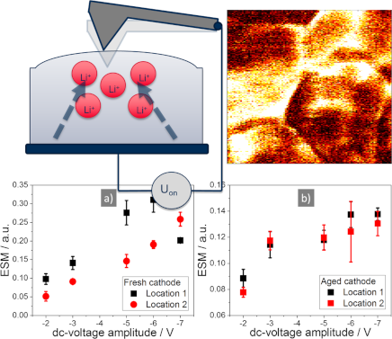
- of the sample and the deflection error of the AFM tip are recorded. The deflection error represents the feedback signal of the feedback control system for the tip–sample contact force control and is the difference between the set point and the effective value. The ESM signal is based on the real, in



Atomic-resolution imaging of rutile TiO2(110)-(1 × 2) reconstructed surface by non-contact atomic force microscopy
Beilstein J. Nanotechnol. 2020, 11, 443–449, doi:10.3762/bjnano.11.35
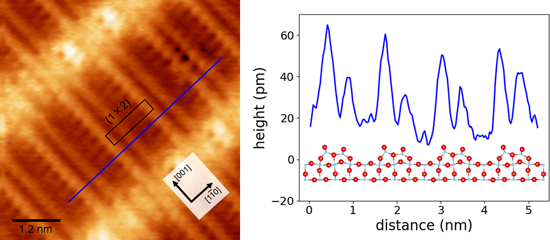
- feedback control was applied in frequency-modulation mode [30] with constant amplitude oscillation. The cantilever deflection was detected using an optical interferometer [31]. Since the electrostatic force due to the contact potential difference (CPD) between the tip and sample prevents high-resolution NC
- results confirmed that the (1 × 2) surface prepared in this study is the same surface as in the previous studies [22][27][28][32]. Figure 3 shows STM and NC-AFM images and the height profiles obtained from the same surface area. Since STM and NC-AFM use different feedback signals (interaction force for NC
- information on the line defect. The line defects could be due to be sub-surface defects because of the geometry of the reflected top surface obtained in NC-AFM imaging using the interaction between the tip and the sample surface as a feedback signal. To identify the line defects, it is necessary to combine


Interactions at the cell membrane and pathways of internalization of nano-sized materials for nanomedicine
Beilstein J. Nanotechnol. 2020, 11, 338–353, doi:10.3762/bjnano.11.25
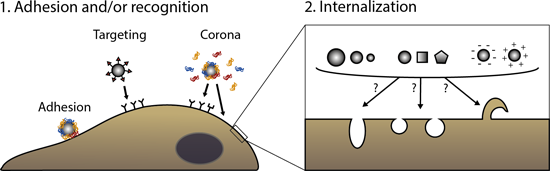
- endocytosis represents a complex cellular process with many molecules, feedback loops, and signalling cascades involved. The endocytosis field is still very active and constantly progressing [71][77][204]. Many processes and molecular details of these pathways are still unknown. For instance, in recent years


Implementation of data-cube pump–probe KPFM on organic solar cells
Beilstein J. Nanotechnol. 2020, 11, 323–337, doi:10.3762/bjnano.11.24
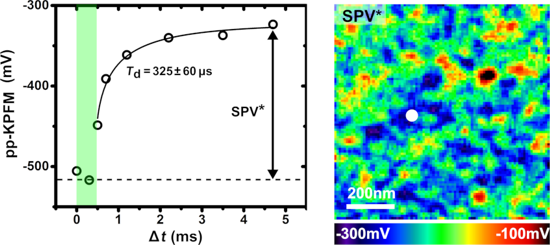
- –acceptor blends with sub-ms time resolution [1]. Subsequent works have shown that sub-μs time resolution can be achieved by acquiring the full information on the cantilever oscillation, leading to the development of fast trEFM [2] and general-mode KPFM [3]. Contrary to feedback-free electrostatic methods
- [4][5], conventional KPFM relies on a closed feedback loop that compensates the tip–sample contact potential difference (CPD). It is thus inherently a rather “slow technique”. Kelvin controllers typically operate with time constants of a few to tens of ms. To implement time-resolved KPFM, a first
- are detected by demodulating the modulated component (ωmod) of the frequency-shift signal (Δf) with the LIA. The reference bias modulation voltage (Vmod, ωmod) and the compensation voltage generated by the KPFM feedback loop (VKPFM) are internally summed by the SPM unit. To generate the modulated bias




Nanosecond resistive switching in Ag/AgI/PtIr nanojunctions
Beilstein J. Nanotechnol. 2020, 11, 92–100, doi:10.3762/bjnano.11.9
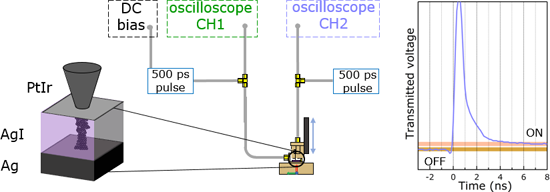
- former. Preset contact resistance values of a few kiloohms were achieved by employing a current-controlled feedback loop. The first few periods of subsequent I(V) measurements were dominated by unstable, non-memristive curves, attributed to the initial formation of the metallic filament. They were


A review of demodulation techniques for multifrequency atomic force microscopy
Beilstein J. Nanotechnol. 2020, 11, 76–91, doi:10.3762/bjnano.11.8

- the cantilever according to the expression f−3dB = f0/2Q, where f0 is the fundamental resonance frequency. Assuming all other components in the z-axis feedback loop are also working at high speed [3], a low quality factor can demand a fast demodulator [12]. Multifrequency AFM (MF-AFM) is a major field
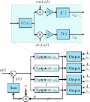
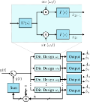
- techniques are not discussed in this article. Synchronous demodulation techniques employ a reference oscillator and can be categorized as either open-loop or closed-loop, depending on whether they use feedback to estimate parameters. Open-loop demodulators include the lock-in amplifier and coherent
- [52]. Fundamental to its operating principle, the Kalman filter utilizes a linear model of system dynamics and feedback of the state variables to update the Kalman gains, which controls the tracking bandwidth. When the time-varying system is discretized for t = kTs, where Ts is the sampling period


The effect of heat treatment on the morphology and mobility of Au nanoparticles
Beilstein J. Nanotechnol. 2020, 11, 61–67, doi:10.3762/bjnano.11.6
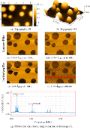
- were heated to 100 °C to remove excess water. An image was first taken in the high-resolution QNM mode to find the Au particles. Then, the operation mode was switched to tapping mode. The oscillation amplitude was kept constant with a feedback loop on, and the power dissipated during tapping was


Atomic force acoustic microscopy reveals the influence of substrate stiffness and topography on cell behavior
Beilstein J. Nanotechnol. 2019, 10, 2329–2337, doi:10.3762/bjnano.10.223
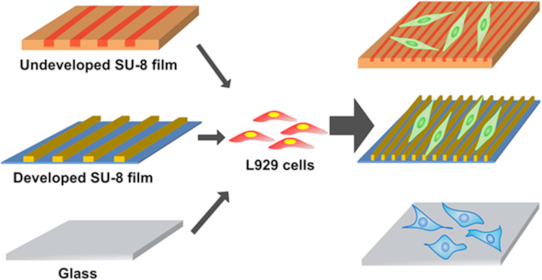
- surfaces [29][33]. When the probe sensor is in contact with the sample surface, the AFM cantilever directly reflects the vibrations. By modulating the drive frequency and the excitation amplitude used for AFAM imaging, the cantilever is set to adopt to the feedback signal. Finally, by analyzing the


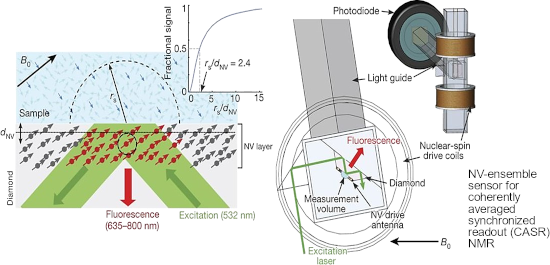
Nitrogen-vacancy centers in diamond for nanoscale magnetic resonance imaging applications
Beilstein J. Nanotechnol. 2019, 10, 2128–2151, doi:10.3762/bjnano.10.207


Kelvin probe force microscopy work function characterization of transition metal oxide crystals under ongoing reduction and oxidation
Beilstein J. Nanotechnol. 2019, 10, 1596–1607, doi:10.3762/bjnano.10.155
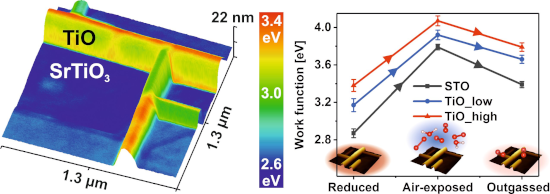
- /AFM system, where KPFM, LC-AFM and STM measurements were performed. KPFM, operating in FM mode, was used with a single-pass method, with three feedback loops maintaining the oscillation amplitude, phase and frequency shift [56]. The real oscillation amplitude was in the range of 10 nm. In order to
- forced to oscillate at higher harmonics, then the tip was retracted tens of nanometers from the surface, all feedback loops were turned down and a contact mode AFM scan was performed when approached with a single loop maintaining a deflection set point of 10–30 mV. The high conductivity of both TiO and





