Search results
Search for "fluorescence microscopy" in Full Text gives 111 result(s) in Beilstein Journal of Nanotechnology.
Patterning of supported gold monolayers via chemical lift-off lithography
Beilstein J. Nanotechnol. 2017, 8, 2648–2661, doi:10.3762/bjnano.8.265
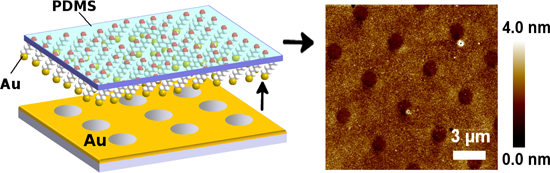
- the nanometer-scale heights of the supported Au monolayers through scanning probe microscopy, as well as the exploration of spatially encoded functionality using fluorescence microscopy. Otherwise, when topographically patterned PDMS stamps are used to pattern Au monolayers, the traits of the latter
- regions containing Au–alkanethiolates appeared bright in fluorescence microscopy images (Figure 2). Using this straightforward functionalization and visualization method, we investigated patterns of lifted-off Au monolayers on PDMS as substrates for DNA recognition. Upon hybridization of dye-labeled
- of the lifted-off monolayers were preserved from the Au-on-Si masters when patterning the lifted-off monolayers on PDMS, as determined by AFM and SEM imaging. These patterns of Au monolayers were recognizable in fluorescence microscopy when functionalized with thiolated DNA that was hybridized with


Carbon nano-onions as fluorescent on/off modulated nanoprobes for diagnostics
Beilstein J. Nanotechnol. 2017, 8, 1878–1888, doi:10.3762/bjnano.8.188
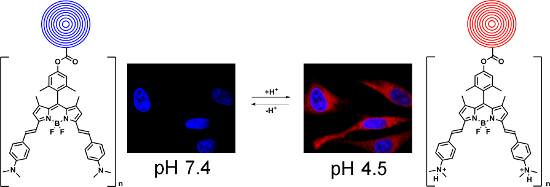
- fluorescent dye (Hoechst 33232). Bright-field transmission images after fluo-CNO treatment confirmed that the HeLa cells were viable throughout all the experiments. From the fluorescence microscopy images (Figure 7), it was observed that cells treated with fluo-CNOs and maintained at a physiological pH (7.4
- 1 h, pH 4.5; Scale bars = 20 μm. Cellular uptake and localization of fluo-CNOs in HeLa cells in acidic conditions (PBS, pH 4.5) observed by confocal fluorescence microscopy after incubation for 2 h (A), 12 h (B) and 48 h (C), respectively. Scale bars = 20 μm. Three-dimensional reconstruction by




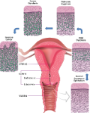
Optical techniques for cervical neoplasia detection
Beilstein J. Nanotechnol. 2017, 8, 1844–1862, doi:10.3762/bjnano.8.186

- limitations of conventional fluorescence microscopy because FLIM results are insensitive to fluorophore concentration and excitation power of the laser. The growth of tumor in mice, inoculated with highly tumorigenic TC-1 cells immortalized using HPV type 16 proteins, was studied as a model of cervical cancer
- the challenge of reliable differentiation of all four types of cervical tissue by fluorescence endomicroscopy alone because of structural similarities of HSIL and stromal/columnar tissues in confocal endomicroscopic images. However, the capacity of confocal fluorescence microscopy to accurately



Synthesis and functionalization of NaGdF4:Yb,Er@NaGdF4 core–shell nanoparticles for possible application as multimodal contrast agents
Beilstein J. Nanotechnol. 2017, 8, 1815–1824, doi:10.3762/bjnano.8.183
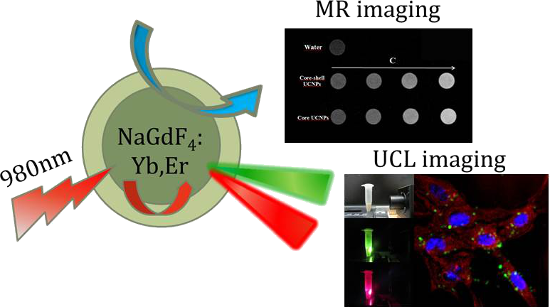
- (UC) emission intensity of Tween 80-coated nanoparticles in comparison with oleic acid coated UCNPs. In addition, the nonspecific uptake and distribution of non-targeted Tween 80-coated UCNPs in human MCF-7 and MDB-MA-231 breast cancer cells was visualized by using confocal fluorescence microscopy


Collembola cuticles and the three-phase line tension
Beilstein J. Nanotechnol. 2017, 8, 1714–1722, doi:10.3762/bjnano.8.172
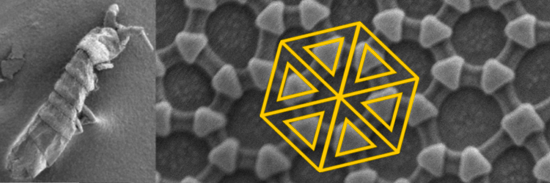
- the dye. The parts of the cuticle that were wetted by the dye can then be visualized with fluorescence microscopy. Results and Discussion Collembola cuticles were dyed with a water–acetone solution of Nile Red and imaged with fluorescence microscopy, a selection of cuticles are shown in Figure 4. The
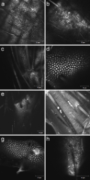
- model of Zheng et al. [16] for . A system with θ0 = 105°, S = 0.1 μm and f = 0.25 is shown as a red line in each graph. Stained samples imaged with fluorescence microscopy, showing the tops of primary and (present in d and g) secondary granules. The light areas are those where the lipophilic dye has
- bonded with the surface, indicating wetting contact between the dye solution and a lipid layer. The images were obtained with confocal fluorescence microscopy using incidental light of 488 nm wavelength and a bandpass filter (565–615 nm). a) C. clavatus (winter-acclimated), b) C. clavatus (summer


![[Graphic 16]](/bjnano/content/inline/2190-4286-8-172-i22.png?max-width=637&scale=1.18182) . A system with θ0 = 105°, S = 0.1 μm a...
. A system with θ0 = 105°, S = 0.1 μm a...

Luminescent supramolecular hydrogels from a tripeptide and nitrogen-doped carbon nanodots
Beilstein J. Nanotechnol. 2017, 8, 1553–1562, doi:10.3762/bjnano.8.157
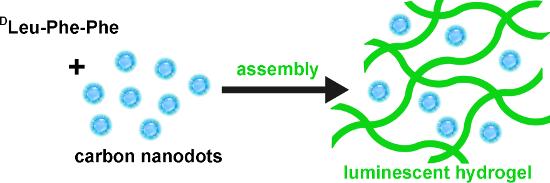
- long term, a supramolecular hydrogel composed of a peptide and luminescent nanodots could be valuable for tissue regeneration based on a bioactive scaffold that can be also visualized in vivo by fluorescence microscopy. Alternatively, other potential applications could be developed in the future for


Low uptake of silica nanoparticles in Caco-2 intestinal epithelial barriers
Beilstein J. Nanotechnol. 2017, 8, 1396–1406, doi:10.3762/bjnano.8.141
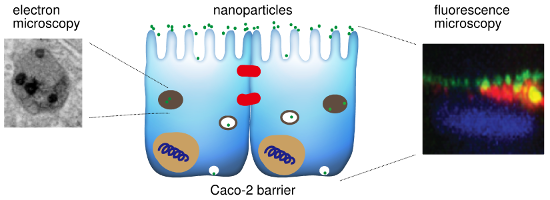
- observations, both using TEM and fluorescence microscopy (Supporting Information File 1, Figure S11). Not wishing to overstate these observations, such vesicular events may suggest rare events of transcytosis. Further studies need to be performed in order to fully address whether or not rare transcytosis



Evaluation of quantum dot conjugated antibodies for immunofluorescent labelling of cellular targets
Beilstein J. Nanotechnol. 2017, 8, 1238–1249, doi:10.3762/bjnano.8.125
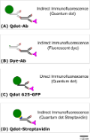
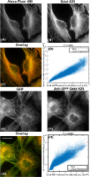
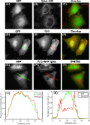
- , United Kingdom 10.3762/bjnano.8.125 Abstract Semiconductor quantum dots (Qdots) have been utilised as probes in fluorescence microscopy and provide an alternative to fluorescent dyes and fluorescent proteins due to their brightness, photostability, and the possibility to excite different Qdots with a




Phospholipid arrays on porous polymer coatings generated by micro-contact spotting
Beilstein J. Nanotechnol. 2017, 8, 715–722, doi:10.3762/bjnano.8.75
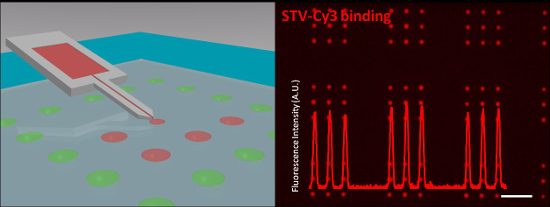
- mechanism of action of this receptor new approaches are needed to facilitate studies with AR. Embedding AR in a lipid layer within HEMA-EDMA mesh might facilitate studies relying not only on fluorescence microscopy techniques but also on spectroscopy, to evaluate coactivators, co-chaperones [22] and even
- microscopy and quantification of signal Fluorescence microscopy was carried out on an Eclipse 80i upright microscope (Nikon Instruments Inc.). Fluorescence images were taken with 10× or 20× objectives. Images were recorded with a CoolSNAP HQ2 camera (Photometrics). Patterns were aligned for imaging by using
- software as previously described in [17]. Phospholipid array on nanoporous HEMA-EDMA polymer. a) Phospholipid microcontact spotting on porous HEMA-EDMA with microchannel cantilevers imaged in situ on the lithography system. b) Fluorescence microscopy image of the DOPC phospholipid array doped with


Uptake of the proteins HTRA1 and HTRA2 by cells mediated by calcium phosphate nanoparticles
Beilstein J. Nanotechnol. 2017, 8, 381–393, doi:10.3762/bjnano.8.40
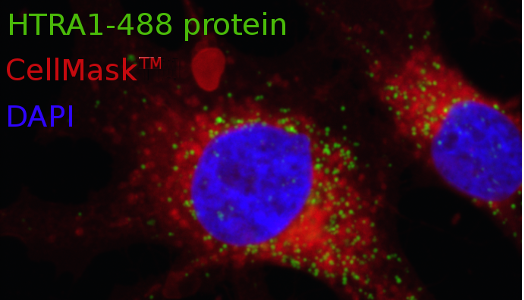
- electron microscopy. Various cell types (HeLa, MG-63, THP-1, and hMSC) were incubated with fluorescently labelled proteins alone or with protein-loaded cationic and anionic nanoparticles. The cellular uptake was followed by light and fluorescence microscopy, confocal laser scanning microscopy (CLSM), and
- -myristate-13α-acetate, Sigma-Aldrich, USA) solution per well, and finally incubated for three days. Afterwards, the cell medium was changed, and the cells were then treated like the other cell lines. Light and fluorescence microscopy were performed on a Zeiss Axiovert 40 CFL instrument (Carl Zeiss
- phosphate nanoparticles. Uptake of the dissolved fluorescently labelled proteins HTRA1-488, HTRA2-488, and BSA-FITC by HeLa and MG-63 cells. The only significant uptake was observed for HTRA1-488 by MG-63 cells. In each image set: left: Light microscopy, centre: fluorescence microscopy (labelled proteins on


Comparison of four methods for the biofunctionalization of gold nanorods by the introduction of sulfhydryl groups to antibodies
Beilstein J. Nanotechnol. 2017, 8, 372–380, doi:10.3762/bjnano.8.39
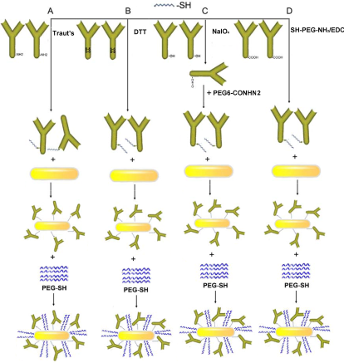
- glass substrates to construct a functional GNR biochip with thiolated anti-IgG using (A) Traut’s reagent, (B) DTT, (C) PEG6-CONHNH2, and (D) SH-PEG-NH2 combined with EDC reaction. Left: absorption spectra of GNRs with 728 and 930 nm longitudinal plasmonic bands. Right: fluorescence microscopy of the GNR


Structural and tribometric characterization of biomimetically inspired synthetic "insect adhesives"
Beilstein J. Nanotechnol. 2017, 8, 45–63, doi:10.3762/bjnano.8.6
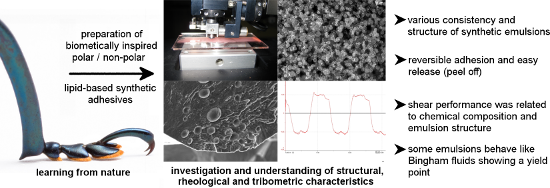
- structural parameters of each emulsion as revealed by bright field/fluorescence microscopy and cryo-scanning electron microscopy (SEM). In general, the droplet sizes determined by the various methods, such as bright field/fluorescence microscopy and cryo-SEM, were in good correspondence, except for the
- these emulsions (Supporting Information File 1, Table S1). Within emulsion SA2 (Supporting Information File 1, Table S1), the aqueous and the oily phase rapidly separated. The analysis of the emulsions of both generations by fluorescence microscopy revealed that all emulsions, except SA4 and SG4


“Sticky invasion” – the physical properties of Plantago lanceolata L. seed mucilage
Beilstein J. Nanotechnol. 2016, 7, 1918–1927, doi:10.3762/bjnano.7.183
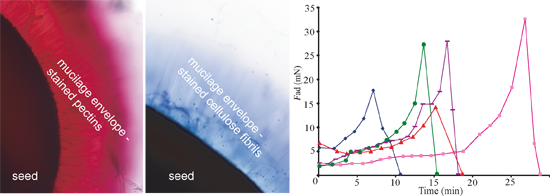
- special type of the cell wall rich in pectins, which is loosely organized and easy accessible, this type of mucilage could also be considered as a model for further mechanical studies of such modified type of the cell wall. Mucilage composition. Bright field and fluorescence microscopy images of different


Nano- and microstructured materials for in vitro studies of the physiology of vascular cells
Beilstein J. Nanotechnol. 2016, 7, 1620–1641, doi:10.3762/bjnano.7.155



Functional diversity of resilin in Arthropoda
Beilstein J. Nanotechnol. 2016, 7, 1241–1259, doi:10.3762/bjnano.7.115
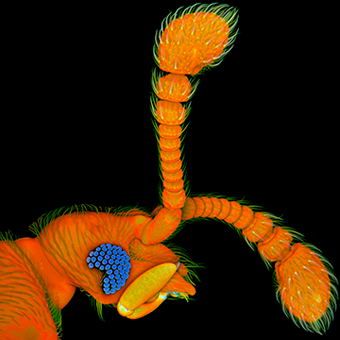
- arthropod exoskeleton materials also exhibit autofluorescences, which can be efficiently visualized with fluorescence microscopy. This allows the production of overlays consisting of different micrographs that show different autofluorescences. Such overlays nicely exhibit differences in the autofluorescence
- fluorescence microscopy and histological staining revealed structures with large proportions of resilin in the pleural area of the metathorax (Figure 4A–D). These structures stretch dorso-ventrally across the entire pleural area (Figure 4F) and are much larger than comparable structures present in fleas (see


Dielectrophoresis of gold nanoparticles conjugated to DNA origami structures
Beilstein J. Nanotechnol. 2016, 7, 948–956, doi:10.3762/bjnano.7.87
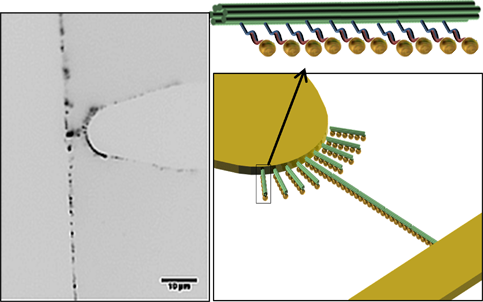
- dielectrophoresis. The dielectrophoretic behavior was investigated employing fluorescence microscopy. For the pristine origami, a significant dielectrophoretic response was found to take place in the megahertz range, whereas, due to the higher polarizability of the metallic nanoparticles, the nanoparticle/DNA
- , the motion of the DNA origami structures, driven by pDEP, is well defined. The gold electrode array was fabricated by photolithography on a glass cover to monitor the motion and positioning of the YOYO®-1 stained 6HB by using fluorescence microscopy. The electrode pairs with the smallest distance of
- representation of the (a) top and (b) side view of the field line gradient, and (c) the six-helix bundle trapping by positive DEP. Potential is applied along the x-axis. Inverted fluorescence microscopy images of the measurement series taken at 1·106 V/m with a stepwise (d) increasing or (e) decreasing frequency


Reconstitution of the membrane protein OmpF into biomimetic block copolymer–phospholipid hybrid membranes
Beilstein J. Nanotechnol. 2016, 7, 881–892, doi:10.3762/bjnano.7.80
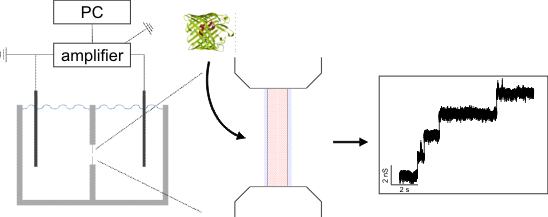
- DPhPC, block copolymer–phospholipid vesicles (lipopolymersomes) were prepared by electroformation [53] in aqueous solutions. Confocal fluorescence microscopy of vesicles dyed with fluorescent lipid (TopFluorPC) and nile red showed that blends of 90 mol % PIPEO block copolymers and 10 mol % DPhPC form
- fluorescence microscopy using a Zeiss LSM710 (Carl Zeiss, Oberkochen, Germany) at excitation wavelengths of 488 and 561 nm. Respectively, the emission of the TopFluorPC lipid was detected between 493 and 543 nm, and nile red emission in the range of 594 to 753 nm using a plan apo 63× oil immersion objective



Organized films
Beilstein J. Nanotechnol. 2016, 7, 406–408, doi:10.3762/bjnano.7.35

- and surface engineering, is a constant that marks the evolution of the field. In fact, one of us (H.M.) with his group entered the field many years ago, initially motivated by the biophysics of membranes and contributed to the development of new methods to characterize monolayers. Fluorescence
- microscopy and Brewster angle microscopy [4][5][6][7] were successfully employed to show that Langmuir monolayers exhibit an interesting domain structure on the micrometer scale with peculiar features due to the anisotropy of the interface. Surface X-ray diffraction revealed a multitude of ordered and
Functional fusion of living systems with synthetic electrode interfaces
Beilstein J. Nanotechnol. 2016, 7, 296–301, doi:10.3762/bjnano.7.27
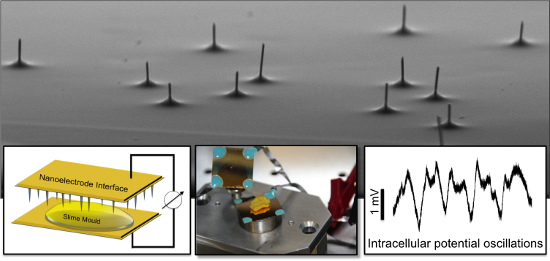
- ). The accessibility of the gold surface is proven by fluorescence microscopy analysis of NEIs in which gold was labeled by a biotin- and AlexaFluor488-labeled streptavidin (b, 3, inset). A SEM side view obtained at a centric braking edge reveals the composition of the interface illustrating gold pillars


Atomic force microscopy as analytical tool to study physico-mechanical properties of intestinal cells
Beilstein J. Nanotechnol. 2015, 6, 1457–1466, doi:10.3762/bjnano.6.151
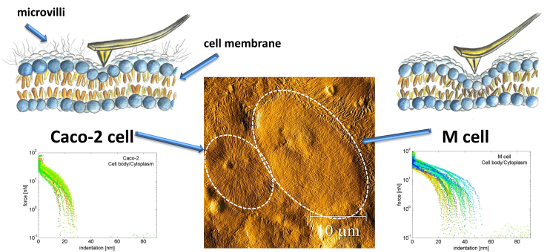
- . Organization of F-actin networks were investigated via phalloidin labeling and visualization was performed with confocal laser scanning fluorescence microscopy (CLSM) and scanning electron microscopy (SEM). The results of these various experimental techniques revealed significant differences in the
- , elasticity and adhesion. Moreover, differences in F-actin networks were investigated via phalloidin labeling using confocal laser scanning fluorescence microscopy (CLSM) and scanning electron microscopy (SEM). Results and Discussion Morphological surface structures and cytoskeleton organization of Caco-2


Protein corona – from molecular adsorption to physiological complexity
Beilstein J. Nanotechnol. 2015, 6, 857–873, doi:10.3762/bjnano.6.88
- the polymer shell), by live HeLa cells in the presence or absence of human transferrin (TF) and human serum albumin (HSA) in phosphate-buffered saline (PBS) medium. They studied the uptake of the NPs by quantitative confocal fluorescence microscopy. For comparison, they also studied the cellular
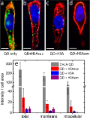
- QDs by HeLa cells, comparing the uptake of the as-synthesized NPs to the cellular uptake of the same NPs carrying an HSA corona or a corona consisting of aminated (HSAam) or succinylated (HSAsuc) HSA, respectively, as described above. The cellular uptake was studied by confocal fluorescence microscopy
- intermediate time points. Profiles were verified independently for representative candidates (marked by symbols) by immunoblot analysis. Reproduced with permission from [10]. Copyright 2013 Nature Publishing Group. Fluorescence microscopy images (a–d) of the cellular uptake of DHLA-QDs by HeLa


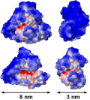
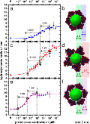

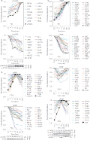
Silica micro/nanospheres for theranostics: from bimodal MRI and fluorescent imaging probes to cancer therapy
Beilstein J. Nanotechnol. 2015, 6, 546–558, doi:10.3762/bjnano.6.57
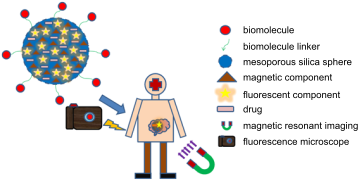
- internalized by RAW 264.7 cells. An increase in the intensity of T1-weighted MRI images of cellular pellets was observed when these nanocomposites were treated with the cells. The internalization into the cells was also monitored by fluorescence microscopy at 393 nm excitation. Recently, there has been a
- antimouse IgG (GM IgG). The characterization of the prepared nanocomposites was performed through TEM, UV–vis and photoluminescence (PL) spectrometry and fluorescence microscopy studies. The absorption peak for CdTe QDs was observed at 570 nm and was shifted to 540 nm after silica coating of NPs. This shift


Hollow plasmonic antennas for broadband SERS spectroscopy
Beilstein J. Nanotechnol. 2015, 6, 492–498, doi:10.3762/bjnano.6.50
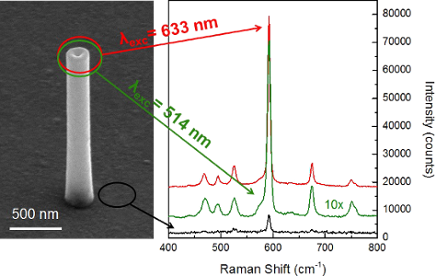
- been applied to the bio-system. Most commonly, only a few selected components of the cells are stained and observed simultaneously by fluorescence microscopy: for example, membrane lipids together with the nucleus and cytoskeleton. As an alternative to fluorescence methods, Raman spectroscopy is


Comparative evaluation of the impact on endothelial cells induced by different nanoparticle structures and functionalization
Beilstein J. Nanotechnol. 2015, 6, 300–312, doi:10.3762/bjnano.6.28
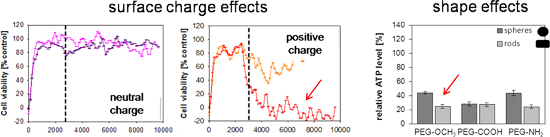
- micromotion measurements (three independent experiments) were transferred to Excel and were assessed for cell viability. The micromotion values were normalized by the controls (medium only) and expressed as percent viability. Uptake analysis via fluorescence microscopy To analyze the uptake of fluorescent
- nanoparticles, endothelial cells were treated with the corresponding nanoparticle formulations. After washing to remove non-internalized particles, cells were fixed for 10 min in 4% (v/v) formaldehyde at 4 °C. The green fluorescent nanoparticles (QDs and Au@MnO) were detected via fluorescence microscopy (CLSM




The effect of surface charge on nonspecific uptake and cytotoxicity of CdSe/ZnS core/shell quantum dots
Beilstein J. Nanotechnol. 2015, 6, 281–292, doi:10.3762/bjnano.6.26
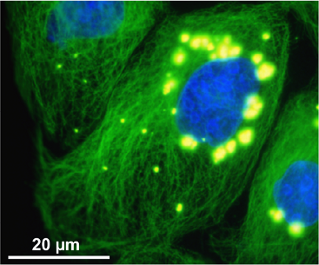
- proliferation, which was confirmed by fluorescence microscopy (Supporting Information File 1, Figure S1). We observed a small fraction of abnormally large cells (twice as large as the normal size), and cells with two nuclei after exposure to the 50 nM solutions of QDs (Supporting Information File 1, Figure S1
- , followed by trypsinization and centrifugation at 110g. Counting was carried out using a Neubauer chamber, and viability was determined using trypan blue exclusion. For fluorescence microscopy measurements, the cells were grown in 2 mL of cell culture medium in a ibiTreat µ-Dish (Ibidi, Martinsried, Germany
- pellet was redissolved in 1 mL of distilled water. Fluorescence microscopy measurements For the fluorescent staining experiments, an upright Olympus fluorescence microscope Olympus BX51, with a 40× water-immersion objective (Olympus, Tokyo, Japan), equipped with a color camera (3 MP) was used. The