Search results
Search for "image processing" in Full Text gives 84 result(s) in Beilstein Journal of Nanotechnology.
Nanostructured SnO2–ZnO composite gas sensors for selective detection of carbon monoxide
Beilstein J. Nanotechnol. 2016, 7, 2045–2056, doi:10.3762/bjnano.7.195
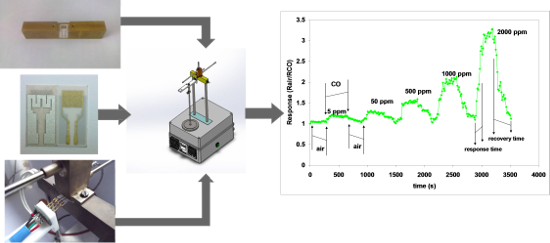
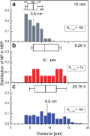
- were analyzed directly (samples were immobilized on a double-sided carbon tape, without coating). AFM measurements were carried in noncontact mode with an XE-100 apparatus from Park Systems (2011), using sharp tips (<8 nm tip radius; PPP-NCHR type from Nanosensors). The XEI (v.1.8.0) image processing




On the pathway of cellular uptake: new insight into the interaction between the cell membrane and very small nanoparticles
Beilstein J. Nanotechnol. 2016, 7, 1296–1311, doi:10.3762/bjnano.7.121
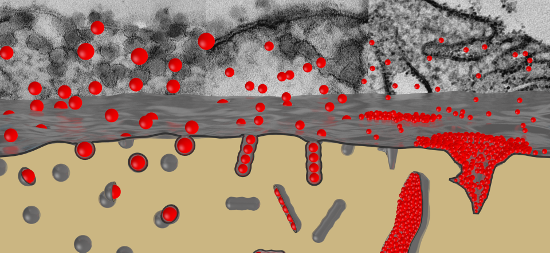
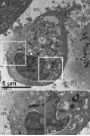
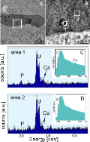
- tissue. However, one has to keep in mind that the embedded section has a thickness in the order of approximately up to 100 nm and an individual silica particle can be as small as 7 nm. This limits the detectability of small, separated silica NPs in the cell interior. For further image processing, the
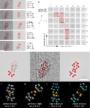
- inelastic darkfield micrographs were segmented to differentiate Si containing pixels from background applying a semi-automatic image processing procedure. For image segmentation we used the trainable segmentation package (Image J) [48][49] and finally prepared a color coded overlay of the silicon rich areas




Correlative infrared nanospectroscopic and nanomechanical imaging of block copolymer microdomains
Beilstein J. Nanotechnol. 2016, 7, 605–612, doi:10.3762/bjnano.7.53
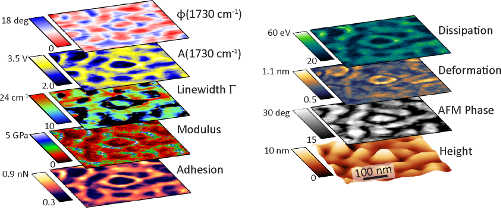
- scans are registered by visually comparing ~10 like features in the height images common to both techniques. The different image datasets are then aligned, with few nanometer accuracy, using standard image registration techniques and an affine transform (MATLAB Image Processing Toolbox). Results and
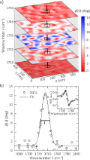
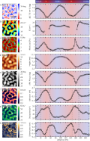


![[Graphic 9]](/bjnano/content/inline/2190-4286-7-53-i10.png?max-width=637&scale=1.18182) (1730 ...
(1730 ...
Length-extension resonator as a force sensor for high-resolution frequency-modulation atomic force microscopy in air
Beilstein J. Nanotechnol. 2016, 7, 432–438, doi:10.3762/bjnano.7.38
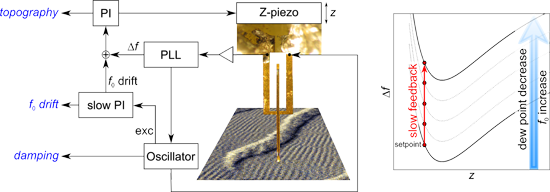
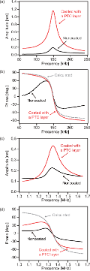
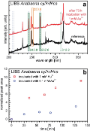
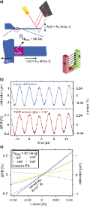
- temperature and humidity sensor (SHT71, Sensirion AG [22]). Basic image processing (e.g., levelling) is done with the Gwyddion software [23]. To determine the sensitivity S of the LER a thermal noise spectrum was acquired around the resonance frequency (Figure 1c). Integration over the noise power spectral


Efficiency improvement in the cantilever photothermal excitation method using a photothermal conversion layer
Beilstein J. Nanotechnol. 2016, 7, 409–417, doi:10.3762/bjnano.7.36
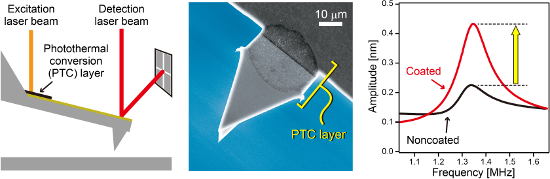
- cantilever fixed end, the optical images were taken under the same illumination condition. The obtained optical images were processed using an image processing software (ImageJ [33]). The small areas (10 μm × 10 μm) near the cantilever fixed ends were cut out from optical images and converted to 8-bit gray



Time-dependent growth of crystalline Au0-nanoparticles in cyanobacteria as self-reproducing bioreactors: 2. Anabaena cylindrica
Beilstein J. Nanotechnol. 2016, 7, 312–327, doi:10.3762/bjnano.7.30
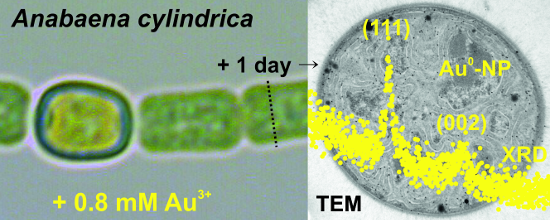
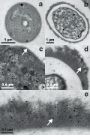
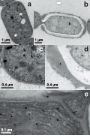
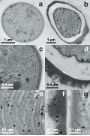
- images with an image processing program reveals a wide distribution for the diameter of the nanoparticles at all times and in all regions of the cyanobacteria. Finally, the nanoparticle concentration in vegetative cells of Anabaena cylindrica is about 50% higher than in heterocysts (HC). These
- calculated. Using image processing software the size and their distribution of formed nanoparticles can be read out directly from TEM images. This was done for the early and later stages of the incubation process at the characteristic regions of the cyanobacteria. Materials and Methods Cultures The cultures
- taken up by the cells, see below, for example. Image processing TEM images show the spatial distribution of the formed nanoparticles within the cells. Since the magnification for each image is known the number of pixels could be covered easily in areas of nm2. The challenging problem is how many pixels



Controlled graphene oxide assembly on silver nanocube monolayers for SERS detection: dependence on nanocube packing procedure
Beilstein J. Nanotechnol. 2016, 7, 9–21, doi:10.3762/bjnano.7.2
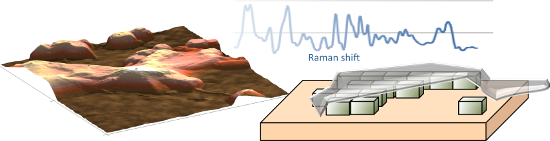
- rectangular non-contact gold coated cantilever were used (model Hi'Res-C14 from MicroMash – http://www.spmtips.com), with typical resonance frequency of 160 kHz, and 1 nm tip radius. The nanocube dimensions were measured from the height statistics in the topographic AFM images. Image processing and pseudo 3D


Possibilities and limitations of advanced transmission electron microscopy for carbon-based nanomaterials
Beilstein J. Nanotechnol. 2015, 6, 1541–1557, doi:10.3762/bjnano.6.158


Transformations of PTCDA structures on rutile TiO2 induced by thermal annealing and intermolecular forces
Beilstein J. Nanotechnol. 2015, 6, 1498–1507, doi:10.3762/bjnano.6.155
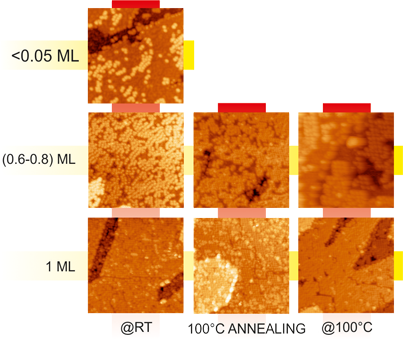
- measurements, the sample was cooled to approximately 100 K using a flow cryostat, and the STM imaging was performed in a constant current mode at positive bias voltages (empty state imaging) with etched tungsten tips used as probes. For image processing and STM data analysis, WSxM software was used [42


Peptide-equipped tobacco mosaic virus templates for selective and controllable biomineral deposition
Beilstein J. Nanotechnol. 2015, 6, 1399–1412, doi:10.3762/bjnano.6.145
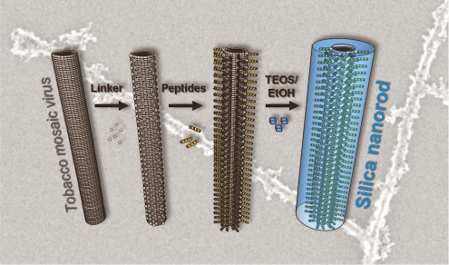
- -contrast TMV–KD10 cores surrounded by electron-dense sheaths were measured in digital TEM images by help of image processing software from the fifth day onwards. This revealed an increase of layer thickness with progressing time (Figure 5). After ten days of reaction time, the TMV–silica hybrids exhibited




Scalable, high performance, enzymatic cathodes based on nanoimprint lithography
Beilstein J. Nanotechnol. 2015, 6, 1377–1384, doi:10.3762/bjnano.6.142
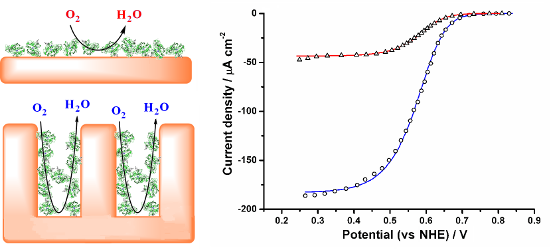
- employed in all measurements. The analysis and processing of the AFM images was performed with the WSxM software package [28]. Image processing consisted of plane subtraction, equalisation, and 3D representation. The electrochemical measurements of the Au electrodes were performed in 0.5 M H2SO4 to clean


Scanning reflection ion microscopy in a helium ion microscope
Beilstein J. Nanotechnol. 2015, 6, 1125–1137, doi:10.3762/bjnano.6.114
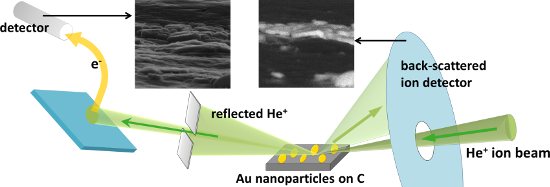
- SEs excited immediately near the sample could not reach the detector because of sample surface charging. The step of a minimum height in the field of view of the image in Figure 6 is marked with arrows. The value of the height, as retrieved from the image processing, was found to be 7 ± 2 nm. The


Observing the morphology of single-layered embedded silicon nanocrystals by using temperature-stable TEM membranes
Beilstein J. Nanotechnol. 2015, 6, 964–970, doi:10.3762/bjnano.6.99

- for a fixed layer stoichiometry of SiO0.93. A transition from irregular and large towards spherical and smaller precipitates is clearly observed. Owing to the excellent contrast, the images can be evaluated by image processing software such as ImageJ [45] in order to analyze the particle distribution


A scanning probe microscope for magnetoresistive cantilevers utilizing a nested scanner design for large-area scans
Beilstein J. Nanotechnol. 2015, 6, 451–461, doi:10.3762/bjnano.6.46
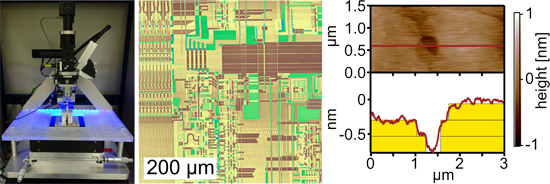
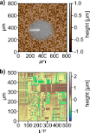
- very low thermal drift of the setup, no further image processing was necessary. The choice of color table allows for a clear distinction of the different layers of which the circuit is comprised. This shows that also the height scale measured by the AFM is constant over the whole large scan area, a key


Effect of silver nanoparticles on human mesenchymal stem cell differentiation
Beilstein J. Nanotechnol. 2014, 5, 2058–2069, doi:10.3762/bjnano.5.214
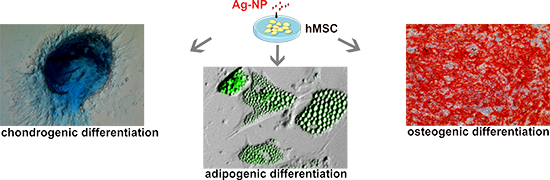
- adipogenic-differentiated hMSCs (B). After 14 d of incubation, viable cells were stained with calcein-AM (green fluorescence) and quantified by using digital image processing (phase analysis). The data are expressed as the mean ± SD (n = 3 independent experiments) given as the percentage of viable cells


PVP-coated, negatively charged silver nanoparticles: A multi-center study of their physicochemical characteristics, cell culture and in vivo experiments
Beilstein J. Nanotechnol. 2014, 5, 1944–1965, doi:10.3762/bjnano.5.205



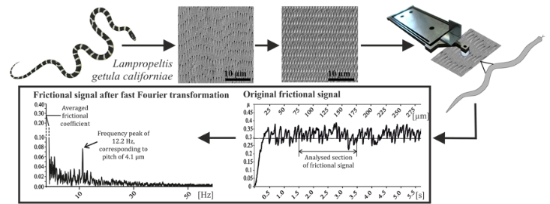
Dry friction of microstructured polymer surfaces inspired by snake skin
Beilstein J. Nanotechnol. 2014, 5, 1091–1103, doi:10.3762/bjnano.5.122
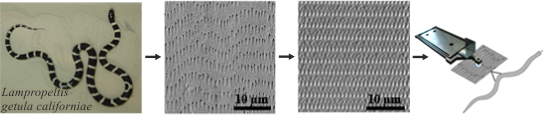
- Instruments) was used to obtain AFM images and NanoWizard® image processing software 3.3.25 was applied to extract 3D surface profiles. The variables of microstructured surfaces were measured from digital images by means of the image analysis software SigmaScanPro 5.0 (SPSS Inc., Chicago, USA). Frictional


Insect attachment on crystalline bioinspired wax surfaces formed by alkanes of varying chain lengths
Beilstein J. Nanotechnol. 2014, 5, 1031–1041, doi:10.3762/bjnano.5.116
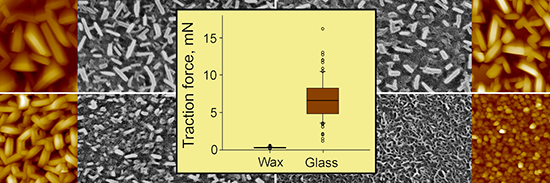
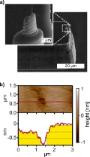
- contact mode with a supersharp silicon non-contact cantilever (SSS-NCH, Nanoworld, Neuchâtel, Switzerland). The scanned area was comparable with the size of setal tips in adhesive pads of the beetle C. septempunctata [52]. The images obtained were processed with the scanning probe image processing


Scale effects of nanomechanical properties and deformation behavior of Au nanoparticle and thin film using depth sensing nanoindentation
Beilstein J. Nanotechnol. 2014, 5, 822–836, doi:10.3762/bjnano.5.94
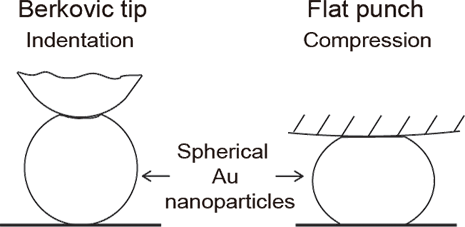
- grains highlighted by the dashed lines. The average grain diameters were found by first importing the TEM images into an image processing and analysis software (ImageJ, National Institute of Health, Bethesda, MD). Second, the outlines of the grains were traced and the enclosed area was determined. The






Measuring air layer volumes retained by submerged floating-ferns Salvinia and biomimetic superhydrophobic surfaces
Beilstein J. Nanotechnol. 2014, 5, 812–821, doi:10.3762/bjnano.5.93
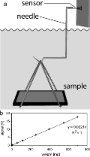
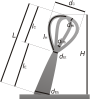
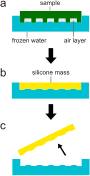
- was performed on a Cambridge Stereoscan 200 SEM (Zeiss GmbH, Oberkochen, Germany) with digital image processing unit (DISS 5, Point electronic GmbH, Halle, Germany) at acceleration voltages of 15 kV for the replicas and 10 kV for the plant material. The leaf surface area was acquired after the volume


Injection of ligand-free gold and silver nanoparticles into murine embryos does not impact pre-implantation development
Beilstein J. Nanotechnol. 2014, 5, 677–688, doi:10.3762/bjnano.5.80
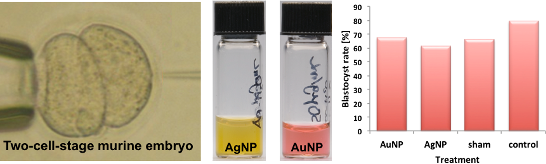
- silver nanoparticles. The mean primary particle diameter was determined by lognormal fitting of a particle number weighted diameter histogram derived from image processing of transmission electron microscopy (TEM) pictures and resulted in 11 nm for AuNP and 21 nm for AgNP. Number frequency distribution




Friction behavior of a microstructured polymer surface inspired by snake skin
Beilstein J. Nanotechnol. 2014, 5, 83–97, doi:10.3762/bjnano.5.8
- intermittent contact mode cantilever (c = 50 Nm−1, NST-NCHF, Nascatec GmbH, Stuttgart, Germany), at ambient conditions (room temperature 24 °C, relative humidity 41%). NanoWizard® SPM software 3.3.23 (JPK Instruments) was used to obtain AFM images and NanoWizard® image processing software 3.3.25 was applied to




Apertureless scanning near-field optical microscopy of sparsely labeled tobacco mosaic viruses and the intermediate filament desmin
Beilstein J. Nanotechnol. 2013, 4, 510–516, doi:10.3762/bjnano.4.60
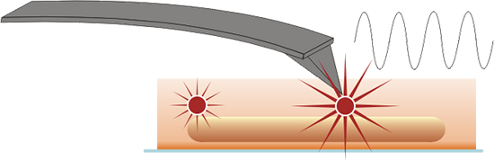
- are intrinsically aligned. Consequently, image processing is very easy and the data can be superimposed without further adjustment. Both, the AFM and the fluorescence part of the setup are highly versatile: For example the extension to dual color fluorescence is possible without major modifications
- . Generally, the setup also allows imaging in liquid media, which makes it predestined for biological samples. Furthermore, the intermittent fluorophore excitation reduces photo-bleaching and thus extends imaging time. Experimental Image processing The unprocessed near-field image contains a significant
- considerably reduced far-field artifacts. Of note, the low-pass filter primarily smoothes individual “noisy pixels” and hardly alters the shape or the width of the fluorescence peaks. The resulting high resolution fluorescence data are then superimposed on the topography. All image processing is done with the


Femtosecond-resolved ablation dynamics of Si in the near field of a small dielectric particle
Beilstein J. Nanotechnol. 2013, 4, 501–509, doi:10.3762/bjnano.4.59
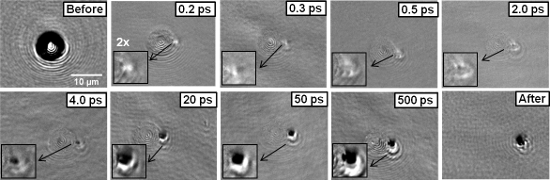
- under the same conditions are similarly acquired in particle-free regions for comparison purposes. Image processing During the image acquisition process, three different images are acquired for a given delay. A first image, blocking the pump beam, is used for normalization purposes. This enables


Guided immobilisation of single gold nanoparticles by chemical electron beam lithography
Beilstein J. Nanotechnol. 2013, 4, 336–344, doi:10.3762/bjnano.4.39
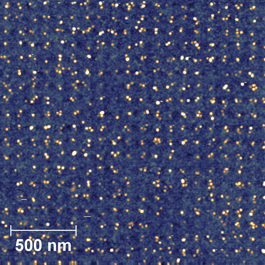
- and force constants between 10 N·m−1 and 130 N·m−1. Image processing was performed by using the open-source software gwyddion 2.28 (http://gwyddion.net) [27]. In general, measurements were post-processed with the commands “Level data by mean plane subtraction”, “Correct lines by matching height median