Search results
Search for "manganese" in Full Text gives 83 result(s) in Beilstein Journal of Nanotechnology.
Fabrication of carbon nanospheres by the pyrolysis of polyacrylonitrile–poly(methyl methacrylate) core–shell composite nanoparticles
Beilstein J. Nanotechnol. 2017, 8, 1897–1908, doi:10.3762/bjnano.8.190

- SiO2 (178.49 mg/g) [54], manganese-impregnated zinc sulphide nanoparticles deposited on activated carbon (191.57 mg/g) [55] and γ-Fe2O3 loaded active carbon (195.55 mg/g) [56]. We believe the efficient removal of MB is mainly attributed to the small pore size and the high specific surface area of CP6



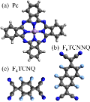
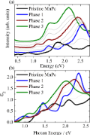
Charge transfer from and to manganese phthalocyanine: bulk materials and interfaces
Beilstein J. Nanotechnol. 2017, 8, 1601–1615, doi:10.3762/bjnano.8.160
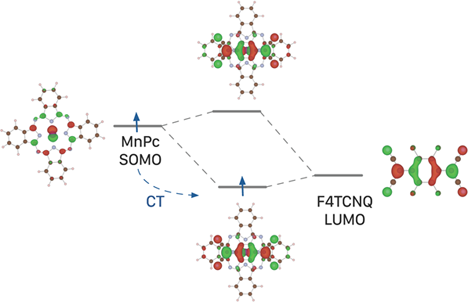
- Bergakademie Freiberg, Leipziger Str. 23, D-09596 Freiberg, Germany 10.3762/bjnano.8.160 Abstract Manganese phthalocyanine (MnPc) is a member of the family of transition-metal phthalocyanines, which combines interesting electronic behavior in the fields of organic and molecular electronics with local magnetic
- transfer; electronic properties; manganese phthalocyanine; Review Introduction The family of metal-centered phthalocyanines has been considered for future technological applications because of their favorable electronic and optical properties and their advantageous chemical stability [1][2][3][4][5][6][7
- ][8]. Phthalocyanine molecules can harbor a number of metal ions, in particular transition-metal ions such as cobalt, iron or manganese. A special characteristic of transition-metal centered phthalocyanines is, that transition-metal ions often are characterized by a magnetic moment, and therefore such


Formation of ferromagnetic molecular thin films from blends by annealing
Beilstein J. Nanotechnol. 2017, 8, 1469–1475, doi:10.3762/bjnano.8.146
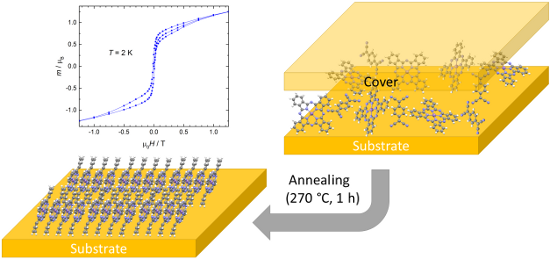
- Abstract We report on a new approach for the fabrication of ferromagnetic molecular thin films. Co-evaporated films of manganese phthalocyanine (MnPc) and tetracyanoquinodimethane (TCNQ) have been produced by organic molecular beam deposition (OMBD) on rigid (glass, silicon) and flexible (Kapton
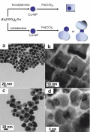
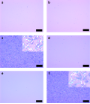
- signals that could occur from the substrate. (a) Manganese phthalocyanine (MnPc) and tetracyanoquinodimethane (TCNQ) molecules. (b) Annealing procedure applied to the blended thin films prepared by OMBD. (c) Well-ordered β-MnPc film after annealing. Optical micrographs for molecular thin films grown on



Structural properties and thermal stability of cobalt- and chromium-doped α-MnO2 nanorods
Beilstein J. Nanotechnol. 2017, 8, 1032–1042, doi:10.3762/bjnano.8.104
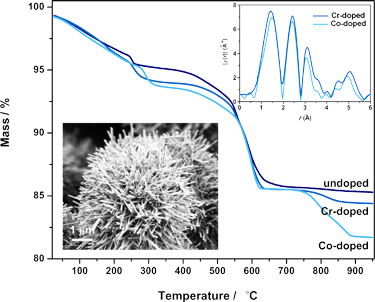
- that of the undoped ones. Dopant ions do not preserve the MnO2 phase at higher temperatures nor do they destabilize the cryptomelane structure. Keywords: α-MnO2; doping; EXAFS; nanorods; XANES; Introduction The wide range of physical and chemical properties of manganese dioxide (MnO2), which exists
- in several polymorphic forms, originates from the different structures in which MnO6 octahedrons are linked by edge- or corner-sharing in different ways to form layered or channel structures [1][2]. The negative charge of the Mn–O network arises from the mixed oxidation states of manganese (Mn4+, Mn3
- responsible for the electroneutrality, while in hollandite the tunnels are occupied with Ba2+ cations. Cryptomelane MnO2 with the chemical composition KMn74+Mn3+O16·nH2O is the most extensively studied octahedral manganese oxide molecular sieve. A minor amount of Mn3+ replaces Mn4+ in the center of the


Tuning the spin coherence time of Cu(II)−(bis)oxamato and Cu(II)−(bis)oxamidato complexes by advanced ESR pulse protocols
Beilstein J. Nanotechnol. 2017, 8, 943–955, doi:10.3762/bjnano.8.96
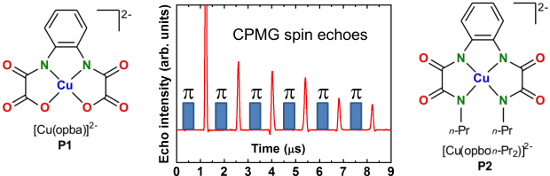
- protocol. Analogous effect of a drastic increase of the spin coherence time in molecular magnets with the CPMG protocol was observed and comprehensively discussed in our previous work on pulse ESR on model binuclear 1,2-diphosphacyclopentadienyl manganese complexes [20]. There we have studied in detail the


Energy-level alignment at interfaces between manganese phthalocyanine and C60
Beilstein J. Nanotechnol. 2017, 8, 927–932, doi:10.3762/bjnano.8.94
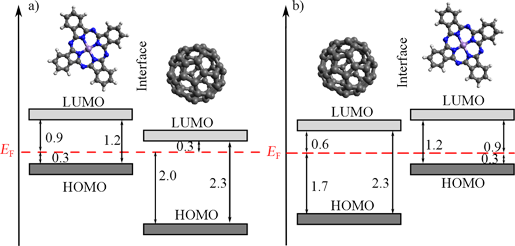
- Daniel Waas Florian Ruckerl Martin Knupfer Bernd Buchner IFW Dresden, P.O. Box 270116, D-01171 Dresden, Germany 10.3762/bjnano.8.94 Abstract We have used photoelectron spectroscopy to determine the energy-level alignment at organic heterojunctions made of manganese phthalocyanine (MnPc) and the
- the two lowest unoccupied molecular orbitals (LUMOs) is rather small. Keywords: C60; manganese phthalocyanine (MnPc); organic interfaces; photoelectron spectroscopy (PES); Introduction Within the last decades we have witnessed considerable progress in the development and understanding of organic
- and an appropriate electron acceptor is a crucial process. Often, fullerenes (C60) and their derivatives are used as acceptor materials. Amongst the transition-metal phthalocyanines MnPc is exceptional in some respects. Due to the participation of manganese 3d orbitals to the molecular electronic


Synthesis of graphene–transition metal oxide hybrid nanoparticles and their application in various fields
Beilstein J. Nanotechnol. 2017, 8, 688–714, doi:10.3762/bjnano.8.74
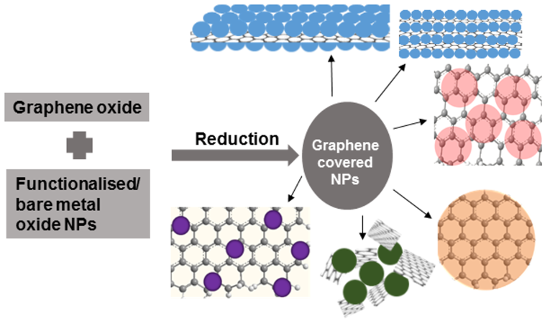
- scalable and relatively cost effective [14][15][16]. In particular, among all the TMO NPs, titanium dioxide [17], manganese oxide [18], iron oxide [19] and zinc oxide [20] have attracted the most attention due to their particular interesting and advantageous properties. By changing the reaction conditions
- it a promising catalyst for fuel cells. Manganese oxide (MnO, Mn2O3, MnO2, Mn3O4, Mn2O7)–graphene hybrids Pyrolusite (MnO2), hausmanite (Mn3O4) and bixbyite (Mn2O3) are important minerals of manganese. These oxides have attracted great attention because of their environmental benignity and the high
- abundance of Mn in nature. Among all the oxides of manganese, Mn3O4 has been studied widely as an anode material for LIB to achieve higher specific capacities than graphite [120]. Mn3O4 has a spinal structure and is a potentially interesting electrode material as an electrolytic supercapacitor because of






Graphene functionalised by laser-ablated V2O5 for a highly sensitive NH3 sensor
Beilstein J. Nanotechnol. 2017, 8, 571–578, doi:10.3762/bjnano.8.61
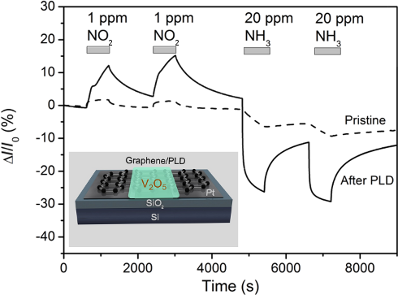
- last 3d elements, scandium and zinc, the rest of the metals possess several oxidation states. The presence of several stable oxidation states serves as a basis of catalytic activity in redox reactions and is most noticeable for vanadium, chromium, and manganese. In particular, vanadium has the highest


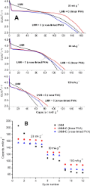
Effect of nanostructured carbon coatings on the electrochemical performance of Li1.4Ni0.5Mn0.5O2+x-based cathode materials
Beilstein J. Nanotechnol. 2016, 7, 1960–1970, doi:10.3762/bjnano.7.187
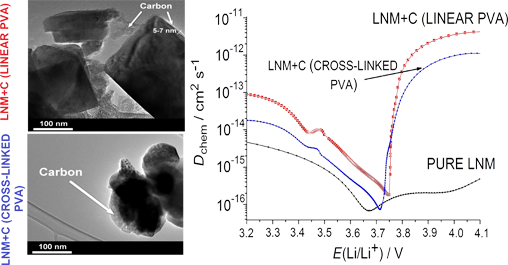
- electrochemical properties (C = 160–180 mAh·g−1 at C/10; U = 2.5–4.6 V) remains attractive until now [2][3][4]. Most of the studies deal with Li(Ni,Mn)O2 with equimolar amounts of nickel and manganese. The influence of the Ni/Mn ratio on the properties of these materials is discussed in [5]. One of the obstacles



Ferromagnetic behaviour of ZnO: the role of grain boundaries
Beilstein J. Nanotechnol. 2016, 7, 1936–1947, doi:10.3762/bjnano.7.185
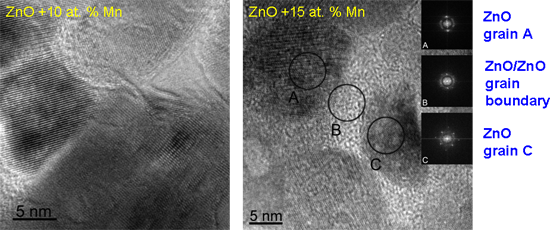
- them with “magnetic” atoms such as iron, manganese and cobalt. Other theoreticians published in that time similar works [2]. It has been predicted that the Curie temperature of such diluted doped magnetic semiconductor oxides can be quite high, even above room temperature. Especially promising was zinc
- growth of single crystals, are well known and well elaborated. It seemed that nothing could prevent the success of the synthesis of ferromagnetic ZnO doped by iron, manganese, cobalt, or other “magnetic” atoms. Indeed first successes came soon. Ferromagnetic ZnO films were synthesised by pulsed laser
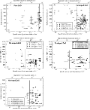
- ferromagnetic behaviour of zinc oxide and developed our own method for the synthesis of pure and doped nanocrystalline ZnO films. The obtained data are summarized in Figure 1 for pure ZnO and ZnO doped with manganese, cobalt, iron and nickel [6][7][8][9]. The full list of used references can be found in [6][7


Improved lithium-ion battery anode capacity with a network of easily fabricated spindle-like carbon nanofibers
Beilstein J. Nanotechnol. 2016, 7, 1289–1295, doi:10.3762/bjnano.7.120
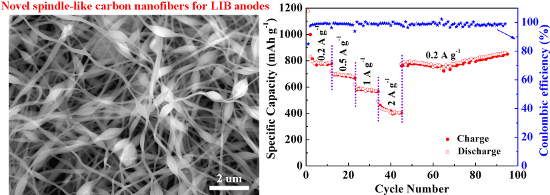
- capacity of 875.5 mAh g−1 after 200 cycles and 1005.5 mAh g−1 after 250 cycles with a significant coulombic efficiency of 99.5%. Keywords: carbon nanofiber network; electrospinning; lithium-ion battery; manganese oxide; nitrogen modification; Introduction Lithium-ion batteries (LIBs) have been identified
- , transition metal oxides are the focus of intensive efforts for LIB anode materials due to their remarkable specific capacity, low cost and environmental compatibility [6][7][8][9][10][11]. Manganese oxide (MnO) is a particularly good choice owing to its high theoretical specific capacity of 755 mAh g−1, low
- carbon materials can be successfully applied for LIB electrodes. Experimental Fabrication of the carbon network All chemicals were of analytical degree and were used without any purification. A typical procedure is as follows. Firstly, 0.45 g of manganese acetate tetrahydrate (Mn(COOH)2·4H2O), together


Multiwalled carbon nanotube hybrids as MRI contrast agents
Beilstein J. Nanotechnol. 2016, 7, 1086–1103, doi:10.3762/bjnano.7.102
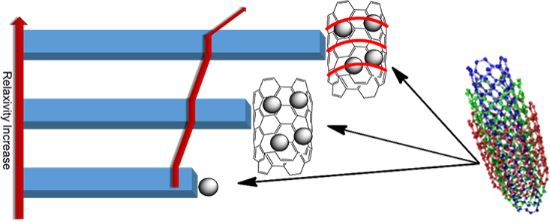
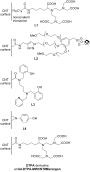
- investigations on applications of carbon nanomaterials in bioimaging [4][5][6][7][8][9], e.g., graphene, graphite oxide with manganese residues [10], gadolinium anchored on fullerenes [11], and nanodiamonds [12]. Sitharaman’s and Wilson’s discoveries of gadonanotubes, such as ultrashort single-wall carbon



Microwave solvothermal synthesis and characterization of manganese-doped ZnO nanoparticles
Beilstein J. Nanotechnol. 2016, 7, 721–732, doi:10.3762/bjnano.7.64
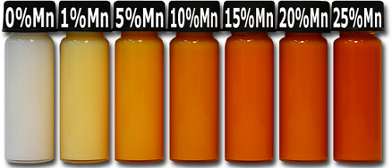
- 141, 02-507 Warsaw, Poland 10.3762/bjnano.7.64 Abstract Mn-doped zinc oxide nanoparticles were prepared by using the microwave solvothermal synthesis (MSS) technique. The nanoparticles were produced from a solution of zinc acetate dihydrate and manganese(II) acetate tetrahydrate using ethylene glycol
- indication of additional phases. Spherical Zn1−xMnxO particles were obtained with monocrystalline structure and average particle sizes from 17 to 30 nm depending on the content of dopant. SEM images showed an impact of the dopant concentration on the morphology of the nanoparticles. Keywords: manganese
- metallic Mn. Metallic manganese is antiferromagnetic, while many alloys of manganese, in which the average Mn–Mn distance is greater than that of metallic manganese, are ferromagnetic [40]. MnO, Mn2O3 and MnO2 are antiferromagnetic [41], while Mn3O4 is ferromagnetic [42][43]. ZnMnO3 is paramagnetic [44][45


Surfactant-controlled composition and crystal structure of manganese(II) sulfide nanocrystals prepared by solvothermal synthesis
Beilstein J. Nanotechnol. 2015, 6, 2319–2329, doi:10.3762/bjnano.6.238
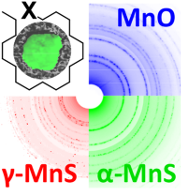
- Ricerche, via C. Golgi 19, 20133 Milano, Italy 10.3762/bjnano.6.238 Abstract We investigated how the outcome of the solvothermal synthesis of manganese(II) sulfide (MnS) nanocrystals (NCs) is affected by the type and amount of long chain surfactant present in the reaction mixture. Prompted by a previous
- the surfactants adsorbed on the NCs. Keywords: manganese oxide; manganese sulfide; nanocrystal; polymorphism control; solvothermal synthesis; sulfur; surfactant; Introduction Manganese(II) sulfide (MnS) is a wide bandgap (Eg ≈ 3 eV) [1], p-type, antiferromagnetic semiconductor that crystallizes in
- three distinct phases: cubic α-MnS (rock salt), cubic β-MnS (zincblende), and hexagonal γ-MnS (wurtzite). In α-MnS, sulfide anions form an fcc lattice and manganese cations fill all of the octahedral voids. β-MnS also has an fcc lattice of S2− ions but the Mn2+ ions occupy half of the tetrahedral voids


A facile method for the preparation of bifunctional Mn:ZnS/ZnS/Fe3O4 magnetic and fluorescent nanocrystals
Beilstein J. Nanotechnol. 2015, 6, 1743–1751, doi:10.3762/bjnano.6.178
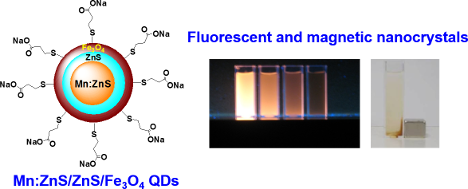
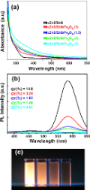
- properties. We therefore believe that the synthetic protocol developed in this work may pave a reliable way for constructing imaging probes with good performance and low toxicity for biological applications. Experimental Chemicals Zinc sulfate heptahydrate (ZnSO4·7H2O, 99.99%), manganese acetate tetrahydrate




Influence of surface chemical properties on the toxicity of engineered zinc oxide nanoparticles to embryonic zebrafish
Beilstein J. Nanotechnol. 2015, 6, 1568–1579, doi:10.3762/bjnano.6.160
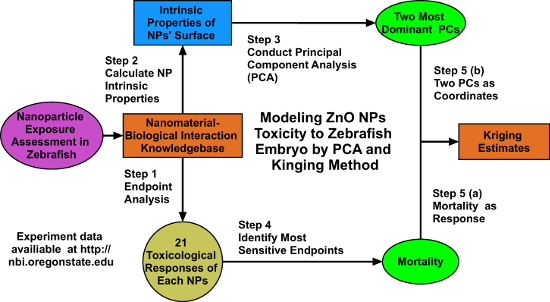
- have been noted to contribute to lower viability in cell culture studies with A549 and HT29 cells [30]. Similar morphology effects on toxicity have been observed in studies of manganese oxide, where the sharp points and edges were found to generate more ROS than smooth surfaces [44]. We tested this




From lithium to sodium: cell chemistry of room temperature sodium–air and sodium–sulfur batteries
Beilstein J. Nanotechnol. 2015, 6, 1016–1055, doi:10.3762/bjnano.6.105
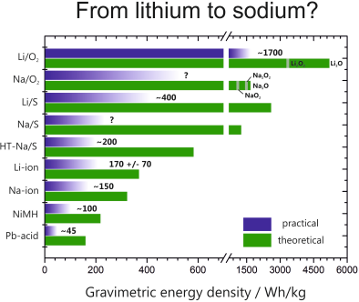
- ) are required. Hence, research focused on the preparation and characterization of catalytically active materials for Li/O2 cells is aimed at higher discharge capacities and lower overpotentials during cycling. Various metal oxide materials, mostly manganese oxides (MnO2, Mn3O4), but also others have


Morphology control of zinc oxide films via polysaccharide-mediated, low temperature, chemical bath deposition
Beilstein J. Nanotechnol. 2015, 6, 799–808, doi:10.3762/bjnano.6.83
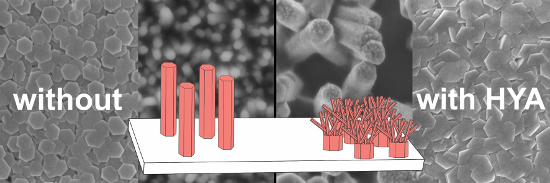
- where highly conductive materials are required (e.g., solar cells and light emitting diodes (LEDs)), ZnO must be doped. Several groups have reported the successful doping of ZnO films with dopants such as magnesium [21], iodine [22], boron [23][24], titanium [25], manganese [26], and aluminium [27][28




Mandibular gnathobases of marine planktonic copepods – feeding tools with complex micro- and nanoscale composite architectures
Beilstein J. Nanotechnol. 2015, 6, 674–685, doi:10.3762/bjnano.6.68
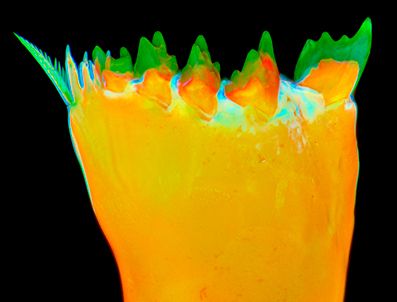
- it would be rather difficult to get reliable results. For insect mandibles, many of which are known to contain relatively high concentrations of zinc and manganese [40][41], it has been shown that the metal incorporations increase the hardness of the mandible material [42][43]. Copepod gnathobases
- silica very likely increases the hardness and stiffness of the gnathobase teeth and therefore has a similar effect as zinc and manganese have in insect mandibles. Mandibular gnathobases, diatom frustules and the evolutionary arms race In addition to the presence of mechanically stable silica-containing


Silica micro/nanospheres for theranostics: from bimodal MRI and fluorescent imaging probes to cancer therapy
Beilstein J. Nanotechnol. 2015, 6, 546–558, doi:10.3762/bjnano.6.57

- fluorescence studies. The size of the particles was found to be 31 ± 4 nm with an emission peak at approx. 620 nm. The in vitro studies with human umbilical vein endothelial cells (HUVEC) suggested that these NPs could be used simultaneously as fluorescent and MRI contrasting agent. 2.4 Manganese oxide as
- magnetic and organic dyes/iridium complex as fluorescent probe Due to their extremely low longitudinal relaxivity, manganese oxides, though less cytotoxic than Gd-complexes, have only a limited application potential as MRI CAs. Yang et al. [21] reported a chemical process for the preparation of
- magnetically active silica-encapsulated manganese oxide nanoparticles. In addition, rhodamine B isothiocyanate (RBITC) and folic acid (FA) were conjugated on the NP surface. These NPs showed absorption peaks at ca. 570 and 280 nm, which correspond to RBITC and FA, respectively. The MRI studies suggested that


Biological responses to nanoscale particles
Beilstein J. Nanotechnol. 2015, 6, 380–382, doi:10.3762/bjnano.6.37

- used in this study were those of current, wide-spread technological importance, such as metals (e.g., silver, gold, platinum), oxides (e.g., silica, iron oxide, cerium oxide, manganese oxide), polymers (e.g., polystyrene) and quantum dots (II/VI semiconductors). Naturally occurring and industrially
Synthesis, characterization, monolayer assembly and 2D lanthanide coordination of a linear terphenyl-di(propiolonitrile) linker on Ag(111)
Beilstein J. Nanotechnol. 2015, 6, 327–335, doi:10.3762/bjnano.6.31
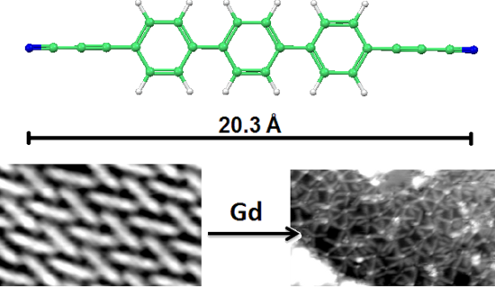
- diiodoterphenyl 4 was subjected to a cross-coupling reaction with propargyl alcohol in the presence of catalytic amounts of Pd(II) salts, leading to the formation of the intermediary compound 5. This compound was subsequently reacted by a tandem manganese dioxide-mediated alcohol oxidation with in situ trapping
- mmol) in THF (20 mL). Then, activated manganese dioxide (1.1 g, 12.8 mmol) was added. The resulting mixture was stirred at room temperature for 2 h and then diluted with dichloromethane (20 mL). The mixture was filtered through Celite, washed well with dichloromethane, and the combined filtrates were


Comparative evaluation of the impact on endothelial cells induced by different nanoparticle structures and functionalization
Beilstein J. Nanotechnol. 2015, 6, 300–312, doi:10.3762/bjnano.6.28
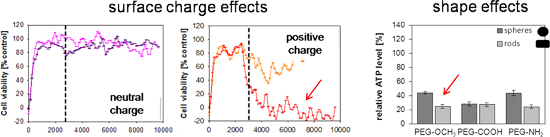
- , was cytotoxic to many cell lines [11][12][13][14], rendering an appropriate coating of gold nanoparticles indispensable for biocompatibility. Metal oxide based nanoparticles such as iron oxide and manganese oxide are ideal tools for MRI applications. They are easy to synthesize and they showed
- was prepared by a seed-mediated chemical protocol [28][66]. 3) Spherical colloids of Fe3O4 (16 nm) and MnO (24 nm) were synthesized by thermal decomposition of iron(III) oleate or manganese(II) oleate in 1-octadecene described previously [67][68]. The metal oxide components of 2) and 3) were coated
- exposure, native), which were set to 100%. DPA: D-penicillamine, MPA: 3-mercaptopropionic acid, CyA: cysteamine. Size effects of the different manganese oxide nanoparticle formulations on the cellular ATP levels of endothelial cells, reflecting activity of cell metabolism. (a) Cells were treated with Au




Manganese oxide phases and morphologies: A study on calcination temperature and atmospheric dependence
Beilstein J. Nanotechnol. 2015, 6, 47–59, doi:10.3762/bjnano.6.6
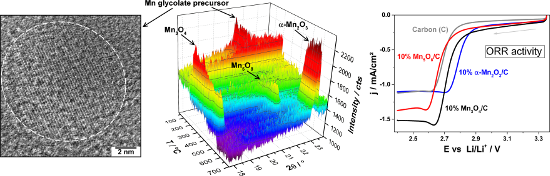
- Research Laboratory, Carl von Ossietzky University of Oldenburg, 26129 Oldenburg, Germany 10.3762/bjnano.6.6 Abstract Manganese oxides are one of the most important groups of materials in energy storage science. In order to fully leverage their application potential, precise control of their properties
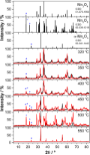
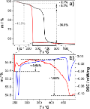
- the different manganese oxides via one route facilitates assigning actual structure–property relationships. The oxidation process related to the different MnOx species was observed by in situ X-ray diffraction (XRD) measurements showing time- and temperature-dependent phase transformations occurring
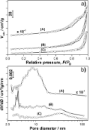
- performance for the mesoporous α-Mn2O3 species. Keywords: electrocatalytic activity; in situ X-ray diffraction; manganese glycolate; manganese oxide nanoparticles; mesoporous α-Mn2O3; Introduction Manganese oxides are a class of inexpensive compounds with a high potential for nanostructuring, which makes





Inorganic Janus particles for biomedical applications
Beilstein J. Nanotechnol. 2014, 5, 2346–2362, doi:10.3762/bjnano.5.244
- monitored by optical spectroscopy [56][73]. The synthetic route can easily be applied to other material compositions as previously demonstrated by the formation of heterostructures composed out of gold and manganese oxide [39]. Au@MnO heterodimers were prepared using preformed Au nanoparticles as seeds, as
- nanoparticles [75][76][77]. Inspired by the idea of the formation of a complex composed of the metal ion and the ligand, the strategy of direct employment of a metal-surfactant complex was used. For instance, manganese(II)oleate [77] and iron(III)oleate [64][75][78] can be handled easily and safely due to their
- ], the gold nanoparticles were functionalized with 1-octadecanethiol to suppress multiple nucleation of manganese oxide on different crystal facets or surface defects. This surface functionalization was proved not to be necessary for Au@Fe3O4 heterodimers. The morphology as well as the sizes of the metal