Search results
Search for "measurement" in Full Text gives 1240 result(s) in Beilstein Journal of Nanotechnology. Showing first 200.
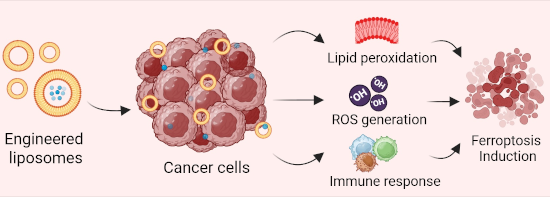
Ferroptosis induction by engineered liposomes for enhanced tumor therapy
Beilstein J. Nanotechnol. 2025, 16, 1325–1349, doi:10.3762/bjnano.16.97


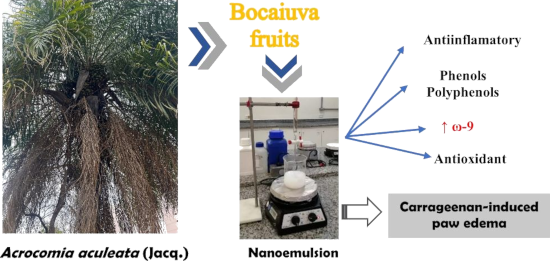
Acrocomia aculeata oil-loaded nanoemulsion: development, anti-inflammatory properties, and cytotoxicity evaluation
Beilstein J. Nanotechnol. 2025, 16, 1277–1288, doi:10.3762/bjnano.16.93
- evaluated, from 10 to 70 °C, at the same time intervals mentioned above. Measurements were performed with the Zetasizer instrument (Malvern, UK). The nanoemulsion was equilibrated at temperatures of 10, 20, 30 40, 40, 50, 60, and 70 °C for 5 min prior to measurement [42]. Hemolytic activity Hemolytic


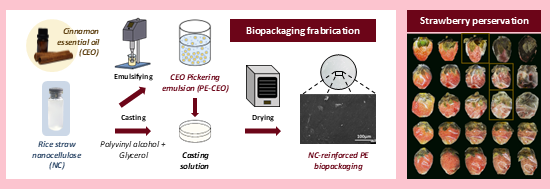
Functional bio-packaging enhanced with nanocellulose from rice straw and cinnamon essential oil Pickering emulsion for fruit preservation
Beilstein J. Nanotechnol. 2025, 16, 1234–1245, doi:10.3762/bjnano.16.91
- diffraction (XRD) was performed using an Aeris Minerals Edition from PANalytical (UK) with Co radiation at 40 kV. Biopackaging samples were clipped on a 16 mm holder and the measurement was performed using a 1/8° diffraction slit. Mechanical strength was determined at room temperature using a Testometric X350
- materials (BP, rBP, and rCBP) was observed using a scanning electron microscope (SEM), model Primas E (US). The samples were coated with Pt for 30 s prior to measurement. Bioactive properties UV absorption. Transparency and UV absorption of the films were determined using UV–vis spectroscopy in the



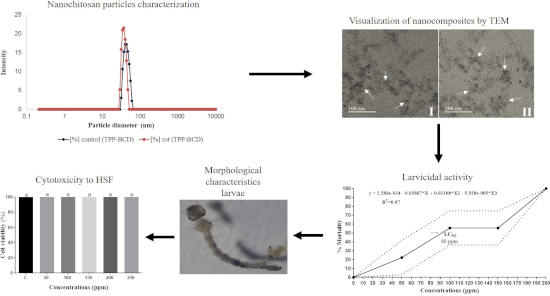
Chitosan nanocomposite containing rotenoids: an alternative bioinsecticidal approach for the management of Aedes aegypti
Beilstein J. Nanotechnol. 2025, 16, 1197–1208, doi:10.3762/bjnano.16.88
- of 1 cm−1 and an accumulation of 35 scans per spectrum. A compressive force of 15 N was applied to the samples during measurement to ensure proper contact with the ATR crystal surface. Quantification of rotenoids by high-performance liquid chromatography The quantification of rotenoids was performed



Mechanical stability of individual bacterial cells under different osmotic pressure conditions: a nanoindentation study of Pseudomonas aeruginosa
Beilstein J. Nanotechnol. 2025, 16, 1171–1183, doi:10.3762/bjnano.16.86
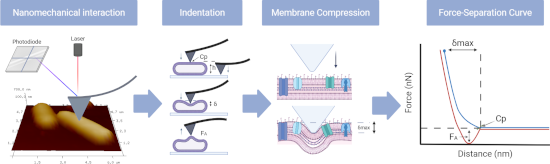
- N/m, and tip radius of 20–60 nm as provided by the manufacturer (Bruker), to study the morphological features of bacteria under different tested conditions. The deflection set point was adjusted during the measurement to optimize imaging conditions. Nanoindentations were performed using a maximum
- single measurement was taken along the length of each bacteria, while three measurements were performed and averaged to take its width. This is presented below in Figure 2A and Figure 2B. All obtained images, FV maps, and force–distance curves were analyzed with the NanoScope analysis software 1.7 from


Crystalline and amorphous structure selectivity of ignoble high-entropy alloy nanoparticles during laser ablation in organic liquids is set by pulse duration
Beilstein J. Nanotechnol. 2025, 16, 1141–1159, doi:10.3762/bjnano.16.84
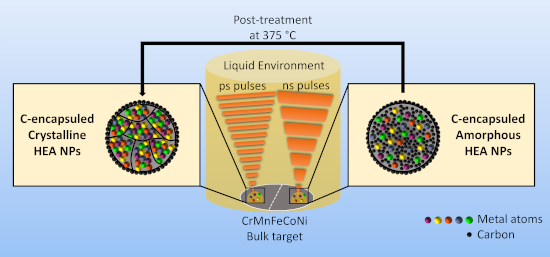
- indicates the formation of larger crystallites in SAED. As shown in the differential scanning calorimetry (DSC) measurement in Figure 4D, the crystallization of the amorphous particles is an exothermic process and begins at approximately 375 °C, which is exactly the same temperature where the rapid decrease
- particle core. The EELS measurement in Figure 6b and Figure 6c shows that both areas yield a significant amount of carbon signal. We observe that the particle shell mainly consists of amorphous and graphitic carbon (peak at 286 eV with respective σ* transition energy loss and possible peak at 294 eV
- combined techniques of sample preparation via FIB and consecutive EELS measurement strengthen our postulated carbon-diffusion-based mechanism about pulse-duration-driven stabilization of amorphous structures in ignoble HEA NPs. Conclusion Understanding the structure formation determinants of high-entropy




Deep learning for enhancement of low-resolution and noisy scanning probe microscopy images
Beilstein J. Nanotechnol. 2025, 16, 1129–1140, doi:10.3762/bjnano.16.83
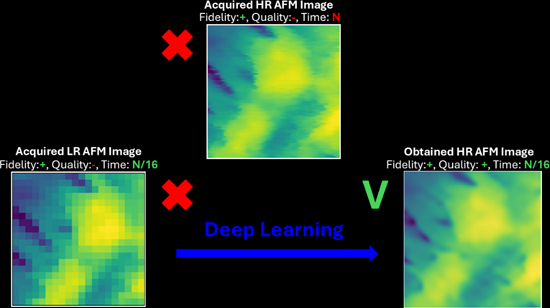
- shows deep learning models to be superior for super-resolution tasks and enables significant reduction in AFM measurement time, whereby low-pixel-resolution AFM images are enhanced in both resolution and fidelity through deep learning. Keywords: atomic force microscopy; deep learning; fast scanning
- and deep learning models. This approach is widely used in the community, with the advantage that it saves time and resources. That said, low-resolution images formed in that way are not comprised of physically accessed measurement pixels, simplifying both the experimental and computational components
- images. Additionally, the application of the suggested procedure can greatly reduce AFM measurement time, enabling the introduction of a faster and more effective procedure into the AFM-based pipeline. Methods The Methods section is composed of Experimental and Computational Pipeline sections


Towards a quantitative theory for transmission X-ray microscopy
Beilstein J. Nanotechnol. 2025, 16, 1113–1128, doi:10.3762/bjnano.16.82
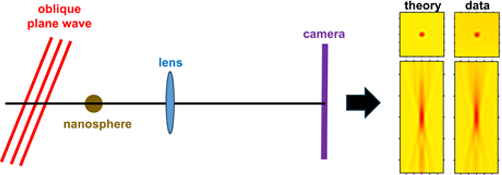
- absorption of each nanosphere, since this is a commonly measured parameter in samples imaged by TXMs. An exact measurement of experimental absorption is non-trivial because the background around the nanosphere varies slowly with distance from the nanosphere center. Therefore, to achieve a robust estimate of
- , which we increased stepwise to include more and more of the tails of the intensity profile. This yielded multiple absorption estimates from a single nanosphere’s best-focus image, enabling an estimate of the mean absorption and its standard deviation. We performed an analogous measurement of absoprtion



Single-layer graphene oxide film grown on α-Al2O3(0001) for use as an adsorbent
Beilstein J. Nanotechnol. 2025, 16, 1082–1087, doi:10.3762/bjnano.16.79
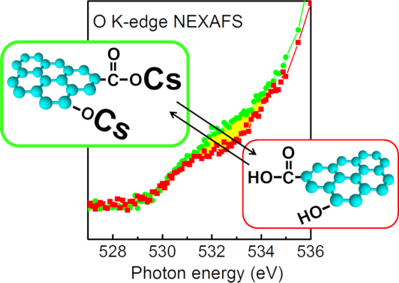
- -yield method was employed to obtain the spectra. The amount of Cs adsorption was inspected by XPS. The energy scan for XPS was done with a VSW CLASS 100 hemispherical energy analyzer. An Al Kα (1486.6 eV) X-ray source (PSP TX400/2) was used for the excitation. In the XPS measurement, the CsCl solution


Piezoelectricity of hexagonal boron nitrides improves bone tissue generation as tested on osteoblasts
Beilstein J. Nanotechnol. 2025, 16, 1068–1081, doi:10.3762/bjnano.16.78
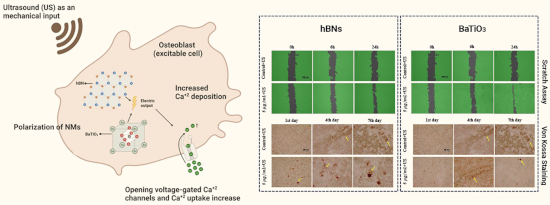
- applied electric field, the acquired phase signals determine the polarization direction of hBNs [49]. The direction and angle of polarization of piezoelectric hBNs were recorded by phase contrast measurement, and it was found to be 300°. This high value indicates that hBNs gave spontaneous responses as


Multifunctional properties of bio-poly(butylene succinate) reinforced with multiwalled carbon nanotubes
Beilstein J. Nanotechnol. 2025, 16, 1014–1024, doi:10.3762/bjnano.16.76
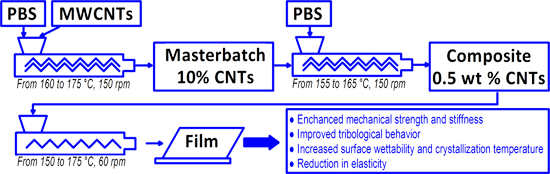
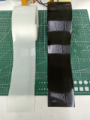
- small standard deviations of the measurement results indicate the high homogeneity of the bio(nano)composite. Conclusion A comparison of the results obtained in this study with those reported in the literature reveals a lack of data on the effect of low concentrations (0.5 wt %) of pristine MWCNTs on
- for this purpose. Measurements were performed between smooth film surfaces (smooth to smooth) and rough film surfaces (rough to rough). The tests were carried out in accordance with PN-EN ISO 8295:2005 “Plastics – Film and Sheeting – Determination of the Coefficients of Friction” at a measurement



Time-resolved probing of laser-induced nanostructuring processes in liquids
Beilstein J. Nanotechnol. 2025, 16, 968–1002, doi:10.3762/bjnano.16.74
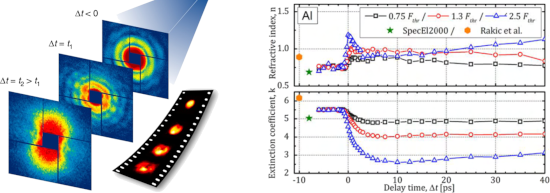
- using a single X-ray pulse, eliminating the need for specimen alignment to a specific Bragg angle. This ensures that the specimen can be completely damaged after a single-pulse measurement, as fresh specimens can be used for subsequent single-pulse exposures. The only requirement is that all specimens
- scattering, and system-specific background. With the last two components removed, the total elastic scattering signal (Figure 4D) exhibits a distribution typical of amorphous materials with two major humps situated between 1 and 4 Å−1, consistent with the X-ray scattering measurement as shown below in Figure


Shape, membrane morphology, and morphodynamic response of metabolically active human mitochondria revealed by scanning ion conductance microscopy
Beilstein J. Nanotechnol. 2025, 16, 951–967, doi:10.3762/bjnano.16.73
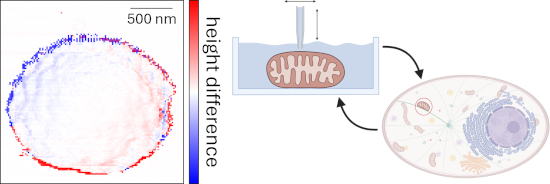
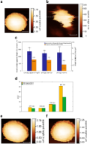
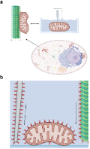
- local environment. The similarities between the nanopipette in the measurement setup and the microtubules in the cellular context are discussed as the basis for the hypothesis. Keywords: HeLa; metabolically active; mitochondria; morphodynamics; scanning ion conductance microscopy; Introduction
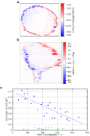
- . One of these effects appears to be associated to the dynamics of the mitochondria’s morphology (in the following referred to as morphodynamics, cf. [6]) and their contact with the measurement environment. Finally, we propose hypotheses to explain the observed effects. Results Viability of the
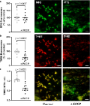
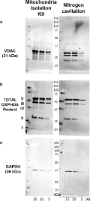
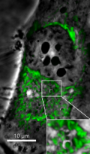
- investigated mitochondria was analysed by microscopy and oxygen consumption measurement. Figure 1 shows isolated mitochondria by nitrogen cavitation [34] and subsequently labelled by MitoTracker™ Green FM (MTG, Figure 1a) and tetramethylrhodamine ethyl ester perchlorate (TMRE, Figure 1b). TMRE accumulates only



Synthesis of biowaste-derived carbon-dot-mediated silver nanoparticles and the evaluation of electrochemical properties for supercapacitor electrodes
Beilstein J. Nanotechnol. 2025, 16, 933–943, doi:10.3762/bjnano.16.71
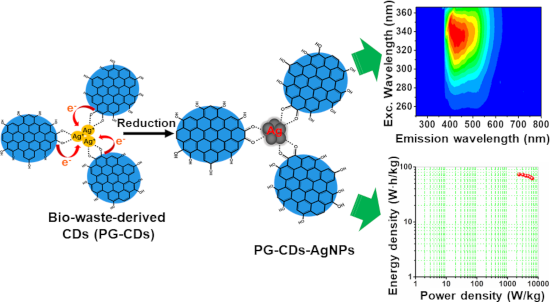
- time obtained from the GCD measurement. Higher SCs are demonstrated by electrode materials with longer discharge durations. At 2 A/g, the obtained SC for PG-CDs-AgNPs was found to be 540 F/g. Figure 5c exemplifies plots of the current density as a function of SC of PG-CDs-AgNPs at multiple current


Focused ion beam-induced platinum deposition with a low-temperature cesium ion source
Beilstein J. Nanotechnol. 2025, 16, 910–920, doi:10.3762/bjnano.16.69
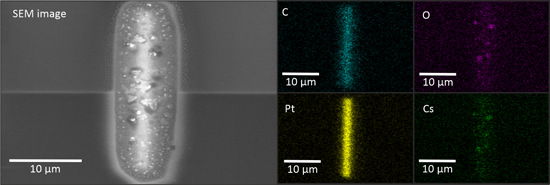
- indicates the position of the cross section. (b) SEM image of this cross section. Before the FIB cut for the cross section measurement was done, an additional Pt layer was deposited with FEBID for protection. (a) Resistivity of Ga+-induced Pt deposits using the same current density and acceleration voltage


Characterization of ion track-etched conical nanopores in thermal and PECVD SiO2 using small angle X-ray scattering
Beilstein J. Nanotechnol. 2025, 16, 899–909, doi:10.3762/bjnano.16.68
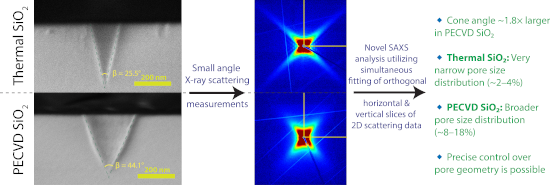
- images do not provide robust statistical information and are prone to measurement errors. Cross-sectional SEM imaging provides limited statistical reliability as the probability of cleaving directly through a nanopore’s central axis is extremely low. This sampling bias introduces significant
- uncertainties in dimensional measurements and makes it challenging to obtain robust structural information about the nanopores. Figure 2 shows a representative 2D scattering pattern obtained from conical nanopores in thermal SiO2. This image represents the simultaneous measurement of approximately 107 parallel
- as is, and the Si substrate was not removed before SAXS measurements. The sample-to-detector distances ranged between 7.2 and 7.6 m. Data collection was performed using Pilatus 1M and Pilatus 2M detectors during different measurement cycles. A silver behenate (AgBeh) standard was used to calibrate


Synchrotron X-ray photoelectron spectroscopy study of sodium adsorption on vertically arranged MoS2 layers coated with pyrolytic carbon
Beilstein J. Nanotechnol. 2025, 16, 847–859, doi:10.3762/bjnano.16.64
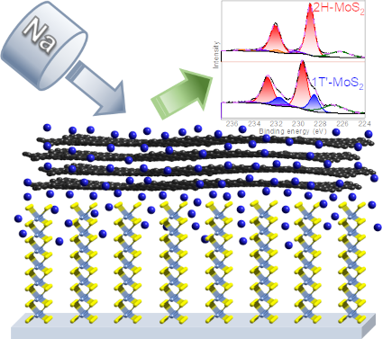
- the preparation and measurement chambers. The Na/Mo ratio on the surface of the MoS2 film is 2.0 after Na deposition for 10 min, 5.5 after additional Na deposition for 20 min, and 3.0 after annealing (Figure 4c). The corresponding Na/Mo ratios in the bulk of the MoS2 film are 1.0, 2.4, and 1.5 (Figure


Synthesis and magnetic transitions of rare-earth-free Fe–Mn–Ni–Si-based compositionally complex alloys at bulk and nanoscale
Beilstein J. Nanotechnol. 2025, 16, 823–836, doi:10.3762/bjnano.16.62
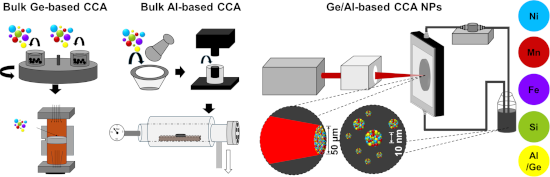
- Co Kα radiation over a 2θ range of 20–110°. The magnetic properties of the samples were measured using a Quantum Design DynaCool physical property measurement system at temperatures ranging from 5 to 390 K under external magnetic fields up to 9 T. Synthesis of CCA NPs by PLAL The CCA colloidal NPs


Supramolecular hydration structure of graphene-based hydrogels: density functional theory, green chemistry and interface application
Beilstein J. Nanotechnol. 2025, 16, 806–822, doi:10.3762/bjnano.16.61
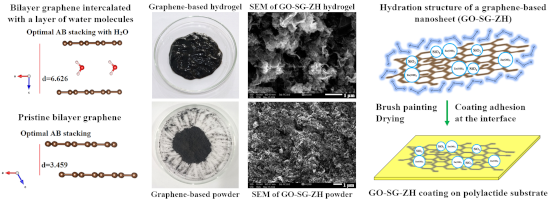
- using the method reported in our previous paper [14][26]. Measurement of tensile properties was conducted using a universal tensile testing machine (Yang Yi Technology, 500-N load cell) and the ASTM D882-18 standard [14][27]. Results and Discussion Density functional theory calculations of intersheet
- GO-SG-ZH/PLA films are described in Figure 12 and summarized in Table 4. Additional data of measurement values and stress–strain curves are given in Supporting Information File 1, Table S1, Figure S4, Table S2, and Figure S5. Our previous paper presented that GO-ZnO coating on PLA film led to an
- shows SEM images of surfaces at the fracture of a GO-SG-ZH/PLA film generated by the tensile measurement. Conclusion Supramolecular graphene-based hydrogels are bioinspired structures which are biomimetic to natural hydration structures of cellular membranes, proteins, and other biomolecules. While


Changes of structural, magnetic and spectroscopic properties of microencapsulated iron sucrose nanoparticles in saline
Beilstein J. Nanotechnol. 2025, 16, 762–784, doi:10.3762/bjnano.16.59
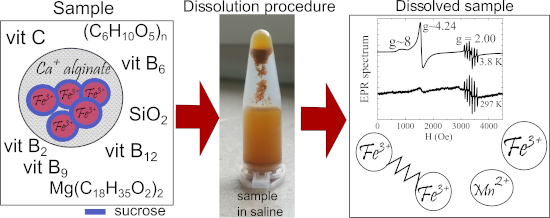
- discrepancies are mainly a consequence of difficulties with analysis of structural and morphological measurement results (e.g., signal obtained in X-ray diffraction (XRD) experiments is dominated by the carbohydrate). This results in very broad, hard to interpret, or even uninterpretable lines (see XRD patterns
- consequences of the dissolution process in terms of microstructural changes and interactions between iron ions. The paper is organized as follows: the “Result and Discussion” section is divided into subsections relating to the individual measurement technique used, presenting measurement results and their
- analysis for undissolved and dissolved samples. In the “Conclusion” section, the most important conclusions are presented, and the “Experimental” section describes in detail the samples and measurement used. Results and Discussion Microstructure Based on the studies and information published in [2][7][8





Thickness dependent oxidation in CrCl3: a scanning X-ray photoemission and Kelvin probe microscopies study
Beilstein J. Nanotechnol. 2025, 16, 749–761, doi:10.3762/bjnano.16.58
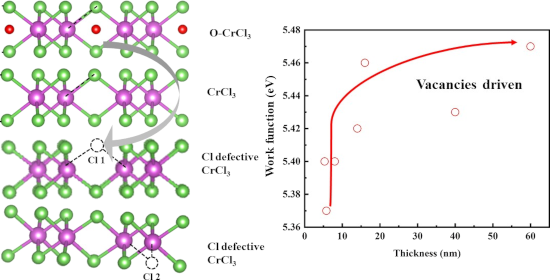
- 1. For the latter sample, we distinguished lean (L) and thick (T) flakes by optical and AFM inspection (Figure 2). The Olympus B×60 system with objective lenses of magnifications of 5×, 10×, 20×, 50×, and 100× was used to find a color scale to interpolate the AFM thickness measurement results. In
- beams. In contrast, the OSA measurement spectrum showed a Si component due to the wider beam diameter. This is further supported by the evaluation of the CrCl3 stoichiometry in the latter two cases. Table 1 displays the area under the peaks for Cl 2p and Cr 2p. The stoichiometry was determined after





Efficiency of single-pulse laser fragmentation of organic nutraceutical dispersions in a circular jet flow-through reactor
Beilstein J. Nanotechnol. 2025, 16, 711–727, doi:10.3762/bjnano.16.55
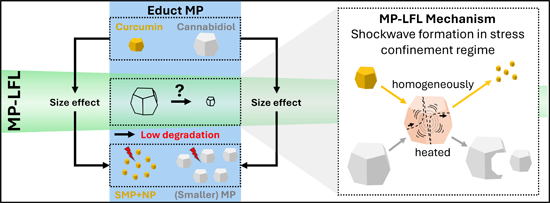
- experiments of IrO2 [14], is not ruled out, but these cannot be detected with the measurement methods used for organic materials. The number-weighted particle size distribution determined via SEM in Figure 3C at the example of 0.1 wt % curcumin shows that the initially polydisperse, bimodal distribution with
- profiles according to ISO 13318-3 [84]. Before the measurement, untreated and laser-generated CBD suspensions of all concentrations were redispersed in an ultrasonic bath. The sedimentation


High-temperature epitaxial growth of tantalum nitride thin films on MgO: structural evolution and potential for SQUID applications
Beilstein J. Nanotechnol. 2025, 16, 690–699, doi:10.3762/bjnano.16.53
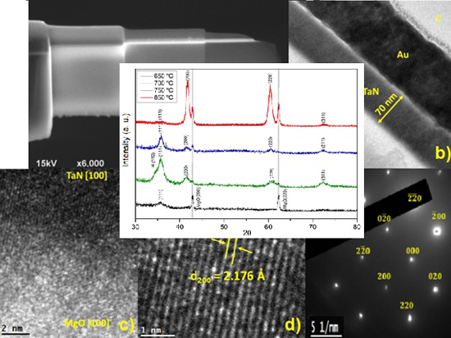
- physical property measurement system. To achieve temperatures below 4.2 K, a vacuum pump was used to reduce the pressure on the helium bath. This technique allows the liquid helium temperature to be lowered to approximately 1.8 K. Reducing the vapor pressure provides an efficient method to reach 2.0 K


The impact of tris(pentafluorophenyl)borane hole transport layer doping on interfacial charge extraction and recombination
Beilstein J. Nanotechnol. 2025, 16, 678–689, doi:10.3762/bjnano.16.52
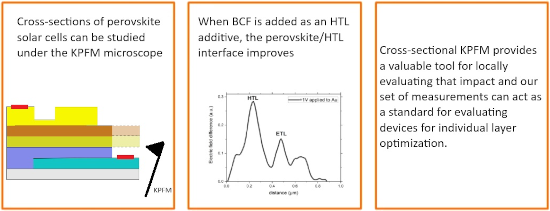
- in solar cells based on these materials. To do so on operating solar cells, we created samples with exposed cross-sections and examined their potential profile distributions with Kelvin probe force microscopy (KPFM), implementing our comprehensive measurement protocol. Using the Lewis acid tris
- force microscopy (KPFM) is an important tool for conducting such studies, enabling the measurement of the perovskite’s surface potential by monitoring the electrostatic force between the surface and a conductive probe (See Supporting Information File 1, Section 1). This measurement can provide insights
- -sections by means of argon ion polishing. To get results that closely simulate the operation of working devices, we used a comprehensive static KPFM measurement protocol (See Supporting Information File 1, Section 2) and measured potential profiles across all layers while applying a voltage or under


Colloidal few layered graphene–tannic acid preserves the biocompatibility of periodontal ligament cells
Beilstein J. Nanotechnol. 2025, 16, 664–677, doi:10.3762/bjnano.16.51
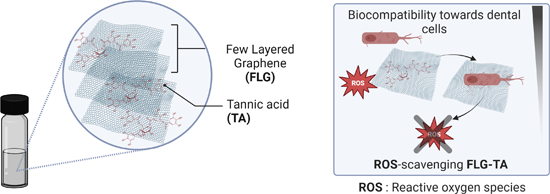
- deposited film was put in contact with a 10−4 M DPPH solution in the absence of light, followed by the absorbance measurement at 517 nm. Biological assays Isolation and culture of PDL cells PDL cells were isolated from human alveolar ligament obtained from extracted human teeth. This study was conducted