Search results
Search for "metal ion" in Full Text gives 99 result(s) in Beilstein Journal of Nanotechnology.
Biocompatible organic–inorganic hybrid materials based on nucleobases and titanium developed by molecular layer deposition
Beilstein J. Nanotechnol. 2019, 10, 399–411, doi:10.3762/bjnano.10.39
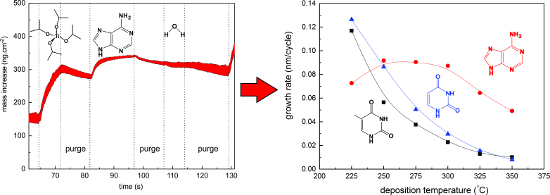
- realized that the mode of action of this drug is due to coordinative bond formation of the metal ion with nucleobase donor atoms in DNA. This led to an upsurge in interest in organometallic compounds containing nucleobases [5][6][7]. For instance, attempts have been made to bind adenine to dirhodium





Removal of toxic heavy metals from river water samples using a porous silica surface modified with a new β-ketoenolic host
Beilstein J. Nanotechnol. 2019, 10, 262–273, doi:10.3762/bjnano.10.25
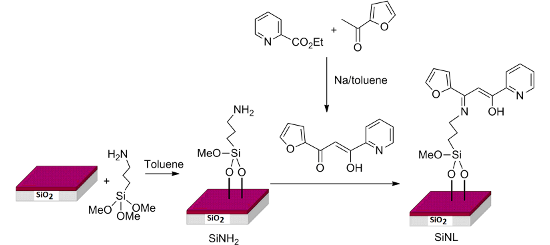
- . Batch experiments. The batch experiments were performed according to our published procedure [37]. Residual metal content was determined by atomic adsorption, using the following equations to determine the amount of adsorbed metal: where QM (mmol·g−1) and QW (mg·g−1) are the amount of the metal ion on
- the adsorbent. The aqueous solution volume, the weight of the adsorbent, the initial concentration of metal ion, the equilibrium metal ion concentration and the atomic weight for metals are designated by: V (L), W (g), C0 (mmol·L−1), Ce (mmol·L−1) and M (g·mol−1), respectively. The average data from
- total protonation of the active chelation sites. As the pH rises, the protonation decreases, which tends to improve the chelation and therefore the adsorption of the metal ions. At pH > 8, the metal ion concentration decreases because of their hydrolysis. Actually, the adequate pH for the maximum


Charged particle single nanometre manufacturing
Beilstein J. Nanotechnol. 2018, 9, 2855–2882, doi:10.3762/bjnano.9.266
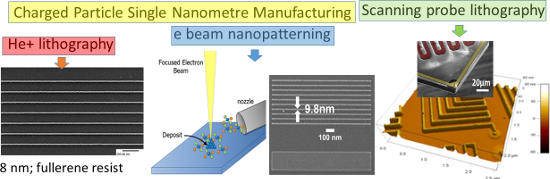
- 1980s [17]. The systems used were essentially scanning ion microscopes using a liquid metal ion source (LMIS) in place of an electron emitter and electric lenses in place of magnetic coils because of the greater Lorentz force required to deflect the “stiffer” ion beam. Most of these systems used the


Nanocellulose: Recent advances and its prospects in environmental remediation
Beilstein J. Nanotechnol. 2018, 9, 2479–2498, doi:10.3762/bjnano.9.232

- been used to fabricate catalysts for the reduction of 4-nitrophenol [52] and microfiltration membranes for bacteria, virus, and heavy metal ion removal [53]. In addition, bleached birch fibres from Betula verrucosa and B. pendula were also investigated in a study led by Suopajärvi et al. [54] to


ZnO-nanostructure-based electrochemical sensor: Effect of nanostructure morphology on the sensing of heavy metal ions
Beilstein J. Nanotechnol. 2018, 9, 2421–2431, doi:10.3762/bjnano.9.227
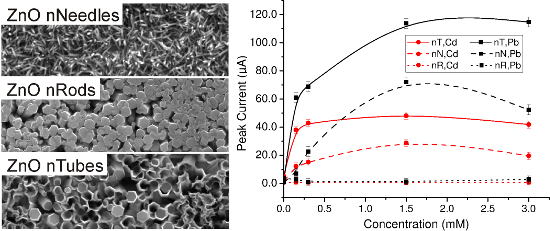
- to cadmium ions on the surface of ZnO nanostructures. This tendency was observed for all morphologies across all concentrations of analyte. In general, it can be concluded that ZnO nanostructures with porous morphology can be used as an effective heavy metal ion sensor on the one hand, and an


Hydrothermal-derived carbon as a stabilizing matrix for improved cycling performance of silicon-based anodes for lithium-ion full cells
Beilstein J. Nanotechnol. 2018, 9, 2381–2395, doi:10.3762/bjnano.9.223
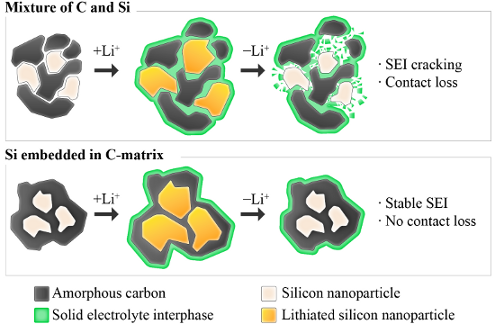
- -sections were prepared by a focused ion beam (FIB) milling process using gallium ions extracted from a high brightness liquid metal ion source. Nitrogen adsorption experiments were performed on a 3Flex Physisorption device (Micromeritics GmbH) at the temperature of liquid nitrogen (−196 °C). Before the


Lead-free hybrid perovskites for photovoltaics
Beilstein J. Nanotechnol. 2018, 9, 2209–2235, doi:10.3762/bjnano.9.207
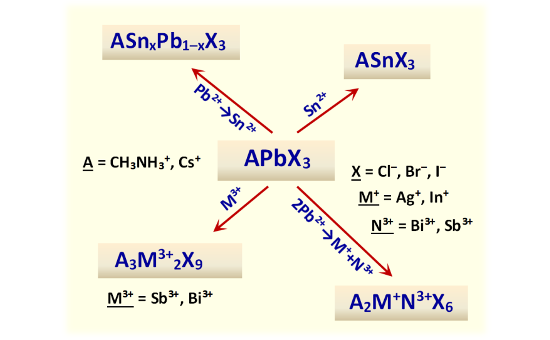
- nanoscale levels with respect to the performance and stability of perovskite-based solar light converters. The survey starts from HPs with lead ions partially substituted by isovalent cations of other less toxic metals, then focuses on lead-free HPs where the central metal ion is in the oxidation state of


Cr(VI) remediation from aqueous environment through modified-TiO2-mediated photocatalytic reduction
Beilstein J. Nanotechnol. 2018, 9, 1448–1470, doi:10.3762/bjnano.9.137
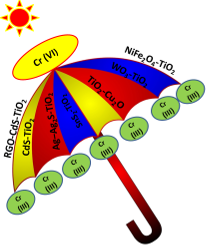
- oxides: Spinel types of metal oxides with the general formula AB2O4 (where A is a divalent metal ion and B is a trivalent metal ion) possess narrow band gaps which enable them to absorb throughout the visible region [179]. In addition, these materials have a high tendency for conduction of electrons


Comparative study of antibacterial properties of polystyrene films with TiOx and Cu nanoparticles fabricated using cluster beam technique
Beilstein J. Nanotechnol. 2018, 9, 861–869, doi:10.3762/bjnano.9.80
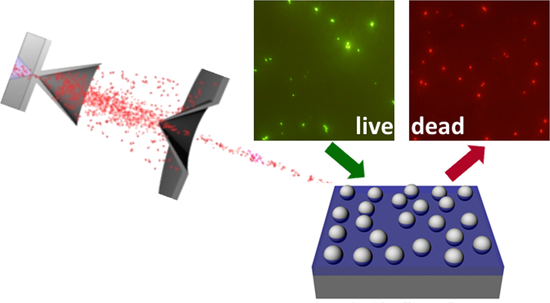
- through mechanisms based on (i) metal ion selectivity (replacement of original metals leading to cellular dysfunction); (ii) metal reduction potential (generating or catalysing the formation of reactive oxygen species (ROS) damaging cellular proteins, lipids and DNA) and (iii) direct nanoparticle (NP




A review of carbon-based and non-carbon-based catalyst supports for the selective catalytic reduction of nitric oxide
Beilstein J. Nanotechnol. 2018, 9, 740–761, doi:10.3762/bjnano.9.68

- temperature window of 150–500 °C in a diesel engine as well as the low energy consumption and economy of NH3-SCR [9]. In the literature, abundant catalysts at low temperature have been explored such as transitional metals (Mn, Cu, Ce, Fe, Co, Mo) [10][11][12][13], novel metals (Pt, Pd) [14], and metal ion
Single-step process to improve the mechanical properties of carbon nanotube yarn
Beilstein J. Nanotechnol. 2018, 9, 545–554, doi:10.3762/bjnano.9.52
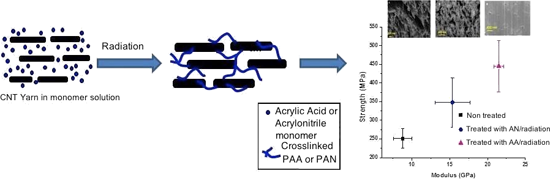
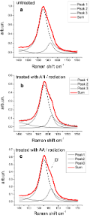
- which electron and ion beam can be used simultaneously. The FIB is generated from a gallium liquid metal ion source with resolution of 7 nm at 30 keV acceleration voltages. The e-beam is generated from field emission gun electron source with high resolution SEM 1 nm at 15 keV and 1.9 nm at 1 keV




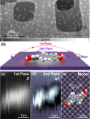
Anchoring of a dye precursor on NiO(001) studied by non-contact atomic force microscopy
Beilstein J. Nanotechnol. 2018, 9, 242–249, doi:10.3762/bjnano.9.26
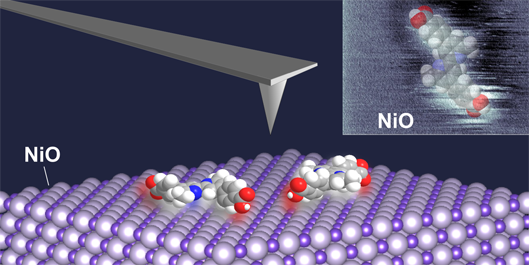
- 2,2′-bipyridine (bpy). In a second step, the ligand-functionalized surface is either directly exposed to a homoleptic metal (typically copper) complex to undergo a ligand-exchange reaction to assemble a surface-bound heteroleptic dye, or is first capped with a metal ion followed by the ancillary
- ) changes to a cis-conformation upon coordination of a metal ion Mn+ (right). From large-scale imaging to atomic resolution on NiO(001). (a) Large scale topographic image of the NiO(001) crystal presenting clean terraces (scan parameters: = 4 nm, Δf1 = −30 Hz). The high-resolution topographic image (b



Tailoring the nanoscale morphology of HKUST-1 thin films via codeposition and seeded growth
Beilstein J. Nanotechnol. 2017, 8, 2307–2314, doi:10.3762/bjnano.8.230
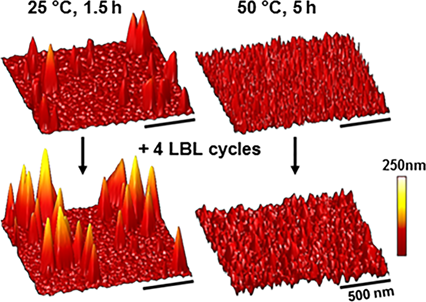
- increase the film thickness. However, the solubility of the reagents within the solution was prohibitive to investigating higher concentration. Additionally, preliminary work found that significant film formation neither occurred when copper acetate was used as the metal ion source, nor when ethanol was
- . Future experiments may investigate the effect of altering the ratio of the metal ion and organic component. Seeded growth Film morphology could be tailored by codeposition utilizing time and temperature as variables to tune the structure. While an increased film thickness was found at elevated


Evaluating the toxicity of TiO2-based nanoparticles to Chinese hamster ovary cells and Escherichia coli: a complementary experimental and computational approach
Beilstein J. Nanotechnol. 2017, 8, 2171–2180, doi:10.3762/bjnano.8.216

- ), platinum (Pt), or palladium (Pd) [13][14], (e) the use of dye-modified TiO2 [15][16], or (f) coupling TiO2 with other semiconductors [17][18]. In the current work, we will focus on surface modification methods. Metal-ion doped TiO2 (so-called second generation nanomaterials) may cause adverse effects not


Application of visible-light photosensitization to form alkyl-radical-derived thin films on gold
Beilstein J. Nanotechnol. 2017, 8, 1863–1877, doi:10.3762/bjnano.8.187
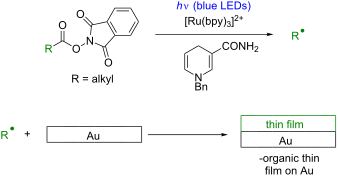
- measured using an ION TOF IV spectrometer (ION TOF Inc., Chestnut Hill, NY) equipped with a Bi liquid metal ion gun. Briefly, the spectrometer consists of three vacuum chambers each separated by a gate valve. Samples are introduced via a loadlock. The preparation and analysis chambers are maintained at ≤7


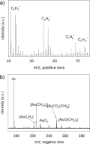

Deposition of exchange-coupled dinickel complexes on gold substrates utilizing ambidentate mercapto-carboxylato ligands
Beilstein J. Nanotechnol. 2017, 8, 1375–1387, doi:10.3762/bjnano.8.139
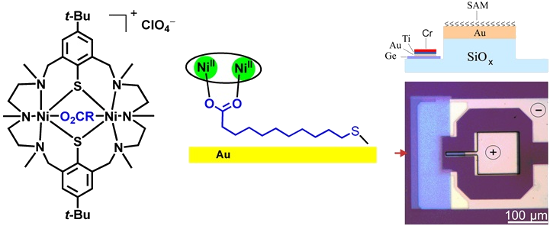
- (Scheme 1), L’ an ambidentate coligand, and M is a paramagnetic transition metal ion, usually MnII, FeII, CoII, or NiII [37]. The ambidentate phosphane-carboxylato [38] and thiol-carboxylato coligands H2L2 and H1L3 (Figure 1) were found to bind selectively via their carboxylate function to form the


Synthesis, spectroscopic characterization and thermogravimetric analysis of two series of substituted (metallo)tetraphenylporphyrins
Beilstein J. Nanotechnol. 2017, 8, 1191–1204, doi:10.3762/bjnano.8.121
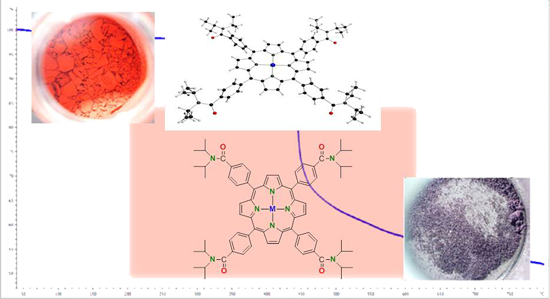
- to metalloporphyrins of which the central metal ion varies on the one hand, while on the other hand these metalloporphyrins should be sterically more demanding to vary the film morphology compared to our original report [8]. In order to support the idea that different central metals as well as


Preparation of thick silica coatings on carbon fibers with fine-structured silica nanotubes induced by a self-assembly process
Beilstein J. Nanotechnol. 2017, 8, 1145–1155, doi:10.3762/bjnano.8.116
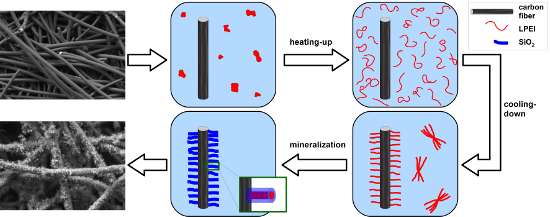
- significant influence on the morphology can be achieved by addition of metal ions. Owing to complex formation between the polyamine and the metal ions, the hierarchical structure is modified by a metal salt addition. The ratio between metal ion and ethylenimine monomer unit was set to 1:30. The hybrid silica
- of metal-ions containing LPEI aggregates, the water phase of the aqueous LPEI suspension was substituted by a copper nitrate solution and a calcium nitrate solution, respectively. The ratio between the metal ion and the ethylenimine monomer unit was set to 1:30. Modification of carbon fiber surfaces


Tuning the spin coherence time of Cu(II)−(bis)oxamato and Cu(II)−(bis)oxamidato complexes by advanced ESR pulse protocols
Beilstein J. Nanotechnol. 2017, 8, 943–955, doi:10.3762/bjnano.8.96
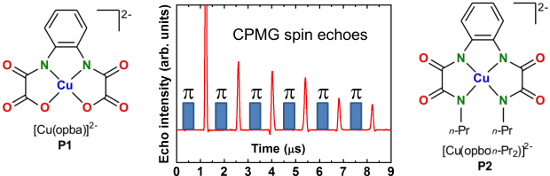
- which in their turn have been investigated with regard to the magnetic superexchange interactions between the Cu spins mediated by the O and N ligands [1][2][3][4][5][6][7][8]. In this context, the transfer of the spin density from the central metal ion to the ligands and next via the oxamato or


Selective detection of Mg2+ ions via enhanced fluorescence emission using Au–DNA nanocomposites
Beilstein J. Nanotechnol. 2017, 8, 762–771, doi:10.3762/bjnano.8.79
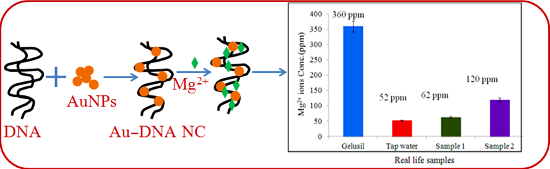
- nanostructure. Keywords: Au–DNA nanocomposites; enhanced fluorescence emission; metal-ion detection; Mg2+ ion detection; Introduction The interactions between Au nanoparticles (AuNPs) and DNA are essential to classify and expand upon, given the potential applications for NP–DNA complexes such as gene therapy
- + is an essential mineral nutrient present in the environment, every cellular organism, and in many kinds of medicines. However, an excess amount of such metal is poisonous and can result in a series of health or environmental problems. Magnesium is the fourth most abundant metal ion present in nature
- samples. These, however, are time consuming and expensive. However, very little information is available regarding the optical properties and fluorescence intensity of Au–DNA nanocomposites (NCs) utilized for metal-ion sensing. The present study demonstrates (Scheme 1) how the preparation and




Synthesis of graphene–transition metal oxide hybrid nanoparticles and their application in various fields
Beilstein J. Nanotechnol. 2017, 8, 688–714, doi:10.3762/bjnano.8.74






Ion beam profiling from the interaction with a freestanding 2D layer
Beilstein J. Nanotechnol. 2017, 8, 682–687, doi:10.3762/bjnano.8.73
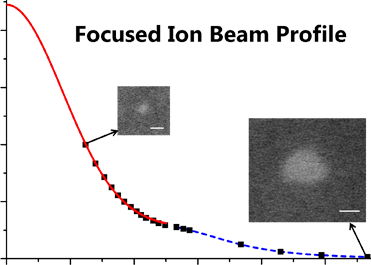
- measure Ga beam profiles in dual-beam systems. As the next step, we perform similar experiments with the helium focused ion beam. He FIB has several conceptual differences compared to the Ga FIB. It is based on a gas-field ion source (GFIS) that is disparate from a liquid metal ion source for gallium


Silicon microgrooves for contact guidance of human aortic endothelial cells
Beilstein J. Nanotechnol. 2017, 8, 675–681, doi:10.3762/bjnano.8.72
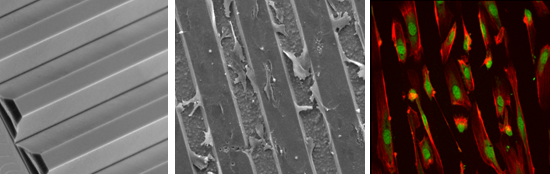
- ). After developing the photoresist by immersing the wafer in the metal ion free developer AZ 726 (MicroChemicals) for 45 s, the lithographic pattern is transferred onto the oxide layer by etching the silicon in buffered hydrofluoric acid. The photoresist film is no longer needed and therefore removed with


Hydrophilic silver nanoparticles with tunable optical properties: application for the detection of heavy metals in water
Beilstein J. Nanotechnol. 2016, 7, 1654–1661, doi:10.3762/bjnano.7.157
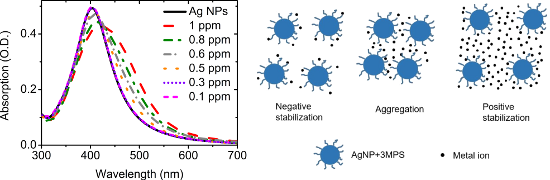
- selective sensors for the detection of very low amounts of heavy metal ions from biological and environmental samples has greatly increased [26]. The metal-ion toxicity depends on their physical state, chemical form as well as the oxidation state. Many groups have studied fluorescent chemosensors with
- of the nanoparticles occurred. Metal ion detection We investigated the optical sensing properties of the AgNP-3MPS material via absorption spectroscopy. Each solution of AgNP-3MPS/ion was prepared in spectroscopic cuvettes that were carefully cleaned to avoid contamination. To a specific amount of


Filled and empty states of Zn-TPP films deposited on Fe(001)-p(1×1)O
Beilstein J. Nanotechnol. 2016, 7, 1527–1531, doi:10.3762/bjnano.7.146
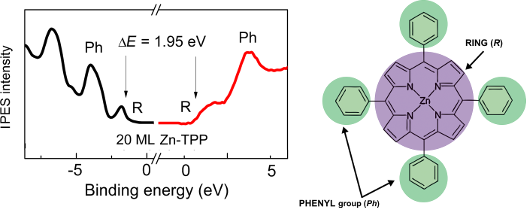
- directly interact with the substrate [1]. A characteristic example is offered by metal-tetraphenylporphyrins (M-TPPs). These molecules have been studied in many research fields [2][3][4][5][6] because a specific change in their peripheral groups or inner metal ion can induce enormous variations in the