


Search results
Search for "metal oxide" in Full Text gives 288 result(s) in Beilstein Journal of Nanotechnology. Showing first 200.
Comparative molecular dynamics simulations of thermal conductivities of aqueous and hydrocarbon nanofluids
Beilstein J. Nanotechnol. 2022, 13, 620–628, doi:10.3762/bjnano.13.54
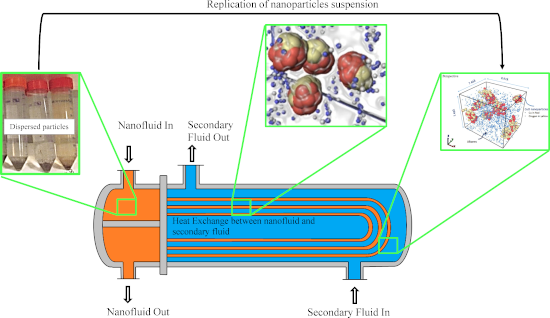
- , Karachi, Pakistan University of Hertfordshire, School of Engineering and Technology, Hatfield, UK Changzhou University, School of Materials Science and Engineering, Changzhou Science Town, Changzhou, P. R. China 10.3762/bjnano.13.54 Abstract The addition of metal oxide nanoparticles to fluids has been
- ., alkane) the thermal conductivity was increased three times (from 0.1 to 0.4 W·m−1·K−1). This approach to determine the thermal conductivity of metal oxide nanoparticles in aqueous and nonaqueous fluids using visual molecular dynamics and interactive autocorrelations demonstrate a great tool to quantify
- nanoparticles with the hydrocarbon-based fluid took less time to stabilise (i.e., about 10 picoseconds). This is because in the aqueous medium, intermolecular collisions and dynamics of metal oxide atoms form metal ionic bonding, thereby taking more time for equilibration. Moreover, the velocity of the CuO


Relationship between corrosion and nanoscale friction on a metallic glass
Beilstein J. Nanotechnol. 2022, 13, 236–244, doi:10.3762/bjnano.13.18
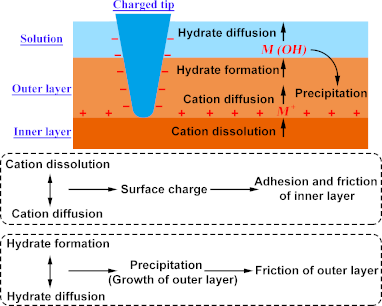
- are susceptible to corrosion when exposed to environmental conditions, the role of surface chemistry for friction must be investigated. At the macroscale, the existence of metal oxide surface films on MGs enhanced the wear resistance in corrosive solutions and the fluid lubricating films formed by


Thermal oxidation process on Si(113)-(3 × 2) investigated using high-temperature scanning tunneling microscopy
Beilstein J. Nanotechnol. 2022, 13, 172–181, doi:10.3762/bjnano.13.12
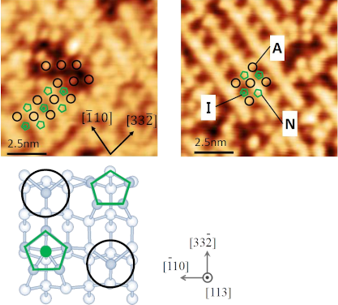
- three-dimensional metal oxide semiconductor field-effect transistors (MOSFETs) [1]. Here, formation processes of ultrathin SiO2 at the interface are considered to be quite important in determining its dielectric properties. To study procedures to fabricate gate dielectrics, it will be necessary to




Tin dioxide nanomaterial-based photocatalysts for nitrogen oxide oxidation: a review
Beilstein J. Nanotechnol. 2022, 13, 96–113, doi:10.3762/bjnano.13.7
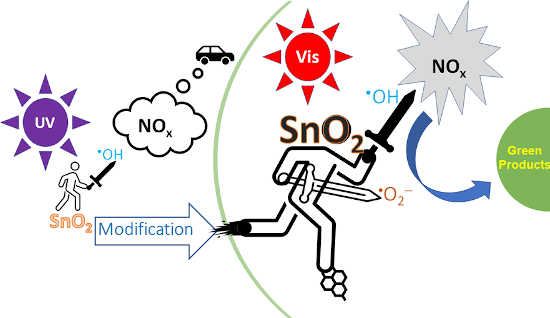
- introducing defects in metal oxide semiconductors opens up the possibility of their use in the visible spectrum [77]. Recently, Xie et al. reported using SnO2/graphene quantum dot (GQD) composites. They showed that the absorption edge of as-prepared SnO2 (Figure 13a black line) is around 340 nm, equaling to a


Sputtering onto liquids: a critical review
Beilstein J. Nanotechnol. 2022, 13, 10–53, doi:10.3762/bjnano.13.2

- NPs with desired size, shape, and composition [2]. Colloidal synthesis allows one to obtain metal, oxide, halide, chalcogenide, and other types of NPs but the mechanisms of their formation are different, even though all of them include an initial nucleation step followed by a growth step [77]. In this






Identifying diverse metal oxide nanomaterials with lethal effects on embryonic zebrafish using machine learning
Beilstein J. Nanotechnol. 2021, 12, 1297–1325, doi:10.3762/bjnano.12.97
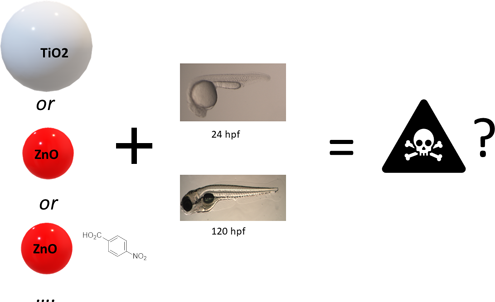
- , embryonic zebrafish (Danio Rerio) are recognised as a key human safety relevant in vivo test system. Hence, machine learning models were developed for identifying metal oxide nanomaterials causing lethality to embryonic zebrafish up to 24 hours post-fertilisation, or excess lethality in the period of 24–120
- -based magnetic resonance imaging (MRI) contrast agent (Feridex) was withdrawn from the market, following concerns regarding its observed side effects [2][7]. In spite of concerns around safety [7][8][9] and other challenges [10], there remains interest in developing novel metal oxide nanomaterials for
- various biomedical applications [10][11][12], as well as applications in other areas, such as in agriculture [13]. Nonetheless, the possibility that novel metal oxide ENMs developed for applications, such as biomedical applications, could be harmful to human health [8][9], means that there is a real need


Plasmon-enhanced photoluminescence from TiO2 and TeO2 thin films doped by Eu3+ for optoelectronic applications
Beilstein J. Nanotechnol. 2021, 12, 1271–1278, doi:10.3762/bjnano.12.94
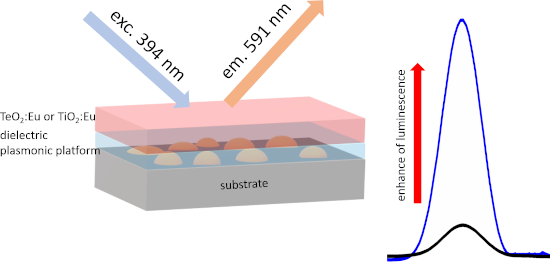
- . Interestingly, no transition caused by the electric dipole (615 nm, typical for Eu3+ ions) was observed in the emission spectrum for both kinds of metal oxide matrix. The main emission peak corresponds to the transition occurring via magnetic dipole, which is independent of the host matrix. Such a phenomenon


Morphology-driven gas sensing by fabricated fractals: A review
Beilstein J. Nanotechnol. 2021, 12, 1187–1208, doi:10.3762/bjnano.12.88
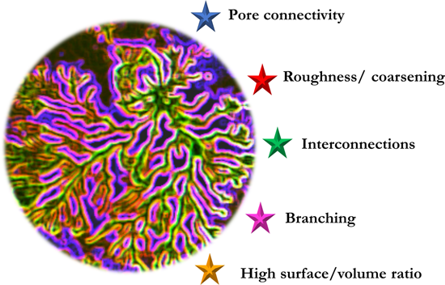
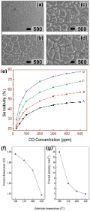
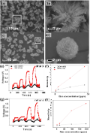
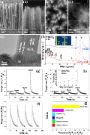
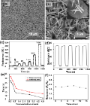
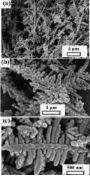
- metal oxide (SMO) sensors are most popular due to their low cost, simplicity, easy fabrication, and wide range of gas detection capabilities [9]. Thin films and nanostructures exhibit better sensing characteristics. Various researchers have reported structures with morphologies such as nanowires (NWs











pH-driven enhancement of anti-tubercular drug loading on iron oxide nanoparticles for drug delivery in macrophages
Beilstein J. Nanotechnol. 2021, 12, 1127–1139, doi:10.3762/bjnano.12.84
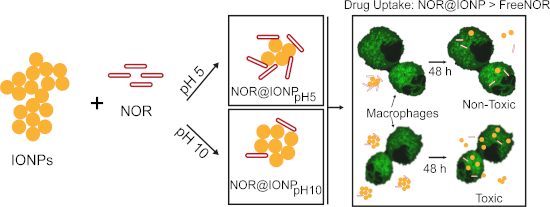
- ]. Furthermore, their interaction with IONPs may be via carboxylate groups, amine groups or by neither [27]. pH variations thus can play a key role in promoting interactions between amino acids and metal oxide surfaces [29]. NOR has also been reported to form stable complexes with Fe2+/3+ [22]. It was also



Assessment of the optical and electrical properties of light-emitting diodes containing carbon-based nanostructures and plasmonic nanoparticles: a review
Beilstein J. Nanotechnol. 2021, 12, 1078–1092, doi:10.3762/bjnano.12.80
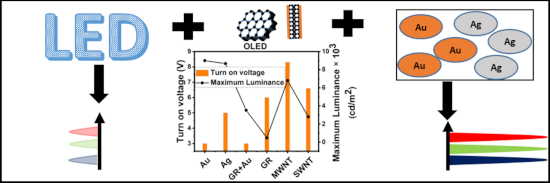
- , the device with 2–3% Ag-doped ZnO EIL shows maximum luminance of 10982 cd/m2, maximum current efficiency of 41.0 cd/A, and EQE of 15.2%. The addition of AgNP to PBD-based ETL enhances the green emission [75]. Kandulna et al. have addressed the effect of plasmonic NP on hybrid metal oxide–polymer
- enhanced through the SPR effect of AgNP, which in turn could counteract the high external luminance. Thus, the low brightness and short operation lifetime of blue QLED could be improved by using CNT–polymer or CNT–metal oxide nanocomposites as ETL and incorporating AgNP in this layer. Further strategies to
- , and maximum luminance of various LED with carbon nanostructures, plasmonic, and metal oxide NP in the device layers. Funding This research has been supported by the European Regional Development Fund project EQUiTANT TK134 (F180175TIBT) and EMÜ bridge funding P200030TIBT.


Progress and innovation of nanostructured sulfur cathodes and metal-free anodes for room-temperature Na–S batteries
Beilstein J. Nanotechnol. 2021, 12, 995–1020, doi:10.3762/bjnano.12.75
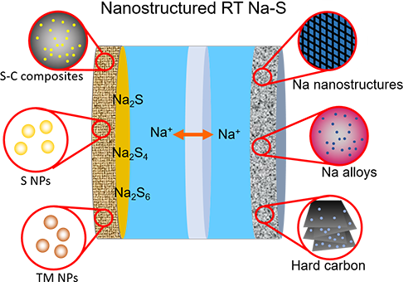
- 10 A·g−1) [49]. Metallic and metal oxide compounds have also attracted much interest due to their electronic conductivity and their high polarity, which leads to strong chemical interaction with polysulfides. For instance, Yan et al. [50] reported an electrode with an excellent performance that is





Molecular assemblies on surfaces: towards physical and electronic decoupling of organic molecules
Beilstein J. Nanotechnol. 2021, 12, 950–956, doi:10.3762/bjnano.12.71

- the substituents of the pyrenes derivatives [87]. Metal oxide thin films on top of metal substrates are another interesting class of ultrathin interfacial layers to decouple organic molecules and to enable the study of their electronic properties without the contribution of the underlying metal
- molecular conformation by planarizing the carbon backbone as well as the self-assembly. Hurdax et al. [89] suggested that work function measurements before and after the adsorption of molecules should give insight into the electronic and physical decoupling. It should be noted that metal oxide thin films
The role of deep eutectic solvents and carrageenan in synthesizing biocompatible anisotropic metal nanoparticles
Beilstein J. Nanotechnol. 2021, 12, 924–938, doi:10.3762/bjnano.12.69

- the principles of green chemistry. Despite extensive studies for more than a decade, DESs as solvents for nanomaterial synthesis yet awaits exploration regarding biological applications. In an interesting recently published work, a natural deep eutectic solvent (NADES) has been used to extract metal
- oxide nanoparticles [28]. Numerous indispensable parameters including surface tension, polarity, viscosity, and hydrogen bonding have an important influence on the reactivity of species. Also, the formation of nanostructures is governed by the mass transport properties of the DES components. It is also


Nanogenerator-based self-powered sensors for data collection
Beilstein J. Nanotechnol. 2021, 12, 680–693, doi:10.3762/bjnano.12.54
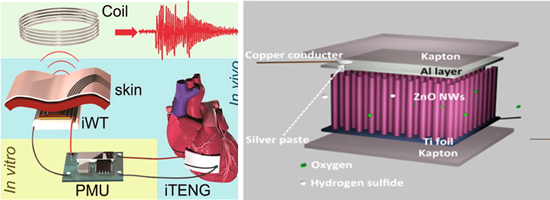
- largely influenced by the surface carrier density on the surface of the nanowires. The adsorption of gas molecules can change the surface carrier density by the shielding effect, so the output of the sensor is very sensitive to the gas concentration. Compared with traditional metal oxide semiconductor





Influence of electrospray deposition on C60 molecular assemblies
Beilstein J. Nanotechnol. 2021, 12, 552–558, doi:10.3762/bjnano.12.45

- different surfaces and compare, for sub-monolayer coverages, the influence of the deposition method on the formation of molecular assemblies. Whereas the island location is the main difference for metal surfaces, we observe for alkali halide and metal oxide substrates that the high-vacuum electrospray
- ][25][28] and metal oxide semiconductors [23][24], while large three-dimensional molecular islands or clusters have been revealed on ionic crystals or bulk insulators [22][26][27][29]. Most of the studies have been performed after thermal evaporation (TE) of C60 from a crucible, but C60 is also one of
- used as model surface in nc-AFM measurements [31][32][33][34], and, finally, NiO(001), a p-type wide-bandgap metal oxide with potential applications in photovoltaics [35][36][37]. For all cases, we show the typical C60 structures formed by TE and compare these with the results from HV-ESD. This allows


The preparation temperature influences the physicochemical nature and activity of nanoceria
Beilstein J. Nanotechnol. 2021, 12, 525–540, doi:10.3762/bjnano.12.43
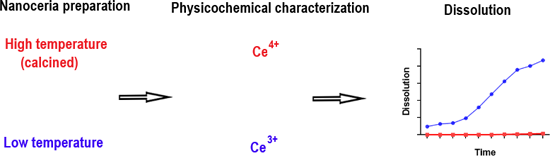
- family of metal oxide ENMs used industrially, as catalysts in diesel fuel, abrasives in chemical mechanical planarization, in integrated circuit manufacture, as structural supports for catalysts for fuel synthesis applications, in solid oxide fuel cells, and in rechargeable batteries [1][2]. Cerium oxide





Solution combustion synthesis of a nanometer-scale Co3O4 anode material for Li-ion batteries
Beilstein J. Nanotechnol. 2021, 12, 424–431, doi:10.3762/bjnano.12.34
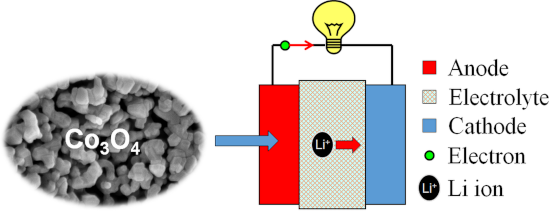
- current densities between 50 and 5000 mA·g−1. Keywords: anode material; cobalt oxide; lithium-ion battery; solution combustion synthesis; transition metal oxide; Introduction Recently, a considerable research effort regarding new anode materials has been made because the traditional carbonaceous anodes
- −1 shows that the values of specific capacity consecutively rise over the theoretical capacity value and are maintained at 1060 mAh·g−1 after 100th cycle. This phenomenon is well known for different transition metal oxide electrodes and is usually ascribed to the reversible formation/dissolution of a


Nickel nanoparticle-decorated reduced graphene oxide/WO3 nanocomposite – a promising candidate for gas sensing
Beilstein J. Nanotechnol. 2021, 12, 343–353, doi:10.3762/bjnano.12.28
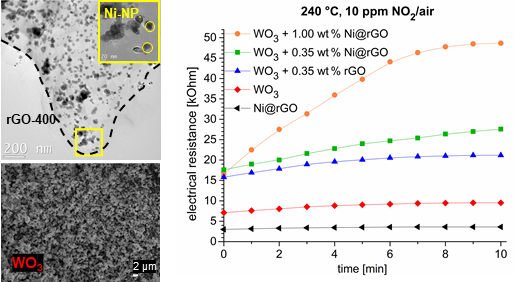
- ][9]. Metal oxide semiconductors (MOS) are the most commonly used gas sensors [10]. MOS can be divided into n-type and p-type MOS. In n-type MOS electrons are the majority charge carriers, while in p-type MOS holes are the majority charge carriers [6]. The exposure to reducing gases causes a decrease
- , and greater stability than pure WO3 [20]. WO3 decorated with palladium nanoparticles on the surface can be used as an improved and reusable gas sensor for NH3 [21]. Metal oxide semiconductor junctions can either be formed between two p-type MOS or two n-type MOS (p–p/n–n homojunctions) or between a p
- performance of MOS@rGO can further be improved by either chemical doping or by combination with a transition metal as ternary component [38]. Iron oxide-doped WO3 films showed improved NO2 sensing at room temperature, when adding a layer of 16 nm p-type rGO on the metal oxide film [39]. Nickel-doped SnO2


TiOx/Pt3Ti(111) surface-directed formation of electronically responsive supramolecular assemblies of tungsten oxide clusters
Beilstein J. Nanotechnol. 2021, 12, 203–212, doi:10.3762/bjnano.12.16

- of electronic devices appealing for the implementation in conceptually new data storage cells [1]. Specifically, resistive memories [2] based on the change of the electrical properties of a transition metal oxide thin layer, integrated in a simple electrode setup as a function of an externally
- significant points of focus for their integration into practical devices. In fact, the economically ideal way to obtain molecule-based devices would be the propensity of surface-deposited molecular metal-oxide clusters to self-assemble toward stable and reproducible functional supramolecular structures [8
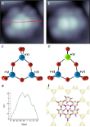
- ]. One possibility to achieve this is to create substrate surfaces, whose characteristics would give rise to the nanostructured metal-oxide self-assembly formation. Herein, we demonstrate the potential of this approach using thermal evaporation of WO3 powder under ultra-high vacuum (UHV) on ultrathin




A review on the green and sustainable synthesis of silver nanoparticles and one-dimensional silver nanostructures
Beilstein J. Nanotechnol. 2021, 12, 102–136, doi:10.3762/bjnano.12.9
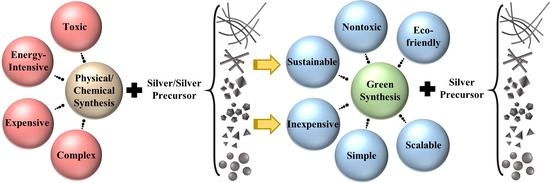
- [143][231]. In most cases, AgNPs are synthesized in metal oxide thin films such as TiO2, SiO2, and ZrO2 where the average particle size is almost 10 nm when the heating temperature is 600 °C in the case of SiO2 thin films, and 500 °C in the case of TiO2 and ZrO2 [231]. Arun Kumar et al. [145
- [232]. Organic solvents are generally more advantageous, as they can act as an oxygen-supplying agent for the metal oxide and result in more uniform structures and a smaller size distribution [232]. One important advantage of the sol–gel technique is the large freedom for choosing different precursors
- precursor for this purpose [241]. An important advantage of this technique is the establishment of a silver-metal-oxide (e.g. SiO2 or TiO2) nanocomposite coating using only one deposition step [241]. The CVD method also provides many opportunities for the synthesis of silver-coated materials with varying


ZnO and MXenes as electrode materials for supercapacitor devices
Beilstein J. Nanotechnol. 2021, 12, 49–57, doi:10.3762/bjnano.12.4
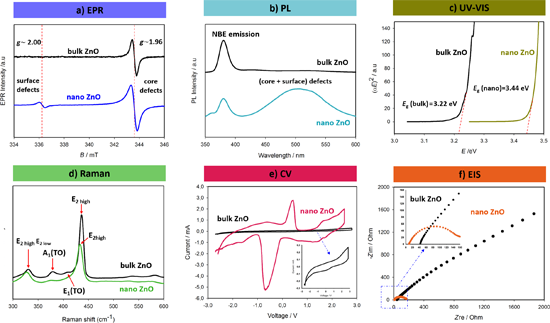
- supercapacitor device are important factors in this scenario. Nowadays, ZnO as metal oxide and MXene as 2D materials are the rising stars of electrode materials in supercapacitors due to their highly controllable properties. Therefore, we review the findings about ZnO and MXene in terms of defect structures and
- semiconductor metal oxide, here ZnO, is processed chemically or physically as an electrode. This is rather complicated and it is important which method is used to test the electrical properties. The common method is the three-point method in which the material is tested with a counter and a reference electrode
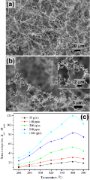
- Nyquist plot and the first semicircle of the Nyquist plot gives the resistance values. In general, defective and nanoscale ZnO has lower resistance values and the semicircle becomes more prominent, as depicted in Figure 1f. Metal oxide electrodes normally show resistive, rather than conductive, behavior
Free and partially encapsulated manganese ferrite nanoparticles in multiwall carbon nanotubes
Beilstein J. Nanotechnol. 2020, 11, 1891–1904, doi:10.3762/bjnano.11.170
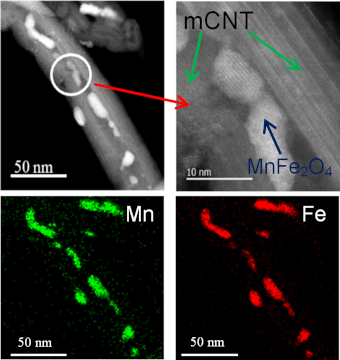
- were attributed to an increase in the dipolar interparticle interactions due to the close packing of nanoparticles within the tubes [7]. There are several potential applications that use metal–metal oxide/CNTs hybrid systems. Carbon nanostructures decorated with titania and silica are used for the
- removal of harmful pollutants [8], carbon nanotubes decorated with molybdenum disulfide are used in microbial fuel cells [9] and photoelectric detectors [10], supercapacitor electrodes use binary metal oxide/multiwall carbon nanotubes (MWCNTs) [11], among other numerous recently developed applications [12




Unravelling the interfacial interaction in mesoporous SiO2@nickel phyllosilicate/TiO2 core–shell nanostructures for photocatalytic activity
Beilstein J. Nanotechnol. 2020, 11, 1834–1846, doi:10.3762/bjnano.11.165
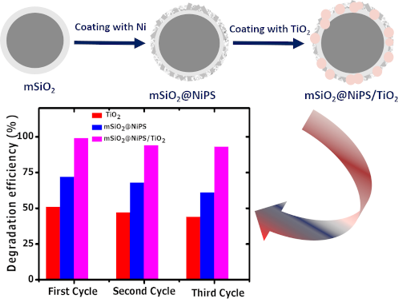
- metal oxides, such as ZrO2 [16] and SiO2 [17], influence the morphology and surface features of the resulting binary metal oxide semiconductors. Moreover, these binary metal oxide semiconductors act as charge-transfer catalysts and significantly reduce the electron–hole recombination [18][19]. Another
- surface [23]. Thus, silica-based core–shell nanocomposites offer added advantages of manipulating the pore structure, surface area, morphology, and catalyst reactivity [28]. Unlike the metal oxide–metal oxide composites, the use of metal oxide core@metal nanocomposites as dopants for titania
- @NiPS/TiO2 was higher with approx. 2.68 eV. Unlike other metal oxide binary systems where TiO2 is coated with SiO2 [68][69], in this study, the mSiO2@NiPS core–shell structure was coated with TiO2 nanoparticles, which readily absorb in the UV region. This suggests that the presence of TiO2 on the


Nanocasting synthesis of BiFeO3 nanoparticles with enhanced visible-light photocatalytic activity
Beilstein J. Nanotechnol. 2020, 11, 1822–1833, doi:10.3762/bjnano.11.164
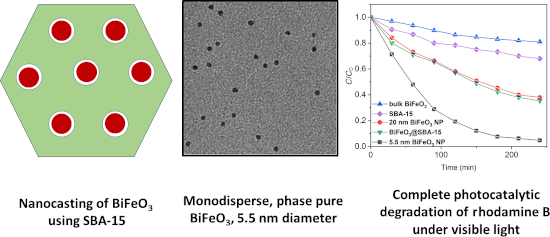
- photocatalytic activity [20]. Since the photocatalytic degradation of organic molecules using a metal oxide photocatalyst is a heterogeneous process, it is obvious that efficiency and overall catalytic performance are strongly correlated to the number of active sites on the catalyst surface area and, thus, to
- synthesize metal oxide particles and, in particular, nanometer-sized ferrite particles due to their availability, low cost and relative inertness [36][37][38][39][40][41]. In the present work, we show the synthesis of pure-phase BiFeO3 nanoparticles with a particle diameter of 5.5 ± 1.0 nm by a wet




Mapping of integrated PIN diodes with a 3D architecture by scanning microwave impedance microscopy and dynamic spectroscopy
Beilstein J. Nanotechnol. 2020, 11, 1764–1775, doi:10.3762/bjnano.11.159
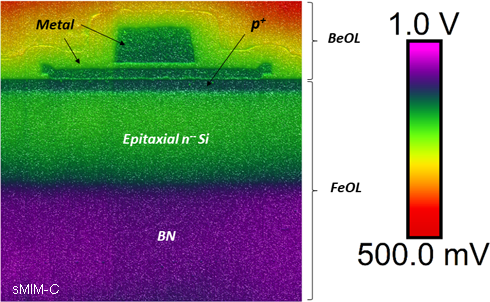
- , determined by our analytic procedure [32], as a function of VDC for both n- and p-type semiconductor materials. Using the complete metal–oxide–semiconductor equations, the Poisson–Boltzmann equation is solved for various active dopant concentration values ranging from 1015 to 1019 atoms·cm−3. In the sMIM





