Search results
Search for "molybdenum" in Full Text gives 88 result(s) in Beilstein Journal of Nanotechnology.
Femtosecond laser-assisted fabrication of chalcopyrite micro-concentrator photovoltaics
Beilstein J. Nanotechnol. 2018, 9, 3025–3038, doi:10.3762/bjnano.9.281
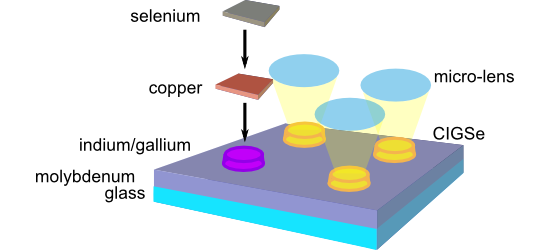
- state of the art. The electric back contact (molybdenum) covered with the highly-efficient light-absorber (CIGSe) on top is deposited on a carrier material (glass). A buffer layer (CdS), a window layer consisting of an intrinsic ZnO layer (ZnO) and an aluminum-doped ZnO layer (Al:ZnO) as transparent
- and opportunities of the novel approaches to realize this cell concept. The first approach for microabsorber fabrication summarized here is based on the growth of metallic precursors (indium islands) on laser-structured substrates (molybdenum on glass) by means of physical vapor deposition (nucleation
- approach). The second method presented is based on laser-induced forward transfer (LIFT). In this method, laser radiation is used to transfer parts of a donor film (copper, indium, gallium) from a transparent carrier medium (glass) to an acceptor substrate (molybdenum on glass) in a spatially controlled


Site-controlled formation of single Si nanocrystals in a buried SiO2 matrix using ion beam mixing
Beilstein J. Nanotechnol. 2018, 9, 2883–2892, doi:10.3762/bjnano.9.267
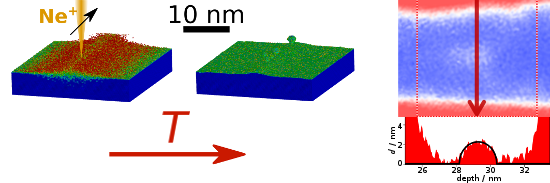
- ) irradiation was performed using a helium ion microscope (HIM) [24][32] (ORION NanoFab, Carl Zeiss). Ne+ ions with an energy of 25 keV were used for ion beam mixing and imaging with either He or Ne was kept to a minimum to avoid additional unintentional damage and mixing. A 10 μm molybdenum aperture was used


Optimization of Mo/Cr bilayer back contacts for thin-film solar cells
Beilstein J. Nanotechnol. 2018, 9, 2700–2707, doi:10.3762/bjnano.9.252
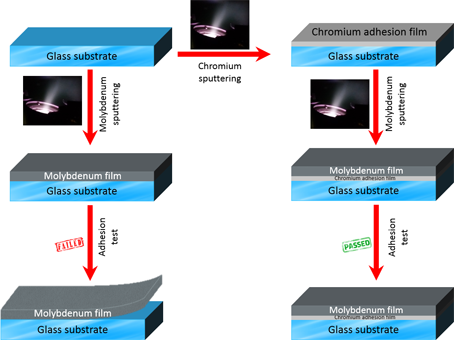
- .9.252 Abstract Molybdenum (Mo) is the most commonly used material as back contact in thin-film solar cells. Adhesion of Mo film to soda–lime glass (SLG) substrate is crucial to the performance of solar cells. In this study, an optimized bilayer structure made of a thin layer of Mo on an ultra-thin
- ; bilayer; chromium; DC sputtering; molybdenum; optical reflectance; Introduction Molybdenum (Mo) thin films are widely used as a back contact for photovoltaic devices such as Cu(In1−xGax)S2 (CIGS) and Cu2ZnSnS4 (CZTS) thin-film solar cells. The back contact is the first layer to be deposited and its


Recent highlights in nanoscale and mesoscale friction
Beilstein J. Nanotechnol. 2018, 9, 1995–2014, doi:10.3762/bjnano.9.190
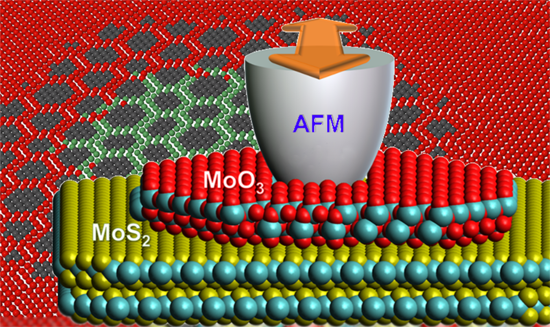
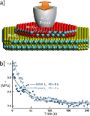
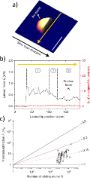
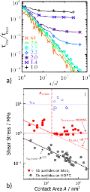
- of most moving machinery parts, it has the disadvantages of a relatively large viscous drag and the risk of a transition to the boundary regime under certain, sometimes uncontrolled conditions. Just recently, a few systems based on layered materials, such as graphene or molybdenum chalcogenides have


Toward the use of CVD-grown MoS2 nanosheets as field-emission source
Beilstein J. Nanotechnol. 2018, 9, 1686–1694, doi:10.3762/bjnano.9.160
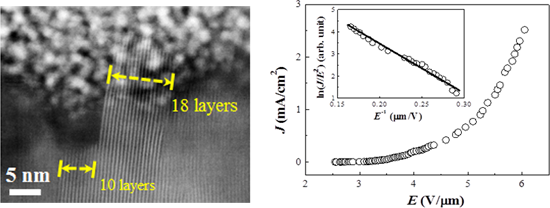
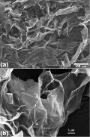
- ; molybdenum disulfide (MoS2); nanosheets; sulfurization; transmission electron microscopy (TEM); Introduction There is a great interest in the development of one- and two-dimensional (1D and 2D) materials for field-emission (FE) based cathodes using various nanostructured materials [1] for applications in

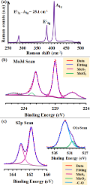


Free-radical gases on two-dimensional transition-metal disulfides (XS2, X = Mo/W): robust half-metallicity for efficient nitrogen oxide sensors
Beilstein J. Nanotechnol. 2018, 9, 1641–1646, doi:10.3762/bjnano.9.156
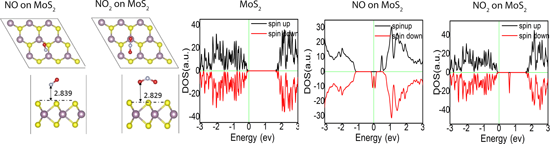
- ][16], phosphorene [9], siligraphene (SiC5) [10] and molybdenum disulfide (MoS2) [11][17] possess a high specific surface area and high electrical conductivity making them the ideal candidates for gas sensors. In particular, investigations of XS2-based (X = Mo, W) monolayer nanodevices demonstrate that


A novel copper precursor for electron beam induced deposition
Beilstein J. Nanotechnol. 2018, 9, 1220–1227, doi:10.3762/bjnano.9.113
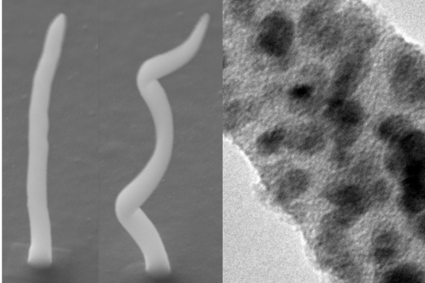
- microscopy (TEM) images onto the nanostructures were acquired with a Gatan Orius CCD-Camera inside a CM12 (Phillips) at an accelerating voltage of 120 kV equipped with a EDAX Genesis silicon drift detector. For TEM investigations the nanostructures were directly deposited onto Omniprobe molybdenum TEM grids


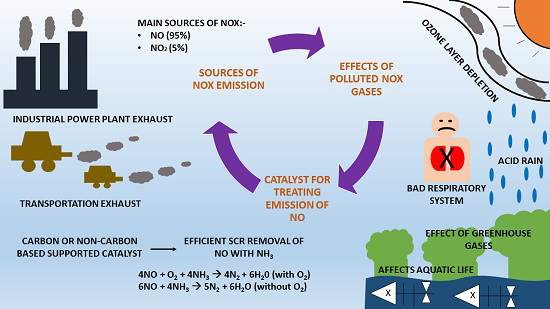
A review of carbon-based and non-carbon-based catalyst supports for the selective catalytic reduction of nitric oxide
Beilstein J. Nanotechnol. 2018, 9, 740–761, doi:10.3762/bjnano.9.68
Sensing behavior of flower-shaped MoS2 nanoflakes: case study with methanol and xylene
Beilstein J. Nanotechnol. 2018, 9, 608–615, doi:10.3762/bjnano.9.57
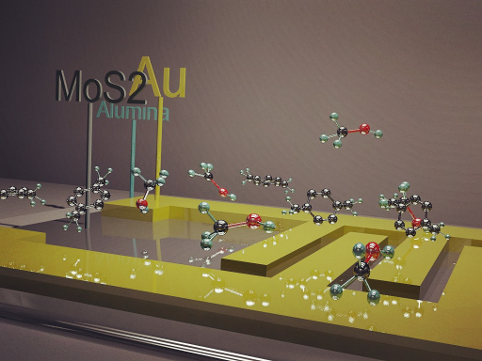
- process is known as one of the scalable methods to synthesize MoS2 nanostructures. In this study, the gas sensing properties of flower-shaped MoS2 nanoflakes, which were prepared from molybdenum trioxide (MoO3) by a facile hydrothermal method, have been studied. Material characterization was performed


Review: Electrostatically actuated nanobeam-based nanoelectromechanical switches – materials solutions and operational conditions
Beilstein J. Nanotechnol. 2018, 9, 271–300, doi:10.3762/bjnano.9.29
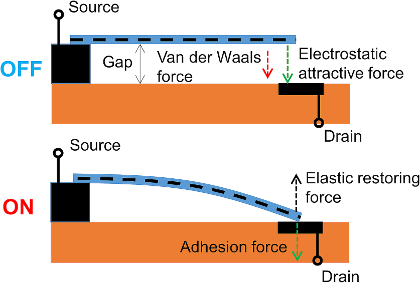
- transfer results in an increase of adhesion in the contact and also makes the surfaces rougher, thus increasing resistance in the contact. For self-mated contacts, for example, in an all-molybdenum switch, material transfer was reported to be a possible cause for the observed contact resistance rise after
- difficult to fabricate due to their high intrinsic stress, large surface roughness and grain size, inherent porosity, and low strength. To date, there are rather few reports on metallic NEM switches [17][18][114][115]. Molybdenum is attractive as a NEM switch material due to its high melting temperature
- (2622 °C [116]) and Young’s modulus (290-380 GPa) [117]. Recent reports on Mo-based NEM switches have proven the robustness of the material. An all-molybdenum 3T NEM switch was fabricated by a top-down approach by filling Mo into a SiO2 mold, prepared by a one-mask photolithography process. This process


Synthesis and characterization of electrospun molybdenum dioxide–carbon nanofibers as sulfur matrix additives for rechargeable lithium–sulfur battery applications
Beilstein J. Nanotechnol. 2018, 9, 262–270, doi:10.3762/bjnano.9.28
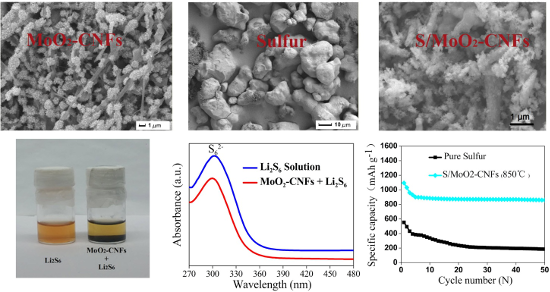
- , Changsha Research Institute of Mining and Metallurgy, Changsha, 412212, P. R. China School of Mathematics and Physics, Jiangsu University of Science and Technology, Zhenjiang, 212013, P. R. China 10.3762/bjnano.9.28 Abstract One-dimensional molybdenum dioxide–carbon nanofibers (MoO2–CNFs) were prepared
- . Molybdenum dioxide (MoO2) materials are particularly attractive among the transition-metal oxides due to their high melting point, high chemical stability and low electrical resistivity (190 S cm−1). This material has great potential for applications in several fields such as sensing, catalysis


One-step chemical vapor deposition synthesis and supercapacitor performance of nitrogen-doped porous carbon–carbon nanotube hybrids
Beilstein J. Nanotechnol. 2017, 8, 2669–2679, doi:10.3762/bjnano.8.267
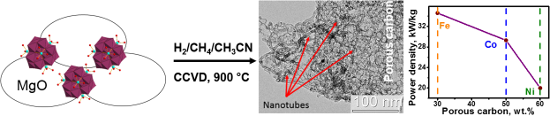
- and porous carbon on the surface of MgO impregnated with bimetallic (transition metal/molybdenum) catalyst precursors. Acetonitrile was added to the methane feedstock to incorporate nitrogen into the graphitic network, which is beneficial for the electrochemical performance of the carbon materials [21
- carbon [2]. Conclusion Nitrogen-doped porous carbon/MWCNT hybrid materials were synthesized using cluster molecules containing molybdenum and transition metal as a source of catalytic nanoparticles for the CCVD synthesis. The cluster molecules were distributed over a MgO support before oxidation in air


Intercalation of Si between MoS2 layers
Beilstein J. Nanotechnol. 2017, 8, 1952–1960, doi:10.3762/bjnano.8.196
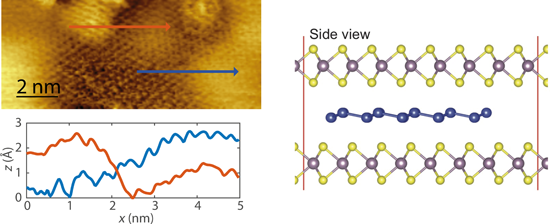
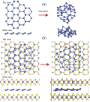
- , Grand Forks, ND 58202, USA 10.3762/bjnano.8.196 Abstract We report a combined experimental and theoretical study of the growth of sub-monolayer amounts of silicon (Si) on molybdenum disulfide (MoS2). At room temperature and low deposition rates we have found compelling evidence that the deposited Si
- . (Adv. Mater. 2014, 26, 2096–2101) that silicon forms a highly strained epitaxial layer on MoS2. Finally, density functional theory calculations indicate that silicene clusters encapsulated by MoS2 are stable. Keywords: intercalation; molybdenum disulfide; scanning tunneling microscopy; silicene; two
- Fermi level. Van der Waals materials with a band gap do not suffer from this limitation. Molybdenum disulfide (MoS2) is a member of the transition metal dichalcogenide (TMD) family that belongs to the class of van der Waals materials. Bulk MoS2 has a band gap of 1.29 eV, which increases to 1.90 eV for a


3D continuum phonon model for group-IV 2D materials
Beilstein J. Nanotechnol. 2017, 8, 1345–1356, doi:10.3762/bjnano.8.136
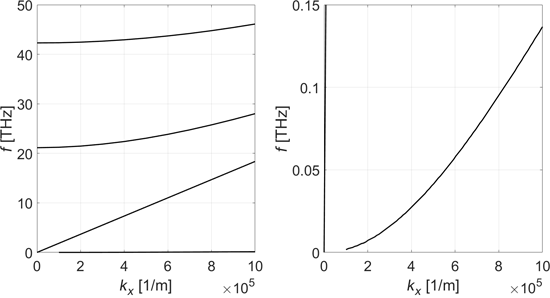
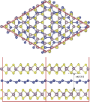
- molybdenum disulfide. The origin of quadratic modes is clarified. Mode coupling for both graphene and silicene is obtained, contrary to previous works. Our model allows us to predict the existence of confined optical phonon modes for the group-IV materials but not for molybdenum disulfide. A comparison of
- the long-wavelength modes to density-functional results is included. Keywords: graphene; molybdenum disulfide; phonon; silicene; two-dimensional materials; Introduction Phonon spectra in two-dimensional (2D) nanomaterials have almost exclusively been computed using density-functional theory (DFT
- beyond the analytical solutions sought for in the current manuscript. Furthermore, we have included a study of a well-known compound 2D material (molybdenum disulfide MoS2) in order to further understand the properties derived for the elemental materials. Results and Discussion Continuum model The 2D


![[Graphic 19]](/bjnano/content/inline/2190-4286-8-136-i109.png?max-width=637&scale=1.18182) phonon modes of single-layer MoS2. The right plot is a ...
phonon modes of single-layer MoS2. The right plot is a ...
Growth, structure and stability of sputter-deposited MoS2 thin films
Beilstein J. Nanotechnol. 2017, 8, 1115–1126, doi:10.3762/bjnano.8.113
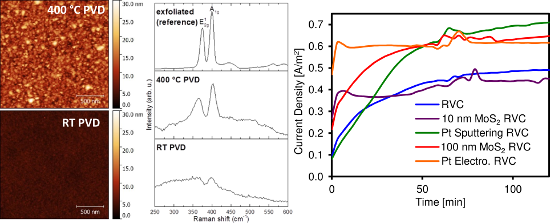
- , Austria Institute of Life Technologies, HES-SO Valais-Wallis, Route du Rawyl 64, CP, 1950 Sion 2, Switzerland 10.3762/bjnano.8.113 Abstract Molybdenum disulphide (MoS2) thin films have received increasing interest as device-active layers in low-dimensional electronics and also as novel catalysts in
- measurements suggest directions for future work on our PVD MoS2 films. Keywords: electrode; hydrogen evolution reaction (HER); magnetron sputter deposition; MoS2; reticulated vitreous carbon (RVC) foam; SiO2/Si substrate; Introduction Molybdenum disulphide (MoS2) is a layered chemical compound comprised of
- amorphous MoS2 films, deposited via simple electro-polymerization procedures, the precatalysts could be MoS3 or MoS2; the active form of the catalysts was identified as amorphous MoS2 [19]. Narrow molybdenum disulfide nanosheets with the edge-terminated structure and a significantly expanded interlayer were


Impact of contact resistance on the electrical properties of MoS2 transistors at practical operating temperatures
Beilstein J. Nanotechnol. 2017, 8, 254–263, doi:10.3762/bjnano.8.28
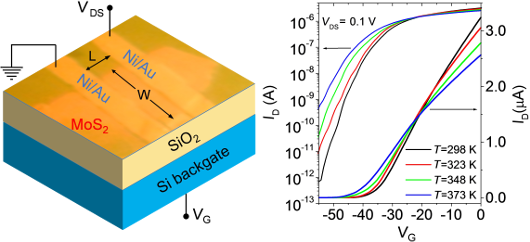
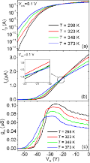
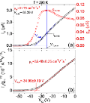
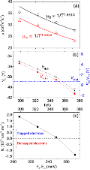
- , University of Palermo, Via Archirafi 36, 90143 Palermo, Italy Department of Physics and Astronomy, University of Catania, Via Santa Sofia, 64, 95123 Catania, Italy 10.3762/bjnano.8.28 Abstract Molybdenum disulphide (MoS2) is currently regarded as a promising material for the next generation of electronic




Obtaining and doping of InAs-QD/GaAs(001) nanostructures by ion beam sputtering
Beilstein J. Nanotechnol. 2017, 8, 12–20, doi:10.3762/bjnano.8.2
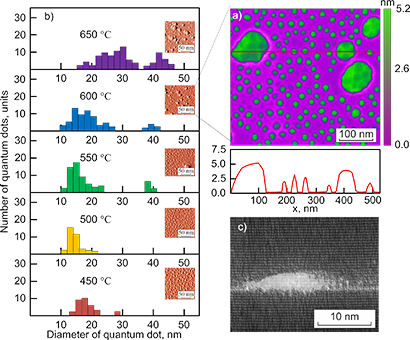
- targets by molybdenum screens during cleaning. Ion etching was carried out at an energy of 180 eV and with etching rates less than 0.3 ML/s. It was shown in [27] that the incorporation of argon ions in the GaAs wafer was not observed at energies below 200 eV. This technique makes it possible to remove the


A new approach to grain boundary engineering for nanocrystalline materials
Beilstein J. Nanotechnol. 2016, 7, 1829–1849, doi:10.3762/bjnano.7.176
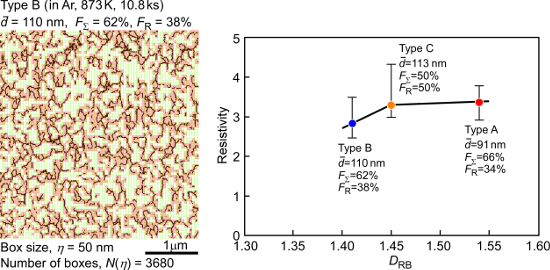
- polycrystalline molybdenum. The generated dislocations can transfer or pass across low-angle boundaries more easily than random boundaries composed of more complicated tilt and twist components at room temperature [72]. It is evident that the grain boundary character can strongly affect the hardness at individual






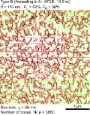

Fracture behaviors of pre-cracked monolayer molybdenum disulfide: A molecular dynamics study
Beilstein J. Nanotechnol. 2016, 7, 1411–1420, doi:10.3762/bjnano.7.132
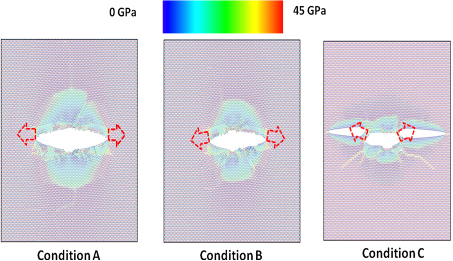
- and Vibration, Xi’an Jiaotong University, Xi’an 710049, China 10.3762/bjnano.7.132 Abstract The fracture strength and crack propagation of monolayer molybdenum disulfide (MoS2) sheets with various pre-existing cracks are investigated using molecular dynamics simulation (MDS). The uniaxial tensions of
- model without finite size effect. Finally, the MDS results of monolayer MoS2 sheets with different angled crack are also analyzed based on the continuum fracture mechanics model. Keywords: crack propagation; fracture strength; molecular dynamics simulation; monolayer molybdenum disulfide; pre-existing
- conductivity of defect-free SLMoS2 by using classical MDS. Dang et al. [16] used MDS with a reactive empirical bond order potential to study the mechanical deformation and failure of monolayer molybdenum disulfide under uniaxial and multiaxial tension. Zhao et al. [17] investigated the influence of temperature




Influence of synthesis conditions on microstructure and phase transformations of annealed Sr2FeMoO6−x nanopowders formed by the citrate–gel method
Beilstein J. Nanotechnol. 2016, 7, 1202–1207, doi:10.3762/bjnano.7.111
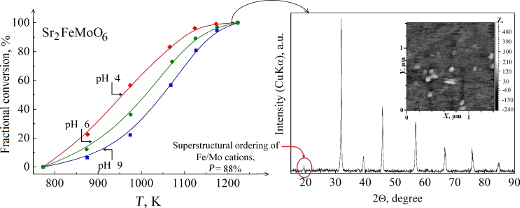
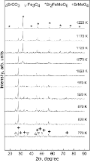
- grain size of the powders in the dispersion grows from 250 to 550 nm with increasing pH value. The X-ray diffraction analysis of the powders annealed at different temperatures between 770 and 1270 K showed that the composition of the initially formed Sr2FeMoO6−x changes and the molybdenum content
- nm and a superstructural ordering of iron and molybdenum cations of 88%. Keywords: magnetic materials; microstructure; nanoparticles; phase transformation; sol–gel preparation; Introduction Due to their unique and extremely important magneto-transport and magnetic properties [1][2], metal oxide
- cations (interposition of iron and molybdenum ions relative to each other) [19]. A decrease in the degree of ordering of the superstructure with increasing pH of the solution was observed. Thus, the results of the X-ray analysis have shown that all investigated SFMO powders are single phase, although SFMO



Synthesis and applications of carbon nanomaterials for energy generation and storage
Beilstein J. Nanotechnol. 2016, 7, 149–196, doi:10.3762/bjnano.7.17
- of the system (Figure 13) [77]. It should be mentioned that graphene is not the only 2D material today that offers great performance for a wide range of applications [78]. Boron nitride and molybdenum disulfide are examples of other 2D materials that offer the possibility to tune material and device















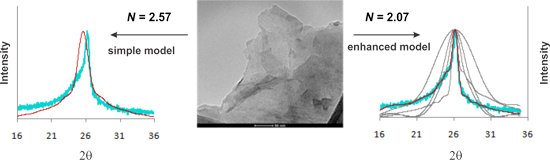
Enhanced model for determining the number of graphene layers and their distribution from X-ray diffraction data
Beilstein J. Nanotechnol. 2015, 6, 2113–2122, doi:10.3762/bjnano.6.216
- solution using a nonstationary current regime (reverse potential, from 1 to 5 V, in molten salt electrolysis, and from 10 to 15 V, in aqueous solution, controlled by a molybdenum quasi-reference electrode and a calomel reference electrode). The study was done at temperatures between 400 and 600 °C in


Biopolymer colloids for controlling and templating inorganic synthesis
Beilstein J. Nanotechnol. 2014, 5, 2129–2138, doi:10.3762/bjnano.5.222

- molybdenum oxide clusters, which were shown to be active as catalysts for selective alcohol oxidation. Similarly, Ganesan and Gedanken [74] had prepared tungsten(VI) oxide nanoparticles through the encapsulation of ammonium metatungstate on chitosan and the subsequent calcination. These particles showed a


Liquid fuel cells
Beilstein J. Nanotechnol. 2014, 5, 1399–1418, doi:10.3762/bjnano.5.153
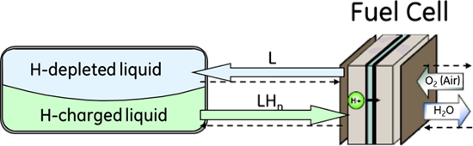
- alloy increases the reaction rate by more than one order of magnitude compared to pure Pt supposedly due to the formation of hydrous molybdenum oxide that reduces the surface poisoning by adsorbed CO [130]. Palladium-based electrocatalysts deliver higher power densities compared to platinum-based ones

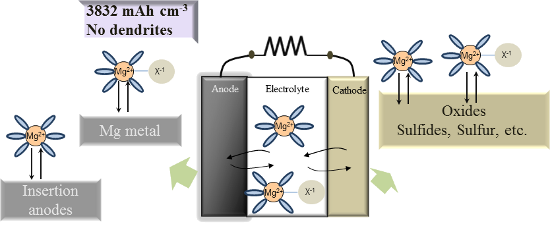
Magnesium batteries: Current state of the art, issues and future perspectives
Beilstein J. Nanotechnol. 2014, 5, 1291–1311, doi:10.3762/bjnano.5.143