Search results
Search for "nanoelectronics" in Full Text gives 99 result(s) in Beilstein Journal of Nanotechnology.
The effect of atmospheric doping on pressure-dependent Raman scattering in supported graphene
Beilstein J. Nanotechnol. 2018, 9, 704–710, doi:10.3762/bjnano.9.65
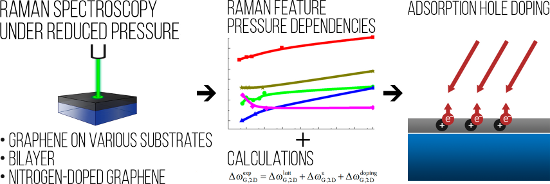
- nanoelectronics. The substrates may affect the adsorption of graphene, either enhancing it, an effect very useful for biosensor applications [2], or reducing it, which is desirable when undoped graphene is needed as a device functional element. A natural way for probing the adsorption properties of graphene is to


Dopant-stimulated growth of GaN nanotube-like nanostructures on Si(111) by molecular beam epitaxy
Beilstein J. Nanotechnol. 2018, 9, 146–154, doi:10.3762/bjnano.9.17
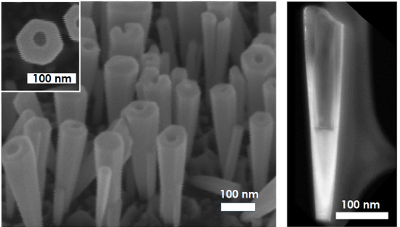
- -nanoelectronics [10]. The discovery of carbon NTs in 1991 unfolded new possibilities for the development of future generation nanoelectronic devices. Growing interest in the tubular structures motivated the synthesis of different semiconductor NTs, one of them being GaN NTs. Comparing to NWs and nanocolumns, NTs


Atomic layer deposition and properties of ZrO2/Fe2O3 thin films
Beilstein J. Nanotechnol. 2018, 9, 119–128, doi:10.3762/bjnano.9.14
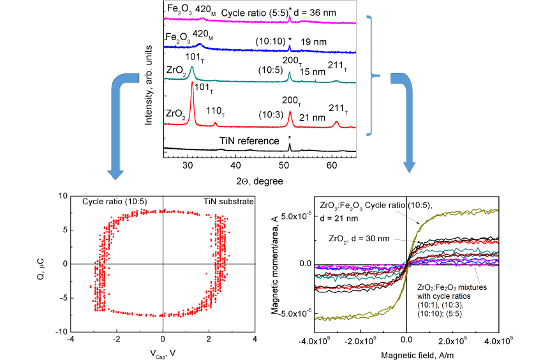
- ratio of 1:20 were used. Such three-dimensional trenched or stacked structures are similar to those used in micro- and nanoelectronics as capacitor bottom electodes, allowing the exploitation of capacitor arrays with enlarged memory density [25][26][27]. The crystal structure was evaluated by grazing


Comparative study of post-growth annealing of Cu(hfac)2, Co2(CO)8 and Me2Au(acac) metal precursors deposited by FEBID
Beilstein J. Nanotechnol. 2018, 9, 91–101, doi:10.3762/bjnano.9.11
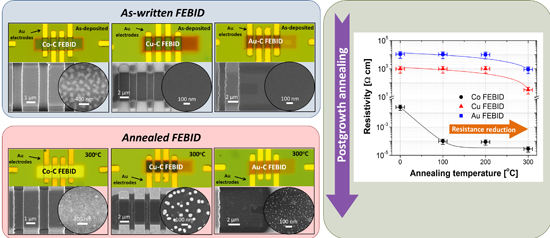
- metals, makes its localised direct-write deposition attractive for applications in high-performance integrated circuits and nanoelectronics [13][27]. Similarly, Au nanostructures are promising materials in nanoplasmonics, biomedical applications, electrochemical sensing, as well as contacts for carbon


Localized growth of carbon nanotubes via lithographic fabrication of metallic deposits
Beilstein J. Nanotechnol. 2017, 8, 2592–2605, doi:10.3762/bjnano.8.260
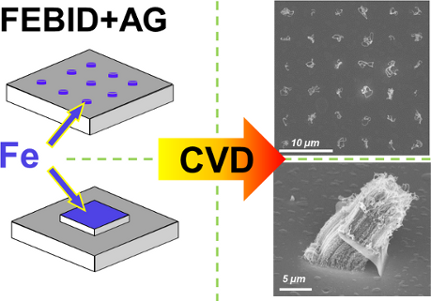
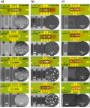
- well-defined configurations for building integrated systems for micro- and nanoelectronics. In this regard, classical methods like optical lithography (OL) [13] and electron beam lithography (EBL) [14], but also focused ion beam (FIB) processing [15], have been successfully applied to fabricate





Nanoprofilometry study of focal conic domain structures in a liquid crystalline free surface
Beilstein J. Nanotechnol. 2017, 8, 2544–2551, doi:10.3762/bjnano.8.254
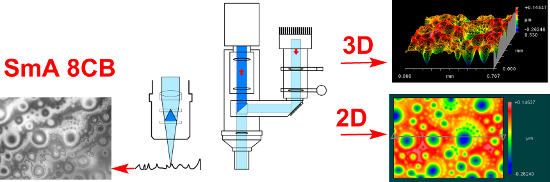
- dimensions of several nanometers on the surface. Nanoprofilometers, or surface analyzers, have been used for technology control in micro- and nanoelectronics to control the production output. In this paper we report the first application of a nanoprofilometer for analysis of the free surface of liquid




Direct writing of gold nanostructures with an electron beam: On the way to pure nanostructures by combining optimized deposition with oxygen-plasma treatment
Beilstein J. Nanotechnol. 2017, 8, 2530–2543, doi:10.3762/bjnano.8.253
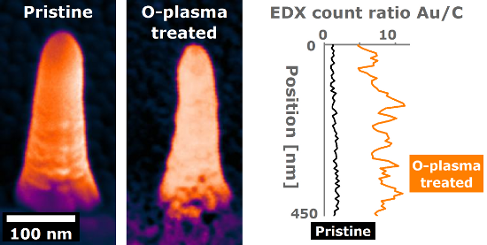
- Wien, Gusshausstrasse 27–29, 1040 Vienna, Austria 10.3762/bjnano.8.253 Abstract This work presents a highly effective approach for the chemical purification of directly written 2D and 3D gold nanostructures suitable for plasmonics, biomolecule immobilisation, and nanoelectronics. Gold nano- and
- important fabrication tools for the production of nanoscale structures and devices in magnetics [11][12][13][14][15], superconductors [16], and nanoelectronics [17][18][19]. The use of FEBID processing as a nanosurgery method for novel nanomaterials, such as graphene, is particularly appealing [20][21][22
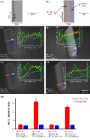
- structures are desirable for devices for bio-nanotechnology, nanoelectronics, plasmonics and photonics. The nanostructures were prepared using FEBID, as schematically depicted in Figure 1a. In brief, precursor molecules (dimethylgold(III)-trifluoroacetylacetonate, chemical formula C7H10AuF3O2) were

Expanding the molecular-ruler process through vapor deposition of hexadecanethiol
Beilstein J. Nanotechnol. 2017, 8, 2339–2344, doi:10.3762/bjnano.8.233
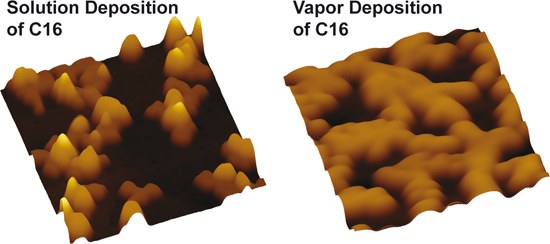
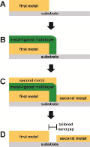
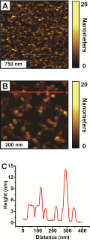
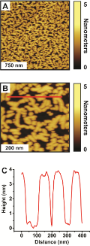
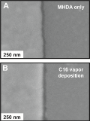
- development of methods to produce nanoscale features with tailored chemical functionalities is fundamental for applications such as nanoelectronics and sensor fabrication. The molecular-ruler process shows great utility for this purpose as it combines top-down lithography for the creation of complex
- . Utilization of the molecular-ruler process in this way provides a general and widely applicable method to fabricate registered, nanometer-scale features for potential applications including nanoelectronics, molecular-scale junctions, and electrochemical sensors [17][18][20][21][25][26]. Although
(Metallo)porphyrins for potential materials science applications
Beilstein J. Nanotechnol. 2017, 8, 1786–1800, doi:10.3762/bjnano.8.180
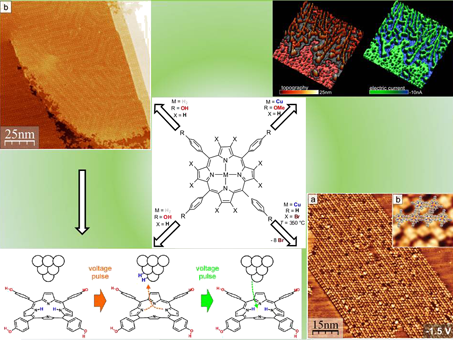
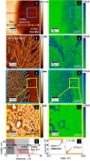
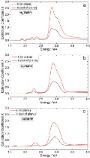
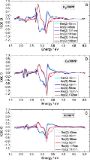
- , Institute of Chemistry, Faculty of Natural Sciences, TU Chemnitz, D-09107 Chemnitz, Germany Semiconductor Physics, Institute of Physics, Faculty of Natural Sciences, TU Chemnitz, D-09107 Chemnitz, Germany Material Systems for Nanoelectronics, TU Chemnitz, D-09107 Chemnitz, Germany Institute for Integrative


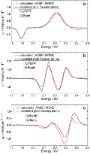


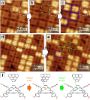


Effect of the fluorination technique on the surface-fluorination patterning of double-walled carbon nanotubes
Beilstein J. Nanotechnol. 2017, 8, 1688–1698, doi:10.3762/bjnano.8.169
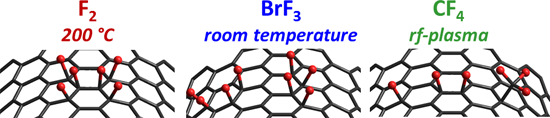
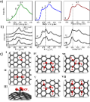
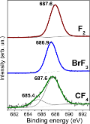
- onto the inner shell too [4]. Although fluorinated CNTs are generally expected to be insulating, one-dimensional structures with a conducting shell surrounded by an insulating layer from the fluorinated carbon could find potential application in nanoelectronics and gas sensing [5]. The ability to


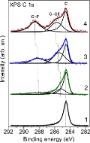

Deposition of exchange-coupled dinickel complexes on gold substrates utilizing ambidentate mercapto-carboxylato ligands
Beilstein J. Nanotechnol. 2017, 8, 1375–1387, doi:10.3762/bjnano.8.139
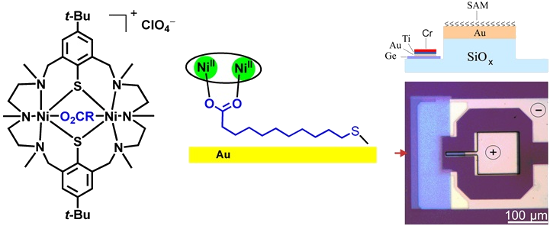
- Leipzig, Germany Semiconductor Physics, Chemnitz University of Technology, D-09107 Chemnitz, Germany Material Systems for Nanoelectronics, Chemnitz University of Technology, Reichenhainer Str. 70, 09107 Chemnitz, Germany Institute for Integrative Nanosciences, IFW Dresden, Helmholtz Str. 20, 01069 Dresden


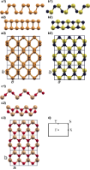
Two-dimensional silicon and carbon monochalcogenides with the structure of phosphorene
Beilstein J. Nanotechnol. 2017, 8, 1338–1344, doi:10.3762/bjnano.8.135
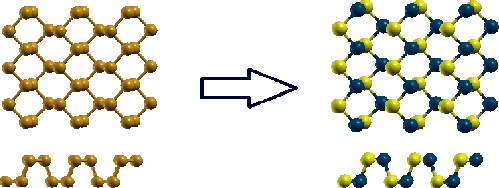
- After determining the structural properties we discuss the electronic properties of these phosphorene-like two-dimensional materials, which are fundamental for applications in nanoelectronics and nanophotonics. The band structures computed within the HSE06 approximation [29] are shown in Figure 3 where


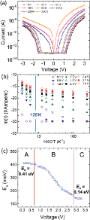
Charge transport in organic nanocrystal diodes based on rolled-up robust nanomembrane contacts
Beilstein J. Nanotechnol. 2017, 8, 1277–1282, doi:10.3762/bjnano.8.129
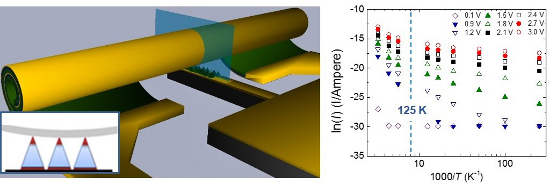
- Vineeth Kumar Bandari Lakshmi Varadharajan Longqian Xu Abdur Rehman Jalil Mirunalini Devarajulu Pablo F. Siles Feng Zhu Oliver G. Schmidt Material Systems for Nanoelectronics, TU Chemnitz, Reichenhainer Str. 70, 09107 Chemnitz, Germany Institute for Integrative Nanosciences, IFW Dresden, Helmholtz


Synthesis, spectroscopic characterization and thermogravimetric analysis of two series of substituted (metallo)tetraphenylporphyrins
Beilstein J. Nanotechnol. 2017, 8, 1191–1204, doi:10.3762/bjnano.8.121
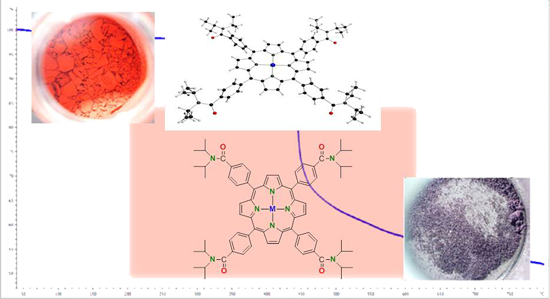
- Rasha K. Al-Shewiki Carola Mende Roy Buschbeck Pablo F. Siles Oliver G. Schmidt Tobias Ruffer Heinrich Lang Inorganic Chemistry, Institute of Chemistry, Faculty of Natural Sciences, TU Chemnitz, 09107 Chemnitz, Germany Material Systems for Nanoelectronics, TU Chemnitz, 09107 Chemnitz, Germany


Investigation of growth dynamics of carbon nanotubes
Beilstein J. Nanotechnol. 2017, 8, 826–856, doi:10.3762/bjnano.8.85
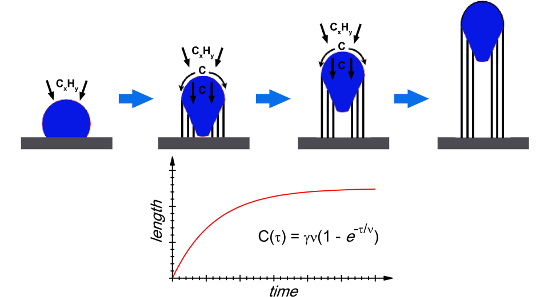
- inhomogeneity of their properties. The synthesis of SWCNTs with defined properties is required for both fundamental investigations and practical applications. Despite the fact that the use of SWCNTs in the fields of nanoelectronics [9][10][11][12], thin-film flexible electronics [13][14] and bioelectronics [15


Synthesis of graphene–transition metal oxide hybrid nanoparticles and their application in various fields
Beilstein J. Nanotechnol. 2017, 8, 688–714, doi:10.3762/bjnano.8.74
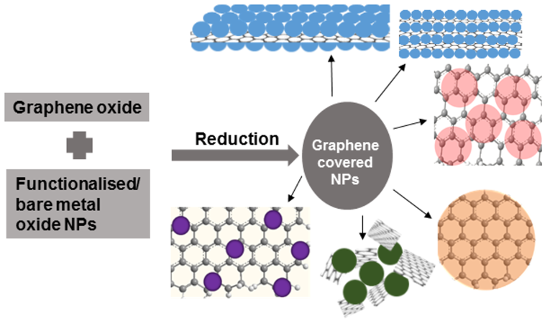
- %), practically independent of the wavelength [10]. Due to these superior properties, it holds great promise for potential applications in many technological fields such as nanoelectronics [11], hydrogen storage, supercapacitors [12] and sensors [13]. Despite its many interesting properties, graphene has a strong






Modeling of the growth of GaAs–AlGaAs core–shell nanowires
Beilstein J. Nanotechnol. 2017, 8, 506–513, doi:10.3762/bjnano.8.54
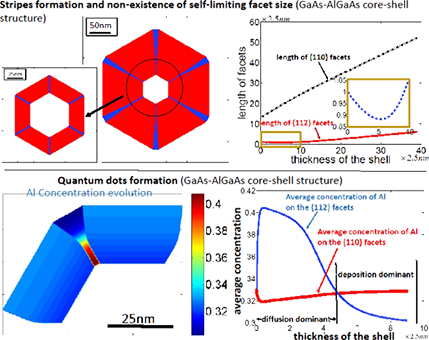
- 60208-3030, USA 10.3762/bjnano.8.54 Abstract Heterostructured GaAs–AlGaAs core–shell nanowires with have attracted much attention because of their significant advantages and great potential for creating high performance nanophotonics and nanoelectronics. The spontaneous formation of Al-rich stripes


Colorimetric gas detection by the varying thickness of a thin film of ultrasmall PTSA-coated TiO2 nanoparticles on a Si substrate
Beilstein J. Nanotechnol. 2017, 8, 229–236, doi:10.3762/bjnano.8.25
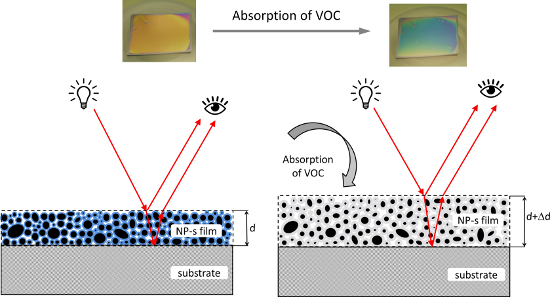
- Research Projects “Advanced materials and high-technology devices for sustainable energetics, sensorics and nanoelectronics” TK141 (2014-2020.4.01.15-0011), “Emerging orders in quantum and nanomaterials” TK134 and the Development Fund of the University of Tartu, are all gratefully acknowledged.


Microscopic characterization of Fe nanoparticles formed on SrTiO3(001) and SrTiO3(110) surfaces
Beilstein J. Nanotechnol. 2016, 7, 817–824, doi:10.3762/bjnano.7.73
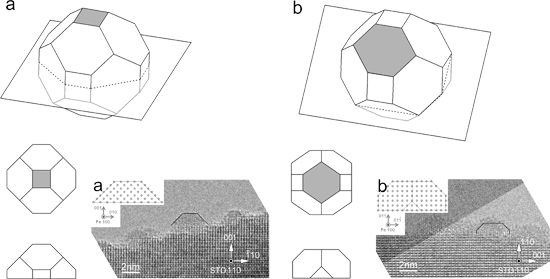
- microscopy (TEM); Wulff construction; Introduction Metal nanoparticles on oxide substrates are one of the key materials in modern technology. Not only are they widely used in catalysis, there are also potential applications in nanoelectronics, spintronics, photonics, sensors, and fuel cells [1][2][3][4][5


Molecular machines and devices
Beilstein J. Nanotechnol. 2016, 7, 310–311, doi:10.3762/bjnano.7.29

- machines. Molecular electronics is currently being developed mostly at the interface between organic chemistry and nanophysics, leaning strongly towards the fundamental understanding of electron transport at the smallest scale and applications in nanoelectronics. The second topic, one-dimensional
Atomic scale interface design and characterisation
Beilstein J. Nanotechnol. 2015, 6, 1708–1711, doi:10.3762/bjnano.6.174
- chemical properties and processes occurring at the surface on a nanoscale are of crucial concern. Nanostructured materials show a great application potential in the areas of nanoelectronics, catalysis, and light harvesting/energy storage, an excellent example being the capability of titanate nanoribbons to
Possibilities and limitations of advanced transmission electron microscopy for carbon-based nanomaterials
Beilstein J. Nanotechnol. 2015, 6, 1541–1557, doi:10.3762/bjnano.6.158
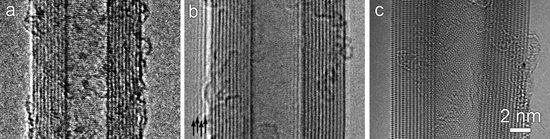
- nanotechnology: as building blocks for nanoelectronics [64], for drug delivery in biomedicine [65], and as bio-imaging agents when decorated with magnetic nanoparticles [66], just to name a few. The investigation of the interfaces of nanohybrids is often crucial in optimizing their design toward eventual


Electron and heat transport in porphyrin-based single-molecule transistors with electro-burnt graphene electrodes
Beilstein J. Nanotechnol. 2015, 6, 1413–1420, doi:10.3762/bjnano.6.146
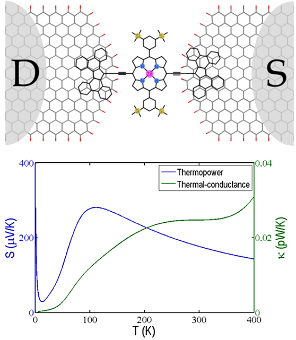
- configurations at the electrodes. This can lead to rectification in the current–voltage characteristic of the junction. Keywords: electro-burnt graphene electrodes; nanoelectronics; porphyrin; single-molecule transistor; Introduction Transistors are the fundamental building blocks of modern electronic devices


Self-assembly of nanostructures and nanomaterials
Beilstein J. Nanotechnol. 2015, 6, 1397–1398, doi:10.3762/bjnano.6.144
- with potential to shape future scientific research, self-assembly is the most promising path to breakthroughs in nanoelectronics, optoelectronics, spintronics, molecular nanotechnology, biology, materials science, software, robotics, manufacturing, transportation, energy harvesting, infrastructure and
Can molecular projected density of states (PDOS) be systematically used in electronic conductance analysis?
Beilstein J. Nanotechnol. 2015, 6, 1247–1259, doi:10.3762/bjnano.6.128
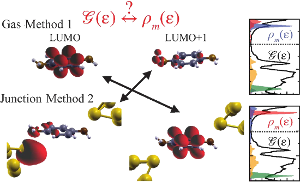
- ; benzene-dithiol; DFT-Landauer; molecular electronics; nanoelectronics; quantum transport; Introduction According to Moore’s law, in a decade or so, the downscaling of conventional silicon-based electronics will achieve its ultimate nanoscale limit. Molecular electronics, or electronics at the nanoscale