Search results
Search for "organometallic" in Full Text gives 76 result(s) in Beilstein Journal of Nanotechnology.
Formation of pure Cu nanocrystals upon post-growth annealing of Cu–C material obtained from focused electron beam induced deposition: comparison of different methods
Beilstein J. Nanotechnol. 2015, 6, 1508–1517, doi:10.3762/bjnano.6.156
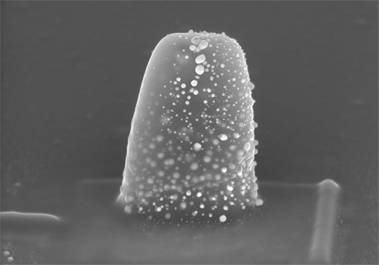
- study in detail the post-growth annealing of a copper-containing material deposited with focused electron beam induced deposition (FEBID). The organometallic precursor Cu(II)(hfac)2 was used for deposition and the results were compared to that of compared to earlier experiments with (hfac)Cu(I)(VTMS
- makes the localized deposition of this metal very attractive for applications in nano-electronics. The organometallic hexafluoroacetylacetonate (hfac)-based Cu(I) and Cu(II) precursors are widely used in chemical vapor deposition (CVD) methods due to their stability and high vapor pressure. They allow




Heterometal nanoparticles from Ru-based molecular clusters covalently anchored onto functionalized carbon nanotubes and nanofibers
Beilstein J. Nanotechnol. 2015, 6, 1287–1297, doi:10.3762/bjnano.6.133
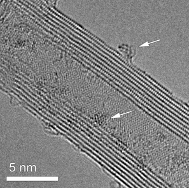
- effective loading of clusters on the CNFs and MWNTs nanocarbons. Oxygen-containing groups were not functionalized because these organometallic clusters are not oxophilic. Phosphine functionalization is necessary to ensure anchoring. Given that the anchoring process happens by ligand exchange at the surface




Surface excitations in the modelling of electron transport for electron-beam-induced deposition experiments
Beilstein J. Nanotechnol. 2015, 6, 1260–1267, doi:10.3762/bjnano.6.129
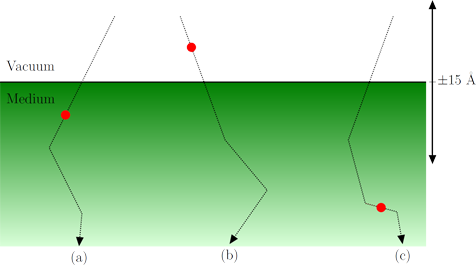
- kiloelectronvolts-electrons to trigger and steer the growth of nanostructures with tunable electronic and magnetic properties from molecules of organometallic precursor gases [1] adsorbed on a substrate [2]. It has been shown that, for irradiation with electrons of 1–5 keV, both the incoming primary electrons and


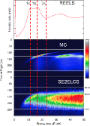
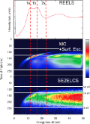
Addition of Zn during the phosphine-based synthesis of indium phospide quantum dots: doping and surface passivation
Beilstein J. Nanotechnol. 2015, 6, 1237–1246, doi:10.3762/bjnano.6.127
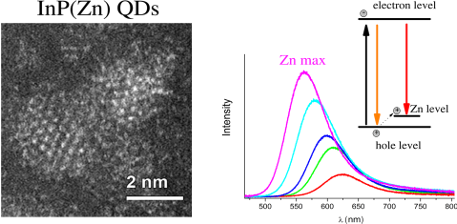
- , possibly simple and safe. Despite the advantages over II–VI materials that are typically used in these fields, the more covalent III–V materials are difficult to prepare because of the lack of suitable precursors. Commonly used in the preparation of III–V materials, organometallic precursors are not stable


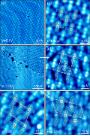
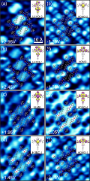
Nano-contact microscopy of supracrystals
Beilstein J. Nanotechnol. 2015, 6, 1229–1236, doi:10.3762/bjnano.6.126
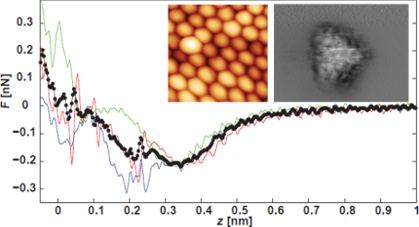
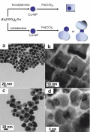
- shell of nanoparticles [35]. Experimental The Au nanocrystals used here were synthesized using a modified organometallic reduction method [36]. Briefly, 0.25 mmol of chloro(triphenylphosphine)gold(I) was dissolved in 25 mL of toluene and 250 μL of dodecanethiol. The reducing solution was made with 2.5

![[Graphic 1]](/bjnano/content/inline/2190-4286-6-126-i1.png?max-width=637&scale=1.18182) = 20 pA, ...
= 20 pA, ...


Pt- and Pd-decorated MWCNTs for vapour and gas detection at room temperature
Beilstein J. Nanotechnol. 2015, 6, 919–927, doi:10.3762/bjnano.6.95
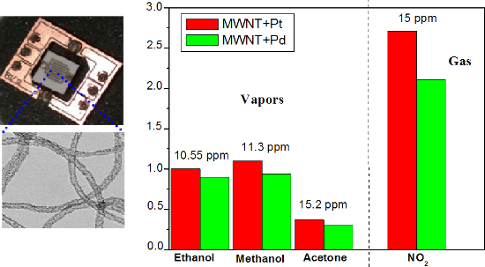
- -workers reported the use of an organometallic precursor together with a plasma treatment in order to obtain FeO-decorated multiwalled carbon nanotubes for the room-temperature detection of aromatic and non-aromatic VOCs [38]. In spite of the fact that metal decoration effectively helps in tuning the gas



Inorganic Janus particles for biomedical applications
Beilstein J. Nanotechnol. 2014, 5, 2346–2362, doi:10.3762/bjnano.5.244
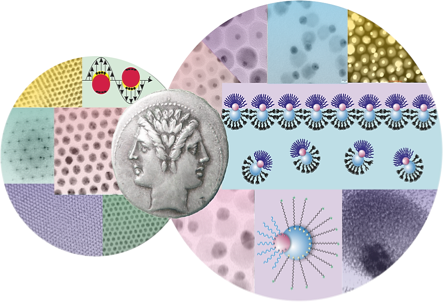
- choice of the organometallic precursor. In a subsequent step to the formation of gold particles, the hydrophobic oleate-capped metal oxide domains were heteroepitaxially grown on the preformed seeds by adapting the synthetic parameters for the formation of monodisperse, isotropic metal oxide
- chemistry, the crucial step of the nanoparticle synthesis is the formation of a metal seed by decomposition of an organometallic precursor prior to the nucleation of the metal oxide. Simultaneous nucleation of both components would have interdiffusion as a limiting factor. Depending on the solvents used for
- in Figure 13, homogeneous nucleation, facilitated by the subsequent addition of the precursor to the reaction mixture, is absolutely crucial for obtaining phase-separated heterodimers. The ternary metal oxide nanoparticles are obtained under identical reaction conditions, but here all organometallic






Spectroscopic mapping and selective electronic tuning of molecular orbitals in phosphorescent organometallic complexes – a new strategy for OLED materials
Beilstein J. Nanotechnol. 2014, 5, 2248–2258, doi:10.3762/bjnano.5.234
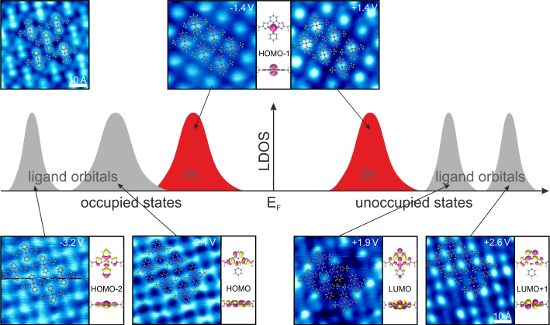
- interfaces of the multilayer device [2]. Cyclic voltammetry (CV) is widely used to determine the oxidation and reduction potentials of organometallic molecules and has rightfully become a very popular technique for electrochemical studies [3][4]. However, interactions of the molecules with their environment
- the relevant frontier orbitals [11][12][13][14][15]. Several studies have performed STM and STS on organometallic compounds, mainly on porphyrins and phthalocyanines [16][17][18][19][20][21][22]. Considering this general success, it is surprising that phosphorescent complexes have barely been
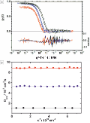
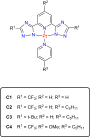
- , the Coulomb repulsion between the two electrons has to be overcome. The separation of the two peaks in Figure 3b would then correspond to the Coulomb energy. Typical Coulomb energies for dz² states of organometallic complexes are around 2 eV [48][49], in agreement with the 2.4(7) eV for C1. In the



Growth and characterization of CNT–TiO2 heterostructures
Beilstein J. Nanotechnol. 2014, 5, 946–955, doi:10.3762/bjnano.5.108
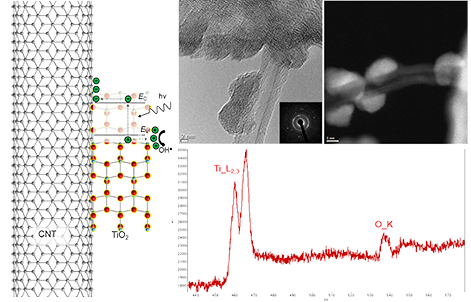
- the porous volume without clogging the surface. In order to continue the process the organometallic precursor gas needs to be purged and a second gas, the reactant will be introduced and reacting in a self-limiting manner with the remaining organic ligands. As a result of this full ALD cycle, the
- ligands react to volatile compounds and the reacted bonds constitute the reaction sites for the next ALD cycle starting again with the organometallic precursor. A schematic illustration of ALD is shown in Figure 2. For titanium isopropoxide Ti(OCH(CH3)2)4 (TTIP) and H2O the self-limiting surface reactions


Optical and structural characterization of oleic acid-stabilized CdTe nanocrystals for solution thin film processing
Beilstein J. Nanotechnol. 2014, 5, 881–886, doi:10.3762/bjnano.5.100
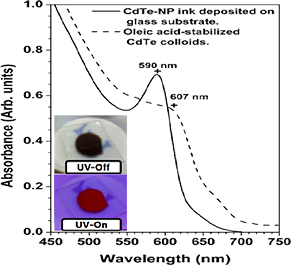
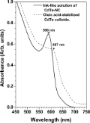
- 10.3762/bjnano.5.100 Abstract This work presents results of the optical and structural characterization of oleic acid-stabilized cadmium telluride nanocrystals (CdTe-NC) synthesized by an organometallic route. After being cleaned, the CdTe-NC were dispersed in toluene to obtain an ink-like dispersion


Interaction of iron phthalocyanine with the graphene/Ni(111) system
Beilstein J. Nanotechnol. 2014, 5, 308–312, doi:10.3762/bjnano.5.34
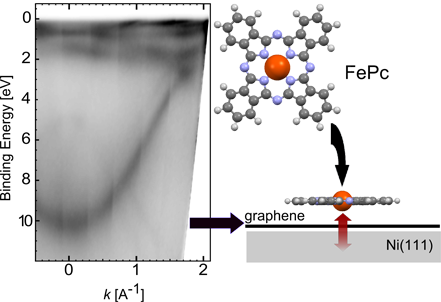
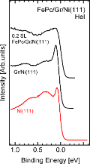
- appropriate buffer layer. Graphene (Gr), thanks to its unique electronic properties [8] and to the quite easy experimental preparation on many metal substrates [9], is a good candidate to tune the MPc–metal interface. Moreover, the self-assembling capabilities of organometallic molecules offer the possibility


In situ growth optimization in focused electron-beam induced deposition
Beilstein J. Nanotechnol. 2013, 4, 919–926, doi:10.3762/bjnano.4.103
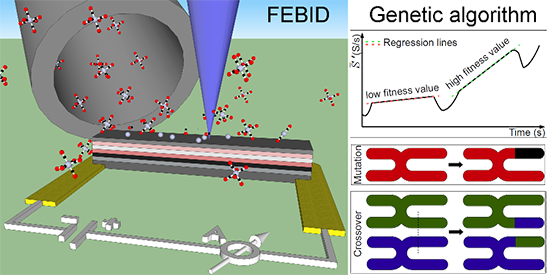
- FEBID-immanent parameter space becomes larger, the identification of the parameters for an optimal deposition protocol is becoming a very challenging problem. In fact, even for a single organometallic precursor, finding the deposition parameters for, e.g., obtaining the maximum possible metal content


Simulation of electron transport during electron-beam-induced deposition of nanostructures
Beilstein J. Nanotechnol. 2013, 4, 781–792, doi:10.3762/bjnano.4.89
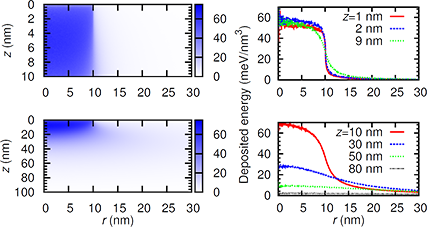
- ., amorphous tungsten oxycarbides with varying carbon and oxygen contents. W(CO)6 belongs to the class of organometallic compounds that are well established for the EBID process [14][15][16]. It has been studied in detail by mass spectrometry [17][18][19] and photoelectron or photoionization spectroscopy [20



Electrospinning preparation and electrical and biological properties of ferrocene/poly(vinylpyrrolidone) composite nanofibers
Beilstein J. Nanotechnol. 2013, 4, 189–197, doi:10.3762/bjnano.4.19

- all kinds of electrospun fibers have already found a wide range of applications, including (but not limited to) sensors, catalysis, medicine and filtration [4][5][6][7][8][9][10][11]. Fc is a kind of organometallic compound with a “sandwich” structure [12], and it has attracted great interest from


Functionalization of vertically aligned carbon nanotubes
Beilstein J. Nanotechnol. 2013, 4, 129–152, doi:10.3762/bjnano.4.14
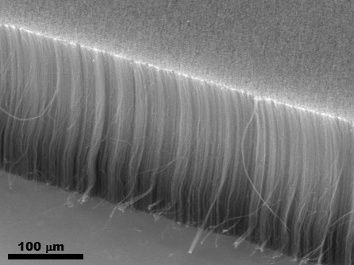
- involving a single synthesis step and those requiring double step synthesis. The single-step synthesis is based on the pyrolysis of organometallic precursors such as metallocenes [29][30]; this method was called “floating catalyst CVD” because it does not require the preparation of catalyst particles








Nanoparticles of novel organotin(IV) complexes bearing phosphoric triamide ligands
Beilstein J. Nanotechnol. 2013, 4, 94–102, doi:10.3762/bjnano.4.11
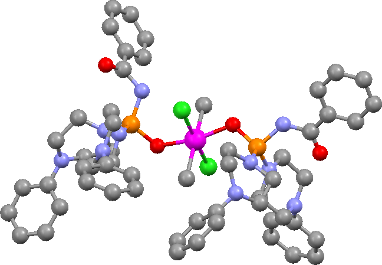
- , there are no reports about the preparation of nanosized organotin(IV) complexes bearing phosphoric triamide ligands. In this work, following on from our previous works to prepare organometallic compounds including phosphoric triamide ligands [17][18], novel organotin(IV) complexes with the formula SnCl2


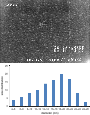
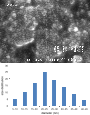
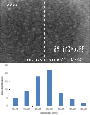
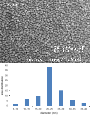


Low-dose patterning of platinum nanoclusters on carbon nanotubes by focused-electron-beam-induced deposition as studied by TEM
Beilstein J. Nanotechnol. 2013, 4, 77–86, doi:10.3762/bjnano.4.9
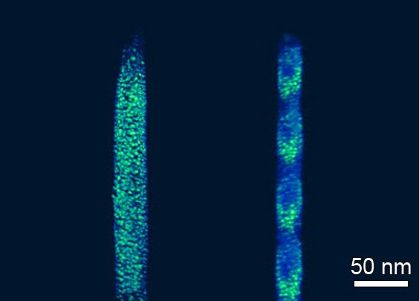
- for nanodevices [37]. Deposition parameters and the size distribution of Pt nanoclusters Since the Pt deposition by focused electron beam is essentially a decomposition process of an organometallic precursor using electron beams, the morphology and dimensions of the as-deposited nanoclusters are
- throughout the experiments. The DualBeam system is equipped with a standard gas injection system (GIS) with (CH3)3Pt(CpCH3) as organometallic precursor gas. The reservoir temperature was approximately 43 °C. The electron beam used for deposition can be accelerated between 3 kV and 30 kV with a beam current
- DualBeam system is equipped with a GIS with the same organometallic precursor gas of (CH3)3Pt(CpCH3). The electron beam used for deposition can be accelerated between 1 kV and 30 kV with varying beam current. The electron dose for Figure 4 was set to be at 8.5 × 10⁸ electrons/μm2, whereas the electron dose


Focused electron beam induced deposition: A perspective
Beilstein J. Nanotechnol. 2012, 3, 597–619, doi:10.3762/bjnano.3.70
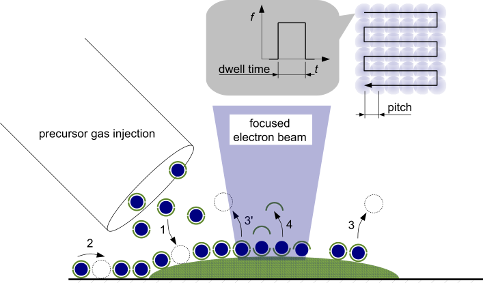
- be 10−2 to 10 mbar for organometallic precursors, but this can only serve as a very crude guideline. A very detailed account on FEBID precursors and their properties can be found in Utke et al. [6], ordered according to the respective type of organic ligand. Quite generally speaking, once supplied to
- alkanes, silanes, metal halogens, carbonyls, phosphines, acetylacetonates and so forth. In the following the focus is on organometallic precursors. Popular representatives for the transition metals are carbonyls, such as W(CO)6 or Co2(CO)8, but also more complex precursors, such as Me3Pt(IV)CpMe. For
- that organometallic precursors with metal atoms having a tendency to carbide formation result mainly in amorphous deposits, whereas precursors with metals that are immiscible with carbon tend to yield nanogranular structures, i.e., they form metallic nanocrystallites embedded in an amorphous


Strong spin-filtering and spin-valve effects in a molecular V–C60–V contact
Beilstein J. Nanotechnol. 2012, 3, 589–596, doi:10.3762/bjnano.3.69
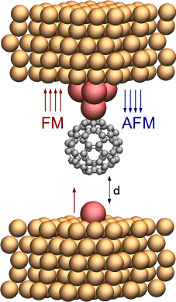
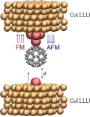
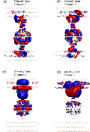
- –Co system on a Cu(001) surface contacted by a Cr tip [23]. The magnetic properties and spin transport have also been calculated for organometallic “multidecker” wires, where magnetic atoms are sandwiched between organic parts [24]. Multidecker systems involving vanadium are very promising due to



Spontaneous dissociation of Co2(CO)8 and autocatalytic growth of Co on SiO2: A combined experimental and theoretical investigation
Beilstein J. Nanotechnol. 2012, 3, 546–555, doi:10.3762/bjnano.3.63
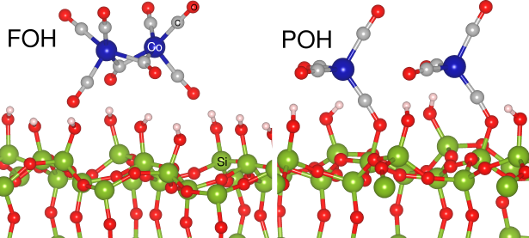
- dissociation products remains as a deposit whose shape and position can be accurately controlled by the lateral positioning of the electron beam in an electron microscope [1][2][3][4][5]. Mostly gaseous, e.g., W(CO)6, Fe(CO)5, and CH3C5H5Pt(CH3)3 [6][7][8][9], but also liquid organometallic precursors


Colloidal lithography for fabricating patterned polymer-brush microstructures
Beilstein J. Nanotechnol. 2012, 3, 397–403, doi:10.3762/bjnano.3.46
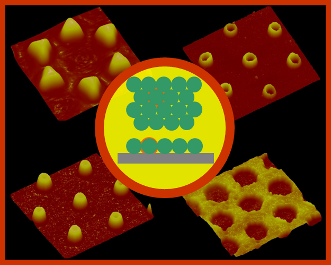
- -ATRP: The polymer brushes were prepared according to our previous procedures with some slight modifications [31]. Briefly, the polymerization solution was prepared by adding a solution of NIPAAM monomer to an organometallic catalyst. The organometallic catalyst was formed in a nitrogen atmosphere by


Approaches to nanostructure control and functionalizations of polymer@silica hybrid nanograss generated by biomimetic silica mineralization on a self-assembled polyamine layer
Beilstein J. Nanotechnol. 2011, 2, 760–773, doi:10.3762/bjnano.2.84
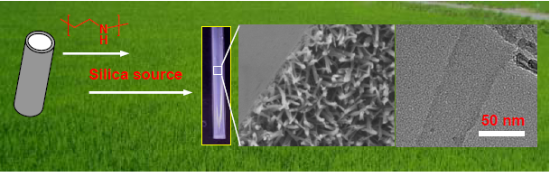
- [8][9][10][11]. On the other hand, silica films consisted of a network of interwoven nanofibers were also reported as produced by flame spray pyrolysis of organometallic solutions with the deposition and annealing temperature of silica in the range from 500 to 800 °C [12]. However, these conventional


Extended X-ray absorption fine structure of bimetallic nanoparticles
Beilstein J. Nanotechnol. 2011, 2, 237–251, doi:10.3762/bjnano.2.28
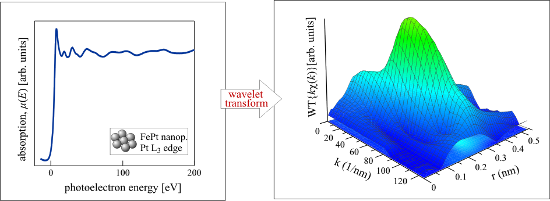
- and other contaminations on the investigated structure, EXAFS of in situ cleaned and oxide-free FePt nanoparticles seems to be a suitable tool to study the intrinsic structural properties of pure metallic nanoparticles. Wet-chemical synthesis A possible organometallic route to synthesise FePt



Magnetic nanoparticles for biomedical NMR-based diagnostics
Beilstein J. Nanotechnol. 2010, 1, 142–154, doi:10.3762/bjnano.1.17
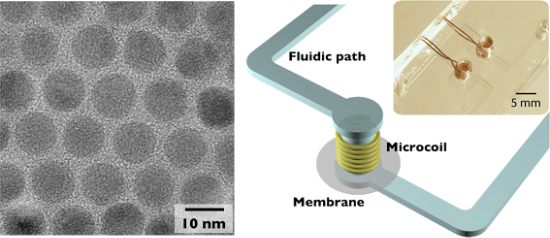
- , magnetization can vary significantly among nanoparticles of similar sizes. More recently, high quality MNPs have been prepared through thermal decomposition of organometallic precursors, in nonhydrolytic organic solutions containing surfactants [15][16][27][28][29]. Monomers are generated via high-temperature


Ultrafine metallic Fe nanoparticles: synthesis, structure and magnetism
Beilstein J. Nanotechnol. 2010, 1, 108–118, doi:10.3762/bjnano.1.13
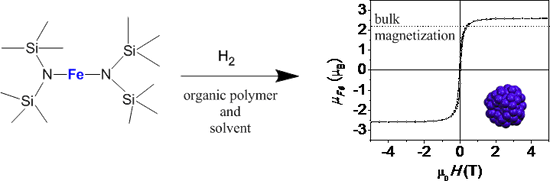
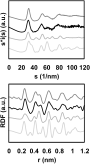
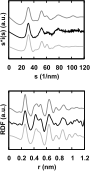
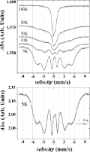
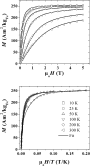
- )5 62 25 79 99 10.3762/bjnano.1.13 Abstract The results of the investigation of the structural and magnetic (static and dynamic) properties of an assembly of metallic Fe nanoparticles synthesized by an organometallic chemical method are described. These nanoparticles are embedded in a polymer
- corresponding to the large hyperfine fields with large isomer shifts are indeed characteristic of surface atoms. Keywords: iron nanoparticles; magnetic properties; organometallic synthesis; size effects; structure; Introduction Progress in both experimental techniques and theoretical calculations over the
- organometallic approach [17]. We have, for example, shown that cobalt NPs prepared by the decomposition of an organometallic precursor under mild conditions in the presence of a stabilising polymer exhibit physical properties similar to those of free cobalt clusters [18]. In this article, we report the chemical