Search results
Search for "physical properties" in Full Text gives 318 result(s) in Beilstein Journal of Nanotechnology. Showing first 200.
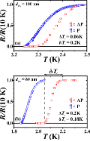
Superconducting spin valve effect in Co/Pb/Co heterostructures with insulating interlayers
Beilstein J. Nanotechnol. 2024, 15, 457–464, doi:10.3762/bjnano.15.41
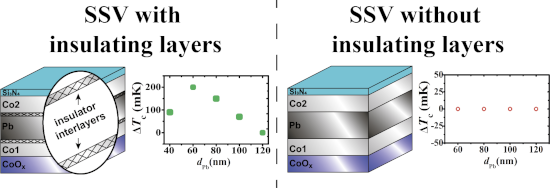
- increased complexity of these interfaces as compared with the ideal metallic contacts between the layers. Though experimentally the formation of an insulating interlayer by oxidation appears to be a doable task, their characteristics, such as thickness, exact composition, and physical properties, cannot be



![[Graphic 6]](/bjnano/content/inline/2190-4286-15-41-i6.svg?max-width=637&scale=1.18182)
Investigating structural and electronic properties of neutral zinc clusters: a G0W0 and G0W0Г0(1) benchmark
Beilstein J. Nanotechnol. 2024, 15, 310–316, doi:10.3762/bjnano.15.28
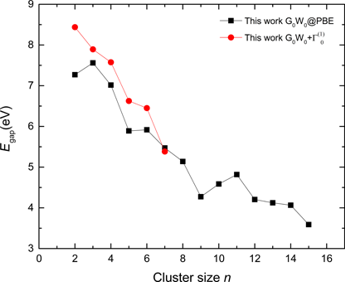
- Analysis by Particle Swarm Optimization”). It has been used previously by many researchers in discovering new materials [15][16]. In addition to the ground state properties, electronic properties such as ionization energies (IEs) and HOMO–LUMO gaps are also important, as they determine the physical
- properties of the clusters. Previous attempts to study the electronic properties of Zn clusters based on ∆-SCF methods tended to underestimate the ionization energies of the clusters as the size grew. State-of-the-art techniques, such as the GW method, can effectively describe the electronic properties of


![[Graphic 14]](/bjnano/content/inline/2190-4286-15-28-i15.svg?max-width=637&scale=1.18182)
Determining by Raman spectroscopy the average thickness and N-layer-specific surface coverages of MoS2 thin films with domains much smaller than the laser spot size
Beilstein J. Nanotechnol. 2024, 15, 279–296, doi:10.3762/bjnano.15.26
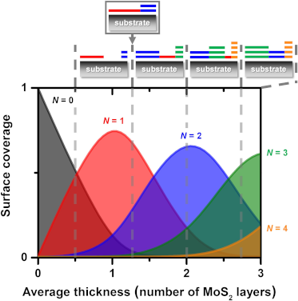
- when using precise transfer or AFM tip manipulation techniques [20], twisted MoS2 can be formed with two adjacent layers stacked with a relative twist angle (θ) varying from 0 to 60°. Such twisted-layered MoS2 structures can exhibit a variety of interesting physical properties including unconventional


Design, fabrication, and characterization of kinetic-inductive force sensors for scanning probe applications
Beilstein J. Nanotechnol. 2024, 15, 242–255, doi:10.3762/bjnano.15.23
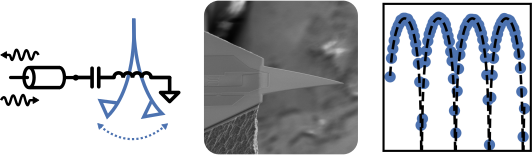
- temperature dependence of ωc and verified electromechanical coupling between the cavity mode and the cantilever mode. These measurements were performed in a dry cryostat (DynaCool Physical Properties Measurement System from Quantum Design) with a base temperature of 1.7 K. We modified a measurement stick by



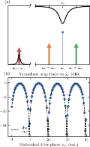
Enhanced feedback performance in off-resonance AFM modes through pulse train sampling
Beilstein J. Nanotechnol. 2024, 15, 134–143, doi:10.3762/bjnano.15.13
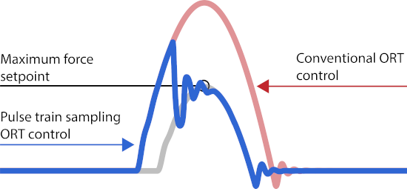
- , the acquired force-versus-distance curves enable extracting physical properties of the sample in real time [8][9][10]. For these reasons, derivations of pulse force modes have grabbed the interest of AFM users whose research areas are focused on soft biological samples [11][12][13][14][15][16] or


A multi-resistance wide-range calibration sample for conductive probe atomic force microscopy measurements
Beilstein J. Nanotechnol. 2023, 14, 1141–1148, doi:10.3762/bjnano.14.94
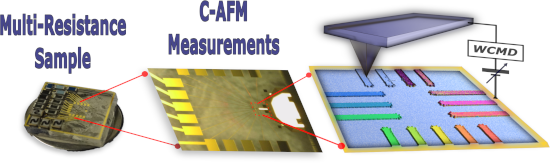
- apex [44]. Therefore, it is common to measure sudden alterations in local currents and resistances in C-AFM unrelated to the sample’s physical properties [43]. The combination of the effects above makes it difficult to quantify and reproduce the measured values in C-AFM experiments, which degrades the


Recognition mechanisms of hemoglobin particles by monocytes – CD163 may just be one
Beilstein J. Nanotechnol. 2023, 14, 1028–1040, doi:10.3762/bjnano.14.85
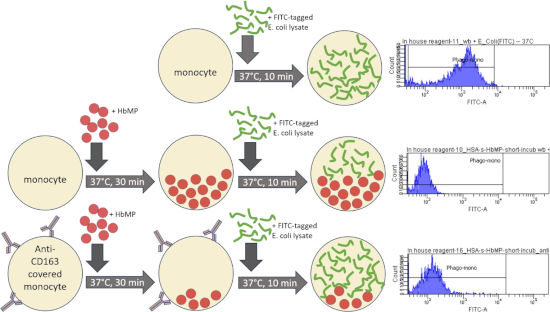
- size or other physical properties of the particles. In this study, we screened several monocytic surface receptors for a possible influence on the uptake of HbMPs by monocytes, which are precursor cells of macrophages. We chose to screen for CD14- as well as CD33-dependent HbMP uptake by monocytes


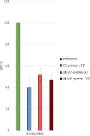


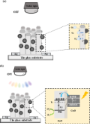
A visible-light photodetector based on heterojunctions between CuO nanoparticles and ZnO nanorods
Beilstein J. Nanotechnol. 2023, 14, 1018–1027, doi:10.3762/bjnano.14.84
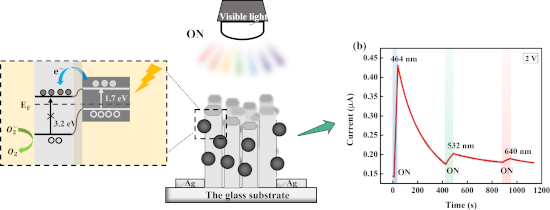
- ., temperature, concentrations of chemicals, and annealing time). ZnO nanorods and nanowires have attracted great interest in photodetectors because their chemical and physical properties are exceptional for electronics applications, and their fabrication strategies are more facile than those of other structures


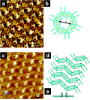
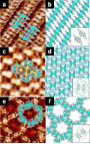
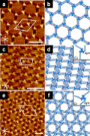
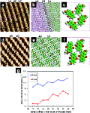
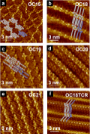
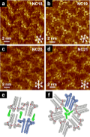
Two-dimensional molecular networks at the solid/liquid interface and the role of alkyl chains in their building blocks
Beilstein J. Nanotechnol. 2023, 14, 872–892, doi:10.3762/bjnano.14.72
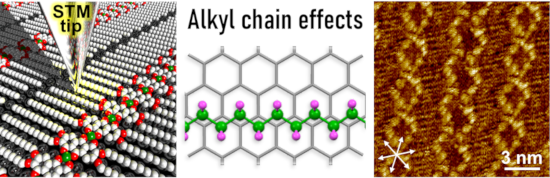
- atoms in the alkyl chain sometimes enabled a drastic change in the 2D assemblies, owing to their odd–even nature. The odd–even effect of alkyl chains has been reported in 2D and 3D systems and is reflected in the periodic changes of characteristics such as morphology and physical properties [112][113
- chains have a great influence on the formation of 2D nanoarchitectures. Recent advances in 2D self-assembly include “on-surface synthesis,” “in situ reactions” such as metal coordination, “correlation of the 2D and 3D structures (crystal structures)” for revealing the origins of physical properties, and









Cross-sectional Kelvin probe force microscopy on III–V epitaxial multilayer stacks: challenges and perspectives
Beilstein J. Nanotechnol. 2023, 14, 725–737, doi:10.3762/bjnano.14.59
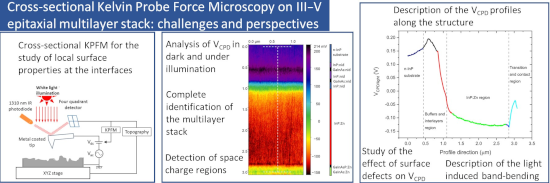
- entire cross section. This is particularly true in our case since the several layers present different physical properties because of varying doping types and concentrations [33]. In order to overcome these challenges related to the operating conditions and to the cleaving process presented in this


Humidity-dependent electrical performance of CuO nanowire networks studied by electrochemical impedance spectroscopy
Beilstein J. Nanotechnol. 2023, 14, 683–691, doi:10.3762/bjnano.14.54
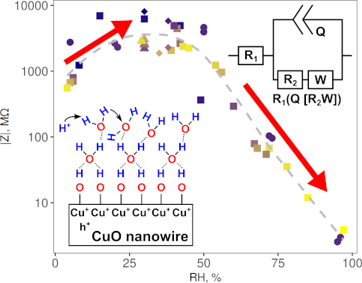
- ]. Copper oxide (CuO) nanowires are excellent candidates for applications in such devices owing to the inexpensive, simple and scalable bottom-up synthesis, and robust physical properties [7][8][9]. A high specific surface area of nanowires and a p-type semiconductor structure are suggested for highly


Transferability of interatomic potentials for silicene
Beilstein J. Nanotechnol. 2023, 14, 574–585, doi:10.3762/bjnano.14.48
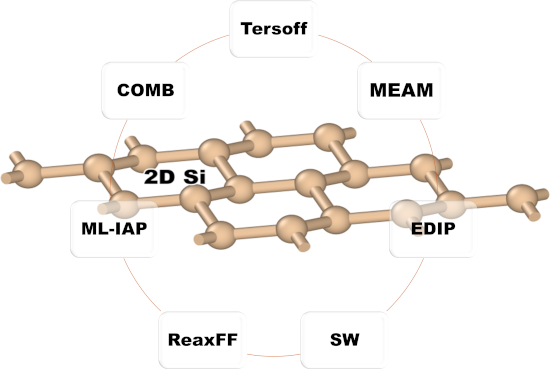
- calculations show that all silicene phases have hexagonal symmetry. The symmetry characteristics of a structure determine the symmetry of its physical properties (cf. Neumann’s Principle and Curie laws) [30][46]. For 2D linear hyperelastic materials, there are four classes of symmetry [25], and hexagonal
![[Graphic 3]](/bjnano/content/inline/2190-4286-14-48-i7.svg?max-width=637&scale=1.18182)

Conjugated photothermal materials and structure design for solar steam generation
Beilstein J. Nanotechnol. 2023, 14, 454–466, doi:10.3762/bjnano.14.36
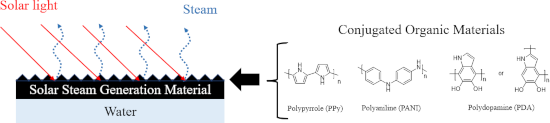
- tunability of molecular structures [5][6]. In fact, there is a long development history of conjugated molecules and polymers, and a clear correlation between their chemical structure and physical properties has been established [7][8][9][10][11][12][13][14][15][16][17]. For example, the absorption spectra
- the advantage that the π electrons delocalized over the conjugated backbone enhance the carrier transport and provide multifunctional properties by combining their intrinsic optoelectronic properties and macromolecular physical properties. Typical polymeric PTMs used for the SSG include polypyrrole
- [51]. Nanofibers Polymer-based nanofibers can be produced from various processable polymers, and they have wide application possibilities with improved physical properties compared to the pristine polymer solids. Polymer-based nanofibers have characteristic properties, such as a high surface-to-volume


Molecular nanoarchitectonics: unification of nanotechnology and molecular/materials science
Beilstein J. Nanotechnol. 2023, 14, 434–453, doi:10.3762/bjnano.14.35
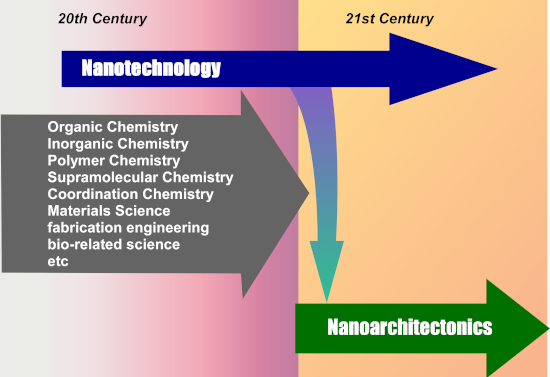
- ][35], efficient molecular identification [36][37][38], and device switching mechanisms based on nanoscale phenomena [39][40][41] have been revealed. The contribution of nanotechnology is not limited to the elucidation of such physical properties of materials. Nanotechnology has also contributed
- yield unusual physical properties. A recent review by Tsuji reports the realization of cryogenic properties at room temperature by chemical immobilization of molecular structures [94]. Functions such as optoelectronic properties and bioactivity of materials strongly depend on molecular structures
- expected to pave the way for further functional nanostructures. In organic molecules and materials, the electronic structure and physical properties can be modified by replacing carbon with silicon. For example, silicon-substituted graphene-based materials exhibit exotic properties. However, it is







High–low Kelvin probe force spectroscopy for measuring the interface state density
Beilstein J. Nanotechnol. 2023, 14, 175–189, doi:10.3762/bjnano.14.18
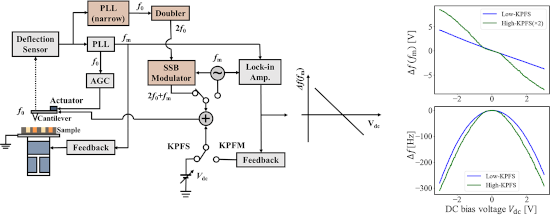
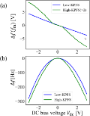
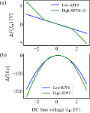
- the physical properties of semiconductors, information on semiconductor interface states is particularly important. For example, in semiconductor devices such as field-effect transistors, the presence of semiconductor interface states is known to significantly affect device operation characteristics



Upper critical magnetic field in NbRe and NbReN micrometric strips
Beilstein J. Nanotechnol. 2023, 14, 45–51, doi:10.3762/bjnano.14.5
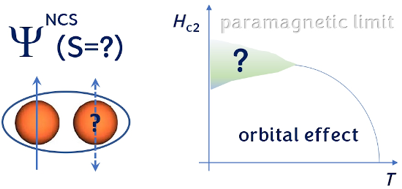
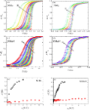
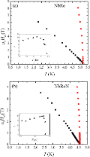
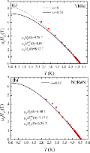
- -84084 Fisciano (Sa), Italy Dipartimento di Fisica “E. Pancini”, Università degli Studi di Napoli Federico II, I-80125 Napoli, Italy 10.3762/bjnano.14.5 Abstract Non-centrosymmetric superconductors have recently received significant interest due to their intriguing physical properties such as multigap
- 0.13 ≤ x ≤ 0.38 crystallizes in the non-centrosymmetric Ti5Re24-type structure with the space group (No. 217) [9][10][11][12]. This non-centrosymmetric nature of the material leads to intriguing and unconventional physical properties such as the time-reversal symmetry breaking observed with muon-spin

Gap-directed chemical lift-off lithographic nanoarchitectonics for arbitrary sub-micrometer patterning
Beilstein J. Nanotechnol. 2023, 14, 34–44, doi:10.3762/bjnano.14.4
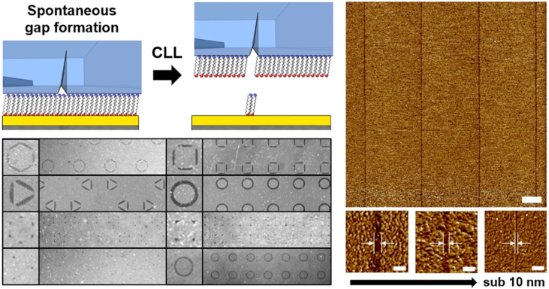
- parameters, D, H, W, and the elastomer’s Young’s modulus [40][46]. In current experimental setups, D and H are used to tune the formation of self-collapse-induced structural gaps, but it is reasonable to assume that both W and the elastomer stamp’s physical properties would have impacted the result as well


Two-step single-reactor synthesis of oleic acid- or undecylenic acid-stabilized magnetic nanoparticles by thermal decomposition
Beilstein J. Nanotechnol. 2023, 14, 11–22, doi:10.3762/bjnano.14.2
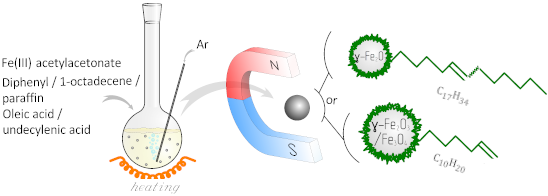
- chemical and physical properties. One such area is biomedicine [1]. Especially iron oxide-based nanoparticles, due to their biodegradation, low toxicity, and enhanced oxidative resistance compared to metallic nanoparticles, show high potential in biomedical applications [2][3][4]. Up to now, iron oxide


Electrical and optical enhancement of ITO/Mo bilayer thin films via laser annealing
Beilstein J. Nanotechnol. 2022, 13, 1589–1595, doi:10.3762/bjnano.13.133
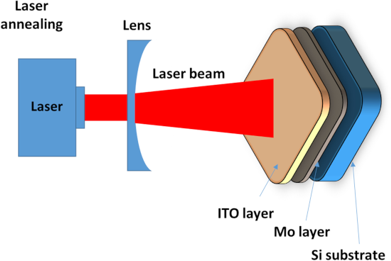
- . The concentration and mobility of charge carriers need to be increased to overcome this problem. Furthermore, enhancing electrical and optical performance at the same time is a critical research topic that has many challenges. Generally, the physical properties of TC materials are essentially affected


Recent trends in Bi-based nanomaterials: challenges, fabrication, enhancement techniques, and environmental applications
Beilstein J. Nanotechnol. 2022, 13, 1316–1336, doi:10.3762/bjnano.13.109
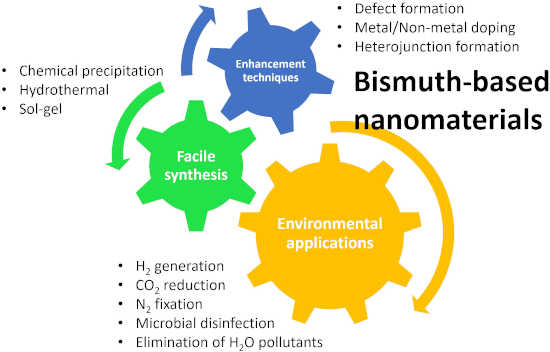
- , and large surface area, which make them excellent for photocatalysis. The progress of synthesis processes allows one to change the physical properties as needed. In order to create economically viable Bi-based photocatalysts, substantial amounts of water are required. Solid-state reaction methods that




Design of surface nanostructures for chirality sensing based on quartz crystal microbalance
Beilstein J. Nanotechnol. 2022, 13, 1201–1219, doi:10.3762/bjnano.13.100
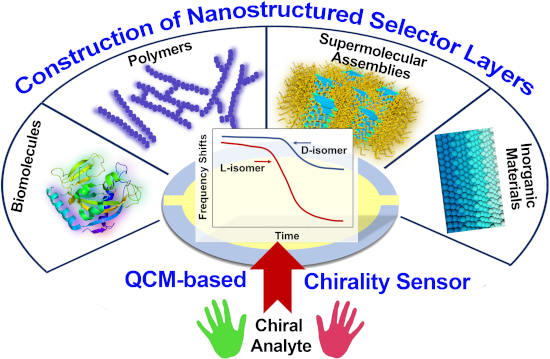
- ]. Chiral enantiomers have identical molecular formulas and the same physical properties. However, they can exhibit completely different functions. One isomer form may act as a powerful medicament, while the other might cause serious side effects. The famous "thalidomide disaster" in the 1960s affected
- to 5.97 ± 0.54, which was the best performance of MOFs for Cys enantiomer discrimination. Xylene is an important chemical feedstock and has three isomeric forms: o-xylene, m-xylene, and p-xylene. Although they have similar structures and physical properties, the three xylene isomers have different


Application of nanoarchitectonics in moist-electric generation
Beilstein J. Nanotechnol. 2022, 13, 1185–1200, doi:10.3762/bjnano.13.99
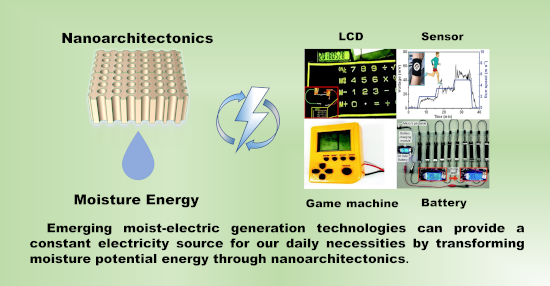
- have superior electrical conductivity and provide better electron transfer properties. Organic nanomaterials are complementary to inorganic nanomaterials in terms of physical properties. Although organic nanomaterials are usually poor in electrical conductivity, they have better properties in terms of


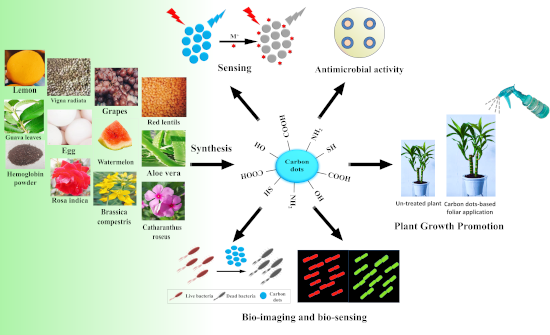
Recent advances in green carbon dots (2015–2022): synthesis, metal ion sensing, and biological applications
Beilstein J. Nanotechnol. 2022, 13, 1068–1107, doi:10.3762/bjnano.13.93


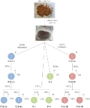


Bioselectivity of silk protein-based materials and their bio-inspired applications
Beilstein J. Nanotechnol. 2022, 13, 902–921, doi:10.3762/bjnano.13.81
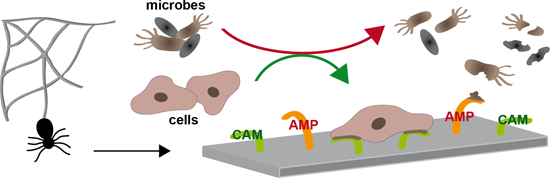
- biomedicine and tissue engineering, since they exhibit promising chemical and physical properties, such as bioactivity, structural integrity, and cell stimulation [29][30]. Biomimetic materials modulating specific cellular responses and tissue regeneration have been developed by adjusting and modifying
- distinguished according to their basic defense mechanism. These are (A) surface topography, which disturbs and inhibits the initial adhesion based on morphological features, (B) material modification, where intrinsic chemical and physical properties result in microbe-repellence, and (C) additives and coatings


Effects of substrate stiffness on the viscoelasticity and migration of prostate cancer cells examined by atomic force microscopy
Beilstein J. Nanotechnol. 2022, 13, 560–569, doi:10.3762/bjnano.13.47
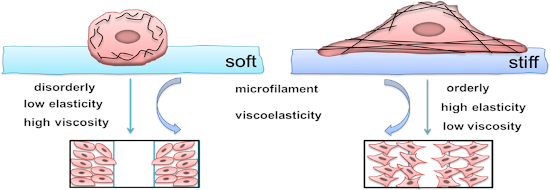
- functions have not been well appreciated [16]. In recent years, alterations in the physical properties of cells have been considered as a marker of malignant transformation of cancer cells [17][18][19]. Based on atomic force microscopy (AFM) measurements, our group found that the progression of prostate