


Search results
Search for "plasmon" in Full Text gives 316 result(s) in Beilstein Journal of Nanotechnology. Showing first 200.
Characterisation of a micrometer-scale active plasmonic element by means of complementary computational and experimental methods
Beilstein J. Nanotechnol. 2023, 14, 110–122, doi:10.3762/bjnano.14.12
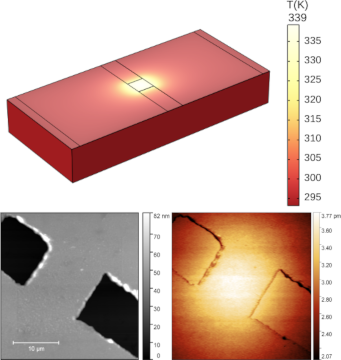
- computational methods to characterise the response of this system. First, an enhanced surface plasmon resonance experiment in a classical Kretschmann configuration is used to measure the changes in the reflectivity induced by an alternating electric current. A lock-in amplifier is used to extract the dynamic
- microscopy (SJEM); surface plasmon polariton; Introduction Active plasmonics has been gaining attention from the research community for its role in the development of photonic devices [1][2], low-loss waveguides [3], and imaging systems [4]. It is an emerging subfield of plasmonics, which focuses on
- imaging technologies and as modulators in optoelectronic couplers for photonic circuits. Finite element method (FEM) simulations are used to validate both experimental approaches, allowing for cross-verification of results and giving greater insight into the underlying physical phenomena. Surface plasmon




Antimicrobial and mechanical properties of functionalized textile by nanoarchitectured photoinduced Ag@polymer coating
Beilstein J. Nanotechnol. 2023, 14, 95–109, doi:10.3762/bjnano.14.11
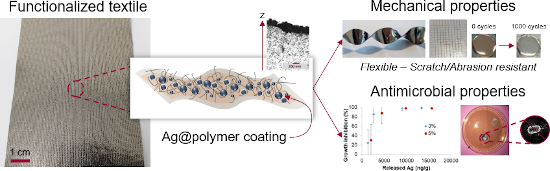
- samples, in order to follow the AgNP synthesis for different exposure times. The obtained spectra are presented in Figure 2, as well as images of the coatings taken for different exposure times. The characteristic surface plasmon resonance band of AgNPs for both coatings is observed around 430 nm and
- surface roughness, as can be seen in the SEM images (Figure 7c). Consequently, the diffuse reflectivity drops in favor of the specular reflectance. The particles are no longer simply juxtaposed but form a continuous silver layer, especially after 1000 friction cycles. The characteristic silver plasmon
- reflectance, mainly diffuse. The underlying metallic layer appears brown and exhibits an absorption band at 430 nm, linked to the plasmon resonance of AgNPs (Figure 8c), trapped inside the polymer matrix. To better understand this sudden decrease in reflectance, the surface was characterized by SEM (Figure 8c



Combining physical vapor deposition structuration with dealloying for the creation of a highly efficient SERS platform
Beilstein J. Nanotechnol. 2023, 14, 83–94, doi:10.3762/bjnano.14.10
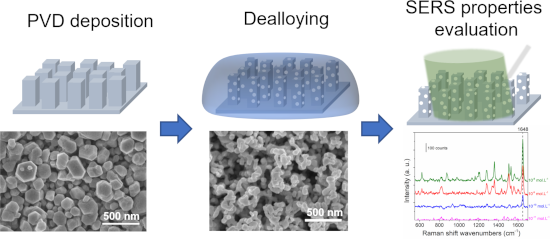
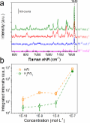
- detection properties are mostly observed in noble metal nanoparticles [2][9][10]. Allowed by their localized surface plasmon resonance (LSPR) in the visible region, silver and gold are the most used materials for the preparation of SERS substrates [11][12]. Although Ag has a higher surface plasmon




Observation of collective excitation of surface plasmon resonances in large Josephson junction arrays
Beilstein J. Nanotechnol. 2022, 13, 1578–1588, doi:10.3762/bjnano.13.132
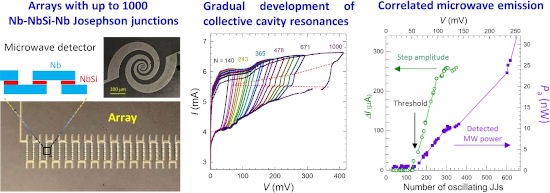
- profound step structure in the current–voltage (I–V) characteristics. The resonances are caused by the formation of surface plasmon-type standing waves at the electrode–substrate interface [34]. Thus, the electrodes themselves act as a common external resonator, facilitating the effective indirect coupling
- in the reverse branch of the I–V characteristics for both arrays. As shown in [9][34], they are caused by propagation of surface plasmon-type EMWs along the Nb electrode–Si substrate interface. These steps appear when the Josephson frequency coincides with one of the cavity mode frequencies
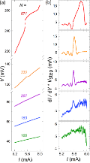
- consequence of collective surface-plasmon resonances. The finite threshold number is the consequence of the collective excitation of the cavity mode [32][33]. Radiation detection For detection of EMW emission we use a superconducting microwave detector. Figure 6a shows an optical image of the detector. It




In search of cytotoxic selectivity on cancer cells with biogenically synthesized Ag/AgCl nanoparticles
Beilstein J. Nanotechnol. 2022, 13, 1505–1519, doi:10.3762/bjnano.13.124
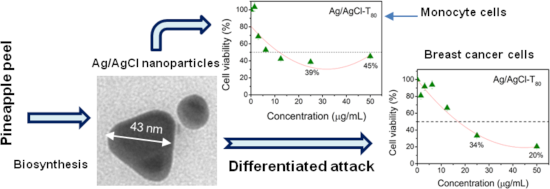
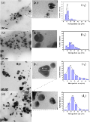
- give rise to a collective oscillation known as surface plasmon effect [34]. This effect can be monitored by UV–vis spectroscopy, where metal nanoparticles absorb radiation at different wavelengths depending on their size [36]. The UV–vis absorption spectra of the reactions at different temperatures are





Facile preparation of Au- and BODIPY-grafted lipid nanoparticles for synergized photothermal therapy
Beilstein J. Nanotechnol. 2022, 13, 1432–1444, doi:10.3762/bjnano.13.118
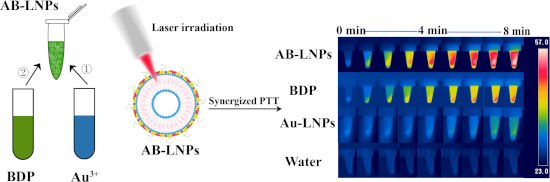
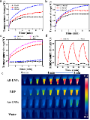
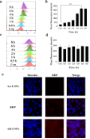
- specificity and minimal invasiveness, it has attracted a great deal of attention as complementary modality for conventional cancer therapy options [1]. Gold nanoparticles (AuNPs) can absorb light and generate heat from light absorption because of the surface plasmon resonance (SPR) phenomenon and the tunable




Double-layer symmetric gratings with bound states in the continuum for dual-band high-Q optical sensing
Beilstein J. Nanotechnol. 2022, 13, 1408–1417, doi:10.3762/bjnano.13.116
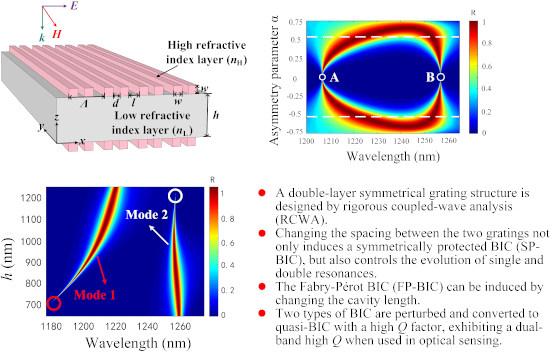
- researchers have focused their interests on the single high-Q resonance of various structures and proposed different types of structures to achieve high-Q-factors, such as metallic structures based on surface plasmon resonances [5][6], Mie resonance-based dielectric structures [7][8], and high-contrast


Supramolecular assembly of pentamidine and polymeric cyclodextrin bimetallic core–shell nanoarchitectures
Beilstein J. Nanotechnol. 2022, 13, 1361–1369, doi:10.3762/bjnano.13.112
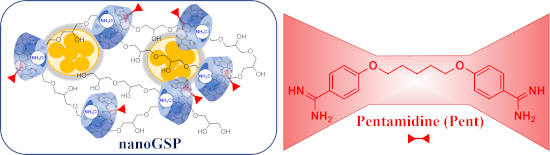
- classifying them in plasmonic NPs (size > 5 nm) and nanoclusters (size < 5 nm). When dimensions exceed 5 nm, NPs exhibit a unique optical phenomenon called localized surface plasmon resonance (LSPR) which represents the collective oscillation of conduction band electrons after interaction between NPs and an


Recent trends in Bi-based nanomaterials: challenges, fabrication, enhancement techniques, and environmental applications
Beilstein J. Nanotechnol. 2022, 13, 1316–1336, doi:10.3762/bjnano.13.109
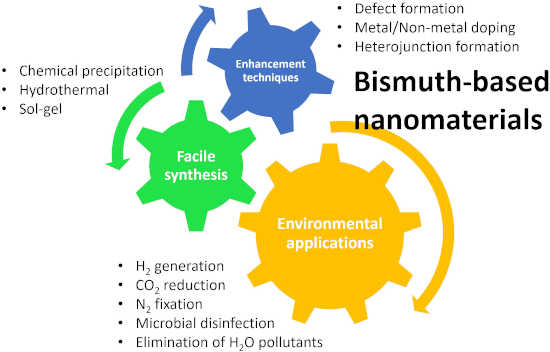
- , is more sensitive to photocurrent, and has a lower electrochemical impedance rate. This is because of surface plasmon resonances (SPRs) and the electron transport capabilities of Bi. The photocatalytic activity for the breakdown of phenol was significantly improved, compared to pristine Bi2WO6 under




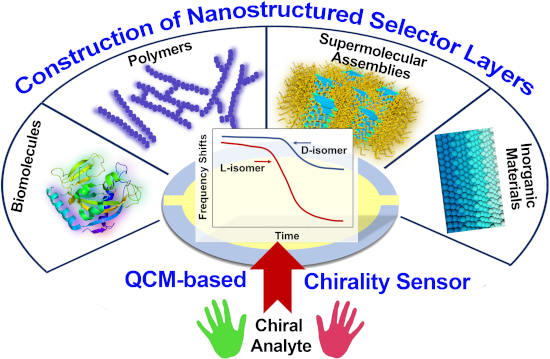
Design of surface nanostructures for chirality sensing based on quartz crystal microbalance
Beilstein J. Nanotechnol. 2022, 13, 1201–1219, doi:10.3762/bjnano.13.100


Tunable high-quality-factor absorption in a graphene monolayer based on quasi-bound states in the continuum
Beilstein J. Nanotechnol. 2022, 13, 675–681, doi:10.3762/bjnano.13.59
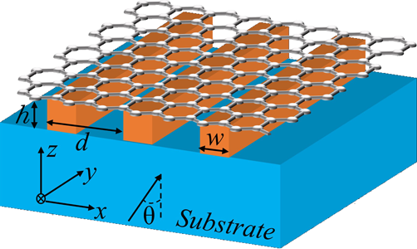
- structure, graphene supports much stronger binding of surface plasmon polaritons (SPPs) with less loss, which leads to a longer propagation distance compared with traditional metal SPPs [35]. In addition, its conductivity can be dynamically controlled by chemical doping or electrostatic fields owing to the
- proposed to enhance the absorption in graphene monolayers, such as coherent perfect absorption effect [46], critical coupling effect [47], guided mode resonance effect [48], metal Tamm plasmon polaritons effect [49], and graphene Tamm surface plasmons effect [50]. In addition, the quasi-BICs mentioned


Detection and imaging of Hg(II) in vivo using glutathione-functionalized gold nanoparticles
Beilstein J. Nanotechnol. 2022, 13, 549–559, doi:10.3762/bjnano.13.46
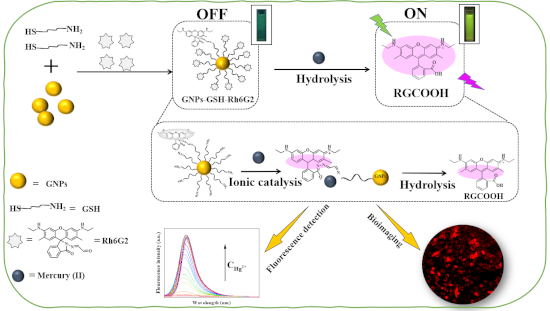
- fluorescence spectra of GNPs-GSH-Rh6G2 are shown in Figure 1b,c. Figure 1c shows a strong absorption peak of 13 nm GNPs with the typical plasmon band of gold nanoparticles at 518 nm. However, the absorption peaks of GNPs-GSH and GNPs-GSH-Rh6G2 were slightly redshifted from 518 to 522 and 536 nm, respectively


Zinc oxide nanostructures for fluorescence and Raman signal enhancement: a review
Beilstein J. Nanotechnol. 2022, 13, 472–490, doi:10.3762/bjnano.13.40
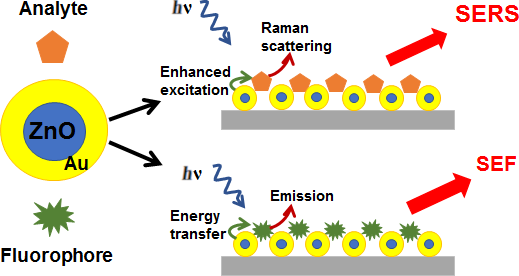
- great interest and will be the focus of this review. The electromagnetic (EM) enhancement in surface-enhanced Raman scattering (SERS) appears due to the enhanced local electric field that is generated when localized surface plasmon resonances (LSPRs) are excited by light incident on noble metal
- morphologies that can be used in combination with noble metals, but also its biocompatibility, photocatalytic self-cleaning capability, and high chemical stability. The SERS effect occurs through the electromagnetic enhancement from the excitation of plasmon resonances in metallic nanoparticles and the
- nanorods (NRs) and Au seeds alone. The results showed a stronger SERS signal in the case of Au–ZnO NRs compared to Au nanoscale seeds. The SERS signal enhancement is due to the increased charge transfer effect of ZnO, which is greatly improved by the localized surface plasmon resonance of Au seeds. For the




Impact of device design on the electronic and optoelectronic properties of integrated Ru-terpyridine complexes
Beilstein J. Nanotechnol. 2022, 13, 219–229, doi:10.3762/bjnano.13.16
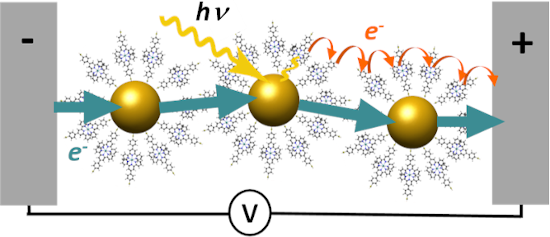
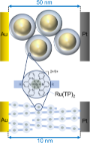
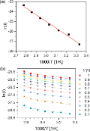
- mechanism, that is, thermally activated hopping conduction in the case of Ru-terpyridine wire devices or sequential tunneling in nanoparticle-based devices. Furthermore, the conductance switching of nanoparticle-based devices upon 530 nm irradiation was attributed to plasmon-induced metal-to-ligand charge
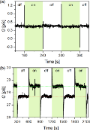
- , therefore, attributed to plasmon excitations of the leads (see Supporting Information File 1, Figure S9). No significant difference in the steady-state current was observed for Ru(TP)2-complex wire devices under illumination and in the dark (on/off ratio given in Figure S10 of Supporting Information File 1
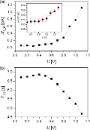
- subsequently counterbalanced by charge carriers in the nanoelectrodes. Since surface plasmon excitations are in the femtosecond range and the diffusion of charge carriers is considerably slower, we find an exponential decay until a steady-state current is reached. The decay constant is field-dependent, as


Sputtering onto liquids: a critical review
Beilstein J. Nanotechnol. 2022, 13, 10–53, doi:10.3762/bjnano.13.2
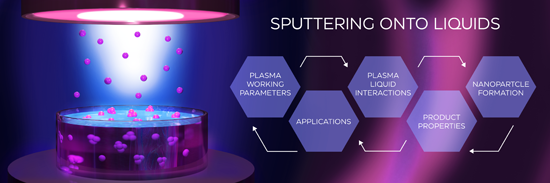
- nuclei of the final NPs [94][95]. Because silver clusters absorb light at different wavelengths than the surface plasmon resonance (SPR) band of Ag NPs (which is used for monitoring of NP growth kinetics by UV–vis spectroscopy) one can spot the induction period on the sigmoidal kinetic curves. Noteworthy






Plasmon-enhanced photoluminescence from TiO2 and TeO2 thin films doped by Eu3+ for optoelectronic applications
Beilstein J. Nanotechnol. 2021, 12, 1271–1278, doi:10.3762/bjnano.12.94
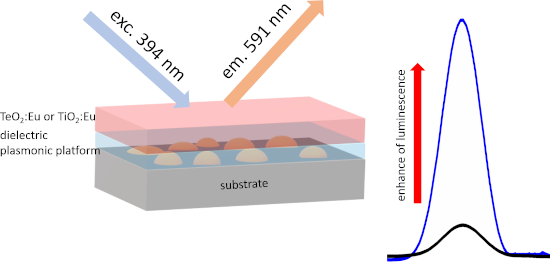
- luminescence properties of europium-doped titanium dioxide and tellurium oxide thin films enhanced by gold plasmonic nanostructures. We propose a new type of plasmon structure with an ultrathin dielectric film between plasmonic platform and luminescent material. Plasmonic platforms were manufactured through
- candidates as phosphors in white LEDs. Keywords: gold nanostructures; luminescence; plasmon resonance; Introduction The rapid development of optoelectronics leads to challenges in the search for new luminescence materials. Especially the fabrication of white LEDs requires more efficient phosphors
- enhance the luminescence by plasmon resonance. These nanostructures could find practical applications, for example, as phosphor material in LEDs. Experimental Corning 1737 glass was chosen as a substrate for film deposition. The substrates were gently cleaned with warm acetylacetone, then rinsed in


Assessment of the optical and electrical properties of light-emitting diodes containing carbon-based nanostructures and plasmonic nanoparticles: a review
Beilstein J. Nanotechnol. 2021, 12, 1078–1092, doi:10.3762/bjnano.12.80
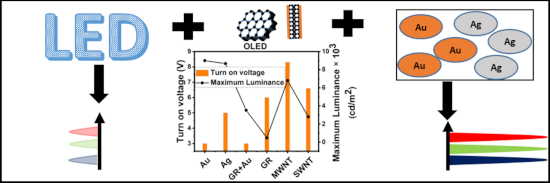
- employed in display applications and lighting systems. Further research on LED that incorporates carbon nanostructures and metal nanoparticles exhibiting surface plasmon resonance has demonstrated a significant improvement in device performance. These devices offer lower turn-on voltages, higher external
- as the emissive layer (EML), the hole transport layers (HTL), the electron transport layers (ETL), the cathode, and the anode [17][18][19][20][21]. Enhancement in LED properties via surface plasmon resonance (SPR) of metal nanoparticles (MNP) such as Au and Ag have also been reported [22][23]. This
- current injections of 100 mA have shown clear enhancements for both types of AuNP in Figure 4a and Figure 4b. Surface plasmon resonance absorbance tends to blueshift with decreasing sizes of the NP. Therefore, the 2 nm AuNP were able to enhance the blue emission from the LED. A similar effect was also


The role of deep eutectic solvents and carrageenan in synthesizing biocompatible anisotropic metal nanoparticles
Beilstein J. Nanotechnol. 2021, 12, 924–938, doi:10.3762/bjnano.12.69
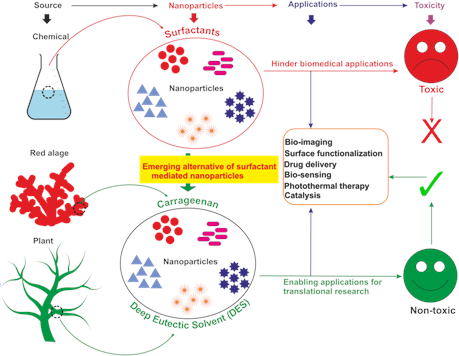
- characteristics, such as interesting plasmonic, optical and catalytic properties, and facile surface modification with tunable size and morphology [1]. Among these properties, the ability of surface plasmon resonance (SPR) at visible to near-infrared (NIR) wavelengths is the most striking characteristic feature
- of gold and silver nanoparticles. Surface plasmon resonance is an inherent property of plasmonic metal nanoparticles that is immensely employed as a tool for theranostics and is highly influenced by the size and shape of the nanoparticle [2]. The property of SPR has also been exploited for nanochips
- surfactant for synthesizing anisotropic nanoparticles with high yield and monodispersity. The surfactant induces anisotropy during the growth of nanoparticles and enables NIR absorption capability due to longitudinal surface plasmon resonance (LSPR) [11]. However, despite the superior plasmonic properties


Modification of a SERS-active Ag surface to promote adsorption of charged analytes: effect of Cu2+ ions
Beilstein J. Nanotechnol. 2021, 12, 902–912, doi:10.3762/bjnano.12.67
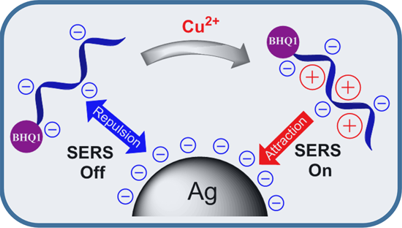
- basic mechanism is EM through localized surface plasmon resonances (LSPRs) on the metal surface [16]. CE is at least two orders of magnitude weaker than EM. The CE mechanism is supposed to be caused by a charge transfer between the plasmonic surface and the chemically adsorbed analyte molecules, which
- support (slide) depending on the time of contact with Ag NPs. The maximum absorption value stabilizes after approximately 12 h with a shift from 412 to 427 nm. We suppose that the redshift of the absorption maximum is due to the plasmon interactions of the closely packed NPs. In order to investigate the


High-yield synthesis of silver nanowires for transparent conducting PET films
Beilstein J. Nanotechnol. 2021, 12, 624–632, doi:10.3762/bjnano.12.51
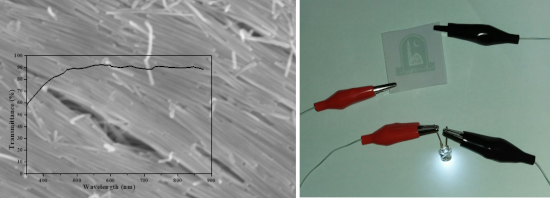
- electrical conductivity [12]. AgNWs are important as they offer a possibility to overcome light–matter interaction in the visible region. The optical properties of AgNWs are determined by localized surface plasmon resonance (LSPR), which depends on shape, size, and environment of the material [13]. AgNWs
- redshift of the peak positions. An overall hypsochromatic shift of the two plasmonic bands of AgNWs is accompanied by the enhancement of their aspect ratios. The SPR peak at 365 nm may be attributed to the plasmon response along the transverse axis of AgNWs, which is identical to that of bulk silver. The
- second peak at 373 nm is attributed to the longitudinal plasmon resonance of AgNWs. It is also noted that no other peak was observed, which shows that the final product was free from contamination of any other nanostructures, such as silver nanoparticles or nanocubes. The SEM results also confirm the


On the stability of microwave-fabricated SERS substrates – chemical and morphological considerations
Beilstein J. Nanotechnol. 2021, 12, 541–551, doi:10.3762/bjnano.12.44
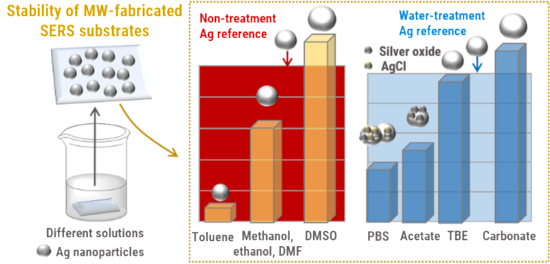
- laser excitation was set to 532 nm which overlaps with the plasmon resonance of the SERS substrates [24]. After an incubation time of eight minutes, the intensity of the characteristic peak of 4-ATP located at 1442 cm−1 reached a maximum intensity which did not further increase after longer incubation


Surface-enhanced Raman scattering of water in aqueous dispersions of silver nanoparticles
Beilstein J. Nanotechnol. 2021, 12, 497–506, doi:10.3762/bjnano.12.40
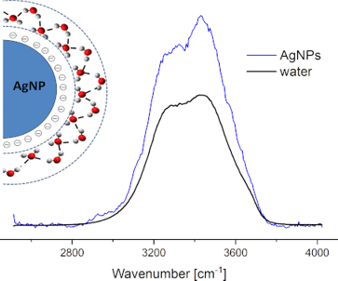
- aqueous dispersion of AgNPs, which exhibit a higher absorption in the region of Raman excitation wavelength (514.5 nm). The reported phenomenon is depended on the size and shape of AgNPs and on the wavelength of the surface plasmon, characteristic for particular AgNPs. The performed reabsorption


Rapid controlled synthesis of gold–platinum nanorods with excellent photothermal properties under 808 nm excitation
Beilstein J. Nanotechnol. 2021, 12, 462–472, doi:10.3762/bjnano.12.37
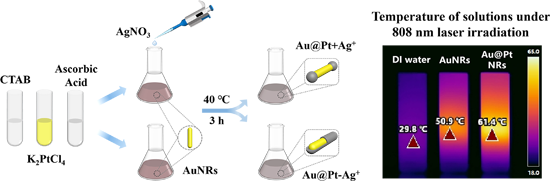
- conversion efficiency (PCE) due to local surface plasmon resonance (LSPR). Studies on different gold–platinum (Au–Pt) bimetal nanoparticles exhibiting the LSPR effect have provided a new idea for the synthesis of excellent PTAs. But there is no simple and scalable method for the controllable synthesis of Au
- . Keywords: AuNRs; local surface plasmon resonance (LSPR); photothermal conversion efficiency; photothermal transduction agents; platinum; Introduction On the surface of noble metal nanoparticles, when the wavelength of incident light resonates with the light absorption wavelength of the nanoparticles, a
- absorption in the UV–vis range. Hence, these nanoparticles can be applied as excellent PTAs. The PCE of PTAs is directly related to the light absorption capacity. For plasmon nanoparticles, their absorption will be significantly enhanced when the illumination laser wavelength is equal to their LSPR


A review on nanostructured silver as a basic ingredient in medicine: physicochemical parameters and characterization
Beilstein J. Nanotechnol. 2021, 12, 440–461, doi:10.3762/bjnano.12.36
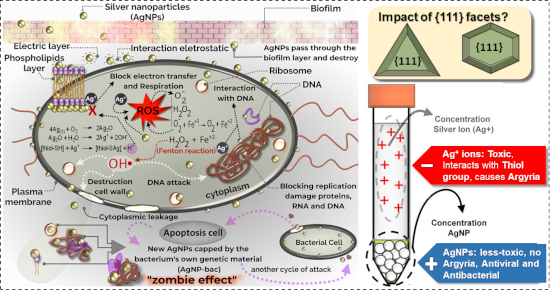
- AgNPs with light leads to surface plasmon resonance (SPR) effect when the incident light frequency coincides with the frequency of the oscillating electrons on the surface. The surface of AgNPs stores the conducting electrons inside the particles and establishes a restorative force which creates a
- dipolar surface plasmon frequency [61][62]. SPR can be modulated by controlling the shape of AgNPs, which in turn controls the ways in which the electrons oscillate. The light is spread and absorbed inside the nanostructure and intensifies the local electric fields [63]. In general, smaller nanoparticles
- term "plasmon" was introduced by Pines and Bohm (1952) and it means, in a very brief way, that electrons move as a group inside of a metal. Together, the electrons alternately flow back and forth while being attracted to the positive ions, which make up the crystal structure, and are repelled when they


The patterning toolbox FIB-o-mat: Exploiting the full potential of focused helium ions for nanofabrication
Beilstein J. Nanotechnol. 2021, 12, 304–318, doi:10.3762/bjnano.12.25
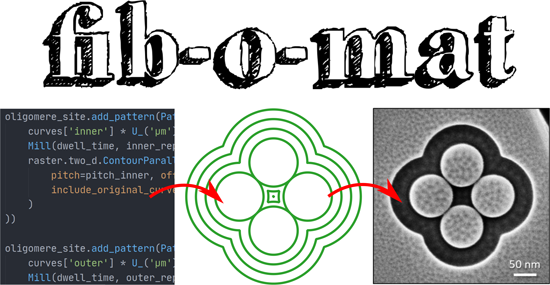
- combined in a straightforward manner, for example, by stacking. Applications of such materials may rely on (coupled) material excitations, such as plasmon polaritons in gold nanostructures [2], on physical properties, such as the exceptionally high mechanical stability of suspended graphene [3], or on
- -crystalline gold constitute an ideal platform for plasmonic applications due to the lack of scattering losses at grain boundaries and surface roughness [56]. In nanostructured gold, collective excitations of the free electron gas may occur under the incidence of visible light [2]. These plasmon polaritons of





