Search results
Search for "platinum" in Full Text gives 342 result(s) in Beilstein Journal of Nanotechnology. Showing first 200.
In situ optical sub-wavelength thickness control of porous anodic aluminum oxide
Beilstein J. Nanotechnol. 2024, 15, 126–133, doi:10.3762/bjnano.15.12
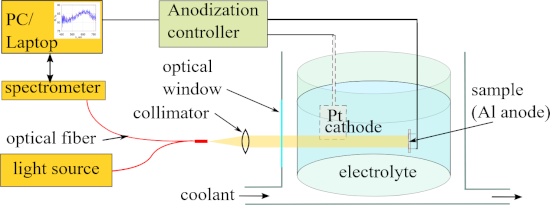
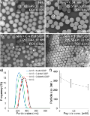
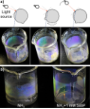
- samples at constant 40 V potential. Platinum cathode and single crystal Al(100) (MTI Corp. mcALa101010) anode were immersed in 0.3 M oxalic acid electrolyte inside a multiwalled container with a transparent optical window. The container was placed on a magnetic stirrer and cooled to 5 °C. The reflectance


New application of bimetallic Ag/Pt nanoplates in a colorimetric biosensor for specific detection of E. coli in water
Beilstein J. Nanotechnol. 2024, 15, 95–103, doi:10.3762/bjnano.15.9
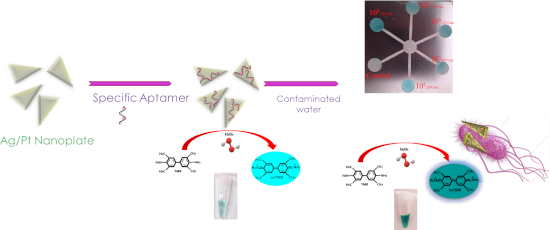
- detection is described using a silver/platinum nanoplate (Ag/Pt NPL) that interacts with an oligonucleotide aptamer as a bioreceptor. The size of the Ag/Pt NPLs was about 42 nm according to the FE-SEM images. The EDS result indicates that a thin layer of Pt ions was coated on the surface of the Ag NPLs
- ; biosensor; detection; E. coli; peroxidase activity; silver/platinum nanoplate; Introduction One of the most dangerous foodborne infections is caused by E. coli. It can induce hemorrhagic colitis, hemolytic uremic syndrome, and thrombocytopenic purpura. E. coli is responsible for more than 2 million acute
- peroxidase activity of Ag/Pt NPLs is substantially greater than those of silver or platinum alone. When compared to Ag NPLs or Pt NPLs alone, the bimetallic NPLs demonstrated higher peroxidase-like activity. We synthesized Ag NPLs and Pt NPLs under the same conditions as bimetallic NPLs. After adding TMB and


A combined gas-phase dissociative ionization, dissociative electron attachment and deposition study on the potential FEBID precursor [Au(CH3)2Cl]2
Beilstein J. Nanotechnol. 2023, 14, 1178–1199, doi:10.3762/bjnano.14.98
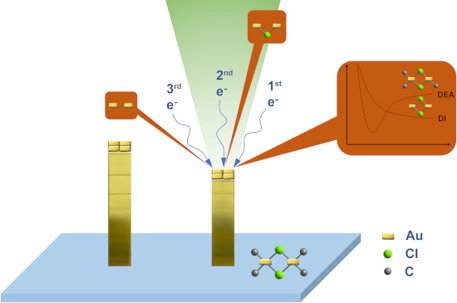
- purification studies [62][63], thin layer exposure to electrons at approx. 500 eV [64][65], gas-phase studies under single collision condition [28][66], and FEBID under HV and UHV conditions [30][60]. Most noticeably, platinum precursors Pt(CO)2X2 (X = Cl, Br) have been studied with respect to FEBID and their



A multi-resistance wide-range calibration sample for conductive probe atomic force microscopy measurements
Beilstein J. Nanotechnol. 2023, 14, 1141–1148, doi:10.3762/bjnano.14.94
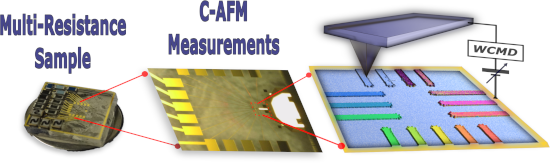
- imaging and spectroscopic (i.e., I–V curves) modes with a 1% achievable relative uncertainty level in the range between 106 Ω and 5 × 10¹⁰ Ω. The protocols adopted in this study highlight several routes for further improvements. Using platinum as metallic material instead of gold for the small electrode


Nanoarchitectonics of photothermal materials to enhance the sensitivity of lateral flow assays
Beilstein J. Nanotechnol. 2023, 14, 988–1003, doi:10.3762/bjnano.14.82
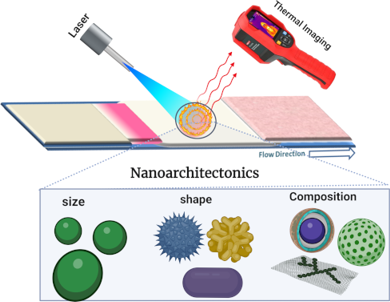
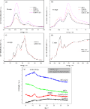
- particle size from 50 to 4.98 nm. In another study, the size-dependent photothermal conversion efficiency of platinum nanomaterials was studied by Depciuch et al. for cancer therapy. Spherical platinum nanoparticles with diameters of 2 and 80 nm were studied regarding the photothermal activity in colon
- Chemical Society. This content is not subject to CC BY 4.0.). Photothermal conversion efficiency of 2 and 8 nm platinum nanoparticles. Orange and the red line represent 2 and 80 nm Pt nanoparticles respectively and their calculated abs/ext ratio (B). (Figure 5B was reprinted from [54], Photodiagnosis and
- Photodynamic Therapy, vol. 29, by J. Depciuch; M. Stec; B. Klebowski; A. Maximenko; E. Drzymała; J. Baran; M. Parlinska-Wojtan, “Size effect of platinum nanoparticles in simulated anticancer photothermal therapy“, article no. 101594, Copyright (2019), with permission from Elsevier. This content is not subject


Nanostructured lipid carriers containing benznidazole: physicochemical, biopharmaceutical and cellular in vitro studies
Beilstein J. Nanotechnol. 2023, 14, 804–818, doi:10.3762/bjnano.14.66
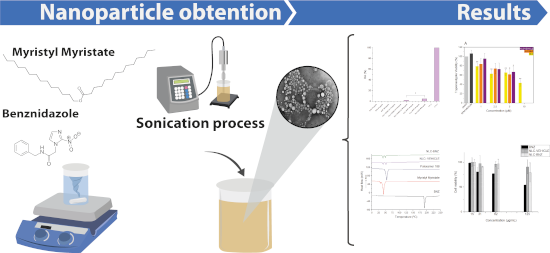
- . A Platinum EPS C8 (150 mm × 4.6 mm, 5 μm, GraceTM, Columbia, MD, USA) column was used; the mobile phase consisted of a mixture of methanol and 0.02% phosphoric acid solution (60:40) for a final pH of 2.5. The system was operated isocratically at a 1.0 mL/min flow rate and the detection was performed
- Instruments, New Castle, DE, USA). Freeze dried formulations of approximately 10 mg were accurately weighed in a platinum pan. Measurements were performed from room temperature to 600 °C at a heating rate of 10 °C/min under nitrogen atmosphere to avoid thermo-oxidative degradation. Attenuated total reflection


A graphene quantum dots–glassy carbon electrode-based electrochemical sensor for monitoring malathion
Beilstein J. Nanotechnol. 2023, 14, 701–710, doi:10.3762/bjnano.14.56
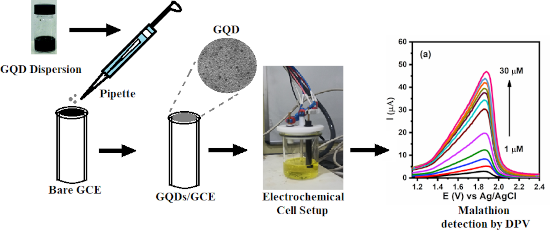
- obtained from a Bruker AFM analyzer atomic force microscope and a FEI Tecnai G2 20 S-TWIN transmission electron microscope. Electrochemical measurements GQDs/GCE, Ag/AgCl, and a platinum wire were used as working, reference, and counter electrode, respectively, in all electrochemical experiments, conducted


SERS performance of GaN/Ag substrates fabricated by Ag coating of GaN platforms
Beilstein J. Nanotechnol. 2023, 14, 552–564, doi:10.3762/bjnano.14.46
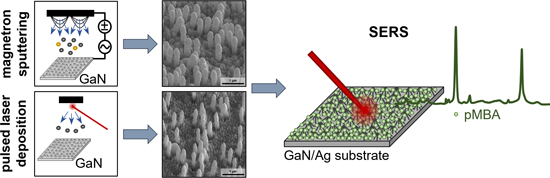
- [32]. Calculations were based on the intensity of the peak at 1078 cm−1, which is the most intense of all peaks in the pMBA spectrum. To determine EFs, a Raman measurement of pMBA adsorbed on the surface of a polished platinum plate was additionally made. The procedure for the analyte deposition on
- the SERS substrates and the platinum plate was the same [32]. The EF values calculated for fabricated SERS substrates are given in Table 3. The SERS spectra of pMBA adsorbed on GaN/Ag substrates fabricated using MS are shown in Figure 6. The substrates fabricated by this method provide similar average
- accumulations at each point for a polished platinum plate. The SERS spectra were acquired from at least 100 points. All collected spectra were processed in the WiRE 5.5 software and then averaged using the CasaXPS software. The SERS measurements were made on SERS substrates that were first embedded in 0.001 M


Evaluation of electrosynthesized reduced graphene oxide–Ni/Fe/Co-based (oxy)hydroxide catalysts towards the oxygen evolution reaction
Beilstein J. Nanotechnol. 2023, 14, 420–433, doi:10.3762/bjnano.14.34
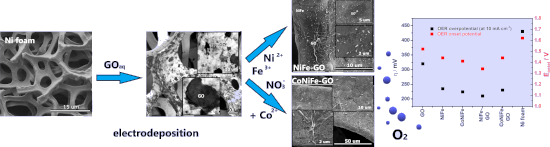
- , the substrates were cleaned ultrasonically in distilled water (5 min) and acetone (5 min). The reference and counter electrodes were Ag/AgCl (4 M KCl) and platinum mesh, respectively. Distilled water was used for the solutions. The measurement temperature was controlled by a thermostat (Julabo F12




Plasmonic nanotechnology for photothermal applications – an evaluation
Beilstein J. Nanotechnol. 2023, 14, 380–419, doi:10.3762/bjnano.14.33
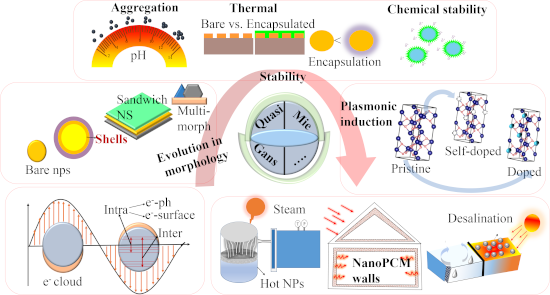
- elements, nanospheres of gold, silver, platinum, cobalt, zinc, nickel, titanium, copper, aluminium, molybdenum, vanadium, and palladium have been analysed [98]. Although there were assumptions of homogeneity, sphericity, and no interaction between particles, the Mie theory-based scattering cross sections




Biocatalytic synthesis and ordered self-assembly of silica nanoparticles via a silica-binding peptide
Beilstein J. Nanotechnol. 2023, 14, 280–290, doi:10.3762/bjnano.14.25
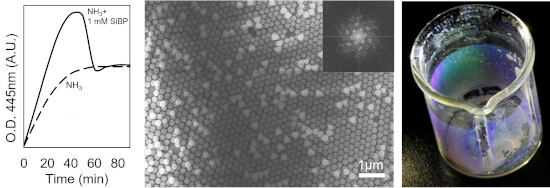
- -assembled particles, cover slides described in the previous section were used. The slides were dried under vacuum and then adhered onto an aluminum sample holder using carbon tape. The samples were coated with platinum for 30 s using an EM ACE200 vacuum coater (Leica Microsystems GmbH, Wetzlar, Germany




Recent progress in cancer cell membrane-based nanoparticles for biomedical applications
Beilstein J. Nanotechnol. 2023, 14, 262–279, doi:10.3762/bjnano.14.24
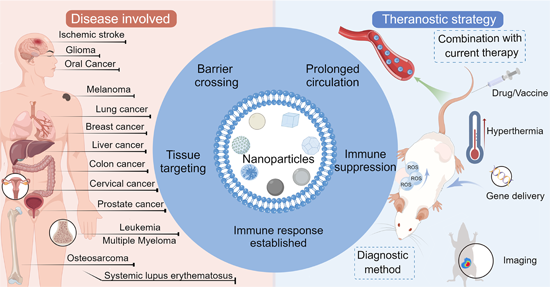
- treatment of tumors [88]. Cancer cell bionanotechnology provides a new way to overcome the shortcomings of conventional treatments. Platinum-based drugs are the mainstream first-line chemotherapy for clinical tumors [89]. However, numerous unavoidable problems, such as drug resistance and side effects, have


Cyclodextrins as eminent constituents in nanoarchitectonics for drug delivery systems
Beilstein J. Nanotechnol. 2023, 14, 218–232, doi:10.3762/bjnano.14.21
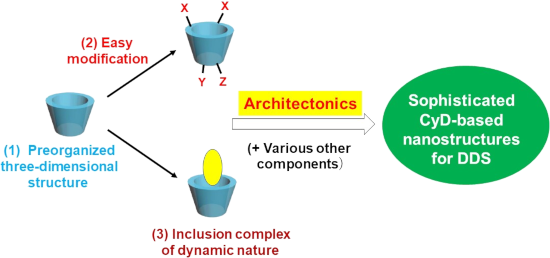
- endogenous H2O2 by Fenton-type reactions without photoirradiation [83][84]. A nanomedicine was prepared from (i) β-CyD bearing both a ferrocene and a platinum(IV) complex (–O–PtIV(Cl2)2(NH3)2(OH)) as prodrug of cisplatin and (ii) poly(ethylene glycol) terminated by ferrocene [85]. The ferrocene molecules




A novel approach to pulsed laser deposition of platinum catalyst on carbon particles for use in polymer electrolyte membrane fuel cells
Beilstein J. Nanotechnol. 2023, 14, 190–204, doi:10.3762/bjnano.14.19
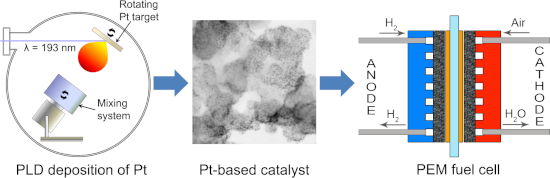
- an efficient Pt-based catalyst for polymer electrolyte membrane fuel cells (PEMFCs) by using a cost-effective and efficient physical method to deposit platinum nanoparticles (PtNPs) on carbon supports directly from the platinum target. The method developed avoids the chemical functionalization of the
- carbon substrate and the chemical synthesis of PtNPs during catalyst fabrication. Platinum was deposited on carbon particles at room temperature using a pulsed laser deposition (PLD) system equipped with an ArF excimer laser (λ = 193 nm). The uniform deposition of PtNPs on carbon supports was achieved
- thanks to a specially designed electromechanical system that mixed the carbon support particles during platinum deposition. In the studies, Vulcan XC-72R carbon black powder, a popular material used as support in the anodes and cathodes of PEMFCs, and a porous carbon material with a high degree of

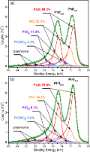


The influence of structure and local structural defects on the magnetic properties of cobalt nanofilms
Beilstein J. Nanotechnol. 2023, 14, 23–33, doi:10.3762/bjnano.14.3
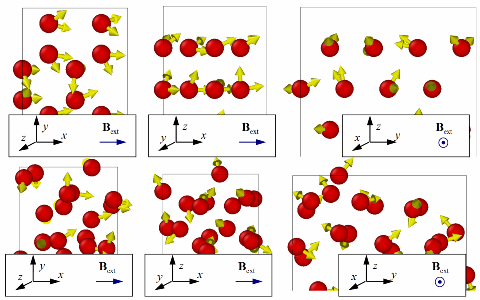
- contacts [35], which are successfully implemented in memory and information storage devices. A similar layered heterostructure, but with the addition of a thin platinum film necessary for the generation of spin–orbit bonds, is also described in [36]. Comprehensive research on new promising materials is a


Rapid and sensitive detection of box turtles using an electrochemical DNA biosensor based on a gold/graphene nanocomposite
Beilstein J. Nanotechnol. 2022, 13, 1458–1472, doi:10.3762/bjnano.13.120
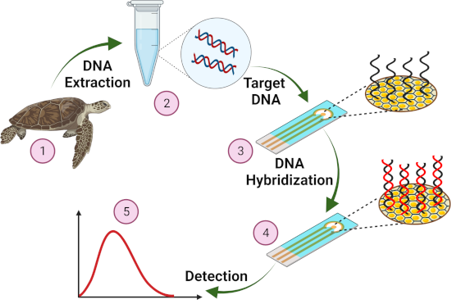
- ssDNA recognition elements [31]. As per our observation, this is the first application of an electrochemical DNA biosensor for BT detection. Kusnin et al. [57] employed silicon nanowires/platinum nanoparticles (SiNWs/PtNPs) on a SPCE for the detection of porcine DNA. The few studies conducted earlier



Growing up in a rough world: scaling of frictional adhesion and morphology of the Tokay gecko (Gekko gecko)
Beilstein J. Nanotechnol. 2022, 13, 1292–1302, doi:10.3762/bjnano.13.107
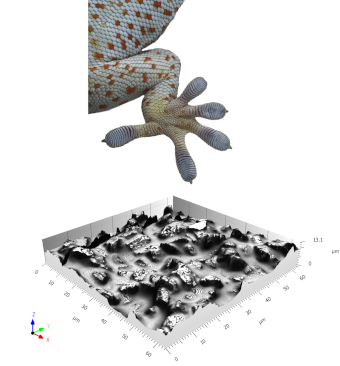
- unit to dehydrate the tissue prior to imaging. They were then placed on a double stick conductive carbon tape affixed to a stub and sputter coated with a platinum/palladium coating. Toes were then viewed using a ThermoFisher Scientific Quanta™ 3D 200i SEM in the Central Facility for Advanced Microscopy



Studies of probe tip materials by atomic force microscopy: a review
Beilstein J. Nanotechnol. 2022, 13, 1256–1267, doi:10.3762/bjnano.13.104
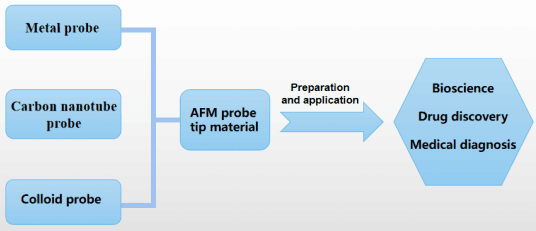
- , such as copper, silver, platinum, etc. Thus, it is also possible to prepare electrochemical colloidal probes (eCPs) with other metals. eCPs under electrochemical control of colloidal probes have potential in various research areas such as adhesion science, tribology or long-range interactions. eCPs
Electrocatalytic oxygen reduction activity of AgCoCu oxides on reduced graphene oxide in alkaline media
Beilstein J. Nanotechnol. 2022, 13, 1020–1029, doi:10.3762/bjnano.13.89
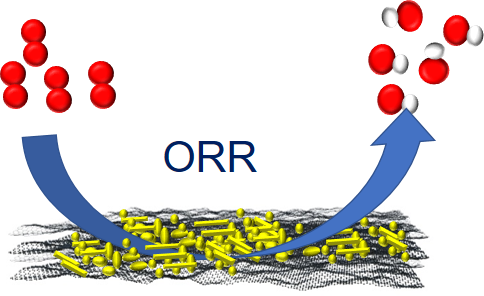
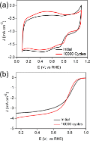
- , Faculty of Engineering and Technology, SRM Institute of Science and Technology, Kattankulathur – 603203, Tamil Nadu, India 10.3762/bjnano.13.89 Abstract Silver-based electrocatalysts as promising substitutes for platinum materials for cathodic oxygen electroreduction have been extensively researched
- the overall performance of the reaction [3][4]. There is an increasing use of platinum catalysts with diverse morphologies and the combination with noble and non-noble metal-based alloy/multimetallic nanoparticles (NPs) as potential electrocatalysts under extreme pH values [5][6][7][8][9][10][11][12


Temperature and chemical effects on the interfacial energy between a Ga–In–Sn eutectic liquid alloy and nanoscopic asperities
Beilstein J. Nanotechnol. 2022, 13, 817–827, doi:10.3762/bjnano.13.72
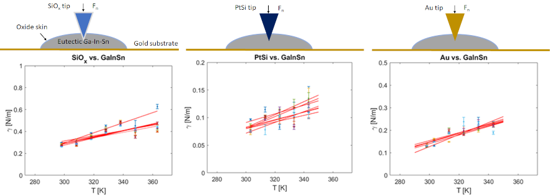
- nN and the sliding velocity to vs = 4 µm/s. Depending on the tip chemistry, we determined different roughness values ranging from Rq = 4.48 nm with a gold tip to Rq = 10.13 nm with a platinum silicide tip. This dependence on the tip chemistry likely originates from different capillary interactions
- the increase of the interfacial energy with the temperature based on the growth of an interfacial oxide layer. We suggest that tip material comes into solution in the Ga–In–Sn eutectic melt for the gold and platinum silicide tips. Though not verified here, we speculate that the partial and thermally
- results in the largest interfacial energy measured in this work. In the case of gold and platinum silicide, the interfacial energy decreases in proportion to the surface energy of the tip material. Moreover, we observe a positive thermal sensitivity of the interfacial energy, which we explain based on



A nonenzymatic reduced graphene oxide-based nanosensor for parathion
Beilstein J. Nanotechnol. 2022, 13, 730–744, doi:10.3762/bjnano.13.65
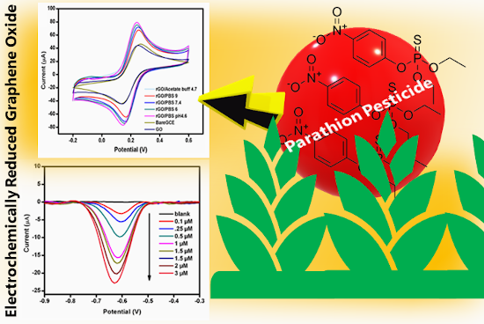
- Technologies, USA), which was connected by a three-electrode system, including a modified and/or unmodified GCE as the working electrode, a saturated Ag/AgCl as the reference electrode (RE), and a platinum wire as the counter electrode (CE). The electrochemical impedance spectroscopy (EIS) study of the


Reliable fabrication of transparent conducting films by cascade centrifugation and Langmuir–Blodgett deposition of electrochemically exfoliated graphene
Beilstein J. Nanotechnol. 2022, 13, 666–674, doi:10.3762/bjnano.13.58
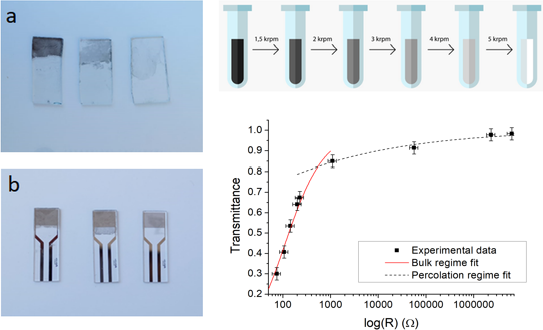
- substrates with dimensions of ca. 2 cm × 1 cm (Figure 2a). Although a great number of different types of substrate materials have been used, such as silica [37], chromium [38], tin [39], silver [40], or platinum [41], glass substrates were used in this paper. Glass is generally a popular choice, not just


Influence of thickness and morphology of MoS2 on the performance of counter electrodes in dye-sensitized solar cells
Beilstein J. Nanotechnol. 2022, 13, 528–537, doi:10.3762/bjnano.13.44
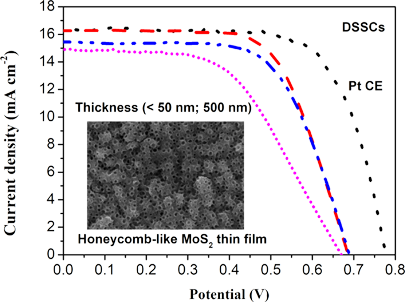
- City, 700000, Vietnam Vietnam National University Ho Chi Minh City, Linh Trung Ward, Thu Duc City, Ho Chi Minh City, 700000, Vietnam 10.3762/bjnano.13.44 Abstract Non-platinum electrodes for photoelectric devices are challenging and attractive to the scientific community. A thin film of molybdenum
- disulfide (MoS2) was prepared on substrates coated with fluorine-doped tin oxide (FTO) to substitute the platinum counter electrode (CE) for dye-sensitized solar cells (DSSCs). Herein, we synthesized layered and honeycomb-like MoS2 thin films via the cyclic voltammetry (CV) route. Thickness and morphology
- and respectable efficiency [1]. This promising third generation of solar cells contains a dye-adsorbed TiO2 photoanode, an iodide/triiodide electrolyte, and a platinum-based cathode, also known as the counter electrode (CE). However, the high cost of platinum has prevented the real-world application of


A chemiresistive sensor array based on polyaniline nanocomposites and machine learning classification
Beilstein J. Nanotechnol. 2022, 13, 411–423, doi:10.3762/bjnano.13.34
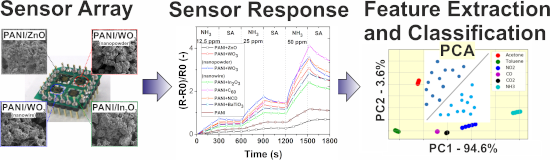
- the corrosion resistance. The width and spacing of interdigitated electrodes are 100 µm. The heating element (surface-mounted device SMD0402 resistor with an electric resistance of 50 Ω) and a platinum temperature sensor (SMD0603 Pt1000) are placed on the bottom side of each sensor by soldering with




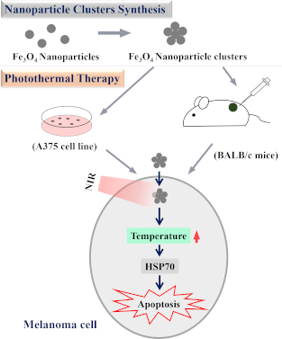
Photothermal ablation of murine melanomas by Fe3O4 nanoparticle clusters
Beilstein J. Nanotechnol. 2022, 13, 255–264, doi:10.3762/bjnano.13.20
- reverse-transcribed to cDNA using HiScript II 1st Strand cDNA Synthesis Kit (Vazyme). Benchtop PCR was performed on a GeneAmp PCR System 9700 machine in a 50 µL reaction volume: 1× PCR buffer (with Mg2+), 0.2 mM dNTP, 0.2 µM primers, 50 ng of template cDNA, and 0.5 µL of Platinum TaqDNA polymerase