Search results
Search for "polystyrene" in Full Text gives 234 result(s) in Beilstein Journal of Nanotechnology. Showing first 200.
Structure and electrochemical performance of electrospun-ordered porous carbon/graphene composite nanofibers
Beilstein J. Nanotechnol. 2020, 11, 1280–1290, doi:10.3762/bjnano.11.112
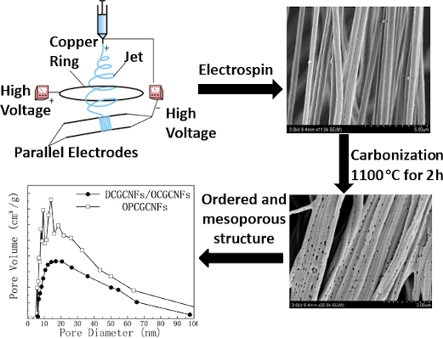
- are incompatible with PAN, such as polystyrene (PS), poly(ʟ-lactic acid) (PLLA) and poly(methyl methacrylate) (PMMA) [20][21][22][23]. During the carbonization process at a high temperature, PAN and the blended polymers undergo phase separation, forming a large number of pores which increases the


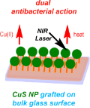
Photothermally active nanoparticles as a promising tool for eliminating bacteria and biofilms
Beilstein J. Nanotechnol. 2020, 11, 1134–1146, doi:10.3762/bjnano.11.98
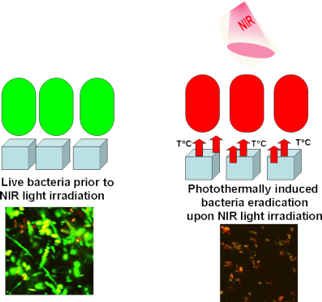
- ][23] and CuO [24][25][26], are also well described in the literature. The antibacterial activity of polymeric nanoparticles, such as the polystyrene sulfate coated with a bilayer of dioctadecyldimethylammonium bromide [27] and poly(lactic-co-glycolic acid) loaded with gentamicin [28], were also


Thermophoretic tweezers for single nanoparticle manipulation
Beilstein J. Nanotechnol. 2020, 11, 1126–1133, doi:10.3762/bjnano.11.97
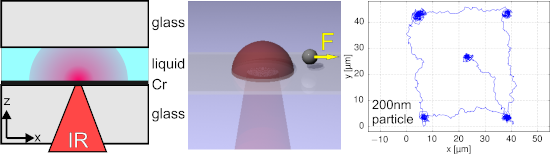
- , we analyze the distribution of the recorded particle positions and the corresponding effective trapping potential for 200 nm diameter polystyrene beads in aqueous 1 mM TRIS solution on a sapphire substrate. (A real-time video is available as Supporting Information File 1). It can be seen that the
- coefficient. For 1 μm diameter polystyrene beads in the same solution (D = 0.5 µm2/s and ST = 10/K) we obtained k = 15kBT/µm2 = 61.5 fN/µm, which is a value approximately 2 to 3 orders of magnitude lower than the stiffness of typical optical tweezers experiments. The stiffness of a parabolic trapping
- substrate. Thermo-optical trapping of a 200 nm polystyrene particle in water (Plas = 44 mW). (a) 2D histogram of particle positions. (b) Histogram of x- and y-positions. (c) Corresponding trap potentials in x- and y-directions obtained from (b), fitted with parabolic functions. Simulation results: (a


Key for crossing the BBB with nanoparticles: the rational design
Beilstein J. Nanotechnol. 2020, 11, 866–883, doi:10.3762/bjnano.11.72
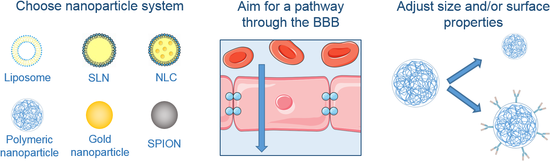
- proteins that can interact with nanoparticles and drastically hinder their diffusion [137]. By densely coating 40 nm and 100 nm fluorescent polystyrene nanoparticles with PEG, the nanoparticles were able to diffuse through the brain ECS of live mice, thanks to PEG limiting the adhesive interactions between


Integrated photonics multi-waveguide devices for optical trapping and Raman spectroscopy: design, fabrication and performance demonstration
Beilstein J. Nanotechnol. 2020, 11, 829–842, doi:10.3762/bjnano.11.68
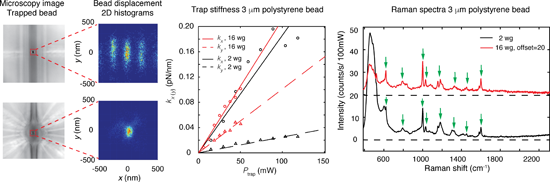
- -waveguide and a 16-waveguide device, using 1 and 3 μm polystyrene beads. Study of the confined Brownian motion of the trapped beads yields experimental values of the normalized trap stiffness for the in-plane directions. The stiffness values for the 16-waveguide device are comparable to those of tightly
- focused Gaussian beam traps and are confirmed by our own simulations. The Raman spectra of the beads (in this work measured via an objective) show clear peaks that are characteristic of polystyrene. In the low-wavenumber range, the spectra have a background that most likely originates from the Si3N4
- spectra are induced and collected by an external spectroscopy system. This work was extended in [4] by using fibers for both trapping of single polystyrene beads and for inducing and collecting Raman signals for the trapped beads. In our previous work [5], we used integrated photonics Si3N4 waveguides of


Silver-decorated gel-shell nanobeads: physicochemical characterization and evaluation of antibacterial properties
Beilstein J. Nanotechnol. 2020, 11, 620–630, doi:10.3762/bjnano.11.49
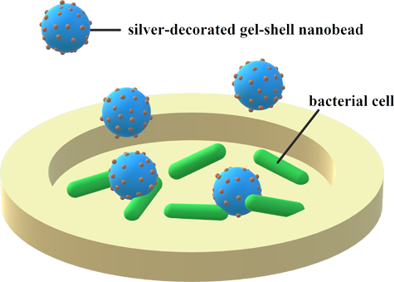
- of composite nanobeads with antibacterial properties. The particles consist of polystyrene cores that are surrounded by sulfonic gel shells with embedded silver nanoparticles. The nanocomposite beads are prepared by sulfonation of polystyrene particles followed by accumulation of silver ions in the
- [10][11][12][13][14][15][16][17]. The resulting composites exhibit a double function, they support the metal nanoparticles and prevent their aggregation. For example, polystyrene microspheres have been decorated with silver nanoparticles and were used as catalysts, Raman-enhancing materials
- , optoelectronic elements and biomedical devices [18][19]. Polystyrene beads are also a versatile material that can be quite easily functionalized with sulfonic groups. The particles are incubated with concentrated sulfuric acid at elevated temperature, which results in gradual etching of their surface. Through


Identification of physicochemical properties that modulate nanoparticle aggregation in blood
Beilstein J. Nanotechnol. 2020, 11, 550–567, doi:10.3762/bjnano.11.44
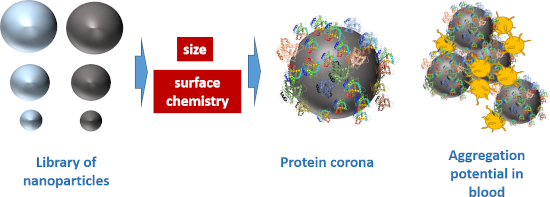
- currently not clear which properties lead to the activation of the coagulation. For example, positive charged dendritic NPs were found to be more thrombogenic than negatively charged ones while positive and negative charged polystyrene NPs both induce platelet activation [7][8]. Carbon and silica
- polystyrene cuvette, at 25 °C. PBS 0.01 M, pH 7.4, Sigma-Aldrich, was used as the diluent in the case of the evaluation of the size after the protein corona formation. Nanoparticle tracking analysis (NTA) An analysis of the size distribution and concentration of CNPs and SNPs were performed by NTA using a




Multilayer capsules made of weak polyelectrolytes: a review on the preparation, functionalization and applications in drug delivery
Beilstein J. Nanotechnol. 2020, 11, 508–532, doi:10.3762/bjnano.11.41
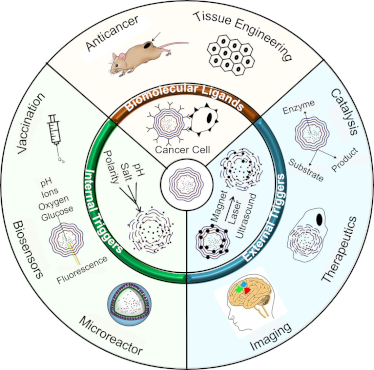
- manipulate the shell permeability [4]. However, most of the work uses strong PEs such as polystyrene sulfonate (PSS) as one of the polymers, and thus, in order to release the payload, a disturbance in the intermolecular forces (e.g., covalent binding, hydrogen bonding and electrostatic interactions) guarding
- polystyrene (PS) were the few originally employed as sacrificial templates. Upon dissolution of these templates at pH < 1.6 or by organic solvents such as dimethylformamide (DMF), dimethyl sulfoxide (DMSO), hydrochloric acid (HCl) and tetrahydrofuran, the capsule showed swelling and retraction of the shell in


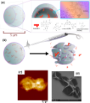

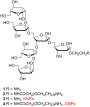
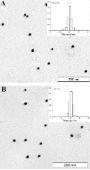
Preparation and in vivo evaluation of glyco-gold nanoparticles carrying synthetic mycobacterial hexaarabinofuranoside
Beilstein J. Nanotechnol. 2020, 11, 480–493, doi:10.3762/bjnano.11.39
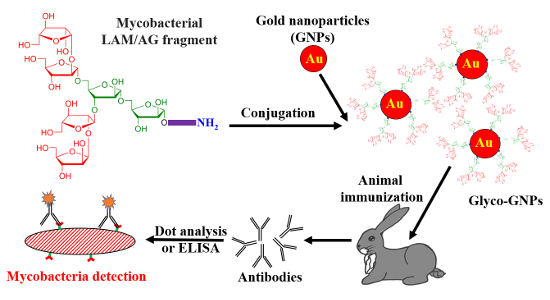
- medium) at 37 °C for 25 days. Enzyme-linked immunosorbent assay Detection of serological reactions of antisera with mycobacterial cells was carried out by ELISA in 96-well polystyrene plates using the standard procedure, as previously described [120]. Aliquots (50 μL) of each bacterial suspension in
- polystyrene. This solution was replaced with 50 μL of primary antibodies (antisera to glyco-GNPs, or intact serum, or antiserum to LPS of Azospirillum brasilense Sp7 [99] as negative control) diluted 1:100 in PBS containing 0.02% Tween 20 and 0.005% PEG (for prevention of nonspecific antibody sorption). After


Interactions at the cell membrane and pathways of internalization of nano-sized materials for nanomedicine
Beilstein J. Nanotechnol. 2020, 11, 338–353, doi:10.3762/bjnano.11.25
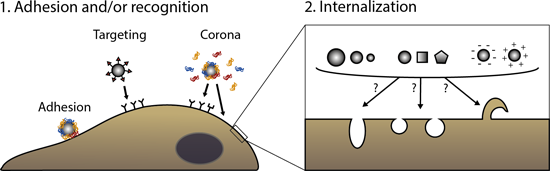
- ][126][127]. For example, in one study using HEK293 cells, spherical polystyrene nanoparticles of 100 nm were internalized through actin-dependent but clathrin-independent processes, and vice versa, 200 nm nanoparticles entered by clathrin-mediated endocytosis [127]. Similarly, the uptake of 500 nm
- could be internalized by HeLa cells [125]. Moreover, the effects of nanoparticle size on the mechanism of uptake may be different in different cell types. For example, it has been shown that murine RAW 264.7 macrophages have a higher uptake efficiency for carboxylated polystyrene nanoparticles compared
- to human endothelial HCMEC or epithelial HeLa cells [131]. In another study using carboxylated polystyrene nanoparticles of different sizes in different cell types, actin was required for the internalization of nanoparticles of 200 nm, but not for those of 40 nm in 1321N1 astrocytes. Instead, in lung


Rational design of block copolymer self-assemblies in photodynamic therapy
Beilstein J. Nanotechnol. 2020, 11, 180–212, doi:10.3762/bjnano.11.15
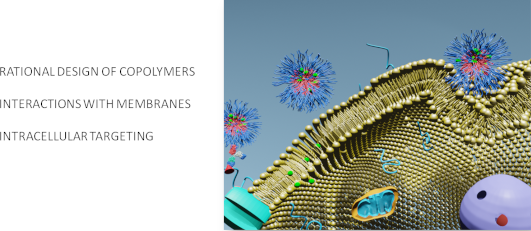
- inspiration from red blood cells, which transport oxygen via haemoglobin, the poly(acrylic acid) block in poly(ethylene glycol)-block-poly(acrylic acid)-block-polystyrene self-assemblies was conjugated to haemoglobin via carbodiimide chemistry [61]. The resultant carrier loaded with zinc phthalocyanine (ZnPc






Nonclassical dynamic modeling of nano/microparticles during nanomanipulation processes
Beilstein J. Nanotechnol. 2020, 11, 147–166, doi:10.3762/bjnano.11.13
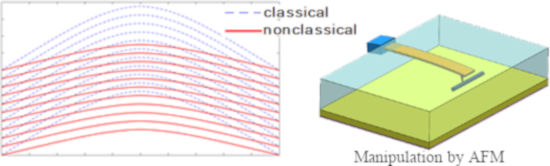
- of the classical method on polystyrene nanorods. The results for cylindrical gold nanoparticles indicate that the material length scale has a major effect on the exact positioning of cylindrical nanoparticles. Keywords: atomic force microscopy; modified couple stress theory; nanomanipulation
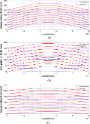
- of the results with other studies” that for a polystyrene nanorod that is softer than gold the same conclusion can not be reached. Table 4 shows the maximum deflections for the analyzed sample. The rotation angle of the modeled cylindrical gold nanoparticle along the nanoparticle length for the four
- studies are presented in Figure 18 and Figure 19 by employing contact mechanics models that are in compliance with other studies. Moradi et al. [8] studied the manipulation dynamics of a cylindrical nanorod made from polystyrene using a classical theory of continuum mechanics. In this section, by







Fabrication of Ag-modified hollow titania spheres via controlled silver diffusion in Ag–TiO2 core–shell nanostructures
Beilstein J. Nanotechnol. 2020, 11, 141–146, doi:10.3762/bjnano.11.12
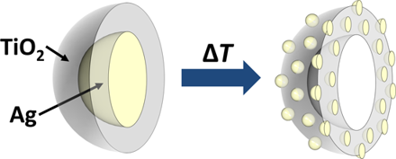
- NP-modified TiO2 HSs are based mainly on multistep processes including hard-templating methods [10][11][12][13][14][15][16][17][18][19]. Au-modified TiO2 HSs of regular shape were prepared using a multistep process in which sulfonated polystyrene spheres were used as a hard-template [10]. The



A review of demodulation techniques for multifrequency atomic force microscopy
Beilstein J. Nanotechnol. 2020, 11, 76–91, doi:10.3762/bjnano.11.8

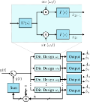
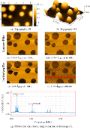
- fundamental resonance frequency of 156.75 kHz. The sample is a blend of polystyrene (PS) and polyolefin elastomer (LDPE) available from Bruker (PS-LDPE-12M). Due to the different elastic moduli of the PS and LPDE regions, the sample is used for evaluating imaging methods that are sensitive to elasticity


pH-Controlled fluorescence switching in water-dispersed polymer brushes grafted to modified boron nitride nanotubes for cellular imaging
Beilstein J. Nanotechnol. 2019, 10, 2428–2439, doi:10.3762/bjnano.10.233
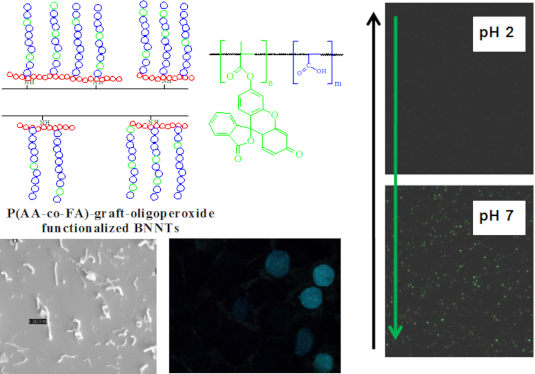
- polymer brushes via polymerization initiated from their surface [12][28]. In particular, BNNTs were covalently modified with hydrophobic polystyrene or poly(glycidyl methacrylate) polymer brushes [28]. The modified nanotubes demonstrated high dispersibility in a large number of organic solvents. In our


A novel method to remove impulse noise from atomic force microscopy images based on Bayesian compressed sensing
Beilstein J. Nanotechnol. 2019, 10, 2346–2356, doi:10.3762/bjnano.10.225
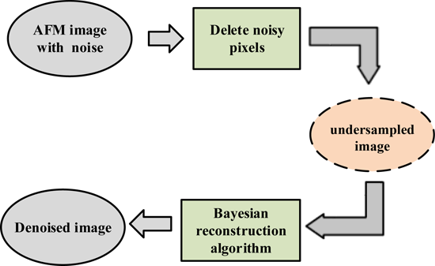
- proposed method, an AFM image with a high density of added impulse noise (Figure 7) and an image of a polymer-blend sample (stiff polystyrene (PS) and soft polybutadiene (PB) polymer, Nanosurf) with noise acquired with a Park Systems XE-100 AFM (Figure 8) are processed by the proposed method. It can be


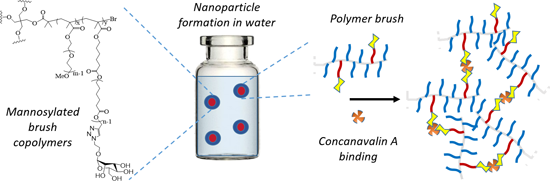
Mannosylated brush copolymers based on poly(ethylene glycol) and poly(ε-caprolactone) as multivalent lectin-binding nanomaterials
Beilstein J. Nanotechnol. 2019, 10, 2192–2206, doi:10.3762/bjnano.10.212
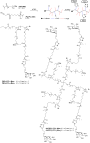
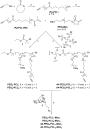
- molecular weight calculated by 1H NMR from the value obtained by GPC (which was substantial for the four-arm polymers) was likely to be caused by the polystyrene calibration and by the intrinsic limitation of the GPC to determine the exact molecular weight of comb-like and hyperbranched polymers, as
- , 500 A) and a PLgel 50 mm∙7.5 mm (5 μm particle size) guard, using THF as eluent at 35 °C. The system was controlled using polystyrene calibration kits (by RESTEK and Sigma-Fluka); samples were dissolved in THF at a concentration of 4 mg/mL and filtered (PTFE filters, 0.45 µm). Synthesis of propargyl
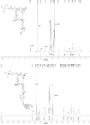
- , obtaining 20 g of final product Pg-PCL as a colorless viscous oil. Conversionε-CL = 99%; conversionpropargyl alcohol = 96%; yield = 92%; Mn,NMR = 716 g·mol−1; Mn,GPC = 1345 g·mol−1; PDI = 1.19 (relative to linear polystyrene). 1H NMR (400 MHz, CDCl3) δ 4.65 (d, J = 2.4 Hz, 2H, -CH2-CCH), 4.03 (t, J = 6.6 Hz



Use of data processing for rapid detection of the prostate-specific antigen biomarker using immunomagnetic sandwich-type sensors
Beilstein J. Nanotechnol. 2019, 10, 2171–2181, doi:10.3762/bjnano.10.210
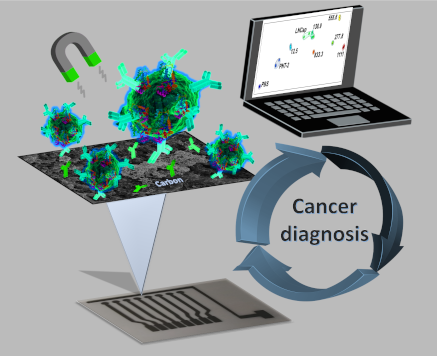
- microfluidic cell was set up, and the electrodes were insulated using a polystyrene card with double-sided adhesive. The double-sided tape was used to delimit the electroactive area, which was fixed on the reference electrode under the arrangement of working electrodes and the auxiliary electrode. Also, the


Gold-coated plant virus as computed tomography imaging contrast agent
Beilstein J. Nanotechnol. 2019, 10, 1983–1993, doi:10.3762/bjnano.10.195
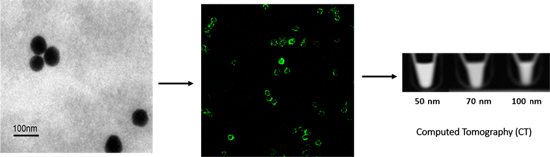
- with camera setting of 380 gain and shutter speed of 15 ms with auto particle detection settings. The instrument was calibrated with 100 nm standard polystyrene beads with known concentrations prior to sample recordings. Scanning transmission electron microscopy A FEI Titan 80-300 TEM/STEM (spherical




Subsurface imaging of flexible circuits via contact resonance atomic force microscopy
Beilstein J. Nanotechnol. 2019, 10, 1636–1647, doi:10.3762/bjnano.10.159
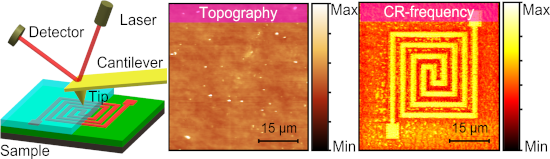
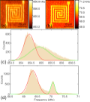
- measurements on some of the probes after CR-AFM subsurface imaging experiments. The thicknesses of the bottom, middle and top layers were approximated from practical AFM measurements. Different layer materials were investigated including PMMA, high-density polyethylene (HDPE), polystyrene (PS), polycarbonate



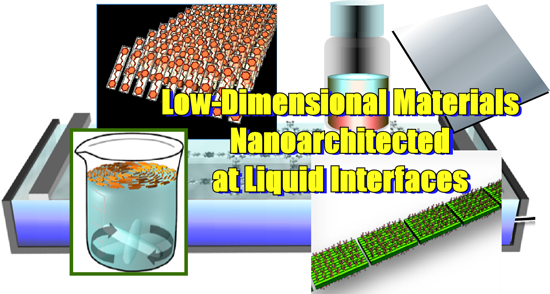
Materials nanoarchitectonics at two-dimensional liquid interfaces
Beilstein J. Nanotechnol. 2019, 10, 1559–1587, doi:10.3762/bjnano.10.153
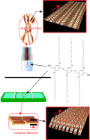
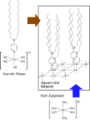
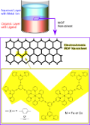
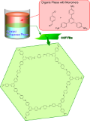
- mechanisms of formation and transformation of zero-dimensional structures within two-dimensional media (dot-dispersed monolayers of block copolymers) [200]. Self-assembled monolayers of polystyrene-b-poly(4-vinylpyridine) and its supramolecular complex with 3-n-pentadecylphenol at the air–water interface
- mechanism might be generalized for zero-dimensional dot-dispersed monolayers of block-copolymers. Wen and co-workers reported the drastic modification of two-dimensionally patterned Langmuir–Blodgett (LB) films of polystyrene-b-poly(2-vinylpyridine) transferred from the air–water interface through acetone













Development of a new hybrid approach combining AFM and SEM for the nanoparticle dimensional metrology
Beilstein J. Nanotechnol. 2019, 10, 1523–1536, doi:10.3762/bjnano.10.150
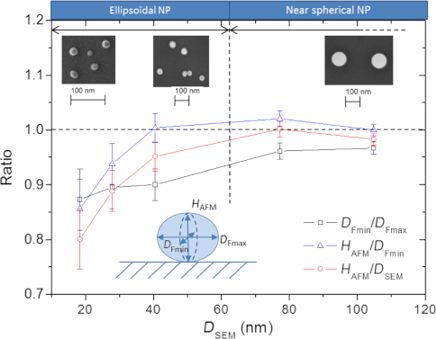
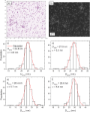
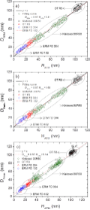
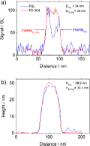
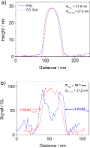
- to nanosilica were imaged by both techniques. A polystyrene latex (PSL) NP population was chosen because the NPs are well-known for having a spherical shape [24]. The PSL sample used in this study has a modal diameter close to 30 nm and can be thus directly compared with the FD304 NP population




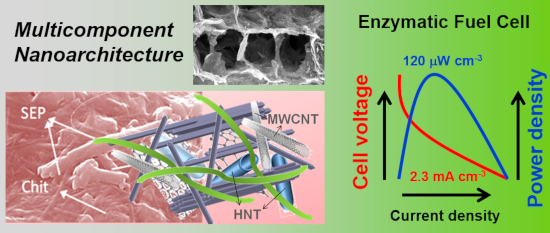
Multicomponent bionanocomposites based on clay nanoarchitectures for electrochemical devices
Beilstein J. Nanotechnol. 2019, 10, 1303–1315, doi:10.3762/bjnano.10.129
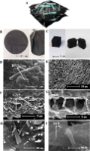
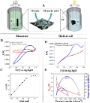
- –20 kNm·kg−1) [53] and is on par with polystyrene foams (10–100 kNm·kg−1) [49] and other bionanocomposite graphene–clay foams (77 kNm·kg−1) [43]. A high electrical conductivity of the bionanocomposite films and foams is crucial for their application in electrochemical devices. The conductivity was



Revisiting semicontinuous silver films as surface-enhanced Raman spectroscopy substrates
Beilstein J. Nanotechnol. 2019, 10, 1048–1055, doi:10.3762/bjnano.10.105
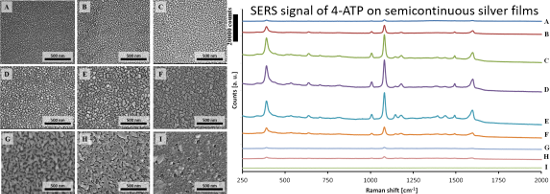
- -structured surfaces made of glass [25][26], GaN [27][28][29], Si [30], TiO2 [31], Al2O3 [32], Ti [33], polymers [34], or planar surfaces coated with nano/microspheres resulting in metal film on nanospheres MFON [35][36], and Au nanocrescents on a monolayer of polystyrene nanospheres [37]. Additionally




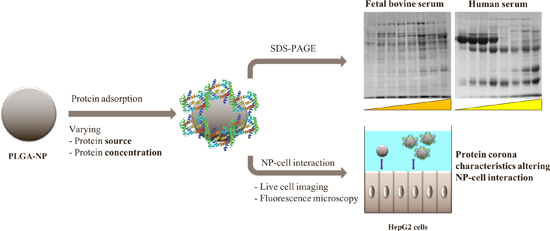
Serum type and concentration both affect the protein-corona composition of PLGA nanoparticles
Beilstein J. Nanotechnol. 2019, 10, 1002–1015, doi:10.3762/bjnano.10.101
- biological response and the pharmacokinetic behavior of colloidal drug carrier systems in the body. For instance, the coating of polystyrene NPs with HSA enhances their circulating lifetime in blood and reduces hepatic uptake clearance after intravenous injection into rats [25]. In contrast, some high