Search results
Search for "radicals" in Full Text gives 232 result(s) in Beilstein Journal of Nanotechnology. Showing first 200.
Green SPIONs as a novel highly selective treatment for leishmaniasis: an in vitro study against Leishmania amazonensis intracellular amastigotes
Beilstein J. Nanotechnol. 2023, 14, 893–903, doi:10.3762/bjnano.14.73
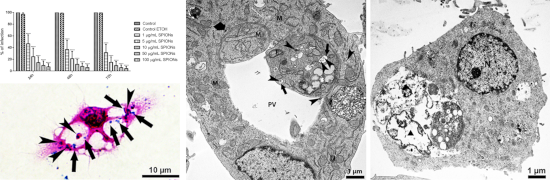
- reaction, catalyzing the formation of highly reactive hydroxyl radicals that lead to oxidative stress [28][29]. Thus, one of the possibilities for the observed antiproliferative effects could be the result of an imbalance in iron homeostasis with the consequent induction of oxidative stress and death of


Carboxylic acids and light interact to affect nanoceria stability and dissolution in acidic aqueous environments
Beilstein J. Nanotechnol. 2023, 14, 762–780, doi:10.3762/bjnano.14.63
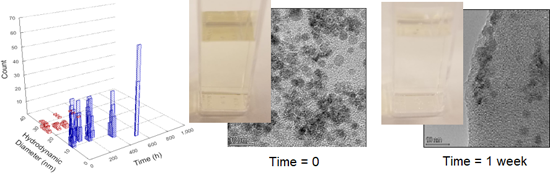
- did not occur in the dark in the presence of most carboxylic acids. Light initiates free radicals generated by ceria nanoparticles. Nanoceria completely dissolved in the presence of citric, malic, and isocitric acid when exposed to light, attributed to nanoceria dissolution, release of Ce3+ ions, and
- ]. When exposed to artificial sunlight, ceria nanoparticles produced hydroxy radicals and induced lipid peroxidation of the gills of cardinal tetra, a native species of the Rio Negro region [45]. The citric acid coating can also be altered by UV irradiation. Photolysis of citric acid under a Hg lamp
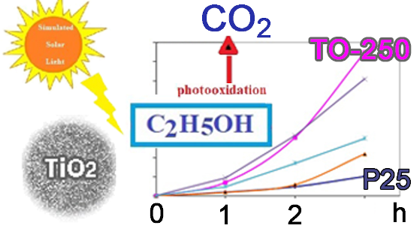
Titania nanoparticles for photocatalytic degradation of ethanol under simulated solar light
Beilstein J. Nanotechnol. 2023, 14, 616–630, doi:10.3762/bjnano.14.51
- that recombination processes are taking place at that level. This also applies to free holes trapped at acceptor levels [68], which cannot escape as easily as electrons from the donor level. Generation of hydroxyl radicals Reactive oxygen species are usually involved in the photodegradation of organic
- from the interaction with photogenerated hydroxyl radicals. Despite the fact that radical trapping was performed in aqueous solution, it can be indicative for the ability of the catalyst surface to generate hydroxyl radicals in the present investigated system. The main reactions leading to (•OH
- ) formation are the following: or Figure 8 shows a significant ability of TO-250-a, TO-450-a, TO-650-a, TO-850-a, and P 25 catalysts to generate •OH, indicating a presumable activity for CO2 generation. In contrast, the samples of series “b” are almost inactive. Only TO-450-b can produce hydroxyl radicals




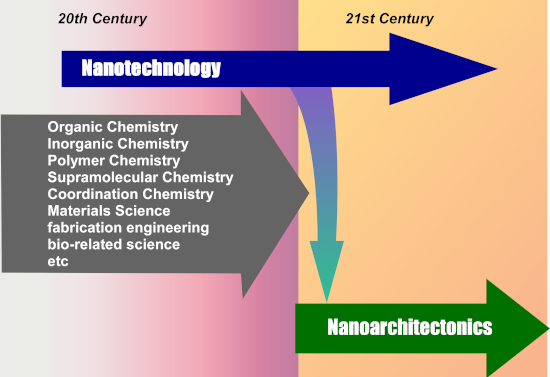
Molecular nanoarchitectonics: unification of nanotechnology and molecular/materials science
Beilstein J. Nanotechnol. 2023, 14, 434–453, doi:10.3762/bjnano.14.35
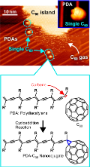
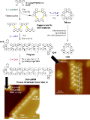
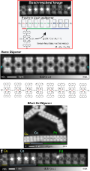
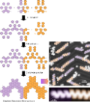
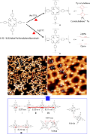
- molecules was also realized. Kawai et al. synthesized three-dimensional graphene nanoribbons by surface chemistry and showed that local probe chemistry can be used to add different molecules by tip manipulation [115]. Specifically, they demonstrated that radicals created by tip-induced debromination can be
- other words, a controlled addition reaction in a single molecule adsorbed on a surface by a local probe at low temperature was demonstrated. Long-lived radicals could be obtained, and C60 molecules could be selectively added to the sites. Such direct addition reactions enable the synthesis of single





Bismuth-based nanostructured photocatalysts for the remediation of antibiotics and organic dyes
Beilstein J. Nanotechnol. 2023, 14, 291–321, doi:10.3762/bjnano.14.26
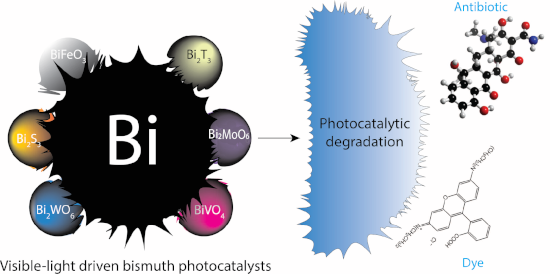
- by conventional methods [11][12][13][14]. For the oxidation of organic molecules, AOPs rely on the in situ generation of potent oxidants (reactive oxygen species, ROS) such as hydroxyl or sulfate radicals. AOPs have been broadly categorised in terms of how ROS are produced, including non
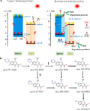
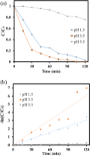
- hydroxyl radicals, enhancing the photocatalytic reaction. These results unequivocally demonstrate the significance of the pH value in the degradation process and the necessity to fine-tune the photocatalysts to make them functional at all pH values. The removal effectiveness and rate of photocatalytic
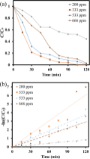
- decrease in efficiency was attributed to two causes: First, it is more difficult for photons to reach the photocatalyst at higher concentrations, which resulted in a decrease in the production of oxidant radicals and, as a result, a decrease in the degradation performance. Second, the number of


Recent progress in cancer cell membrane-based nanoparticles for biomedical applications
Beilstein J. Nanotechnol. 2023, 14, 262–279, doi:10.3762/bjnano.14.24
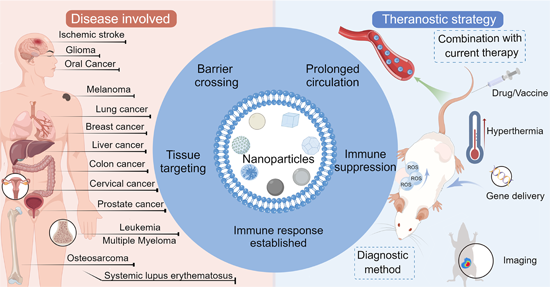
- levels of GSH peroxidases [106]. Based on the conditions in the TME, ferrous/ferric ions can catalyze H2O2 to produce hydroxyl radicals (•OH) through the Fenton reaction [39][107]. Nanoscale agents with ferroptosis function coated by cancer cell membranes can avoid surveillance of the body and travel to


Structural, optical, and bioimaging characterization of carbon quantum dots solvothermally synthesized from o-phenylenediamine
Beilstein J. Nanotechnol. 2023, 14, 165–174, doi:10.3762/bjnano.14.17
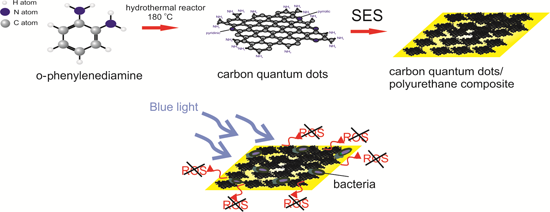
- −polyoxypropylene−polyoxyethylene Pluronic 68 generate singlet oxygen through energy transfer to molecular oxygen [21]. But CQDs prepared from o-phenylenediamine do not generate singlet oxygen or OH radicals through energy or electron transfer, because the condensation process of these dots includes NH2 groups in
- their structure whereas the presence of pyrrolic and pyridinic nitrogen is really minor. Thus reaction centers for ROS generation (dominantly pyridinic N) do not exist in o-phenylenediamine CQDs [40]. Hydroxyl radical production To examine the production of hydroxyl radicals, two measurements at
- indicate a low level of PL intensity after all measured time periods (0‒300 min) and (0‒440 min). This fact shows that there is no production of hydroxyl radicals in the CQDs/PU composite samples at the two excitation wavelengths (365 and 405 nm). In the previous section we established that the CQDs do not


Non-stoichiometric magnetite as catalyst for the photocatalytic degradation of phenol and 2,6-dibromo-4-methylphenol – a new approach in water treatment
Beilstein J. Nanotechnol. 2022, 13, 1531–1540, doi:10.3762/bjnano.13.126
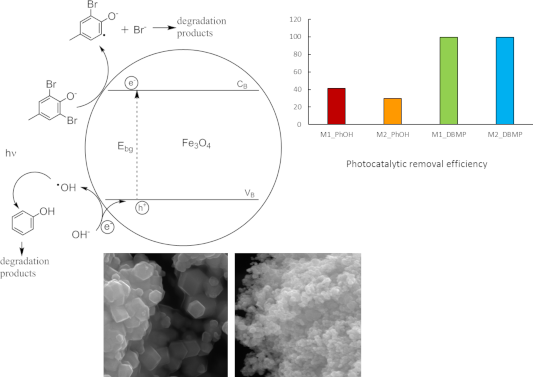
- , petroleum constituents, and volatile organic compounds. Furthermore, the rate of ozonation is accelerated in alkaline media because hydroxide ions catalyze the decomposition of ozone and produce hyperactive hydroxyl radicals (•OH). Photocatalysis is a promising technique for removing POPs from water using
- hydroxyl radicals (•OH) generated during water ozonation are described by the SBH model [30][31][32] for neutral pH or the TFG model [33][34][35] for pH > 7. Considering the process conditions during the study (pH 8), we are interested in the TFG model. The rate constants used in the model were determined
- by Chelkowska et al. [36]. The TFG model includes the following reactions: The reaction in Equation 6 shows that the ozone decomposition process is initiated by hydroxy anions. Two-electron transfer of the oxygen atom produces the –OOH anion, which is necessary for the generation of hydroxyl radicals


Recent trends in Bi-based nanomaterials: challenges, fabrication, enhancement techniques, and environmental applications
Beilstein J. Nanotechnol. 2022, 13, 1316–1336, doi:10.3762/bjnano.13.109
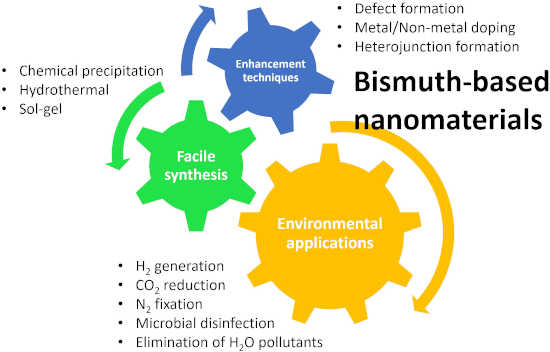
- conduction band (CB) through visible light [39]. The holes in the valence band of the catalyst split water to hydroxyl radicals (•OH). Electrons in the CB of a semiconductor photocatalyst can generate the superoxide anion (•O2−) when they interact with oxygen molecules. During the photocatalytic oxidative
- obtained. They found that Bi5O7Br effectively converts molecular oxygen to superoxide radicals and hydroxyl radicals in visible light. Under UV–vis irradiation, Bi5O7Br showed a higher photocatalytic activity in the degradation of rhodamine B (RhB) dye than BiOBr. The addition of Bi5O7Br photocatalysis to
- inside the oxygen vacancies have a longer lifetime than those in the CB. Therefore, electrons in defect states have the potential to react with oxygen that has been adsorbed by oxygen vacancies, which results in the production of superoxide •O2− radicals. These may subsequently be employed to drive




Rapid fabrication of MgO@g-C3N4 heterojunctions for photocatalytic nitric oxide removal
Beilstein J. Nanotechnol. 2022, 13, 1141–1154, doi:10.3762/bjnano.13.96
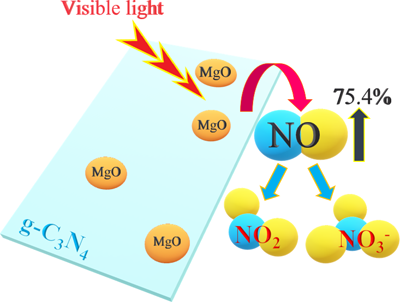
- scavenger also reduces the NO decomposition by about 1.3 times. The weak contribution of •OH radicals in the NO degradation is clearly shown, with a reduction in efficiency by only about 1%. Hence, electrons and holes are the main contributors to the photocatalytic NO degradation. Also, ESR was used to
- determine accurately the reaction mechanism of the material. Figure 11b shows that under visible light and using DMPO–H2O and DMPO–OH, the material generates •OH and •O2 radicals. In contrast, only •OH radicals are generated in the dark, but to a very low extent. Hence, the generation of •O2 radicals
- ). The holes can degrade NO directly by oxidizing NO into NO2 (Equations 9 and 10) [47][69]. Simultaneously, at the CB of g-C3N4, electrons are excited and react with O2 to produce •O2− radicals. In addition, these electrons also migrate across the CB of MgO, creating excess electrons in MgO and avoiding





Green synthesis of zinc oxide nanoparticles toward highly efficient photocatalysis and antibacterial application
Beilstein J. Nanotechnol. 2022, 13, 1108–1119, doi:10.3762/bjnano.13.94
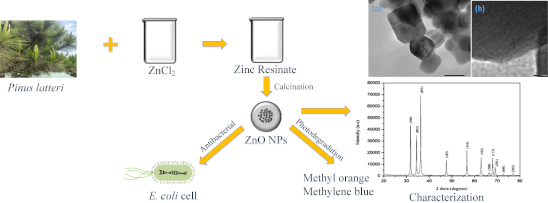
- ]. These photogenerated electrons and holes migrate to the surface of ZnO to react with H2O and O2 to generate O2•− and •OH radicals, which oxidize organic substances. In addition, ZnO nanoparticles (NPs) have high antibacterial activity against bacteria, high biocompatibility, and are nontoxic to human
- holes in VB and electrons in CB. The electrons reduce the oxygen absorbed on the ZnO surface to form •O2−. These •O2− species continue reacting with H2O to form H2O2 and •OH. The hole in VB will react with H2O to produce •OH radicals. These •OH radicals are strong oxidizing radicals and are mainly
- present in solution which can degraded dyes. These radicals can attract MO and MB molecules, oxidize the dye molecules to degradation products, and finally completely degrade the dyes to CO2 and H2O [35][36]. In addition, when ZnO NPs get in contact with E. coli, reactive oxygen species (ROS), such as •OH




Recent advances in green carbon dots (2015–2022): synthesis, metal ion sensing, and biological applications
Beilstein J. Nanotechnol. 2022, 13, 1068–1107, doi:10.3762/bjnano.13.93
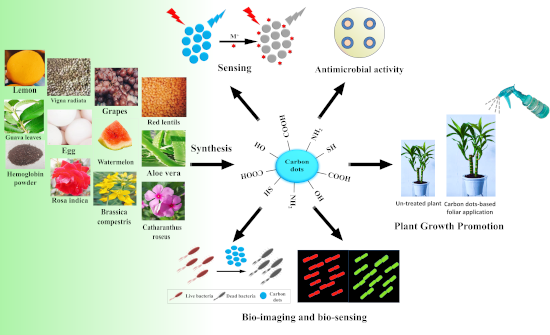
- Fe3+/Fe2+ in water, H2O2 can be split into hydroxyl radicals, and the ensuing radical is an incredibly potent oxidizing species. The treatment time lasted from 10 to 60 min, with 40 min yielding the highest CD luminescence. The resulting CDs (2–10 nm) have excellent penetration into HeLa cells




Spindle-like MIL101(Fe) decorated with Bi2O3 nanoparticles for enhanced degradation of chlortetracycline under visible-light irradiation
Beilstein J. Nanotechnol. 2022, 13, 1038–1050, doi:10.3762/bjnano.13.91
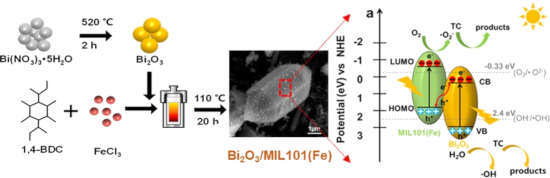
- speculated and shown in Figure 7. Two possible degradation pathways were deduced through hydroxylation, dehydration, and ring opening [59]. First, dechlorination of CTC due to the attack of radicals resulted in the formation of P1 intermediates with m/z of 444. Then P2 (m/z 432) was obtained from P1 through
- investigated by radical trapping test. Ethylenediaminetetraacetic acid disodium (EDTA-2Na), isopropanol (IPA), and vitamin C (VC) were used as scavengers for holes (h+), hydroxyl radicals (•OH), and superoxide radicals (•O2−), respectively. Figure 8a shows the degradation rate of CTC in the presence of three
- degradation efficiency of CTC decreased to 73.6% and 65.1%, respectively, indicating that h+ and •OH also played a role in the photocatalytic process to some extent. To further confirm the free radicals produced in the photocatalytic degradation of CTC, ESR spectra of the samples were measured. As given in


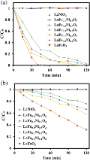
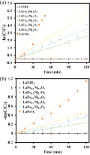
Solar-light-driven LaFexNi1−xO3 perovskite oxides for photocatalytic Fenton-like reaction to degrade organic pollutants
Beilstein J. Nanotechnol. 2022, 13, 882–895, doi:10.3762/bjnano.13.79
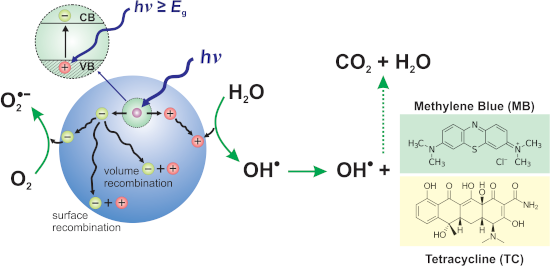
- substances in wastewater [16]. Among these procedures, the Fenton method causes numerous interests due to its convenience and effectiveness. Notably, the Fenton method can produce many hydroxyl radicals (∙OH) by introducing divalent iron solution and hydrogen peroxide, as shown in Equation 1 below. The
- complexes might compete with the hydroxyl radicals, eliciting a degradation of the reaction performance [18]. In recent years, the Fenton method has gradually developed into a new scenario of oxidation method, called photo-Fenton, which is facilitated or driven by the light source. Compared with a typical
- hydrogen peroxide can be remarkably transformed into redox radicals, followed by destroying the organic pollutants. Meanwhile, the remaining divalent iron complexes in the system can return to the circulation of hydrogen peroxide reaction and continuously form new hydroxide radicals [20]. Therefore, based



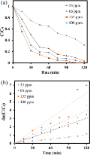
Hierarchical Bi2WO6/TiO2-nanotube composites derived from natural cellulose for visible-light photocatalytic treatment of pollutants
Beilstein J. Nanotechnol. 2022, 13, 745–762, doi:10.3762/bjnano.13.66
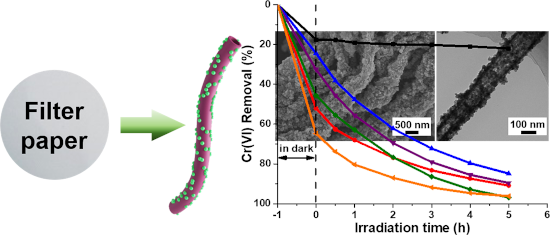
- photocatalytic reduction of Cr(VI), while hydroxyl radicals and reactive holes contributed to the photocatalytic degradation of rhodamine B. Keywords: biomimetic synthesis; cellulose; nanoarchitectonics; nanocomposite; nanotubes; photocatalysis; pollutants; Introduction The direct emission of untreated
- Cr(VI), IPA (0.1 M), EDTA-2Na (10.0 mM), KIO3 (0.1 M), and AgNO3 (0.1 M) were added into the reaction solution to shield the hydroxyl radicals (•OH), reactive holes (h+), superoxide radicals (•O2−) and electrons (e−) species, respectively, generated during the photocatalysis. Similarly, IPA (0.1 M


Correction: Coordination-assembled myricetin nanoarchitectonics for sustainably scavenging free radicals
Beilstein J. Nanotechnol. 2022, 13, 570–571, doi:10.3762/bjnano.13.48

Ethosomal (−)-epigallocatechin-3-gallate as a novel approach to enhance antioxidant, anti-collagenase and anti-elastase effects
Beilstein J. Nanotechnol. 2022, 13, 491–502, doi:10.3762/bjnano.13.41
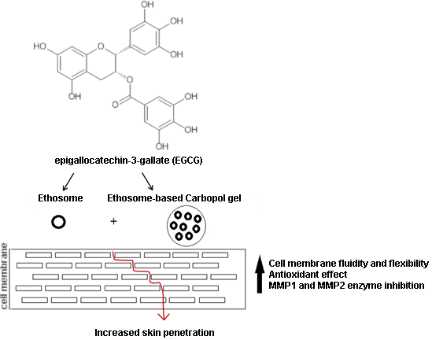
- responsible for the elasticity and resistance of the skin in the dermis, (i.e., the middle layer of the skin) are collagen and elastin, and the changes in these two components play an important role in the skin aging process [1][2]. The production of reactive oxygen species (ROS) or free radicals through
- ultraviolet (UV) radiation, smoking, pollution, and normal endogenous metabolic processes triggers the skin aging process. Elastase and collagenase enzymes induced by the formation of ROS accelerate the aging process and cause loss of collagen and elastin fibrils. With the formation of free radicals, lipid
- peroxides and free oxygen radicals increase. Damage to phospholipids, which contain large amounts of unsaturated fatty acids and are sensitive to degradation by hydroxyl radicals, deteriorates the structure of the cell membrane [3]. Antioxidants are compounds that capture and stabilize free radicals and



Investigation of electron-induced cross-linking of self-assembled monolayers by scanning tunneling microscopy
Beilstein J. Nanotechnol. 2022, 13, 462–471, doi:10.3762/bjnano.13.39
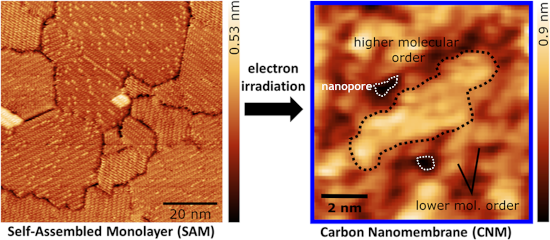
- attachment process at ≈6 eV and suggested that the cross-linking of aromatic SAMs proceeds in a radical chain reaction [53]. Above the ionization potential, a direct electron impact ionization is believed to cause C–H cleavage and generate radicals [63]. Neumann et al. found a strong energy dependence for
- initiates a reaction with an adjacent molecule and generates another new radical carbon center, which may react with other molecules. According to Amiaud et al. [53], the formation of first radicals can be caused either by electronic rearrangement or dissociative electron attachment of the negative ion


Coordination-assembled myricetin nanoarchitectonics for sustainably scavenging free radicals
Beilstein J. Nanotechnol. 2022, 13, 284–291, doi:10.3762/bjnano.13.23
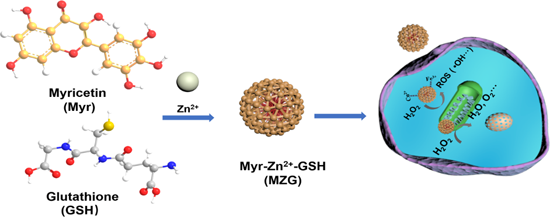
- signal pathways and, thus, of sustainably scavenging radicals. However, Myr is poorly soluble in water, which limits its bioavailability for biomedical applications, and even its clinical therapeutic potential. The antioxidant peptide glutathione (GSH) plays a role as antioxidant in cells and possesses
- not only chelating intracellular transition metal ions for removing reactive oxygen species (ROS) [20], but also of activating antioxidant enzymes and the AMPK/NRF2 signal pathway [21], yielding sustainable scavenging of radicals. Myr can inherently increase body resistance to carcinogens, viruses
- (equivalent concentration of Myr: 0.25, 0.5, 1, 1.5, and 2 µg·mL−1, equivalent concentration of GSH: 1, 2, 3, and 4 µg·mL−1) gradually decreased, suggesting that MZG nanoparticles scavenged radicals. When the concentration of MZG nanoparticles was equivalent to 2 µg·mL−1 of Myr and 4 µg·mL−1 of GSH, the


Engineered titania nanomaterials in advanced clinical applications
Beilstein J. Nanotechnol. 2022, 13, 201–218, doi:10.3762/bjnano.13.15
- photocatalytic activity. Upon UV irradiation, the electrons in the valence band get excited to the conduction band, leading to the formation of electron–hole pairs and the generation of ROS. Subsequently, the generated holes (h+) convert water/hydroxide molecules to peroxide/hydroxyl radicals by oxidation. The
- generated free electrons (e−) react with molecular oxygen to generate superoxide radicals by reduction. Several factors contribute to the photocatalytic performance of TiO2, such as the structural phase (anatase, brookite, or rutile), defects in the lattice, the degree of crystallinity, morphology
- convenient recombination electrons and holes, the electrons and holes live long enough for a continuous ROS generation on the surface, which is a highly demanded feature of TiO2 nps for the eradication of surface microorganisms [78]. Some studies showed that anatase could produce •OH radicals in a


A comprehensive review on electrospun nanohybrid membranes for wastewater treatment
Beilstein J. Nanotechnol. 2022, 13, 137–159, doi:10.3762/bjnano.13.10
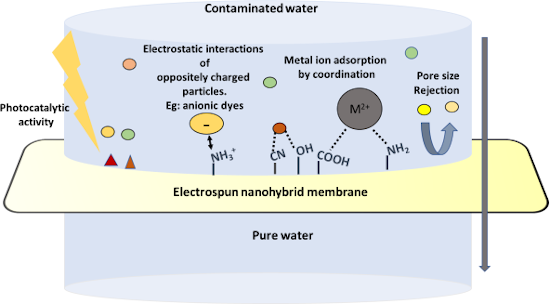





Tin dioxide nanomaterial-based photocatalysts for nitrogen oxide oxidation: a review
Beilstein J. Nanotechnol. 2022, 13, 96–113, doi:10.3762/bjnano.13.7
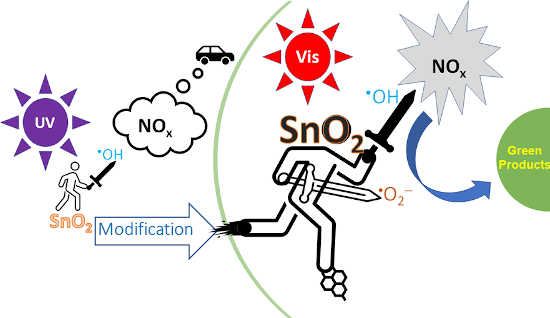
- working scheme of semiconductor photocatalysts for NO oxidation. Light generates holes (h+) in the valence band (VB) and electrons (e–) in the conduction band (CB) of the photocatalytic material. Electrons at the material surface will react with oxygen molecules to form superoxide radicals (•O2
- −, similarly holes react with water to form hydroxyl radicals). Free radicals and strong oxidizing agents react with NOx to produce NO3−, deposited on the photocatalyst surface. The NO3− product formed on the surface of the catalyst can be easily separated for further treatment by washing with water due [11
- SnO2 NPs, and this is the first report on using a SnO2 photocatalyst with NP morphology for the NO degradation. The photocatalytic mechanism of SnO2 NPs is based on electrons and holes to generate reactive radicals. Figure 7 shows that the photocatalytic NO removal efficacy of SnO2 NPs achieved 63.37


Sputtering onto liquids: a critical review
Beilstein J. Nanotechnol. 2022, 13, 10–53, doi:10.3762/bjnano.13.2
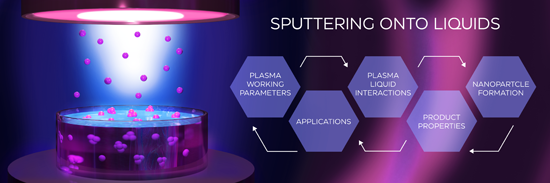
- multiply charged ions (Ar2+, M2+). If the plasma is generated in an argon/reactive gas mixture R+, R2+, R2+, and MRx+ ions (with R being, e.g., O or N) can also be found; (3) chemically reactive radicals such as O or N atoms produced through dissociation reactions during reactive sputtering. O atoms can






Comprehensive review on ultrasound-responsive theranostic nanomaterials: mechanisms, structures and medical applications
Beilstein J. Nanotechnol. 2021, 12, 808–862, doi:10.3762/bjnano.12.64
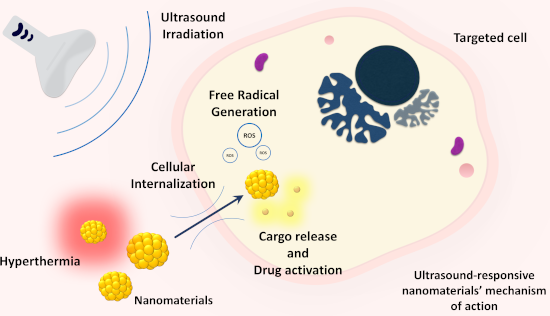
- ]. In other cases, disruption and destabilization of the complex nanostructure subsequent to US vibration leads to drug release [28][29][30]. In addition, the ultrasonication of certain complexes can generate free radicals that can cause cell damage or activation of cellular signaling pathways [31
- components in water-based media, which plays a role in both therapeutic and diagnostic applications [148][149]. Due to the toxicity of free radicals, some chemical compounds called sonosensitizers have been used as sonodynamic therapy agents which produce synergistic effects with US irradiation by generating
- free radicals [150]. Masuda et al. proposed that there is a relation between the quality and quantity of free radical formation and the frequency of the US applied in the presence of MBs [151]. The combination of free-radical-generating components and other materials could lead to multifunctional


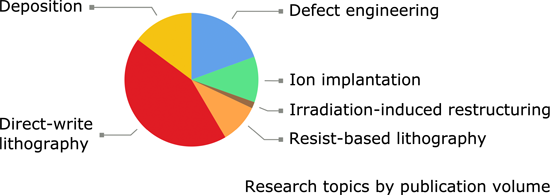
A review of defect engineering, ion implantation, and nanofabrication using the helium ion microscope
Beilstein J. Nanotechnol. 2021, 12, 633–664, doi:10.3762/bjnano.12.52