Search results
Search for "semiconductors" in Full Text gives 357 result(s) in Beilstein Journal of Nanotechnology. Showing first 200.
Nanomaterials for photocatalysis and applications in environmental remediation and renewable energy
Beilstein J. Nanotechnol. 2023, 14, 722–724, doi:10.3762/bjnano.14.58

- potential strategy for water treatment via the effectively infinite energy from the sun and the photocatalysts. Photocatalysis based on nanostructured semiconductors can significantly contribute to tackling several environmental pollution problems, sustainable synthesis, and energy production [2][15][16
- development of advanced materials based on semiconductors (i.e., carbon-modified hexagonal boron nitride (MBN), MgO@g-C3N4, and TiO2@MWCNTs) have indicated a highly efficient photocatalytic performance for phenol removal using a low-power visible LED light source. For NO degradation, a visible light source

Metal-organic framework-based nanomaterials as opto-electrochemical sensors for the detection of antibiotics and hormones: A review
Beilstein J. Nanotechnol. 2023, 14, 631–673, doi:10.3762/bjnano.14.52
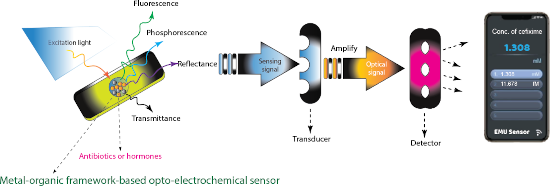
- developing luminescent sensors include their toxicity, ease of aggregation, photobleachability, and low capacity for adsorption of the target analyte. Numerous luminescent materials, including semiconductors, metal complexes, metal-based fluorescent nanoparticles, MOFs, and inorganic phosphors doped with
- simulations based on density functional theory with periodic boundary conditions. In comparison to the building units, they noticed that MOFs have a charge distribution that remains constant, and their electronic properties show a wide range of bandgap energies categorized as insulators or semiconductors. The


Conjugated photothermal materials and structure design for solar steam generation
Beilstein J. Nanotechnol. 2023, 14, 454–466, doi:10.3762/bjnano.14.36
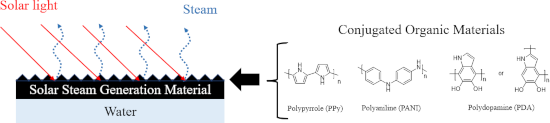
- . Photothermal materials (PTMs) applied to SSG include metallic materials, semiconductors, carbon-based materials, and conjugated organic materials [1][2][3][4]. Compared to metallic and inorganic PTMs, π-conjugated organic PTMs have advantages, such as a greater light absorption, easier synthesis, and
- nonradiative relaxation of excited electrons to the ground state. Depending on the interaction mechanism, photothermal phenomena are classified into three categories, namely plasmonic local heating of metals, nonradiative relaxation of semiconductors, and thermal vibration relaxation of conjugated molecules


Molecular nanoarchitectonics: unification of nanotechnology and molecular/materials science
Beilstein J. Nanotechnol. 2023, 14, 434–453, doi:10.3762/bjnano.14.35
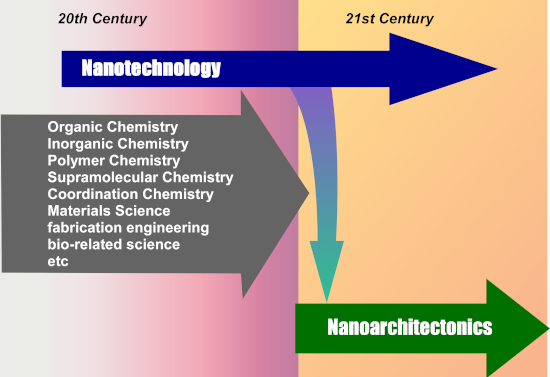
- allows a wide variety of nonplanar aromatic hydrocarbons to be built and highly distorted structures to be synthesized. These nonplanar aromatic hydrocarbons are expected to have a wide range of applications, including semiconductors, light-emitting devices, bioimaging, and pharmaceuticals. As a polymer







Plasmonic nanotechnology for photothermal applications – an evaluation
Beilstein J. Nanotechnol. 2023, 14, 380–419, doi:10.3762/bjnano.14.33
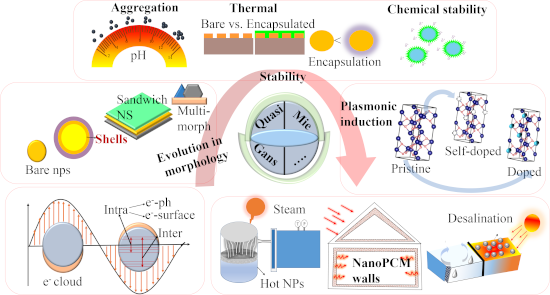
- to its atoms, eventually converted to heat through a series of energy-loss processes. This conversion of electromagnetic energy into heat is called the photothermal (PT) effect. Early stages of the PT effect were initially observed in semiconductors [2], after which researchers started to explore
- and Cu [54]. The free electron density is tied to the effective mass and determines the resonant plasma frequency (ωp), given by where N is the free electron density, m is the effective mass, and e is the elementary charge. The LSPR effect is not present in most of the semiconductors because of their
- lack of the required free carrier concentration. Similar to how the free carrier density of metals can be tuned by size, morphology, and refractive index of the nanomaterial, the free carrier density of semiconductors can be easily tuned by doping, temperature variations, or by phase transitions. LSPR




Bismuth-based nanostructured photocatalysts for the remediation of antibiotics and organic dyes
Beilstein J. Nanotechnol. 2023, 14, 291–321, doi:10.3762/bjnano.14.26
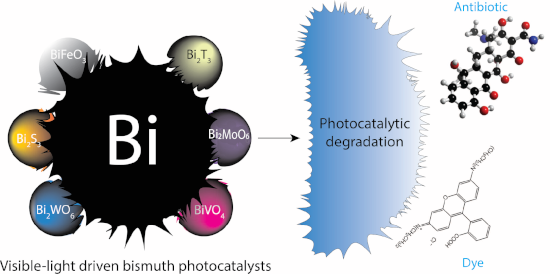
- environment worldwide, in addition to the global energy crisis, is the increasing water pollution caused by micropollutants such as antibiotics and persistent organic dyes. Nanostructured semiconductors in advanced oxidation processes using photocatalysis have recently attracted a lot of interest as a
- of the most prominent study topics compared to the commonly used semiconductors (TiO2 and ZnO). In this review, the most recent developments in the use of photocatalysts based on bismuth (e.g., BiFeO3, Bi2MoO6, BiVO4, Bi2WO6, Bi2S3) to remove dyes and antibiotics from wastewater are thoroughly
- [71], and environmental remediation via photocatalysis [25]. Bi-based semiconductors, in particular, are thought to be able to surpass the limitation of the solar light-harvesting capacity of TiO2-based photocatalytic materials because of their smaller bandgaps. Because of its highly anisotropic Fermi


High–low Kelvin probe force spectroscopy for measuring the interface state density
Beilstein J. Nanotechnol. 2023, 14, 175–189, doi:10.3762/bjnano.14.18
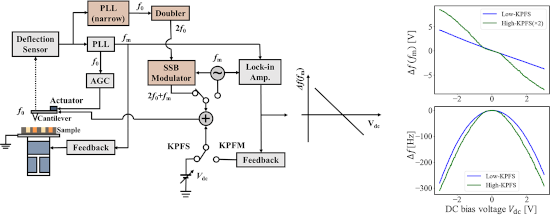
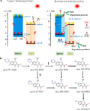
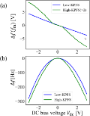
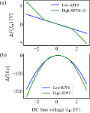
- interface state density inside semiconductors. We derive an analytical expression for the electrostatic forces between a tip and a semiconductor sample in the accumulation, depletion, and inversion regions, taking into account the charge transfer between the bulk and interface states in semiconductors. We
- the physical properties of semiconductors, information on semiconductor interface states is particularly important. For example, in semiconductor devices such as field-effect transistors, the presence of semiconductor interface states is known to significantly affect device operation characteristics
- have been performed on a variety of sample surfaces, including metals [9][10], semiconductors [11][12][13][14], and insulators [15][16][17]. When a semiconductor sample is measured by KPFM, the measured CPD is related to information about the semiconductor properties such as dopant density, surface



Photoelectrochemical water oxidation over TiO2 nanotubes modified with MoS2 and g-C3N4
Beilstein J. Nanotechnol. 2022, 13, 1541–1550, doi:10.3762/bjnano.13.127
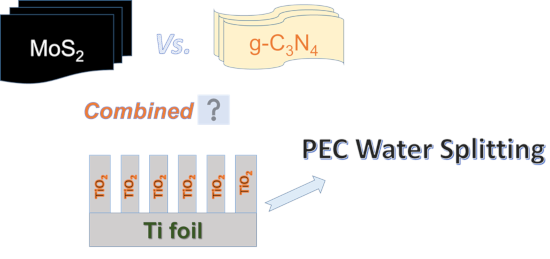
- could replace noble metals are a research interest. Photocatalytic technology uses semiconductors for effective approaches to the degradation of dyes and antibiotics, the removal of pollutant gases, and water splitting to produce hydrogen using solar energy [12][13][14][15][16][17]. Among such
- semiconductors, TiO2 nanotube arrays (TNAs) of 2–100 nm in diameter and 1–2 μm in length, are often used for efficient PEC applications exploiting advantages such as chemical stability, less toxicity and suitable cost [18][19][20][21]. However, there are two disadvantages affecting directly their photocatalytic
- ability. (i) TNAs only respond to ultraviolet (UV) light [22][23][24], and (ii) they exhibit fast carrier recombination [25]. Recently, the development of new heterojunction architectures through coupling TNAs with other semiconductor materials, especially low-bandgap semiconductors, led to a reduction of


Non-stoichiometric magnetite as catalyst for the photocatalytic degradation of phenol and 2,6-dibromo-4-methylphenol – a new approach in water treatment
Beilstein J. Nanotechnol. 2022, 13, 1531–1540, doi:10.3762/bjnano.13.126
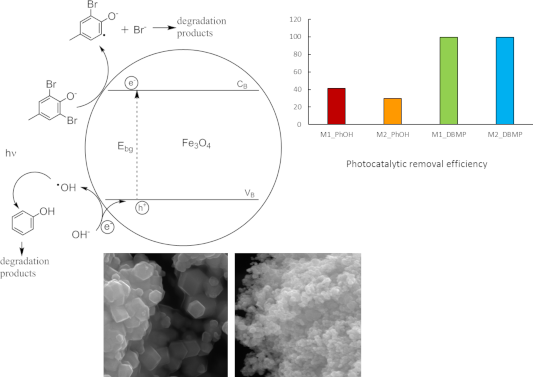
- catalysts were semiconductors rather than conductors. The morphology of the Fe3O4 catalysts is shown in Figure 2. The images show nanocrystal agglomerates with particle sizes of 100–400 nm for M1 and of 25–100 nm for M2 (Figure 2). The aggregation of M2 particles is much stronger than that of M1. Hence, M2


Frequency-dependent nanomechanical profiling for medical diagnosis
Beilstein J. Nanotechnol. 2022, 13, 1483–1489, doi:10.3762/bjnano.13.122
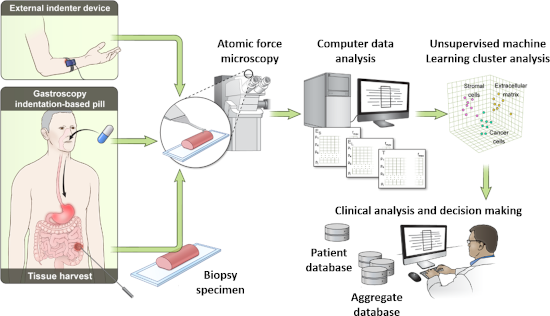
- chemical characterization of surfaces ranging from semiconductors and metals to polymers and biological materials [1][2][3][4][5]. In particular, a variety of mechanical property measurement methods have been developed, although most of them are restricted to relatively simple physical descriptions, such
- been used in corporate or corporate-funded research for the characterization of polymers, semiconductors and other materials [21][22][23][24][25][26][27][28][29]. It is also well known that we owe the invention of the AFM to scientists at IBM [1]). The slow adoption of AFM methods in broad-impact


Recent trends in Bi-based nanomaterials: challenges, fabrication, enhancement techniques, and environmental applications
Beilstein J. Nanotechnol. 2022, 13, 1316–1336, doi:10.3762/bjnano.13.109
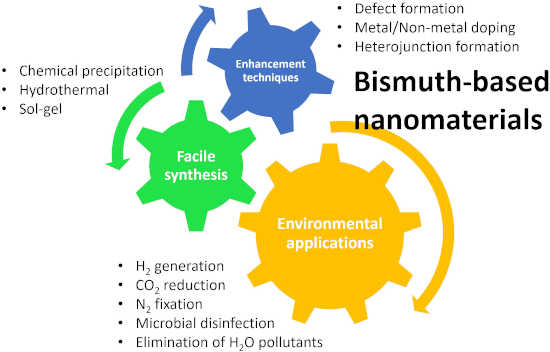
- environmentally beneficial alternatives [7]. The choice of the photocatalysts is one of the most important steps in attaining high performance in photocatalysis. Semiconductors with bandgaps greater than 3 eV are called wide-bandgap photocatalysts. These semiconductors include oxides (e.g., TiO2, Bi2O3, Bi2WO6
- oxides, and binary Bi sulfides. Bismuth oxyhalides are indirect bandgap semiconductors in which photogenerated electrons and holes rarely recombine. BiOX is an excellent photocatalyst, and it is widely applied due to its small bandgap and high electron density, which are easily adjustable by changing the
- photocatalytic effectiveness of those semiconductors is inadequate for practical environmental and energy conservation applications because of substantial electron–hole recombination and a low capacity for the absorption of visible light. Numerous attempts have been made, with an emphasis on doping, the creation




Bending and punching characteristics of aluminum sheets using the quasi-continuum method
Beilstein J. Nanotechnol. 2022, 13, 1303–1315, doi:10.3762/bjnano.13.108
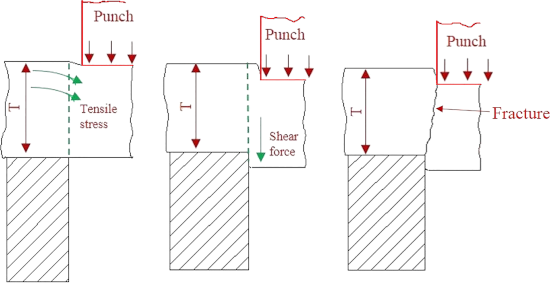
- , nanoelectromechanical systems (NEMS), environmental science, and semiconductors [1][2][3][4][5][6][7][8][9][10]. The increased requirements for advanced nanostructures simultaneously give rise to extensive researches in precision machining techniques, including nanoimprinting lithography (NIL) [11][12], mechanical nano





Enhanced electronic transport properties of Te roll-like nanostructures
Beilstein J. Nanotechnol. 2022, 13, 1284–1291, doi:10.3762/bjnano.13.106
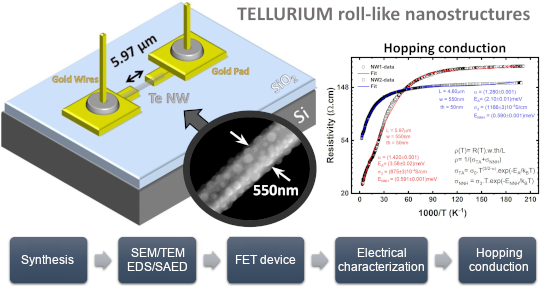
- value is in excellent agreement with our experimental values of EA = 2.10 meV and EA = 3.58 meV, found through the analysis of the resistivity data (Figure 5). These values are surprisingly small compared to the larger ionization energy of acceptors (near 1 eV) in semiconductors with small valence band




Design of surface nanostructures for chirality sensing based on quartz crystal microbalance
Beilstein J. Nanotechnol. 2022, 13, 1201–1219, doi:10.3762/bjnano.13.100
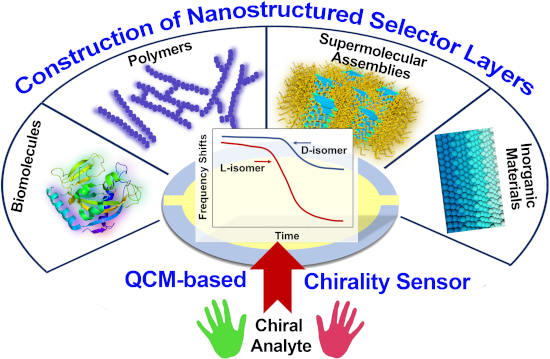
- sensing layers from inorganic nanostructures In contrast to the abundance of chiral organic molecules, chirality in inorganic materials seems rare. Unlike the well-established theory of chirality for organic molecules, the notion of chirality for metals, semiconductors, and other inorganic nanostructures


Rapid fabrication of MgO@g-C3N4 heterojunctions for photocatalytic nitric oxide removal
Beilstein J. Nanotechnol. 2022, 13, 1141–1154, doi:10.3762/bjnano.13.96
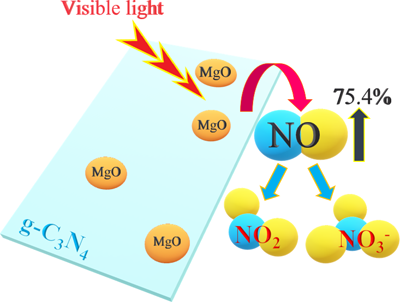
- (+1.75 eV) is more negative than that of H2O/•OH (+2.40 eV), reducing the photocatalytic efficiency [16][17]. A well-known approach for overcoming this problem in order to achieve increased photocatalytic performance is to couple two semiconductors with optimal band alignment. MgO is an alkaline metal
- redox potential by coupling two or more semiconductors [23][24], such as Bi2MoO6-based [25][26][27][28][29], BiOCl-based [30][31], g-C3N4-based [32][33][34], ZnO-based [35][36][37], TiO2-based [38][39], and MgO-based heterostructured photocatalysts [40]. Among these, the combination of MgO and g-C3N4








Green synthesis of zinc oxide nanoparticles toward highly efficient photocatalysis and antibacterial application
Beilstein J. Nanotechnol. 2022, 13, 1108–1119, doi:10.3762/bjnano.13.94
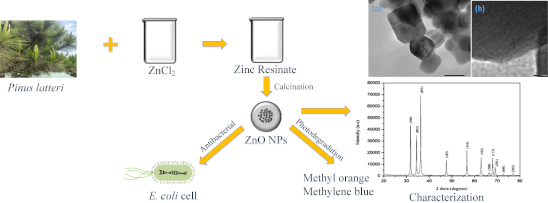
- technologies have been proposed to remove organic pollutants from water, including coagulation coupled with sedimentation, biological processes, membrane filtration, adsorption, advanced oxidation, catalysis, and photocatalysis [1][2][3]. Using semiconductors as photocatalysts has been a widely studied
- approach for the complete removal of organic pollutants due to their advantages. Semiconductors can act as catalysts for the complete degradation of organic substances when excited by light with an energy value higher than their bandgap. Among many semiconductors, TiO2 and ZnO are widely used as





Recent advances in green carbon dots (2015–2022): synthesis, metal ion sensing, and biological applications
Beilstein J. Nanotechnol. 2022, 13, 1068–1107, doi:10.3762/bjnano.13.93
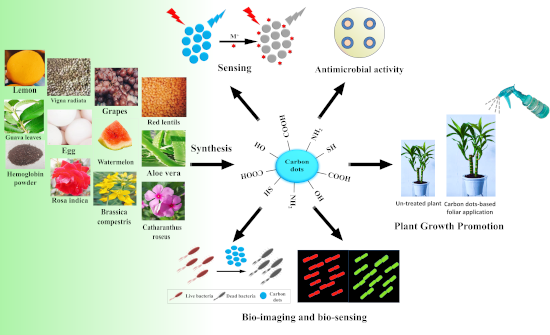
- that could detect Hg2+ and cysteine in a linear range of 2–20 μM and 0.1–2.0 μM for Hg2+ and Cys, respectively [53]. When compared to un-doped CDs, CDs co-doped with nitrogen and phosphorus (N,P-CDs) display novel and surprising features. After doping with N, the CDs become n-type semiconductors. In




Spindle-like MIL101(Fe) decorated with Bi2O3 nanoparticles for enhanced degradation of chlortetracycline under visible-light irradiation
Beilstein J. Nanotechnol. 2022, 13, 1038–1050, doi:10.3762/bjnano.13.91
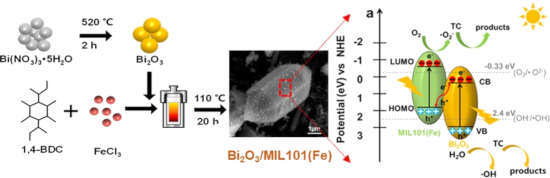
- traditional measures were difficult to be popularized. Photocatalysis is considered as an alternative and promising strategy for degradation and mineralization of antibiotics due to its low cost, high efficiency, mild reaction condition, and no secondary pollution [9][10][11]. A variety of semiconductors have
- use carbon nanotubes or carbon quantum dots to modify MIL101(Fe) to enhance its conductivity and broaden its visible-light response [37][38]. Another strategy is to construct MIL101-based heterostructures with the aid of narrow-gap semiconductors to promote the separation and transfer of
- photogenerated charges and resultant photocatalytic activity [26]. Up to date, a few semiconductors such as ZnO [39], TiO2 [19] and g-C3N4 [40] have been employed to construct heterojunctions with MIL101(Fe). The abovementioned MIL101-based heterojunctions are all traditional heterojunctions which promote the


Theoretical investigations of oxygen vacancy effects in nickel-doped zirconia from ab initio XANES spectroscopy at the oxygen K-edge
Beilstein J. Nanotechnol. 2022, 13, 975–985, doi:10.3762/bjnano.13.85
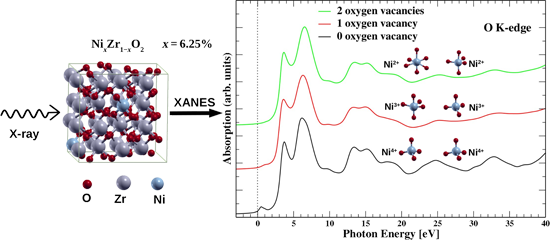
- ; Introduction The search for room-temperature magnetic semiconductors has been the driving force behind the increasing interest of material scientists and solid-state physicists in magnetic oxides [1]. This is due to their potential applications as building block of spintronic devices. Magnetic oxides are
- stoichiometric concentration required to ensure overall charge neutrality can modify the presence of defect states in the electron bandgap [4][26][27]. In diluted magnetic semiconductors (DMS), magnetic impurities such as the transition metals (TM) Fe or Ni are introduced to produce a magnetic ground state. The
- zirconia will also create oxygen vacancies, although of different concentration due to the different oxidation states of Fe and Ni. Furthermore, O vacancies may be inadvertently introduced into semiconductors as a result of the processing conditions. For example, in a semiconductor manufacturing process



Efficient liquid exfoliation of KP15 nanowires aided by Hansen's empirical theory
Beilstein J. Nanotechnol. 2022, 13, 788–795, doi:10.3762/bjnano.13.69
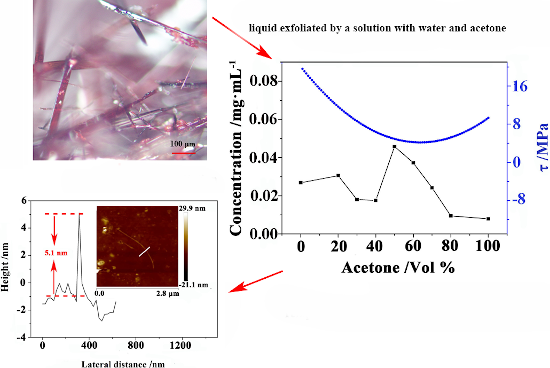
- temperature measurements of KP15 nanodevices. Keywords: Hansen's empirical theory; KP15; liquid exfoliation; nanodevices; nanowires; Raman; semiconductors; Introduction Low-dimensional materials have drawn significant attention in recent years. So far, not only new composite materials with excellent


Hierarchical Bi2WO6/TiO2-nanotube composites derived from natural cellulose for visible-light photocatalytic treatment of pollutants
Beilstein J. Nanotechnol. 2022, 13, 745–762, doi:10.3762/bjnano.13.66
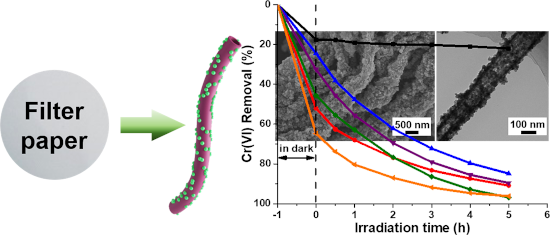
- -responsive semiconductors with suitable band structures provides a pathway for the advancement of highly efficient photocatalysts [9]. It has been demonstrated that the assembly of various nanoscale building blocks to form the corresponding nanoarchitectonics provides an ideal pathway for the syntheses of a
- conduction band (ECB) of the TiO2 and Bi2WO6 semiconductors are determined according to the Equation 5 and Equation 6 [31]: where χ, Ee, and Eg represent the geometric mean of the absolute electronegativity of the atoms in the semiconductors, the free electron energy on the hydrogen scale (approx. 4.5 eV
- ), and the bandgaps of semiconductors based on the UV–vis DRS characterizations, respectively. It is reported that the χ values of the TiO2 and Bi2WO6 semiconductors are 5.81 and 6.21 eV, respectively [52]; while the Eg values of the TiO2 and Bi2WO6 semiconductors are determined to be 3.12 and 2.40 eV


Direct measurement of surface photovoltage by AC bias Kelvin probe force microscopy
Beilstein J. Nanotechnol. 2022, 13, 712–720, doi:10.3762/bjnano.13.63
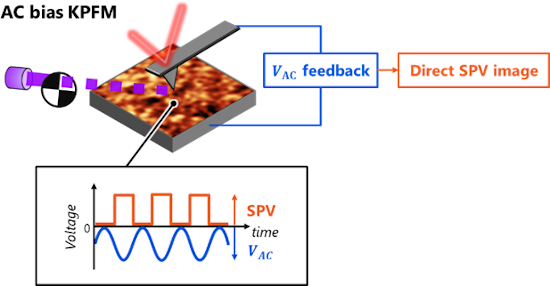
- photocatalytic semiconductors. The local SPV is generally measured consecutively by Kelvin probe force microscopy (KPFM) in darkness and under illumination, in which thermal drift degrades spatial and energy resolutions. In this study, we propose the method of AC bias Kelvin probe force microscopy (AC-KPFM
- thermal drift between darkness and illumination. In the case of semiconductors, an electric field is screened on the scale of the Debye length LD [3], where kB is the Boltzmann constant, T is the temperature, ε0 is the vacuum permittivity, εr is the relative permittivity of the semiconductor, e is the
- reactions (hours) [62][63][64]. Particularly for photocatalytic semiconductors, AC-KPFM would be an indispensable tool for detecting the fast SPV distribution related to charge redistribution (microseconds to milliseconds) because SPV measured with classical KFPM is attributed to both charge redistribution


Zinc oxide nanostructures for fluorescence and Raman signal enhancement: a review
Beilstein J. Nanotechnol. 2022, 13, 472–490, doi:10.3762/bjnano.13.40
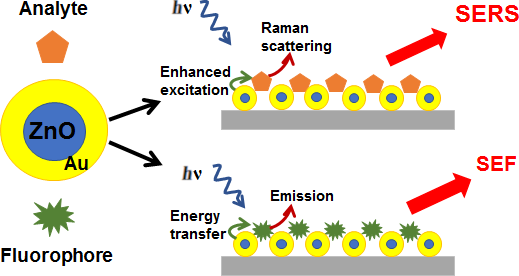
- on semiconductors decorated with noble metals, or vice versa, has been proposed. These hybrid nanostructures show enhanced optical and electronic properties due to the coupling between the noble metal and the semiconductor [10][11][13]. Various fabrication techniques have been employed to develop





Tin dioxide nanomaterial-based photocatalysts for nitrogen oxide oxidation: a review
Beilstein J. Nanotechnol. 2022, 13, 96–113, doi:10.3762/bjnano.13.7
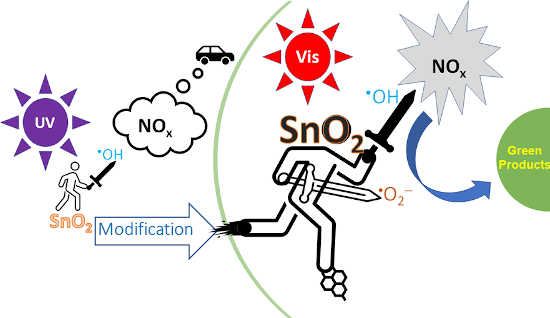
- ] (see Equations 1–10). Recently, research on tin dioxide (SnO2) materials has increased significantly, which expresses the potential of SnO2 materials for the scientific community (Figure 2a). SnO2 is one of the most extensively investigated n-type semiconductors. It is known as tin(VI) oxide or stannic
- Many attempts have been made to enhance the photocatalytic activity and take better advantage of SnO2 for the NOx abatement, including the combination with other metal oxides [70], organic semiconductors [71], or metallic nanomaterials [72] to form a heterojunction/composite photocatalyst, and self
- co-photocatalysts, including inorganic and organic semiconductors, is a practical approach to enhance the charge transfer efficacy for the photocatalytic process. The photocatalytic degradation of NOx over SnO2 as a host photocatalyst is reported to be considerably enhanced after the combination with


Chemical vapor deposition of germanium-rich CrGex nanowires
Beilstein J. Nanotechnol. 2021, 12, 1365–1371, doi:10.3762/bjnano.12.100
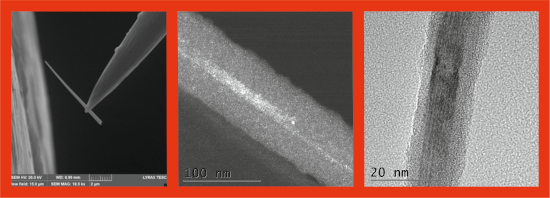
- reasonable choice for DMS alloys with chromium for the best compatibility with silicon-based industry. However, precipitation of transition metals is the main obstacle; but in low-dimensional semiconductors the precipitation is significantly reduced. Therefore, CrGe nanowires (NWs) were prepared to study
- representatives of diluted magnetic semiconductors, which have been intensively studied for future magnetic, optomagnetic, electronic, and related devices. Preparation of Cr/Ge materials in the form of NWs opens space for tuning the magnetic properties in germanium-rich Cr/Ge nanostructures. Moreover, the complex